 Write to the booksellers
-
Type
Book (5357)
Magazine (35)
Music sheets (3)
Photographs (8)
-
Latest
Last 3 days (1)
Last month (71)
Last week (4)
-
Language
Czech (1)
English (3)
French (5386)
German (11)
Latin (1)
Spanish (1)
-
Century
17th (16)
18th (202)
19th (1151)
20th (2262)
21st (78)
-
Countries
Belgium (352)
Côte d'Ivoire (19)
Denmark (687)
France (3988)
Switzerland (357)
-
Syndicate
CLAM (2)
ILAB (3016)
NVVA (183)
SLACES (183)
SLAM (2122)
SNCAO (48)
Eléments de chimie. (Notation atomique) à l'usage des candidats aux baccalauréats classiques, à l'école spéciale militaire de Saint-Cyr et à l'école navale
Hachette. 1897. In-12. Cartonnage d'éditeurs. Etat d'usage, Coins frottés, Dos satisfaisant, Rousseurs. 351 pp., illustré dans le texte, légères tâches sur les plats. . . . Classification Dewey : 540-Chimie et sciences connexes
Classification Dewey : 540-Chimie et sciences connexes

MANIPULATIONS CHIMIQUES - ANALYSE QUALITATIVE - NOTIONS D'ANALYSE QUANTITATIVE PAR LIQUEURS TITREES.
LIBRAIRIE HACHETTE ET CIE. 1898. In-12. Relié. Bon état, Couv. convenable, Dos satisfaisant, Intérieur frais. II + 248 pages augmentées de nombreuses figures en noir et blanc dans le texte - . . . . Classification Dewey : 540-Chimie et sciences connexes
Classification Dewey : 540-Chimie et sciences connexes
Manipulations chimiques. Analyse qualitative. Notions d’analyse quantitative par liqueurs titrées. 2e édition.
Paris, Hachette 1898, 185x110mm, 248pages, reliure demi-basane. Titre au dos doré. Bon état.
Cachet de bibliothèque. Pour un paiement via PayPal, veuillez nous en faire la demande et nous vous enverrons une facture PayPal
METAUX, CHIMIE ORGANIQUE
Hachette. 1896. In-12. Relié. Bon état, Couv. convenable, Dos frotté, Quelques rousseurs. 495 pages. Illustré de nombreuses gravures en noir et blanc dans le texte et hors texte.. . . . Classification Dewey : 540-Chimie et sciences connexes
2e édition. Cours élémentaire de chimie (notation atomique). Classification Dewey : 540-Chimie et sciences connexes
Métaux chimie Organique
Hachette et cie. Non daté. In-8. Cartonné. Bon état, Couv. convenable, Dos satisfaisant, Quelques rousseurs. 495 pages. Nombreux schémas en noir et blanc, dans le texte.. . . . Classification Dewey : 540-Chimie et sciences connexes
Classification Dewey : 540-Chimie et sciences connexes
Précis de chimie. (Notation atomique). A l'usage de l'enseignement secondaire moderne, de l'enseignement des jeunes filles, des écoles normales primaires et de l'enseignement supérieur.
Couverture rigide. Reliure toile de l'éditeur, 454 pages. Rousseurs.

Livre. Editions Hachette, 1896.
METAUX CHIMIE ORGANIQUE
LIBRAIRIE HACHETTE ET CIE - 6° EDITION. 1910. In-16. Cartonné. Bon état, Couv. convenable, Dos satisfaisant, Intérieur frais. 552 pages. Nombreuses illustrations en noi et blanc dans le texte et hors texte.. . . . Classification Dewey : 540-Chimie et sciences connexes
Cours élémentaire de Chimie. Classification Dewey : 540-Chimie et sciences connexes
Métaux. Chimie organique.
HACHETTE et Cie. 7ème édition. 1912. In-12. Cartonné. Bon état, Couv. convenable, Dos satisfaisant, Quelques rousseurs. 552 pages. Nombreuses figures en noir et blanc, dansle texte.. . . . Classification Dewey : 540-Chimie et sciences connexes
Cours élémentaire de Chimie. Classification Dewey : 540-Chimie et sciences connexes
Métaux Chimie Organique
Hachette & cie 1910 in12. 1910. Cartonné. Il s'agit d'un manuel scolaire de chimie élémentaire probablement une réimpression d'un ouvrage historique portant sur les métaux et la chimie organique. Il fait partie d'une collection de titres indisponibles numérisés par la BNF et réimprimés à la demande par Hachette
Bon état ex libris Quelques pages avec des annotations au crayon intérieur et reliure en bon état
Les Gillet de Lyon. Fortunes d'une grande dynastie industrielle (1838-2015).
2015 Librairie Droz, Collection "Publications d'Histoire Economique et Sociale Internationale", n°33 - 2015 - Fort in-8, broché, couverture illustrée - 510 p. - Quelques reproductions photographiques in texte en N&B

Bon état - Coins légèrement émoussés Bon
The atomic weight of Radium and the periodic system
s.l., 1905 pp.467-471, 24cm., Reprinted from the American Chemical Journal (1905)
The absorbtion spectra of neodymium chloride and praseodymium chloride in water, methyl, alcohol, ethyl alcohol and mixtures of these solvents
s.l., 1908 pp.276-298 + 6 plates out-of-text, 24cm., Reprinted from "Proceedings of the American Philosophical Society" (1908)
A study of the temperature coefficients of conductivity in aequeous solutions and on the effect of temperature on dissociation
s.l., 1905 pp.357-422, 24cm., with dedicace by H.C.Jones, Reprinted from the American Chemical Journal (1905)
Les phénomènes chimiques de la germination
Bruxelles, Hayez 1886 140pp., publié dans et extrait (et donc sans brochure) des "Mémoires couronnés et autres mémoires publiés par l'Académie Royale des Sciences, des Lettres et des Beaux-Arts de Belgique. collection in-8" Tome XXXVIII (38), texte frais et en bon état, W116700
Les enzymes
Presses Universitaires de France 1968 collection que sais je n°434. poche. 1968. broché. La Structure moléculaire est un ouvrage scientifique de Bernard Pullman publié dans la collection encyclopédique "Que sais-je ?" des Presses universitaires de France. Ce livre dont plusieurs éditions existent (notamment 1953 1959 et une 7e édition) présente les connaissances sur la structure des molécules avec des illustrations
Bon état
Mécanique des explosifs. Encyclopédie scientifique/Bibliothèque de mécanique appliquée et génie.
Paris, Octave Doin et Fils, 1917. 13 x 18, xi-516-xii pages, 115 figures, reliure d'édition pleine percaline orange, tête rougie, très bon état.
LA PRODUCTION FOURRAGERE PAR LES ENGRAIS. Prairies et herbages. 2e édition.
Paris Librairie Agricole de la Maison Rustique 1890. In-8 VIII 307pp. Demi percaline verte bradel, dos orné d'une fleurette dorée, pièce de titre de basane rouge, reliure de l'époque. Illustré de nombreux tableaux dans le texte. Bel exemplaire bien complet.
Classification des fourrages, leur composition chimique, le sol des prairies, l'eau, la formation des prairies et herbages, leur entretien, leur régénération, défrichement des mauvaises prairies.
Guide pour l'achat et l'emploi des engrais chimiques. 6e édition. ‘Bibliothèque agricole’.
Paris, Librairie Agricole de la Maison Rustique, 1887, gr. in-8°, 487 p., cachet ‘Dr. Ed. Marmier Ing.-Chim.’, reliure en demi-cuir, dos orné, plats et gardes marbrées et tranches jaspées, bel exemplaire.

(SLACES, NVVA)
Phone number : 41 (0)26 3223808
Guide pour l'achat et l'emploi des produits chimiques.
Couverture rigide. Reliure demi basane. Coiffes usées. 487 pages. Cachets.
Livre. Cinquième édition contenant beaucoup de développements nouveaux. Société anonyme des produits chimiques agricoles, 1876.
Guide pour l'achat et l'emploi des engrais chimiques.
Paris, Librairie Agricole de la Maison Rustique, "Bibliothèque Agricole", 1887, 1 br., étiquette contrecollée sur la 1ère de couverture: "Grand dépot de machines agricoles [...] chez Mr E. Joulié [...] à Valence (Drôme)". in-8 de 487 pp. ;
Henri Soulié, né à Valence. Membre correspondant de la Société d'Agriculture du département de la Drome.
MESURE DES VOLUMES LIQUIDES, LIQUEURS TITREES, ALCALIMETRIE, VOLUMETRIE, TOME II, CHAP. I
Hermann & Cie. 1936. In-8. Broché. Bon état, Couv. convenable, Dos satisfaisant, Intérieur frais. 60 pages. Illustré de figures en noir et blanc dans le texte. Etiquette sur le dos. Tampons et annotations de bibliothèque sur le 1er plet et en page de garde.. . . . Classification Dewey : 540-Chimie et sciences connexes
'Actualités scientifiques et industrielles', 351, Leçons de Chimie analytique, I. Classification Dewey : 540-Chimie et sciences connexes
Journal de Physique théorique et appliquée - Publié par J.-Ch. D'ALMEIDA, professeur de Physique au Lycée Henri IV
Reference : 115563
(1874)
Journal de Physique Tome 3 : Année 1874
1874 Tome troisième - Année 1874 - Paris, au Bureau du Journal de Physique - In-8, demi basane bleu-vert, plats marbrés, titre, tomaison, année et filets dorés au dos - 399 pages - Illustrations et schémas en N&B in texte
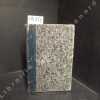
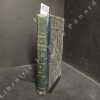
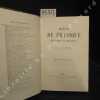
Bon état - Frottements sur le cuir - Dos légèrement insolé - Plats frottés - Coins et coiffes frottés - Intérieur propre
JOURNAL DES SAVANTS (1) et (4) - Mr Mallement de Messange (2) et (3)
Reference : 110011
(1) Journal des scavans pour l'année M. DC. LXXXI. (1681) + (4) Journal des scavans pour l'année M. DC. LXXXII. (1682) - (2) Nouveau système de l'aiman par Mr Mallement de Messange - (3) Dissertation sur les cometes à Monsieur le Procureur General du Grand Conseil. Sentiment du peuple & de quelques philosophes sur les mouvements des Cieux, & les Phenomenes extraordinaires
(1) et (4) A Paris, Chez Jean Cusson, rue Saint Jacques, à l'Image de Saint Jean Baptiste - M. DC. LXXXI. 1681 - Avec privilege du Roy - Fort In-8 (17,5 x 23cm environ), reliure pleine peau brune - 5 nerfs, fleurons, filets, pièce de titre et années dorés au dos, tranches mouchetées rouge - 442 pages (numérotation passant de 208 à 299) + Table des Matières des Journaux (1) - 354 pages + Table des Matières des Journaux (4) - Bandeaux, gravures in et hors texte, cul-de-lampe. - Deux livrets par M. Mallement de Messange sont reliés entre les deux années, à savoir : (2) A Paris, Chez Jean Cusson, rue Saint Jacques, à l'Image de Saint Jean Baptiste, vis à vis S. Yves - Sans date - Nouveau système de l'aiman - 16 pages(3) A Paris, Chez Jean Cusson, rue Saint Jacques, à l'Image de Saint Jean Baptiste - M. DC. LXXXI. 1681 - Dissertation sur les cometes - 17 pages - Avec une gravure en dernière page
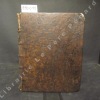
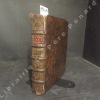
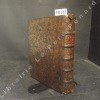
Bon état, reliure compacte malgré premier feuillet légèrement désolidarisé et départ de fentes aux extrémités de la charnière du premier plat - Coins écrasés et éraflés - Inscriptions à la plume en deuxième de garde - Rousseurs et quelques auréoles dans l'ouvrage - Une déchirure avec manque au coin de la p. 306 avec petit impact sur une gravure assez bon
CHIMIE 3 TOMES
DUNOD 66EME EDITION. 1957. In-16. Cartonné. Bon état, Couv. convenable, Dos lisse, Intérieur frais. 207 + 253 + 208 pages.. . . . Classification Dewey : 540-Chimie et sciences connexes
Aide-memoire Dunod. Preface de P. Piganiol. TOME I : Mesures. Constantes physiques des corps chimiques. TOME II : Proprietes et caracteristiques des composes organiques. TOME III : Chimie Generale. Analyse minerale et analyse organique. Classification Dewey : 540-Chimie et sciences connexes
Chimie, 3 tomes
Dunod. 1951-1971. In-16. Cartonné. Bon état, Couv. convenable, Dos satisfaisant, Intérieur frais. 246p chacun . Le tome 1 est de 1971, les deux autres tomes de 1951 (tome 2 et 3).. . . . Classification Dewey : 540-Chimie et sciences connexes
tome 1 : mesures, consantes physiques des corps chimiques.,tome 2 : propriétes et caractéristiques des composés organiques, tome 3 : chimie minérale, analyse minérale et organique, 69 ème édition Classification Dewey : 540-Chimie et sciences connexes

