 Write to the booksellers
-
Type
Autograph (1)
Book (5494)
Magazine (35)
Music sheets (3)
Photographs (8)
-
Latest
Last 24h (1)
Last 3 days (2)
Last month (8)
Last week (3)
-
Language
Czech (1)
English (3)
French (5524)
German (11)
Latin (1)
Spanish (1)
-
Century
17th (16)
18th (197)
19th (1155)
20th (2522)
21st (97)
-
Countries
Belgium (353)
Côte d'Ivoire (20)
Denmark (697)
France (4113)
Switzerland (358)
-
Syndicate
CLAM (2)
ILAB (3011)
NVVA (183)
SLACES (183)
SLAM (2106)
SNCAO (48)
[Chez Théophile Barrois le Jeune] - Collectif ; SOCIETE ROYALE DE MEDECINE ; MAUDUYT DE LA VARENNE ; LAVOISIER, Antoine
Reference : 70430
(1785)
Histoire de la Société Royale de Médecine. Années M.DCC.LXXX et LXXXI. Avec les Mémoires de Médecine & de Physique médicale, pour les mêmes Années. Tirés des Registres de cette Société [ Années 1780 et 1781 ] [ Contient notamment : ] "Observations météorologiques" pour les années 170 & 1781 (R. P. Cotte) ; "Sur les différentes manières d'administrer l'électricité, & Observations sur les effets que ces divers moyens ont produits" (Mauduyt de La Varenne) ; "Réflexions sur les effets de l'éther vitriolique & de l'éther nitreux dans l'économie animale" (Lavoisier)
1 vol. fort in-4 reliure de l'époque plein veau marbré, dos à 5 nerfs orné, Chez Théophile Barrois le Jeune, Paris, 1785, 2 ff., XVI-392-430 pp. avec 15 planches hors-texte (13 et 2, dont planches dépliantes) et 29 tableaux dépliants (28 et 1). Histoire de la Société Royale de Médecine. Années M.DCC.LXXX et LXXXI. Avec les Mémoires de Médecine & de Physique médicale, pour les mêmes Années. Tirés des Registres de cette Société [ Années 1780 et 1781 ] [ Contient notamment : ] "Observations météorologiques" pour les années 170 & 1781 (R. P. Cotte) ; "Sur les différentes manières d'administrer l'électricité, & Observations sur les effets que ces divers moyens ont produits" (Mauduyt de La Varenne) ; "Réflexions sur les effets de l'éther vitriolique & de l'éther nitreux dans l'économie animale" (Lavoisier)
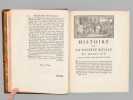
On trouve notamment un article du R.P. Cotte sur les "Observations météorologiques" pour les années 170 & 1781, agrémentées d'impressionnantes "Tables météorologiques" dépliantes, précisant notamment les relevés de thermomètre et de baromètre pour de nombreuses villes du Royaume mais aussi d'Angleterre et de Hollande, ainsi que des observations remarquables au verso. On y trouve également un très long mémoire "sur les différentes manières d'administrer l'électricité, & Observations sur les effets que ces divers moyens ont produits", par l'électrothérapeute Mauduyt de La Varenne, et in fine un article de Lavoisier : "Réflexions sur les effets de l'éther vitriolique & de l'éther nitreux dans l'économie animale". Bon état (très petit mq. de cuir en mors, coupes et plats, très bon état par ailleurs).
[Imp. J. Herbert & Cie] - Collectif ; Société anonyme des pneumatiques Dunlop ; DE PAWLOWSKI, G.
Reference : 42881
(1933)
L'industrie ferroviaire et le caoutchouc.
1 vol. in-4 br. format à l'italienne, Imp. J. Herbert & Cie, s.d. (circa 1933) avec 24 ff.


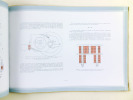
Très belle plaquette consacrée à ce sujet rarement étudié de l'utilisation du caoutchouc dans les chemins de fer.
Collectif, Société des Anciens élèves des Ecoles nationales d'Arts et Métiers
Reference : 629
(1878)
Bulletin mensuel technologique.
1878 Paris, Dejey & Cie, 1878-1904. Treize volumes in-8 demi chagrin (reliures dépareillées), comprenant les semestres suivants: divers (quelques mois de 1878 à 1890), juillet-décembre 1890, janvier-décembre 1891, janvier-juin 1892, janvier-juin 1893, janvier-juin 1896, juillet-décembre 1897, juillet-décembre 1899, janvier-juin 1901, janvier-juin 1902, janvier-juin 1903, juillet-décembre 1904. Environ 110 pages par bulletin, nombreuses planches (tableaux, plans, croquis ...) in-fine et nombreuses figures in-texte. Rousseurs, légères épidermures.
Ensemble d'études concernant les machines à vapeur, les moteurs et la transmission, le chemin de fer, la marine, l'aviation, la fonderie et le forgeage, les charpentes métalliques, les travaux publics, l'électro-magnétisme, la chimie industrielle, la thermodynamique, l'hydraulique,... La librairie est ouverte du mardi au samedi de 9h30 à 12h30 et de 13h30 à 19h00. Commandes par courriel ou téléphone. Envoi rapide, emballage soigné.
Collectif sous la direction de V. Grignard, G. Dupont et R. Locquin
Reference : 32970
Traite de chimie organique - Tome XIX - Pyrrole et composes pyrroliques. Pigments tetrapyrroliques. Noyaux pyrroliques complexes. Indigo et colorants indigoides
Masson et cie, 1942. Format 18x26 cm, reliure editeur, toilee noire, plat et dos avec decors et titrage dores, coiffe rougie, 710 pages. Avec un coin abime. Bon etat, petites traces d'usage sur un livre d'occasion.
Collectif Wautelet Michel Lehn Jean-Marie
Reference : 100108025
(2014)
ISBN : 2100706098
Les nanotechnologies - 3ème édition
Dunod 2014 320 pages 14x1 8x21 8cm. 2014. Broché. 320 pages.
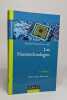
Très bon état tranches légèrement fânées sinon comme neuf
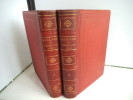
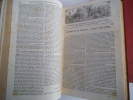
Encyclopédie théorique et pratique des connaissances utiles
composée de traités sur les connaissances les plus indispensables. Nouvelle édition,illustrée d’environ 1500 gravures intercalées dans le texte. Deux tomes en deux volumes in 8 demi-chagrin rouge à nerfs, titre, tomaison, caissons dorés. Plats percaline rouge chagrinée, filets à froid en encadrement Tome 1 : faux-titre, titre, 816 pages texte sur 2 colonnes (paginées 1 à 1632) Tome 2 : faux-titre, titre, 783 pages, paginées1633 à 3199. Tranches mouchetées. Garnier frères éditeurs, sans date. Rousseurs éparses habituelles, plus fortes et début et fin de volume.

Méthodes electro-chimiques appliquées à l'analyse
Amicale corporative des étudiants en pharmahie. 1964. In-4. Broché. Etat passable, Couv. légèrement passée, Dos abîmé, Intérieur acceptable. 68 pages. nombreuses figures en noir et blanc. Texte dactylographié. Plats désolidarisés. Absence de dos. Vendu en l'état. Exemplaire de travail.. . . . Classification Dewey : 540-Chimie et sciences connexes
Préface par P. Mesnard. Classification Dewey : 540-Chimie et sciences connexes
Marie Curie. Collection : Junior/Marabout Mademoiselle, N° 206.
Verviers (Belgique), Marabout Mademoiselle, 1964. 11 x 18, 155 pp., broché, bon état (couverture légèremen défraîchie).
Guide Pratique pour la Détermination des Poudres Officinales
Avec 92 figures dans le texte, 1 vol. in-12 reliure éditeur pleine percaline verte, Octave Doin, Paris, 1893, III-193 pp.
Bon exemplaire.
DU CINEMATOGRAPHE au cinéma 1895-1995. 100 ans de technologies cinématographiques françaises. Préface de Robert Enrico.
Paris Editions Dixit 1995. In-8 broché 364pp. Avec des illustrations. Bel exemplaire.
L'histoire des industries techniques cinématographiques françaises avec les figures marquantes (inventeurs, chimistes, mécaniciens, opticiens...)et l'histoire des techniques: la pellicule, la couleur, la construction des caméras, l'évolution des décors et des studios, les trucages, les effets spéciaux. (2862)
CHIMIE GENERALE
Claude Hermant. Non daté. In-8. Broché. Etat d'usage, Couv. convenable, Coiffe en pied abîmée, Intérieur acceptable. 202 pages.. . . . Classification Dewey : 540-Chimie et sciences connexes
M.P.C. Classification Dewey : 540-Chimie et sciences connexes
Electrochimie. Electrodes de référence et constitution de la couche double. Colloque n°73.
P., CNRS, 1957, in 8° relié pleine percaline rouge de l'éditeur, 304 pages.
PHOTOS sur DEMANDE. Fermeture du 1er au 23 Août


Phone number : 04 77 32 63 69
L'Acier (Elaboration et Travail)
COLIN Armand. 1922. In-16. Broché. Etat d'usage, Couv. défraîchie, Dos plié, Intérieur acceptable. 200 + 8 pages. Nombreuses figures en noir et blanc, dans le texte. Dos renforcé par une bande, avec code de bibliothèque sur la coiffe en-tête. Tampons de bibliothèque sur la page de titre et dans quelques marges.. . . . Classification Dewey : 540-Chimie et sciences connexes
Collection Armand Colin, Section de Chimie. Classification Dewey : 540-Chimie et sciences connexes
L'essor de la chimie appliquée.
P., Flammarion (Bibliothèque de Philosophie Scientifique), 1910, in 12 broché, 349pp. ; qq. rousseurs.
Fermeture du 1er au 23 Août
Phone number : 04 77 32 63 69
MOLECULAR ORBITAL THEORY FOR ORGANIC CHEMISTS
JOHN WILEY & SONS. 1961. In-8. Relié toilé. Bon état, Couv. convenable, Dos satisfaisant, Intérieur frais. 489 pages. Ouvrage en anglais. Nombreux schémas en noir et blanc dans le texte.. . . . Classification Dewey : 540-Chimie et sciences connexes
Classification Dewey : 540-Chimie et sciences connexes
LES FICHIERS VUIBERT, CHIMIE, TERMINALE S
Vuibert. 2002. In-8. Broché. Bon état, Couv. convenable, Dos satisfaisant, Intérieur frais. 208 pages. Illustré de figures en noir et blanc dans le texte.. . . . Classification Dewey : 540-Chimie et sciences connexes
Tout le programme en fiches pratiques. Classification Dewey : 540-Chimie et sciences connexes
DEUXIEME RECUEIL D'EPREUVES SELECTIONNEES DES OLYMPIADES NATIONALES DE LA CHIMIE ( Ve, VIe, VIIe OLYMPIADES)
PRESSES DU CENTRE REGIONAL. 1994. In-4. Broché. Bon état, Couv. convenable, Dos satisfaisant, Intérieur frais. 284 pages - Nombreux schémas et figures en noir et blanc, dans le texte - Annotations à l'encre sur la page de titre. . . . Classification Dewey : 540-Chimie et sciences connexes
Publié avec le concours de l'Union des Physiciens, Ministère de l'Education Nationale, de la Jeunesse et du Sport, et de la Société Française de Chimie Classification Dewey : 540-Chimie et sciences connexes
RECUEIL D'EPREUVES SELECTIONNEES DES QUATRE PREMIERES OLYMPIADES NATIONALES DE LA CHIMIE
PRESSES DU CENTRE REGIONAL. 1990. In-4. Broché. Bon état, Coins frottés, Dos satisfaisant, Papier jauni. 221 pages - Nombreux schémas et figures en noir et blanc, dans le texte. . . . Classification Dewey : 540-Chimie et sciences connexes
Publié avec le concours de l'Union des Physiciens, Ministère de l'Education Nationale, de la Jeunesse et du Sport, et de la Société Française de Chimie Classification Dewey : 540-Chimie et sciences connexes
L'INDUSTRIE CHIMIQUE en EUROPE
Un ouvrage de 223 pages, format 240 x 155 mm, broché, publié en 1955, Organisation Européenne de Coopération Economique (Paris)
Collection "La Situation dans les Secteurs Economiques"
Phone number : 04 74 33 45 19
A short Account of the Improvements in Gun=Powder made by Sir William Congreve. Being the Substance of the Specification of a Patent granted to him the 3rd of July, 1815.
London, T. Egerton, 1818. Contemp. marbled boards. Titlelabel with gilt lettering on upper board. A paperlabel pasted on lower part of spine. Stamps on title-page. A few faint scattered brownspots.
First edition, giving details of a new way of manufacturing gunpowder which Congreve patented 1815.
PRATIQUER LA CHIMIE, 1re (Exercices et Solutions) (Profil Sciences, 925)
Hatier. 1983. In-12. Broché. Etat d'usage, Couv. défraîchie, Dos satisfaisant, Déchirures. 79 pages. Nombreuses annotations dans l'ouvrage (ouvrage de travail).. . . . Classification Dewey : 540-Chimie et sciences connexes
Profil Sciences, 925. Classification Dewey : 540-Chimie et sciences connexes
LA CLASSIFICATION PERIODIQUE DES ELEMENTS CHIMIQUES.
DUNOD. 1967. In-12. Broché. Etat d'usage, Couv. convenable, Dos satisfaisant, Intérieur frais. 112 pages illustées de quelques figures - rares soulignements dnas le texte.. . . . Classification Dewey : 540-Chimie et sciences connexes
traduit par F. PEROT. Classification Dewey : 540-Chimie et sciences connexes
Chimie Générale, 2 TOMES : Description des éléments chimiques et de leurs propriétés -
COLIN Armand. 1929 - 1930. In-16. Relié. Bon état, Couv. convenable, Dos satisfaisant, Intérieur frais. 214 + 186 + 202 pages. Nombreuses figures en noir et blanc, dans le texte.. . . . Classification Dewey : 540-Chimie et sciences connexes
Collection Armand Colin, Section de Chimie N°41 à 43. Classification Dewey : 540-Chimie et sciences connexes
CHIMIE MINERALE, 3 TOMES, DESCRIPTION DES ELEMENTS CHIMIQUES ET DE LEURS PROPRIETES
Armand Colin. 1935-1941. In-16. Broché. Etat d'usage, Couv. légèrement passée, Coiffe en tête abîmée, Intérieur acceptable. 218 + 190 + 202 pages. Illustrés de nombreuses figures en noir et blanc dans le texte. Etiquettes de code sur les dos des tomes I et II. Tampons et annotations de bibliothèque sur les 1ers plats et les pages de titre des tomes I et II.. . . . Classification Dewey : 540-Chimie et sciences connexes
Collection Armand Colin, Chimie, n° 41, 42, 43. 3e-4e éditions revues. Classification Dewey : 540-Chimie et sciences connexes

