 Write to the booksellers
-
Type
Book (2345)
Magazine (9)
-
Latest
Last 3 days (2)
Last month (12)
Last week (2)
-
Language
English (1)
French (2352)
Italian (1)
-
Century
16th (1)
17th (5)
18th (85)
19th (514)
20th (931)
21st (127)
-
Countries
Belgium (421)
Côte d'Ivoire (4)
Denmark (630)
France (1088)
Netherlands (1)
Switzerland (210)
-
Syndicate
CLAM (1)
ILAB (1288)
NVVA (19)
SLACES (19)
SLAM (517)
Comment Entretenir et Dépanner Son Automobile
Paris Librairie Polytechnique Béranger 1963 In 12 Collection " Eclair " . Département Technique des Presses de la Cité . Illustré de photographies en noir et blanc .Automobile - 184 p. , 350 gr.

Couverture rigide Très Bon État . 1° édition
Les Intégraphes. La Courbe Intégrale et ses Applications. [Bound together with C. Bohn: Über Linsenzusammenstellungen und Ihren Ersatz]. - [ABDANK-ABAKANOWICZ'S INTEGRAPH.]
Paris, Gauthier-Villars, 1886. Royal8vo. In contemporary half cloth with paper label pasted on to top of spine. Occassional brownspots throughout. With 94 figures in the text. X, 156 pp." (4), 88 pp. 20, 16, 15, 18, (31) advertising
![Les Intégraphes. La Courbe Intégrale et ses Applications. [Bound together with C. Bohn: Über Linsenzusammenstellungen und Ihren Ersatz]. - ...](https://static.livre-rare-book.com/pictures/LLX/49270_1_thumb.jpg)
![Les Intégraphes. La Courbe Intégrale et ses Applications. [Bound together with C. Bohn: Über Linsenzusammenstellungen und Ihren Ersatz]. - ...](https://static.livre-rare-book.com/pictures/LLX/49270_2_thumb.jpg)
First edition of Abakanowicz's famous integraph. It was invented independently about 1880 by the British physicist Sir Charles Vernon Boys and by Bruno Abakanowicz, however, the later being referred to as inventor (Goldstein, L'Europe mathématique: histoires, mythes, identities). ""The developments in the integraph design made by Abdank-Abakanowicz in France in the 1870s have been acknowledged as amongst the most noteworthy"" (Small, The Electronic Analogue Computer, P. 59).""The integraph is an elaboration and extension of the planimeter, an earlier, simpler instrument used to measure area. It is a mechanical instrument capable of deriving the integral curve corresponding to a given curve. Hence, it is able to solve elementary differential equations graphically. However, it was not until 1878 that he succeeded in developing a practical model. ""This volume is a description of the basic Abakanowicz instrument and a few of its later modifications. Abdank-Abakanowicz's instrument was able to produce solutions for only simpler differential equations, i.e., the commonly entountered class having the form dy/dx = F(x). An instrumental solution requires that as a first step a graph of the function F be drawn. Next, a pointer on the instrument is used to follow (trace) this graph. The value of the integral may then be read from the instrumentdials. This Abakanowicz approach was widely adopted in the early twentieth century, and the instrument was produced, and later improved, by such well-known instrument makers as Coradi in Zurich"" (The Erwin Tomash Library, Vol. 1, p. 2.).Bound with Abakanowicz's Integraph is:Répertoire Alphabétique des Procédés et Recettes publiés par Le Monde de la Science et de l'Industrie pendant les Années 1880 à 1886. Lausanne, Jaunin, 1887. 15 pp.Du régime de l'invention. Examen des améliorations proposées à la législation relative aux inventions à propos du nouveau projet de loi sur les brevets. Paris, A. Durand, 1862. 160 pp.Erwin Tomash Library A1.

On the determination of the Photometric Intensity of the Coronal Light during the Solar Eclipse of April 16th, 1893. Received April 14, - Read April 30, 1896.
(London, Harrison and Sons, 1897). 4to. No wrappers as extracted from ""Philosophical Transactions"" Year 1896, Volume 187 - Series A. Pp. 433-442.
First printing. Abney was a pioneer in the sensitometry of photographic images, and inventor of a dry photographic emulsion. His ""Instruction in Photography"", 1871 became a standard text.
International Broadcasting: A New Dimension of Western Diplomacy (The Washington Papers)
SAGE Publications Ltd 1976 90 pages in8. 1976. Broché. 90 pages.
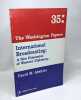
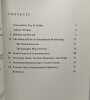
Bon Etat couverture un peu défraîchie intérieur propre
Guide du dessinateur industriel
Hachette Technique 1993 Cartonnage rigide glacé illustré éditeur - 320 pages Bon état 633 g
The Action of Light on Selenium. Received May 18, - Read June 15, 1876. - [INVENTING THE SOLAR CELL]
(London, Harrison and Sons, 1878). 4to. In the original wrappers. Offprint from ""Philosophical Transactions"" 1877 - Vol. 167. Author and title written in light pencil to front wrapper. Wrappers with a bit of soiling and part of spine is missing. Corners bended. Internally fine and clean. Pp. 313-349.
First edition, in the extremely rare offprint, of Adams and Day's landmark paper, in which they demonstrated that electricity could be produced from light without moving parts, eventually leading to the modern solar cell. It is here that Adams shows for the first time that the discovery of Willoughby Smith - that the conductivity of selenium is due only to the effect of light - is correct and furthermore that light has an effect on the resistance of selenium and that light generates electrical currents in selenium. Two years later Adams expanded the work and published 'Solar Heat'. Here he described his ""Power Tower Concept"", which to this day remains the basis of solar plants.William Grylls Adams (1836 - 1915), professor of Natural Philosophy at King's College, London, and brother of the famous astronomer John Couch Adams (1819-1892), was President of the Physical Society of London from 1878 to 1880. In 1872 he was elected a Fellow of the Royal Society and in 1875 delivered their Bakerian Lecture. He was president of the Institute of Electrical Engineers and of the mathematical and physical section of the British Association.His greatest achievement lies in demonstrating the seminal discovery that electricity could be produced from light without moving parts. The road to this discovery was begun in 1839 when Becquerel discovered that illumination of one of two metal plates in a dilute acid changed the electromotive force. Another French scientist, Auguste Mouchout, followed up on Becquerel's discovery, but it was not until 1876, when Adams and Richard Evans Day discovered that illuminating a junction between selenium and platinum has a photovoltaic effect, that the foundation for the documented use of solar thermal power was laid [with the publication of the present paper]. ""From a historical viewpoint, it is of interest to note that the first experiments on the generation of solar thermal power in India were conducted by an Englishman, William Adams, about one hundred years ago. Adams stayed in Coloba, Mumbai and performed his experiments in the compound of his bungalow. He used a sphecical reflector 12 m in diameter, made from sheets of glass mirror. The sun's rays were focussed on a boiler having a capacity of about 60 litres and the steam generated was used to drive a 2.5 HP steam pump. Adams's work is described in a book written by him entitled ""Solar Heat - A Substitute for Fuel in Tropical Countries for Heating Steam Boilers and Other Purposes"" (Education Society's Press, Byculla, Bombay, 1878)."" (Sukhatme & Neyak, ""Solar Energy. Principles of Thermal Collection and Storage"", p. 48)""William Grylls Adams was and English scientist who taught as a professor in the department of Natural Philosophy at King's College. He is notable for his contribution to the discovery of the photoelectric effect, on which all solar energy applications are based. He was inspired by Auguste Mouchout's invention of the solar steam engine. With the intent of making improvements to Mouchot's design, Adams began to experiment with different materials and designs. In 1876, working in conjunction with his student, Richard Day, he discovered that selenium produced electricity when exposed to sunlight. Using the selenium, he then added mirrors to the design to concentrate sunlight on the engine. This design came to be known as the power tower concept and is still in use today."" (Smith & Taylor, ""Renewable and Alternative Energy resources: A Reference Handbook"", 2008, pp. 1556-56).Wheeler Gift, No. 3856. Shiers ""Early Televison"", no. 73.
Positivismes. Philosophie, Sociologie, Histoire, Sciences Actes du colloque international, 10-12 decembre 1997, Universite Libre de Bruxelles,
Turnhout, Brepols, 1999 Hardback, 314 p., 155 x 240 mm. ISBN 9782503508108.
Le terme "positivisme" repond traditionnellement a la definition suivante: un systeme philosophique qui recuse les a priori metaphysiques et voit dans l'observation des faits positifs et dans l'experience l'unique fondement de la connaissance. Mais cette definition est-elle suffisante? N'y a-t-il alors qu'un seul "positivisme", et s'agit-il d'un mode de pense revolu, sans influence sur notre temps, ou au contraire d'un ou de plusieurs modes de pensee qui gardent leur actualite? Les etudes rassemblees dans ce volume abordent differentes facettes, non plus du positivisme mais bien des positivismes. Traite par des philosophes, des historiens, des sociologues, ce theme s'epanouit en questions multiples. La pensee comtienne y est reexaminee sous l'angle du systeme philosophique proprement dit, de son actualite et de ses archaismes. L'on y examine les glissements de sens du mot positivisme, sa presence - parfois implicite - au sein de notre pensee actuelle, les differentes "ecoles positivistes", comme le positivisme logique, ou encore l'influence exercee par les positivismes sur d'autres disciplines, histoire, sociologie, sciences exactes... Languages : French.
Institutions and Societies for Teaching, Research and Popularisation. Proceedings of the XXth International Congress of History of Science (Liege, 20-26 July 1997) Vol. XIX,
Turnhout, Brepols, 2002 Paperback, 360 p., 155 x 240 mm. ISBN 9782503514130.
Languages : English, French.
Histoire des techniques
Meddens 1980 in4. 1980. Cartonné jaquette. iconographie en noir et blanc et en couleurs
Bon état intérieur propre bords jaquette frottés petites fentes en bas du dos
Cours de technologie d'atelier/ tome 5 :modelage
Eyrolles 1941 397 pages in4. 1941. broché. 397 pages. Manuel technique dédié à l'apprentissage du modelage probablement destiné aux étudiants en arts ou aux artistes débutants proposant des méthodes pratiques et des connaissances technologiques spécifiques à cet atelier
Bon état couverture insolée
"AEPINUS (ÆPINUS), FRANZ ULRICH THEODOSICUS. - ANALYSIS OF THE MICROMETER.
Reference : 49127
(1758)
Sur les inconvéniens qu'on a lieu de Craindre dans l'usage du Micrometre, surtout par Rapport aux Instrumens qu'on adapte au quart de Cercle.
(Berlin, Haude et Spener, 1758). 4to. No wrappers as issued in ""Mémoires de l'Academie Royale des Sciences et Belles-Lettres"" Tome 12 (1756), pp. 365-386 a. 2 folded engraved plates.
First apperance of the paper in which Aepinus gives a mathematical analysis of a micrometer adapted to a quadrant circle, his only publication related to satronomy.
Étude sur les machines centrifuges pompes et ventilateurs
Dunod Éditeur 1881 171 pages IN4. 1881. reliure editeur. 171 pages. Ouvrage technique de 1881 par A.-H. Courtois publié par Dunod consacré à l'étude des machines centrifuges notamment les pompes et ventilateurs. Le livre inclut six plans détaillés et présente des recherches expérimentales sur le fonctionnement de ces équipements industriels
Bon état dos et coiffes frottés rousseurs éparses à l'intérieur ne génant en rien la lecture de l'ouvrage
Medicina y Filologia. Estudios de lexico medico latino en la Edad Media
, Brepols - Harvey Miller, 2010 Hardcover. 258 p., 165 x 240 mm, Languages: Spanish, Including an index. Fine copy. ISBN 9782503538952.
El Grupo de investigacion de la Universidad de Valladolid Speculum medicinae, compuesto por una docena de filologos clasicos, en el que colaboran tambien un historiador de la medicina y una arabista, lleva trabajando muchos anos en la elaboracion del que se ha llamado Diccionario latino de andrologia y ginecologia (DILAG). En este momento se encuentra ya en fase de revision. El DILAG es un diccionario tecnico especializado que recoge, en las fuentes medicas mas significativas de la Antiguedad, la Edad Media y el Renacimiento, terminos medicos latinos encuadrados en las especialidades de la andrologia, la ginecologia y la embriologia. En la redaccion del DILAG sus colaboradores han encontrado diferentes aspectos de la medicina medieval dignos de estudio, que abarcan los campos de la anatomia, la fisiologia, la patologia y la terapeutica o problemas relacionados con ellos, como la sexualidad o la deformacion de terminos tecnicos mal interpretados. Con sus trabajos pretenden mostrar las multiples aplicaciones, tanto medicas como filologicas o historicas, que los estudiosos pueden llevar a cabo con el material de dicho diccionario y apreciar las posibilidades investigadoras que brinda. Algunas de estas aportaciones de caracter parcial se presentaron en el IVe Congres europeen d?etudes medievales, organizado por la FIDEM en Palermo el ano 2009, y otras han sido elaboradas expresamente para este libro. Ahora, gracias a la amable invitacion de la direccion de la FIDEM, se reunen en esta monografia, a modo de capitulos autonomos, los trabajos mencionados, con el fin de contribuir al conocimiento e investigacion de un tipo de lexico que cada vez atrae mas la atencion de los estudiosos.
L'ultrat-violet, la lumière solaire et artificielle, l'infra-rouge (d'Aimard et Dausset).
L'Expansion Scientifique Française, 1949. 14 x 18, 231 pp., broché, bon état.
7e édition.
Traité élémentaire sur les Machines à Vapeur. Contenant leurs applications aux chemins de fer, à la navigation, etc. Imité de l'anglais par ... Et refermant plusieurs articles de M. F. Arago.
Paris, Au Bureau de l'Administration centrale, 1841. 85 X 145 mm. 3 parties reliées en un volume demi-basane, dos lisse avec titre et faux-nerfs dorés (rel. de l'ép.). 267, 215 et 216 pp. ornées de figures, avec 9 planches dépliantes. Reliure lég. frottée.
Phone number : 41 021 964 60 10
"AKADEMIE DER WISSENSCHAFTEN ZU PARIS (ACADEMIE ROYALE DES SCIENCES).
Reference : 26629
(1762)
Schauplatz der Künste und Handwerke, oder vollständige Beschreibung derselben, verfertiget oder gebilliget von denen Herren der Academie der Wissenschaften zu Paris. In das Teutsche übersetzt und mit Anmerkungen versehen von Johann Heinrich Gottlob vo...
Berlin, Stettin und Leipzig, Johann Heinrich Rüdigern, 1762-75. 4to. Bound in 13 fine uniform full calf, raised bands, gilt backs. Remains of paperlabels on backs. Top of spine on one volume frayed. Small rubber stamp on titles. A few brownspots. A good copy. Having in all 374 (of 585) fine engraved plates (1 plate supplied in xerox-copy). Plates measure around 37x24cm.
First German edition of one of the main works of the 18th century in the fields of crafts and technology as it is a translation of the famous series ""Description des Arts et Metiers"" issued by Academie Royale des Sciences 1760-75. The French edition was published in folio. Band 1: Kohlenbrennen, Lichtziehen, Ankerschmieden, Nadler, Papiermacher. 31 plates and 1 table"Band 2: Eisenhämmer. Teil 1-2, Wachsziehen, Pergamentmachen, Leder-Vergoldung, Schieferbrüche. 22 plates Band 3: Eisenhämmer. Teil 3-4, Spielkartenherstellung, Seidenfärberei, Pappenmacher. 29 plates (1 plate supplied in xerox-copy) Band 4: Böttcherkunst, Weißgerber, Ziegelstreichen, Zuckersieden, Silber affinieren. 30 plates Band 5: Messingherstellung, Tuchmacherkunst, Lohgerberei. 33 plates. Band 6: Tuchfrisierkunst, Saffianleder-Herstellung, Leder auf ungarische Art, Weißgerber, Hutmacher, Dachdecker. 19 plates Band Band 7: Tapetenweberei, Kalkbrennerkunst, Ziegelstreichen in Holland, Ziegelhütten, Ball- und Raquettenmacher. 30 plates and 1 table Band 8: Perückenmacherkunst, Müller, Nudelmacher und Bäcker. 15 plates Band 9: Schuster, Schlösserkunst. 48 plates Band 10: Steinkohlenbergbau, Indigobereiter. 22 plates Band 11: Eisenbergwerke und Hüttenwerke in der Steiermark, Leimsiederei, Fischerei, Teil 1. 25 plates and 1 table Band 12: Fischerei, Teil 2. 50 plates Band 13: Fischerei, Teil 3, Porzellanherstellung. 23 plates and 1 engr. frontisp. Band 14: Glasmalerei und Glasarbeiten. Mit 13 (von 14) Tafeln Band 15: Wollenzeugfabrikant. 17 plates Band 16: Seifensider, Leinwandhandel, Schneiderhandwerk, Leinenmanufaktur, Tabaksmanufaktur. 27 plates Band 17: Bleiarbeiter, mathematische und astronomische Instrumente, Baumwoll-Samtfabrikation. 38 plates Band 18: Stickerkunst, Siebmacher, Riemer und Sattler (mit Kutschenbau), Drahtzieherei, Stahlblattmacher. 51 plates Band 19: Schiffbaukunst. 18 plates and 1 engr. frontisp.Band 20: Zinngießerkunst. 32 plates Band 21: der Strumpfwirkerstuhl und sein Gebrauch. 14 plates.
Prenons un verre, boissons sans alcool, doux.
Hatier. 1969. In-16. En feuillets. Etat d'usage, Couv. légèrement passée, Dos satisfaisant, Intérieur frais. Vingtaine de cartes, illustrations couleur.. . Sous Emboitage. . Classification Dewey : 663-Technologie des boissons
Cocktails sans alcool. Classification Dewey : 663-Technologie des boissons

Prenons un verre, long drinks, rafraichissant.
Hatier. 1969. In-16. En feuillets. Etat d'usage, Couv. légèrement passée, Dos satisfaisant, Intérieur frais. Vingtaine de fiches, illustrations couleur.. . Sous Emboitage. . Classification Dewey : 663-Technologie des boissons
Cocktails. Classification Dewey : 663-Technologie des boissons
Le travail du bois à l'usage des ingénieurs,techniciens,entrepreneurs,conducteurs de travaux,chefs d'ateliers,tous les corps de métiers se rattachant aux industries du bois et les élèves des écoles techniques et professionnelles.
Alb.de Boeck / Ch.Béranger. 1920. In-8. Broché. Etat d'usage, Tâchée, Dos abîmé, Papier jauni. 529 pages - nombreuses figures en noir et blanc dans et hors texte - renfort papier sur les plats - tampon sur le 1er plat - plats tâchés.. . . . Classification Dewey : 674-Technologie du bois et du liège
Classification Dewey : 674-Technologie du bois et du liège
La soudure à l'arc industrielle
Desforges editeur 1953 in8. 1953. Broché.
dos défait fortement fragilisé livre complet vendu en l'état
"Des accessoires utiles pour votre 2 CV ou votre 4 CV. Les sélections de Système ""D"", N° 60."
Paris, Société Parisienne d'Edition, 1957. 13 x 18, 31 pp., nombreuses figures, broché, bon état.
"Minuteries et chronorupteurs. Les sélections de Système ""D"", N° 62."
Paris, Société Parisienne d'Edition, 1957. 13 x 18, 31 pp., nombreuses figures, broché, bon état.
Du Titanic à Karnak, L'aventure du mécénat technologique.
Paris, Dunod, 1994, cartonnage souple illustré, 17,5x24,5 cm, 352 pages , quelques illustrations.
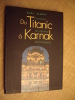
Quelques légères traces de pliures sur bord inférieur de couverture.
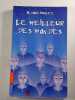
Le meilleur des mondes
Pocket Jeunesse Sans date. Le Meilleur des mondes d'Aldous Huxley se déroule dans une société dystopique future où les humains sont conditionnés dès la naissance par clonage et lavage de cerveau pour maintenir une stabilité parfaite. L'histoire suit Bernard Marx un habitant des castes supérieures qui se sent déconnecté et John le Sauvage un homme élevé dans une réserve traditionnelle qui découvre les horreurs cachées de ce monde soi-disant idéal. Le roman explore les dangers du progrès technologique et du contrôle social au détriment de l'authenticité et de la liberté
Bon état
Devie et catalogue Alfa-Laval
SOCIETE ALFA-LAVAL. Avril 1970. In-4. En feuillets. Bon état, Couv. convenable, Dos satisfaisant, Intérieur acceptable. Environ 20 pages. Quelques schémas et photos en noir et blanc, dans le texte. Texte dactylographié.. . . . Classification Dewey : 663-Technologie des boissons
Classification Dewey : 663-Technologie des boissons

