 Write to the booksellers
-
Type
Book (2966)
Magazine (9)
-
Latest
Last 3 days (1)
Last month (5)
Last week (9)
-
Language
French (2974)
Italian (1)
-
Century
16th (2)
17th (9)
18th (164)
19th (929)
20th (1057)
21st (126)
-
Countries
Belgium (420)
Côte d'Ivoire (4)
Denmark (1260)
France (1080)
Netherlands (1)
Switzerland (210)
-
Syndicate
ILAB (1914)
NVVA (19)
SLACES (19)
SLAM (514)
Les applications de l'aluminium dans les industries chimiques et alimentaires
Eyrolles 1962 in8. 1962. Cartonné.
Bon état cependant couverture défraîchie marquée intérieur propre
Le tissage de la soie artificielle - l'édition textile moderne
L'édition textile 1929 in8. 1929. Cartonné. illustrations en noir et blanc
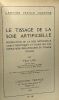
Bon état tranche ternie couverture défraîchie intérieur propre
Open Here The Art of Instructional Design
New York, Stewart, Tabori & Chang Inc , 1999 Softcover, 144 pp, 16x254x254 mm, 835,00 gram, illustrated, in English, in good condition ISBN 1556709625.
Open Here: The Art of Instructional Design displays an entertaining array of the most ingenious, stupid, beautiful, and horrible visual solutions that instruction designers and illustrators have invented to help us handle modern technology and everyday products. These works of art show us how to floss out teeth properly, where to insert the printer cartridge, which button to press to transfer a phone call, how to use chopsticks, how to open a milk carton, and how to exit the plane in case of an emergency landing. Open Here also includes a diverse sampling of images: the finest cut-away drawing of a truck's diesel engine, a revealing expanded view of a model airplane, and detailed full-color photographs of a sewing machine in a 19th-century manual. Open Here also includes an overview of the basic elements of visual instructions: the baffling yet remarkable drawings, cartoons and symbols that tell us where to cut, where to twist, how to repeat, and also how not to do all of the above.
Instruction pour l'emploi des machines Pax à canette centrale, classe 12-13.
Herstal (Belgique), Manufacture Nationale de Machines à Coudre Pax, s.d. 9 x 22, 23 pp., 20 figures, broché, état moyen (annotations sur la dernière page blanche).
charbon de terre en Europe occidentale avant l'usage du coke. Proceedings of the XXth International Congress of History of Science (Liege, 20-26 July 1997) Vol. IV,
Turnhout, Brepols, 1999 Paperback, 224 p., 155 x 240 mm. ISBN 9782503508917.
This volume presents a collection of selected papers worked out for the XXth International Congress of History of Science held in July 1997 in Liege The first part analyzes interrelations between the exact sciences, chemistry and physics on the one hand, and life sciences on the other hand. It is well known that in many fields of biological sciences, mainly in those working with experimental methods, chemical and physical knowledge was integrated but the historic development of that interrelation is not yet known and cannot be explained enough in all details until the present day. By searching for the events in the past, historians of science find out that introducing physical and chemical methods and knowledge into life sciences was not a simple but very complex historical process. The second part was constructed during the centenary of E.B. Wilson's pioneering book The Cell in Development and Inheritance (1896), with an eye on this tradition of biological research. Wilson attempted to integrate cytology, embryology, and the chromosome theory of inheritance into a common cellular framework. It was only in the late 1970s that the synthesis now called cell biology, developmental biology and developmental genetics came into existence. The work carried out in Zurich under E. Hadorn's supervision was brought to light. Concepts and paths of research were defined, for example: homeosis, physiological genetics, 'body plans' allometry, homologies of process, evolution as 'bricolage' and finally a critical essay on different perspectives on development. Languages : English.
Praktische Anleitung zum Flussbaue. Zweite verb. Aufl. 2 Bde.
Münch., 1832. Cont.hcalf. Atlasvol. in cont.hcloth. Back somewhat worn. St.o.t. XVI,VIII,198, XVI,234 pp. and Atlas in folio-oblong with 8 litogr.plates.

En liden dog konsterig Bog Om adskillige slags Farffve oc Bleck : Hvorledis mand skal farffve Træ, Been, Jern, Tin, Glas, Byrster, Klæde, Silcke, Skind oc Ledder, saa om atskillige slags Farffve at berede, at skriffve oc male med ... (Part 2 of ""Oecon... - [FIRST BOOK IN DANISH ON COLORING AND HOW TO MAKE COLOURS]
Kiøbenhaffn (Copenhagen), Peter Hake, 1648. 4to. In later marbled paper-wrappers. Lower outer corner of title-page with repair, slightly touching text. Evenly browned throughout. 64, (4) pp.

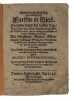
The rare first edition of the first book in Danish to contain recipes for colours and guides on how to dye and colour hide and various materials. The work is a translation of Pedemontano’s ‘Secreti’ (Venice, 1555), one of the most popular in the genre of ‘books of secrets’ combining medical, cosmetic and technological recipes. In Denmark up until the present publication the process and knowledge of making colours and colouring in general had been passed on orally and the individual shops keeps their recipes and techniques a secret hoping to have a competitive advantage. This also explains why the first work on coloring in Danish is a translation of an Italian work and not the work of Dane – no one wanted to spill their secrets! Books on coloring by Danes did notappear until the second part of the 18th century. Pedemontano’s ‘Secreti’ “is one of the earliest printed publications containing art technological recipes. Book five describes how to prepare pigments, dyestuffs and printing inks, black, coloured and metallic writing inks, and explains the colouring of bone, leather and wood. Its recipe for intaglio printing ink is in fact the first ever published.” (Stijnman, A short-title bibliography of the Secreti by Alessio Piemontese). Alessio Pedemontano is presumably a synonym for Ruscelli: “nothing is actually known about Alessio other than his name and what he tells about himself in the introduction to the ‘Secreti’, and occasionally in his wanderings in the main text – if indeed this is reliable information at all. Twelve years after the publication of the original ‘Secreti’, Francesco Sansovino wrote the preface to a different volume of secrets compiled by one Girolamo Ruscelli (1500?–1566?), a contemporary alchemist who is known through other publications. Sansovino stated that Alessio was a pseudonym of Ruscelli.” (Stijnman, A short-title bibliography of the Secreti by Alessio Piemontese). The present publication was printed as part 2 of Holst’s “Oeconomia nova” (1647-1649) but with separate title-page and pagination. Thesaurus 492Bibliotheca Danica II 249.
MAISONS PREFABRIQUEES EN BOIS ET EN DUR
CHARLES MASSIN. 1967. In-4. Relié toilé. Etat d'usage, Couv. convenable, Dos satisfaisant, Intérieur acceptable. 43 pages - nombreuses photos noir et blanc et plan dans le texte - jaquette en bon état général, coins frottés, coiffe en tête usée. . . . Classification Dewey : 674-Technologie du bois et du liège
Classification Dewey : 674-Technologie du bois et du liège

Zénobe Gramme, notice bio-bibliographique suivie de la description de la dynamo par son inventeur et d'autres documents. Collection Nationale, N° 6.
Bruxelles, Office de Publicité, 1941. 13 x 20, 81 pp., broché, bon état.
En frontispice, portrait de Zénobe Gramme.
Machine à Laver les bouteilles à 2 brosses verticales.
CHEZ L'AUTEUR. Non daté. In-4. Broché. Bon état, Couv. convenable, Dos satisfaisant, Intérieur frais. Quelques feuillets et une planche dépliante illustrée en bleu et blanc.. . . . Classification Dewey : 663-Technologie des boissons
Plan N°6806 Classification Dewey : 663-Technologie des boissons
Motopompe électrique N°0 à Boulets - Orifices : 30 m/m. Instruction de fonctionnement n°659
SOCIETE DU FILTRE GASQUET. Non daté. In-4. En feuillets. Etat passable, 1er plat abîmé, Dos satisfaisant, Papier jauni. 2 pages + un plan dépliant en rouge et blanc. Quelques marques de brulures en marges.. . . . Classification Dewey : 663-Technologie des boissons
Classification Dewey : 663-Technologie des boissons
Éléments de mécanique - 4e édition
Vuibert 1953 in8. 1953. Broché.
EDITION 1953 - Bon état général sous papier de soie présence de rousseurs peu marquées (principalement aux abords des plats intérieurs
Notions générales sur les Chemins de Fer. Statistique - Histoire (etc. etc.).. Suivies des Biographies de Cugnot, Sèguin et george Stephenson... et d'un Bibliographie raisonnée.
Paris, Lacroix et Baudry, (1859). Contemp. half calf. Gilt spine with gilt lettering. A paperlabel pasted on upper part of spines. Stamps on title-page. VII,452 pp., 52 textillustrations, 1 plate, 1 table. Scatterede brownspots.
Traité élémentaire des chemins de fer.
2 Bde. Paris, Langlois et Leclercq, 1855-1856. 8°. (4) III (1), 554 (2) S.; (4) II, 582 (2) S. Mit insges. 520 gest. Abb. im Text, 5 gef. lithogr. Karten, 10 Stahlstichtafeln und 4 gef. Tabellen. Spätere Leinenbände mit goldgepr. Rückenschild (Orig.-Umschläge miteingebunden).
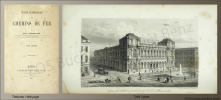
Auguste Perdonnet (1801-1867) war französischer Ingenieur und Eisenbahnpionier. Als Professor an der École centrale des arts et manufactures in Paris bot er schon 1831 eine erste Lehrveranstaltung über das Eisenbahnwesen an. - Die Karten zeigen folgende Eisenbahnnetze: I. England und Irland, II. Belgien und Holland, III. Frankreich, IV. Deutschland und V. Vereinigte Staaten. Die Tafeln zeigen: Aufschüttungsarbeiten beim Graben von Clamart, Viadukt von Val Fleury, Offenburger Eisenbahnbrücke von der Seite, Eingang der Offenburger Eisenbahnbrücke, Gare de l'Est in Paris, Gare du Nord in Paris, sowie die Lokomotiven Sharp-Robert, Stephenson, Crampton und Engerth. - Eingebundene Orig.-Umschläge fleckig. Seiten teilw. gebräunt und am Kopfsteg teilw. mit Wasserrand. Durchgehend stockfleckig. - Rückenschild von Bd. 2 mit beschabter Stelle.
APPAREILLAGE GENERAL . Ameublement - Installation - Décoration pour Salons de coiffure et Instituts de beauté .
Paris , Perma , sd ( v 1930 ) , in4° broché ( avec rivets ) 112pp . Abondantes illustrations photo ou dessin à chaque page .Couverture défraichie , intérieur propre .
Composition typographique et description générale des techniques graphiques
Couverture rigide Eyrolles 1957 Paris 25x16,5 cm
Reliure pleine toile rouge, titre doré au dos - 482 pp. Couverture originale conservée. 480 illustrations. Manuel pratique à l'usage des candidats au certificat d'aptitude professionnelle. Parfait état. Poids: 1 kg. 500.
L'Air comprimé et ses applications : Production - Distribution et conditions d'emploi
Dunod Relié 1876 In-8 (15,8 x 22,5 cm), reliure demi-chagrin, plats de percaline, dos à 5 nerfs orné de caissons dorés, tranches dorées, 598 pages, nombreuses figures en noir dans le texte, 9 planches in fine dont 6 tableaux et 3 croquis ; mouillure au premier plat, bords du quatrième plat insolés, quelques rousseurs à l'intérieur par ailleurs bien conservé, assez bon état général. Livraison a domicile (La Poste) ou en Mondial Relay sur simple demande.
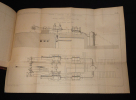
Recueil de plusieurs Machines de Nouvelle Invention. Ouvrage posthume. De M. Perrault, de l'Académie Royale des Sciences, Docteur en Medecine, de la Faculté de Paris.
A Paris, chez Jean-Baptiste Coignard, 1700. In-4 de (12)-44 pp., 11 planches, veau brun, dos orné à nerfs (reliure de l'époque).
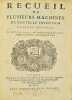
Édition originale posthume, rare. 11 planches dépliantes gravées.« Recueil de plusieurs machines de nouvelles inventions » publié après sa mort par son frère Charles Perrault, en 1700. Dans la préface on peut lire : « Je sais qu'il n'y a pas beaucoup de personnes qui aient du goût pour ces sortes de choses. Le beau monde ne sait pas ce que c'est et n'en veut rien savoir. La plupart des gens de Lettres les ignorent ordinairement en proportion de leur littérature, & j'en ai vu d'une érudition si profonde qu'ils n'auraient pas distingué un marteau d'avec un maillet, ni une scie d'avec une lime, confondant tout cela sous le nom d'outils ou d'instrument dont l'Artisan se sert dans ses ouvrages. Cependant, quelque avantage qu'on ait toujours donné aux connaissances purement spéculatives, sur celles qui descendent à la pratique et à l'exécution (…). Il ne laisse pas de se trouver un grand nombre de personnes très éclairées, qui prennent plaisir à voir des Machines & surtout des Machines d'une invention toute nouvelle, particulièrement lorsqu'elles n'en demeurent pas à donner quelque satisfaction à l'esprit, mais quelles passent pour produire un effet qui peut être de quelque utilité ».Machines qui élèvent des fardeaux sans frottement ; Machines avec laquelle on peut se servir d'un grand tuyau à lunette immobile, par le moyen d'un miroir ; Nouvelle invention d'une horloge à pendule qui va par le moyen de l'eau ; Machine pour empêcher que les gros câbles des ancres ne soient facilement rompus ; Moyen de faire un Pont dune longueur extraordinaire, qui se lève et se baisse avec une grande facilité.Bon exemplaire. Page de titre salie, des rousseurs.
Le vertige histoire et actualité
Louis pariente 1998 205 pages in4. 1998. Relié. 205 pages.
Bon Etat
Comprendre L'Ordinateur . 1972 Par Michel Saint-Paul Et Albert Perriol
les éditions d'organisation ,1972, in-8 de 166 pages ,broché ,Bon état , .Isbn : Q00SZNRREF.(4 photos du livre sur mon site https://www.vieuxlivre.fr) .Les frais de port pour la France sont offerts à partir de 25 euros d'achat (Mondial relay ). (colissimo suivi +6,90 ).
Austin und Morris Mini : Unser Mini ist der Gr te!
, Delius Klasing Vlg Gmbh 2015, 2015 Hardcover, 112 seiten, Deutsch, 247 x 217 mm, in sehr guten zustand, mit foto's in farbe und s/w. ISBN 9783667101235.

