 Write to the booksellers
-
Type
Book (465)
Magazine (17)
-
Latest
Last 24h (1)
Last month (1)
-
Language
English (2)
French (479)
Russian (1)
-
Century
19th (1)
20th (307)
21st (21)
-
Countries
Belgium (12)
Brazil (1)
Canada (3)
Côte d'Ivoire (2)
Denmark (117)
France (311)
Germany (1)
Switzerland (34)
United States of America (1)
-
Syndicate
ALAC (3)
ILAB (228)
NVVA (14)
SLACES (14)
SLAM (91)
SNCAO (1)
Entwurf einer Landschaft. Illustré de lithographies par C.-L. Roux.
Paris, Éditions de la Galerie Simon, 1930. Grand in-4 broché, couverture imprimée. Chemise en demi-box noir, étui (Honegger).
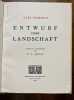
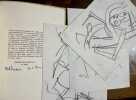
Illustré de 5 lithographies de Gaston-Louis Roux, dont une en frontispice. Édition originale. Tirage à 112 exemplaires, un des X exemplaires de chapelle sur Hollande van Gelder, signé par l’auteur et l’illustrateur. Enrichi d’un envoi autographe de l’auteur à Erna Reber, la dédicataire du livre, ainsi que des cinq dessins originaux ayant servis aux illustrations de ce livre, tous signés. Amis de la première heure, Carl Einstein rencontre Kahnweiler dès son arrivée à Paris vers 1904. Amateur de peinture cubiste, il écrit également des romans et de la poésie, que Kahnweiler apprécie particulièrement. Intellectuel engagé, Einstein devient un fin critique et un grand théoricien de l'art primitif. En 1915 son livre Negerplastik fait date, tout comme la somme sur l’art de son temps, Die Kunst des 20e Jahrhunderts. Pour rédiger ses travaux, il entre en contact avec de nombreux artistes et collectionneurs à travers l’Europe. C’est ainsi qu’il rencontre Gottlieb Friedrich Reber, immense collectionneur des peintres cubistes de la première heure. D’origine allemande, Reber s’installe en Suisse après la Première Guerre mondiale. Dans son histoire de l’art, Einstein illustrera le chapitre sur le cubisme avec les œuvres de la collection Reber. Et ils collaboreront tous les deux à la revue surréaliste Documents. C’est dire si la présence d’un envoi autographe d’Einstein à Erna Reber, est précieuse: l’ouvrage lui étant déjà dédié, il lui est personnellement dédicacé ! Entwurf einer Landschaft (Esquisse d’un paysage) est le premier livre publié par Einstein en France. Recueil de poèmes au ton hermétique, il ne connait pas un grand succès, et pour cause, ni l’éditeur ni son auteur n’ont cru utile d’en donner une traduction en français. Gaston-Louis Roux a intégré la Galerie Simon en 1927, à l'âge de vingt-trois ans, mais n’avait pas encore réalisé d’illustrations pour Kahnweiler. Il avait déjà une expérience en ce domaine, puisqu’il avait travaillé pour Pascal Pia, spécialisé dans la littérature érotique clandestine. Ainsi Roux et Einstein se connaissent, ils collaborent à la revue Documents, et Einstein lui consacre même une partie d’un chapitre dans son histoire de l’art. Toutefois, l’illustration qui naîtra de cette collaboration est des plus déroutantes. Entwurf - esquisse - ainsi semblent les dessins réalisés par Roux. On peut aisément penser que ce rare exemplaire de chapelle, enrichi des dessins originaux, a été offert par le poète et le peintre à l’épouse du collectionneur lorsque le couple visitait la Galerie Simon. Et il est amusant de noter que sur la page de titre se trouvent non pas deux, mais trois coquilles ! Skira 320; Hugues 26; Pompidou p. 187; Chapon p. 285; Galland p. 952.
Einstein.
Paris, Hachette (coll. "Génies et Réalités"), 1966. Gr. in-8°, 248p. Reliure skyvertex d'éditeur sous rhodoïd imprimé.
Abondante iconographie. A l'état de neuf.
Une nouvelle figure du monde. Les théories dEinstein. Avec une préface de M. Einstein.
P., Payot, 1921, in 12 broché, 242 pages. ; rousseurs ; couvetrure fanée avec manques.
...................... Photos sur demande ..........................


Phone number : 04 77 32 63 69
Einstein, sa vie et son temps. [Unknown Binding]
Edition Albin Michel, collection ",Les savants et le monde",, couverture cornée et légèrement abîmée au niveau de la tranche.
Merci de nous contacter à l'avance si vous souhaitez consulter une référence dans notre boutique à Authon-du-Perche.
Einstein. Sa vie et son temps. Traduit de l'anglais par André George.
P., Albin Michel (Collection "Les Savants et le Monde"), 1950, in 8° broché, 435 pages ; couverture illustrée (un peu fanée).
PHOTOS SUR DEMANDE. ...................... Photos sur demande ..........................
Phone number : 04 77 32 63 69
POURQUOI LA GUERRE
Institut international de coopération intellectuelle.1933.In-8 carré.63 p.Ex.2596 sur Chataignier.BE.Couv.et tranches avec qques petits défauts.
Tout sur les petits et grands troubles de la mémoire - comment retrouver ses souvenirs, se rappeler des choses difficiles, ne pas se laisser distraire, enforcer sa mémoire, détecter la maladie d'Alzheimer (Essais Payot)
Payot. 2009. In-8. Broché. Etat d'usage, Couv. convenable, Dos satisfaisant, Intérieur frais. 332 pages. Exemplaire de bibliothèque avec étiquette au dos et tampon sur la page de titre.. . . . Classification Dewey : 610-Sciences médicales. Médecine
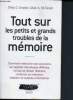
Traduit de l'américain par Françoise Bouillot. Classification Dewey : 610-Sciences médicales. Médecine
Albert Einstein, créateur et rebelle. En collaboration avec Helen Dukas.
P., Le Seuil, 1975, in 8° broché, 301 pages ; nombreuses illustrations.
PHOTOS SUR DEMANDE. ...................... Photos sur demande ..........................
Phone number : 04 77 32 63 69
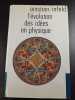
L'Évolution des idées en physique: Des premiers concepts aux théories de la relativité et des quanta [Paperback] ALBERT EINSTEIN / LEOPOLD INFELD
Bel édition de 1990, chez France Loisir, livre et jaquette en parfait état.
Merci de nous contacter à l'avance si vous souhaitez consulter une référence dans notre boutique à Authon-du-Perche.
Tiré à part : Orn. Jh. Bad.-Württ n°11 : Abnorm singende Gartengrasmücke (Sylvia borin) über zwei Brutperioden am Federsee.
Orn. Jh. Bad.-Württ. 1995. In-8. Broché. Bon état, Livré sans Couverture, Dos satisfaisant, Intérieur frais. 2 pages. Annotation à l'encre sur la première page. Texte en allemand.. . . . Classification Dewey : 430-Langues germaniques. Allemand
Classification Dewey : 430-Langues germaniques. Allemand
LOOKING AT ITALIAN PICTURES IN THE NATIONAL GALLERY OF ART
National Gallery of Art, Washington, D.C.. 1951. In-16. Broché. Bon état, Couv. légèrement passée, Dos satisfaisant, Intérieur frais. 116 pages. Illustré de nombreuses photos en noir et blanc hors texte. Dos muet.. . . . Classification Dewey : 420-Langue anglaise. Anglo-saxon
Foreword by John WALKER. Classification Dewey : 420-Langue anglaise. Anglo-saxon
La théorie Einsteinienne de la gravitation. Essai de vulgarisation de la théorie.
P., Hermann, 1922, in 12 broché, XI-119 pages ; traces de scotch sur les gardes.
PHOTOS SUR DEMANDE. ...................... Photos sur demande ..........................
Phone number : 04 77 32 63 69
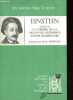
Einstein - Extraits de La théorie de la relativité restreinte exposé élémentaire - Collection Grands classiques des sciences et des techniques - Un savant dans le texte n°4.
Gauthier-Villars. 1964. In-8. Broché. Etat d'usage, Coins frottés, Coiffe en tête abîmée, Papier jauni. 64 pages, couverture contrepliée, quelques illustrations et photos en noir et blanc dans et hors texte - annotation à l'encre en page de titre.. . . . Classification Dewey : 530-Physique
Collection Grands classiques des sciences et des techniques - Un savant dans le texte n°4. Classification Dewey : 530-Physique
Pour comprendre Einstein... Avec figures dans le texte.
Paris, Doin, 1922, in 12 broché, 244 pages ; couverture légèrement fanée
...................... Photos sur demande ..........................
Phone number : 04 77 32 63 69
Einstein et l'univers. Une lueur dans le mystère des choses.
P., Hachette, 1921, petit in 8° broché, 221 pages.
PHOTOS sur DEMANDE ...................... Photos sur demande ..........................
Phone number : 04 77 32 63 69
Albert Einstein. One hundred authors for Einstein.
Wiley-VCH, 2005, in-4to, 472 p., richement ill., cartonnage original.
(SLACES, NVVA)
Phone number : 41 (0)26 3223808
EINSTEIN - Traduction par Caroline André - Présentation par Helen Dukas et Banesh Hoffmann
Reference : 121511
(1980)
Correspondance
1980 Editions InterEditions - 1980 - In-8, broché - 197 p. - Ouvrage bilingue (français-allemand)
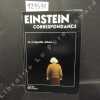

Bon état - Menus frottements sur la couverture - Pli de lecture au dos - 4ème de couverture légèrement insolée
Autoportrait
1980 Editions InterEditions - 1980 - In-8, broché - 130 p. - Ouvrage bilingue (français-allemand)
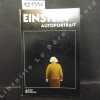
Bon état - Menus frottements sur la couverture
Albert Einstein.
Paris, Club des Libraires de France (coll. "Biographie"), 1958. In-8°, 323p. Reliure pleine toile imprimée d'éditeur.
Edition numérotée. Suivi d'une postface inédite de l'auteur et d'aperçus sur la théorie de la relativité (illustré de quelques croquis). Avec un cahier photographiques h-texte.
Le drame d'Albert Einstein.
1954 P., Plon, 1954, in 12 broché, 254 pages ; 7 gravures hors-texte et un fac similé dans le texte.
...................... Photos sur demande ..........................
Phone number : 04 77 32 63 69
Einstein et le conflit des générations
Editions Complexe 1974 Préface de Serge Moscovici. Edition de 1974. In-8 broché 23 cm sur 15. 381 pages. État moyen, salissure sur la tranche supérieure ainsi que sur la couverture.
Etat correct d’occasion
FAUSSE SCIENCE ET FAUX SAVOIR (LES FAUSSES THÉORIES).
Angoulême. Bachelier-Billaud, éditeur. 1974. Plaquette in-8° agrafée. 43 pages. E.O. Bon état.
Réfutation d'Einstein. " Voyez-vous, chers amis, ce qu'Einstein a fait de plus fort, ce n'est pas d'avoir élaboré des théories dont l'inconséquence dépasse l'imagination, non, ce qu'il a fait de plus fort, c'est d'avoir fait avaler ça tout chaud à des gens normalement constitués "
EINSTEIN, sa vie et son temps -- EDITION ORIGINALE
P., A.Michel, 1950, un volume in 8, broché, couverture imprimée, 435pp.
---- EDTION ORIGINALE ---- Jeunesse et formation - Conception du monde physique avant Einstein - Naissance d'une ère nouvelle en physique (vie à Berne, influences philosophiques, les hypothèses fondamentales de la théorie de la relativité, relativité du temps...) - Einstein à Prague, à Berlin - La relativité généralisée - Einstein, figure publique - Voyages à travers l'Europe, l'Amérique et l'Asie - Développement de la physique atomique - Agitation politique en Allemagne - Utilisation politique des théories d'Einstein - Einstein au Etats-Unis**5925/CAV.E6
Einstein, Sa vie et Son Temps
Paris Albin Michel 1950 Petit In-8 435 pp, traduit de l'anglais par André George, VIII reproductions photographiques en noir hors-texte.
Bon État Général Broché à raba

