 Write to the booksellers
-
Type
Book (440)
Magazine (17)
-
Language
English (2)
French (454)
Russian (1)
-
Century
19th (1)
20th (305)
21st (21)
-
Countries
Belgium (12)
Brazil (1)
Canada (3)
Côte d'Ivoire (2)
Denmark (117)
France (287)
Germany (1)
Switzerland (33)
United States of America (1)
-
Syndicate
ALAC (3)
ILAB (216)
NVVA (14)
SLACES (14)
SLAM (80)
SNCAO (1)
Einheitliche Theorie von Gravitation und Elektricität.
Berlin, Gruyter & Co., 1931. 4to. Orig. printed orange wrapper. Offprint/Sonderausgabe aus Sitzungsberichten..pp. (1)-19. Fine fresh copy.
First edition in the rare Offprint with separate printed title and separate pagination. Se Weil No. 182 where this is not mentioned. Weil No. 182 with an asterix, denoting a major work.The early Offprints from ""Sitzungsberichten..."" are called ""Sonderabdruck"" up to Weil No.165 (including this). From Weil 166 they are called ""Sonderausgabe..."". - Before 161 (up to 160) the Offprints do not have separate title and pagination (the pagination follows the numbering in the periodical). From 166 the Offprint has both separate printed title and pagination. - ( So Weil Nos 161-165 is still ""Abdruck"", but with separate title and pagination). These facts are not mentioned in the bibliographies.
Einheitliche Theorie von Gravitation und Elektricität. (Erste-) Zweite Abhandlung.
Berlin, Akademie der Wissenschaften, 1931-32. 4to. Both papers with orig. printed orange wrappers. Offprints (Sonderausgabe) ""Sitzungsberichten der Preussischen Akademie der Wissenschaften"". 19"10 pp. Fine and clean.
First edition. - Weil: 182 and 185. With asteerix, denoting major paper.
Systematische Untersuchung über kompatible Feldgleichungen, welche in einem Riemannschen Raume mit Fernparallelismus gesetz werden können.
Berlin, Gruyter & Co., 1931. 4to. Orig. printed orange wrappers. Offprint/Sonderausgabe aus Sitzungsberichten....pp. (1)-11. Fine fresh copy.
First edition of the rare Offprint with separate title and separate pagination. Se Weil No. 180, where this is not mentioned. - Mayer came to America in 1933, and about him as his collaborator, Einstein said ""It is he who produced all my calculations, his skill is fantastic, You know.""The early Offprints from ""Sitzungsberichten..."" are called ""Sonderabdruck"" up to Weil No.165 (including this). From Weil 166 they are called ""Sonderausgabe..."". - Before 161 (up to 160) the Offprints do not have separate title and pagination (the pagination follows the numbering in the periodical). From 166 the Offprint has both separate printed title and pagination. - ( So Weil Nos 161-165 is still ""Abdruck"", but with separate title and pagination). These facts are not mentioned in the bibliographies.
Systematische Untersuchung über kompatible Feldgleicheungen, welche in einem Riemannschen Raume mit Fernparallelismus gesetz werden können.
Berlin, Akademie der Wissenschaften, 1931. 4to. Orig. printed green wrappers in Sitzungsberichte 1931 Heft XIII-XV pp. 257-65. Small nicks to frontwrapper.
First edition in the periodical form. - Weil: 180.
Zwei strenge statische Lösungen der Feldgleichungen der einheitlichen Feldtheorie.
Berlin, Akademie der Wissenschaften, 1930. 4to. Orig. printed green wrapper. No VI, 1930 of Sitzungsberichte der Preussische Akademie der Wissenschaften. Wrappers with very small nicks atspine. Small part of one corner gone. pp. 110-120. A small stamp at foot of frontwrapper.
First edition in the periodical form. - Weil No. 170
Zwei strenge statische Lösungen der feldgleichungen der einheitlichen Feldtheorie.
Berlin, Gruyter & Co., 1930. 4to. Orig. printed orange wrappers. Offprint/Sonderausgabe aus Sitzungsberichten...pp. (1)-13. Fine fresh copy.
First edition in the rare Offprint with its separate printed title and separate pagination. Se Weil No. 170, not mentioning this.The early Offprints from ""Sitzungsberichten..."" are called ""Sonderabdruck"" up to Weil No.165 (including this). From Weil 166 they are called ""Sonderausgabe..."". - Before 161 (up to 160) the Offprints do not have separate title and pagination (the pagination follows the numbering in the periodical). From 166 the Offprint has both separate printed title and pagination. - ( So Weil Nos 161-165 is still ""Abdruck"", but with separate title and pagination). These facts are not mentioned in the bibliographies.
Alfred Einstein. Mozart : L'homme et l'oeuvre eMozart, sein Charakter, sein Werke. Texte français de Jacques Delalande [Unknown Binding] Einstein, Alfred and Delalande, Jacques
Broché bon état.Pages non coupées.Contenu propre . Couverture érodée avec plis . 594 pages . 1954. Alfred Einstein. Mozart : L'homme et l'oeuvre Mozart, sein Charakter, sein Werke. Texte français de Jacques Delalande. PHOTOS SUR DEMANDE
Merci de nous contacter à l'avance si vous souhaitez consulter une référence dans notre boutique à Authon-du-Perche.
La musique romantique
Gallimard (12/1989)
LIVRE A L’ETAT DE NEUF. EXPEDIE SOUS 3 JOURS OUVRES. NUMERO DE SUIVI COMMUNIQUE AVANT ENVOI, EMBALLAGE RENFORCE. EAN:9782070701087
La musique romantique. Collection Pour la musique.
Paris, Gallimard 1959, 195x135mm, 478pages, broché. Bel exemplaire.
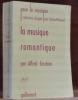
photos n/b, Pour un paiement via PayPal, veuillez nous en faire la demande et nous vous enverrons une facture PayPal
Mozart - L'homme et l'oeuvre.
[s.l, Paris], Desclée de Brouwer, [cop. 1954] 1 volume In-8° (14,5 x 21,7cm) Broché sous couverture au 1er plat illustré. 594p., 1 feuillet; musique. Couverture un peu frottée; traces d'un ancien adhésif de couvrure sur les gardes; rares petites marques marginales à l'encre.
Texte français de Jacques DELALANDE de "Mozart, sein Charakter, sein Werk", importante étude du musicologue états-unien (d'origine allemande) Alfred EINSTEIN (1880-1952) sur l'oeuvre de Wolfgang Amadeus Mozart (1756-1791); catalogue des oeuvres du compositeur en appendice; index des noms; portrait au 1er plat.
Mozart - L'homme Et L'oeuvre
Gallimard Broché bon état .Contenu propre .Couverture jaunie . 1992.628 pages .PHOTOS SUR DEMANDE
Merci de nous contacter à l'avance si vous souhaitez consulter une référence dans notre boutique à Authon-du-Perche.
Mozart : l'homme et l'oeuvre
Desclée de Brouwer Broché 1954 In-8 (14,5 x 21,7 cm), broché, 594 pages ; pliures au dos, chocs sur le premier plats et les premières pages, état moyen. Livraison a domicile (La Poste) ou en Mondial Relay sur simple demande.

Schubert : portrait d'un musicien.
Gallimard, 1979, in-8°, 452 pp, catalogue des lieder, index des noms et des oeuvres, broché, couv. illustrée, pelliculage décollé sur les bords au 2e plat, bon état
Le musicologue Alfred Einstein (Munich, 1880 - Californie, 1952) s'est signalé par sa magistrale étude des “Madrigaux italiens”, par son “Mozart”, par sa révision du Catalogue Köchel, par celle du “Dictionnaire de musique” de Riemann, par ses articles de la “Berliner Tageblatt”. Fuyant le régime hitlérien, il gagne Londres en 1933 et les Etats-Unis en 1939. D'année en année, sans trop insister sur la biographie, Alfred Einstein s'attache aux oeuvres révélatrices de la vie intérieure. Son Schubert est un esprit indépendant, même vis-à-vis de Beethoven. C'est un être d'intimité, "seul au piano", qui ne cherche ni les jeux d'esprit ni les applaudissements. C'est un romantique, par sa joie sensuelle sur fond de tristesse, son rapport tout immédiat à la sonorité, sa palette de peintre du sentiment ; il lui arrive d'anticiper en toute précocité les trouvailles wagnériennes et modernes ; mais c'est un "classique du romantisme", chez qui le souci de poésie n'affaiblit jamais la musique. N'étant "pas de ce monde", il crée pour s'en accommoder, mais la mort lui est une douce amie. Sans dissertations, ce livre fait naître maintes idées, souvent reprises dans les études schubertiennes depuis un quart de siècle. Bref, c'est un ouvrage classique. Désormais les frais d'envoi sont de 6 € seulement pour les livres jusqu'à 1 kg (colissimo suivi), pour la France métropolitaine.
Schubert, portrait d’un musicien. Traduit par Jacques Delalande. Collection Leurs Figures.
Paris, Gallimard 1958, 207x114mm, 449pages, broché. Bon état.
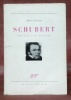
Pour un paiement via PayPal, veuillez nous en faire la demande et nous vous enverrons une facture PayPal
Alfred Einstein. Schubert : Portrait d'un musicien. Traduction de Jacques Delalande... 3e dition
Gallimard Mayenne impr. Floch Broch D'occasion bon tat 01/01/1958 453 pages
Alfred Einstein. Schubert : Portrait d'un musicien. Traduction de Jacques Delalande... 3e dition
Gallimard Mayenne impr. Floch Broch D'occasion bon tat 01/01/1958 453 pages
"EINSTEIN, A., L. INFELD, and B. HOFFMANN. - THE ROUND OFF OF GENERAL RELATIVITY - ASSOCIATION COPY.
Reference : 46475
(1938)
The gravitational Equations and the Problem of Motion. (Part I). (Received June 16, 1937). (+) II. (Received May 29, 1939). 2 Papers (Paper II only Einstein and Infeld).
(Princeton, NJ.), Annals of Mathematics, 1938 a. 1940. Both papers in orig. printed wrappers. Offprints from ""Annals of Mathematics"", Vol. 39, No. 1, january, 1938 and Vol. 41, No. 2, April, 1940. Pp. 65-100 and pp. 455-464. Both clean and fine. This copy has belonged to Abraham Pais (1918-2000) - the famous Einstein scholar, theoretical physicist and Einsteins collegue at Princeton - and having his name on top of both frontwrappers ""A Pais"".
First editions, in the scarce offprint versions, of Einstein's last and highly important contributions to General relativity, and in which is shown that the equation of motion follows directly from the field equation that defined the geometry.""Einstein's last importent contribution to general relativity deals again with the problem of motion. It is the work done with Leopold Infeld and Banash Hoffmann on the N-body problem of motion. In these papers, the gravitational field is no longer treated as external. Instead, it and the motion of its (singular) sources are treated simultaneously. Anew approximationscheme is introduced in which the fields are no longer necessarily weak but in which the source velocities are small compared with the light velocity .... The equations obtained have found use in situations where Newtonian interaction must be included. '(These equations) are widely used in analyses of planetary orbits in the solarsystem. For example, the Cal Tech Jet Propulsion Laboratory uses them, in modified form, to calculate ephmerides for high-precision tracking of planets and spacecraft.""(Pais ""Subtle is the Lord"", p. 290-91).""The problem of the equation of motion of bodies is the following. The 1916 theory had a classical structure in the sense that there were both field equations (the curvature of space-time is determined by the mass and motion of bodies in space-time) and equations of motion of bodies (the world line of small mass is a geodesic). Are these two statements really separate? If the field equations were linear, they indeed would be. They are not linear, however, and Einstein showed (in the papers offered) that if matter is represented by a point singularity of the metric field, these singularities are located on world lines that are geodesics of space-time, provided its metric satisfies the equation of general relativity.""(DSB).Weil: 202 a. 295 (both with an asterix denoting a major paper). - Boni: 236 a. 236.1.
"EINSTEIN, A., L. INFELD & B. HOFFMANN. - EINSTEIN'S LAST CONTRIBUTION TO GENERAL RELATIVITY - THE ROUND OFF OF GENERAL RELATIVITY.
Reference : 46954
(1938)
The gravitational Equations and the problem of Motion. (I-) II. (Part II only with Infeld).
Baltimore, Princeton University Press, 1938 a.1940. Royal8vo. Bound in 2 full cloth, gilt lettering to spines. In: Annals of Mathematics"", Series 2, Vol. 39 and vol. 40. (Entire volumes offered). The papers: pp. 65-100 a. pp. 455-464. Clean and fine.også on a generalization...... pais p. 496
First appearance of these two importent papers on the General theory of Relativity, in which is shown that the equation of motion follows directly from the field equation that defined the geometry.""Einstein's last importent contribution to general relativity deals again with the problem of motion. It is the work done with Leopold Indfeld and Banesh Hoffmann on the N-body problem of motion. In these papers, the gravitational field is no longer treated as external. Instead, it and the motion of its (singular) sources are treated simultaneously. A new approximation scheme is introduced in which the fields are no longer necessarily weak but in which the source velocities are small compared with the light velocity... (These equations) are widely used in analyses of planetary orbits in the solar system.""(Pais ""Subtle is the Lord"", pp. 290-91).Weil: 202 a. 205, both with an asterix, denoting a major paper. - Boni: 236 a. 236.1.
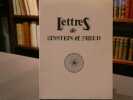
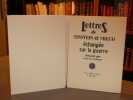
LETTRES de EINSTEIN et FREUD échangée sur la guerre. Présenté par Denis DE ROUGEMONT.
Pierre Aelberts, Editeur Liège 1972 In-8 carré ( 265 X 195 mm ) de 22 pages, en feuilles sous couverture imprimée. EDITION ORIGINALE privée et tirée à 30 exemplaires numérotés sur Hollande Van Gelder et justifiés à la main par l'éditeur ( second papier après 10 + 1 Japon ). Très bel exemplaire.
"EINSTEIN, A. & N. ROSEN. - THE SILBERSTEIN-EINSTEIN CONTROVERSY.
Reference : 47073
(1936)
Two-Body Problem in General Relativity Theory.
Lancaster, American Physical Society, 1936. 4to. In: ""The Physical Review"", Vol. 49, Second Series. X,971 pp. (Entire volume offered). Einstein & Rosen's paper: pp. 404-405.
First printing of Einstein and Rosen's answer to Silberstein's critique of Einstein's Theory of Relativity ..""Ludwik Silberstein, who initially was a supporter of the special theory, objected at different occasions against general relativity. In 1920 he argued that the deflection of light by the sun, as observed by Arthur Eddington et al. (1919), is not necessarily a confirmation of general relativity, but may also be explained by the Stokes-Planck theory of complete aether drag. However, such models are in contradiction with the aberration of light and other experiments (see ""Alternative theories""). And in 1935, Silberstein claimed to have found a contradiction in the Two-body problem in general relativity. However, also this claim was refuted by Einstein and Rosen (1935) (in the paper offered).""(Wikipedia).
Einstein, A. - ROSENKRANZ, Ze’ev (éd. augmentée par Barbara Wolff):
Reference : 108220aaf
Derrière l’image Albert Einstein. (The Albert Einstein Archives - The Jewish National and University Library - The Hebrew University of Jerusalem).
Musée historique de Berne - Éditions Neue Zürcher Zeitung, 2006, in-4to, 259 p. richement illustré, + 1 feuille non reliée ‘La montre Longines d’Albert Einstein’, cartonnage original ill.

(SLACES, NVVA)
Phone number : 41 (0)26 3223808
Zur Theorie der Radiometerkräfte (+) (Addendum to Bose's paper:) [Einstein] (+) Über die Entwicklung des Drehkristallverfahrens. Bemerkung zu der Arbeit von Polanyi, Schiebold und Wissenberg.
Berlin, Springer, 1924. 8vo. Bound in contemporary half cloth. In ""Zeitschrift für Physik"", Bd. 27. Entire volume offered. Stamp to front free end paper. Fine and clean. [Einstein:] Pp. 1-6" P. 392. [Bose:] P. 392. [Entire volume: IV, 395, (1) pp].
First appearance of Einstein's paper on statistical mechanics and the physics of radiometers. Weil 139, 143a
Demonstration of the Non-Existence of Gravitational Fields with a non-vanishing total Mass free of Singularities.
Tucuman, Argentina, 1941. Royal8vo. Orig. printed wrappers. Offprint from ""Revista. Universidad Nacional de Tucuman"", Series A Matematicas y Fisica Teorica, Vol. 2, Diciembre de 1941, Nos 1 y 2. Pp. 11-15. Fine and clean.
First edition of a scarce paper in the offprint version. The paper ""represents the basis of the one written by the same author in collaboration with Wolfgang Pauli in 1943, in which, by following analogous lines, the proof of the non-existence of regular particle-type solutions was generalized to the case of cilyndrical geometries in Kaluza-Klein theory (Einstein & Pauli, 1943). Besides, other generalizations were subsequently presented. The (non)-existence of such solutions in classical unified field theory was undoubtedly an important criterion leading Einstein's investigations.""Galvagno and Giribet).""In his search for a unified field theory that could undercut quantum mechanics, Einstein considered five-dimensional classical Kaluza-Klein theory. He studied this theory most intensively during the years 1938-1943. One of his primary objectives was finding a non-singular particle solution. In the full theory this search got frustrated, and in the x5-independent theory Einstein, together with Pauli, argued it would be impossible to find these structures."" (Jeroen van Dongen).Weil: 208. - Boni: 243.
Demonstration of the Non-Existence of Gravitational Fields with a non-vanishing total Mass free of Singularities.
Tucuman, Argentina, 1941. Royal8vo. Orig. printed wrappers. Offprint from ""Revista. Universidad Nacional de Tucuman"", Series A Matematicas y Fisica Teorica, Vol. 2, Diciembre de 1941, Nos 1 y 2. Pp. 11-15. Fine and clean. This copy has belonged to Abraham Pais (1918-2000) - the famous Einstein scholar, theoretical physicist and Einsteins collegue at Princeton - and having his name on top of the frontwrapper ""A Pais""
First edition of a scarce paper in the offprint version. The paper ""represents the basis of the one written by the same author in collaboration with Wolfgang Pauli in 1943, in which, by following analogous lines, the proof of the non-existence of regular particle-type solutions was generalized to the case of cilyndrical geometries in Kaluza-Klein theory (Einstein & Pauli, 1943). Besides, other generalizations were subsequently presented. The (non)-existence of such solutions in classical unified field theory was undoubtedly an important criterion leading Einstein's investigations.""(Galvagno and Giribet).""In his search for a unified field theory that could undercut quantum mechanics, Einstein considered five-dimensional classical Kaluza-Klein theory. He studied this theory most intensively during the years 1938-1943. One of his primary objectives was finding a non-singular particle solution. In the full theory this search got frustrated, and in the x5-independent theory Einstein, together with Pauli, argued it would be impossible to find these structures."" (Jeroen van Dongen).Weil: 208. - Boni: 243.

