 Write to the booksellers
-
Type
Art print (2)
Book (5878)
Magazine (20)
Manuscript (1)
Old papers (1)
Photographs (3)
-
Latest
Last month (14)
Last week (14)
-
Language
English (10)
French (5890)
German (1)
Greek (1)
Italian (1)
Latin (2)
-
Century
16th (2)
17th (9)
18th (246)
19th (886)
20th (2961)
21st (132)
-
Countries
Belgium (277)
Canada (3)
Côte d'Ivoire (13)
Denmark (1368)
France (3943)
Switzerland (301)
-
Syndicate
ALAC (3)
CLAM (3)
ILAB (4118)
NVVA (139)
SLACES (139)
SLAM (2588)
SNCAO (15)
The Theory of Relativity.
Oxford, 1952. Royal8vo. Orig. blue cloth. XII,386 pp. Back inner hinge becoming loose.
First edition.
The Theory of Relativity.
Oxford, Clarendon Press, 1952. Royal8vo. With orig. printed wrappers in orig. full cloth. Wrapper with some tears.
First edition.
Electromagnetic Properties of Nuclear Systems on Meson Theory.
Copenhagen, 1943. Orig. printed wrappers. 66 pp.
First edition. (Det Kgl. Danske Videnskabernes Selskab, Matemaisk-Fysiske Meddelelser).
Zur Theorie des Durchgangs schneller Elektronen durch Materie.
Kopenhagen, 1932. Orig. printed wrappers. Møller's Doctorial-dissertation, supervised by Niels Bohr, with dedication ""Venlig hilsen/ C.M."" as ""Sonderdruck aus Annalen der Physik"". XXV,(53) pp.
On the Problem of Convergence in Non-Local Field Theories.
København, Ejnar Munksgaard, 1955. 8vo. In the original printed wrappers. Offprint from ""Det Kongelige Danske Videnskabgernes Selskab"", Bind 29, nr 6. Very fine and clean. 19 pp.
Offprint of Møller's paper on on the problem of convergence in non-local field theories.
Pyrenocarpeae feeanae in Féei essai (1824) et supplément (1837) editae e novo studio speciminum originalium expositae et in novam disopsitionem ordinatae. Extrait de ‘Mémoires de la société de physique et d'histoire naturelle de Genève’, tome XXX, 3.
Genève, Charles Schuchardt, 1888, in-4to, 45 p., sans brochure.

(SLACES, NVVA)
Phone number : 41 (0)26 3223808
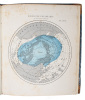
Atlas zum Lehrbuch der kosmischen Physik. Enthaltemnd 27 zum Theil colorirte Tafeln in Stahlstich.
Braunschweig, Vieweg und Sohn, 1856. Small 4to. Contemp. hcalf. repair to top of spine. Corners bumped. Stamps on title-page. 27 plates, some folding, some in chromolithography.
Grundriss der Physik und Meteorologie.
Für Lyceen,Gymnasien,Gewerbe=und Realschulen, sowie zum Selbstunterrichte. 12. verm.u.verb.Aufl. Braunschw., 1875. Cont.hcalf. XIX,654 pp.,598 wood-engr.illustr. (machinery a.apparatus) and 1 colourplate.
Grundriss der Physik und Meteorologie. Für Lyceen, Gymnasien, Gewerbe=und Realschulen, so wie zum Selbstunterricht. Zweite vermehrte und verbesserte Auflage. Mit gegen 600 in den text eingedruckten Holzschnitten.
Braunschweig, Vieweg und Sohn, 1850. Bound in a nice contemp. hcalf, richly gilt spine. (6),524 pp., 557 fine wood-cuts in the text. First and last few leaves with a few brownspots, otherwise fine and clean.
Lehrbuch der Physik und Meteorologie. Als dritte umgearbeitete und vermehrte Auflage der Bearbeitung von Pouillet's Lehrbuch der Physik. Erster Band (von 2).
Braunschweig, Vieweg und Sohn, 1847. Contemp. hcalf. Raised bands. X,(2),640 pp. and 722 textillustrations in woodcut. Some scattered brownspots.
Lehrbuch der Physik. Mit einem Anhange: Die Grundlagen der Chemie und der mathematischen Geographie. 7. Aufl.
Freiburg im Breisgau, 1882. Cont. hcalf. Back a little rubbed. XV,442 pp., 1 spectralplate and 319 textillustr.
Artillerie atomique. 2e édition, revue et augmentée, avec un supplément sur les expériences de Bikini, 147 figures, dont 14 hors texte.
Paris - Liège, Librairie Polytechnique Ch. Béranger 1947, 230x145mm, VIII - 201pages, broché. Bel exemplaire.
Pour un paiement via PayPal, veuillez nous en faire la demande et nous vous enverrons une facture PayPal
Analyse des matières des matières cristallisées, au moyen des rayons X. Collection : Actualités scientifiques et industrielles, N°332.
Paris, Hermann, 1936. 16 x 26, 45 pp., 16 figures broché, bon état.
Recueil d'observations électro-dynamiques, contenant divers mémoires, notices, extraits de lettres ou d'ouvrages périodiques sur les sciences, relatifs à l'action mutuelle de deux courants électriques, à celle qui existe entre un courant électrique et un aimant ou le globe terrestre, et à celle de deux aimants l'un sur l'autre.
Paris, Crochard, 1822. In-8 de (4)-383 pp. (erreurs de pagination sans manque), table, errata, 10 planches repliées signées Adam d'après Girard, basane racinée, dos lisse orné de filets dorés (reliure de l'époque).
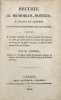
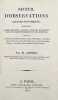
Éditions originales des différents mémoires réunis dans l'un des états les plus complets du recueil. Le volume constitue l'un des documents fondamentaux de la naissance de l'électrodynamique moderne. Il s'ouvre sur le Premier Mémoire. De l'Action exercée sur un courant électrique, par un autre courant, le globe terrestre ou un aimant, dans lequel Ampère développe les conséquences de la découverte d'Ørsted de 1820 et établit expérimentalement les lois de l'action mutuelle des courants électriques. En quelques semaines, il passe ainsi de la constatation du phénomène magnétique provoqué par un courant à une théorie générale des interactions entre courants.Le recueil rassemble, outre les travaux d'Ampère, des textes de Berzelius, Davy, Faraday, de la Rive et Savary, ainsi que les réponses et commentaires suscités par les expériences nouvelles. Il contient notamment le mémoire de Faraday sur les mouvements électromagnétiques et la théorie du magnétisme, suivi des notes d'Ampère et de Savary, ainsi que plusieurs mémoires dans lesquels Ampère précise, développe et défend sa théorie électrodynamique. La confrontation avec Faraday est particulièrement importante : leurs conceptions divergentes de l'explication des phénomènes électromagnétiques allaient structurer une part essentielle de l'histoire de la physique du XIXe siècle.La bibliographie de ce recueil est particulièrement complexe. Ampère ne cessa d'en enrichir et d'en remanier le contenu au fur et à mesure de ses nouvelles expériences et de la publication des travaux de ses contemporains ; plusieurs états furent ainsi publiés entre 1821 et 1823 sous des titres voisins. L'exemplaire présent, qui contient notamment l'Extrait d'une lettre de M. Ampère à M. Faraday, daté de Paris, 18 avril 1823 (pp. 365-378), correspond à un état particulièrement complet du recueil, constitué en 1823 sous la date de 1822. Cette lettre, absente de certains exemplaires, constitue un précieux indice pour l'état bibliographique du volume.Contient (l'auteur est Ampère sauf indication contraire) :Premier Mémoire. De l'Action exercée sur un courant électrique, par un autre courant, le globe terrestre ou un aimant (pp. 3–68).[AMPÈRE & Gillet de LAUMONT]. Additions au mémoire précédent - note sur les expériences électro-magnétiques de MM. Oersted, Ampère, Arago et Biot (pp. 69–92).[BERZELIUS]. Lettre à M. Berthollet sur l’État magnétique des corps qui transmettent un courant d’électricité (pp. 93–99).Lettre de M. Ampère à M. Arago (pp. 99–108).Notice sur les Expériences électro-magnétiques de MM. Ampère et Arago, lue à la séance publique de l’Académie royale des Sciences de Paris, le 2 avril 1821 (pp. 109–112).Lettre de M. Ampère à M. Erman, secrétaire de 1'Académie Royale de Berlin (pp. 113–120).[DAVY]. Extrait d’une Lettre de Sir H. Davy à Mr. Ampère (pp. 120–121).Extrait d’une Lettre de Mr. Ampère au Prof. De La Rive (pp. 121–124).[FARADAY]. Mémoire sur les mouvemens électro-magnétiques et la théorie du magnétisme. (pp. 125–158).[AMPÈRE & SAVARY]. Notes relatives au Mémoire de M. Faraday. (pp. 158–167).Réponse de M. Ampère à la Lettre de M. Van Beck (sic), sur une nouvelle Expérience électro-magnétique (pp. 169–198).Exposé sommaire des nouvelles Expériences électro-magnétiques faites par différens Physiciens, depuis le mois de mars 1821, lu dans la séance publique de l’Académie royale des Sciences, le 8 avril 1822 (pp. 199–206).Notes sur cet exposé des nouvelles Expériences relatives aux Phénomènes produits par l'action électrodynamique, faites depuis le mois de mars 1821 (pp. 207–236).Expériences relatives aux nouveaux phénomènes électro-dynamiques que j'ai obtenus au mois de decembre 1821 (pp. 237–250).Extrait d'une Lettre de M. Ampère au Prof. De La Rive sur des expériences électro-magnétiques, 22 Juin 1822 (pp. 252–258).De l’Action qu’exerce la Terre sur les conducteurs voltaïques (pp. 259–261).[De la RIVE]. Mémoire sur l’Action qu’exerce le globe terrestre sur une portion mobile du circuit voltaïque, (pp. 262-292).Second Mémoire. Sur la détermination de la formule que représente l'action mutuelle de deux portions infiniment petites de conducteurs voltaïques (pp. 293–318).Additions au Mémoire précédent. Extrait d’un Mémoire présenté à l’Académie royale des Sciences, dans la séance du 16 septembre 1822 (pp. 319–324).Exposé méthodique des phénomènes électrodynamiques et des lois de ces phénomènes (pp. 325–344).[SAVARY]. Extrait fait par M. Savary du Mémoire qu’il a lu à l’Académie royale des Sciences, le 3 fevrier 1823 (pp. 345–364).Extrait d’une Lettre de M. Ampère à M. Faraday, Paris, 18 avril 1823, (pp. 365–378).Très bon exemplaire en reliure d'époque. Cachet ancien « Lycée Impérial » (page 70). Quelques discrètes restaurations.DSB, I, pp. 139-147 ; Norman, Jeremy M. and Diana H. Hook, The Haskell F. Norman Library of Science and Medicine (San Francisco, 1991), pp. 44-45.

L'année industrielle. Découvertes scientifiques et Inventions nouvelles en 1899
1 vol. in-12 reliure pleine percaline rose, fers de prix du collège Lakanal de Treignac en premier plat, F. Juven, Paris, 1900, 280 pp.
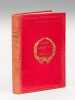
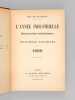
Bon état (dos lég. passé).
L'année industrielle. Découvertes scientifiques et Inventions nouvelles en 1901
1 vol. in-12 reliure pleine percaline rose, fers de prix du collège Lakanal de Treignac en premier plat, F. Juven, Paris, 1902, 280 pp.
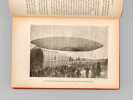
Bon état (dos lég. passé).
Du big bang à l'homme - L'émergence de l'esprit
SIRPE 1995 In-8 broché 24 cm sur 16. 142 pages. Bon état d’occasion.
Bon état d’occasion
Cours de sciences physiques (physique générale, électricité et magnetisme, chimie) à l'usage des candidats aux examens de l'administration des postes et des télégraphes - Collection Bibliothèque du courrier des examens des postes des télégraphes
Bureaux du courrier des examens. non daté. In-8. Broché. Etat passable, Tâchée, Dos abîmé, Quelques rousseurs. 288 pages - papier jauni - nombreuses figures en noir et blanc dans le texte - plats tâchés - coins abîmés - annotation sur le 1er plat - coiffe en pied absente - coiffe en tête abîmée.. . . . Classification Dewey : 530-Physique
Collection Bibliothèque du courrier des examens des postes des télégraphes et des téléphones - 8e édition. Classification Dewey : 530-Physique
COURS DE SCIENCES PHYSIQUES (PHYSIQUE GENERALE, ELECTRICITE ET MAGNETISME, CHIMIE), A L'USAGE DES CANDIDATS AUX EXAMENS DE L'ADMINISTRATION DES POSTES ET DES TELEGRAPHES
Bureaux du Courrier des Examens. 1929. In-8. Broché. Etat d'usage, Couv. légèrement passée, Coiffe en pied abîmée, Rousseurs. 400 pages. Illustré de nombreuses gravures en noir et blanc dans le texte. Quelques pages légèrement abîmées et détachées.. . . . Classification Dewey : 530-Physique
17e édition refondue. Bibliothèque du Courrier des Examens des PTT. Classification Dewey : 530-Physique
A Manual of Gier Algol 4. - [FIRST EDITION OF THE GIER ALGOL 4 MANUAL.]
Copenhagen, A/S Regnecentralen, 1967. 8vo. In the original yellow printed wrappers. Former owner's stamp (K. Egelund Larsen) to front- and back-wrapper as well as title-page. 89 pp. A bit of wear to extremities, a bit of soiling to wrappers and a few spots to front wrapper. Internally nice and clean.
First edition of the Gier Algol 4 manual, a users' manual of the Algol 60 compiler system for the Gier computer (known as Gier Algol 4). The Algol 60 programming language was exceedingly influential and innovative and gave rise to many other programming languages, such as BCPL, B, Pascal, Simula and C. It is stated on the title-page that this is the ""Third edition of A Manual of Gier Algol"", which means, not that this is a later printing/edition of the paper, but that it is the third version of Gier Algol, being the 4th paper in the Algol series. ""Where Algol 58 was considered quite properly to be a draft, Algol 60 was appriciated, almost immediately, as a rounded work of art. It was to become a universal tool with which to view, study, and proffer solutions to almost every kind of problem in computation."" (Origins of Cyberspace 813).""The language was designed by a committee of American and European computer scientists to address some of the problems with Fortran programming language. It had significant influence on later programming language design. John Backus developed a method for describing the syntax of the Algol 58 programming language. This was revised and expanded by Peter Nauer for Algol 60 and the resulting approach is known as Backus Naur form."" (O'Regan, Gerard. A brief history of computing, 2008, 80 p.).The Gier Algol 4 was developed by the leading Danish computer scientists at that time: Tove Asmussen, Jørn Jensen, Søren Lauesen, Paul Lindgreen, Per Mondrup, Jørgen Zachariassen and Peter Nauer, the later being a pioneer in computer science" in 2005 he won the ACM A.M. Turing Award for his work on defining the ALGOL 60 programming language. The N in the BNF notation stands for Nauer. (Backus-Naur form).
A Manual of Gier Algol III. - [FIRST EDITION OF THE GIER ALGOL III MANUAL.]
Copenhagen, A/S Regnecentralen, 1964. 8vo. In the original yellow printed wrappers. ""Gier Algol 3. Kurt E. Larsen"" written in hand to front wrapper. 67 pp. A bit of wear to extremities and a bit of soiling, internally clean.
First edition of the Gier Algol III manual, a users' manual of the Algol 60 compiler system. The Algol 60 programming language was exceedingly influential and innovative and gave rise to many other programming languages, such as BCPL, B, Pascal, Simula and C. It is stated on the title-page that this is the ""Second edition of A Manual of Gier Algol"", which means, not that this is a later printing/edition of the paper, but that it is the second version of Gier Algol, being the 3rd paper in the Algol series. ""Where Algol 58 was considered quite properly to be a draft, Algol 60 was appreciated, almost immediately, as a rounded work of art. It was to become a universal tool with which to view, study, and proffer solutions to almost every kind of problem in computation."" (Origins of Cyberspace 813).""The language was designed by a committee of American and European computer scientist to address some of the problems with Fortran programming language. It had significant influence on later programming language design. John Backus developed a method for describing the syntax of the Algol 58 programming language. This was revised and expanded by Peter Nauer for Algol 60 and the resulting approach is known as Backus Naur form."" (O'Regan, Gerard. A brief history of computing, 2008, 80 p.).The Gier Algol was developed by the leading Danish computer scientist at that time: Henning Christensen, Gunnar Ehrling, Jørn Jensen, Peter Kraft, Paul Lindgreen, Knuth-Sivert Skog, Peter Willemoes and Peter Nauer, the later being a pioneer in computer science and in 2005 he won the ACM A.M. Turing Award for his work on defining the ALGOL 60 programming language. The N in the BNF notation stands for Nauer. (Backus-Naur form).
"Heisenberg et le principe d'incertitude; le monde existe-t-il quand on ne regarde pas ? Collection : Grandes idées de la science, N° 3."
Paris, Editions RBA, 2014. 16 x 23, 174 pp., quelques illustrations en N/B, reliure d'édition carton imprimé, très bon état.
Traduction de Mariane Millon.
"Le monde existe-t-il quand on ne le regarde pas ?; Heisenberg et le principe de l'incertitude. Collection : Grandes idées de la science."
Paris, RBA, 2013. 15 x 24, 174 pp., quelques illustrations, reliure d'édition carton imprimé, bon état (dos légèrement gauchi).
Traduction par Mariane Million.
LA PHYSIQUE MODERNE, ETUDES HISTORIQUES ET PHILOSOPHIQUES
Félix Alcan, Paris. 1890. In-8. Broché. Etat d'usage, Couv. défraîchie, Dos abîmé, Mouillures. 276 pages.. . . . Classification Dewey : 530-Physique
2e édition augmentée d'une Préface nouvelle. 'Bibliothèque de Philosophie contemporaine'. Classification Dewey : 530-Physique
Sur la théorie du rayonnement d'après M. C.G. Darwin
P., Hermann, 1933, un volume in 8 broché, 24pp.
---- EDITION ORIGINALE**6900/Q7DE

