 Write to the booksellers
-
Type
Art print (2)
Book (5876)
Magazine (20)
Manuscript (1)
Old papers (1)
Photographs (3)
-
Latest
Last 24h (1)
Last month (15)
Last week (13)
-
Language
English (10)
French (5888)
German (1)
Greek (1)
Italian (1)
Latin (2)
-
Century
16th (2)
17th (9)
18th (246)
19th (885)
20th (2962)
21st (132)
-
Countries
Belgium (277)
Canada (3)
Côte d'Ivoire (13)
Denmark (1368)
France (3941)
Switzerland (301)
-
Syndicate
ALAC (3)
CLAM (3)
ILAB (4115)
NVVA (139)
SLACES (139)
SLAM (2585)
SNCAO (15)
Microwave mixers Collection Radiation laboratory series Vol. 16 Sommaire: Crystal rectifier units; Local-oscillator noise; Frequency control of local oscillators ...
McGraw - Hill book company. 1948. In-8. Relié. Très bon état, Couv. convenable, Dos satisfaisant, Intérieur frais. 381 pages augmentées de quelques figures en noir et blanc dans texte.. . . . Classification Dewey : 530-Physique
Etiquette sur coiffe en pied. Tampon bibliothèque.Collection Radiation laboratory series Vol. 16. texte écrit en anglais. Sommaire: Crystal rectifier units; Local-oscillator noise; Frequency control of local oscillators ... Classification Dewey : 530-Physique
Gravitational Red-Shift in Nuclear Resonance. - [THE POUND-REBKA EXPERIMENT - THE TEST THAT PROVED TIME IS RELATIVE]
(New York), American physical Society, 1959. Lex8vo. Volume 3, No. 9, November 1, 1959 of ""Physical Review Letters"", In the original printed blue wrappers. A very nice and clean copy externally as well as internally, near mint. Pp. 439-441. [Entire issue: 411-457].
First publication of the Pound-Rebka experiment which is regarded as being the last of the classical test of general relativity proposed by Albert Einstein to be verified. It is a test of the general relativity prediction that clocks should run at different rates at different places in a gravitational field and is considered to be the experiment that ushered in an era of precision test of general relativity. Today the so called gravitational redshift is essential for understanding the cosmos and operating the Global Positioning System (GPS).""Before he worked out the general theory of relativity, Einstein had already deduced that gravity must affect a light wave's frequency and wavelength. Light moving upwards from Earth's surface, for example, shifts to longer wavelength and lower frequency, as gravity saps it of some energy. But the effect is tiny in earth's modest gravity. In 1959 Robert Pound and Glen Rebka of Harvard University finally succeed in testing this crucial prediction, and they reported their results in [The present paper]."" (Physical Review Focus, 12 July 2005). Although the Global Positioning System (GPS) is not designed as a test of physics, it must account for the gravitational redshift in its timing system. When the first satellite was launched, some engineers neglected to predict that a noticeable gravitational time discrepancy would occur. So the first satellite was launched without the clock adjustment that was later built into satellites. It had a predicted time difference of 38 microseconds per day which, if not accounted for, could lead to hours of discrepancy.
MECHANICS OF LIQUIDS
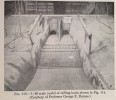
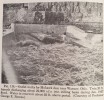
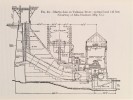
An elementary text in hydraulics and fluid mechanics In 8° relié par éditeur nombreuses illustrations 271 pp
Selected Papers of Cecil Frank Powell.
Amsterdam & London, North-Holland Publishing Company, 1972. 4to. Publishers full cloth with dust jacket. Jacket with a closed tear. A fine copy. XIII,(1),456 pp.
Cecil Frank Powell was awarded the 1950 Nobel Prize in Physics ""for his development of the photographic method of studying nuclear processes and his discoveries regarding mesons made with this method"".
Philosophy and the New Physics
Routledge ,1991, in-8 de 208 pages ,illustrations in-texte ,broché ,Bon état , .Isbn : 041507584x.(1 photo sur mon site https://www.vieuxlivre.fr .Les frais de port pour la France sont offerts à partir de 25 euros d'achat (Mondial relay ). (colissimo suivi +6,90 ).
An Experiment in Search of a Directive Action of one Quartz Crystal on another. Received September 27, - Read November 17, 1898.
(London, Harrison and Sons, 1892). 4to. No wrappers as extracted from ""Philosophical Transactions"", 1891, Vol. 192 - Series A. Pp. 245-256, textillustr.
First printing of these experiments in oder to measutre the gravitational constant.""Closely related to his investigations on the constant of gravitation is the experiments in search of a directive action of one quartz crystal on another, which, though leading to a negative result is a model of the application of refined methods to physical researc of great delicacy.""(From the motivation for receivind the Royal Medal).
Théories modernes sur la matière.
P., Rousset, 1908, in 12 broché, 96 pages ; portrait hors-texte ; couverture défraichie.
PHOTOS sur DEMANDE. ...................... Photos sur demande ...................


Phone number : 04 77 32 63 69
[Alexandre Gratier et Jules Rey, H. Dunod et E. Pinat] - PRASIL, Docteur ; (SERVIERE, G.)
Reference : 55277
(1908)
Mouvements des Liquides dans les Corps creux de Révolution.
Traduction de G. Servière, 1 vol. in-8 cartonnage pleine percaline grise, Publications de "La Houille Blanche", Alexandre Gratier et Jules Rey, Grenoble, H. Dunod et E. Pinat, Paris, 1908, 53 pp.
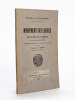
Bon état (nom de l'éditeur frotté en couv.)
L'optique
Seuil. 1962. In-12. Broché. Bon état, Couv. convenable, Dos satisfaisant, Intérieur frais. 191 pages avec des photos n&b.. . . . Classification Dewey : 530-Physique
Classification Dewey : 530-Physique
L'optique. Collection : Microcosme/Le rayon de la science, N° 16.
Paris, Editions du Seuil, 1962. 12 x 18, 191 pp., nombreuses illustrations en N/B, bon état.
"Lot de 2 livres : L'homme superlumineux + la médecine superlumineuse - Collection ""Recherches""."
Sand. 1992-1995. In-8. Broché. Bon état, Coins frottés, Dos satisfaisant, Intérieur frais. 207 pages + 189 pages - étiquette collée sur le 1er plat.. . . . Classification Dewey : 530-Physique
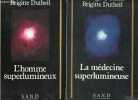
"Collection ""Recherches"". Classification Dewey : 530-Physique"
PRECIS DES SCIENCES PHYSIQUES ET NATURELLES, EPS, BREVET ELEMENTAIRE, ENSEIGNEMENT SECONDAIRE DES JEUNES FILLES
Hachette. 1904. In-12. Relié. Etat d'usage, Couv. légèrement passée, Dos frotté, Quelques rousseurs. 486 pages. Illustré de nombreuses gravures en noir et blanc. Dos taché. Dos, plats et quelques pages se détachant. Annotations en page de garde.. . . . Classification Dewey : 530-Physique
2e édition revue. Conforme aux programmes officiels. Avec une préface par G. Colomb. Illustré de 347 figures. Classification Dewey : 530-Physique
Untersuchungen uber Kathodenstrahlen. Habilitationsschrift zur erlangung der venia legendi der naturwissenschaftlich-mathematischen fakultät der Rupprecht-Karls-Universitat zu Heidelberg
Heidelberg, Rembold, 1897, un volume in 8, broché, (dos cassé), 37pp., 2 planches**4310/L7AR
LE LIVRE DES BIORYTHMES
EDITIONS KA. 1981. In-12. Broché. Etat d'usage, Couv. défraîchie, Dos frotté, Intérieur frais. 142 pages. Nombreux graphique en noir et blanc dans le texte.. . . . Classification Dewey : 530-Physique
Classification Dewey : 530-Physique
On a Peculiar Behaviour of Glow-Lamps raised to High Incandescence. (Received March 14, 1885).
London, Harrison and Sons, 1885. Later full buckram. Gilt lettering to spine. IX,506,XL pp., 1 plate, textillustr. (Entire volume offered). Preece's paper: pp. 219-230 with 6 large textillustrations. Internally clean and fine.
First printing of this importent paper in which Preece was the first to use the term ""Edison effect.""""In 1884 William Henry Preece, an official of the British General Post Office, was shown an experiment by Thomas Edison. Of this experiment Preece gave what appears to be the first printed account in a paper entitled 'On a Peculiar Behaviour of Glow-Lamps raised to High Incandescence' (the paper offered)... What Edison had demonstrated was that if a metal plate is sealed into an electric light bulb and joined to the positive end of the filament a considerable curent will pass. If the plate is joined to the negative terminal, however, no current will pass. This was known as the 'Edison effect' and in 1890 Fleming, an electrical engineer who had workes with the Edison Company in London and now was professor at University College, began a carefull study of this phenomenon in carbon filament lamps. In 1904 he was able to demonstrate that this occurred not only with electric waves but also with wireless waves. He thus introduced the basic principle of the modern wireless valve, which permits only unilateral conductivity.""(PMM No 396).Shiers & Shiers ""Early television"", No 186.
Über die magnetische Nachwirkung. - [THE PREISACH MODEL OF HYSTERESIS]
Berlin, Springer, 1935. 8vo. In contemporary halv cloth with gilt lettering to spine. In ""Zeitschrift für Physik"", Bd. 94, 1935. Entire volume offered. Stamp to front free end-paper. Fine and clean. Pp. 277-302. [Entire volume: VIII, 818 pp.].
First printing of Preisach seminal paper in which generalizes hysteresis loops as the parallel connection of independent relay hysterons - today known as the Preisach model of hysteresis. Hysteresis is the dependence of a system not only on its current environment but also on its past environment. This dependence arises because the system can be in more than one internal state. The Preisach Model is being used in such different branches of science as engineering, mechanics, biology and economics.
Rapport du Président de la société de physique et d'histoire naturelle de Genève pour l'année 1920. Extrait de ‘Mémoires de la société de physique et d'histoire naturelle de Genève’, vol. 39, fasc. 5.
Genève, Schuchardt, 1920, 1921, in-4to, 22 p., timbre de bibl. sur page de titre, sans brochure.
(SLACES, NVVA)
Phone number : 41 (0)26 3223808
Contributions à la thermodynamique et l'énergétique. Etude thermodynamique des phénomènes irréversibles -- EDITION ORIGINALE de la thèse d'agrégation présentée par I. PRIGOGINE à l'Université libre de Bruxelles -- BEL EXEMPLAIRE
Liège, Desoer, 1947, un volume in 8, broché, couverture imprimée, (petit manque de papier dans la partie supérieure du premier feuillet blanc), 9pp. 143pp.
---- EDITION ORIGINALE de la thèse d'agrégation présentée par I. PRIGOGINE à l'Université libre de Bruxelles ---- BEL EXEMPLAIRE ---- "Physicien et chimiste belge d'origine russe, Prigogine fut lauréat du prix Nobel de chimie pour ses contributions à la thermodynamique hors équilibre, particulièrement la théorie des structures issipatives"**8755/8757/M3
Physique temps et devenir - traduit de l'anglais par Françoise Sullivan sous la direction de Jacques Chanu
Masson 1980 275 pages in8. 1980. Broché. 275 pages.

Très Bon Etat intérieur propre bonne tenue couverture un peu défraîchie
Physique temps et devenir. Traduit de l’anglais par Françoise Sullivan sous la direction du Professeur Jacques Chanu.
Paris, Masson 1980, 240x160mm, 275pages, broché. Exemplaire à l'état de neuf.
Pour un paiement via PayPal, veuillez nous en faire la demande et nous vous enverrons une facture PayPal
Le strutture dissipative auto-organizzazione dei sistemi termodinamici in non-equilibrio
Sansoni 1982 in8. 1982. Cartonné.
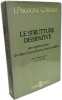
proche du très bon état intérieur propre bonne tenue avec sa jaquette
Physique. I. Notions générales. Pesanteur. Hydrostatique. Chaleur. II. Acoustique. Optique. III. Magnétisme et électricité
Ecole Spéciale des travaux publics Paris, Ecole Spéciale des Travaux Publics 1909 - 1913. 3 volumes In-8 brochés. 318 + 304 + 372 pages. Très bon état.
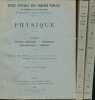
Toutes les expéditions sont faites en suivi au-dessus de 25 euros. Expédition quotidienne pour les envois simples, suivis, recommandés ou Colissimo.
Physique. Livre II. Acoustique. Optique
Ecole spéciale des travaux publics. 1913. In-8. Broché. Bon état, Couv. convenable, Dos plié, Intérieur frais. 304 pp. Nombreux schéms explicatifs. Dos un peu fané.. . . . Classification Dewey : 530-Physique
Classification Dewey : 530-Physique
Cours de chimie. Cours de Physique. En 3 livres.
ECOLE SPECIALE DES TRAVAUX PUBLICS. 2ème édition. 1909 - 1914. In-8. Broché. Bon état, Couv. défraîchie, Coiffe en tête abîmée, Quelques rousseurs. 318 + 279 + 119 pages. Nombreuses illustrations en noir et blanc dans le texte. Livre II en état d'usage. Coiffes en pied légèrement abîmées sur les livres II et III.. . . . Classification Dewey : 530-Physique
Livre I : Notions générales - Pesanteur - Hydrostatique - Chaleur. Livre II : Acoustique - Optique. Livre III : Chimie Organique. Classification Dewey : 530-Physique
Physique. Livre II : Chaleur (2ème partie), mouvements vibratoires, acoustique et optique.
ECOLE SPECIALE DES TRAVAUX PUBLICS. 9ème édition. 1931. In-4. Broché. Bon état, Couv. défraîchie, Manque en coiffe de tête, Non coupé. 511 pages. Texte en écriture manuscrite. Nombreuses illustrations en noir et blanc dans le texte et en planches hors-texte. Coiffe en pied abîmée.. . . . Classification Dewey : 530-Physique
Classification Dewey : 530-Physique

