 Write to the booksellers
-
Type
Book (5463)
Magazine (20)
Manuscript (1)
Old papers (1)
Photographs (3)
-
Latest
Last 3 days (4)
Last month (5)
-
Language
English (10)
French (5474)
German (1)
Greek (1)
Italian (1)
Latin (1)
-
Century
16th (2)
17th (8)
18th (245)
19th (885)
20th (2951)
21st (133)
-
Countries
Belgium (265)
Canada (3)
Côte d'Ivoire (13)
Denmark (1365)
France (3541)
Switzerland (301)
-
Syndicate
ALAC (3)
CLAM (2)
ILAB (4127)
NVVA (139)
SLACES (139)
SLAM (2601)
SNCAO (15)
Manuel de télégraphie électrique.
Quatrième édition, revue, corrigée et augmentée ornée de 80 gravures sur bois placées dans le texte et de 4 planches gravées sur acier, 1 vol. in-12 reliure d'époque demi-basane marron, nom E. Chabrier en queue au dos, Librairie de L. Hachette et Cie, Paris, 1862, 252 pp. avec 4 planches dépliantes
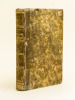
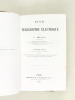
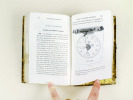
Peu commun. Etat moyen (reliure fort. frottée, petit mq. à une planche dépliante sur une pliure, petites mouill. en fin d'ouvrage). Prix en l'état.
Theoretische Tlegraphie. Eine Anwendung der Maxwellschen Elektrodynamik auf Vorgänge in Leitungen und Schaltungen. Zweite Auflage. Mit 240 Figuren im Text.
Braunschweig, Vieweg & Sohn, 1924. Orig. full cloth. Light wear to spine ends. Spine a bit faded. XIV,548 pp., texillustr. Internally clean and fine.

ELECTRICITE - MAGNETISME - TRAVAUX DIRIGES / COLLECTION METHODES.
HERMANN. 1967. In-8. Broché. Bon état, Couv. convenable, Dos frotté, Intérieur frais. 1952 pages - 1er et 2ème plats argentés.. . . . Classification Dewey : 530-Physique
Classification Dewey : 530-Physique

LES SCIENCES PHYSIQUES DU BREVET ELEMENTAIRE, NOTIONS DE PHYSIQUE ET DE CHIMIE
Hatier. 1920. In-12. Relié. Etat d'usage, Couv. défraîchie, Dos fané, Quelques rousseurs. 373 pages. Couverture illustrée de gravures en noir et blanc. Illustré de nombreuses gravures en noir et blanc dans le texte. Plats très frottés. Plats et quelques pages se détachant. Vignettes (lettrines) collées au dos du 1er plat. Annotation en page de titre.. . . . Classification Dewey : 530-Physique
Nouvelle édition refondue. Classification Dewey : 530-Physique
Notions de Sciences Physiques et Naturelles.
HATIER. 1920. In-12. Cartonné. Bon état, Couv. légèrement passée, Dos satisfaisant, Intérieur frais. 196 pages. Nombreux dessins en noir et blanc et quelques-uns en couleurs, dans le texte et hors-texte. Dos toilé noir. . . . Classification Dewey : 530-Physique
Cours élémentaire et 1ère année du Cours Moyen. Hygiène, Agriculture et Industrie. Classification Dewey : 530-Physique
Sciences physiques du brevet élémentaire
Hatier. 1923. In-8. Cartonnage d'éditeurs. Etat d'usage, Couv. convenable, Dos frotté, Intérieur bon état. 532 pp. - Ouvrage illustré de nombreuses gravures - 1 PHOTO DISPONIBLE.. . . . Classification Dewey : 530-Physique
Classification Dewey : 530-Physique
LA PHYSIQUE ET LA CHIMIE DU BREVET ELEMENTAIRE DE CAPACITE ET DES COURS DE L'ANNEE COMPLEMENTAIRE
Hatier. Non daté. In-12. Relié. Bon état, Couv. convenable, Dos satisfaisant, Intérieur bon état. 414 pages. Illustré de nombreuses gravures en noir et blanc dans le texte. Etiquette annotée collée en page de garde. Vers 1900.. . . . Classification Dewey : 530-Physique
24e édition. Ouvrage renfermant les notions de physique et de chimie indiquées par les arrêtés de 1882 et 1884. Illustré de 337 gravures. Chimie en notation atomique. Classification Dewey : 530-Physique
LES SCIENCES PHYSIQUES ET NATURELLES, AVEC NOTIONS D'AGRICULTURE, COURS MOYEN
Hatier. 1932. In-12. Relié. Etat d'usage, 1er plat abîmé, Coiffe en tête abîmée, Déchirures. 287 pages, puis 55 pages. Couverture illustrée d'une gravure monochrome. Illustré de nombreuses gravures en noir et blanc dans le texte, et de gravures en couleur sur planches hors texte. Manques en haut du 1er plat et des 100 premières pages. Quelques taches et annotations.. . . . Classification Dewey : 530-Physique
Cours Bremant-Peschard. Classification Dewey : 530-Physique
Mesonprocessen in het mesisch veld van een kern of een kerndeeltje
Antwerpen, Standaard-Boekhandel 1946 148pp.geïll., 26cm., in de reeks "Verhandelingen van de Koninklijke Vlaamse Academie voor Wetenschappen, Letteren en Schone Kunsten van België. Klasse der Wetenschappen" jg.8 no.18, originele omslag, enkele roestvlekjes op bladsneden, goede staat, W73168
La Revue Scientifique et industrielle.
1900 cart. éditeur. in-4, 178pp., illustré, P. Pigoreau (ca. 1900)
" Ces fameux rayons X , qui ont fait leur apparition au mois de janvier 1896, ont tant fait parler d'eux…". Ils occupent les deux tiers de l'ouvrage. Importante iconographie.
Instruction Pratique pour l'Usage de Pendule balistique a Induction.
Paris, J. Correard, 1862. Contemp. hcalf. Gilt back. A paperlabel on lower part of back. Stamp on titlepage. (3),175 pp. and 3 large folded engraved plates.
First edition. Brettes was a pioneer in measuring the speed of projectiles by electrical means.
Atlas de la Physique
La Pochothèque ,1997, in-8 de 380 pages ,illustrations in-texte ,broché ,Bon état ,petit étiquette blanche sur la page de titre .Isbn : 9782253130161.(5 photos du livre sur mon site https://www.vieuxlivre.fr) .Les frais de port pour la France sont offerts à partir de 25 euros d'achat (Mondial relay ). (colissimo suivi +6,90 ).
L'USURE DES METAUX ET LES MOYENS DE L'APPRECIER PAR L'EMPLOI DE LA NOUVELLE MACHINE D'USURE AMSLER
DUNOD. 1925. In-8. En feuillets. Etat d'usage, Couv. légèrement passée, Dos frotté, Intérieur frais. 30 pages en feuillets - nombreuses photos, tableaux et courbes en noir et blanc dans et hors texte - corps de l'ouvrage desolidarisé des plats.. . . . Classification Dewey : 530-Physique
Sommaire: essais de Bottone, Essais de Dudley, Essais de Breuil et de Robin, Essais de Stanton, Essais de Saniter, Essais de Brinell - description de la nouvelle machine universelle Amsler pour essais d'usure.... Classification Dewey : 530-Physique
Additional observations on the optical properties and structure of heated glass and unannealed glas drops. In a Letter addressed to Joseph Banks. Read November 10, 1814.
(London, W. Bulmer and Co., 1813). 4to. No wrappers as extracted from ""Philosophical Transactions"" 1815 - Part I. Pp. 1-8 a. 1 engraved plate.
First appearance of an importent paper in optics in which Brewster describes some of the experiments that lead him, in the next two years, to his discoveries of ""Brewster's Law"" and to his distinction between Biaxial and Uniaxial crystalline structures.
On a Remarkable Property of the Diamond. Received February 15, - Read March 4, 1841. (+) On the Phenomenon of Solid and Fluid Substances exposed to Polarized Light. Receved April 15, - Read May 6, 1841.
(London, Richard and John E. Taylor, 1841). 4to. No wrappers as extracted from ""Philosophical Transactions"" 1841 - Part I. Pp. 41-42 a. pp. 43-58 a. 1 engraved plate. The plate having a large dampstain to upper a. right margin, only very slightly touching the image.
Both papers first printings.
On the Connexion between the Phenomena of the Absorption of Light, and the Colours of thin Plates. Received May 9, - Read May 11, 1837. (+) On the Colours of ixed Plates. Received october 25, - Read December 14, 1837. (2 Papers).
(London, Richard and John E. Taylor, 1837 a. 1838). 4to. No wrappers as extracted from ""Philosophical Transactions"" 1837 - Part II. Pp. 245-252 and 1838 - Part I. Pp. 73-77.
First printing of 2 papers in which Brewster discusses the phenomena of light absorption, Newton's rings and Youngs wave theory of light. Brewster still adhered to the emission theory of Newton.
On the optical and physical properties of Tabasheer. Read May6, 1819.
(London, W. Bulmer and Co., 1819). 4to. No wrappers as extracted from ""Philosophical Transactions"" 1819 - Part I. Pp. 283-299.
First appearance. Brewster analyzes Tabasheer with his new crystallographic methods.Tabasheer, also spelt as Tabachir or Tabashir, is a translucent white substance, composed mainly of silica and water with traces of lime and potash, obtained from the nodal joints of some species of bamboo. It is part of the pharmacology of the traditional Ayurvedic and Unani systems of medicine of the Indian subcontinent. It is also an ingredient in many traditional Chinese medicines.
On the Polarisation of Light by oblique transmission through all Bodies, whether crystallized or uncrystallized. In a Letter addressed to Taylor Combe. Read January 27, 1814.
(London, W. Bulmer and Co., 1814). 4to. No wrappers as extracted from ""Philosophical Transactions"" 1814 - Part I. Pp. 219-230 and 1 engraved plate. Fine and clean.
First appearance of this pioneer work in the optical theory of polarization and double refraction by ""The discoverer of the law of polarization, of biaxal crystals, of optical mineralogy, and of double refraction by compression.""""Since Brewster had found that light was partially polarized by oblique refraction in mica, he attempted to determine the law of this polarization in he simpler case of successive refractions by a pile of thin glass plates. By the end of 1813 he had concluded that ""the number of plates in any parcel, multiplied by the tangent of the angle, at which it (completely) polarises light, is a constant quantity"" (in the paper offered here p. 221). More importent, since ""the pencil of light polarised by transmission (comports) itself, in every respect like one of the pencils former by double refracting crystals"" (the paper offered p. 219), study of the physical optics of transparent ought to enable philosophers ""to unfold the secrets of double refraction, to explain the forms and structure of crystallised bodies....""(DSB).
"BREWSTER, DAVID - DISCOVERING A NEW PROPERTY OF HEAT BIREFRINGENCE IN GLASS
Reference : 45239
(1814)
Results of some recent Experiences on the Properties impressed upon Light by the Action of Glass raised to different Temperatures, and cooled under different Circumstances. In a Letter to Joseph Banks. Read May 19, 1814.
(London, W. Bulmer and Co., 1814). 4to. No wrappers as extracted from ""Philosophical Transactions"" 18154 - Part II. Pp. 436-439.
First appearance of an importent paper in which Brewster reveals his discovery of a new connection between light and heat: ""glass brought to a certain temperature forms two images, and polarises them in opposite manner, like all doubly refracting crystals, the one image being coincident with the other""(p. 437). Brewster was the discoverer of the law of polarization, of biaxal crystals, of optical mineralogy, and of double refraction by compression.Independently of Seebeck, in 1814 English physicist David Brewster started investigating birefringence in glass caused by inhomogeneous heating. He also investigated the effect of sudden cooling of heated glass and discovered that in broken glass birefringence vanishes. Brewster considered his discovery so important* that he hastily published a paper, in which he only verbally described the creation of birefringence in glass by heat.With 2 other notable papers by HENRY KATER ""An improved Method of dividing Astronomical Circles and other Instruments"", pp. 419-435a. 2 folded engraved plates. And JOHN W.F. HERSCHEL ""Consideration of various Points of Analysis"", pp. 440-468.
On the Affections of Light transmitted through crystallized Bodies. In a Letter to Sir Humphrey Davy. Read December 23, 1813.
(London, W. Bulmer and Co., 1814). 4to. No wrappers as extracted from ""Philosophical Transactions"" 1814 - Part I. Pp. 187-218 and 3 engraved plate. Fine and clean.
First printing of pioneer paper in which Brewster laid the foundations of new fields of investigations. by showing that in a large class of crystals there are two axes along which there is no double refraction. Such crystals he calls BIAXAL, the simpler type to which Iceland spar belongs being called UNIAXAL.""Brewster created new fields of optical mineralogy and photoelasticity. In 1813, while studying the ""depolarising"" action of Topaz, he observed two sets of elliptical rings (interference patterns) centered on axes in the Topaz that were apparently inclined at 65 degr.. He interpreted this to mean that Topaz must have two axes, not one, of double refraction, an entirely unexpected result. After many laborious experiments he was able in 1819 to group all but a few of hundreds of minerals and crystals into mutually consistent optical and mineralogical categories: the primitive form determined the number of axes of double refraction.""(DSB).
On some Properties of Light. Read January 28, 1813.
(London, W. Bulmer and Co., 1813). 4to. No wrappers as extracted from ""Philosophical Transactions"" 1813 - Part I. Pp. 101-109
First printing of Brewsters first paper in the Transactions in which he gives a preliminary result of his testing of the transmission of light through around 200 transparent substances. In a paper issued the next year (1814) he called the different phenomena that he observed here, Biaxal and Uniaxal.
On the laws which regulate the Absorption of polarised Light by Double Refracting Crystals. In a Letter addressed to ... Sir Joseph Banks. read November 12, 1818.
(London, W. Bulmer and Co., 1819). 4to. No wrappers as extracted from ""Philosophical Transactions"" 1819 - Part I. Pp. 11-27, 1 textillustr.
First appearance of one of Brewsters importent paper in the field of optical mineralogy, a field he himself created. In the paper he investigates the polarization-force of double refracting crystals. In 1819 he was able to group all but a few of hundreds of minerals and crystals into mutually consistent optical and mineralogical categories: the primitive form determined the number of axes of double refraction.""He regarded ""all the various phenomena of polarisation of light by reflexion and refraction as brought under the dominion of laws as well determined as those which regulate the motions of the planets."" In 1816 he received the Copley Medal, in 1819 two Rumford Medals, and in 1831 a Royal Medal for the papers in which he announced these discoveries. On the popular level, Brewster’s reputation was established in 1816 by the fad for his kaleidoscope. Its invention was a direct result of his studies of the ory of polarization by multiple reflections.""(DSB).
On the laws which regulate the Absorption of polarised Light by Double Refracting Crystals. In a Letter addressed to ... Sir Joseph Banks. read November 12, 1818.
(London, W. Bulmer and Co., 1819). 4to. No wrappers as extracted from ""Philosophical Transactions"" 1819 - Part I. Pp. 11-27, 1 textillustr.
First appearance of one of Brewsters importent paper in the field of optical mineralogy, a field he himself created. In the paper he investigates the polarization-force of double refracting crystals. In 1819 he was able to group all but a few of hundreds of minerals and crystals into mutually consistent optical and mineralogical categories: the primitive form determined the number of axes of double refraction.""He regarded ""all the various phenomena of polarisation of light by reflexion and refraction as brought under the dominion of laws as well determined as those which regulate the motions of the planets."" In 1816 he received the Copley Medal, in 1819 two Rumford Medals, and in 1831 a Royal Medal for the papers in which he announced these discoveries. On the popular level, Brewster’s reputation was established in 1816 by the fad for his kaleidoscope. Its invention was a direct result of his studies of the ory of polarization by multiple reflections.""(DSB).
On the Action of crystallized surfaces upon light. In a Letter addressed to Joseph Banks. Read February 25, 1819.
(London, W. Bulmer and Co., 1819). 4to. No wrappers as extracted from ""Philosophical Transactions"" 1819 - Part I. Pp. 145-160.
First appearance of one of Brewsters importent paper in the field of optical mineralogy, a field he himself created. In the paper he investigates the polarization-force of double refracting crystals. In 1819 he was able to group all but a few of hundreds of minerals and crystals into mutually consistent optical and mineralogical categories: the primitive form determined the number of axes of double refraction.""He regarded ""all the various phenomena of polarisation of light by reflexion and refraction as brought under the dominion of laws as well determined as those which regulate the motions of the planets."" In 1816 he received the Copley Medal, in 1819 two Rumford Medals, and in 1831 a Royal Medal for the papers in which he announced these discoveries. On the popular level, Brewster’s reputation was established in 1816 by the fad for his kaleidoscope. Its invention was a direct result of his studies of the ory of polarization by multiple reflections.""(DSB).
On the Action of crystallized surfaces upon light. In a Letter addressed to Joseph Banks. Read February 25, 1819.
(London, W. Bulmer and Co., 1819). 4to. No wrappers as extracted from ""Philosophical Transactions"" 1819 - Part I. Pp. 145-160.
First appearance of one of Brewsters importent paper in the field of optical mineralogy, a field he himself created. In the paper he investigates the polarization-force of double refracting crystals. In 1819 he was able to group all but a few of hundreds of minerals and crystals into mutually consistent optical and mineralogical categories: the primitive form determined the number of axes of double refraction.""He regarded ""all the various phenomena of polarisation of light by reflexion and refraction as brought under the dominion of laws as well determined as those which regulate the motions of the planets."" In 1816 he received the Copley Medal, in 1819 two Rumford Medals, and in 1831 a Royal Medal for the papers in which he announced these discoveries. On the popular level, Brewster’s reputation was established in 1816 by the fad for his kaleidoscope. Its invention was a direct result of his studies of the ory of polarization by multiple reflections.""(DSB).

