 Write to the booksellers
-
Type
Art print (2)
Book (5888)
Magazine (20)
Manuscript (1)
Old papers (1)
Photographs (3)
-
Latest
Last 24h (13)
Last month (39)
Last week (2)
-
Language
English (10)
French (5900)
German (1)
Greek (1)
Italian (1)
Latin (2)
-
Century
16th (2)
17th (9)
18th (246)
19th (886)
20th (2964)
21st (133)
-
Countries
Belgium (277)
Canada (3)
Côte d'Ivoire (13)
Denmark (1369)
France (3952)
Switzerland (301)
-
Syndicate
ALAC (3)
CLAM (3)
ILAB (4120)
NVVA (139)
SLACES (139)
SLAM (2589)
SNCAO (15)
MECANIQUE ET PHYSIQUES GENERALES
DUNOD. 1947. In-18. Broché. Etat d'usage, Plats abîmés, Dos abîmé, Papier jauni. 242+46 pages.. . . . Classification Dewey : 530-Physique
A L'USAGE DES ELEVES DE L'ENSEIGNEMENT SUPERIEUR SCIENTIFIQUE ET TECHNIQUE, DES ELEVES DE MATHEMATIQUES SUPERIEURES ET SPECIALES, DES INGENIEURS ET DES PHYSICIENS - VECTEURS, CINEMATIQUE, STATIQUE, DYNAMIQUE, PESANTEUR - STATIQUE DES FLUIDES - GRAVITATIONS - CHALEUR ET THERMODYNAMIQUE - MECANIQUE DES FLUIDES - DEPLACEMENTS ET VIBRATIONS ELASTIQUES ET ELECTROMAGNETIQUES,ETC Classification Dewey : 530-Physique
MECANIQUE-PHYSIQUE GENERALE - 8e EDITION
DUNOD. 1968. In-16. Relié toilé. Bon état, Couv. convenable, Dos satisfaisant, Intérieur frais. XLII + 224 + XL pages - nombreux calculs et figures noir et blanc dans le texte - 1 topogramme noir et blanc hors texte dépliant. . . . Classification Dewey : 530-Physique
Classification Dewey : 530-Physique
"MECANIQUE - PHYSIQUE GENERALE / COLLECTION ""AIDE-MEMOIRE"""
DUNOD. NON DATE. In-16. Relié toilé. Bon état, Couv. défraîchie, Dos satisfaisant, Intérieur frais. 222 + LXIII pages. Quelques tableaux en noir et blanc,dans le texte.. . . . Classification Dewey : 530-Physique
Classification Dewey : 530-Physique
Métrologie appliquée (Méthodes et instruments de mesures)
Dunod. 1954. In-18. Relié. Etat d'usage, Couv. convenable, Dos fané, Papier jauni. XL + 299 + LXIV pages - nombreux schémas en noir et blanc dans le texte.. . . . Classification Dewey : 530-Physique
Classification Dewey : 530-Physique
Métrologie générale (grandeurs, unités et symboles) Tome II
Dunod. 1946. In-18. Relié. Bon état, Couv. convenable, Dos satisfaisant, Intérieur frais. 209 + LXIV pages.. . . . Classification Dewey : 530-Physique
Etiquette sur coiffe en pied. Classification Dewey : 530-Physique
JOKERS, SCIENCES PHYSIQUES 3e
Bordas. 1986. In-12. Broché. Bon état, Couv. convenable, Dos satisfaisant, Intérieur frais. 150 pages. Illustré de nombreuses figures en noir et blanc dans le texte.. . . . Classification Dewey : 530-Physique
170 exercices, 75 corrigés. Classification Dewey : 530-Physique
DEQUIN JACQUES, JOURDAIN JEAN, PONCELET MICHEL
Reference : RO60023170
(1989)
ISBN : 2040182551
SCIENCES PHYSIQUES 3e
Bordas. 1989. In-4. Relié. Bon état, Couv. convenable, Dos satisfaisant, Intérieur frais. 191 pages. Couverture illustrée en couleur. Illustré de photos et de schémas en couleur dans le texte. Spécimen enseignants.. . . . Classification Dewey : 530-Physique
Nouvele collection Dirand. Classification Dewey : 530-Physique
DEQUIN JACQUES, JOURDAIN JEAN, PONCELET MICHEL
Reference : RO60023163
(1990)
ISBN : 2040104607
SCIENCES PHYSIQUES 6e
Bordas. 1990. In-4. Relié. Bon état, Couv. convenable, Dos satisfaisant, Intérieur frais. 160 pages. Couverture illustrée en couleur. Illustré de photos et de dessins en couleur.. . . . Classification Dewey : 530-Physique
Collection Laser. Sous la dir. de Bernard Dirand. Classification Dewey : 530-Physique
Mécanique. Préface de M. A. Chatelet -- EDITION ORIGINALE
P., Gauthier-Villars, 1954, un volume in 8, broché, couverture imprimée, 12pp., (1), 200pp.
---- EDITION ORIGINALE ---- Théorie des vecteurs - Cinématique - Les principes de la mécanique - Statique**1702/N5DE
Beta gamma hoekcorrelatie-metingen in het verval van 199Au
Brussel, Paleis de Academiën 1966 45pp., 26cm., in de reeks "Verhandelingen van de Koninklijke Vlaamse Academie voor Wetenschappen, Letteren en Schone Kunsten van België. Klasse der Wetenschappen" jg.28 no.86, originele omslag, goede staat, W73169
EXPERIENCES ATOMIQUES - 5 PROBLEMES
EDITIONS ELZEVIR. 1946. In-12. Broché. Bon état, Couv. convenable, Dos satisfaisant, Intérieur frais. 63 pages. Nombreuses illustrations en noir et blanc dans le texte et hors texte;. . . . Classification Dewey : 530-Physique
Qu'apportent au monde les expériences de Los Alamos et de Bikini? Classification Dewey : 530-Physique
LES APPLICATIONS PRATIQUES DE LA LUMINESCENCE / 2E EDITION.
DUNOD. 1946. In-8. Broché. Etat d'usage, Tâchée, Dos abîmé, Intérieur acceptable. XIV + 263 pages - annotations au stylo sur le 1er plat - quelques figures en noir et blanc dans le texte - une petite étiquette collée sur le 1er contre plat - quelques mots soulignés au stylo rouge à l'intérieur de l'ouvrage sans réelle conséquence sur la lecture.. . . . Classification Dewey : 530-Physique
Avec une préface M.Haitinger - Sommaire : la luminescence principes et généralistes - technique des études de photoluminescence - substances minérales naturelles - substances minérales préparées - substances organiques et produits pharmaceutiques photographiques - physiologie et biologie - matières plastiques - caoutchouc - papeterie - parfumerie - produits de droguerie cires résines gommes pigments - écrans luminescents etc. Classification Dewey : 530-Physique
PREHISTOIRE ET HISTOIRE DE LA LUMIERE- LES PREMIERS MATINS DU MONDE
FRANCE EMPIRE. 1979. In-8. Broché. Bon état, Couv. convenable, Dos satisfaisant, Intérieur frais. 299 pages- quelques photos en noir et blanc hors texte. . . . Classification Dewey : 530-Physique
Classification Dewey : 530-Physique
Cours de physique Expérimentale, par le docteur J.T. Desaguliers, traduit de l'anglois par le R.P. Pezenas (2 volumes).
Chez Jacques Rollin, Charles-Antoine Jombert, 1751, 2 volumes de 20.5x25.5 cm environ, (1) f., xij pp., (1) f., 503 pages, 32 planches, (1) f., - 1 faux-titre, 1 titre, 636 pages, 46 planches, (1) f., reliure plein veau fauve marbré de l'époque, dos à 5 nerfs portant titres et tomaisons dorés sur pièce de titre rouille (pièce de tomaison du tome I, havane), riche décor de caissons à fleurons et motifs dorés aux entre-nerfs, coupes dorées, gardes marbrées, tranches rouges. Frottements sur les coins et les coiffes, petite fente sur la coiffe de tête, ouvrages bien conservés et bien complets des 78 planches.
John Theophilus Desaguliers, né Jean Théophile Désaguliers, (La Rochelle, 12 mars 1683 - Londres 29 février 1744) est un scientifique principalement connu de nos jours comme un des fondateurs de la Franc-maçonnerie dite moderne. Il est aussi un ardent défenseur et propagateur des idées d'Isaac Newton tant scientifiques que philosophiques et politiques. Merci de nous contacter à l'avance si vous souhaitez consulter une référence au sein de notre librairie.
Rapport sur les progrès de la théorie de la chaleur -- EDITION ORIGINALE -- BEL EXEMPLAIRE
P., Imprimerie impériale, 1868, un volume grand in 8 relié en demi-chagrin vert (reliure de l'époque), (2), 114pp.
---- EDITION ORIGINALE ---- BEL EXEMPLAIRE ---- P. Desains fut professeur de physique à la Faculté des sciences ---- Densité des gaz et des vapeurs - Compressibilité des fluides élastiques - Dilatation des gaz et des vapeurs - Mesure des hautes températures - Thermomètres à air - Dilatation des corps liquides et des corps solides - Tensions des vapeurs - Chaleurs spécifiques - Changement d'état des corps - Chaleur de combustion - Chaleur développée dans les actions chimiques - Chaleur rayonnante - Etat de la science en 1807 - Recherches faites en France de 1807à 1830 - Thermomultiplicateur ; 1830-1840 - Etudes nouvelles sur les lois de la haleur rayonnante : 1840-1867 - Propagation de la chaleur dans les corps athermanes - Physique du Globe**7819/M4
Le mouvement initerrompu des molécules dans les fluides et autres hypothèses
Imprimerie de la Cour Victor Bück. 1917. In-4. Broché. Etat d'usage, Couv. défraîchie, Dos abîmé, Intérieur frais. 171 page augmentées de quelques dessins en noir et blanc dans texte.. . . . Classification Dewey : 530-Physique
Etiquette sur coiffe en pied. Tampon bibliothèque.2 phoos disponibles. Classification Dewey : 530-Physique
Nouvelle encyclopédie pratique d'ELECTRICITE.
P., Quillet, 1939, 2 forts volumes in 4°, reliés demi chagrin vert de l'éditeur ; très nombreuses figures in et hors-texte, dont 7 "démontables" ; reliure frottée avec petits manques à un dos.
PHOTOS sur DEMANDE. ...................... Photos sur demande ...................


Phone number : 04 77 32 63 69
La Physique populaire
Hatier Reliure d'éditeur In-4, (28x19.5 cm), reliure d'éditeur toile rouge, tranches dorées, 835 pages, sans date (vers 1908), iconographie en noir et blanc, ouvrage de prix reçu le 25 juillet 1908 par René Bâche ; intérieur piqué et jaunie, mors et coiffes frottés, petites traces sur les tranches, assez bon état général. Livraison a domicile (La Poste) ou en Mondial Relay sur simple demande.

Physique populaire - Collection Bibliothèque Camille Flammarion.
Librairie Marpon et Flammarion. 1891. In-4. Relié demi-cuir. Etat d'usage, Plats abîmés, Dos lisse, Rousseurs. 835 pages - nombreuses illustrations en noir et blanc dans et hors texte - frontispice en noir et blanc - 4 aquarelles hors texte - plats, contre plats et gardes jaspés - coins, tranches et plats frottés - plats griffés - auteur, titre, filets, pointillés dorés sur le dos - papier jauni.. . . . Classification Dewey : 530-Physique

Collection Bibliothèque Camille Flammarion. Classification Dewey : 530-Physique
Physique Poulaire
Librairie Marpon et Flammarion - Paris. 1891 - 875 pages - Illustrations dans le texte noir et blanc et hors texte couleurs.Intérieur papier uniformément jauni. Fort volume in quarto ,cartonnage de l'éditeur polychrome - Bon état .
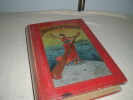
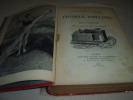
Physique Populaire
Paris Flammarion 1891 GRAND In-8 Fort 835 pp, Bibliothèque Camille Flammarion ; ouvrage orné de 508 figures N&B in-texte et de 4 aquarelles hors-texte, frontispice. Toutes tranches dorées, 1er plat illustré en couleur par Paul Souze, 2d plat estampé à chaud, dos illustré d'estampes dorées. Mors faibles, coiffes frottées, coins émoussés, fines épidermures sur coupes ; intérieur très frais.
Bel État Cartonnage Éditeur
Eléments De Pysique Ou exposé Méthodique Des Phenomenes De La Physique et De La Météorologie
Paris Dezobry & Magdelaine In16 3 parties en 1 volume - 1ere partie sur les propriétés des corps - 2eme partie sur la chaleur , l'electricité et le magnetisme - 3eme partie sur la météorologie - trés nombreuses figures et dessins - coiffe supérieure arrachée - demi basane usagé - coins frottés - sans date ( vers 1850)
Moyen
[Magnin, Blanchard et Cie] - DES ESSARTS, Alfred ; CHEREAU, Albert ; [ LANGLOIS DES ESSARTS, Alfred Stanislas ]
Reference : 39677
(1863)
Les Grands Inventeurs anciens et modernes.
Ouvrage orné de 24 lithographies à deux teintes par A. Chéreau, 1 vol. in-4 cartonnage éditeur pleine percaline bordeaux, Magnin, Blanchard et Cie, Paris, s.d. [ circa 1863 ], 24 pp.
![Les Grands Inventeurs anciens et modernes.. DES ESSARTS, Alfred ; CHEREAU, Albert ; [ LANGLOIS DES ESSARTS, Alfred Stanislas ]](https://static.livre-rare-book.com/pictures/CDL/39677_thumb.jpg)
![Les Grands Inventeurs anciens et modernes.. DES ESSARTS, Alfred ; CHEREAU, Albert ; [ LANGLOIS DES ESSARTS, Alfred Stanislas ]](https://static.livre-rare-book.com/pictures/CDL/39677_2_thumb.jpg)
![Les Grands Inventeurs anciens et modernes.. DES ESSARTS, Alfred ; CHEREAU, Albert ; [ LANGLOIS DES ESSARTS, Alfred Stanislas ]](https://static.livre-rare-book.com/pictures/CDL/39677_3_thumb.jpg)
Bon état (qq. très légers frott. sur rel., rouss.)
La physique : évolutions et enjeux
Les essentiels Milan. 1998. In-12. Broché. Bon état, Couv. convenable, Dos satisfaisant, Intérieur frais. 61 pages augmentées de quelques illustrations en noir et blanc,dans le texte.. . . . Classification Dewey : 530-Physique
Classification Dewey : 530-Physique
LA PHYSIQUE - EVOLUTION ET ENJEUX / COLLECTION LES ESSENTIELS MILAN.
MILAN. 1998. In-12. Broché. Bon état, Couv. convenable, Dos satisfaisant, Intérieur frais. 63 pages illustrées de nombreux dessins et photos en noir et blanc - 1er plat illustré d'une photo couleurs.. . . . Classification Dewey : 530-Physique
Classification Dewey : 530-Physique

