 Write to the booksellers
-
Type
Artists book (4)
Autograph (39)
Book (15840)
Disk (17)
Drawings (1)
Engraving (7)
Magazine (140)
Manuscript (7)
Music sheets (9)
New book (1)
Photographs (130)
Postcards (17)
Posters (3)
Public sale (2)
-
Latest
Last 24h (15)
Last 3 days (17)
Last month (233)
Last week (5)
-
Language
Chinese (1)
Czech (1)
Dutch (20)
English (33)
French (16118)
German (17)
Italian (19)
Latin (2)
Russian (4)
Spanish (2)
-
Century
16th (15)
17th (12)
18th (161)
19th (1154)
20th (7427)
21st (1026)
-
Countries
Belgium (1056)
Canada (35)
China (3)
Côte d'Ivoire (69)
Denmark (63)
France (13289)
Germany (6)
Greece (7)
Italy (1)
Switzerland (1686)
United Kingdom (1)
United States of America (1)
-
Syndicate
ALAC (35)
CLAM (35)
CLAQ (30)
CNE (9)
ILAB (7302)
NVVA (454)
SLACES (454)
SLAM (6346)
SNCAO (177)
Nationale und Universale Musik.
Zürich, Pan-Verlag, 1958 ; 8°, cartonnage, jaquette.
Excellent état.
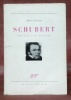
Schubert : portrait d'un musicien.
Gallimard, 1979, in-8°, 452 pp, catalogue des lieder, index des noms et des oeuvres, broché, couv. illustrée, pelliculage décollé sur les bords au 2e plat, bon état
Le musicologue Alfred Einstein (Munich, 1880 - Californie, 1952) s'est signalé par sa magistrale étude des “Madrigaux italiens”, par son “Mozart”, par sa révision du Catalogue Köchel, par celle du “Dictionnaire de musique” de Riemann, par ses articles de la “Berliner Tageblatt”. Fuyant le régime hitlérien, il gagne Londres en 1933 et les Etats-Unis en 1939. D'année en année, sans trop insister sur la biographie, Alfred Einstein s'attache aux oeuvres révélatrices de la vie intérieure. Son Schubert est un esprit indépendant, même vis-à-vis de Beethoven. C'est un être d'intimité, "seul au piano", qui ne cherche ni les jeux d'esprit ni les applaudissements. C'est un romantique, par sa joie sensuelle sur fond de tristesse, son rapport tout immédiat à la sonorité, sa palette de peintre du sentiment ; il lui arrive d'anticiper en toute précocité les trouvailles wagnériennes et modernes ; mais c'est un "classique du romantisme", chez qui le souci de poésie n'affaiblit jamais la musique. N'étant "pas de ce monde", il crée pour s'en accommoder, mais la mort lui est une douce amie. Sans dissertations, ce livre fait naître maintes idées, souvent reprises dans les études schubertiennes depuis un quart de siècle. Bref, c'est un ouvrage classique. Désormais les frais d'envoi sont de 6 € seulement pour les livres jusqu'à 1 kg (colissimo suivi), pour la France métropolitaine.
Schubert, portrait d’un musicien. Traduit par Jacques Delalande. Collection Leurs Figures.
Paris, Gallimard 1958, 207x114mm, 449pages, broché. Bon état.
Pour un paiement via PayPal, veuillez nous en faire la demande et nous vous enverrons une facture PayPal
Beyond Contemporary Fame. Reassessing the Art of Clemens non Papa and Thomas Crecquillon,
Turnhout, Brepols, 2006 Paperback, 394 p., 190 x 290 mm. ISBN 9782503518848.
Clemens non Papa and Thomas Crecquillon were the most prolific composers in the Low Countries in the mid-sixteenth century. Judging by the sheer number of sources containing their works and by the way these works were used as models for new compositions, they were venerated by performers, composers, and other music lovers. Remarkably enough, both composers have been treated casually in musicological writings. The present collection of essays ? the outcome of a conference that was held at the University of Utrecht in 2003 ? is entirely devoted to this much neglected field of research and deals with important topics, such as biographical aspects of the poorly documented lives of Crecquillon and Clemens non Papa, the influence and long-lasting presence of their music in sixteenth- and early seventeenth-century sources, the relationship between text and music, source studies, instrumental music and musical analysis. Languages : French, English, German.
Medieval Dominicans. Books, Buildings, Music, and Liturgy
, Brepols, 2021 Hardback, 405 pages, Size:156 x 234 mm, Illustrations:27 b/w, 17 col., 15 tables b/w., Language: English. ISBN 9782503569031.
Summary The Order of Preachers has famously bred some of the leading intellectual lights of the Middle Ages. While Dominican achievements in theology, philosophy, languages, law, and sciences have attracted much scholarly interest, their significant engagement with liturgy, the visual arts, and music remains relatively unexplored. These aspects and their manifold interconnections form the focal point of this interdisciplinary volume. The different chapters examine how early Dominicans positioned themselves and interacted with their local communities, where they drew their influences from, and what impact the new Order had on various aspects of medieval life. The contributors to this volume address issues as diverse as the making and illustrating of books, services for a king, the disposition of liturgical space, the creation of new liturgies, and a Dominican-made music treatise. In doing so, they seek to shed light on the actions and interactions of medieval Dominicans in the first centuries of the Order's existence. TABLE OF CONTENTS List of Illustrations, Acknowledgements Introduction ? Eleanor J. Giraud and Christian Thomas Leitmeir The Impact of the Dominicans on Books at the University of Paris 1217-1350 ?Richard Rouse and Mary Rouse The Spread and Circulation of the Dominican Pocket Breviary ; Appendix of Selected Dominican Breviaries ? Laura Albiero Illustrated Dominican Books in France, 1221-1350 ? Alison Stones The Artistic and Spiritual Impact of the Dominicans in the Eastern Mediterranean in the Late Middle Ages ?Panayota Volti The Preachers and the Evolution of Liturgical Space in Italy: Thirteenth to Sixteenth Century ? Haude Morvan 'A Path Prepared for them by the Lord': King Louis IX, Dominican Devotion, and the Extraordinary Journey of Two Preaching Friars ?Emily Guerry Thomas Aquinas, Dominican Theology, and the Feast of Corpus Christi ?M. Michèle Mulchahey Reading Eschatology in the Feast of Corpus Christi ?Barbara R. Walters The Orations of the Medieval Dominican Liturgy?Innocent Smith OP Dominican Mass Books before Humbert of Romans?Eleanor J. Giraud 'Lest the Sisters Lose Devotion': Dominican Liturgy and the Cura Monialium Question in the Thirteenth Century ? Innocent Smith OP Compilation and Adaptation: How 'Dominican' is Hieronymus de Moravia's Tractatus de Musica? ? Christian Thomas Leitmeir Jerome of Moravia's Cantor: A Specialist in Musical Sounds ?B?a?ej Matusiak OP Index
Choeurs de l'Afrique Equatoriale -Chants de Piroguiers -Féticheurs - Et Divers en dialecte indigène avec adaptation française
1950. Paris/Bruxelles Éditions Henry Lemoine & Cie 1950 - Agrafé 19 cm x 27 cm 20 pages 7 ills noir & blanc hors-texte - Chants recueillis et adaptés par Eliane Barat-Pepper préface de Jacques Chailley bel envoi de l'auteur - Très bon état

Mozart sociologie d'un génie
1991 Paris, Seuil ,1991, 11 x 18 cm , 244 pp, bon état,
collection : "la librairie du XXI ème siècle", traduit par J.Etore et B.Lortholary.

Comment entrer dans la chambre où l'on est depuis toujours
José Corti In-8, élégante couverture souple en papier à pontusseaux et nonogramme des éditions, 135 pages, ensemble marmoréen, dessins de Rachel Ben Sira ht en noir -bel ouvrage.
Traduction par l'auteur lui-même et Bernar Noël. Bon Etat Mise à jour du Samedi 27 Juin 2026. Paiement PayPal immédiat, Mondial Relay pour : France, Allemagne, Autriche, Belgique, Espagne, Italie, Portugal, Luxembourg, Pays-Bas, Pologne (Communiquer votre point ou locker si connu). Une participation supplémentaire peut être demandée pour les colis lourds hors France où les envois compris entre 5 et 25 kg sont dégressifs : 2 à 4 kilogrammes - 7.99 / 5 à 10 kg - 15.99 / 15 -25 kg - 25.99. Certaines de nos collections ( Vian, Céline, Camus (...) peuvent être expédiées en Franco de port. Pour linternational hors Europe (Suisse, Canada, Japon, Etats-Unis, les frais dexpéditions peuvent varier selon le poids (mise à jour : 1 juin 2026).
Chant du ménestrel - Partition gravée pour piano ou harpe.
Paris, Simon Gaveaux, ca.1814. 3p in-folio (env. 32*24.5). Titre et 2 pages de partition. Intéressant document mettant en musique le chant d'un ménestrel dans Emma et Eginard. Millevoye est un des importants précurseurs du Romantisme mort à seulement 34 ans en 1816. Cette partition est vraisemblablement publiée du vivant de l'auteur. Rare
![Chant du ménestrel - Partition gravée pour piano ou harpe.. Elisa Berlot [musique] ; Millevoye [texte],](https://static.livre-rare-book.com/pictures/JNL/005639_thumb.jpg)
Pauvre Jacques. Romance.
Berne, Imp. R. Armbruster, s.d. (vers 1890), 43.5x32 cm, 2 ff. de musique et paroles en français, Lithographie teinté en bleu par „J. Reichlen“ sur la couverture, dos vide.
image disp.

(SLACES, NVVA)
Phone number : 41 (0)26 3223808
Yo cantaré tu nombre, Señor
GLN-968, Cantemos al Señor, Instituto Pontificio San Pío X, Salamanca 1964
Assez bon
Materiality of Sound in Chant Manuscripts in the East
, Brepols, 2025 Paperback, Pages: 280, Size:216 x 280 mm, Illustrations:142 b/w, 11 col., 24 tables b/w., 7 tables col., Languages: English, French, Italian. ISBN 9782503610092.
Summary The two books of Scriptor, Cantor & Notator present an innovative multi-author project dealing with the complex interconnections between learning, writing and performing chant in the Middle Ages. A number of different methodological approaches have been employed, with the aim of beginning to understand the phenomenon of chant transmission over a large geographical area, linking and contrasting modern definitions of East and West. Thus, in spite of this wide geographical spread, and the consequent variety of rites, languages and musical styles involved, the common thread of parallels and similarities between various chant repertoires arising from the need to fix oral repertories in a written form, and the challenges involved in so doing, are what bring this wide variety of repertoires and approaches together. This multi-centric multi-disciplinary approach will encourage scholars working in these areas to consider their work as part of a much larger geographical and historical picture, and thus reveal to reader and listener more, and far richer, patterns of connections and developments than might otherwise have been suspected.? The Materiality of Sound in Chant Manuscripts in the East brings together articles on ancient Greek, Byzantine, Coptic and Armenian music scripts in the East. Together with the collection of essays published in The Materiality of Sound in Chant Manuscripts in the West, these books discuss local scribal peculiarities and idiosyncrasies beyond the cultural and geographical contexts of production and uses of their manuscript sources.? TABLE OF CONTENTS Introduction The Early History of Notation Writing music on Greek texts during the first Christian millennium (Alexandru, Maria) La notation musicale grecque, une affaire d'artistes ou d'artisans ? (Perrot, Sylvain) Prescriptive Notations Les tableaux de signes ekphonétiques : nouvelles considérations à partir des signes prosodiques (Zographos, Anastasios) La notazione ecfonetica bizantina: chaos e kosmos nel cosiddetto «sistema degenerato» (Tessari, Silvia) Exegete and Cantor A Kalophonic Verse from the Second Psalm composed by John Koukouzeles: From Manuscript to Performance (Chaldaeakes, Achilleas G.) Le chantre dans les communautés juives médiévales (Cerveux, Alexandre) Regional Scripts and Repertories The Asmatikon Notation. New Evidence (Kritikou, Flora) Scriptor, Cantor, Notator. The Case of the Armenian Neumes (Utidjian, Haig) No Notation, No Problem. Modern Mnemonic Movement in Ancient 'Pharaonic' Singing (Hanna, Mena Mark) The last 'scriptor cantilenae'. Composing and anthologizing on the eve of music typography in the Balkans (1820) (Plemmenos, John) List of Manuscripts List of Relevant Names List of Places
Materiality of Sound in Chant Manuscripts in the West. Scriptor, Cantor & Notator (Volume I)
, Brepols, 2023 Paperback, 328 pages, Size:216 x 280 mm, Illustrations:107 b/w, 33 tables b/w., 2 maps b/w, Language(s):English, Italian, French. ISBN 9782503606149.
Summary Scriptor, Cantor & Notator is an innovative multi-author project dealing with the complex interconnections between learning, writing and performing chant in the Middle Ages. A number of different methodological approaches have been employed, with the aim of beginning to understand the phenomenon of chant transmission over a large geographical area, linking and contrasting modern definitions of East and West. Thus, in spite of this wide geographical spread, and the consequent variety of rites, languages and musical styles involved, the common thread of parallels and similarities between various chant repertoires arising from the need to fix oral repertories in a written form, and the challenges involved in so doing, are what bring this wide variety of repertoires and approaches together. This multi-centric multi-disciplinary approach will encourage scholars working in these areas to consider their work as part of a much larger geographical and historical picture, and thus reveal to reader and listener more, and far richer, patterns of connections and developments than might otherwise have been suspected. Scriptor, Cantor & Notator is published in two books. The first, The Materiality of Sound in Chant Manuscripts in the West, brings together articles on several different families of early music scripts in the Latin West and provides a vividly diverse picture of some of the best current scholarship on the various types of ancient and medieval musical notation. TABLE OF CONTENTS Methodology Concepts and Taxonomies of Music Scripts (Rankin, Susan) Design, and the Historiography of Early Music Scripts (Varelli, Giovanni) Appunti metodologici sullo studio del canto liturgico (Albiero, Laura) Indeterminacy. New Aspect of Meaning in Gregorian Chant (Mascareñas Garza, Óscar) Guiding Silence. The Function of Melodic Interruptions in Medieval Chant (Lousberg, Leo) « Et gloriosus in saecula ». Paléographie des notations franques nord-occidentales (970-1120) (Goudesenne, Jean-François) Manuscripts and Manuscript Fragments Reuniting Fragments and Reconsidering the Scribal History of the Beneventan Zone (Nardini, Luisa) Frammenti di un antifonario in notazione nonantolana (Roncroffi, Stefania) Notation in Transition? A Palaeographical Study of the Insular Missal EXcl 3515 (Mannion, Anne) Regional Scripts and Repertories Notazioni neumatiche dei secoli XI-XII nella Biblioteca Capitolare di Verona. Riflessioni e spunti di ricerca (Cunego, Giovanni) La notation musicale dans la Catalogne médiévale. Autour des origines et son évolution (Garrigosa i Massana, Joaquim) The Scribe and the Notator as the Bearer of Identity. Bohemian Notation in Late Mediaeval Manuscripts of Central Europe (Veselovska, Eva)
Histoire des concerts populaires de musique classique, contenant les programmes annotés de tous les concerts donnés au cirque Napoléon... suivie de six esquisses sur la vie et les oeuvres de J. Haydn, Mozart, Beethoven, Weber, Mendelssohn et R. Schumann, par A. Elwart,...2e édition.
1864 Paris, Librairie Castel, 1864 ; In-18° broché, couverture jaune imprimée en noir; 142pp. , LIVpp.
On trouve en fin d'ouvrage un précieux "Guide de l' amateur de musique dans Paris" ( journaux et éditeurs de musique, manufactures de pianos, harmoniums, luthiers,concerts permanents, location d'instruments, etc...). Quelques feuillets ont de fortes piqûres, très petit manque de papier en bordure du 1er plat de la couverture.( Org 1er)
Histoire des Concerts Populaires de Musique classique. Les programmes annotés de tous les Concerts donnés au Cirque Napoléon depuis leur fondation jusqu'à ce jour. Suivis de Six esquisses sur la Vie et les Oeuvres de J. Haydn, Mozart, Beethoven, Weber, Mendelssohn et Robert Schumann.
Paris, Librairie Castel, 1964. In-12, demi-percaline, dos lisse, auteur et titre en lettres dorées, fleuron et filets dorés, couvertures conservées, 142 pp. Suivi d'un guide de l'Amateur de Musique dans Paris, LIV pp. (Quelques rousseurs en début d'ouvrage).
3è édition, portrait rajouté sur le premier ff blanc de PA Deloup Fondateur des Concerts Populaires de Paris.
Petit manuel d'harmonie, d'accompagnement de la basse chiffrée, de réduction de la partition au piano et de transposition musicale, contenant, en outre, des règles pour parvenir à écrire la basse ou un accompagnement de piano sous toute espèce de mélodie
Paris, chez Colombier s.d. [19e s.] 52pp., 48cm., br.orig. (dos renforcé), taches et rousseurs sur les pages (texte toujours lisible), probablement 1ère édition, M91592
Petit manuel d'harmonie, d'accompagnement de la basse chiffrée, de réduction de la partition au piano et de transposition musicale, contenant, en outre, des règles pour parvenir à écrire la basse ou un accompagnement de piano sous toute espèce de mélodie
Paris, chez Colombier s.d. iv + 76pp., illustré d'exemples de musique dans le texte, 2me édition revue corrigée et considérablement augmentée par l'auteur, 23cm., br.orig., rousseurs (texte toujours bien lisible), M91651
Frank Martin, musique et esthétique musicale. Actes du colloque de La Chaux-de-Fonds 1990.
Sans lieu, Revue Musicale de Suisse Romande, 1995. Gr. in-8°, 117p. Broché, couverture illustrée.
Exemplaire à l'état de neuf.
HARMONIES INITIATION A L'ESTHETIQUE MUSICALE.
LES CAHIERS LIBRES. NON DATE. In-8. Broché. Etat d'usage, Couv. légèrement passée, Dos satisfaisant, Intérieur acceptable. 151 pages - coins frottés - petite déchirure sur le 1er plat.. . . . Classification Dewey : 780-Musique
Classification Dewey : 780-Musique
HARMONIES - INITIATION A L'ESTHETIQUE MUSICALE
LES CAHIERS LIBRES. NON DATE. In-8. Broché. Bon état, Couv. convenable, Dos satisfaisant, Intérieur frais. 151 pages.. . . . Classification Dewey : 780-Musique
Classification Dewey : 780-Musique
HARMONIES. Initiation à l'esthétique musicale
format moyen, couverture souple.151 pages. Exemplaire non coupé, bon état. Une expédition par Mondial Relay vous sera proposée les cahiers libres
Emile Bienaimé (1802-1869), compositeur, ténor, deuxième second prix de Rome en musique en 1826, maître de chapelle à Notre-Dame de Paris, président de la Société libre des Beaux-Arts.
Reference : 018167
Lettre autographe signée
Emile Bienaimé (1802-1869), compositeur, ténor, deuxième second prix de Rome en musique en 1826, maître de chapelle à Notre-Dame de Paris, président de la Société libre des Beaux-Arts. L.A.S., 19 octobre 1847, 1p 1/2 in-8. Au peintre Claude-François Mirault (1784-1862), membre de l'Athénée des Arts. Il lui réclame des rapports sur des ouvrages qu'il a présenté en séance en 1844 afin de les publier. Rare autographe de ce compositeur. [419]
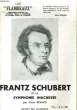
FRANTZ SCHUBERT ET LA SYMPHONIE INACHEVEE
EDITIONS DES FLAMBEAUX. 1944. In-12. Broché. Bon état, Couv. convenable, Dos satisfaisant, Intérieur frais. 22 pages.. . . . Classification Dewey : 780-Musique
Classification Dewey : 780-Musique
Abrege du cours d'harmonie theorique et pratique par Emile Durand professeur au conservatoire national de musique
ALPHONSE LEDUC. NON DATE. In-4. Relié. Etat d'usage, Couv. légèrement passée, Mors fendus, Quelques rousseurs. 171 PAGES - nombreuses partitions - une page volante - quelques rares annotations et tâches, sans conséquence sur la lecture - filets, titre et auteur dorés au dos - Dos abîmé - coins frottés - 2 photos disponibles. . . . Classification Dewey : 780-Musique

Classification Dewey : 780-Musique

