 Write to the booksellers
-
Type
Book (230)
Magazine (22)
Maps (2)
-
Latest
Last month (1)
Last week (2)
-
Language
English (1)
French (253)
-
Century
18th (2)
19th (7)
20th (115)
21st (17)
-
Countries
Belgium (47)
Côte d'Ivoire (1)
France (183)
Greece (2)
Switzerland (21)
-
Syndicate
CLAM (1)
ILAB (107)
NVVA (1)
SLACES (1)
SLAM (98)
Histoire des peuples balkaniques.
Fayard, 1950, in-12, 502 pp, 13 cartes, chronologie, biblio, broché, jaquette, bon état (Coll. Les Grandes Etudes Historiques)
"Voici un livre qui vient à son heure pour nous expliquer l'Histoire des Peuples balkaniques. En effet, les Balkans sont demeurés pour la plupart d'entre nous la « poudrière de l'Europe », et les Balkaniques une poussière de petits peuples ambitieux, jaloux, intraitables et jamais satisfaits. D'où viennent une telle turbulence et de telles exigences ? M. René Ristelhueber nous l'explique avec la précision d'un historien qui n'ignore rien des sources de son sujet, l'élégance d'un écrivain rompu à la rédaction des dépêches diplomatiques, et souvent avec un sens très exact du pathétique. Bien qu'il soit toujours dangereux et délicat, dans un travail historique, d'aborder les problèmes d'actualité, M. Ristelhueber a consacré cependant une centaine de pages de son livre aux plus récents événements. Pour mieux comprendre le drame actuel des pays balkaniques, il faut d'abord connaître leur histoire, et je ne connais pas de meilleur ouvrage, plus clair, plus synthétique, plus documenté, à la fois plus serieux et plus vivant." (B. Simiot, Hommes et mondes, 1950) Désormais les frais d'envoi sont de 6 € seulement pour les livres jusqu'à 1 kg (colissimo suivi), pour la France métropolitaine.
Histoire des peuples balkaniques. Collection : Les Grandes Etudes historiques.
Paris, Arthème Fayard, 1950. 12 x 18, 503 pp., quelques cartes, broché, bon état.
From Topography to Text: The Image of Jerusalem in the Writings of Eucherius, Adomn n and Bede
, Brepols, 2019 Paperback, xxiv + 262 pages, Size:156 x 234 mm, Illustrations:11 b/w, 10 tables b/w., 3 maps b/w, Language: English. ISBN 9782503580753.
Summary From Topography to Text: The Image of Jerusalem in the Writings of Eucherius, Adomn n and Bede uses topographical detail to examine the source material, religious imagination and the image of Jerusalem in three related Latin texts from the fifth, seventh and eighth centuries. The work introduces an original methodology for analyzing the Jerusalem pilgrim texts, defined by their core interest in the commemorative topography of the Christian holy places. By newly identifying the topographical material in Adomn n's description of Jerusalem, the study exposes key distortions in the text, its exclusive intramural focus on the Holy Sepulchre and the eschatological image of New Jerusalem that emerges from its description of contemporary Jerusalem. The study verifies the post-Byzantine provenance of Adomn n's topographical material, namely, the oral report of Arculf, thus redressing scholarly ambivalence regarding Adomn n's contemporary source. The new insights into Adomn n's De locis sanctis, including its mental map of Jerusalem, provide a template with which to analyze the text's relationship with the writings of Eucherius and Bede. While Bede's De locis sanctis has commonly been regarded as an epitome of Adomn n's work, when the sequence, structure and images of the texts are compared, Eucherius not Adomn n is, for Bede, the authoritative text. From Topography to Text offers a significant discussion on the Jerusalem pilgrim texts and the Christian topography of the Holy City, while analyzing the image of Jerusalem in the writings of three remote authors who never set foot in the city. TABLE OF CONTENTS 1. Introduction 2. The Jerusalem Pilgrim Texts 2.1. Premises 2.2. A Topographical Methodology 2.2.a. The Four Components of Topographical Descriptions 2.2.a.1. Commemoration 2.2.a.2. Location 2.2.a.2.a. Duplicate and Translated Sites 2.2.a.2.b. Biblical Descriptions of Location 2.2.a.3. Appearance 2.2.a.4. Sequence 2.2.a.5. Applying the Four-Fold Methodology 2.2.b. Topographical Templates 2.2.c. Commemorative Credibility 2.2.d. Religious Imagination 2.3. Assessing Textual Images of Jerusalem 2.4. Summary 3. Eucherius' Letter to Faustus 3.1. The Name of Jerusalem 3.2. Mount Sion 3.3. The Holy Sepulchre 3.4. The Temple 3.5. The Pool of Bethesda and the Spring of Siloam 3.6. Extramural Jerusalem 3.7. Eucherius' Image of Jerusalem 3.8. Format and Sources 4. Adomn n's De locis sanctis 4.1. Approaches and Premises 4.1.a. Adls as Pilgrim Text 4.1.b. The Internal Witness of Adls 4.1.c. The Role of Arculf 4.1.d. Adls' Supplemental Sources 4.1.e. The Three Books of Adls 4.2. The City of Jerusalem 4.2.a. Adls 1.1 as Prologue 4.2.b. Intramural Jerusalem 4.2.b.1. Entering Jerusalem 4.2.b.2. The Complex of the Holy Sepulchre 4.2.b.3. The Omission of the Pool of Bethesda 4.2.b.4. The Extramural Status of Holy Sion 4.2.c. Extramural Jerusalem 4.2.c.1. The Jehoshaphat Valley 4.2.c.2. The Jephonias Monument 4.2.c.3. Mount Sion 4.2.c.4. The Interval of Adls 1.20 4.2.c.5. The Mount of Olives 4.3. Maps and Resources 4.3.a. The Jerusalem Circuit 4.3.b. 'Arculf in Jerusalem' 4.4. Conclusion 4.4.a. Adls' Image of New Jerusalem 4.4.b. Adomn n's use of Eucherius 4.4.c. Mapping Jerusalem 5. Bede's De locis sanctis 5.1. Bdls as Epitome 5.2. The Purpose of Bdls 5.3. Scholarship on Bdls 5.4. Bede and His Sources: Adomn n and Eucherius 5.4.a. Bede's use of Adls 5.4.b. Bede's use of Eucherius 5.5. The Jerusalem Material of Bede's De locis sanctis 5.5.a. Bdls 1: The Area of Jerusalem 5.5.b. Bdls 2: Intramural Jerusalem 5.5.b.1. Entering Jerusalem 5.5.b.2. The Complex of the Holy Sepulchre 5.5.b.3. The Temple 5.5.b.4. The Pool of Bethesda and the Spring of Siloam 5.5.b.5. The Church of Holy Sion 5.5.b.6. The Column of the Miraculous Healing 5.5.c. Bdls 3: The Tree of Judas and Aceldama 5.5.d. Bdls 4: The Cloth Relics of Jerusalem 5.5.e. Bdls 5.1: Leaving Jerusalem 5.5.f. Bdls 5: The Jehoshaphat Valley 5.5.f.1. The Tower of Jehoshaphat 5.5.f.2. The Tombs of Simeon and Joseph 5.5.f.3. The Church of Mary's Tomb 5.5.f.4. The Grotto of Gethsemane 5.5.g. Bdls 6: The Mount of Olives and its Holy Places 5.5.g.1. The Church of the Ascension 5.5.g.2. The Tomb of Lazarus 5.5.g.3. The Eleona 5.6. Summary of Bede' De locis sanctis 6. Conclusion Appendix 1: Adls and the Post-Byzantine Sources Appendix 2: A Review of O'Loughlin and the Arculf Debate Appendix 3: Peter of Burgundy
Demir Kapu. Die Erzählung einer Tat des Völkerbundes. Mit einem Brief des Herrn Bundesrat Giuseppe Motta an den Verfasser.
Liestal, Verlag "zum Landschäftler", 1928. 8°. 108 S. Originalbroschur.
Erste Ausgabe. - Vom Schweizer Schriftsteller und Journalisten Adolf Saager (1879-1949) verfasste historisch-literarische Darstellung über den friedenstiftenden Einfluss des Völkerbundes im Krieg zwischen Griechenland und Bulgarien 1925. - Broschurumschlag mit Knickfalte. - Selten.

Three Pilgrimages to the Holy Land
, Brepols, 2022 Paperback, 302 pages, Size:156 x 234 mm, Illustrations:4 maps b/w, Language: English. ISBN 9782503593722.
Summary This edition presents English translations of the accounts of three important twelfth-century travellers to the Holy Land, the Anglo-Saxon Saewulf and the Germans John of W rzburg and Theoderic, based on the edition of the Latin texts. Saewulf travelled to the Holy Land soon after its capture by the First Crusade in 1099. His travelogue, framed by accounts of his outward sea journeys from southern Italy to Jaffa and back to Constantinople, describes the buildings and holy sites of Jerusalem and its surrounding countryside as they appeared in the early years of the Frankish kingdom, before the major building works that characterized the short century of Christian rule over the city were fully under way. In contrast, the two German descriptions give more detailed accounts of the transformation that the city and surrounding landscape had undergone and of the new churches and monasteries and their artistic programmes that had been created by the 1160s and 1170s. The translated texts are preceded by an introduction placing the texts in their historical context and are accompanied by brief explanatory notes with bibliographical indications for further information. The source texts of this volume appeared in Corpus Christianorum, Continuatio Mediaeualis as Peregrinationes tres (CC CM, 139), edited by R.B.C. Huygens. References to the corresponding pages of the Corpus Christianorum edition are provided in the margins of this translation. TABLE OF CONTENTS Preface Introduction Bibliography Saewulf John of W rzburg Theoderic Appendix: List of variations in the Lambeth Palace manuscript of Saewulf Index
Linguistique Balkanique. Problèmes et résultats.
Paris, Honoré Champion, 1930. Grand in-8 broché, 242 pp., table analytique. Ex. non coupé.
Collection Linguistique - XXXI. Couv. défraîchie avec qq. petites déchirures, intérieur en bonne condition. - Frais de port : -France 6,8 € -U.E. 9 € -Monde (z B : 14 €) (z C : 24 €)

Péninsule des Balkans. Carte N° 46 extraite de l'Atlas classique (Géographie moderne).
- Carte double page. 32 x 44 cm.
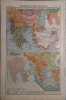
Vieux papier. (Carte de l'Italie au verso). Librairie Hachette, 1924.
Theatrum belli sive novissima tabula qua maxima pars Danubii et præsertim Hungaria cum aliis adiacentibus regnis; nec non Græcia, Morea, et Archipelagi insulæ accurate delineantur.
Augsburg, Seutter. (Ca. 1750). 48x57 cm. Kupferstichkarte mit 2 gestochenen Kartouchen mit Flächen- und Grenzkolorit.
Ryhiner 6301 7. - Kupferstichkarte des Donausverlaufes von der Quelle zur Mündung, dem Balkan, Griechenland, ganz Italien und Kleinasien. Leicht moderfleckig.
Rapport sur les directives du VIe congres du PTA relatives au Ve plan quinquennal (1971-1975) de developpement economique et culturel de la republique populaire d'Albanie présenté au VIe congrès du PTA le 4 novembre 1971.
"Editions "" Naim Frashëri "". 1971. In-12. Relié. Bon état, Couv. convenable, Dos satisfaisant, Papier jauni. 167 pages - photo en noir et blanc de l'auteur en frontispice - petite déchirure sur la page de titre.. . . . Classification Dewey : 949.6-Balkans"
Classification Dewey : 949.6-Balkans
Intercultural Encounters in Medieval Greece after 1204. The Evidence of Art and Material Culture
, Brepols, 2022 Paperback, 572 pages, Size:156 x 234 mm, Illustrations:220 b/w, 35 col., Language: English. ISBN 9782503598505.
Summary Based on the evidence of artistic production and material culture this collective volume aims at exploring cross-cultural relations and interaction between Greeks and Latins in late medieval Greece in the aftermath of the Fourth Crusade. Fourteen essays discuss mostly new and unpublished archaeological and artistic material, including architecture, sculpture, wall-paintings and icons, pottery and other small finds, but also the evidence of music and poetry. Through the surviving material of these artistic activities this volume explores the way Byzantines and Latins lived side by side on the Greek mainland and the Aegean islands from the thirteenth to the fifteenth centuries and traces the mechanisms that led to the emergence of the new, composite world of the Latin East. Issues of identity, patronage, papal policy, the missionary activities of the Latin religious orders and the reactions and responses of the Byzantines are also re-considered, offering fresh insights into and a better understanding of the various manifestations of the interrelationship between the two ethnicities, confessions and cultures. TABLE OF CONTENTS Introduction List of Abbreviations List of Illustrations PART I: TRACING THE LATIN IDENTITIES AND THE ROLE OF THE MENDICANTS Michalis Olympios, Architecture, Use of Space, and Ornament in the Mendicant Churches of Latin Greece: An Overview Vicky Foskolou, Reflections of Mendicant Spirituality in the Monumental Painting of Crete in the Late Medieval Period (13th-15th centuries) Nickiphoros I. Tsougarakis, Art, Identity, and the Franciscans in Crete Ioanna Bitha and Anna-Maria Kasdagli, Saint George 'of the English': Byzantine and Western Encounters in a Chapel of the Fortifications of Rhodes Dimitris Kountouras, Western Music and Poetry at the Kingdom of Thessalonica: Music and Historiography of the Fourth Crusade PART II: SOCIAL TRANSFORMATIONS AND MUTUAL APPROACHES: THE EVIDENCE OF ARCHAEOLOGY AND MATERIAL CULTURE Olga Gratziou, Imported Projects, Local Skills, and the Emergence of a 'Cretan Gothic' Anastasia Vassiliou, Glazed Pottery in Late Medieval Morea (13th-15th Centuries): Cross-Cultural Tableware with Multiple Connotations Maria Michailidou, Pottery Finds in the Medieval Town of Rhodes (1204?1522): Insights on a Multicultural, Cosmopolitan Society Eleni Barmparitsa, Dress Accessories and Sartorial Trends in the Principality of Achaia (1205-1428): Evidence from the Frankish Castles of Chlemoutsi and Glarentza PART III: CULTURAL INTERACTIONS AND BYZANTINE RESPONSES: THE EVIDENCE OF ARCHITECTURE, MURALS, AND ICON PAINTING Michalis Kappas, Cultural Interactions between East and West: The Testimony of Three Orthodox Monasteries in Thirteenth-Century Frankish Messenia Aspasia Louvi-Kizi, Politics of Equilibrium: Gothic Architectural Features at Mystras (1361-71), Cypriot Models, and the Role of Isabelle de Lusignan Nikolaos Mastrochristos and Angeliki Katsioti, Reconstructing the Artistic Landscape of Rhodes in the Fifteenth Century: The Evidence of Painting from Lindos Konstantia Kefala, Permeable Boundaries of Artistic Identity: The Origin of a Fifteenth-Century Annunciation Sophia Kalopissi-Verti, Preaching, the Role of the Apostles, and the Evidence of Iconography in East and West: Byzantine Responses to the 'Challenges' from the Latin Church after 1204 Notes on Contributors Index
Les outils dans les Balkans du moyen âge à nos jours 2 volumes
Italie 1986 Editions de l'Ecole des Hautes Etudes en Sciences Sociales et Maisonneuve et Larose Hardcover 1st Edition
Reliure rigide: Très bon, boîte: Très bon, 25 x 19 cm, 379, 1032, français, 1ère édition, 2 volumes, illustrations, état du livre: Très bon Couverture en lin bordeaux avec impression dorée du titre sur le devant et le dos du livre ; avec une boîte coulissante en même tissu ; illustrations en noir et blanc. [Cette description peut avoir été traduite par une IA.]
LIFE AUTOUR DU MONDE - LES BALKANS
TIME-LIFE. 1965. In-4. Relié. Bon état, Couv. convenable, Dos satisfaisant, Intérieur frais. 156 pages. Nombreuses illustrations en couleurs et noir et blanc dans et hors texte. Texte en colonnes.. . . . Classification Dewey : 949.6-Balkans
Classification Dewey : 949.6-Balkans
Life autour du Monde. Les Balkans
Time LIFE. 1965. In-4. Cartonné. Bon état, Couv. convenable, Dos satisfaisant, Intérieur frais. 156 pages. Texte sur deux colonnes illustré de nombreuses photos en n&b et quelques-unes en couleurs. Cartes au début et in fine.. . . . Classification Dewey : 949.6-Balkans
Classification Dewey : 949.6-Balkans
La Bataille à Scutari d'Albanie
Emile-Paul. 1913. In-12. Broché. Etat passable, Tâchée, Coiffe en pied abîmée, Quelques rousseurs. 288p,traces de mouillures sur le 2ème plat à l'intéreiur et taches sur le 1er plat, petit manque sur la coiffe en pied.Les pages se détachent.Signature sur le 1er plat.. . . . Classification Dewey : 949.6-Balkans
"4ème édition, N° 1,558. ""Depuis des siècles les Monténégrins ont coutume de faire des razzias au pays Ottoman, ils appellent ces incursions des Tchétas"" Classification Dewey : 949.6-Balkans"
Über die Geschichte und Sprache der Albaner und der Wlachen.
Hamburg, Helmut Buske, 1976. In-8 broché, 366 pp., textes en allemand, albanais, roumain et latin, bibliographie.
Romanistik in Geschichte und Gegenwart. Band 4. Comme neuf - Frais de port : -France 6,8 € -U.E. 9 € -Monde (z B : 14 €) (z C : 24 €)
La Hongrie de l'Adriatique au Danube: Impressions de voyage.
Paris Plon 1883 Grand in-8 de 4 ff. lim. n.ch. (le premier blanc) et 412 pp., demi chagrin, dos à nerfs orné, dos orné, tranches dorées, petit accroc en haut du mors sup., des rousseurs. (Ch. Magnier rel.).
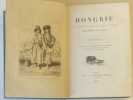
Bel ouvrage, illustré de 10 héliogravures hors-texte d'après Valerio et 160 gravures dans le texte dont 100 dessins de Poirson (de nombreux à pleine page), 1 carte dépliante en couleurs.
Legacies of the Crusades. Proceedings of the Ninth Conference of the Society for the Study of the Crusades and the Latin East, Odense, 27 June - 1 July 2016. Volume 1
, Brepols, 2021 Hardback, 304 pages, Size:156 x 234 mm, Language: English. ISBN 9782503587882.
Summary When war ended, the hard work began. Crusader warfare was only the beginning, for after peace came huge and often fundamental changes for individuals and societies. First it was necessary to establish firm and secure agreements between enemies, and take care of prisoners of war and refugees. Soon followed new legal systems, and new social groups emerged as old and new families intermarried, or entire segments of the population became subordinates under new rulers. And in a longer time perspective, the entire physical landscape was changed to conform to and express the beliefs and values of the conquerors. The military expeditions of the medieval crusades are well studied, at different times and in many diverse areas, but the consequences for individuals and societies much less. This book opens up a new research area, and contributes with 11 studies covering the Middle Eastern crusader states, the Mediterranean, and the Baltic Sea. TABLE OF CONTENTS Introduction. Legacies of the Crusades Torben Kjersgaard Nielsen and Kurt Villads Jensen I. The Diversity of Crusading From Jerusalem to Mexico. Unity and Diversity in Crusading, Eleventh to Sixteenth Centuries Alan V. Murray II. Crusades to the Holy Land Between the Downfall of Edessa and the Capture of Damietta. How the Glamour of the Prester John Legend Influenced the Crusader-Muslim Conflict, (539-618 AH / 1144-1221 AD) Ahmed M. Sheir Give me Three Good Reasons for a Muslim to end a crusade. Saladin and the Third Crusade Betty Binysh On the Role of Roman law in the Crusader States. Allocation of Risk and the Ransom of Captives Tomislav Karlovi? Refugees in the Latin East before and during the Third Crusade (1168-1192) Jochen Burgtorf III. Societies in the Eastern Mediterranean Desire, Myth, and Necessity. Latin Attempts at Integrating Nubians into the Orbis Christianorum of the Holy Land During the Twelfth to Fifteenth Centuries Adam Simmons Unknown Leaders. The Contribution of the Teutonic Grand Master's Deputies to the Order's Status and Position in the Latin Kingdom of Jerusalem Shlomo Lotan The Formation and Evolution of the Class of Burgesses in the Lusignan Kingdom of Cyprus 1192-1474 Nicholas Coureas The Knight Hospitaller Slave system and its Variety of Enslaved Groups on Cyprus, Rhodes and Malta Nicholas McDermott IV. New Polities and Societies in the Baltic Region Agreements on the Acceptance of Christianity between Crusaders and Pagans in Thirteenth-Century Livonia Mihkel M esalu A Crusader and the Chieftain's Daughter. Connubium between Conquerors and Natives during the Baltic Crusades Anti Selart The Inclusion of Indigenous Western Baltic People in the Teutonic Order's Prussian and Curonian Land Administration in the Thirteenth and Fourteenth Centuries Raitis Simsons The Teutonic Order and the Origins of its State as an Example of a Crusading Landscape in Fourteenth-Century Prussia Gregory Leighton
Les Aroumains un peuple qui s'en va: Suivi de L'aroumain parlé à Metsovo ; Le nomadisme chez les Aroumains
Editions Acratie 2005 in8. 2005. Broché.
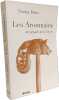
Bon état quelques rousseurs sur la tranche intérieur propre
Les Balkans 1945 - 1960. Thèse.
Paris, Presses Universitaires de France 1977, 240x155mm, 269pages, broché. Bel exemplaire.
Pour un paiement via PayPal, veuillez nous en faire la demande et nous vous enverrons une facture PayPal
Die Balkanländer im Europa der Gegenwart. Fünftes Symposium, organisiert in Thessaloniki (am 22.-23. Mai 1992) vom Institut für Balkan-Studien und der Südosteuropa-Gesellschaft München
Thessaloniki, Istitute for Balkan Studies 1994 170pp., 24cm., softcover, few stamps, good condition, [contributions in German, English and French], G75412
E istorike, archaiologike kai laografike eruena gia te Thrake : Symposio. Xanthe, Komotene, Alexandroupole, 5-9 Dekembriou 1985. Praktika
Thessalonike [Thessaloniki], Idruma meleton Chersonesou tou Haimou (Institute ofr Balkan Studies) 1988 449pp.with illustrations, 24cm., softcover, in the series "Institute for Balkan Studies" vol.217, [text in Greek], Good condition, G77675
Architecture and Visual Culture in the Late Antique and Medieval Mediterranean. Studies in Honor of Robert G. Ousterhout
, Brepols, 2021 Paperback, xviii + 253 pages, Size:216 x 280 mm, Illustrations:90 b/w, Language: English. ISBN 9782503583969.
Summary This book comprises sixteen essays addressing issues of art and architecture together with archaeology within the context of sacred space, broadly defined. It encompasses a wide range of territories, methodologies, perspectives, and scholarly concerns. Our point of departure is the built environment, with all that this entails, including religious and political ceremony, painted interiors, patronage, contested spaces, structural and environmental concerns, sensory properties, the written word as it pertains to architectural projects, and imagined spaces. In all, the scholars involved in this project find fresh approaches and uncover new meanings and interpretations in the material examined within this volume, including buildings and objects from Europe to Asia, and spanning from Late Antiquity through the end of the Middle Ages. TABLE OF CONTENTS Preface List of Abbreviations Publications of Robert G. Ousterhout LATE ANTIQUE MANIFESTATIONS 1. Benjamin Anderson, The Forum of Theodosius: Labor and the Gods 2. Anna Sitz, Architectures of Surveillance: Houses and Stylites in the Northern Syrian 'Dead Villages' CONSTRUCTING SANCTITY 3. Amy Papalexandrou, Sacred Sound and the Reflective Cornice 4. Michalis Kappas, Building an Orthodox Monastery in the Frankish Morea: Andromonastiro at Messenia 5. Vasileios Marinis, What Makes a Church Sacred? Symeon of Thessalonike's Commentary on the Rite of Consecration 6. Warren T. Woodfin, Furnishing the Celestial Sanctuary: Painted Architectural Settings for the Communion of the Apostles 7. Eunice Dauterman Maguire & Henry Maguire, 'The Forgotten Symbols of God': Screening Patterns from the Early Christian and Byzantine Worlds 8. Roland Betancourt, Extended in the Imagination: The Representation of Architectural Space in Byzantium THE LEVANT 9. Rory O'Neill, Structural Innovation and Tradition in the Medieval Levant 10. Megan Boomer, 'Architecture as Reliquary': Latin Reconstruction and Rhetoric at the Church of the Holy Sepulchre 11. Charles A. Stewart, Hallowed Halls: Earliest Domed-Hall Churches in Cyprus 12. Jordan Pickett, Conflict Architecture: Making History at the Tomb of the Patriarchs in Hebron ANATOLIA AND ARMENIA 13. Suna a?aptay, Into the Sacred Space: Facing Ayasoluk and Its Gate of Persecutions 14. Tolga Uyar, Carving, Painting and Inscribing Sacred Space in Late Byzantium: Bezirana Kilisesi Rediscovered (Peristrema-Cappadocia) 15. Fatma G l zt rk B ke, Questioning Boundaries in Byzantine Cappadocia: Secular Spaces, Sacred Spaces, and Interfaces In-between 16. Armen Kazaryan, City of Ani. Constructing a Medieval Capital in the Christian Orient List of Contributors
Le Monténégro. Pages d' Histoire Diplomatique.
Paris,Eugène Figuière,1917 ; petit in-8°,broché,couverture gris pale imprimée en noir et rouge; 2ff.,99pp.,2ff.
Première partie : 1860-1914 - Deuxième partie : le Monténégro dans la Guerre Européenne. a) Avant la catastrophe.b ) Après la chute du Monténégro.Troisième partie :Politique actuelle du Monténégro.( CO1)
UN PEUPLE MARTYR
Librairie Critique Emile Nourry, Paris. 1923. In-12. Broché. Etat d'usage, Couv. légèrement passée, Dos fané, Intérieur frais. 69 pages. Illustré de dessins en couleur sur planches hors texte, et de quelques cartes en noir et blanc sur planches dépliables en fin d'ouvrage.. . . . Classification Dewey : 949.6-Balkans
La question des Wendes (Serbes de Lusace) devant l'opinion publique. Classification Dewey : 949.6-Balkans
De godsdienst der Slaven
Roermond, J.J.Romen en zonen 1969 200pp.met 8 buitentekstills. + tekeningen in de tekst, linnen band met stofwikkel

