 Write to the booksellers
-
Language
English (1)
French (67)
German (1)
-
Century
19th (3)
20th (53)
21st (5)
-
Countries
Belgium (41)
France (28)
-
Syndicate
CLAM (2)
ILAB (9)
SLAM (7)
La gnosi. Natura e storia di una religione tardoantica (Biblioteca di cultura religiosa)
Paideia 2000 504 pages 20 8x3 2x14 8cm. 2000. Broché. 504 pages.

proche du très bon état intérieur propre bonne tenue
L'homme de desir. Présentation de Robert Amadou
, coll. « Gnose » 1979 In-8 broché. 325 pages. Très bel exemplaire. Bon état d’occasion.
Avec une belle dédicace de Robert Amadou Bon état d’occasion
Martyrium und Sophiamythos im Gnostizismus nach den Texten von Nag Hammadi
Münster Westfalen, Aschendorffsche Verlagsbuchhandlung 1987 316pp., in the series "Jahrbuch für Antike und Christentum" Ergänzungsband 14 (1987), 28cm., publisher's hardcover binding in blue cloth, dustwrapper, small stamp on title page, text and interior are clean and bright, good condition, R107289
Der glaubende und die feindliche Welt. Beobachtungen zum gnostischen Dualismus und seiner Bedeutung für Paulus und das Johannesevangelium
Neukirchen, Neukirchener Verlag 1970 xii + 324pp., 24cm., hardcover (publisher's blue cloth with gilt lettering), in the series "Wissenschaftliche Monographien zum Alten und Neuen Testament" volume 37, some traces of use & few underlinings in pencil, else in good condition, R78529
Gnostica - Mandaica - Liturgica opera eius ipsius selecta & collecta septuagenario Erico Segelberg oblata, curantibus Jan Bergman, Jan Hjärpe, Per Ström una cum Bibliographia Segelbergiana ab Oloph Bexell redacta
Uppsala, Almqvist & Wiksell International 1990 212pp., 24cm., in the series "Acta Universitatis Upsaliensis. Historia religionum" vol.11, softcover, good condition, [texts in English], [contains the following chapters: Gnostica pp.19-80, Mandaica pp.81-144, Liturgica pp.145-170, Bibliographia pp.171-212], X76045
Du créateur biblique au démiurge gnostique. Trajectoire et réception du motif du blasphème de l'Archonte
, Brepols, 2021 Paperback, 864 pages, Size:156 x 234 mm, Illustrations:38 tables b/w., Language(s):French, Hebrew, Greek. ISBN 9782503584966.
Summary L'auteur de ce livre propose la comparaison critique de toutes les utilisations attestées du motif gnostique du blasphème de l'Archonte et l'étude de la transformation de la citation du texte d'Isaïe dans les textes gnostiques en examinant les particularités de chaque attestation. Cette approche permet, entre autres, de bien distinguer les différentes versions du blasphème de l'Archonte et de retracer, autant que possible, les différentes étapes de sa diffusion dans la littérature gnostique. Toutes ces variantes sont précieuses, car elles permettent de préciser les destinataires visés par les différentes oeuvres et les contextes socioreligieux spécifiques à chacune de celles-ci. L'Archonte apparaît tantôt comme un modèle de conversion à imiter, tantôt comme un anti-modèle à rejeter, comme le type de l'impiété religieuse. Ces présentations impliquent des destinataires et des situations communautaires différents, si bien que les origines du motif du blasphème de l'Archonte sont diverses, mais doivent être situées à l'intérieur du cadre de la construction du discours interreligieux. Le blasphème de l'Archonte apparaît alors comme un des volets de la crise identitaire du christianisme au IIème siècle, qui s'est cristallisée, entre autres, autour de la question de la véritable connaissance de Dieu. TABLE OF CONTENTS Préface par Paul-Hubert Poirier Avant-propos Table des matières Partie I : Introduction Prologue Chapitre I : Fondement scripturaire du blasphème de l'Archonte Partie II : Les versions ophites du blasphème de l'Archonte Chapitre II : Le blasphème de Yaldabaôth de la notice d'Irénée sur les ophites Chapitre III : Le blasphème du Grand Géniteur Yaldabaôth dans l'Écrit sans titre Chapitre IV : Le blasphème de Samaël-Sakla-Yaldabaôth dans l'Hypostase des archontes Chapitre V : Le blasphème du Grand Géniteur dans la Sagesse de Jésus-Christ Chapitre VI : Le blasphème du Cosmocrator dans le Deuxième traité du Grand Seth Partie III : Les versions barbélo-séthiennes du blasphème de l'Archonte Chapitre VII : Le blasphème du Protarchonte de la notice d'Irénée sur les barbéliotes Chapitre VIII : Le blasphème du Protarchonte Yaldabaôth dans l'Apocryphon de Jean Chapitre IX : Le blasphème du Grand Démon Sakla dans la Prôtennoia trimorphe Chapitre X : Le blasphème de Sakla dans le Livre sacré du Grand Esprit invisible Partie IV : Les versions valentiniennes du blasphème de l'Archonte Chapitre XI : Le blasphème du Démiurge de la Grande Notice d'Irénée et la réfutation des livres II et IV Chapitre XII : Le blasphème du Démiurge dans l'Adversus Valentinianos de Tertullien Chapitre XIII : Le blasphème du Démiurge de la notice sur Valentin de l'Elenchos Partie V : Les « autres » versions du blasphème de l'Archonte Chapitre XIV : Le blasphème de l'Archonte dans L'Adversus Marcionem de Tertullien Chapitre XV : Le blasphème du Cosmocrator de la notice contre Marcion d'Eznik de Ko?b Chapitre XVI : Le blasphème d'Élohim de la notice sur Justin de l'Elenchos Chapitre XVII : Le blasphème du Grand Archonte de la notice de l'Elenchos sur Basilide Chapitre XVIII : Le blasphème de l'Archonte de la notice d'Épiphane contre les nicolaïtes Chapitre XIX : Le blasphème de l'Archonte dans la Seconde Apocalypse de Jacques Partie VI : Conclusion Épilogue Annexe I. La source commune à l'Écrit sans titre et à l'Hypostase des archontes Annexe II. Les matériaux communs à la Sagesse de Jésus-Christ et à Eugnoste Bibliographie Index des auteurs modernes Index des sources anciennes
Kushta. A monograph on a principal word in Mandaean texts. I: The descending knowledge
Lund, Gleerup 1953 144pp., 24cm., original first 1953-edition, softcover, small stamp at verso of title page, good condition, X75746
Constructions of Gender in Late Antique Manichaean Cosmological Narrative
, Brepols, 2019 Paperback, 324 pages, Size:156 x 234 mm, Languages: English, Latin. ISBN 9782503586663.
Summary Manichaeism emerged from Sasanian Persia in the third century CE and flourished in Persia, the Roman Empire, Central Asia and beyond until succumbing to persecution from rival faiths in the eighth to ninth century. Its founder, Mani, claimed to be the final embodiment of a series of prophets sent over time to expound divine wisdom. This monograph explores the constructions of gender embedded in Mani's colourful dualist cosmological narrative, in which a series of gendered divinities are in conflict with the demonic beings of the Kingdom of Darkness. The Jewish and Gnostic roots of Mani's literary constructions of gender are examined in parallel with Sasanian societal expectations. Reconstructions of gender in subsequent Manichaean literature reflect the changing circumstances of the Manichaean community. As the first major study of gender in Manichaean literature, this monograph draws upon established approaches to the study of gender in late antique religious literature, to present a portrait of a historically maligned and persecuted religious community. TABLE OF CONTENTS 1. Introduction: This discusses the history of gender studies and its application to religious studies; a summary of previous literature relating to gender in Manichaeism; a brief life of Mani and its relation to his canon of texts. It outlines the contents of the following chapters. 2. The Manichaean Father: exploration and identification of gendered attributes associated with masculinity with reference to Connell's model of hegemonic masculinity. The Manichaean Father is considered as embodiment of desirable masculine traits and the appropriate exercise of masculine rulership and authority. 3. The Chief Archon: This chapter examines the construction of gender implicit in the characterization of the chief archon. Mani's writings characterize the chief archon in polar opposition to the Manichaean Father as exemplum of masculine rulership which embodies lust for power and territory. Mani characterizes the chief archon as a dangerous outsider who seeks to invade. This is expressed through the trope of the cannibal. The chief archon's acts of cannibalism mark him as alien, uncivilized and savage. Manichaean texts written after Mani's death reflect the persecution of the Manichaean community. The characterization of the chief archon develops to reveal a tyrannous ruler who incites fear and terror in his own subjects. 4. The First Man: This chapter considers the apparent paradox of the two competing constructions of masculinity evident in the characterization of the Manichaean First Man, who plays a central role in Manichaean cosmological drama. His characterization as both valiant warrior and suffering victim in defeat is explored in the context of the changing circumstances of the Manichaean community facing persecution. Parallel models of endurance as a worthy expression of masculinity in Jewish, Judaeo-Christian and early Christian literature are discussed. 5. The Mother of Life: This chapter explores the gendered characterization of the Manichaean Mother of Life in Manichaean literature. As mother of the First Man, the Mother of Life embodies positive motherhood, demonstrating nurturing characteristics. Her role in the mythological drama is considered as an expression of the Jewish/Judaeo-Christian literary Wisdom figure (Sophia, Hokmah). The Mother of Life shares and extends imagery attached to Hokmah to encompass wisdom as a weapon. The Mother of Life is also characterized as a model of feminine imprecation to masculine authority through the valorization of her prayer to the Manichaean Father on behalf of the beleaguered First Man. This is discussed in relation to the veneration of Hannah's prayer (1 Sam.) in rabbinic literature. 6. The Manichaean Demoness Az and the yetzer hara: This chapter explores parallels between the feminine-gendered demon Az and the evolving Jewish concept of the "evil inclination" (the yetzer hara) as expressions of the human propensity to sin. As mother of Adam and Eve and mother of the demons, the maternal style of the demoness Az polarizes the motherhood of the Mother of Life. 7. The Maiden of Light: This chapter explores the characterization of the Maiden of Light and her epithets of purity and wisdom in the context of the seductive display of her image to the archons in Manichaean mythology. This act is considered in the context of the model used by feminist biblical scholars of the male as owner of the gaze and the female as object of male gaze. The chapter argues that the characterization of the Maiden of Light should be considered in relation to the biblical characterizations of Susanna, Judith and Esther. These reveal the female as both victim and manipulator of male gaze. These texts reveal that the seeking of male gaze is extolled in cases of communal threat when authorized by masculine authority. It is argued that the seductive display of the Maiden of Light allows doubt concerning the exploitation of females within the Mnichaean community. 8. Conclusions: The conclusion draws together the research findings of the previous chapters. Polarized positions within and across constructions of gender are considered.
Devoir (Le) Spiritualiste. Son idéal. Sa conception. Sa réalisation.
Sotteville-les-Rouen (puis Bihorel-les-Rouen), A.-L. Legrand, Bibliothèque des "Amitiés Spirituelles" n°12, sans date (circa 1925), mention de 4e édition sur la couverture ; in-16, broché ; 93 pp., (1 bl.), (4) pp. de table, couverture orange.
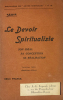
Un papillon imprimé donne la nouvelle adresse de A.-L. Legrand à Bihorel-les-Rouen. Ouvrage d'ésotérisme chrétien. Bon état général.


Koptisch-Gnostische Schriften, Erster Band: Die Pistis Sophia, die beiden Bücher des Jeu, unbekanntes altgnostisches Werk
Berlin, Akademie-Verlag 1962 xxxvi + 424pp., re-edition of the 3rd edition, 26cm., original softcover, good condition, C102685
Een onbekend gnostisch systeem in Plutarchus' De Iside et Osiride
Leuven, 1942 xiii + 126pp., 24cm., orig. omslag, in de reeks "Studia Hellenistica" volume 1, onopengesneden, mooie staat, C92236
Selected Essays on Gnosticism, Dualism and Mysteriosophy
Leiden 1978 BRILL Hardcover
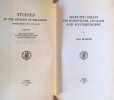
Relié, 24 x 17 cm, 490 pp., Anglais, état du livre : Très Bon Études dans l'histoire des religions XXXVIII [Cette description peut avoir été traduite par une IA.]
A Study in Anti-Gnostic Polemics: Irenaeus Hippolytus and Epiphanius (Studies in Christianity and Judaism 1.)
WILFRID LAURIER UNIV PR 1981 126 pages 1x23x15cm. 1981. Broché. 126 pages.
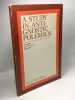
bon état de conservation intérieur propre bords un peu frottés intérieur propre
De gnostisch-occulte vloedgolf - van Simon de Tovenaar tot New Age. Een kritische beoordeling
Kampen, Kok 1990 246pp., gebroch., mooie staat, R53363
De gnostisch-occulte vloedgolf - van Simon de Tovenaar tot New Age. Een kritische beoordeling
Kampen, Kok 1990 246pp., aantekeningen in de tekst en marge, gebroch., verder in goede staat, R53364
The New Testament and gnosis: Essays in honour of Robert McL. Wilson
Edinburgh, T. & T. Clark 1983 xii + 258pp. + portrait, 23cm., hardcover, 3 stamps (of which a small one at lower edges), else VG, R70125
Heilsgeschichtlich verfasste Theologie und Männerbünde. Die Grundlagen des gnostischen Weltbildes
Tübingen, Tübinger Gesellschaft 1994 xxix + 183pp., 24cm., softcover, dustwrapper, Very good condition, in the series "Tübinger Gesellschaft. Wissenschaftliche Reihe" Band 4, X77483
Iranian manichaean Turfan texts in publications since 1934. Photo edition
London, School of Oriental and African Studies 2000 59pp. + 188 plates, 33cm., in the series "Corpus inscriptionum iranicarum. Supplementary series" vol.4, hardback (cloth), very good condition, ISBN 0 7286 0315 2, X76036
Studies in the gospel of Thomas
London, Mowbray 1960 vii + 160pp., 1st edition, 23cm., editor's hardcover, dustwrapper, good condition, R78442

