 Write to the booksellers
-
Language
English (1)
French (67)
German (1)
-
Century
19th (3)
20th (53)
21st (5)
-
Countries
Belgium (41)
France (28)
-
Syndicate
CLAM (2)
ILAB (9)
SLAM (7)
Démonstration de la prédication apostolique
CERF 1995 412 pages in8. 1995. Broché. 412 pages. Le contenu présente la vie et l'œuvre d'Irénée de Lyon évêque du IIe siècle disciple de Polycarpe et figure majeure de la théologie primitive. Il est connu pour sa lutte contre le gnosticisme et sa défense de la Tradition apostolique. Le livre 'Démonstration de la prédication apostolique' est un traité catéchétique qui expose la foi chrétienne à partir des Écritures
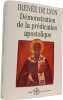
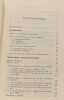
Bon Etat intérieur propre
Gnostic Religion
Beacon Press 1971 355 pages 13 716x2 286x20 066cm. 1971. Broché. 355 pages.
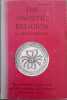
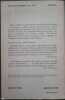
intérieur propre malgrés quelques annotations au crayon papier dans l'ouvrage
La Magie
Presses universitaires de france 1973 in12. 1973. Broché. Ouvrage universitaire de la collection "Que sais-je ?" des Presses Universitaires de France qui explore le phénomène de la magie à travers différentes cultures et périodes historiques notamment en Afrique noire dans l'Égypte ancienne le bouddhisme le judaïsme et présente des figures comme John Dee et Aleister Crowley
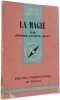
Bon Etat couverture frottée intérieur propre
Entwicklungslinien durch die Welt des frühen Christentums
Tübingen, J.C.B.Mohr (Paul Siebeck) 1971 xii + 276pp., hardback (editor's blue cloth with gilt lettering, few vague spots on both plates), 24cm., stain on upper edges (not on pages), R77135
Revealing Women: Feminine Imagery in Gnostic Christian Texts
, Brepols, 2021 Paperback, 231 pages, Size:156 x 234 mm, Language: English. ISBN 9782503586687.
Summary Revealing Women offers a detailed and textually oriented investigation of the roles and functions of female characters in Gnostic Christian mythologies. It answers questions such as: to what end did Gnostic Christian theologians employ feminine imagery in their theology? What did they want to convey through it? This book shows that feminine imagery was a genuine concern for Gnostic theologians, and it enquires about how it was employed to describe the divine through a contextual reading of Gnostic Christian texts presenting Ophite, Sethian, Barbeloite and Valentinian mythologoumena and theologoumena. Overall, it argues that feminine imagery ought to be acknowledged as an important theological framework to investigate and contextualize Gnostic works by showing that these theologians used feminine imagery to exemplify those aspects of the Godhead which they considered paradoxical and, yet, essential. The claims made in the first chapters are later substantiated by an in-depth investigation of understudied Gnostic texts, such as the so-called Simonian Gnostic works, the Book of Baruch of the Gnostic teacher Justin and the Nag Hammadi treatise known as Exegesis of the Soul.
The Gnostic Scriptures: A New Translation With Annotations and Introductions (Anchor Bible Reference Library)
Bantam Doubleday Dell 1995 568 pages 15 6x23 1x4 7cm. 1995. Broché. 568 pages.
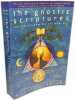

proche du très bon état intérieur propre
Puissance du Christianisme. Magie Chrétienne.
Paris, Aryana (G. Vidal) (Lyon, Imprimerie Bosc Frères), 1960 ; in-8, broché ; 288 pp., 1 planche hors-texte, figures.
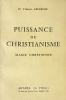
EDITION ORIGINALE. Jésus et la science : Jésus et le paranoïaque ; rapport ami-ennemi ou fraction sociale ; rapport ouverture-fermeture de l'âme ou fraction d'amour ; l'oeil de Dieu, l'oeil de Satan ; religion-antireligion ; guérison et cristalisation ; foi et radioactivité ; réincarnation ; lumière polarisée ; crucifié sur le souffle ; sédimentation des âmes ; fleuves de défunts et champs électroniques. Jésus et la société : Jésus et l'Etat ; délire aloolo-collectiviste ; le Karma dans l'Evangile ; Jésus et l'hygiène collective ; Paix universelle ; etc. Jésus et la Magie : berceau magique ; solide ultra-léger ; communions ; masochisme dans l'oeuvre du Christ ; sadisme autour de lui ; rites et pleurs ; amour transfiguration ; condamnation secrète ; oeil-flambeau ; centre solaire ; etc. ; alpha et oméga ; désintégration de l'esprit ; l'eau de l'âme ; Jésus et l'atome ; le culte magique ; Christ-Roi ; etc. Bel exemplaire non coupé.


La gnose
1971 Petite Bibliothèque Payot - 1971 - In-12 broché, couverture illustrée - 277 pages


Passages soulignés au stylo p13 à 15 (voir photos) et 4 traits dans le catalogue en fin d'ouvrage - Quelques rares autres passages soulignés au crayon de papier d'un trait non appuyé - Pli de lecture au dos - Légers frottements et plis à la couv. Assez bon
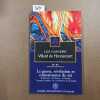
Les cahiers Villard de Honnecourt #81 : La gnose, révélation et connaissance de soi
2011 - broché - Numéro 81 - Publication de la GLNF (Grande Loge Nationale Française) - 2011 - In-8 (24 x 15 cm) broché - 159 pages - Publication sous titrée "Un regard différent sur la spiritualité" - Revue fondée par Jean BAYLOT en 1965 - François STIFANI (Directeur de la publication) - Bertrand HEYRAUD (Directeur de la rédaction) - ISBN : 9771969992002 / 1969-9921 - SOMMAIRE : La gnose, illuminisme et ésotérisme (Bruno PINCHARD) - Gnosticisme et initiation. Conférence Villard de Honnecourt de Mircéa ELIADE - Histoire de la Franc-Maçonnerie. Harold Charles Mamlock, un défenseur méconnu de la régularité maçonnique (Francis DELON) - Histoire des spiritualités. Rome (Bertrand HEYRAUD) - Gnose et gnoticisme (Yves PAIX) - Gnose, théosophie et Jacob Boehme (Jacques CHRISSOS) - ...
Bon état
Das Johannesbuch der Mandäer. Part I: Einleitung, Ubersetzung, Kommentar. Part II: Text [2 parts in 1 volume]
Giessen, Töpelmann 1966 2 parts in 1 volume (complete): xxxii,256pp. + 291pp., 25cm., unaltered reprint of the original 1905-1915-edition ("unveränderter Nachdruck"), cloth, very good condition, scarce, X75754
Clement of Alexandria. A Study in Christian Platonism and Gnosticism
Oxford, Oxford University Press 1971 xiv + 266pp., 1st edition, in the series "Oxford Theological Monographs", publisher's hardcover in cloth with gilt lettering on spine, dustwrapper slightly worn, text and interior clean and bright, good condition, F105345
Le grand secret.
Paris, Eugène Fasquelle, Bibliothèque Charpentier, 1921 ; in-8 (214 x 155 cm), broché, chemise demi maroquin vieux rose, dos à nerfs, titre doré, étui bordé ; 320, [2] pp., couverture beige.
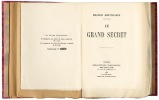
Edition originale, un des 100 exemplaires (N°52) sur Hollande, second et dernier grand papier du tirage de tête, après 30 sur Japon ; bel exemplaire complet de ses grands témoins dont quelques uns, très peu, ont pris une légère poussière sur le bord extérieur. "La recherche des sources du fleuve mystérieux qui coule à travers toutes les religions, les croyances et les philosophies, nous conduit dans l'Inde sacrée : de là ce courant se répandit sans doute en Egypte, dans la Perse antique, en Chaldée, imprégna le peuple Hébreu, s'infiltra en Grèce [...] De l'occultisme primitif, nous connaissons donc trois dérivations : la dérivation Egypte-Perse-Chaldée-Grèce (les "mystères" religieux grecs) ; l'ésothérisme judéo-chrétien, avec les Esseniens, les Gnostiques, les néo-platoniciens alexandrins, les Kabbalistes du Moyen-Âge ; enfin l'occultisme moderne, plus ou moins imprégné des précédents ..." (Laffont-Bompiani : Dictionnaire des Oeuvres). Petit frottement aux nerfs de la chemise, bel exemplaire à toute marge tel que paru.
Die Oden Salomos in ihrer Bedeutung für Neues Testament und Gnosis - BAND I + BAND Ia + BAND II
Vandenhoeck & Ruprecht 1979 237 pages in8. 1979. Cartonné jaquette. 3 volume(s). 237 pages. Ouvrage académique de Michael Lattke analysant les Odes de Salomon une collection de textes religieux anciens et explorant leur signification pour la compréhension du Nouveau Testament et du gnosticisme. L'œuvre comprend une concordance et présente le texte syriaque en écriture estrangela ainsi qu'un fac-similé du papyrus grec Bodmer XI
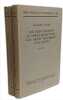
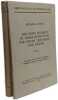
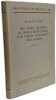
Bon état bonne tenue intérieurs propres avec leur jaquette (défraîchies=
Bible Moderne. Livre Premier.
Paris, Chamuel, 1892 ; in-12, broché ; 96, (4) pp., couverture grise muette.
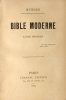
EDITION ORIGINALE (Caillet, 7873), la suite n'est jamais parue et il semblerait que l'anonymat de l'auteur n'ait pu être percé. Les religions sont complètement dépassées, il convient d'élever la Vérité en dogme religieux, la vérité étant l'apprentissage et la connaissance de l'Univers par l'Intelligence. La Substance Universelle est la base de tout... Le raisonnement n'est pas inintéressant. Bel exemplaire de cet ouvrage rare.
Evangelium veritatis (Testi del Vicino Oriente antico)
Paideia 2000 160 pages 20 8x1x13 6cm. 2000. Broché. 160 pages.
couverture un peu salie intérieur propre bonne tenue
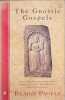
The Gnostic Gospels
Penguin 1990 183 pages 12 2x1 4x19 6cm. 1990. Broché. 183 pages. 'SHE IS ALWAYS READABLE ALWAYS DEEPLY INFORMED ALWAYS RICHLY SUGGESTIVE' - HAROLD BLOOM IN THE WASHINGTON POST BOOK WORLD
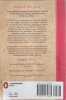
Gnosticism and Christianity in Roman and Coptic Egypt (Studies in Antiquity and Christianity)
T.& T.Clark Ltd 2004 320 pages 15 6x1 98x22 86cm. 2004. Broché. 320 pages.
Bon état intérieur propre
Bidrag til en analyse af de Mandaeiske skrifter. Med henblik paa bestemmelsen af Mandaeernes forhold til Jodedom od Kristendom
Aarhus, Universitetsforlaget i Aarhus 1940 226pp., 26cm., softcover, good condition, [text in Danish], [doctoral dissertation "Denne Afhandling er af det teologiske Fakultet antaget til offentlig at forsvares for Doktorgraden, Kobenhavn, 1940"], scarce, X75747
The concept of the church in the shepherd of Hermas
Lund, Gleerup 1966 340pp., 24cm., in the series "Studia theologica Lundensia" vol.27, softcover, some small annotations in the text, G, R76990
Gnose, narration et interprétation des Écritures dans les Pseudo-Clémentines. Une comparaison avec les écrits gnostiques
, Brepols, 2026 Paperback, Pages: 396, Size:156 x 234 mm, Illustrations:7 tables b/w., Languages: French, Greek, Latin. ISBN 9782503617145.
Summary Les Homélies et Reconnaissances pseudo-clémentines présentent des caractéristiques qui ont parfois été considérées comme « gnostiques ». Grâce à une comparaison avec certains écrits de Nag Hammadi, il apparaît que les Pseudo-Clémentines ne prouvent pas l'existence d'un « judéo-christianisme gnostique », mais qu'elles trouvent leur place sur la scène philosophique et théologique antique, plus spécifiquement dans le domaine des théories chrétiennes anciennes de la connaissance religieuse - de la gnose. La connaissance joue en effet un rôle central dans la définition des identités religieuses et devient un instrument pour délimiter des frontières. C'est dans ce cadre qu'elle fait l'objet de revendications et de polémiques : qui a le droit de proclamer la posséder ? Quel est son contenu, et comment peut-elle être obtenue ? Quels sont les adversaires qui affirment, eux aussi, la posséder, et sur quelles bases leurs prétentions sont-elles réfutées ? Cette étude cherche à éclairer ces dynamiques dans les Homélies et les Reconnaissances pseudo-clémentines et à exposer les théories de la connaissance qu'elles développent. À cette fin, une comparaison avec certains écrits gnostiques, comme le Livre des secrets de Jean, permet de mettre en évidence des enjeux gnoséologiques et polémiques du christianisme ancien, de même qu'un contexte intellectuel, littéraire et théologique commun. TABLE OF CONTENTS Avant-propos Introduction Partie I. Entre fiction romanesque et autorité apostolique Chapitre 1. Jeux romanesques. Les Pseudo-Clémentines et le roman gréco-latin Chapitre 2. Pseudépigraphie et tradition apostolique Partie II. La narration gnoséologique, ou la mise en intrigue d'une quête de connaissance religieuse et philosophique véritable Chapitre 3. La connaissance philosophique et religieuse dans l'Antiquité gréco-latine, juive et chrétienne Chapitre 4. La narration d'une quête de connaissance religieuse et philosophique véritable Chapitre 5. De l'ignorance à la connaissance Chapitre 6. L'agent de la gnose Partie III. Le contenu de la gnose Chapitre 7. De manière double et opposée. La connaissance sur le monde et sur l'être humain Chapitre 8. Dieu, les Écritures et la piété. Les rapports entre gnose et salut Chapitre 9. La polémique anti-gnostique dans les Pseudo-Clémentines Conclusion Annexes Bibliographie Index
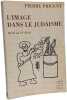
L'image dans le judaïsme: Du IIe au VIe siècles (LF.BIB.ANC.TEST)
Labor et Fides 2018 247 pages 14 8x1 6x22 2cm. 2018. Broché. 247 pages. Le Traité tripartite est une édition critique avec introduction et commentaire d'un texte gnostique copte (NH I 5) de la Bibliothèque de Nag Hammadi établie par le spécialiste Einar Thomassen et traduite en collaboration avec Louis Painchaud
Bon Etat intérieur propre
Lettre a Flora [Ptelemaiou pros Phloran]. Texte, traduction et introduction [dans: Sources chrétiennes, 24]
Paris, Cerf 1949 101pp., 20cm., dans la série "Sources chrétiennes. Série annexe de textes non chrétiens" vol.24, br.orig., non coupé, bon état, bilingue: grec-français, R86739
RAHN, Otto - PITROU, Robert (Traduit de l'allemand par) - ROY, Christiane (Nouvelle édition revue et complétée par) - NELLI, René (Préface)
Reference : 125779
(1985)
ISBN : 2905371129
Croisade contre le Graal
1985 Editions Philippe Schrauben - 1985 - In-8 broché, couverture illustrée - 331 pages
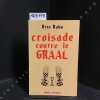
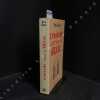
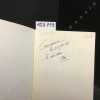
Bon état - Menus frottements sur la couverture - Petit texte au stylo sur la page de garde - Dos légèrement insolé Bon
Hermas and Christian prophecy. A study of the eleventh mandate
Leiden, Brill 1973 xiv + 197pp., 24cm., softcover, VG, (doctoral dissertation, Rijksuniversiteit Utrecht, promotor: W.C. Van Unnik), R69024
Structures théologiques de la gnose à Richard de Saint-Victor. Essais et analyses critiques
Paris, Presses Universitaires de France 1962 436pp., dans la série "Bibliothèque de l'Ecole des Hautes Etudes. Sciences religieuses" volume 72, 25cm., brochure originale, partiellement non coupé, bon état, R104785

