 Write to the booksellers
-
Type
Autograph (1)
Book (35023)
Drawings (1)
Magazine (37)
Manuscript (2)
-
Latest
Last 24h (2)
Last 3 days (6)
Last month (44)
Last week (8)
-
Language
Dutch (2)
English (2)
French (35003)
German (3)
Italian (5)
Latin (49)
-
Century
16th (29)
17th (234)
18th (520)
19th (3685)
20th (19978)
21st (2119)
-
Countries
Belgium (5694)
Brazil (1)
Canada (11)
Côte d'Ivoire (9)
France (25109)
Italy (1)
Netherlands (63)
Switzerland (4176)
-
Syndicate
ALAC (10)
CLAM (67)
CNE (1)
ILAB (23244)
NVVA (880)
SLACES (818)
SLAM (21864)
SNCAO (58)
Seize instructions sur la nature et les devoirs de la charge pastorale prêchées du mois d'octobre 1854 au mois de mars 1855.
A la sacristie de la Paroisse Saint-Laurent. 1855. In-12. Broché. Etat d'usage, Couv. légèrement passée, Coiffe en pied abîmée, Rousseurs. IX + 390 pages - coiffes abîmées - rousseurs sur les plats - annotation sur la page de titre.. . . . Classification Dewey : 260-Théologie sociale chrétienne
Classification Dewey : 260-Théologie sociale chrétienne


L'autre vie - Tome premier - 3e édition.
Victor Palmé / J.Albanel / Henri Trembley. 1881. In-12. Broché. Etat d'usage, Couv. défraîchie, Coiffe en pied abîmée, Rousseurs. XXI + 503 pages - coiffes abîmées - rousseurs sans réelle conséquence sur la lecture.. . . . Classification Dewey : 240-Théologie morale et spirituelle
Classification Dewey : 240-Théologie morale et spirituelle
Le livre d'or de la jeune fille et de la femme chrétienne - n°37.
Zech et fils. non daté. In-16. Broché. Etat d'usage, Coins frottés, Coiffe en tête abîmée, Intérieur acceptable. 1106 pages - contre plats jaspés - tranches rosées dorées - illustratoin en noir et blanc sous serpente en frontispice - annotation sur la page de faux titre - dos frotté - rognure en tête sur les plats - titre doré sur le dos.. . . . Classification Dewey : 230-Christianisme. Théologie chrétienne
n°37. Classification Dewey : 230-Christianisme. Théologie chrétienne
Hommage à Marie mère de dieu - Nouveau mois de mai - 3e édition.
Ambroise Bray. 1863. In-32. Relié plein cuir. Etat d'usage, Coins frottés, Dos à nerfs, Quelques rousseurs. 224 + XXVI pages - tranches dorées - étiquette de librairie collée sur le 1er contre plat - annotation sur la page de faux titre - titre doré sur le dos - dos à 4 nerfs.. . . . Classification Dewey : 230-Christianisme. Théologie chrétienne
Classification Dewey : 230-Christianisme. Théologie chrétienne
Les pères apostoliques et leur époque - Cours d'éloquence sacrée fait à la sorbonne pendant l'année 1857-1858 - 2e édition.
Ambroise Bray. 1859. In-8. Relié. Etat d'usage, 1er plat abîmé, Coiffe en pied abîmée, Mouillures. 475 pages - rousseurs et mouillures à l'intérieur de l'ouvrage sans réelle conséquence sur la lecture - annotation sur la page de garde - plats jaspés - coins frottés - déchirures sur le 1er plat - coiffes et dos frottés.. . . . Classification Dewey : 230-Christianisme. Théologie chrétienne
Classification Dewey : 230-Christianisme. Théologie chrétienne
M. l'Abbé Freppel, Professeur à la faculté de théologie de Paris
Reference : 93208-C2554
(1860)
Saint Justin - Les apologistes chrétiens au IIe siècle - Cours d'éloquence sacrée fait à la Sorbonne pendant l'année 1858 - 1859.
Broché, édition Ambroise Bray, Libraire Editeur, 1860, 470 pages. Bon état, petits manques au dos, mors fendus, légères taches sur le premier plat, une tache sur le dernier plat. Intérieur frais.
Vie de Sainte Jeanne Françoise de Chantal
Ardant frères. non daté. In-12. Relié. Etat d'usage, Couv. convenable, Dos abîmé, Intérieur frais. 95 pages. Frontispice en noir et blanc.. . . . Classification Dewey : 230-Christianisme. Théologie chrétienne
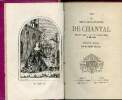
Classification Dewey : 230-Christianisme. Théologie chrétienne
Vie de saint françois de sales
Eugène ardant et cie 120 pages in12. Sans date. Broché. 120 pages.
Bon Etat coiffes légèrement frottés
Conférences aux mères chrétiennes sur l'éducation.
Victor Lecoffre. 1881. In-12. Broché. Etat d'usage, 1er plat abîmé, Coiffe en pied abîmée, Quelques rousseurs. XVI + 387 pages - quelques rousseurs à l'intérieur de l'ouvrage sans réelle conséquence sur la lecture - rousseurs sur les plats - manque sur le 1er plat.. . . . Classification Dewey : 230-Christianisme. Théologie chrétienne
Classification Dewey : 230-Christianisme. Théologie chrétienne
Les collectes ou simples homélies sur les premières oraisons de chaque dimanche et de quelques-unes des principales fêtes de Notre-Seigneur de la Sainte Vierge et des Saints (années 1856 et 1857)
Ambroise Bray. 1867. In-12. Broché. Etat d'usage, Tâchée, Coiffe en pied abîmée, Quelques rousseurs. 288 pages - papier jauni - petit manque en tête sur le 1er plat - coiffes légèrement abîmées.. . . . Classification Dewey : 260-Théologie sociale chrétienne
Classification Dewey : 260-Théologie sociale chrétienne
Influence du christianisme sur le droit.
Périsse Frères. 1858. In-8. Broché. Etat d'usage, Couv. légèrement passée, Coiffe en pied abîmée, Quelques rousseurs. VI + 444 pages - quelques rousseurs à l'intérieur de l'ouvrage sans réelle conséquence sur la lecture - rousseurs sur les plats.. . . . Classification Dewey : 230-Christianisme. Théologie chrétienne
Classification Dewey : 230-Christianisme. Théologie chrétienne
Cinquante-deux prones sur les sacrements - 15e édition.3
P.Lethielleux. 1922. In-8. Broché. Etat passable, Couv. légèrement passée, Dos abîmé, Papier jauni. VIII + 432 pages - papier jauni - 2ème plat absent - dos absent - ouvrage désolidarisé - annotation sur le 1er plat et sur la page de garde.. . . . Classification Dewey : 260-Théologie sociale chrétienne
Classification Dewey : 260-Théologie sociale chrétienne
Etudes critiques sur les origines du christianisme.
Louis Guérin / Victor Palmé. 1870. In-8. Broché. Etat d'usage, Tâchée, Coiffe en pied abîmée, Mouillures. XXIV + 528 pages - rousseurs et mouillures à l'intérieur de l'ouvrage sans réelle conséquence sur la lecture - salissures sur les plats - coiffes abîmées.. . . . Classification Dewey : 230-Christianisme. Théologie chrétienne
Classification Dewey : 230-Christianisme. Théologie chrétienne
NOS RAISONS DE CROIRE. PRECIS D'APOLOGETIQUE.
HATIER. 1939. In-12. Broché. Etat d'usage, Couv. légèrement passée, Dos fané, Intérieur frais. 254 pages. Quelques illustrations en noir et blanc dans le texte.. . . . Classification Dewey : 230-Christianisme. Théologie chrétienne
Classification Dewey : 230-Christianisme. Théologie chrétienne
DANS LA JOIE
APOSTOLAT. 1972. In-8. Broché. Bon état, Couv. convenable, Dos satisfaisant, Intérieur frais. 153 pages. Non illustré. Hommage de l'auteur.. . . . Classification Dewey : 230-Christianisme. Théologie chrétienne
Classification Dewey : 230-Christianisme. Théologie chrétienne
Mandement de l'archevêque de Bordeaux
Au bureau du journal. non daté. In-4. Broché. Bon état, Couv. convenable, Dos satisfaisant, Intérieur frais. 8 pages.. . . . Classification Dewey : 240-Théologie morale et spirituelle
Classification Dewey : 240-Théologie morale et spirituelle
Agenda spirituel pensées pieuses et pratiques de piété pour chaque jour de l'année.
Aubanel Frères. 1898. In-12. Broché. Etat d'usage, Plats abîmés, Dos satisfaisant, Papier jauni. 175 pages - tranches rosées - contre plats jaspés - plats frottés.. . . . Classification Dewey : 240-Théologie morale et spirituelle
Ouvrage approuvé par S.G.Monseigneur l'Archevêque de Cambrai. Classification Dewey : 240-Théologie morale et spirituelle
La famille, l'église, l'état dans l'éducation.
Maison de la bonne presse. 1921. In-8. Broché. Etat d'usage, Couv. convenable, Dos satisfaisant, Papier jauni. XIII + 538 pages - pages non coupées.. . . . Classification Dewey : 240-Théologie morale et spirituelle
Classification Dewey : 240-Théologie morale et spirituelle
VERITE ET MENSONGES ou bien ESSAI D'APOLOGETIQUE CONTEMPORAINE. PREMIER VOLUME.
FIRME M. ALBERTS, GALOPPE. 1908. In-8. Broché. Etat d'usage, Couv. légèrement passée, Dos plié, Intérieur frais. 375 pages. Un portrait photo noir et blanc hors texte, bandeaux et culs-de-lampe. Bandes de papier kraft collées en bordure des plats. Étiquette et tampons de bibliothèque.. . . . Classification Dewey : 230-Christianisme. Théologie chrétienne
Classification Dewey : 230-Christianisme. Théologie chrétienne
POUR UNE VIE MONTANTE
LA VIE MONTANTE. 1967. In-8. Broché. Etat d'usage, Couv. légèrement passée, Dos satisfaisant, Intérieur acceptable. 11 pages. Léger accroc en bordure de quelques pages.. . . . Classification Dewey : 230-Christianisme. Théologie chrétienne
Curé honoraire de Saint-Pierre-de-Chaillot. Classification Dewey : 230-Christianisme. Théologie chrétienne
L'EGLISE ET SES TEMOINS DANS LE MONDE.
J. DE GIGORD. 1927. In-12. Cartonné. Etat d'usage, Coins frottés, Dos satisfaisant, Intérieur frais. 307 pages. Dos de toile grise. Manque sur le revêtement du premier plat. Tampons.. . . . Classification Dewey : 230-Christianisme. Théologie chrétienne
Classification Dewey : 230-Christianisme. Théologie chrétienne
Nouveau commentaire littéral critique & théologique sur tous les livres des divines écritures - TOME PREMIER
Louis Vivès Libraire-Éditeur 1860 in8. 1860. Relié. Ouvrage de commentaire biblique en plusieurs tomes rédigé par le Dr J. F. d'Allioli traduit de l'allemand par l'abbé Gimarey avec texte latin et version française en regard. Il propose une analyse littérale critique et théologique de tous les livres des Divines Écritures destiné à un public spécialisé
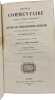
Bon Etat couverture défraîchie intérieur propre première page réparée
LITTERATURE ESPAGNOLE
1219 broché - 12x19 - 167 pp - 1930 - librairie BLOUD et GAY - bibliothèque catholique des sciences religieuses - 400 exemplaires numérotés de 1 à 400 sur VELIN ALFA RUYSDAËL pour les souscripteurs de la bibliothèque catholique des sciences religieuses, ce tirage spécial constitue l'édition originale N° 341
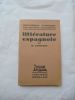
ANTHROLOGIE HISTOIR PHILOSOPHIE LITTERATURE PARADES
Beautés de l'histoire sainte ou époques intéressantes,traits remarquables,belles actions,usages et moeurs du peuple de dieu,depuis la création jusqu'à l'établissement de la religion chrétienne,inclusivement - 4e édition.
Chez Belin et le Prieur. 1823. In-12. Relié plein cuir. Etat d'usage, Coins frottés, Dos fané, Mouillures. 398 pages - gravure en noir et blanc en frontispice - quelques gravures en noir et blanc hors texte - contre plats jaspés - dorures du dos partiellement effacées - coins et tranches frottés - déchirures, manque sur la page de titre - papier jauni - mouillures et quelques rousseurs à l'intérieur de l'ouvrage sans réelle conséquence sur la lecture - traces de crayon à papier en début d'ouvrage - 2 photos disponible.. . . . Classification Dewey : 230-Christianisme. Théologie chrétienne
Classification Dewey : 230-Christianisme. Théologie chrétienne
L'Evangile de Notre Seigneur Jésus Christ Traduit sur le grec. douzième édition.
Delay. non daté. In-24. Cartonné. Bon état, Couv. convenable, Dos frotté, Intérieur frais. 294 pages augmentées de quelques gravures en noir et blanc dans texte.. . . . Classification Dewey : 260-Théologie sociale chrétienne

Classification Dewey : 260-Théologie sociale chrétienne

