 Write to the booksellers
-
Type
Book (1963)
Magazine (4)
-
Latest
Last 3 days (1)
Last month (22)
Last week (2)
-
Language
English (1)
French (1951)
German (1)
Latin (14)
-
Century
17th (36)
18th (59)
19th (345)
20th (766)
21st (57)
-
Countries
Belgium (1198)
France (553)
Netherlands (1)
Switzerland (215)
-
Syndicate
ILAB (232)
NVVA (59)
SLACES (59)
SLAM (171)
Dokumente der klosterlichen Visitationen
, Brepols - Harvey Miller, 1999 Hardcover. 158 p., 160 x 240 mm, Languages: French, Fine copy. Including an index. ISBN 9782503509693.
L'eucharistie, centre de l'histoire du salut chez Saint Ambroise de Milan
Paris, Beauchesne 1968 302pp., 22cm., dans la série "Théologie historique" volume 9, brochure originale, petit cachet, bon état, R106445
Cantus ecclesiastici juxta editionem Vaticanam ad usum clericorum collecti et illustrati
Ratisbonae [Regensburg], Friedrich Pustet 1926 184pp. + added: 16pp.appendix, 17cm., in the collection "Kirchenmusik", cart.cover (spine in cloth), G, R69248
Erklärung des Kyriale (nach Text und Melodie von p.Dominicus Johner)
Regensburg, Friedrich Pustet 1933 128pp., cloth, 21cm., VG
Oktoechos tou en hagiois patros hemon Ioannou tou Damaskenou periechousa ten en tais kuriakais tou eniautou psallomenen anastasimon akolouthian
Rome, s.n. 1886 151pp., 26cm., modern hardcover in red cloth, text in Greek, marbled endpapers, copy from the collection of the belgian byzantinist prof. Justin Mossay (with ex-libris and stamp on title page), text and interior are clean and bright, good condition, R106032
Le mystère de l'eucharistie médité au pied des saints autels
Paris, Ambroise Bray 1867 387pp., reliure cart. (dos en cuir rouge avec titre doré), 18cm., 3e éd., qqs.rousseurs, bon état
Instructions sur le Rituel contenant La Théorie et la pratique des sacrements et de la morale et tous les principes et décisions nécessaires aux curés, confesseurs, prédicateurs, chanoines, bénéficiers, prêtres ou simples clercs.
A Lyon, chez les Frères Périsse, 1790. 3 forts vol. au format in-4 (267 x 207 mm) de 2 ff. bl., xvi - 724 pp. et 2 ff. n.fol. ; 1 f. n.fol., 782 pp. et 3 ff. bl. ; 2 ff. n.fol., 370 pp., 1 f. n.fol., 86 pp. (Table générale) et 1 f. n.fol. Reliures uniformes de l'époque de pleine basane racinée havane, plats jansénistes, dos à nerfs ornés de filets gras à froid, doubles caissons d'encadrement dorés, larges fleurons dorés, semis de cercles dorés, pièces de titre de maroquin rouge, titre dorée, tomaison dorée au centre d'un ovale ornementé doré, larges palettes dorée en queue, jeu de petits filets obliques sur les coupes, toutes tranches marbrées.
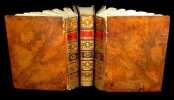
Ensemble complet de ses trois volumes. "Ouvrage fort estimé et d'un grand usage" (in Brunet). ''Avant de prescrite l'ordre et les cérémonies des sacrements dans le rituel, et d'enseigner la manière de les administrer, nous avons jugé à propos de donner quelques instructions, tant sur les sacrements en général, que sur chacun en particulier''. ''La rapidité avec laquelle se sont épuisées jusqu'à présent les éditions des Instructions sur le Rituel, dites Rituel de Toulon rend le témoignage le plus éclatant et le moins suspect du mérite de cet ouvrage. La pureté de doctrine qu'il renferme, sa clarté et sa précision sont en effet des motifs assez puissants pour lui valoir l'accueil de tant d'Ecclésiastiques animés du désir de se pénétrer de plus en plus de leurs devoirs, afin de s'en acquitter dignement.'' Quérard IV, La France littéraire, p. 237. Angles et coiffes élimés. Défauts pouvant affecter les mors ; sans cependant nuire à la solidité de l'ensemble. Quelques rousseurs dans le texte. Quelques cahiers brunis. Du reste, belle condition.


Studies on the Testaments of the Twelve Patriarchs: Test and Interpretation (Studia in Veteris Testamenti Pseudepigrapha Band 3)
Brill 1997 329 pages in8. 1997. Cartonné. 329 pages.
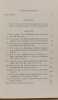
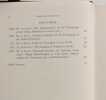
proche du très bon état intérieur propre bonne tenue
Jo o Pedro d'Alvarenga, Manuel Pedro Ferreira, Alberto Medina de Sei a (eds)
Reference : 68034
Fragmenta Musicae Contemporary Perspectives
, Brepols - Harvey Miller, 2025 paperback, 542 pages, Size:178 x 254 mm,Illustrations:10 b/w, 67 col., 33 tables b/w., 2 tables col., 90 musical examples, Language: English. *new. ISBN 9782503613000.
This volume stems from a research project on medieval and sixteenth-century fragments with music carried out at CESEM?Centre for the Study of the Sociology and Aesthetics of Music, Lisbon Nova University, between 2021 and 2024, as well as from an international colloquium on fragmentology held in Cascais, Portugal, in July 2023. It brings together twenty studies that address a varied range of disjecta membra, including loose folios from dismembered manuscripts, mutilated musical-liturgical codices, incomplete sets of part-books, truncated musical settings, and even the remains of a historic organ. The aim is to invest these materials with significance beyond their condition as fragmented cultural artefacts by exploring their texts, contexts, meanings, trajectories and, when appropriate, proposing methods for their reconstitution. TABLE OF CONTENTS Introduction I. Fragments in Collections Fragments at a Crossroad of Disciplines: The Case of the Liber Demetrii de Lasko Zsuzsa Czag ny Reflected and Refracted: A Fragment Collection from Trier Anna de Bakker Eighteenth-Century Musical Fragmentology and Early-Modern Musical Historiography Giovanni Varelli II. Fragments and Contexts Fragments and Places: Establishing Connections Manuel Pedro Ferreira Vestiges from the Time Before the Reformation of Subiaco-Melk David Merlin Contextualising a Polyphonic Fragment: The Salve regina by Dom Bento in Coimbra MM 12 Bernadette Nelson III. Wandering Fragments The Journey of Liturgical Fragments from England, France, Germany, and Italy to Coimbra: A Contribution to Book History in Portugal Oc ane Boudeau and Kristin Hoefener Lost, Then Found in Canada: Stories Behind Some Medieval Manuscript Fragments that Have Journeyed Across the Ocean Debra Lacoste IV. Studies on Fragments The Earliest Plainchant Fragments of Hungarian Provenance? Interpreting Two Twelfth-Century Troper-Proser Leaves from ?ibenik Gabriella Gil nyi New Insights into a Thirteenth-Century Fragmentary Breviary: The Case of MS Porto 1151 Diogo Alte da Veiga Fragments on the Margins of an Antiphoner Kathleen Nelson and Nathan Cox Fragmentary Motets in Coimbra Sources from the 1570s Jo o Pedro d?Alvarenga V. Studies with Fragments The Pentecost Responsory Erant omnes apostoli, its Borrowed Melismas, a Rare Prosula, and Portuguese Fragments Containing It Jo o Pedro d?Alvarenga Some Rare Responsory Verses in Portuguese Fragments: A CANTUS-based Assessment Giulio Minniti From London to Portugal: Musical Notation as a Marker of Identity Susan Rankin Iberian Liturgical Offices Celebrating Military Successes: Echoes of Victory in a Plainchant Fragment (Coimbra, Arquivo Hist rico Municipal, B60/36) Alberto Medina de Sei a Extrapolating from Fragments: A Portuguese Case Study Owen Rees VI. Reconstructing from Fragments A Data-Based Approach to the Reconstruction of Missing Voice-Parts in Seventeenth-Century Polyphony Ana Silva Sousa and Nuno de Mendon a Raimundo The Collection of Latin Sacred Music in P-BRad MS 964: Identification and Reconstitution of its Contents Andrew Woolley In Search of a Lost Sound: Intervention Options Towards the Fragmented Material of a Historic Organ Jo o Vaz and Andr Ferreira Contributors List of Manuscript and Archival Sources Bibliography Index
Jo o Pedro d'Alvarenga, Manuel Pedro Ferreira, Alberto Medina de Sei a (eds)
Reference : 68509
Fragmenta Musicae Contemporary Perspectives
, Brepols - Harvey Miller, 2025 Paperback, Pages: 542 p. Size:178 x 254 mm, Illustrations:10 b/w, 67 col., 33 tables b/w., 2 tables col., 90 musical examples, Language English. nEW. ISBN 9782503613000.
Summary This volume stems from a research project on medieval and sixteenth-century fragments with music carried out at CESEM?Centre for the Study of the Sociology and Aesthetics of Music, Lisbon Nova University, between 2021 and 2024, as well as from an international colloquium on fragmentology held in Cascais, Portugal, in July 2023. It brings together twenty studies that address a varied range of disjecta membra, including loose folios from dismembered manuscripts, mutilated musical-liturgical codices, incomplete sets of part-books, truncated musical settings, and even the remains of a historic organ. The aim is to invest these materials with significance beyond their condition as fragmented cultural artefacts by exploring their texts, contexts, meanings, trajectories and, when appropriate, proposing methods for their reconstitution. TABLE OF CONTENTS Introduction I. Fragments in Collections Fragments at a Crossroad of Disciplines: The Case of the Liber Demetrii de Lasko Zsuzsa Czag ny Reflected and Refracted: A Fragment Collection from Trier Anna de Bakker Eighteenth-Century Musical Fragmentology and Early-Modern Musical Historiography Giovanni Varelli II. Fragments and Contexts Fragments and Places: Establishing Connections Manuel Pedro Ferreira Vestiges from the Time Before the Reformation of Subiaco-Melk David Merlin Contextualising a Polyphonic Fragment: The Salve regina by Dom Bento in Coimbra MM 12 Bernadette Nelson III. Wandering Fragments The Journey of Liturgical Fragments from England, France, Germany, and Italy to Coimbra: A Contribution to Book History in Portugal Oc ane Boudeau and Kristin Hoefener Lost, Then Found in Canada: Stories Behind Some Medieval Manuscript Fragments that Have Journeyed Across the Ocean Debra Lacoste IV. Studies on Fragments The Earliest Plainchant Fragments of Hungarian Provenance? Interpreting Two Twelfth-Century Troper-Proser Leaves from ?ibenik Gabriella Gil nyi New Insights into a Thirteenth-Century Fragmentary Breviary: The Case of MS Porto 1151 Diogo Alte da Veiga Fragments on the Margins of an Antiphoner Kathleen Nelson and Nathan Cox Fragmentary Motets in Coimbra Sources from the 1570s Jo o Pedro d?Alvarenga V. Studies with Fragments The Pentecost Responsory Erant omnes apostoli, its Borrowed Melismas, a Rare Prosula, and Portuguese Fragments Containing It Jo o Pedro d?Alvarenga Some Rare Responsory Verses in Portuguese Fragments: A CANTUS-based Assessment Giulio Minniti From London to Portugal: Musical Notation as a Marker of Identity Susan Rankin Iberian Liturgical Offices Celebrating Military Successes: Echoes of Victory in a Plainchant Fragment (Coimbra, Arquivo Hist rico Municipal, B60/36) Alberto Medina de Sei a Extrapolating from Fragments: A Portuguese Case Study Owen Rees VI. Reconstructing from Fragments A Data-Based Approach to the Reconstruction of Missing Voice-Parts in Seventeenth-Century Polyphony Ana Silva Sousa and Nuno de Mendon a Raimundo The Collection of Latin Sacred Music in P-BRad MS 964: Identification and Reconstitution of its Contents Andrew Woolley In Search of a Lost Sound: Intervention Options Towards the Fragmented Material of a Historic Organ Jo o Vaz and Andr Ferreira Contributors List of Manuscript and Archival Sources Bibliography Index
De hymnen van het getij- en misboek, uit hunne oorspronkelijk en huidige lezing, met behoud hunner maat, overgedicht en toegelicht door R.J.Jordens
Tongerloo, St.Norbertus-boekhandel 1935 xvi + 408pp., onopengesneden, (2e grondig verbeterde uitgave, vermeerderd met de verschillende eigen hymnen der Belgische en Nederlandsceh bisdommen), enkele vlekjes op omslag, goede staat
JORDENS Rombout Jan O.Praem. (vertaling en toelichting) & HEYLEN Th.L. (inleiding)
Reference : R27171
(1926)
De Hymnen van 't Norbertijner en Roomsche getij- en misboek, volgens de oorspronkelijke maat verdietscht en toegelicht
Tongerloo, Eucharistisch Bureau 1926 xvi + 240pp., tweetalig: latijn-Nederlands, originele omslag, goed, R27171
La communion des malades - notes pratiques de discipline sacramentaire
Louvain, Museum Lessianum 1933 93pp., dans la série "Museum Lessianum. Section théologique" no.31, br.orig., 24cm., bel état
Readers and Hearers of the Word. The Cantillation of Scripture in the Middle Ages
, Brepols, 2022 Hardback, 268 pages, Size:156 x 234 mm, Illustrations:12 b/w, 17 col., 14 musical examples, Language: English. ISBN 9782503592879.
Summary Readers and Hearers is a broad, multi-disciplinary treatment of the chanting of the Scriptures (epistle and gospel) at Mass in the Middle Ages. This form of chanting followed a procedure that continued to be used in the western Latin liturgy until the mid-twentieth century and in the traditional Latin Mass today. The readings were not simply spoken, but chanted to formulae that stood halfway between heightened speech and song (cantillation). Specific clerics (lectors, subdeacons, deacons), distinctively vested, were commissioned to chant the Scriptures, employing a ritual that came to be surrounded by an elaborate ceremonial. For the gospel this involved acolytes, processional movement, and the employment of ecclesiastical 'furniture' (pulpit, ambo, and choir screen). While the laity attending Mass could generally see all of the ritual actions, what did they understand of the Latin text they were hearing? In areas where Latin was spoken in Antiquity the ability to comprehend Latin passively as it morphed into the Romance vernaculars survived longer than generally assumed. Naturally, in Germanic lands, christianized in the early Middle Ages, that capability never existed. Several manuals were created to guide layfolk to engage in devotions suitable to the various parts of the Mass. How all of these elements ? ceremony and devotional aids ? united 'readers' with 'hearers' at Mass is the theme of the present volume, which also covers Martin Luther's guidelines for the chanting of the Scriptures in German TABLE OF CONTENTS List of Illustrations, Abbreviations Introduction Chapter 1. 'Lay Folkes' and the Mass Chapter 2. Readers of the Word: Lectors, Subdeacons, Deacons Chapter 3. Reading, Writing, and Punctuating the Word Chapter 4. Cantillating the Epistle and the Gospel Chapter 5. Hearers of the Word Chapter 6. Direction of Prayer, Siting of Churches, and Chanting of the Gospel Chapter 7. Places for the Readings Chapter 8. Vestments Chapter 9. Sacralizing the Word Appendix 1. Isidore of Seville, De ecclesiasticis officiis 2. 11 Appendix 2. Bilingual (Latin/Greek) Readings Appendix 3. Amerus, Practica artis musice, cap. 26 Appendix 4. Ceremonial of Cardinal Giacopo Stefaneschi, cap. 28 Bibliography Index
La forma dell'eucaristia e l'epiclesi nella liturgia armena secondo Nerses Lampronatzi
Cairo, 1959 54pp., 24cm., text in Italian, offprint from "Collectanea" No.4, Centro Franciscano di Studi Orientali Cristiani), softcover, good condition, X114346
"Missel du dimanche; texte liturgique officiel."
Tournai (Belgique), Desclée de Brouwer, 1971. 11 x 17, 1082 pp., reliure d'édition souple, bon état.
Missel de la semaine. Présenté par Pierre Jounel. Texte liturgique officiel.
Tournai, Desclée 1973, 170x105mm, 43 - 2042pages, reliure basane. Relié en basane plein brun avec titre doré au dos. Papier bible. Bel exemplaire.
Pour un paiement via PayPal, veuillez nous en faire la demande et nous vous enverrons une facture PayPal
recits de voyages et de pelerinages
, Brepols - Harvey Miller, 1981 Hardcover. 88 p., 160 x 240 mm, Languages: French, Fine copy. Including an index. ISBN 9782503360386.
Die Stellung Christi im liturgischen Gebet
Münster, Aschendorff 1962 xvi + 280pp., 24cm., 2nd ed., in the series "Liturgiewissenschaftliche Quellen und Forschungen" vol.19/20 (photomechanical reprint of vol.7/8 of the "Liturgiegeschichtliche Forschungen", mit Nachträgen von des Verfassers), softcover, 2 library stamps, else in very good condition, R67262
Die Stellung Christi im liturgischen Gebet
Münster, Aschendorff 1925 xvi + 256pp., 24cm., 1st ed., in the series "Liturgiegeschichtliche Forschungen" vol.7/8, softcover (spine reinforced), 2 library stamps, good condition, R76893
Die Stellung Christi im liturgischen Gebet
Münster, Aschendorff 1962 xvi + 280pp., 24cm., 2nd ed., in the series "Liturgiewissenschaftliche Quellen und Forschungen" vol.19/20 (photomechanical reprint of vol.7/8 of the "Liturgiegeschichtliche Forschungen", mit Nachträgen von des Verfassers), softcover, very good condition, R95855
PRAELECTIONES JURIS CANONICI HABITAE IN SEMINARIO SANCTI SULMPITII
Apud V. Lecoffre 1880 Apud V. Lecoffre 1880, 3 volumes In-8 reliés demi basane noire, dos à nerfs soulmignés de filets dorés, fleurons dorés entre nerfs. XV + 550 + 620 + 540 pages. Bien relié. Trés bon état.
Toutes les expéditions sont faites en suivi au-dessus de 25 euros. Expédition quotidienne pour les envois simples, suivis, recommandés ou Colissimo.
L’Ordinaire liturgique du Diocèse de Besançon (Besançon, Bibl. Mun., Ms 101). Texte et sources. Collection Spicilegium Friburgense 38.
Fribourg, Editions Universitaires 1999, 240x170mm, 611pages, broché. Exemplaire à l'état de neuf.
photos n/b, Pour un paiement via PayPal, veuillez nous en faire la demande et nous vous enverrons une facture PayPal
La REVOLUTION LITURGIQUE
Un ouvrage de 221 pages, format 135 x 210 mm, broché, publié en 1971, Diffusion de la Pensée Française, bon état
Etude de la Constitution Conciliaire (4 décembre 1963) et Pontificale (3 avril 1969)
Phone number : 04 74 33 45 19
Christological catechesis of the liturgy. A study on the Great Feasts of our Lord in the Malankara Church
Rome, Mar Thoma Yogam (St.Thomas Christian Fellowship) 1996 xx + 362pp., softcover, 24cm., very good condition, R79397

