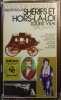
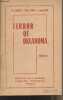
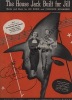
1959 Editions LUG - N° 91 - 03/1959 - In-12, broché, couverture illustrée - 128 planches en N&B
Très bon état, état exceptionnel pour un collectionneur - infimes rousseurs sur la 4ème de couverture
1959 Editions LUG - N° 92 - 04/1959 - In-12, broché, couverture illustrée - 128 planches en N&B
Très bon état, état exceptionnel pour un collectionneur - Légères rousseurs sur la couverture, la 1ère et la dernière page - Couverture très légèrement frottée - Très légers plis sur la 1ère de couverture

, Brepols, 2019 Paperback, xxiv + 262 pages, Size:156 x 234 mm, Illustrations:11 b/w, 10 tables b/w., 3 maps b/w, Language: English. ISBN 9782503580753.
Summary From Topography to Text: The Image of Jerusalem in the Writings of Eucherius, Adomnán and Bede uses topographical detail to examine the source material, religious imagination and the image of Jerusalem in three related Latin texts from the fifth, seventh and eighth centuries. The work introduces an original methodology for analyzing the Jerusalem pilgrim texts, defined by their core interest in the commemorative topography of the Christian holy places. By newly identifying the topographical material in Adomnán's description of Jerusalem, the study exposes key distortions in the text, its exclusive intramural focus on the Holy Sepulchre and the eschatological image of New Jerusalem that emerges from its description of contemporary Jerusalem. The study verifies the post-Byzantine provenance of Adomnán's topographical material, namely, the oral report of Arculf, thus redressing scholarly ambivalence regarding Adomnán's contemporary source. The new insights into Adomnán's De locis sanctis, including its mental map of Jerusalem, provide a template with which to analyze the text's relationship with the writings of Eucherius and Bede. While Bede's De locis sanctis has commonly been regarded as an epitome of Adomnán's work, when the sequence, structure and images of the texts are compared, Eucherius not Adomnán is, for Bede, the authoritative text. From Topography to Text offers a significant discussion on the Jerusalem pilgrim texts and the Christian topography of the Holy City, while analyzing the image of Jerusalem in the writings of three remote authors who never set foot in the city. TABLE OF CONTENTS 1. Introduction 2. The Jerusalem Pilgrim Texts 2.1. Premises 2.2. A Topographical Methodology 2.2.a. The Four Components of Topographical Descriptions 2.2.a.1. Commemoration 2.2.a.2. Location 2.2.a.2.a. Duplicate and Translated Sites 2.2.a.2.b. Biblical Descriptions of Location 2.2.a.3. Appearance 2.2.a.4. Sequence 2.2.a.5. Applying the Four-Fold Methodology 2.2.b. Topographical Templates 2.2.c. Commemorative Credibility 2.2.d. Religious Imagination 2.3. Assessing Textual Images of Jerusalem 2.4. Summary 3. Eucherius' Letter to Faustus 3.1. The Name of Jerusalem 3.2. Mount Sion 3.3. The Holy Sepulchre 3.4. The Temple 3.5. The Pool of Bethesda and the Spring of Siloam 3.6. Extramural Jerusalem 3.7. Eucherius' Image of Jerusalem 3.8. Format and Sources 4. Adomnán's De locis sanctis 4.1. Approaches and Premises 4.1.a. Adls as Pilgrim Text 4.1.b. The Internal Witness of Adls 4.1.c. The Role of Arculf 4.1.d. Adls' Supplemental Sources 4.1.e. The Three Books of Adls 4.2. The City of Jerusalem 4.2.a. Adls 1.1 as Prologue 4.2.b. Intramural Jerusalem 4.2.b.1. Entering Jerusalem 4.2.b.2. The Complex of the Holy Sepulchre 4.2.b.3. The Omission of the Pool of Bethesda 4.2.b.4. The Extramural Status of Holy Sion 4.2.c. Extramural Jerusalem 4.2.c.1. The Jehoshaphat Valley 4.2.c.2. The Jephonias Monument 4.2.c.3. Mount Sion 4.2.c.4. The Interval of Adls 1.20 4.2.c.5. The Mount of Olives 4.3. Maps and Resources 4.3.a. The Jerusalem Circuit 4.3.b. 'Arculf in Jerusalem' 4.4. Conclusion 4.4.a. Adls' Image of New Jerusalem 4.4.b. Adomnán's use of Eucherius 4.4.c. Mapping Jerusalem 5. Bede's De locis sanctis 5.1. Bdls as Epitome 5.2. The Purpose of Bdls 5.3. Scholarship on Bdls 5.4. Bede and His Sources: Adomnán and Eucherius 5.4.a. Bede's use of Adls 5.4.b. Bede's use of Eucherius 5.5. The Jerusalem Material of Bede's De locis sanctis 5.5.a. Bdls 1: The Area of Jerusalem 5.5.b. Bdls 2: Intramural Jerusalem 5.5.b.1. Entering Jerusalem 5.5.b.2. The Complex of the Holy Sepulchre 5.5.b.3. The Temple 5.5.b.4. The Pool of Bethesda and the Spring of Siloam 5.5.b.5. The Church of Holy Sion 5.5.b.6. The Column of the Miraculous Healing 5.5.c. Bdls 3: The Tree of Judas and Aceldama 5.5.d. Bdls 4: The Cloth Relics of Jerusalem 5.5.e. Bdls 5.1: Leaving Jerusalem 5.5.f. Bdls 5: The Jehoshaphat Valley 5.5.f.1. The Tower of Jehoshaphat 5.5.f.2. The Tombs of Simeon and Joseph 5.5.f.3. The Church of Mary's Tomb 5.5.f.4. The Grotto of Gethsemane 5.5.g. Bdls 6: The Mount of Olives and its Holy Places 5.5.g.1. The Church of the Ascension 5.5.g.2. The Tomb of Lazarus 5.5.g.3. The Eleona 5.6. Summary of Bede' De locis sanctis 6. Conclusion Appendix 1: Adls and the Post-Byzantine Sources Appendix 2: A Review of O'Loughlin and the Arculf Debate Appendix 3: Peter of Burgundy
, Brepols - Harvey Miller, 2026 hardback, Pages: 204 p.Size:155 x 245 mm, Illustrations:71 tables b/w. Language(s):Latin, French *new. ISBN 9782503623078.
Corpus Christianorum Series Latina, vol. 76 bis 5 About this series Add to Wishlist Hieronymus Commentarius in Osee Roger Gryson (ed) Pages: 296 p. Size:155 x 245 mm Language(s):Latin, French Publication Year:2026 Buy print version ? 255,00 EXCL. VAT RETAIL PRICE ISBN: 978-2-503-62307-8 Hardback Available Osée, premier des Douze, dernier pour Jérôme : une exégèse entre refus du littéral et quête du sens - et un bel exercice de critique textuelle Subject(s) Western Fathers (c. 160-735) Old Testament/Hebrew Bible criticism & exegesis Early Christian & Patristic Latin literature Summary Dans la Bible hébraïque comme dans la Bible grecque, Osée est le premier des Douze prophètes. Ce n'est pas lui, cependant, que Jérôme a pris en main le premier, quand il a entrepris de commenter l'ensemble du corpus prophétique de l'Ancien Testament; il figure, au contraire, parmi les derniers qu'il a abordés, à la fin de l'année 406, avant de s'attaquer aux grands prophètes. La raison n'en est pas seulement qu?Osée est le plus long des Douze; il lui posait aussi un problème sur lequel il s'explique longuement dans sa préface. D'entrée de jeu, le Seigneur intime au prophète l'ordre de prendre pour femme une prostituée, puis une autre ? ou la même ? adultère. Pour les prédécesseurs de Jérôme, tels Irénée ou Hilaire, cela ne faisait pas difficulté. Jérôme, en revanche, répugne invinciblement à l'idée que Dieu puisse cautionner ainsi des comportements immoraux. Contrairement au principe constamment réaffirmé que l'interprétation spirituelle doit s'appuyer sur le fondement de l'histoire, il évacue dans le commentaire des trois premiers chapitres le sens littéral et propose là une lecture purement allégorique du texte sacré. Cette exégèse hors sol contraste avec celle des chapitres suivants où, conformément à la manière habituelle de Jérôme, les oracles du prophète sont régulièrement mis en rapport avec les faits rapportés dans les livres des Rois. La nouvelle édition se base sur un choix de quatorze manuscrits. Parmi les commentaires hiéronymiens des Douze prophètes, du point de vue de l'histoire du texte, chaque cas est particulier. Dans celui d'Osée, les manuscrits carolingiens descendent tous de deux archétypes bourrés de fautes, eux-mêmes tributaires d'un hyperarchétype où elles étaient déjà nombreuses. La leçon originale doit être souvent cherchée dans des manuscrits plus tardifs, qui présentent alors, outre des fautes propres et des variantes de révision intempestives, le défaut d'être tous plus ou moins contaminés. C'est un bel exercice de critique textuelle. TABLE OF CONTENTS Introduction La tradition manuscrite La famille ? La famille ? Les témoins postérieurs L?établissement du texte Fautes d?archétype Les éditions Stemma codicum Sigles et abréviations Explanationum in Osee libri III Conspectus siglorum Incipit In Osee Incipit liber secundus Incipit liber tertius Table des citations scripturaires
Princeton University Press 1987 435 pages 14 224x3 048x21 844cm. 1987. Relié. 435 pages.
très bon état de conservation intérieur propre avec sa jaquette (dos insolé)
Oxford University Press USA 1998 280 pages 13 97x2 03x21 34cm. 1998. Broché. 280 pages.
Comme neuf
Chatto & Windus 1995 144 pages in12. 1995. Cartonné jaquette. 144 pages.
Très bon état ex-libris
Cambridge University Press 1996 174 pages 13 97x21 59x1 1176cm. 1996. Broché. 174 pages.
Très Bon Etat de conservation intérieur propre bonne tenue
Princeton University Press 1990 389 pages 24 13x3 048x16 256cm. 1990. Cartonné jaquette. 389 pages.
Très bon état étiquette sur le premier plat intérieur propre
London, T.Fisher Unwin 1911, 210x145mm, 345pages, frontispice, with 87 illustrations, cloth binding. Book in good condition.
Pour un paiement via PayPal, veuillez nous en faire la demande et nous vous enverrons une facture PayPal
Paris, Albin Michel, 1998. 15 x 23, 430 pp., plusieurs illustrations en N/B, quelques dessins, 1 carte double page, broché, bon état (taches sur les tranche inférieure et supérieure).
préface de Jean Malaurie.
Paris, Albin Michel, 2001. 15 x 23, 364 pp., plusieurs illustrations en N/B, broché, très bon état.
"préface d'André Kaspi; avant-propos de N. Scott Momaday."
Holmes & Meier Publishers Inc 1981 300 pages 14 732x2 286x22 352cm. 1981. Broché. 300 pages. Ouvrage collectif publié en 1981 qui rassemble des essais et discussions sur la Shoah en tant qu'expérience historique. Le livre aborde le génocide juif pendant la Seconde Guerre mondiale et les mouvements de résistance présentant des contributions de plusieurs auteurs dont Yehuda Bauer et Nathan Rotenstreich
Bon état intérieur propre bonne tenue
Editions Flammarion 2026 446 pages 10 8x2 2x17cm. 2026. mass_market. 446 pages.
Bon état
Editions Flammarion 2026 446 pages 10 8x2 2x17cm. 2026. broché. 446 pages.
Bon état
Le grand livre du mois 2026 320 pages in8. 2026. Broché. 320 pages.
Comme neuf
Cambridge University Press 1986 243 pages 21 59x1 778x14 224cm. 1986. Cartonné jaquette. 243 pages.
Très bon état avec sa jaquette intérieur propre bonne tenue
, Brepols, 2024 Paperback, xviii + 338 pages, Size:216 x 280 mm, Illustrations:182 b/w, 28 col., 19 tables b/w., 14 maps b/w, 7 maps color, Language: English. ISBN 9782503606736.
Summary This thematic volume focuses on the demise of the Kura-Araxes culture and the beginning of the Middle Bronze Age, a period between about 2600 and 2000 cal BC that saw the gradual disappearance of millennia-long traditions in the region. Specialists reassess the chrono-cultural attribution of several complexes in the region, together with the absolute chronology of the whole sequence. Through this approach, the volume offers a nuanced insight into the changes and continuities of a crucial period between the Early and Middle Bronze Age. The chapters gathered together here also explore the abandonment of long-established settlements, the production of lavishly endowed funerary complexes, testament to the emergence of growing inequalities in society, and the adoption of a far more mobile way of life as revealed by archaeology. TABLE OF CONTENTS List of Illustrations 1. For a Reassessment of the EB/MB Transition in the Kura-Araxes oikumene: The Chrono- Cultural Aspect RUBEN BADALYAN & BÉRENGÈRE PERELLO 2. Understanding the End of the Kura-Araxes Phenomenon: The Radiocarbon Perspective ANNA PAOLA PASSERINI 3. Archaeology at the Frontiers : Investigations at Rabati, Southern Caucasus and Evidence of Cultural Memory GIORGI BEDIANASHVILI, ANDREW JAMIESON & CLAUDIA SAGONA 4. The Post-Kura-Araxes Period in the Southern Caucasus : Reflections on Definitions and Terminology, and a View from Shida Kartli ELENA ROVA 5. The Final Stage of the Kura-Araxes Culture from Kvemo Kartli NINO SHANSHASHVILI & GODERDZI NARIMANISHVILI 6. The Eastern Shores of Lake Sevan during the Early Bronze Age : Preliminary Reflections MARIAM AMIRYAN, RENÉ KUNZE, ARSHAVIR HOVHANNISYAN, HAYK MELIKADAMYAN, ROMAN HOVSEPYAN & ARSEN BOBOKHYAN 7. Late Kura-Araxes Sub-Complexes of Armenia : Synchronization Problems in the Light of New Data RUBEN BADALYAN, PAVEL AVETISYAN, BÉRENGÈRE PERELLO, ANNAPAOLA PASSERINI, ARMINE HARUTYUNYAN, ARSEN BOBOKHYAN & LEVON AGHIKYAN 8. The Chronology of the Archaeological Complexes of Armenia of the Last Quarter of the Third and the First Half of the Second Millennium bce in the Context of Transformation and Fragmentation of the Archaeocultural Environment PAVEL AVETISYAN & RUBEN BADALYAN 9. Shengavit from Kura-Araxes to Early Kurgan Periods HAKOB SIMONYAN & MITCHELL S. ROTHMAN 10. Preliminary Results of the Excavations at Qaraçinar (Azerbaijan) and New Data on the 'Kura- Araxes-Early Kurgans' Transition on the Eastern Piedmont of the Lesser Caucasus GIULIO PALUMBI, BAKHTIYAR JALILOV, MUZAFFAR HUSEYNOV, ALEXIA DECAIX, MODWENE POULMARC'H & ANDREA RICCI 11. Metamorphism of the End : A Close Look at the Final Phases of the Kura-Araxes Cultural Tradition SEPIDEH MAZIAR 12. The Later Phases of the Early Trans-Caucasian: A View from Yanik Tepe in North-West Iran GEOFFREY D. SUMMERS 13. Notes on the End of the Kura-Araxes ('Khirbet Kerak') Presence in the Southern Levant RAPHAEL GREENBERG Index
, Brepols, 2024 Paperback, xxvi + 358 pages, Size:216 x 280 mm, Illustrations:333 b/w, 77 col., 3 tables b/w., 8 tables col., 6 maps color, Language: English. ISBN 9782503608037.
Summary The site of Lori Berd, located in northern Armenia, is home to an extraordinary necropolis that once housed the dead of the local elite during a period that spanned from 2200 to 400 BC. Influenced both by Urartian conquests from the south and by invasions from the Eurasian nomadic tribes from the north, the people of this region buried their dead with prestigious artefacts, complex customs, and a particular reverence shown during the later stages of the Early and Middle Iron Ages (1000-550 BC). This volume offers a detailed account of the archaeological significance of the site, providing detailed accounts of thirty-one tombs, the majority of which have never before been comprehensively published, and seeking to set Lori Berd in its broader historical and material context. Through this approach, the book offers a comprehensive exploration of the Iron Age in the South Caucasus, unravelling the interconnected themes of wealth, power, and cultural expressions. TABLE OF CONTENTS List of Illustrations Acknowledgements List of abbreviations Chapter 1. Introduction The Aims of this Work The Contemporary Research Framework The Actuality of the Question Methods Chapter 2. The Necropolis of Lori Berd Research History State of Research Description of Early and Middle Iron Age tombs Evaluation of the Tombs Chapter 3. Vessels Types of Pottery Metal Vessels Chapter 4. Weaponry and Tools Swords Daggers Scabbards Knives Spears Axes Maceheads Arrowheads Bidents Flesh Hook Arm Guards Ferrules Chisels Helmet Phaleras Quiver pin Reflections on Weapons Chapter 5. Jewellery and Art Objects Idols Bone Plaques Seals Beads Pendants Rings Clothing and its Fittings Silver Torc Temple Ornaments Band Diadems Assessment of Results of Geochemical Analysis of Gold and Silver Samples Chapter 6. Varia Tripod Fittings Sceptres Toiletry Items Chapter 7. Horse Sacrifices and Horse-Related Objects Historical Sources Zooarchaeological Investigations on Horses Horse Bits Belts Horse Torcs Horse Bridle Fasteners Horse Adornments Foot Bandages Visualization of Horse-Related Objects on Selected Horses Horse Warriors and the Notion of Gender Chapter 8. Assessment of Results of Wet Chemistry Analysis of Samples from Copper Objects Samples and Analysis Chemical Composition and Element Ratios Lead Isotope Analysis Chapter 9. Social Change and the Representation of Elites at Lori Berd Lori Berd Tombs Grouping Evidence of Social Inequality among the Tombs Chronology of Tombs Main Aspects of Representation in the Lori Berd Tombs Chapter 10. Lori Berd in its Regional Context The Nature of Foreign Influences in Lori Berd Lori Berd and Urartu South Caucasus as Imperial Periphery of the Urartian State Chapter 11. Main Results Appendix Works Cited Index
, Brepols, 2024 Paperback, xvi + 270 pages, Size:216 x 280 mm, Illustrations:118 b/w, 95 col., 3 tables b/w., 1 maps color, Language(s):English, French. ISBN 9782503610320.
Summary The famous oasis city of Palmyra, located in the Syrian Desert, has long been the subject of scholarly research; and over the last decade, it has been the focus of three key projects based at Aarhus University in Denmark. Together, these projects have yielded results that have shed new light on Palmyra and have profoundly changed what we know about both the city itself, and its place in the wider Roman Empire, through a focus on sculptural production and the sustainability and economy that underpinned this, urban development, excavation history, and legacy data. This volume, based on a conference organized under the auspices of the Palmyra research projects in Aarhus, draws together papers that reflect on our understanding of Palmyra up to now, and pave the way for new lines of enquiry. Experts in the field engage with discussions of best practice, offer new perspectives on the city, its society, and its environs, and outline approaches that will allow research to continue to break new ground in our understanding of Palmyra. TABLE OF CONTENTS List of Illustrations Abbreviations 1. Palmyra in Perspective: A Decade of Research in Retrospective Rubina Raja 2. Harald Ingholt on Palmyra in his Own Words: Audience, Language and Contexts in Ingholt's Archaeological Reports, Newspaper Articles, and Field Diaries Olympia Bobou, Rubina Raja, and Julia Steding 3. Shifting our Perspective on the Female Portraits Maura K. Heyn 4. Perspectives on the Palmyrene Religious Epigraphy: Cultural Context and Organization of Religious Life Aleksandra Kubiak-Schneider 5. Revisiting the Palmyrene Pantheon: Methodological Considerations on the Many and the Few - The Nature of the Evidence Rubina Raja 6. The Contribution of the Palmyra Portrait Project to Research on the Epigraphy of Palmyra Jean-Baptiste Yon 7. Perspectives on Palmyrene Long-Distance Trade Eivind Heldaas Seland 8. Small Coins, Big Implications? Kevin Butcher 9. Palmyra and the Problem of Parthian Art Henry P. Colburn 10. Late Antique and Early Islamic Palmyra in Perspective: The Potential and Limits of Incomplete Datasets Emanuele E. Intagliata and Alberto Bacchetta 11. Documents pour l'histoire de l'archéologie au temps du mandat français en Syrie : IV. Le « Service des Antiquités » de la République Française au Levant durant ses premières phases : « Histoire d'une réussite archéologique » Michel Al-Maqdissi 12. The Sanctuary of Bel in Perspective: Selective Destructions, Selective Memories, Selective Realities Jen A. Baird, Zena Kamash, and Rubina Raja 13. The Hauran Needs Palmyra Maurice Sartre 14. Does Palmyra Still Have a Future? Annie Sartre-Fauriat Index
, Brepols, 2019 Paperback, xiv + 212 pages, Size:216 x 280 mm, Illustrations:135 b/w, Languages: English, French. ISBN 9782503576350.
Summary The oasis city of Palmyra in the Syrian Desert has long been the focus of scholarly attention, both as a major cultural locus at the heart of the ancient world, active in trade and politics, and as an important local centre of religion, attested through the archaeology and historical sources related to the site. In this volume, which is the outcome of a conference organized within the framework of the Palmyra Portrait Project, the latest research from scholars working on Palmyra is drawn together to offer new insights into both the city's religious life and its wider implications for our understanding of religious life in the Near East in general in the first three centuries CE. Incorporating analyses and discussions of archaeological, epigraphic, and literary sources that shed light on Palmyrene religion, the contributions gathered here reassess and discuss the beliefs and practices that were followed in the city, assess the different cults that existed, and present new insights into the development and function of the city's religious communities and spaces. Together, these chapters provide a vital update to our understanding of how people lived and worshipped in this city, which remains crucial to the broader understanding of the role of religion and religious practices in urban contexts in antiquity. TABLE OF CONTENTS Revisiting the Religious Life of Palmyra: Or Why It Still Matters to Focus on Ancient Religious Life within the Context of a Single Site - RUBINA RAJA Patterns of Worship at Palmyra: Reflections on Methods and Approaches - TED KAIZER Dieux grecs à Palmyre: L'ambigüité d'un concept - MAURICE SARTRE Images as Windows on the Religious Life of Palmyra - LUCINDA DIRVEN Images of Individual Devotion in Palmyrene Sources - ELEONORA CUSSINI Reconsidering the dorsalium or 'Curtain of Death' in Palmyrene Funerary Sculpture: Significance and Interpretations in Light of the Palmyra Portrait Project Corpus - RUBINA RAJA The Significance of the orans Pose in Palmyrene Art - MAURA HEYN 'Les dieux armés' in Palmyra: Religious, Iconographic, Ethnic, and Historic Considerations - TOMMASO GNOLI Bel the Merciful - ALEKSANDRA KUBIAK-SCHNEIDER Foreigners and Outsiders:The Religious Life of Palmyra Seen from Outside - JEAN-BAPTISTE YON Portable Religion and the Palmyrene Diaspora - EIVIND HELDAAS SELAND A Palmyrene Contribution to Eastern Christianity: The Name of King Gondophares - NATHANAEL ANDRADE
, Brepols, 2022 Paperback, xvi + 177 pages, Size:216 x 280 mm, Illustrations:1204 b/w, 2 col., 7 tables b/w., 2 maps b/w, Language: English. * NEW ISBN 9782503597607.
Summary The ancient city of Palmyra is, rightly, famous for its major monumental architecture and its vast corpus of funerary portraiture, most of which dates from the first three centuries AD. This material has long been central to art-historical, archaeological, and epigraphical studies of the region. However, up to now, relatively little attention has been paid to the 'small stuff' from Palmyra ? seemingly minor items such as the enigmatic local coinage and the richly iconographic banqueting tesserae found scattered across the city's sanctuaries ? which has never been comprehensively studied, but may have had huge importance for the people who lived in Roman Palmyra. This volume, which arises from the research project Circular Economy and Urban Sustainability in Antiquity headed by Prof. Rubina Raja, aims to redress the balance by giving new focus to these small finds with a view to studying them and better understanding their significance in Palmyrene social and religious life. Drawing together experts on Palmyra's archaeology, history, and language, the volume offers insights and reflections into various aspects of the city's coins and tesserae in both their local setting and their wider regional context. In doing so, the contributions gathered here open up new lines of enquiry, and at the same time underline how much we still have to learn from studying even the smallest items. TABLE OF CONTENTS The Small Stuff of the Palmyrenes: Coins and Tesserae from Palmyra ? RUBINA RAJA Revisiting the Palmyrene Banqueting Tesserae: Conceptualization, Production, Usage, and Meaning of the Palmyrene ? RUBINA RAJA Tesserae and Prosopography ? JEAN-BAPTISTE YON Palmyrene Tesserae in the Context of Temple Administration ? ALEKSANDRA KUBIAK-SCHNEIDER Some Thoughts on Divine Representations on Palmyrene Coins and Tesserae ? TED KAIZER Caravan Trade in Palmyrene Tesserae and Coins? ? EIVIND H. SELAND Three Forgotten Tesserae and a Coin from Palmyra in the Oriental Museum at Durham University ? TED KAIZER AND JEREMY HUTTON The Production, Circulation and Function of the Local Palmyrene Coinage ? NATHALIA KRISTENSEN Palmyra's Small Coins and their Dies: Preliminary Results ? NATHANAEL ANDRADE Civic Coins and Urban Networks: Palmyra and its Coinage in a Regional Perspective ? MICHAEL BLÖMER Bigger Stuff Beyond Palmyra: The Coinage of the Hatrans and Assyrians ? KEVIN BUTCHER
, Brepols, 2021 Paperback, xxx + 202 pages, Size:216 x 280 mm, Illustrations:96 b/w, 24 col., 2 tables b/w., Language: English. ISBN 9782503591254.
Summary The site of Palmyra, an oasis city in the Syrian desert located at a cultural and geographical crossroads, was a major trading centre in the first three centuries ad. This volume offers an in-depth exploration into one type of trade and its economy, namely that of stone, and the crucial role that this played within the settlement. The papers gathered here explore different aspects of stone, from its use in Palmyra's famous funerary portraiture, the production techniques that underlay these works, and their polychromy, through to where and how marble and limestone were provenanced, quarried, and transported, and what this implies for our understanding of the organization of the stone trade in both Syria and beyond. Chapters on Aphrodisian artists and the rock-cut chambers in Commagene and Cyrrhestice ensure the evidence from Palmyra is set in a wider context, enabling comparisons to be drawn with the work of sculptors elsewhere. Together, the papers within this volume offer a unique insight into a trade and economy of vital importance in an important urban centre of the Roman period. The work presented here is an outcome of the Palmyra Portrait Project, directed by Prof. Rubina Raja. TABLE OF CONTENTS Table of Contents List of Illustrations Abbreviations List of Ancient Authors Colour Plates ? Production Economy in Roman Syria: New Views on Old Stones - RUBINA RAJA AND JULIA STEDING Carving the Palmyrene Portrait Reliefs: Observations on the Collection in the NY Carlsberg Glyptotek - BEN RUSSELL AND WILL WOOTTON Partly Finished Objects from the Palmyrene Funerary Context - JULIA STEDING The Polychromy of Palmyrene Portraits: Workmen and Colouration - CLARISSA BLUME Les calcaires de Palmyre face aux autres roches de?décoration architecturale et de sculpture - JEAN-CLAUDE BESSAC Quarrying in the Roman Near East: Palmyra and Baalbek - A Comparative Study - JEANINE ABDUL MASSIH Sourcing the Stone: The State of Techniques and their Implications - PATRICK DEGRYSE, SANDER MUSKENS, AND MARC WAELKENS Palmyra, Syria, and 'Imperial' Marble - ALFRED M. HIRT The Trade in Marble and other Stone in the Eastern Mediterranean - MARC WAELKENS The Sculptors of Aphrodisias/La scuola di Afrodisia in 2018 - JULIA LENAGHAN Quarries, Tombs, and Funerary Sculpture in Commagene and Cyrrhestice - MICHAEL BLÖMER Index
Cambridge University Press 2026 284 pages in8. 2026. Broché. 284 pages.
Bon état dos un peu creusé et ridé intérieur propre ex-libris
Feltrinelli 2026 150 pages 14x1 4x21 8cm. 2026. Broché. 150 pages.
Très Bon Etat de conservation intérieur propre bonne tenue