 Write to the booksellers
-
Type
Book (7262)
Disk (45)
Drawings (1)
Engraving (9)
Magazine (89)
Maps (4)
Music sheets (136)
New book (4)
Old papers (1)
Photographs (19)
Posters (1)
-
Latest
Last 24h (2)
Last 3 days (5)
Last month (122)
Last week (9)
-
Language
Czech (1)
Dutch (9)
English (158)
French (7389)
German (4)
Italian (2)
Japanese (1)
Latin (3)
Russian (4)
-
Century
16th (17)
17th (43)
18th (199)
19th (882)
20th (2485)
21st (1574)
-
Countries
Belgium (1156)
Canada (34)
China (56)
Côte d'Ivoire (7)
Denmark (1063)
France (4902)
Germany (1)
Netherlands (181)
Switzerland (155)
United Kingdom (12)
United States of America (4)
-
Syndicate
ALAC (27)
CLAM (25)
CLAQ (2)
ILAB (2251)
NVVA (15)
SLACES (15)
SLAM (1038)
SNCAO (4)
Setting National Priorities: The 1983 Budget
Brookings Institution 1982 282 pages in8. 1982. Broché. 282 pages.
Bon Etat couverture défraîchie intérieur propre
Peggy Wauters. The Big Escape
Gent, Mer. Paperkunsthalle , 2014 Hardcover, 35x25cm., 160pp., ills. in kleur. Nieuw. ISBN 9789491775741.
Zelf verklaarde Peggy Wauters (1968, Aalst) dat ze de dingen sneller schildert dan ze zeggen kan. Schilderen is voor haar als taal, als spreken, als een denken. Met de expo en het boek 'The Big Escape' toont ze haar werken van de laatste tien jaar. Die omvatten kleine (soms niet groter dan 4,5 x 4,5 cm) en grote schilderijen, maar ook tekeningen, collages, en zelfs sculpturen. Opvallend is de bijna serene en vanzelfsprekende manier waarop ze aan de hand van alledaagse situaties en taferelen de zachte wreedheid van het dagelijkse leven toont. Als een caleidoscoop geeft ze de inhoud van banale situaties een andere betekenis. Zo ontstaat er een vervreemding van de dingen des levens die de mensen roeren en beroeren. Het sublieme en het abjecte omhelzen elkaar feilloos en als een vanzelfsprekendheid. Bovendien zijn haar werken nooit gespaard van enige humor. Het boek bevat naast het voorwoord van de Heer Alain Liedts een beschouwende tekst en een gedicht van Inge Braeckman.
PEGLER, Martin M ; Editors of Retail Ad World
Reference : 21398
(2001)
ISBN : 1584710624
Christmas. Advertising, Marketing & Display.
Visual References Publications 2001 In-4, broché, couv. illustrée rempliée, photographies en couleurs, 175 pp. En anglais. Bon état d’occasion, malgrè couv. légèrement insolée.
Noel à travers la publicité. Bon état d’occasion
Grammaire 3e : Discours textes phrases: Discours textes phrase Livre de l'élève
Belin 2003 256 pages 19 4x1 6x27 2cm. 2003. Broché. 256 pages.
Pellet Eric Haubert Dominique Voltz Francine Vulpillières Catherine de Paccalin Margherita
Reference : 500100514
(2002)
ISBN : 9782701131450
Grammaire 4e: Discours textes phrase Livre de l'élève
BELIN EDUCATION 2002 336 pages 19 4x1 6x27 2cm. 2002. Broché. 336 pages.
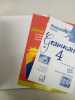
Bon état
"PELLETIER, PIERRE et JOSEPH CAVENTOU. - THE DISCOVERY OF STRYCHNINE.
Reference : 43871
(1818)
Note sur un nouvel Alcali (Lu à l'Academie des Sciences le 10 août 1818. (+) Mémoire Sur un nouvel Alcali végétal (la Strychine) trouvé dans la fève de Saint-Ignace, la noix vomique, etc. (Lu à l'Academie des Sciences le 14 décembre 1818).
(Paris, Crochard, 1818,1819). No wrappers. In: ""Annales de Chimie et de Physique, Par MM. Gay-Lussac et Arago."", tome 8 (Cahier 3) a. 10 ( Cahier 2), pp. 225-336 and pp. 129-240. (Entire issues offered). Pelletier & Caventou's papers: pp. 323-324 (tome 8) and pp. 142-176 (tome 10). A few scattered brownspots.
First printing of these classic papers in chemistry in which the authors announced their discovery of Strychnine. This was the first alkali of vegetable origin to be discovered after morphine. This discovery (and their discovery of chlorophyll) brought them international fame. The first small paper contains the announcement of the discovery and the second long memoir contains the elaborate exposition of the discovery.""Strychnine was only the second alkaloid to be extracted, the first was morphine. Pelletier and Caventou wanted to name their new alkaloid vauqueline after Nicolas Vauquelin, one of their associates who had refined the technique of ether extraction for use in isolating alkaloids. However, the officers of the Académe des Sciences in Paris rejected the idea on the grounds that a respected scientist’s name should not be paired with a deadly poison. In addition to strychnine the pair isolated other important compounds from plants including caffeine, chlorophyll and the anti-malaria drug quinine. (Paul L. Burnham).Parkinson:""Breakthroughs"", 1818 C. - Garrison & Morton: 1846.The first issue also contains their importent memoir ""Examen chimique de la Cochenillee et de sa matière colorante"", pp. 250-287 which describes how they obtained crotonic acid from croton oil and analyzed carmine in the cochineal.

"PELLETIER, PIERRE et JOSEPH CAVENTOU. - THE NAMING AND ISOLATION OF CHLOROPHYLL
Reference : 43741
(1818)
Sur la Matière verte des Feuilles.
(Paris, Crochard, 1818). No wrappers. In: ""Annales de Chimie et de Physique, Par MM. Gay-Lussac et Arago."", tome 9 (Sec. Cahier), pp. 113-224. (Entire issue offered). Pelletier & Caventou's paper: pp. 194-196. Clean and fine.
In this paper the two famous French chemists announced the first isolation of, and the naming of the substance Chlorofyll, the green substance essential for photosynthesis.Chlorophyll is the molecule that absorbs sunlight and uses its energy to synthesise carbohydrates from CO2 and water. This process is known as photosynthesis and is the basis for sustaining the life processes of all plants. Since animals and humans obtain their food supply by eating plants, photosynthesis can be said to be the source of our life also.
"PELTIER, JEAN CHARLES A. - DISCOVERY OF THE ""PELTIER-EFFECT""
Reference : 43654
(1834)
Nouvelle Expériences sur la Caloricité des courans électriques.
(Paris, Crochard, 1834). No wrappers. In: ""Annales de Chimie et de Physique"", 2. Series, Tome 56, Cahier 4 (last issue of tome 56). Entire issue offered. Pp. 337-444. Peltier's paper: pp. 371-386. The text calls for a plate, but not present here.
First printing of the paper in which Peltier describes his discovery of the ""Peltier-Effect"", the thermo-electric cooling and heating of an electrical junction dependent on the direction of the current.""Stimulated by the work of Nobili, Peltier constructed a sensitive galvanometer to measure the conductivities of antimony and bismuth for small currents. Peltier's use of small samples of these nonductile materials was fortunate because the anomalous behavior of these materials led him to construct a thermoelectric thermoscope and to measure the temperature distribution along a series of thermocouple circuits. He discovered that a cooling effect can take place at one junction and an excessive heating at the other. He then confirmed this discovery by using an air thermometer in place of the thermoscope. Peltier did not pursue the effect he had discovered, and its importence was not fully recognized until after the thermodynamic work of William Thomson twenty years later.""(DSB X, p. 500).Wheeler Gift no 2684. - Ronald's Library, p. 389. - Parkinson ""Breakthroughs"" 1834 P.
Ces plantes que l'on mange.
Paris, éd. du Chêne, janvier 2009, 2e édition, in-4, cartonnage souple à rabats éd., couv. photo coul. éd., 184 pp., papier glacé, très nb. photos et reproductions de documents anciens en coul., sommaire, index, bibliographie, Les fruits, les légumes, les céréales et les huiles végétales sont aujourd'hui à la mode en matière de nutrition. Pourtant, ils sont consommés depuis la nuit des temps, et chacun d'eux a sa propre histoire. C'est de cette histoire que Jean-Marie Pelt, avec sa verve habituelle, traite ici en tentant de situer les productions céréalières, fruitières et maraîchères dans l'histoire des hommes. De la domestication des herbes sauvages à l'agriculture moderne, ces plantes ont nourri les hommes et leur ont offert peu à peu une diversification alimentaire, des sources de vitamines et d'énergie nécessaires à leur santé et à leur développement ainsi que la découverte de vrais plaisirs gastronomiques. La très riche iconographie marie des illustrations anciennes (planches botaniques, documents historiques) et les magnifiques photos contemporaines de Rob White présentant les plantes de façon très graphiques, comme des tableaux. Très bon état
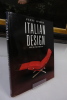
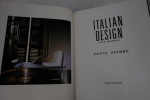
Italian Design. 1870 to the Present
Published by Thames and Hudson Ltd, London, 1988. (24x30cm.) Hardcover, hard cover in red cloth with color illustrated dust jacket. 298 illustrations, 149 in color. Dust jacket slightly loose at the bottom of the back. Very fresh interior. Pubblicato da Thames and Hudson Ltd, Londra, 1988. (24x30 cm.) Copertina rigida, copertina rigida in tela rossa con sovraccoperta illustrata a colori. 298 illustrazioni, 149 a colori. Sovraccoperta leggermente allentata nella parte inferiore del dorso. Interni molto freschi. Edité par Thames and Hudson Ltd, London, 1988. (24x30cm.) Relié, couverture rigide en toile rouge avec jaquette illustrée en couleurs. 298 illustrations, 149 en couleurs. Jaquette légèrement décollée en bas au dos. Intérieur très frais.

CARAVAGGIO AND PICTORIAL NARRATIVE, Dislocating the Istoria in Early Modern Painting
, Brepols Publishers, 2011 Hardcover, VII 654 p., 0 b/w ill. 336 colour ill., 225 x 300 mm, . ISBN 9781905375486.
"Truly a distinguished achievement, this book is required reading for general readers as well as specialists in the history of art" (Charles Dempsey, The Johns Hopkins University) A very important part of Caravaggio?s production consists of pictorial narratives, mostly religious. Thus, according to early modern aesthetics, Caravaggio practiced the artistic genre of the istoria: the most discussed and thoroughly defined pictorial institution of his time. Unanimously, seventeenth-century artists and art theorists censored and condemned Caravaggio?s art for its numerous deficiencies and faults in regard to the principles of the istoria. In spite of all these testimonies, Caravaggio?s innovations in and misuses of the techniques specific to early modern pictorial narrative have never been systematically studied, debated, and put into historical perspective. In this volume, Lorenzo Pericolo argues that Caravaggio?s multiple experimentations with the traditional devices of the istoria not only represent the core of an unprecedented "poetics of dislocation," but also unsettled, dismantled, and expanded the scope of pictorial narrative in ways that would have redefined and deeply transformed the concept of painting and artistic creation, had Caravaggio?s enterprise not have been ferociously criticized and stigmatized as both aberrant and defective. To solidly establish the importance and groundbreaking charge of Caravaggio?s work, Pericolo examines the notion of Leon Battista Alberti?s istoria as interpreted and developed by early modern artists and theorists?from Leonardo to Vasari, from Lomazzo to Poussin, and from Michelangelo to Bellori?in vast surveys in which the concepts of diachrony, duration, eurythmy, propriety, verisimilitude, and pictorial truth? among others?are carefully examined on a theoretical and practical level. By analyzing the paintings of Caravaggio?s followers such as Cecco del Caravaggio, Battistello Caracciolo, Valentin de Boulogne and, not least, Diego Velazquez, Pericolo explores how Caravaggio?s innovations in the domain of pictorial narrative were variously construed, elaborated upon, and brought to fruition in the aftermath of the master?s death in 1610, thereby offering a critical explanation of the implosion and extinction of the Caravaggesque movement in the 1630s. Among the flood of recent books devoted to Caravaggio, whose popularity now stands at the zenith, Lorenzo Pericolo?s profound and passionate study stands out for its sensitive and learned presentation of an argument that is both historically true and critically revealing to present-day sensibilities. Thoroughly at home in the vast literature devoted to Baroque art in general and to Caravaggio in particular, Pericolo also brings to his subject an unrivaled understanding of modern theoretical techniques on the one hand, and, on the other, an unrivaled mastery of seventeenth-century artistic theory, profoundly based in Aristotelian poetics and in rhetorical techniques. Through extended close readings of Caravaggio?s paintings, arranged in roughly chronological order, Pericolo brilliantly teases out the theoretical and practical choices that confronted Caravaggio, and that further determined reception of his work, both in the positive and negative senses, by highly sophisticated contemporary audiences. Beyond this, Pericolo is a remarkably sensitive guide to Caravaggio?s expression of profound, wrenching and often painful, emotions caught in eternal suspension, the sources of both his contemporaries? discomfort and our own, modern, recognition and appreciation. Truly a distinguished achievement, this book is required reading for general readers as well as specialists in the history of art.
Between Battles and Ballots: Israeli Military in Politics (Cambridge Middle East Library)
Cambridge University Press 1985 356 pages 15 2x2 6x22 6cm. 1985. Broché. 356 pages. L'ouvrage de Yoram Peri ancien conseiller du Premier ministre israélien Yitzhak Rabin analyse la relation entre l'armée et le politique en Israël. Il démontre que le contrôle de l'État sur l'institution militaire y a été faible et qu'un modèle de partenariat civilo-militaire s'y est développé en examinant notamment la période 1947-1977
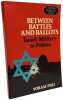
Très Bon état bonne tenue intérieur propre
Perl Pierre-Olivier Turgis Jacqueline Collectif Aoustin Fabien Hamandjian Loïc
Reference : 500300049
(2019)
ISBN : 9782047357873
L'Année de 1re Spécialités de Sciences humaines / Maths + Enseignements communs
BORDAS 2019 400 pages 18 8x25 8x2 8cm. 2019. Broché. 400 pages.
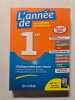
Bon état
Dorure et polychromie sur bois
FATON 1992 194 pages 22 2x2 2x29cm. 1992. Cartonné jaquette. 194 pages.
comme neuf avec sa jaquette
CIGARE - LE GUIDE.
HERME. 1997. In-8. Relié. Bon état, Couv. convenable, Dos satisfaisant, Intérieur frais. 142 pages - quelques illustrations en couleurs dans le texte.. . . . Classification Dewey : 633.7-Plantes alcaloïdes (tabac, thé, cacao, café, pavot)
Classification Dewey : 633.7-Plantes alcaloïdes (tabac, thé, cacao, café, pavot)
[Donjean ] - Perrier Mr.,Dubreuil Mr.,Ray Nol's (The) - Spencer Emile - Marchal,Disle Fernand
Reference : 80426
(1892)
Partition de la chanson : Mon oncle l'invalo Chansonnette Cigale (La),Théâtre des Ambassadeurs
Partitions sur les Autres conflits Bigot 1892 approx.
Etat moyen Petit format
Le Thé
Editions du Chêne 2007 16 2x1 6x18 6cm. 2007. Reliure editeur cartonnée. Ce carnet gourmand explore l'univers du thé : de la plante et sa culture aux différentes variétés en passant par ses vertus son histoire ses rites de dégustation et les objets associés. Il mêle documents anciens photographies extraits littéraires conseils récits et recettes invitant le lecteur à un voyage sensoriel et culturel

Très bon état
Le thé. Les carnets gourmands.
Paris, éd. du Chêne, 2003, in-8 oblong, cartonnage, couv. photo coul. éd., 128 pp., papier glacé, très nb. photos et reproductions de documents anciens en coul. et en noir, sommaire, bibliographie, table d'infusion Ambre des thés de Ceylan, cuivre du Darjeeling d'automne, cristal du Yin Zhen de Chine... à chaque thé sa couleur, son parfum, son plaisir. Des jardins sous les nuages du Yunnan au sol rouge des pentes du mont Cameroun, ses plantations répandues à travers le monde illustrent son histoire universelle. Boisson de civilisation aux multiples vertus, aux rites de dégustation aussi précis que différents, le thé fait rêver et voyager. Ce carnet, qui mêle documents anciens, photos récentes, extraits littéraires, conseils, récits et recettes nous invite à plonger dans son univers. Superbe iconographie ! Très bon état
Librairie spécialisée en gastronomie , œnologie et tabagie
Perrier, R. [with the cooperation of P. Fischer & H. Harant]
Reference : IG44186
(1930)
La Faune de la France en tableaux synoptiques illustrés. Fascicule IX. Mollusques. Bryozoaires, Brachiopodes, Protocordés, Amphioxus, Tuniciers.
1930 viii, 172 p., 778 figures, original printed boards. Some wear on spine.
"PERRIN, (JEAN BAPTISTE). - THE DISCONTINUOUS STRUCTURE OF MATTER.
Reference : 43636
(1897)
Rayons cathodiques et Rayons de Röntgen. Etude epérimentale. Premiere - (Deuxieme) Partie. (I. Rayons Cathodiques. II. Rayons de Röntgen).
Paris, Masson et Cie, Imprimerie Gauthier-Villars, 1897. 8vo. Bound with original printed yellow wrappers (wrappers to both the volume and to the parts) in contemp. hcalf, raised bands, gilt spine. Light wear along edges. Small stamp on verso of titlepage, on printed frontwrappers and on foot of p. 576. In ""Annales de Chimie et de Physique"", 7me Series - Tome XI. (Entire volume offered). 576 pp. Perrin's paper: pp. 496-554. Textillustrations. Clean and fine.
First appearance of Perrin's doctorial thesis, in which he definitly settled the question of the common nature of cathode rays and of the recently discovered X rays, showing them to be particles. The experiments prepared the way for J.J. Thomson's determination in 1897 of the charge-mass ratio of these particles, electrons. In 1896 Perrin won the Joule Prize of the Royal Society for his experiments on cathode rays and for his preliminary studies on Röntgen's X rays, these investigations formed the content of his thesis. Perrin received the Nobel Prize in Physics in 1926 for this and other work on the discontinuous structure of matter, which put a definite end to the long struggle regarding the question of the physical reality of molecules.""During the 1890s he was attracted to the study of cathode rays, which Crookes had shown to be electrically charged. Even so, there remained controversy whether they were particles (as it seemed they would have to be if they were charged) or whether Crooke's observations were in error and they were actually a form of wave radiation. Perrin settled the matter for all in 1895 by showing that the radiation could be made to impart a large negative charge to a cylinder upon which they fell. The cathode rays must, therefore, consist of negatively-charged material, and must be particles rather than wave. J.J. Thomson was able to determine the mass of the particles and to show that they were much smaller than atoms.""(Asimov).The offered volume contains further notable papers. 14 Memoirs by Marcellin Berthelot.
Une croisade médicale contre l'alcoolisme, compte rendu d'une enquête parmi les médecins français, suivi d'un petit précis de l'alcoolisme à l'usage des éducateurs et des dirigeants
Paris, chez Louis Arnette, Libraire 1845 In-8 23,5 x 15,5 cm. Broché, couverture gride, auteur & titre en noir sur le dos et le premier plat, 240 pp., table des matières. Exemplaire en bon état. Petite pliure angulaire en coin de pied de la couverture.
Bon état d’occasion
Die neuen Psalmenhomilien: Eine kritische Edition des Codex Monacensis Graecus 314 (Die griechischen christlichen Schriftsteller der ersten Jahrhunderte N.F. 19 Band 19)
De Gruyter 2015 651 pages 16 69x23 19x2 82cm. 2015. Cartonné. 651 pages.
Très Bon Etat intérieur propre bonne tenue
Vijfde bulletin van de Tweede Wereldoorlog
, Aspekt B.V., Uitgeverij 2003, 2003 Paperback, 229 pagina's, Nederlands, 235 x 155 mm, boek in prima staat, met illustraties en foto's in z/w,. ISBN 9789059111769.
Het vijfde deel van het Bulletin Tweede Wereldoorlog bevat wederom tal van verschillende bijdragen. Jan Meyers beschrijft de bizarre inhoud van de brief die de gedetineerde Mussert in november 1945 aan ministerpresident Schermerhorn schreef. De historicus Jan Nijdam belicht de wonderlijke levensloop van Jan Baars. Deze vooroorlogse fascistenleider verrichte tijdens de bezetting moedig verzetswerk en verzeilde na de oorlog in de schimmige wereld van inlichtingendiensten. Ab Caransa schetst op aangrijpende wijze de laatste maanden van zijn gevangenschap in een subkamp van Auschwitz (Gleiwitz IV) en daaropvolgende dodenmars in januari 1945. Onder de titel 'Opa war kein M rder' staat de historicus C.E.H.J. Verhoef stil bij de traumatische omgang in Duitsland en Oostenrijk met de misdaden van de Wehrmacht in de Tweede Wereldoorlog. Jet van Swieten doet verslag van de 'Russenoorlog' op Texel waar de in Duitse dienst getreden Georgi rs een maand voor de capitulatie in opstand kwamen. In zijn artikel 'Onder de banieren van het Rode Leger' besteedt Perry Pierik uitvoerig aandacht aan de memoires van Russische militairen uit de Tweede Wereldoorlog. J.G. Kikkert beschrijft ten slotte op boeiende wijze de werkzaamheden van verschillende inlichtingendiensten in het vooroorlogse Nederland. Het Bulletin bevat nog diverse andere bijdragen waaronder het vaste overzichtsartikel 'De Lange Schaduw van een oorlog'. In de vier voorgaande delen van het Bulletin Tweede Wereldoorlog werd onder meer aandacht besteed aan: Albert Speer en de holocaust, Colijn en zijn fascistische bewonderaars, de Sinterklaasrazzia in Haarlem, de Mussert- Garde, Friedrich Weinreb, film in het Derde Rijk, generaal Vlassov en zijn leger, de slag om de Ginkelse heide, de diplomatie van de Nieuwe Orde, de Moslim-divisie Handschar, het Delftse studentenverzet, het protectoraat Bohemen en Moravi , Marinus van der Lubbe, het Bezemfascisme, Nederland en de dreiging van chemische oorlogsvoering, operatie 'Wintersgewitter', volkskunde in het Derde Rijk en Bernards geheime bezoek aan Argentini .
MEMOIRES DU COMMANDANT PERSAT de 1806 à 1844. Publiés avec une introduction et des notes par Gustave Schlumberger.
1910 1volume, reliure demi-chagrin vert olive (binding half shagreen) in-octavo (22,8 x 14,5 cm), reliure d'époque, dos 5 nerfs (spine with raised bands) insolé (le vert olive a viré au soleil en marron-clair)- entre-nerfs à fleuron au fer plein or (floweret with full blocking stamp) - titre frappé or (gilt title) et tomaison (volume numbering), papier marbré vert aux plats (cover with marbled paper), toutes tranches lisses (all edges smooth), Avec 1 fac-similé hors texte en noir, [(1) f + XXX pp + (5) ff (préface) + 367] pages, 1910 Paris E. PLON, Nourrit et Cie Imprimeurs-Editeurs,
Mémoires.... Édition originale. 'Maurice Persat est un original et brillant spécimen de l'officier impérial, d'une fabuleuse bravoure, adorateur passionné à la fois de l'Empereur et de la liberté, que sa haine farouche des hommes de 1815 force à quitter la France et à tenter une foule d'aventures .Emigré en Amérique en 1817, le Commandant Persat combattit avec Bolivar et tous les défenseurs des idées libérales à Naples, en Grèce, en Espagne, aux Antilles. Il finit cependant par se rallier à Charles X.Tulard 1140 - Bertier de Sauvigny 803..........trés bel exemplaire...............en bon état malgré le petit défaut signalé (very good condition in spite of the small defect indicated).

