 Write to the booksellers
-
Type
Book (7262)
Disk (45)
Drawings (1)
Engraving (9)
Magazine (89)
Maps (4)
Music sheets (136)
New book (4)
Old papers (1)
Photographs (19)
Posters (1)
-
Latest
Last 24h (2)
Last 3 days (5)
Last month (122)
Last week (9)
-
Language
Czech (1)
Dutch (9)
English (158)
French (7389)
German (4)
Italian (2)
Japanese (1)
Latin (3)
Russian (4)
-
Century
16th (17)
17th (43)
18th (199)
19th (882)
20th (2485)
21st (1574)
-
Countries
Belgium (1156)
Canada (34)
China (56)
Côte d'Ivoire (7)
Denmark (1063)
France (4902)
Germany (1)
Netherlands (181)
Switzerland (155)
United Kingdom (12)
United States of America (4)
-
Syndicate
ALAC (27)
CLAM (25)
CLAQ (2)
ILAB (2251)
NVVA (15)
SLACES (15)
SLAM (1038)
SNCAO (4)
Christelijke onderwijzingen of Sermonen voor al de feestdagen des jaars
Gent, Vander Schelden 1875 316pp., 22cm., contemporaine gecart. band (gemarbreerde platten, lederen tug met titel in goudopdruk), 3 stempeltjes, goede staat, R98122
Graphic Practices and Literacies in the History of English
, Brepols, 2025 Hardback, xv + 355 pages, Size:156 x 234 mm, Illustrations:37 b/w, 12 col., 16 tables b/w., Language: English. *new ISBN 9782503600451.
Summary Graphic devices such as tables and diagrams and other visual strategies of organising text and information are an essential part of communication. The use of these devices and strategies in books and documents developed throughout the medieval and early modern periods, as knowledge was translated and circulated in European vernaculars. Yet the use of graphic practices and multimodal literacies associated with them have mostly been examined in the context of Latin, Greek, Arabic, and Hebrew, and early vernacular writing remains an under-researched area. This volume brings together contributors from English historical linguistics and book studies to highlight multimodal graphic practices and literacies in texts across a range of genres and text types from the late medieval period until the eighteenth century. Contributions in the volume investigate both handwritten and printed materials, from books in the domains of medicine, religion, history, and grammar, to administrative records and letter writing. TABLE OF CONTENTS Graphic Practices in Early English Texts MATTI PEIKOLA, JUKKA TYRKK , and MARI-LIISA VARILA Part I Conventionalising Strategies of Verbal and Visual information COLETTE MOORE The Pragmatics of Late Medieval English Accounts: A Case Study KJETIL V. THENGS Plague on the Page: Mise-en-page and Visual Highlighting in the John of Burgundy Plague Tract from the Fourteenth to the Seventeenth Century ALPO HONKAPOHJA The Pragmatics of Punctuation in Early English Medical Recipe Books JAVIER CALLE-MART N and JES S ROMERO-BARRANCO Visual Pragmatics and Late Modern English Letters INGRID TIEKEN-BOON VAN OSTADE Part II The A to Z of Middle English Indexing? The Tables of John Trevisa's Polychronicon WENDY SCASE A Visual and Linguistic Interpretation of the Pater Noster Table of the Vernon Manuscript OLGA TIMOFEEVA Visual Chronologies in Early Modern English Historiography AINO LIIRA, MATTI PEIKOLA, and MARJO KAARTINEN Visual Representation of Information in Medical Texts, 1500-1700 MARI-LIISA VARILA, CARLA SUHR, and JUKKA TYRKK Verbal and Visual Instruction in Early Dance Manuals: The Curious Case of John Playford's Tables HANNA SALMI Graphic Elements in Early Printed Grammar Books JANNE SKAFFARI and JUKKA TYRKK Afterword JEREMY J. SMITH Bibliography Index Notes on Contributors
The Painted Veil + On a chinese screen + christmas holiday --- 3 livres
Vintage Classics 2025 240 pages 12 8x1 8x19 6cm. 2025. Broché. 3 volume(s). 240 pages.
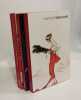
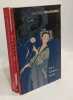
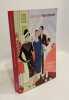
Bon état légères rousseurs sur le dos intérieur propre
Théorie de la sexualité des Infusoires ciliés.
(Paris, Gauthier-Villars), 1887. 4to. No wrappers. In: ""Comptes Rendus Hebdomadaires des Séances de L'Academie des Sciences"", Tome 105, No 7. Pp. (325--) 563. (Entire issue offered). Maupas' paper: pp. 356-359.
First appearance of this classic paper in whic Maupas determined that fertilization in protozoa is essential to the indefinite continuation of a cell strain. His discovery proved an importent stimulus to subsequent investigation not only upon protozoa but also in the area of parthenogenesis.""He found in Paramecium that after generations of division, the stock becomes infeebled. Ultimately the individuals die, unless they meet partners for conjugation. When two such enfeebled individuals meet, their bodies are approximated and they interchange nuclear elements. Next, division takes place. The stock has regained its vigour. No differentiation of sexes is evident in the conjugatory process, though such differentiation can be traced in other prorozoa.""(Singer ""The Story of Living Tings"", p. 531 ff.).Thomas Hall ""A Source Book in Animal Biology"", pp. 458-60.

La Parure et autres nouvelles a chute
Editions Hatier 2011 96 pages 12 3x17 4x0 7cm. 2011. pocket_book. 96 pages.
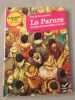
Bon état
Maupassant Guy de Prat Marie-Hélène Ibero Joëlle Signoret Isabelle
Reference : 500178704
(2015)
ISBN : 9782047353707
Classiques Bordas - L'enfant et autres histoires de famille - Maupassant
BORDAS 2015 248 pages 10 67x17 17x2 39cm. 2015. Broché. 248 pages.
Bon état
Maupassant Guy de Sendre-Haïdar Michèle
Reference : 500210646
(2012)
ISBN : 9782210760684
Cinq nouvelles fantastiques - Classiques et Patrimoine
MAGNARD 2012 80 pages 13 3x17 7x0 5cm. 2012. pocket_book. 80 pages.
Bon état
Maupassant Guy de Vasseur Jean-Pierre McMaster Albert M.C. Dunne Walter
Reference : 500093441
(2013)
ISBN : 9782368300046
Boule de suif et deux autres nouvelles
VASSEUR 2013 10 5x1 2x15cm. 2013. Broché.
Très bon état
"MAUPERTUIS, PIERRE LOUIS. - CONFIRMING NEWTON'S DYNAMIC AND THE FLATTENING OF THE EARTH.
Reference : 51275
(1740)
La Figure de la Terre determinée. Par Messieurs de L'Academie Royale des Sciences, qui ont mesuré le Degré du Méridien au Cercle Polaire. (Discours lu dans l'Assemblée publique du 13 Novembre 1737).
(Paris, L'Imprimerie Royale, 1740). 4to. Without wrappers. Extracted from ""Mémoires de l'Academie des Sciences. Année 1737"". Pp. 389-469, 1 engraved map (from Torneå to Kittis) and 5 folded engraved plates.
First printing of the official report from the French Academy of the geodetic expedition to Lapland in order to settle the conflict between Earth-elangators and Earth-flatteners, between the French and the British. ""Newton had calculated from the Earth's rotational force at the Equator that its equatoeial diameter should exceed its polar diameter by 0.44 per cent, or 27 km (17 miles)"" similar in Jupiter, rotating more than twice as fast, the disparity of the diameters was shown to be even greater... In France, however, tha Cassinis from geodetic measurements stretching along the meridian at Paris from the Channel to the Pyrennees came to exactly the opposite conclusion - that the polar diameter of the Earth was the greater. After Maupertuis had examined this imcompatibility in 1733, the Academy of Sciences decided that it should be settled by measure of a degree of latitude taken in two widely separated parts of the globe. Maupertuis, with Clairaut, took a party to the Golf ofBothnia. La Condamine, with Bouguer, took another to Peru. maupertuis departed in May 1736 and was absent for a year, only in December (1737) was he able to announce the result that, in accordance with Newton's dynamical theory, the degreee in the far north was loner than that in Paris. More years elepsed before the degreee in Peru was found to be shorter. As Voltaire put in a wrily witty (but un-Baconian) couplet addresseed to Maupertuis:""In tedious deserts you were forced to roam. To find the truth that Newton knew at home."" (Rupert Hall ""Revolution in Science 1500-1750, pp.351-52).Parkinson ""Breakthroughs"" 1736-37 E.
"MAUPERTUIS, (PIERRE LOUIS MOREAU DE). - THE EPISTEMOLOGICAL STATUS OF THE LAWS OF MOTION.
Reference : 49130
(1758)
Examen philosophique de la Preuve de L'Existence de Dieu employée dans l'Essai de Cosmologie. Premier-Seconde Partie. (1. Sur l'Evidence & la certitude Mathematique. - 2. Ou l'on examine les Loix de la Nature).
(Berlin, Haude et Spener, 1758). 4to. No wrappers as issued in ""Mémoires de l'Academie Royale des Sciences et Belles-Lettres"" Tome 12 (1756), With the section-titlepage. Pp. (2),389-424.
Fisr edition of an importent paper in which Maupertuis articulates his final synthesis of his earler work on the status of natural laws of motion and with is reflexions on epistemological certainty. He here coined the term ""repliability"" to denote the unambigouos truths of arithmetics and geometry.
Monde secret des jardins 275 photographies en couleur (Le)
FLAMMARION 1994 288 pages 22 6x2 4x29 2cm. 1994. Relié. 288 pages.
Bon état
Oud-Vlaams Hoofd (St. Anneke). Album met een reeks van vijftien originele prenten, ge tst, gedrukt en getekend door de kunstenaar Jacques Gorus.
Antwerpen , Eigen Beheer, 1966 Losbladig in originele overslagdoos. Van dit album verschenen 68 exemplaren. In ieder album is een reeks van vijftien originele etsen van Jacques Gorus verzameld. 50 exemplaren werden genummerd van 1 tot 50. Dit exemplaar is nummer 34. Gesigneerd door Gorus en Gilliams.
Drie exemplaren, niet in de handel, voorzien van merkletters A.B.C. bevatten tevens al de staten van een zestal etsen. Vijftien exemplaren, genummerd van I tot XV, bevatten de eerste staat van een zestal etsen alsmede een originele tekening. De typografische verzorging werd uitgevoerd door drukkerij G. De Batist, te Antwerpen. Met 3 bladen tekst 'Begroeting' (en boekverzorging) door Maurice Gilliams. Exemplaar nummer 34. Jacques Gorus was schilder, aquarellist, tekenaar van figuren, stadszichten en landschappen maar vooral gekend als etser van het Antwerpse straatleven. Hij is een meesterlijk observator van de menselijke soort. In tekeningen en etsen geeft de kunstenaar zijn toeschouwers les in lichaamstaal. Jacques Gorus verbleef in de jaren 1925-1937 op het Vlaams Hoofd.
Arsène Lupin Tome 3 : Progressez en anglais: Tome 3 Deux coups de maître
JEAN-PIERRE VASSEUR 2013 128 pages 10 4x0 8x15cm. 2013. Broché. 128 pages.
Très bon état
Arsène Lupin Tome 3 : Progressez en anglais: Tome 3 Deux coups de maître
JEAN-PIERRE VASSEUR 2013 128 pages 10 4x0 8x15cm. 2013. Broché. 128 pages.
Très bon état
Clavis Patrum Graecorum. Saeculum quartum (Patres Postnicaeni). Scriptores Alexandrini et Aegyptii (CPG 2000-2684). Deuxi me dition, revue et mise jour
, Brepols, 2023 Hardback, xxv + 420 pages, Size:155 x 245 mm, Language(s):Latin, French. ISBN 9782503605159.
Summary D s la parution de son premier tome, en 1974, la Clavis Patrum Graecorum s'est impos e aux patristiciens, byzantinistes, historiens et th ologiens comme l'instrument indispensable pour d signer de mani re univoque, gr ce un num ro, les multiples textes dont ils s'occupent. Mais un tel instrument de travail, qui pour chaque ?uvre indique la meilleure dition, ce qu'on sait de sa date et de son authenticit , de sa tradition manuscrite, et cela non seulement en grec mais dans toutes les langues chr tiennes anciennes dans lesquelles elle a t traduite (latin, copte, syriaque, etc.), doit videmment tre tenu jour, car les tudes progressent, et progressent vite. Les crits sont mieux dit s, mais aussi mieux tudi s ; les moyens modernes permettent de trouver plus facilement, en amont, les ?uvres dont ils se sont inspir s, et en aval, les textes qu'ils ont eux-m mes influenc s. Si les versions anciennes ont tant d'importance, c'est notamment parce qu'elles ont parfois conserv des manuscrits plus anciens que le monde grec, lequel, l' poque de la translitt ration, a souvent limin les mod les onciaux de ses manuscrits d sormais crits en minuscules. TABLE OF CONTENTS Pr face la seconde dition Conspectus materiae Sigles et titres abr g s Abbreviationes CPG nos 2000-2684 Textes r pertori s dans les autres tomes de cette Clavis et cit s dans le pr sent volume Concordantiae (PG, PL, CPL, BHG, BHL, BHO) Index nominum et operum
HISTOIRE DU CAFE
DESJONQUERES. 1991. In-8. Broché. Bon état, Couv. convenable, Dos satisfaisant, Intérieur frais. 249 pages. . . . Classification Dewey : 633.7-Plantes alcaloïdes (tabac, thé, cacao, café, pavot)
Classification Dewey : 633.7-Plantes alcaloïdes (tabac, thé, cacao, café, pavot)

The Russian Civil War
HarperCollins Publishers Ltd 1987 320 pages 15 2x2 6x22 8cm. 1987. Broché. 320 pages.
Bon Etat bonne tenue intérieur propre
Max and Klammet, Gerhard KNIGHT, Friends of the Heart (Sous la direction de)
Reference : 137390
(1970)
Return to the Alps
Friends of the Heart 1970 Livre en anglais. In-folio relié 35 cm sur 26,5. 160 pages. Jaquette en assez bon état. Bon état d’occasion.
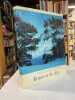
Bon état d’occasion
Description of the Maxim Automatic Machine-Gun. - [THE AUTOMATIC MACHINE-GUN]
London, Institution of Mechanical Engineers, 1885. 8vo. Original printed wrappers. Contained in the April issue of Proceedings of The Institution of Mechanical Engineers, pp.167-197, with 8 plates. The whole issue offered here. Custom cloth box with gilt leather title on spine.
First edition. Maxim's first announcement of his invention of the automatic machine-gun using the energy from the recoil force to eject each spent cartridge and insert the next one, Maxim came up with the single-man operated machine-gun. Earlier types of machine-guns, as the Gatling and Gardner, consisted of multiple barrels and were powered by the manual turning of a crank, which made them very heavy and caused them to require several men in order to operate them. The invention of the Maxim-mechanism allowed for a single-barrel construction, and the new machine-gun could potentially be operated by just one man, which thus led to the modern automatic machine-gun. Scarce.
Ambigua to John. Volume I: Translation
, Brepols, 2024 Paperback, 400 pages, Size:156 x 234 mm, Language(s):English, Greek. ISBN 9782503579467.
Summary In the Ambigua to John, the great early Byzantine monastic theologian and philosopher Maximus the Confessor (580 - 662) is at work in his most creative and expansive mode. Using difficult passages in Gregory Nazianzen as starting points for his thinking, Maximus draws together various strands of the theological and philosophical traditions he inherited and shapes an ever-moving, kaleidoscopic vision of the journey through the world of place, time, and materiality to final dynamic repose in eternity. Throughout the text, Maximus takes his readers along the many paths his own mind traveled to clarify this breathtaking reflection of the teachings of Scripture and the patristic tradition. In this translation of the first fully critical edition of Maximus's text, the streams of the Confessor's divine philosophy are revealed in their own right. This translation will be followed with the first full commentary on the Ambigua to John in English, to appear in Corpus Christianorum in Translation. The source text of this volume will appear in Corpus Christianorum, Series Graeca, 84. TABLE OF CONTENTS Introduction Bibliography The Ambigua to John Index of Scriptural References Index of Non-Biblical Sources General Index
Le Jaguar : Code Zéro (The Strange expériment)
1955 petit in-8 broché - 1955 - 176 pages - couverture illustrée par Alex Pinon - Ed. Sogedide
Bon état, pliures de lecture sur le dos, léger trait de lecture sur le premier plat, légères pliures sur le quatrième plat
"MAXWELL, JAMES CLARK. - THE INTRODUCTION OF THE ""ELECTRICAL FORMULATION"" OF THE ELECTROMAGNETIC THEORY OF LIGHT.
Reference : 42029
(1869)
On a Method of making a Direct Comparison of Electrostatic with Electromagnetic Force"" with a Note on the Electromagnetic Theory of Light. (Read June 18, 1868).
(London, Taylor & Francis, 1869) Large 4to. Without wrappers. Extracted from ""Philosophical Transactions of the Royal Society of London."", Vol. 158. Maxwell's paper: pp. 643-657. Clean and fine, wide margins.
First appearance of this major paper on electromagnetic dynamics, in which Maxwell improves the groundbreaking equations he had set forth in his famous paper of 1865, the ""A dynamical Theory of Electro-Magnetic Fields"". In the paper offered here, he for the first time proposed to base the electromagnetic theory of light solely on 2 equations. The paper is one of Maxwell's 5 most importent contributions to electromagnetism.""Formulas for the forces between moving charged bodies may indeed de derived from Maxwell's equations, but the action is not along the line joining them and can be reconciled with a dynamical principle only by taking into account the exchange of momentum with the field. Maxwell remarked that the equations might be condensed, but ""to eliminate a quantity which expresses a useful idea would be rather a loss than a gain in this stage of our enquiry."" he had in fact simplified the equations in his fifth major paper, the short, but importent ""Note on the Electromagnetic Theory of Light."" (1868), writing them in an integral form without the function A, based on four postulates derived from electrical experiments. This may be called the electrical formulation of the theory, in contrast with the original dynamical formulation."" (C.W.F. Everitt in DSB).
"MAXWELL, JAMES CLARK. - THE ""MAXWELL-DISTRIBUTION""S FINAL FORM - A MAIN PAPER IN 19TH CENTURY PHYSICS.
Reference : 43456
(1867)
""On the Dynamical Theory of Gases."" Received May 16, - Read May 31, 1866.
London, Taylor and Francis, 1867. 4to. No wrappers as extracted from ""Philosophical Transactions"", Vol. 157 - Part I. Titlepage to volume 155 and pp. 49-88. Titlepage with minor light browning at corners. Internally clean. A small stamp on verso of titlepage.
First appearance of this seminal paper (in its full version from ""Transactions""), representing the announcement of Maxwell's final ""Theory of Gases"" and introduces the ""Maxwell Distribution"" in its final form, a statistical means of describing aspects of the kinetic theory of gases, a theory, together with his electromagnetic theory, are considered to be SOME OF THE GREATEST ADVANCES IN PHYSICS OF ALL TIMES. Everett considers this paper (1868) to be Maxwell's greatest single paper. Maxwell's discoveries laid the foundations of special relativity and quantum mechanics.One of Maxwell's major investigations was on the kinetic theory of gases. Originating with Daniel Bernoulli, this theory was advanced by the successive labours of John Herapath, John James Waterston, James Joule, and particularly Rudolf Clausius, to such an extent as to put its general accuracy beyond a doubt" but it received enormous development from Maxwell, who in this field appeared as an experimenter (on the laws of gaseous friction) as well as a mathematician.In 1866, he formulated statistically, independently of Ludwig Boltzmann, the Maxwell-Boltzmann kinetic theory of gases. His formula, called the Maxwell distribution, gives the fraction of gas molecules moving at a specified velocity at any given temperature. In the kinetic theory, temperatures and heat involve only molecular movement. This approach generalized the previously established laws of thermodynamics and explained existing observations and experiments in a better way than had been achieved previously. Maxwell's work on thermodynamics led him to devise the Gedankenexperiment (thought experiment) that came to be known as Maxwell's demon.
"MAXWELL, JAMES CLERK. - ESTABLISHING THE SCIENCE OF RAREFIED GAS DYNAMICS.
Reference : 42765
(1880)
On Stresses in Rarified Gases arising from Inequalities of Temperature. Recieved March 19, - Read April 11, 1878. (+) Appendix. (Added May, 1879).
(London, Harrison and Sons, 1880). 4to. No wrappers as extracted from ""Philosophical Transactions"", Year 1879, Vol. 171 - Part II. Pp. 231-256. Clean and fine.
First appearance of a major paper on Gas Dynamics, creating a whole new science. One of Maxwell's major investigations was on the kinetic theory of gases. Originating with Daniel Bernoulli, this theory was advanced by the successive labours of John Herapath, John James Waterston, James Joule, and particularly Rudolf Clausius, to such an extent as to put its general accuracy beyond a doubt"" but it received enormous development from Maxwell, who in this field appeared as an experimenter (on the laws of gaseous friction) as well as a mathematician.""Maxwell's last major paper on any subject was ""On Stresses in Rarified Gases arising from Inequalities of Temperature."" Between 1873 and 1876 the scientific world had been stirred by William Crooke's experiments with the radiometer, the well-known device composed of a partuially evacuated chamber containing a paddle wheel with vanes blackened on one side and silvered on the other, which spins rapidly when radiant heat impinges on it....Reynolds called this new effect ""thermal transpiration"". Maxwell gave a simple qualitative explanation in his report, and in an appendix added to his own paper in May 1879 he developed a semiempirical theory accounting for it and for the radiometer effect...Maxwell's paper created the science of rarified gas dynamics. His formulas for stress and heat flux in the body of the gas were contributions of permanent value, while his investigations of surface effects started a vast body of research extending to the present day...One other contribution of great beauty contained in notes added to the papwer in May and June 1879 was an application of the methods of spherical harmonic analysis to gas theory.""(DSB IX, p. 224-25).
The Bakerian Lecture. - On the Viscosity or Internal Friction of Air and other Gases. Received November 23, 1865 (+) Postscript.- Received December 7, 1865. - Read February 8, 1866.
(London, Taylor and Francis, 1866). Large 4to. Without wrappers. Extracted from ""Philosophical Transactions of the Royal Society of London."", Vol. 156 - Part I. Pp. 249-268 a. 1 lithographed plate. A few brownspots to the plate. Having the titlepage to vol. 156 - Part I. A few brownspots to lower margins.
First appearance of a major paper in the kinetic theory of gases, in which Maxwell proved that the viscosity was independent of pressure as predicted, and nearly a linear function of the absolute temperature T.One of Maxwell's major investigations was on the kinetic theory of gases. Originating with Daniel Bernoulli, this theory was advanced by the successive labours of John Herapath, John James Waterston, James Joule, and particularly Rudolf Clausius, to such an extent as to put its general accuracy beyond a doubt"" but it received enormous development from Maxwell, who in this field appeared as an experimenter (on the laws of gaseous friction) as well as a mathematician.""James Clerk Maxwell published a famous paper in 1866 (the paper offered) using the kinetic theory of gases to study gaseous viscosity. The internal friction (the viscosity) of the gas is determined by the probability a particle of layer A enters layer B with a corresponding transfer of momentum. Maxwell's calculations showed him that the viscosity coefficient is proportional to both the density, the mean free path and the mean velocity of the atoms. On the other hand, the mean free path is inversely proportional to the density. So an increase of pressure doesn't result in any change of the viscosity.

