 Write to the booksellers
-
Type
Book (7246)
Disk (45)
Drawings (1)
Engraving (9)
Magazine (89)
Maps (4)
Music sheets (135)
New book (2)
Old papers (1)
Photographs (19)
Posters (1)
-
Latest
Last 24h (1)
Last 3 days (1)
Last month (118)
Last week (857)
-
Language
Czech (1)
Dutch (9)
English (156)
French (7373)
German (4)
Italian (2)
Latin (3)
Russian (4)
-
Century
16th (16)
17th (43)
18th (196)
19th (878)
20th (2478)
21st (1562)
-
Countries
Belgium (1156)
Canada (32)
China (56)
Côte d'Ivoire (7)
Denmark (1063)
France (4888)
Germany (1)
Netherlands (181)
Switzerland (155)
United Kingdom (9)
United States of America (4)
-
Syndicate
ALAC (25)
CLAM (25)
CLAQ (2)
ILAB (2244)
NVVA (15)
SLACES (15)
SLAM (1036)
SNCAO (4)
Wanderstudent 2000. The Wanderstudent of 1425 revived in virtual reality in 2000? Towards a European Virtual University. Proceedings of the International Colloquium, organised by EuroPACE in the framework of the 575th anniversary celebrations of the Katholieke Univers.
Leuven, Universitaire Pers, 2001 Paperback, English, original editor's jacket, 16x24 cm., 172 pp. ISBN 9789058671561.
'The Wanderstudent of 1425 revived in virtual reality in 2000!' This was the leading theme of the 'Wanderstudent 2000' conference held in Leuven (Belgium) in October 2000, in the framework of the 575th anniversary of the Katholieke Universiteit Leuven. Just as during the middle ages German students wandered over the country to visit the best masters and to gather knowledge and credits from them, should we not expect students of the third millenium to do the same, but now 'virtually' and 'globally'? Will this virtual wandering be left completely to the free initiative of the individual student? Will universities encourage it and create supporting structures? Will universities control and structure the process by establishing inter-university networks and creating joint virtual campuses? Will universities join efforts with industry and society to create flexible lifelong learning systems? Whereas on the one hand ICT-based networking between universities clearly offers a huge potential for the enrichment of learning contents, for the stimulation of international exchanges and mobility, and for the enhancement of flexibility and accessibility, on the other hand a number of logistical problems have to be solved, related to assurance of educational quality, acrreditiation and credit transfer, intellectual property rights, languages and cultural differences, cost efficiency,equality of access for all sections of society across continents.These challenging questions gave sufficient food for thought and discussion to the 170 participants from 21 different countries, who effectively used this conference as an appropriate forum for exchanging points of view on the concept and implementation of a 'distributed virtual university' in all its aspects.
ROEPINGSDAG TE KALLO. 25 MEI 1975. PAROCHIE ST. - PETRUS EN PAULUS.
Kallo/Beveren-Waas, Parochie St. - Petrus en Paulus/Herman Cools, 1975 Geniet, originele papieren uitgeversomslag in z/w, 23.8x15.7 cm., 32 pp., z/w illustraties.
Groninger molens
N.V. Erven P. Noordhoff 1958 in8. 1958. Broché. photographies noir et blanc
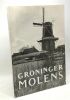
Bon état général pages un peu gondolées au niveau de la marge inférieure intérieur propre avec sa carte dépiante séparée
THE SEVEN SKETCHBOOKS OF VINCENT VAN GOGH. A FACSIMILE EDITION,
New York, , Harry N. Abrams, 1986**, 1986 Bound, red cloth, illustrated dustjacket, frontispice, 240 x 275mm., 320pp., richely illustrated in color and b/w. ISBN 9780810917316.
Translated from the dutch by Claudia Swan. Reproduces every page of Van Gogh's seven sketchbooks, which previously were accessible only to a privileged few in the Rijksmuseum Vincent Van Gogh, Amsterdam. Book is in good condition.
KUNSTBEZIT VAN DE SINT - LAURENTIUSKERK TE HAMONT.
Hamont - Achel, De Geschied- en Heemkundige Kring " De Goede Stede Hamont ", 1991 Gebrocheerd, kartonomslag in zwart en rood, titelpagina met vignet, 15x21 cm., 214 pp., geillustreerd in z/w.
Inventaris van het roerend patrimonium van de kerkfabriek Sint-Laurentius te Hamont, uitgegeven door de Geschied- en Heemkundige Kring " De Goede Stede Hamont ", bij gelegenheid van de tentoonstelling over het kunstbezit van de St. Laurentiuskerk te Hamont Van 1 tot 11 ovember 1991.
Enge Dingen ! Het aangetaste lichaam.
Zwolle, WBooks, 2011 Gebrocheerd, toegekleegde originele uitgeversomslag in kleur met boodschap "snij de pagina's open en huiver !", 23x16 cm., 96 pp., uitgebreide kleurillustratie. ISBN 9789089103024.
Met bijdragen rond geslachts- en huidziekten in het Nederlands/Francais/Deutsch. De fascinatie voor het aangetaste menselijk lichaam is eeuwenoud. Al in de Middeleeuwen presenteerden kwakzalvers tijdens de jaarlijkse dorpskermis mensen met lichamelijke afwijkingen als rariteit. Op het podium werd het lichamelijk gebrek uitgebreid getoond, evenals de soms huiveringwekkende remedies. In "Enge dingen ! Het aangetaste lichaam." staat deze menselijke nieuwsgierigheid naar interessante, afwijkende of enge zaken centraal. Aan de hand van afbeeldingen uit (oude) medische boeken, preparaten op sterk water, medische wasmodellen en gruwelijke kunstobjecten worden de gevolgen van curieuze misgeboorten, ziektes, parasieten, ongelukken en geweld getoond. Het boek gaat tevens in op de impact van deze veranderingen aan het lichaam. Wat betekent het voor iemand om te moeten functioneren met een lichamelijk gebrek? "Enge Dingen ! Het aangetaste lichaam." is niet alleen een kijkboek om bij weg te griezelen ,maar geeft tevens een antwoord op de vraag hoe wij omgaan met alles wat ?buiten de norm? valt op lichamelijk gebied, in het verleden maar ook in het heden. Net als vroeger moet de lezer pagina?s lossnijden voor hij geconfronteerd wordt met de echte enge dingen.
DE SPELEN VAN ZINNE VERTOOND OP HET LANDJUWEEL TE GENT VAN 12 - 23 JUNI 1539. DEEL I: TEKST,
Groningen/ Antwerpen, Wolters/ De Sikkel, 1939 Paperback, bruine stevige papieromslag met vignet, 170 x 245mm., 361pp.
Genummerd exemplaar binnen een oplage van 450. In goede staat.
SINT-SIXTUS TE WESTVLETEREN,
Wijnegem, Homunculus, 2005 geniet, geillustreerde kartonomslag in kleur, 145 x 210mm., 24pp., illustratie z/w.
Reeks Heraldiek Abdijen en Kloosters 11. Nieuw.
ANTWERP'S GOLDEN AGE. THE METROPOLIS OF THE WEST IN THE 16TH - 17Th CENTURIES.
Unknown, Smithsonian Institution , 1973/1975 Paperback, pictorial softcover, 16x24 cm., 223 pp., illlustrations in b/w.
Exhibition organized by the City of Antwerp in collaboration with the Belgian Ministry of Flemish Culture. History of Antwerp - The City - Antwerp Metropolis of the Arts - Painting and Drawing - Sculpture - Medals - The graphic Arts - Typography - The Shop of Christopher Plantin - The Bookbinding.
EEN GEDENKSTEEN VOOR PLANTIJN EN VAN RAPHELINGEN TE LEIDEN WAARIN OPGENOMEN DE CATALOGUS LIBRORUM RESIDUORUM TABERNAE RAPHELENGIANAE,
Leiden, Brill, 1965 Witte kartonomslag, frontispice, 130 x 180mm., 44pp. 50-tal pagina's facsimile-uitgave.
Met een woord vooraf door F.C. Wieder Jr. Opdracht. In goede staat.
DE RUBENSKAPEL IN DE SINT JACOBSKERK TE ANTWERPEN.
Antwerpen, Maatschappij "Voor God en 't Volk", 1927 originele uitgeversomslag, fronti-spice in z/w, 24x16 cm., 58 pp., geillustreerd z/w.
Historisch-Archeologische Studie. Ter gelegenheid der 350ste verjaring van Rubens' geboorte.
dessins de Van Gogh. Les chefs-d'oeuvre,
, Mercatorfonds / Fonds Mercator,, Relie, avec jaquette, 240 x 290mm., 192pp., 166 illustrations dont 160 en couleurs, neuf ! ISBN 9789061535881.
Par le truchement d'un panorama d'une centaine de chefs-d'oeuvre choisis dans son abondante production graphique, le present livre propose de mettre en valeur l'exceptionnel talent de Van Gogh dessinateur. C'est en tant que dessinateur que Van Gogh entame sa carriere artistique en 1880. Pendant trois ans il se concentre surtout sur cette activite. Meme lorsqu'il s'epanouit essentiellement comme peintre a partir de 1884, il continue a s'interesser de tres pres a l'art du dessin. Une serie de sept imposants dessins de paysages realises a Nuenen en mars/avril 1884, dont cinq sont repris dans ce livre, temoignent de facon eloquente de son talent en ce domaine. En 1886-1888, a Paris, Van Gogh assimile une methode de travail plus moderne, apres quoi, en fevrier 1888, il s'etablit a Arles. La decouverte de la plume de roseau permet la creation de dessins de paysages tres reussis qui culminent dans la seconde serie de Montmajour: six vues grandioses d'une Provence brulant sous le soleil. L'exposition montre la serie complete. L'amour que Van Gogh voue a la vie rurale s'exprime dans une autre oeuvre-phare de l'exposition. Quatre versions de La Moisson - une aquarelle, un tableau et deux copies dessinees a la plume - illustrent le processus artistique qui caracterise si nettement ses oeuvres d'Arles: un va-et-vient entre tableaux et dessins qui permet a l'artiste d'evaluer le rythme et la cohesion de la composition dans des disciplines differentes. A Saint-Remy (mai 1889-mai 1890) et ensuite a Auvers-sur-Oise, Van Gogh experimente avec les rythmes et les couleurs. Nouveau.
LE LIVRE DE L'AMATEUR DE CAFE.
LAFFONT ROBERT. 1983. In-8. Relié. Bon état, Couv. convenable, Dos satisfaisant, Intérieur frais. 211 pages augmentées de nombreuses illustrations en noir et blanc et monochromes in et hors texte.. . . . Classification Dewey : 633.7-Plantes alcaloïdes (tabac, thé, cacao, café, pavot)
Classification Dewey : 633.7-Plantes alcaloïdes (tabac, thé, cacao, café, pavot)


Le livre de l’amateur de café
Robert Laffont 1983 In-8 relié 27,5 cm. 212 pages. Illustrations dans le texte. Très bon état d’occasion.
Très bon état d’occasion
MEASUREMENTS ON THE ELECTRICAL RESISTIVITY OF IRON FILMS AT LOW TEMPERATURES,
Brussel, Paleis der Academien, 1950 Gebrocheerd, papieromslag, 180 x 260mm., 16pp.
Mededelingen van de Koninklijke Vlaamse Academie voor Wetenschappen, Letteren en Schone Kunsten van Belgie. Klasse der Wetenschappen. Jaargang XII N? 1. In goede staat.
SMALL HELIUM LIQUEFIER OF THE EXPANSION TYPE/ MEASUREMENTS ON THE HELIUM CONTENT OF MONAZITE OF BELGIAN CONGO,
Brussel, Paleis der Academien, 1950 Gebrocheerd, papieromslag, 180 x 260mm., 9pp.
Mededelingen van de Koninklijke Vlaamse Academie voor Wetenschappen, Letteren en Schone Kunsten van Belgie. Klasse der Wetenschappen. Jaargang XII N? 10. In goede staat.
Vanity Fair - May 1932 The world of ideas (Bolivia Bill - Disarmament in world politics - ...) - In and about the theatre - Concerning the cinema - The world of art - Poetry and verse - Literary hors d'oeuvres - Sports and games - Satirical sketches - Miscellaneous
Vol. 38 - N° 3 - May 1932 - Published monthly by The Condé Nast Publications, Inc, Boston Post Road, Greenwich, Conn - Magazine en anglais - illustré - In-4 broché - 80 pages
assez bon état - couv. très légèrement frottée - petite déchirure sur le haut du dos
Art Dico: À la découverte de lettres illustrées du dictionnaire
Alternatives 2005 160 pages 15x1 8x23 2cm. 2005. Broché. 160 pages.
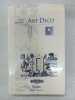
Bon état
VAN MEEL A.M.J. (pastoor van ste Catharina op het begijnhof te Diest)
Reference : R47638
(1880)
Wegwijzer voor christene jongelingen
Mechelen, Van Moer 1880 151pp., grotendeels onopengesneden, 18cm.
THE EARLY SIENESE PAINTINGS IN HOLLAND,
Florence, Centro Di/ Istituto Universitario Olandese, 1989 Pictorial cardboard cover, 190 x 265mm., 159pp., profoundly illustrated in colour and b/w. ISBN 8870381706.
Italia e i Paesi Bassi Cataloghi 1. Translated from the Dutch by Michael Hoyle. In good condition.
IMAGES FROM THE BIBLE. THE NEW TESTAMENT.N BILDER AUS DER BIBEL. DAS NEUE TESTAMENT. IMAGES DE LA BIBLE. NOUVEAU TESTAMENT. IMAGENES DE LA BIBLIA. EL NUEVO TESTAMENTO,
Amsterdam, Pepin Press, 2010 Illustrated cardboard cover in colour, 280 x 220 x 17 mm., 223pp., b/w illustration throughout, CD-Rom included. ISBN 9789057681363.
Concepts such as writing on the wall and the wisdom of Solomon can be found in art, literature and everyday expressions in cultures around the world. Images from the Bible contains a beautiful collection of Bible illustrations from the 17th to the 19th century that have been chosen for their beauty and their relevance as illustrations of these shared cultural ideas. All illustrations are stored on the accompanying CD and are ready to use for printed media and web page design. They can also be used to produce postcards, or to decorate letters, flyers, etc. For the vast majority of applications, single images can be used free of charge. For information about conditions, please see the introduction to this book or the image rights information on this website. New book.
HET WONDERJAAR TE ANTWERPEN 1566 - 1567. INLEIDING TOT DE STUDIE DER GODSDIENSTONLUSTEN TE ANTWERPEN VAN 1566 TOT 1585,
, Antwerpen, De Sikkel, 1930, linnen band met opdruk, originele omslag titelpagina, 160 x 250mm., 528pp.
De doctoraalscriptie van R. van Roosbroeck.
HET TORENGEBOUW TE ANTWERPEN. DE GESCHIEDENIS VAN EEN STEDELIJK LANDSCHAP.
Antwerpen, Kredietbank, 1985 oorspronkelijk geillustreerde uitgeversomslag in kleur, 21x29.6 cm.,71 pp., geillustreerd in z/w en in kleur.
Deze brochure werd uitgegeven door de Kredietbank in haar culturele-brochurenreeks.
HET TORENGEBOUW TE ANTWERPEN. DE GESCHIEDENIS VAN EEN STEDELIJK LANDSCHAP.
Antwerpen, Kredietbank, 1985 Originele uitgeversomslag geillustreerde kartonomslag in z/w met houtsnede van Joris Minne, 21x29.7 cm.,+/- 25 pp. + 16 buitentekstillustraties in z/w.
Tentoonstelling 31 oktober - 30 november 1985.
Les grandes cultures du Monde
Leur histoire,leur exploitation,leurs différents usages, Traduction du Hollandais par F.RODE.Le riz,la vigne, le froment,le cacao, le thé, le quinquina,le tabac,le sucre, le maïs,in 4 demi-chagrin rouge à nerfs, titre et fers dorés. filets à froid. Faux-titre,titre,378 pages, sur papier couché, nombreuses illustrations en noir dans le texte et hors-texte en couleurs. Ernest Flammarion éditeur sans date . Coiffes et deux mors restaurés, sinon bon exemplaire

