 Write to the booksellers
-
Type
Book (7250)
Disk (45)
Drawings (1)
Engraving (9)
Magazine (89)
Maps (4)
Music sheets (134)
New book (4)
Old papers (1)
Photographs (19)
Posters (1)
-
Latest
Last 24h (1)
Last 3 days (2)
Last month (120)
Last week (855)
-
Language
Czech (1)
Dutch (9)
English (156)
French (7377)
German (4)
Italian (2)
Japanese (1)
Latin (3)
Russian (4)
-
Century
16th (17)
17th (43)
18th (199)
19th (882)
20th (2480)
21st (1565)
-
Countries
Belgium (1156)
Canada (32)
China (56)
Côte d'Ivoire (7)
Denmark (1063)
France (4890)
Germany (1)
Netherlands (181)
Switzerland (155)
United Kingdom (12)
United States of America (4)
-
Syndicate
ALAC (25)
CLAM (25)
CLAQ (2)
ILAB (2248)
NVVA (15)
SLACES (15)
SLAM (1037)
SNCAO (4)
Apologia Philosophica et Christiana, pro Animi libertate.
Paris, Apud Michaëlum de Roigny, 1569. Small 8vo. Very nice recent half calf with five raised bands and gilt title to spine. Old owner's name to title-page (discreet). A nice and clean copy with only minor, very light soiling. Nice woodcut initials. 51 ff.
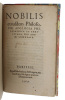

Very rare first edition of this work on the freedom and immortality of the soul, by the father of the famous physicist and anatomist, Jean Riolan the Younger. Jean Riolan the Elder (1539-1605) was also himself a noted French anatomist and a leading member of the medical faculty of Paris. He fought against the novelties that entered the faculty due to Paracelsus and authored a number of works attacking the most famous of the scientists who were in favour of chemical means. Works by him are of great scarcity.The work, which is divided into three parts attacks the theories on the soul of Pomponazzi, Portius, Sepulveda, and Cardano, and as such it is an important document in the seminal controversy about the immortality odf the soul which dominated most philosohical thought of the Renaissance.We have been unable to find the work in any bibliographies.

Vol.1-Rising of the Moon Part [Import allemand]
Mis 2014 14x12x1cm. 2014. CD.
![Vol.1-Rising of the Moon Part [Import allemand]. Rising Of The Moon Part](https://static.livre-rare-book.com/pictures/IGE/30199_thumb.jpg)
Expédié soigneusement dans une enveloppe à bulles depuis la France
Caravanes du sel - - traduit de l'allemand dont 89 en couleur 4 cartes
Arthaud 2008 2x32x25cm. 2008. Relié jaquette.
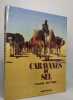
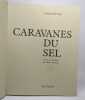
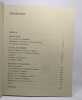
jaquette en bon état intérieur frais
Caravanes du sel - - traduit de l'allemand dont 89 en couleur 4 cartes
Arthaud 2008 2x32x25cm. 2008. Broché.
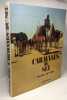
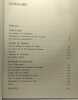
très bon état de conservation avec sa jaquette intérieur propre
"RITTER, JOHANN WILHELM - THE INVENTION OF THE DRY CELL BATTERY.
Reference : 44124
(1803)
Versuche mit einer Voltaischen Zink - Kupfer - Batterie von 600 Lagen.
(Halle, Rengerschen Buchhandlung, 1803). Without wrappers. Extracted from ""Annalen der Physik. Herausgegeben von Ludwig Wilhelm Gilbert"", Bd. 13, Erstes Stück. Pp. 1-72 and 2 folded engraved plates. A faint dampstain to lower part of some leaves and to the plates..
First appearance of the paper in which Ritter describes his invention (1802) of the dry cell battery.
"RITTER, (JOHANN W.). - THE DISCOVERY OF ""CHEMICAL RAYS"" - ULTRAVIOLET LIGHT AND RADIATION.
Reference : 43492
(1801)
Announcing his discovery of ultraviolet light ""Von den Herren Ritter und Bückmann. - - Am 22sten Febr. habe ich auch auf der Seite des Violetts im Farbespectrum, ausserhalb desselben, Sonnenstrahlen angetroffen....
Halle, Rengerschen Buchhandlung, 1801. Without wrappers as published in ""Annalen der Physik. Herausgegeben von Ludwig Wilhelm Gilbert"", Bd. 7, Viertes Stück. The entire issue offered (=Heft 4). Pp. 387-528. Ritter's announcement p. 525. With titlepage to volume 7. Clean and fine. Titlepage a bit shavedin inner margin.
First printing of Ritter's announcement of his discovery of ultraviolet light in a halfpage letter addressed to Gilbert's Annalen. With that discovery, it became clear that visible light represents no more than a fraction of a continous spectrum.A year earlier, in 1800, William Herschel discovered infrared light. This was the first time that a form of light beyond visible light had been detected. After hearing about Herschel's discovery of an invisible form of light beyond the red portion of the spectrum, Ritter decided to conduct experiments to determine if invisible light existed beyond the violet end of the spectrum as well. He had heard that blue light caused a greater reaction in silver chloride than red light did. Ritter decided to measure the rate at which silver chloride reacted to the different colors of light. He directed sunlight through a glass prism to create a spectrum. He then placed silver chloride in each color of the spectrum and found that it showed little change in the red part of the spectrum, but darkened toward the violet end of the spectrum. Johann Ritter then decided to place silver chloride in the area just beyond the violet end of the spectrum, in a region where no sunlight was visible. To his amazement, this region showed the most intense reaction of all. This showed for the first time that an invisible form of light existed beyond the violet end of the visible spectrum. This new type of light, which Ritter called Chemical Rays, later became known as ultraviolet light or ultraviolet radiation (the word ultra means beyond). - Parkinson, Breakthroughs: 1801 P.
Versuche über das Sonnenlicht.
Halle, Rengerschen Buchhandlung, 1803. Without wrappers as extracted from ""Annalen der Physik. Herausgegeben von Ludwig Wilhelm Gilbert"", Jahrgang 1802, Bd. 12, Zwölftes Stück. Pp. 409-416. Titlepage to vol. 12.
This is Ritter's first expositon of his discovery of ultraviolet light. It was announced the year before in a halfpage letter addressed to Gilbert's Annalen and printed in the Annalen. With that discovery, it became clear that visible light represents no more than a fraction of a continous spectrum.A year earlier, in 1800, William Herschel discovered infrared light. This was the first time that a form of light beyond visible light had been detected. After hearing about Herschel's discovery of an invisible form of light beyond the red portion of the spectrum, Ritter decided to conduct experiments to determine if invisible light existed beyond the violet end of the spectrum as well. He had heard that blue light caused a greater reaction in silver chloride than red light did. Ritter decided to measure the rate at which silver chloride reacted to the different colors of light. He directed sunlight through a glass prism to create a spectrum. He then placed silver chloride in each color of the spectrum and found that it showed little change in the red part of the spectrum, but darkened toward the violet end of the spectrum. Johann Ritter then decided to place silver chloride in the area just beyond the violet end of the spectrum, in a region where no sunlight was visible. To his amazement, this region showed the most intense reaction of all. This showed for the first time that an invisible form of light existed beyond the violet end of the visible spectrum. This new type of light, which Ritter called Chemical Rays, later became known as ultraviolet light or ultraviolet radiation (the word ultra means beyond).
Reinsurance : First Edition
, Kluwer Academic Publishers, 1979 Hardcover; 590 pages;ENG; 240 x 170 x 55 mm, book is in very good condition !, dustjacket is not pretty but never the less included, black cloth with goldcoloured imprint, without illustrations, ISBN 9780903393386.
This key looseleaf work provides a general introduction to and definition of reinsurance, and considers its legal nature, the formation and form of reinsurance agreements and utmost good faith. It looks at the terms, interpretation and coverage of reinsurance agreements, and considers general matters, including assignment, winding up, reinsurance brokers and conflict of laws. * Covers all the important case law and legislation within this field * Examines losses and claims, subrogation, contribution, reinstatement and arbitration * Includes an exhaustive index plus clear tables of statutes, statutory instruments and cases * Now includes chapters by US editors setting out US law on utmost good faith as it relates to reinsurance contracts * Considered to be the most authoritative publication on the subject
Current Directions in Eleventh- and Twelfth-Century Sculpture Studies.
, Brepols, 2011 XII 212 pages., 114 b/w ill., 220 x 280 mm, Languages: English,Paperback,. ISBN 9782503531656.
Robert A. Maxwell and Kirk Ambrose, Introduction: Romanesque Sculpture Studies at a Crossroads - Jerome Baschet, Iconography beyond Iconography: Relational Meanings and Figures of Authority in the Reliefs of Souillac - Martin Buchsel, The Status of Sculpture in the Early Middle Ages: Liturgy and Paraliturgy in the Liber miraculorum sancte Fidis - Thomas E. A. Dale, The Nude at Moissac: Vision, Phantasia and the Experience of Romanesque Sculpture - Ilene H. Forsyth, The Date of the Moissac Portal - Dorothy F. Glass, (Re)framing Early, Romanesque Sculpture in Italy - Klaus Niehr, Sculpturing Architecture, Framing Sculpture and Modes of Contextualizing the Arts in the Eleventh and Twelfth Centuries - Jose Luis Senra, Between Rupture and Continuity: Romanesque Sculpture at the Monastery of Santo Domingo de Silos - Andrea von
destruction de Sodome et de Gomorrhe (Gn 18-19) dans la litt rature chr tienne des premiers si cles
, Brepols, 2019 Paperback, 223 pages, Size:148 x 210 mm, Languages: French, Italian, English. ISBN 9782503581767.
Summary Situ entre l'alliance avec Abraham et la naissance d'Isaac, l'histoire de la destruction de Sodome et de Gomorrhe (Gn 18-19) a marqu l'imaginaire juif et chr tien. Le pr sent volume tudie la fa on dont il a t interpr t et r crit dans les cinq premiers si cles de notre re. Agn s Bastit-Kalinowska analyse les t moignages bibliques et patristiques des trois premiers si cles sur ce r cit. Sergio Zincone tudie ensuite l'ex g se que Jean Chrysostome en a donn e, tandis que Rachel Toone discute l'utilisation pol mique qu'il en faite dans le trait Contre les opposants la vie monastique. Avec R gis Courtray, c'est l' x g se occidentale des IVe-Ve si cles qui est analys e. Marie-Pierre Buissi re poursuit par une pr sentation de l'ex g se de l'Ambrosiaster, o il est question du sort des b b s de Sodome. La seconde section examine la grande post rit que ce r cit a eue dans la po sie latine des IVe-Ve si cle. Aline Canellis propose une relecture du Carmen de Sodoma, dont elle donne la premi re traduction fran aise. Michele Cutino tudie la fa on dont Claudius Marius Victorinus r crit le r crit de la destruction de Sodome dans son Alethia. Laurence Gosserez analyse enfin la r criture qu'en propose l'Harmatig nie de Prudence. TABLE OF CONTENTS Agn s Bastit, La destruction de Sodome et Gomorrhe (Gn 18-19) et sa r ception aux trois premiers si cles Sergio Zincone, I frutti guasti di Sodoma e la sua distruzione : l'esegesi di Giovanni Crisostomo Rachel Toone, Redeeming the City: A Study of Book III of Chrysostom's Against the Opponents of the Monastic Life R gis Courtray, La destruction de Sodome chez Ambroise, J r me et Augustin Marie-Pierre Bussi res, Quel sort pour les b b s de Sodome ? La contamination du p ch ou le m rite individuel chez l'Ambrosiaster Aline Canellis, Relecture du Carmen de Sodoma [CPL 1425] : Probl mes d' tablissement du texte et de traduction Michele Cutino, La r criture de la destruction de Sodome dans l'Alethia de Claudius Marius Victorinus Laurence Gosserez, La destruction de Sodome dans l'Hamartig nie de Prudence (H., 723-776) Index
Catalogue of Medieval Manuscripts of Latin Commentaries on Aristotle in British Libraries I: Oxford,
Turnhout, Brepols, 2011 Hardback, 446 p., 1 colour ill., 152 x 229 mm. ISBN 9782503542324.
This is the first of a projected series of four volumes describing manuscripts and fragments in British libraries containing commentaries on the Latin Aristotle. This volume covers the Bodleian Library and the college libraries of the University of Oxford. It lists 397 items, including portfolios of fragments from more than one original book, dating from the late twelfth century until c. 1500. While many of these manuscripts have come to Oxford from elsewhere in Europe, some as recently as the twentieth century, the majority were made locally and used in the medieval University. Many of them, such as the important Canonici collection in the Bodleian Library, have not been adequately described before, while most of the anonymous commentaries have not been listed at all. Four indexes are provided to facilitate searching the main text.
Robert Carradine Andrew Amani Henry Boger Brett Beoubay Robert Bjorklund Courtney Brin Paul Boger George Mendeluk Chuck Bush Darren Arnaud Edrick Browne The Terror Experiment Zombie - The Terror Experiment / The Terror Experiment ( ) Zombie - The Terror Experiment
Reference : 500322663
(2013)
ISBN : 3662207003115
The terror experiment [Blu-ray] (NEUF SOUS BLISTER)
Opening 2013 13 76x1 48x18 03cm. 2013. Broché.
![The terror experiment [Blu-ray] (NEUF SOUS BLISTER). Robert Carradine Andrew Amani Henry Boger Brett Beoubay Robert Bjorklund Courtney Brin Paul Boger ...](https://static.livre-rare-book.com/pictures/IGE/500322663_thumb.jpg)
Neuf
Robert Carradine Andrew Amani Henry Boger Brett Beoubay Robert Bjorklund Courtney Brin Paul Boger George Mendeluk Chuck Bush Darren Arnaud Edrick Browne The Terror Experiment Zombie - The Terror Experiment / The Terror Experiment ( ) Zombie - The Terror Experiment
Reference : 500326537
(2013)
ISBN : 3662207003115
The terror experiment [Blu-ray] (NEUF SOUS BLISTER)
Opening 2013 13 76x1 48x18 03cm. 2013. Broché.
![The terror experiment [Blu-ray] (NEUF SOUS BLISTER). Robert Carradine Andrew Amani Henry Boger Brett Beoubay Robert Bjorklund Courtney Brin Paul Boger ...](https://static.livre-rare-book.com/pictures/IGE/500326537_thumb.jpg)
Neuf
Raoul De Keyser .De dingen die ik zie /The Things I see .
Brussel, ASA, 2011 Paperback, 240x165mm, 96p, Nederlands/ Engelse editie . ISBN 9789461170101.
De tentoonstelling omvat een uitzonderlijke selectie van werken uit musea en privecollecties. Ze focust op vijf opeenvolgende fasen in de ontwikkeling van de kunstenaar en belicht de toenemende vrijheid die Raoul De Keyser als schilder en als tekenaar aan de dag legt. De Keysers werk munt uit door subtiliteit. Zijn werken ogen abstract maar zijn meestal gebaseerd op motieven uit zijn dagelijkse omgeving. Voor dit originele overzicht ontwierpen de architecten Robbrecht en Daem een experimentele museumarchitectuur, die speciaal voor deze tentoonstelling wordt opgesteld in De Loketten. De constructie illustreert en bepaalt tegelijk de structuur van de tentoonstelling. In vijf opeenvolgende ruimten krijgt de bezoeker telkens een geheel van werken (schilderijen, tekeningen en aquarellen) te zien, dat een grondig beeld geeft van een belangrijk aspect van de kunst van Raoul De Keyser. Since 1964, the Belgian painter Raoul De Keyser has been building a highly personal body of work that is exceptionally difficult to categorize. With great individuality, he has successfully reconciled a number of apparent contradictions: figuration versus abstraction, the physicality of paint versus the ephemerality of the image, and exploration of the fundamentals of painting versus references to his personal life and surroundings. Since 1980 De Keyser sets off resolutely down his own path and also marked the beginning of his steadily growing success. Tentoonstelling: De Loketten van het Vlaams Parlement, Brussels, 24/3/2011 - 11/7/2011
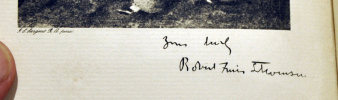
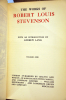
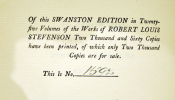
THE WORKS OF ROBERT LOUIS STEVENSON
1924 William Heinemann - Chatto & Windus - Cassell & Co. Ltd.. 1924-1926. In-8 Carré. Reliés, 25 volumes d'env. 300-450 pages chacun. Textes en anglais .Titres dorés sur les dos, tranches supérieures dorées, reliure signée de Otto Schulze & Edimbourg, superbe travail , trés pro .... A noter : des illustrations et des cartes ponctuent les ouvrages, un papier de qualité a été choisi pour la realisation de ces livres, aucunes rousseurs, sans oublier qu'il s'agit d'une édition numérotée .
Le brigandage dans les Basses-Alpes de 1789 à 1802 d'après le livre de l'abbé Maurel paru en 1899
Robert Niel 2007 191 pages in8. 2007. Broché. 191 pages.


TURNER. WATERCOLOURS LENT BY THE BRITISH MUSEUM.
Brussel, Koninklijke Musea voor Schone Kunsten van Belgie, 1971 Gebrocheerd onder geillustreerde kartonomslag, tekst in de lengte, 19x13.6 cm., 32 pp. + afbeeldingen geillustreerd in z/w.
Tentoonstelling Voorlopig Museum voor Moderne Kunst, Brussel 28 november 1970 tot 10 januari 1971.
Geschichte von Amerika.
2 Bände. Leipzig, Weidmanns Erben und Reich, 1777. Gr.-8°. 1 Portrait, 13 Bl., 574 S.; 1 Bl., 618 S., 29 Bl. Mit 4 gefalteten Karten und 1 Tafel. Pappbände der Zeit mit Rückensch.
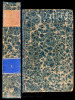
Erste Ausgabe. – Die Karten zeigen Südamerika, Mittelamerika mit den karibischen Inseln sowie den Südosten von Amerika. Übersetzt von Jaohann Friedrich Schiller. Mit Exlibris. «Emil Egli». – Vereinzelt leicht braun- und stockfleckig. Mit neuen Vorsätzen. Den Einbandrücken restauriert.
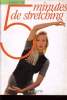
5 minutes de stretching
HACHETTE. 1997. In-8. Broché. Bon état, Couv. convenable, Dos satisfaisant, Intérieur frais. 95 pages. Nombreux illustrations en couleur, dans le texte et hors texte.. . . . Classification Dewey : 610-Sciences médicales. Médecine
Classification Dewey : 610-Sciences médicales. Médecine

Interacting with Saints in the Late Antique and Medieval Worlds
, Brepols, 2023 Hardback, 282 pages, Size:156 x 234 mm, Illustrations:7 b/w, 20 col., Language(s):English, French. ISBN 9782503605586.
Summary The cult of saints is one of the most fascinating religious developments of Late Antiquity and the early Middle Ages. Christians admired martyrs already in the second century, but for a long time they perceived them only as examples to follow and believed they could pray directly to God, whom they addressed as 'Our Father'. A new attitude toward saints, now considered above all as powerful friends of God and efficient intercessors, started to emerge in the third century. Once this process gained momentum in the Constantinian era, the cult of saints constantly changed and rapidly adapted to new conditions and demands. This evolution highlighted many factors: the popularity of specific saints and the different types of sanctity, the spread of cults and customs, and the ways in which the saints were described, visualised, and represented. This volume seeks to capture the dynamic of these adaptations, showing both those aspects of cult which evolved quickly and those which remained stable for a long time. It studies the evolution of the cults in a broad period from the third to the seventh centuries and in various regions from Gaul to Georgia, with a particular interest in the two greatest centres of the cult of saints: Rome and Constantinople. In response to changing needs and different circumstances, new generations of believers repeatedly modified the cults of established saints, even as they introduced new saints. TABLE OF CONTENTS Robert Wi?niewski: Introduction I. Seeing and Hearing the Saints Robin M. Jensen: Icons as Relics: Relics as Icons Maria Lidova: Placing Martyrs in the Apse: Visual Strategies for the Promotion of Saints in Late Antiquity Julia Doroszewska: Saintly In-betweeners: The Liminal Identity of Thekla and Artemios in their Late Antique Miracle Collections Arkadiy Avdokhin: Resounding Martyrs: Hymns and the Veneration of Saints in Late Antique Miracle Collections Xavier Lequeux: Les saints myroblytes en Orient et en Occident jusqu' l'an mil: Prol gom nes l'histoire d'un ph nom ne miraculeux II. Local and Cosmopolitan Cults Andr s Handl: Reinvented by Julius, Ignored by Damasus: Dynamics of the Cult of Callixtus in Late Antique Rome Stephanos Efthymiadis: The Cult of Saints in Constantinople (Sixth-Twelfth Century): Some Observations Anna Lampadaridi: The Origins and Later Development of the First Italo-Greek Hagiographies: The Dossiers of the Sicilian Martyrs Agatha, Lucia, and Euplus III. Constructing Paradigms Ian Wood: The Lives of Episcopal Saints in Gaul: Models for a Time of Crisis, c. 470-550 Micha? Pietranik: Saints and Sacred Objects in Eastern Roman Imperial Warfare: The Case of Maurice (582-602) Nikoloz Aleksidze: Martyrs, Hunters and Kings: The 'Political Theology' of Saints' Relics in Late Antique Caucasia
Nederlandse Golf Geschiedenis.
, picture Publishing, 2023 hardcover, formaat 340mm x 260 mm, gebonden, 420 pagina's full colour, rijk ge llustreerd. ISBN 9789492576637.
Het boek De Nederlandse Golf Geschiedenis in woord en beeld is een must read voor iedere golfer in Nederland. In twee delen krijgt de lezer een volledig beeld van de geschiedenis van het spel, vanaf de Normandische verovering van Engeland tot en met de grote doorbraak van golf in Nederland en vrijwel alles wat zich daartussen heeft afgespeeld. Hoofdrolspelers, hypothesen en mythes worden beschreven, geanalyseerd en beoordeeld op hun historische merites. In het eerste deel van het boek wordt antwoord gegeven op de veel gestelde vraag wat de oorsprong is van het Schotse golfspel en wat de relatie is met het vroege spel met den colve in de Lage Landen. Het tweede deel geeft een chronologisch en thematisch overzicht van de ontwikkeling van golf in Nederland en laat zien hoe het uitgroeide van vermaak voor de happy few tot het populaire spel van nu. De Nederlandse Golf Geschiedenis is beschreven in heldere tekst, afgewisseld met prachtige, illustratieve afbeeldingen.
Robin Claude,Dupré Danièle,Gerbeau Roland,Lapeyrere Didier,The Blazers - Rio Chuck - Salvet André
Reference : 25036
(1958)
Super Tragique
TEXTES GAIS 2007 224 pages 15x1 4x20 8cm. 2007. Broché. 224 pages.
Très bon état
The Bench
Random House Childrens Books US
LIVRE A L’ETAT DE NEUF. EXPEDIE SOUS 3 JOURS OUVRES. NUMERO DE SUIVI COMMUNIQUE AVANT ENVOI, EMBALLAGE RENFORCE. EAN:9780593434512
The Bench
Puffin UK
LIVRE A L’ETAT DE NEUF. EXPEDIE SOUS 3 JOURS OUVRES. NUMERO DE SUIVI COMMUNIQUE AVANT ENVOI, EMBALLAGE RENFORCE. EAN:9780241542217

