 Write to the booksellers
-
Type
Book (8591)
Disk (44)
Drawings (1)
Engraving (9)
Magazine (89)
Maps (4)
Music sheets (135)
New book (2)
Old papers (1)
Photographs (19)
Posters (1)
-
Latest
Last 24h (3)
Last 3 days (2)
Last month (1655)
Last week (2)
-
Language
Czech (1)
Dutch (9)
English (156)
French (8717)
German (4)
Italian (2)
Latin (3)
Russian (4)
-
Century
16th (17)
17th (43)
18th (199)
19th (882)
20th (2616)
21st (2690)
-
Countries
Belgium (1156)
Canada (32)
China (56)
Côte d'Ivoire (7)
Denmark (1063)
France (6232)
Germany (1)
Netherlands (181)
Switzerland (155)
United Kingdom (9)
United States of America (4)
-
Syndicate
ALAC (25)
CLAM (25)
CLAQ (2)
ILAB (2234)
NVVA (15)
SLACES (15)
SLAM (1026)
SNCAO (4)
"POCKELS, F. - THE POCKELS EFFECT OR PHOTOELASTIC EFFECT DISCOVERED.
Reference : 49414
(1889)
Ueber den Einfluss elastischer Deformationen, speciell einseitigen Druckes, auf das optische Verhalten krystallinischer Körper. (3 parts).
Leipzig, Johann Ambrosius Barth, 1889. 8VO. Contemp. hcalf. Raised bands, gilt spine. Top of spine worn and some wear to upper compartment. In ""Annalen der Physik und Chemie. Hrsg. von G. Wiedemann."", Neue Folge Bd. 37. VIII,680 pp. a. 7 folded plates. Pockels' paper: pp. 144-172, 269-305, 372-394. Small stamp to htitle, title-page and verso of. Internally fine.
First printing of Pockels' paper in which he announced the discovery of the effect which bears his name. He shows that the optical property is changed by a change in the dieelectric function induced by electric deformation of a solid. The discovery became to have a wide use in semiconductor technology.The volume contains further notable papers ELSTER & GEITEL ""Ueber die Electricitätserregung beim Contact verdünnter Gase mit galvanisch glühende Drähten"", pp. 315-329. - HEINRICH HERTZ ""Ueber die Fortleitung electrischer Wellen durch Drähte"", pp. 395-407. - W. HALLWACHS ""Ueber den Zusammenhang des Elektricitätsverlustes durch beleuchtigung mit der Lichtsabsorption"" (The photo-electric effect !), pp. 666-674, papers by Lenard, Ferdinand Braun (2 papers) etc.

Le Chat Noir/LA Lettre Volee: deux nouvelles à énigme de Poe
Editions Hatier 2011 96 pages 12 6x0 6x17cm. 2011. pocket_book. 96 pages.

Très bon état - livre issu de destockage - pouvant présenter d'infimes traces de stockage - Expédié soigneusement dans emballage adapté
Poe Edgar Allan Baudelaire Charles Vasseur Jean-Pierre
Reference : 500094532
(2012)
ISBN : 9782913305939
Progressez en anglais grâce à Edgar Poe : The Gold-Bug ; Mesmeric Revelation
Vasseur 2012 10 4x0 8x15cm. 2012. Broché.

Très bon état
[G. P. Putnam's Sons, New York and London, The Knickerbocker Press] - POE, Edgar Allan ; (COBURN, Frederick Simpson)
Reference : 67538
(1902)
Tales of Edgar Allan Poe
With 23 Illustrations from Original Designs, by Frederick Simpson Coburn, 8vo, blue hardcover, G. P. Putnam's Sons, New York and London, The Knickerbocker Press, s.d. (copyright 1902), 491 pp.
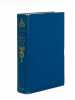
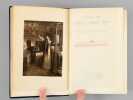
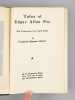
Good condition (slight spot on first cover).
Op de drempel van een nieuwe tijd, de Maastrichtse Beeldsnijder Jan van Steffeswert voor 1470 na 1525.
, Bonnefantenmuseum / Gent, Snoeck-Ducaju,, 2000 paperback, pictorial frontcover, 315 p. 30 cm. rijkelijk geillustreerd. ISBN 9789053493359.
very richly illustrated, list works exhibited.
Poem by Juan Pablo Plazas, an interview with Tania Nasielski and the artist
Reference : 64030
Juan Pablo Plazas Even if you
, Posture Editions Nr 42, 2021 PB, 297 x 210 mm, 96 pages, ENG edition. ISBN 9789491262432.
Colombian anthropologist and artist Juan Pablo Plazas is fascinated by the ability of people and communities to interpret the world in different ways. In his practice, he starts from everyday objects and raw materials that have special material or formal properties. With wonder and a sense of humour, he takes them out of their ordinary context, turns them into sculptures or gives them a role in a performance. Through this action, Plazas breaks through the 'dead normal' and invites us to understand objects as animated, living matter. 'Even if You' is a book in which all the lines set out by the artist in recent years come together as if they were a crossroads. 'When I think of the art I create and the discourse that surrounds my art, this image comes to mind: a ship adrift between icebergs. The icebergs being the found things, stories, encounters, situations that surface in an unpredictable way. The fact that I'm able to see only the tip of the iceberg, that maybe there are other parts of things that I can't understand or even put into words. It makes me think of the sublime being portrayed on the top of the mountain, without being able to what's underneath. Only in this case, the mountain is submerged in water and constantly on the move. What we can't see in the case of trees, is that they are all connected through a net of roots.' Fragment of By Any Other Name, a conversation between Tania Nasielski and Juan Pablo Plazas
"POINCARE, H. (HENRI). - THE DISCOVERY OF AUTOMORPHIC FORMS.
Reference : 49173
(1882)
Sur les fonctions fuchsiennes. (+) Sur les fonctions.... Note. (+) Sur les fonctions.... Note.
(Paris: Gauthier-Villars), 1882. 4to. No wrappers. In: ""Comptes Rendus Hebdomadaires des Seances de l'Academie des Sciences"", Vol 94, No 4 + 15 + 17. Pp. (149-) 184, pp. (997--) 1068 a. pp. (1139-) 1214. (3 entire issues offered). Poincare's papers: pp. 163-168, 1038-1042 a. 1166-67.
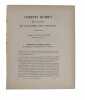
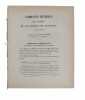
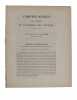
First appearance in print of the discovery of the automorphic forms, which Poincaré named Fuchsian functions.""One of Poincaré's first discoveries in mathematics, dating to the 1880s, was automorphic forms. He named them Fuchsian functions, after the mathematician Lazarus Fuchs, because Fuchs was known for being a good teacher and had researched on differential equations and the theory of functions. Poincaré actually developed the concept of these functions as part of his doctoral thesis. Under Poincaré's definition, an automorphic function is one which is analytic in its domain and is invariant under a discrete infinite group of linear fractional transformations. Automorphic functions then generalize both trigonometric and elliptic functions."" (Wikipedia).
Theorie des Groupes fuchsiens (+) Mémoire sur les Fonctions fuchsiennes (+) Sur les Fonctions de deux Variables (+) Mémoire sur les groupes kleinéens (+) Sur les groupes des équations linéaires (+) Mémoire sur les fonctions zétafuchsiennes. - [THE DISCOVERY OF AUTOMORPHIC FUNCTIONS]
Berlin, Stockholm, Paris, F. & G. Beijer, 1882-84. Large4to (272 x 230 mm). Three volumes uniformly bound in contemporary half calf with gilt lettering to spine. In ""Acta Mathematica"", volume 1-5. Light wear to extremities, boards and spines with scratches. Stamp to verso of front board in all volumes. First three leaves in first volume detached, otherwise internally fine and clean. Vol. I, pp. 1-62" Pp. 193-294 Vol. II, pp. 97-113 Vol. III. pp. 49-92 Vol. IV pp. 201-312" Vol. V pp. 209-278.
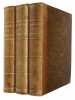

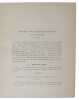
First publication of these groundbreaking papers which together constitute the discovery of Automorphic Functions. ""Before he was thirty years of age, Poincaré became world famous with his epoch-making discovery of the ""automorphic functions"" of one complex variable (or, as he called them, the ""fuchsian"" and ""kleinean"" functions)."" (DSB).These manuscripts, written between 28 June and 20 December 1880, show in detail how Poincaré exploited a series of insights to arrive at his first major contribution to mathematics: the discovery of the automorphic functions. In particular, the manuscripts corroborate Poincaré's introspective account of this discovery (1908), in which the real key to his discovery is given to be the recognition that the transformations he had used to define Fuchsian functions are identical with those of non-Euclidean geometry. (See Walter, Poincaré, Jules Henri French mathematician and scientist).The idea was to come in an indirect way from the work of his doctoral thesis on differential equations. His results applied only to restricted classes of functions and Poincaré wanted to generalize these results but, as a route towards this, he looked for a class functions where solutions did not exist. This led him to functions he named Fuchsian functions after Lazarus Fuchs but were later named automorphic functions. First editions and first publications of these epochmaking papers representing the discovery of ""automorphic functions"", or as Poincaré himself called them, the ""Fuchsian"" and ""Kleinian"" functions.""By 1884 Poincaré published five major papers on automorphic functions in the first five volumes of the new Acta Mathematica. When the first of these was published in the first volume of the new Acta Mathematica, Kronecker warned the editor, Mittag-Leffler, that this immature and obscure article would kill the journal. Guided by the theory of elliptic functions, Poincarë invented a new class of automorphic functions. This class was obtained by considering the inverse function of the ratio of two linear independent solutions of an equation. Thus this entire class of linear diffrential equations is solved by the use of these new transcendental functions of Poincaré."" (Morris Kline).Poincaré explains how he discovered the Automorphic Functions: ""For fifteen days I strove to prove that there could not be any functions like those I have since called Fuchsian functions, I was then very ignorant" every day I seated myself at my work table, stayed an hour or two, tried a great number of combinations and reached no results. One evening, contrary to my custom, I drank black coffee and could not sleep. Ideas rose in crowds I felt them collide until pairs interlocked, so to speak, making a stable combination. By the next morning I had established the existence of a Class of Fuchsian functions, those which come from hypergeometric series" i had only to write out the results, which took but a few hours...the transformations that I had used to define the Fuchsian functions were identical with those of Non-Euclidean geometry...""
Sur la dynamique de l'electron. (Séance du Lundi 5 Juin 1905).
Paris, Gauthier-Villars, 1905. 4to. No wrappers. In: ""Comptes Rendus Hebdomadaires des Séances de L'Academie des Sciences"", Tome 140, No 23. Titlepage to vol. 140. Pp. (1497-) 1572. (Entire issue offered). Poincaré's paper: pp. 1504-1508. Titlepage with a stamp on verso. A bit of upper right corner gone. Leaves a bit fragile, caused by the poor paperquality. Clean.
First printing of this famous paper delivered to the Academy of Paris on its session of June 1905, as the first Poincaré relativistic text ""On the dynamic of electron"", where Poincaré set forth the essential element of relativity and the ""Lorentz Transformation"". Poincaré concludes ""It seems that this impossibility of demonstrating absolute motion is a general law of nature"" !! and that Newton's law need modification and that there should exist gravitational waves which propagate with the velocity of light !! - This famous paper gave rice to the controversy about priority around the discovery of special relativity as Poincaré's paper is from June 5 and Einstein's first paper on relativity was received by the ""Annalen"" on June 30, both 1905.""The official history tells us that Einstein, without having read the works of Lorentz and Poincaré past 1895 and without any prior publication on the subject, had written alone in Bern the ""founder paper"" of the Relativity in the last days of June 1905. For that reason, and a few other of less importance, the biographers of Einstein have called that year 1905 ""Annus mirabilis"" and its centenial is celebrated in 2005. However on June 5, 1905, after many other papers on this subject, Poincaré had presenteda note at the French Academy of Science, a text that contains the essential elements of Einstein paper: the relativity principle and the ""Lorentz transformation"". This coincidence involves the suspicion of a possible plagiarism of Poincaré by Einstein."" (C. Marchal ""Poincaré, Einstein and the Relativity: the Surprising Secret.""
"POISEUILLE, (JEAN LÉONARD MARIE). - THE ""POISEUILLE-LAW"" GENERALIZED.
Reference : 45036
(1847)
Recherches expérimentales sur la mouvement des liquides de nature différente dans les tubes de très-petits diamètres.
Paris, Victor Masson, 1847. Contemp. hcalf, raised bands, gilt spine. Light wear along edges.Three small stamps on verso of titlepage. In ""Annales de Chimie et de Physique"", 3ieme Series, tome 21. 512 pp. a. 6 plates. (Entire volume offered). Poiseuille's paper: pp. 76-110. 3 small stamps on verso of titlepage. A small stamp on verso of plates.
First printing of the paper in which - after being persuated by a committee lead by Arago to make further experiments - Poiseuille generalized the law named after him, first announced in 1840. He studied experimentally the flow of different liquids through capillary tubes, and found the law named after him, that relates the flow to the pressure, the diameter and the lenght of the tube and to the viscosity of the liquid. Poiseuille's investigations are fundamental in blood viscosimetry. ""Poiseuille's work represents a major advance in blood pressure measurements""(Gedeon p. 189).""Poiseuille’s paper (the 1840-paper) was reviewed by a committee consisting of Arago, Piobert, and Regnault. They persuaded him to make further experiments with ether and mercury, and these investigations were published in 1847 (the paper offered). He found that ether yielded the same law as distilled water, whereas mercury obeyed a different law. In 1870 Emil Gabriel Warburg found that mercury obeys the Poiseuille law, except for certain anomalies caused by amalgamation in metal tubes.""(DSB). The paper was also printed at the same time in ""Comptes Rendues"".The volume contains other notable papers by August Laurent, Matteucci, Bravais, Senarmont ""Mémoire sur la Conductibilité des Substances cristallisées pour la Chaleur"", pp. 457-470.
"POISSON, (SIMÉON-DENIS). - CO-FOUNDING THE ""MATHEMATICAL THEORY OF ELASTICITY"".
Reference : 44897
(1828)
Mémoire sur l'Équilibre et le Mouvement des Corps élastiques. (Lu à l'Academie des Sciences, le 14 avril 1828).
(Paris, Crochard, 1828). 8vo. Without wrappers. In 'Annales de Chimie et de Physique', Series 2 - Volume 37, Cahier 4. Pp. 337-444 (entire issue offered). Poisson's paper:pp. 337-355.
First appearance of one of the founding papers in ""The mathematical Theory of Elasticity"" and Poisson's first on the subject. ""The theory of elasticity based on the idea of a molecular structure attracted Poisson's interest, and he did much to lay the foundations of that science.""(Timoshenko p. 111 ff.).""In the preface to the long ""Mémoire sur I’équilibre et le movement des corps élastiques"" (14 April 1828), the hints yield to explicit declaration. In applying mathematics to physics, Poisson stated, it was necessary at first to employ abstraction and ""in this regard, Lagrange has gone as far as possible in replacing physical ties by equations between coordinates."" Now, however, ""along with this admirable conception,"" it is necessary to ""construct physical mechanics, the principle of which is to reduce everything to molecular actions."" In other words, the death of Laplace the previous year enabled Poisson to move boldly ahead with his long range plans and to present himself as Laplace’s successor.""(DSB)The issue offered contains notable papers by Berzelius, Gay-Lussac and others.
"POISSON, (SIMÉON-DENIS). - COINING THE PHRASE ""LAW OF LARGE NUMBERS""
Reference : 49883
(1835)
Recherches sur la probabilité des jugements, principalement en matière criminelle. (+) Note sur la loi des grands nombres. (+) Note sur le calcul des probabilités. (+) Formules relatives aux probabilités qui dépendent de très grands nombres. (3 papers).
(Paris, Bachelier), 1835-36. 4to. No wrappers. In: ""Comptes Rendus Hebdomadaires des Séances de L'Academie des Sciences"", Tome 1, Séance du Lundi 14 Décembre 1835 and tome 2, Séance Lundi 11 Avril 1836 + Séance Lundi 27 Juin 1836 + Séance du Lundi 18 Avril 1836. + Pp. (467-) 498, (355-) 386, (387-) 402 a. pp. (601-) 630. (4 entire issues offered. Poisson's papers: pp. 473-495 (1835), pp. 377-380, pp. 395-400 and pp. 603-13. (1836). Clean and fine.
First appearance of 3 importent paper in probability theory, serving as a preamble to Poissons's famous work published two years later, and with nearly the same title ""Recherches sur la probabilité des jugements en matiere criminelle et en matiere civile"" (1837). The paper offered introduces THE LAW OF LARGE NUMBERS (Loi universelle des Grandes nombres, pp. 478-79), a key concept in probability theory. Poisson states that all events of a moral as well as of a physical nature are subject to this universal law. His definition (in English translation) on p. 478 reads ""Things of every kind obey a universal law that we may call the law of large numbers. Its essence is that if we observe a very large number of events of the same nature, which depend on constant causes and on causes that vary irregularly, sometimes in another, 1.e., not progressively in any determined sense, then almost constant proportions will be found among numbers"" (p. 478 in the first memoir).
"POISSON, (SIMÉON-DENIS). - INTRODUCING ""THE LAW OF LARGE NUMBERS""
Reference : 47235
(1835)
Recherches sur la probabilité des jugements, principalement en matière criminelle. (+) Note sur la loi des grands nombres. (2 Papers).
(Paris, Bachelier), 1835-36. 4to. No wrappers. In: ""Comptes Rendus Hebdomadaires des Séances de L'Academie des Sciences"", Tome 1, Séance du Lundi 14 Décembre 1835 and tome 2, Séance Lundi 11 Avril 1836. Pp. (467-) 498 and (355-) 386. (2 entire issues offered. Poisson's papers: pp. 473-495 (1835) a. pp. 377-380 (1836).
First appearance of 2 importent paper in probability theory, serving as a preamble to Poissons's famous work published two years later, and with nearly the same title ""Recherches sur la probabilité des jugements en matiere criminelle et en matiere civile"" (1837). The paper offered introduces THE LAW OF LARGE NUMBERS (Loi universelle des Grandes nombres, pp. 478-79), a key concept in probability theory. Poisson states that all events of a moral as well as of a physical nature are subject to this universal law. His definition (in English translation) on p. 478 reads ""Things of every kind obey a universal lw that we may call the law of large numbers. Its essence is that if we observe a very large number of events of the same nature, which depend on constant causes and on causes that vary irregularly, sometimes in another, 1.e., not progressively in any determined sense, then almost constant proportions will be found among numbers"" (p. 478 in the first memoir).""Prior to the publication of the ""Rechearces"", Poisson presented his principal results and philosophical views to the Academie des Sciences in papers read at the sessions of 14 december 1835 and 11 April 1836. The first memoir became the ""Préambule"" of the ""Rechearches"" and outlined Poisson's criticism of Laplace's approach to the probability judgements, the universal applicability of the law of large numbers, and some of the results based on the Ministry of Justice's statistics.... Poisson's second memoir discussed his ""Law of Large Numbers"", with special attentuion to how it differed from bernoulli's theorem and how it was particularly well suited for applications to the moral sciences..."" (Lorraine Daston ""Classical Possibility in the Emlightment"", pp. 364-65).""In Recherches sur la probabilité des jugements en matière criminelle et en matière civile (1837"" (Research on the Probability of Criminal and Civil Verdicts), an important investigation of probability, the Poisson distribution appears for the first and only time in his work. Poisson’s contributions to the law of large numbers (for independent random variables with a common distribution, the average value for a sample tends to the mean as sample size increases) also appeared therein."" Encl. Britannica). - In fact the law appears here, two years before, in the offered paper."" (Encl. Britannica).
"POISSON, (SIMÉON-DENIS). - THE FIRST OF ITS KIND, MOVING REFERENCE FRAMES AND ACCELERATION.
Reference : 47406
(1837)
Extrait de la premiere partie d'un Mémoire sur la Mouvement des projectiles dans l'air, en ayent égard à leur rotation et à l'influence du mouvement diurne de la Terre.
(Paris, Bachelier), 1837. 4to. No wrappers. In: ""Comptes Rendus Hebdomadaires des Séances de L'Academie des Sciences"", Tome 5, No. 20. Pp. (659-) 710. (Entire issue offerd). Poisson's paper: pp. 660-667.
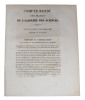
First appearance of Poisson's importent work - the first of its kind - on the dynamics of a motion taking into account also of the motion of the reference system. The work in its full ""Sur les mouvement des projectiles dans l'air, en ayent éghard à leur figure, & la rotation et à l'influence du mouvemnet diurne de la terre"" was published two years later in 1839.""Recherches sur le mouvement des projectiles dans l’air (1839), was far better known in its day. It is the first work to deal with the subject by taking into account the rotation of the earth and the complementary acceleration resulting from the motion of the system of reference. A decade after its publication it inspired Foucault’s famous experiment demonstrating the earth’s rotation. Poisson, who had supervised Coriolis’ doctoral research, recognized the importance of his invention of a term to correct for the deviations from the law of motion that arise in a rotating reference system. Unfortunately, Poisson did not consider himself obliged to cite the name of the actual inventor of the term."" (DSB).
"POISSON, (SIMÉON-DENIS). - THE MATHEMATICAL ANALYSIS OF HEAT - POISSON'S ISENTROPE.
Reference : 44896
(1823)
Sur la Chaleur des Gaz et des vapeurs.
(Paris, Crochard, 1823). 8vo. Without wrappers. In 'Annales de Chimie et de Physique', Series 2 - Volume 23, Cahier 4. With halftitle to vol. 23. Pp. 337-444 (entire issue offered). Poisson's paper: pp. 337-352.
First appearance of Poisson's importent paper on the mathematical treatment of ""specific heats"".""In ""Sur la chaleur des gaz et des vapeurs,"" published in August 1823 in Annales de chimie et de physique, Poisson developed ideas published four months before by Laplace in Book XII of Mécanique céleste. Poisson introduced all the precautions needed to render the confused notion of quantity of heat susceptible to mathematical analysis. He called quantity of heat the magnitude that characterizes the transition of a given mass of gas from an arbitrary initial state of temperature and pressure to another state. This definition makes more abstract the quantitative aspect that naturally follows from the concept of heat as a caloric fluid. Poisson could thus deal comfortably with this magnitude, since for him it is simply a function q of p, p, and ø (pressure, density, and temperature). The equation of state p= ap(1+aø) was already classic, and the growing acceptance of the notions of specific heats, at constant pressure and constant volume, allowed him to write the simple partial differential equation of which should be the integral. He also showed that independently of any additional hypothesis, and whatever the arbitray function used in the integration, the adiabatic transformations (the term did not yet exist) correspond to the formulas p · py = constant and (?+266.67)·p1y= constant, y being the ratio of the specific heats, assumed constant.""(DSB).
Théorie mathématique de la Chaleur. (Cet article est le préambule d'un ouvrage actuellement sous presse, et qui paraitra incessamment).
(Berlin, G. Reimer, 1834). 4to. No wrappers. Extracted from ""Journal für die reine und angewandte Mathematik. Hrsg. von A.L. Crelle"", Bd. XII. Pp. 258-262.
First apperance of Poisson's preamble to his famous work ""Théorie mathématique de la Chaleur"", published 1835. “Poisson scored a point in this work by demonstrating how the conductibility of heat in the interior of bodies, far from being contained in the notion of flux as Fourier had held, must be derived from an absorption coefficient that restores a neglected functional dimension. It was in this area that … Poisson’s mechanical model for conduction of heat was the most fruitful. That conception enabled Poisson to understand on the molecular scale the complete and correct equation for radiation of heat” (DSB)
THE BISMUTITE OF THE LUGOGO AND KABULANTWE RIVERS ( West Urundi )/ BISMUTIET UIT HET LUGOGO-KABULANTWEGEBIED ( West-Urundi ),
Brussel, Paleis der Academien, 1951 Gebrocheerd, papieromslag, 180 x 260mm., 8pp.
Mededelingen van de Koninklijke Vlaamse Academie voor Wetenschappen, Letteren en Schone Kunsten van Belgie. Klasse der Wetenschappen. Jaargang XIII. N? 5. In goede staat.
Istambul - Carnet De La Sublime Porte
ROUERGUE 2004 112 pages 18 8x1 2x25 2cm. 2004. Broché couverture rempliée. 112 pages.

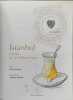
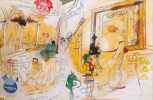
Bon état
T16 - Les grandes civilisations (1): Volume 1 Moyen-Orient Europe Asie
Aedis 2010 30 pages 18x0 4x24 6cm. 2010. Broché. 30 pages.
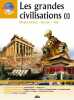
Très bon état
T16 - Les grandes civilisations (1): Volume 1 Moyen-Orient Europe Asie
Aedis 2010 30 pages 18x0 4x24 6cm. 2010. Broché. 30 pages.
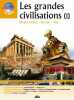
Comme neuf - livre issu de destockage - pouvant présenter d'infimes traces de stockage - Expédié soigneusement dans emballage adapté
T16 - Les grandes civilisations (1): Volume 1 Moyen-Orient Europe Asie
Aedis 2010 30 pages 18x0 4x24 6cm. 2010. Broché. 30 pages.
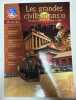
Très bon état - légères marques de lecture et/ou de stockage mais du reste en très bon état- expédié soigneusement depuis la France
T16 - Les grandes civilisations (1): Volume 1 Moyen-Orient Europe Asie
Aedis 2010 30 pages 18x0 4x24 6cm. 2010. Broché. 30 pages.
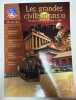
Comme neuf
T16 - Les grandes civilisations (1): Volume 1 Moyen-Orient Europe Asie
Aedis 2010 30 pages 18x0 4x24 6cm. 2010. Broché. 30 pages.
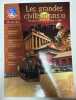
Très bon état - légères marques de lecture et/ou de stockage mais du reste en très bon état- expédié soigneusement depuis la France
T16 - Les grandes civilisations (1): Volume 1 Moyen-Orient Europe Asie
Aedis 2010 30 pages 18x0 4x24 6cm. 2010. Broché. 30 pages.
Très bon état - légères marques de lecture et/ou de stockage mais du reste en très bon état- expédié soigneusement depuis la France
T16 - Les grandes civilisations (1): Volume 1 Moyen-Orient Europe Asie
Aedis 2010 30 pages 18x0 4x24 6cm. 2010. Broché. 30 pages.
Très bon état

