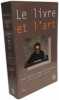
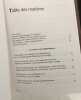
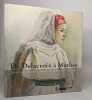
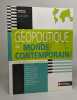
Variorum 1994 320 pages 15 24x2 29x22 61cm. 1994. Cartonné. 320 pages. Ce volume rassemble des études académiques de Han J.W. Drijvers sur l'interaction complexe entre influences religieuses culturelles et politiques en Syrie durant l'Antiquité tardive. Il comprend des sections consacrées au marcionisme et au manichéisme ainsi que des analyses sur le christianisme syriaque après les conquêtes arabes
Très bon état intérieur propre bonne tenue
in-4° : 1 feuillet de quatre pages - Signé LOUIS. - Mont-de-Marsan, 1791.
Turnhout, Brepols, 2011 Hardback, XXVI 573 p., 49 b/w ill., 11 b/w tables, 15 b/w line art, 156 x 234 mm. ISBN 9782503532080.
Dedicated as a memorial to the great historian of England and the Continent in the eighth century, Wilhelm Levison, this book provides the widest and most in-depth exploration to date of relations between England and the Continent during an equally crucial period, the tenth century. The volume, which comes out of a sustained collaboration between English and Continental universities, contains thematically arranged essays by established leading specialists and also by younger scholars. By building on the approaches used by Levison as well as other methods that have been developed in the decades since his death, these essays tackle a broad range of questions: What routeways and modes of contact linked England with the Continent? How similar were attitudes to rulership and dynastic strategies? How did the law, the working of government, and the organization and culture of the church differ between England and the Continent? How was the past seen and represented on the two sides of the English Channel? In answering these questions, this volume offers news ways of exploring the links and developing the comparison between England and the Continent in the century after the collapse of the Carolingian Empire, a formative period for the development of Europe. Studies in the Early Middle Ages (SEM 37). Languages: English, Old English, Old Norse. New.
"DRUMMOND, THOMAS. - THE INVENTION OF LIMELIGHT, THE ""DRUMMOND LIGHT""
Reference : 46535
(1826)
(London, W.Nicol, 1826). 4to. No wrappers as extracted from ""Philosophical Transactions"" 1826 - Part III. Pp. 324-337 and 1 engraved plate. A faint dampstain to top of plate.
First appearance of Drummond's paper in which he described his (and Goldsworthy Gurney's) invention and coined the word 'limelight'. His apparatus, demonstrated on the plate, was originally used for surveying as the title of the paper shows. Drummond claimed the light to be 83 times brighter than any previous artificial light.The Scottish engineer, Thomas Drummond (1797-1840), saw a demonstration of the effect by Michael Faraday and realized that the light would be useful for surveying. Drummond built a working version in 1826, and the device is sometimes called the Drummond Light after him. Limelight was first used in public in the Covent Garden Theatre in London in 1837 and enjoyed widespread use in theatres around the world in the 1860s and 1870s. Limelights were employed to highlight solo performers in the same manner as modern followspots (spotlights). Limelight was replaced by electric arc lighting in the late 19th century. (Wikipedia).""John Hersehel describes the impression produced when the light was first exhibited in the Tower: ""The common Argand burner and parabolic reflector of a British lighthouse were first exhibited, the room being darkened, and with considerable effect. Fresnel’s superb lamp was next disclosed, at whose superior effect the other seemed to dwindle, and showed in a manner quite subordinate. But when the gas began to play, the lime being brought now to its full ignition and the screen suddenly removed, a glare shone forth, overpowering, and as it were annihilating, both its predecessors, which appeared by its side, the one as a feeble gleam which it required attention to see, the other like a mere plate of heated metal. A shout of triumph and of admiration burst from all present.""’ (DNB).Parkinson ""Breakthroughs"", 1825 C
Bourg, Imprimerie Brochot, 1931 - 1935 ; grand in-8 ; six volumes, brochés ; 448 ; 511 ; 464 ; 458 ; 470 ; 470 pp.
A ce jour, c'est l'ouvrage le plus complet et le plus achevé sur cette période importante de l'histoire, tout particulièrement pour l'Ain, département-frontière.Exemplaire non coupé, à l'état de neuf, quelques très rares piqûres.
Phone number : 06 60 22 21 35
BUCHET CHASTEL 2026 1008 pages 14 2x4x19 8cm. 2026. Broché. 1008 pages.
Bon état couverture un peu ternie intérieur propre bonne tenue sans son bandeau
New York, Charles Henry Ford editor, 1945. In-4°, 54p. Broché, couverture illustrée.
Edition originale de ce numéro entièrement consacré à Duchamp. Reproductions d'un grand nombre d'oeuvres de Duchamp ainsi que de Tanguy, Man Ray, Cornell, Matta, Max Ernst, etc...Bien complet du triptyque central à découper.
[sans lieu]; Paris, [sans nom]; David le jeune, 1751; 1748. In-12 de [2]-366; [2]XVI-192-6] pages, plein veau brun, dos à nerfs orné de filets et fleurons dorés, tranches rouges, armes dorées frappées au bas du dos, de la famille Du Breil de Pontbriand, ex-libris C. T. Noel du Payrat. Petit manque à la coiffe inférieure et petite fente à un mors. Sur le second feuillet blanc, inscription ancienne: "Provient de la vente des livres de feu l'abbé de Pontbriand à Paris en juillet 1767".In-12 of [2] -366; [2] XVI-192-6] pages, full brown calf, ribbed back decorated with gilt fillets and floral ornaments, red edges, golden arms stamped on the lower back, from the Du Breil de Pontbriand family, and C.T. Noel du Payrat bookplate. Small lacking in the lower turn in and small slit on one joint. On the second white leaf, old inscription: "Provient de la vente des livres de feu l'abbé de Pontbriand à Paris en juillet 1767".
Le second ouvrage est illustré de trois vignettes de De Sève, gravées par Fessard. On mentionne parfois un frontispice, qui n'est pas présent.The second work is illustrated with 3 vignettes by De Sève, engraved by Fessard. Sometimes a frontispiece is mentioned, which is not present here. Bel exemplaire de cette véritable édition originale "devant être préférée à celle qui porte le nom de Prault, 1751" (Quérard), car elle est antérieure: notre exemplaire comporte une correction manuscrite à l'encre, de l'époque, qui sera prise en compte dans l'édition suivante (ladite "Prault, 1751"). "Les Considérations sur les mœurs de ce siècle passent avec raison pour le tableau le plus intéressant que nous ait laissé le siècle dernier : on a dit qu’elles étaient le chef-d’œuvre de Duclos. Louis XV qui l’estimait particulièrement lui avait délivré des lettres de noblesse. " (T. Tastet). Le roi Louis XV dira des Considérations: "C’est l’ouvrage d’un honnête homme". La Théorie des sentiments agréables est ici dans sa troisième édition, la seconde mise dans le commerce, avec une préface de Jean Jacob Vernet.Beautiful copy of this true original edition "devant être préférée à celle qui porte le nom de Prault, 1751" (Quérard), because it is earlier: our copy includes a handwritten correction in ink, of the time, which will be taken into account in the following edition (the so-called "Prault, 1751"). The Considérations sur les moeurs de ce siècle pass with reason for the most interesting picture that the eighteenth century has left us: it has been said that they were the masterpiece of Duclos. Louis XV, who particularly valued the author, had granted him letters of nobility. King Louis XV will say about the book "It is the work of an honest man". The Théorie des sentimens agréables is here in its third edition, the second release on the market, with a preface by Jean Jacob Vernet.
paris Imprimerie Chaix 1896 Une Affichette Publicitaire [Fac-similé réduit de l'affiche originale], lithographiée en couleurs, format : 40 x 28,6 cm, Signé en bas à droite : Dudley HARDY , Timbre sec dans le coin inférieur droit : "Les Maîtres de l'affiche // Imprimerie Chaix", 1896 [Paris] : Les Maîtres de l'Affiche Editeur,
Édition : [Fac-similé réduit de l'affiche originale] , Note : Source : Affiche originale de : WATERLOW & SONS LONDON ..... SUPERBE .................. en trés bon état (very good condition). en trés bon état
"DUFAY (DU FAY), CHARLES FRANCOIS DE CISTERNAY. - THE DISCOVERY OF POSITIVE AND NEGATIVE CHARGE OF ELECTRICITY.
Reference : 46590
(1735)
(Paris, L'Imprimerie Royale, 1735). 4to. Without wrappers. Extracted from ""Mémoires de l'Academie des Sciences. Année 1733"". Pp. 23-39, pp. 73-84, pp. 233-254 a. 1 engraved plate, pp. 457-476. With titlepage to the volume (1733/1735). Margins of titlepage with a few brownspots.
First appearance of these milestone papers in the histroy of electricity in which Dufay explains his discovery of two kinds of electricity and the relation between them, attraction and repulsion, shocks and sparking, and the full recognition of electrostatic repulsion. He formulates the two-fluid theory of electricity. He further showed that ""not all bodies can become electrified themselves"" (by friction) and went on to show, ""that they can all acquire a considerable (electrical) virtue when the tube (of rubbed) glass), wood, metals or liquids are brought near them,"", provided only that they are insulated by beiing stood on ""a support of glass or of sealing-wax"".Dufay ""TRANSFORMED A COLLECTION OF MISCELLANEOUS WEEDS INTO THE FIRST GARDEN OF EUROPE"" (Heilbron)""Dufay's substantive discoveries - ACR, the two electricities, shocks and sparking - are but one aspect, and perhaps not the most significant, of his achievement. His insistence on the impiortence of the subject, on the universal character of electricity, on the necessity of organizing, digesting and regulariizing known facts before grasping new ones, all helped to introduce order and professionel standards into the study of electricity at precisely the moment when the accumulation of data began to require them. He foundthe subject a record of often capricious, disconnected phenomena, the domain of the polymaths, textbook writers, and prfesional lecturers, and left a body of knowledge that invited and rewarded prolonged scrutinity from serious physicists."" (Heilbron ""Electricity in the 17 & 18 Centuries"", p. 260).Parkinson ""Breakthroughs"", 1734 P - Ronalds Library, p. 145. - Not in Wheeler Gift Cat.
Connaissance et Mémoires - CME, 1693, 2003 (réimpression), 48 p.
Ce traité est la transcription du plus ancien ouvrage de langue française jamais consacré au thé (1693). L’auteur y manifeste l’émerveillement de l’Europe du XVIIe pour l’Extrême-Orient ainsi que l’enthousiasme qu’elle porte à la nouvelle boisson. Le texte foisonne d’indications précieuses sur l’usage du thé, les “croyance” et “découvertes médicales”… Illustré de 6 gravures.
Jean pierre taillandier 1993 96 pages in4. 1993. Cartonné. 96 pages.
Bon état
A Lyon, chez Jean-Baptiste Deville, 1688, 1 pleine basane fauve, dos à nerfs, orné, ex-libris manuscrit sur la première garde, plats et mors frottés in-8 de 1 feuillet blanc, titre frontispice: gravure représentant un turc, un chinois et un indien d'Amérique, buvant chacun leur boisson (café, thé et chocolat), titre, 9 feuillets non chiffrés ( Epitre à monsieur le chevalier Valon seigneur de Janlis et de Veuvey, préface, avis au public, approbation), 444 pages, 5 feuillets non chiffrés (table, privilège), 3 planches dessinées et gravées par Mathieu Ogier (peintre lyonnais), bandeaux et vignettes par le même graveur, ex-libris manuscrit sur la page de titre ;
Cet ouvrage traite des vertus curatives du café, du thé et du chocolat et sur la manière de les préparer. La partie sur le chocolat est une traduction de l’espagnol par le médecin parisien René Moreau (1587-1656) d’une relation de Antoine Colmenero de Ledesma. Philippe Sylvestre Dufour, né à Manosque en 1622 et mort à Vevey (Canton de Vaud) vers 1687 est un apothicaire, banquier, collectionneur et auteur protestant installé à Lyon. Il s'exila à Genève lorsque l'exercice des professions médicales fut interdit aux Protestants. Il fut l'un des plus riches apothicaires lyonnais par la fortune héritée de sa famille et par son commerce lucratif de drogues en provenance d'Orient. Il se constitua un cabinet de curiosités, l'un des plus fournis de la ville.Réf. Biblio.: Vicaire, Bibliographie gastronomique, 293. Bitting, p. 134. Oberlé, 733. Haag IV, 377-378. Duval, 1912, Note sur les diverses éditions du Traité de Philippe Sylvestre Dufour, in Annales de la Société de Botanique. Lyon, 1912, XXXVII : 7-13.
Phone number : 06 80 15 77 01
FLAMMARION 1994 in8. 1994. Broché.
Bon état sous rhodoïd intérieur propre
, Museum Boijmans Van Beuningen 1998, 1998 Paperback, 48 pagina's, NL, 200 x 200 mm, in prima staat, met illustraties in kleur en z/w. ISBN 9789040092619.
Dull, Jonathan R. (Associate Editor / The Papers of Benjamin Franklin)
Reference : 30715
(1983)
The National Committee for the Bicentennial of the Treaty of Paris / Vermont Heritage Press Cloth N. P. 1983
Fine 4to. 35 pages. Metal seal on front cover. Facsimile of the Treaty with an introduction.
"DULONG, (PIERRE) & (ALEXIS) PETIT. - THE ""LAW OF DULONG AND PETIT"" ANNOUNCED.
Reference : 43914
(1817)
Paris, Crochard, 1817. Contemp. hcalf, richly gilt spines. Light wear at top of spine. Minor scratches to edges. Small stamps on verso of titlepages and verso of plates. In: ""Annales de Chimie et de Physique, Par MM. Gay-Lussac et Arago."", tome 7, 2e Series. 448 pp. a. 2 engraved plates. (the entire volume offered). Dulong & Petit-papers: pp. 113-154, pp. 225-264, pp. 337-367. Clean and fine.
First edition of these 3 groundbreaking papers with the first appearance in print of THE LAW OF THE CONSTANCY OF ATOMIC HEAT, i.e. the specific heat multiplied by the atomic weight. The insight had far reaching implications as it showed a new way to Dalton's atomic theory.""In 1815 Dulong's famous collaboration with the mathematical physicist Alexis Therese Petit began"" it produced three importent memoirs on heat."" (the papers offered here). The 2 first was awarded the price of the Academy in 1818 and was leading up to the last paper in which they formulted the ""Law of the Constancy of product of atomic weight and specific heat""""They (Dulang and Petit) were concerned with the specific heats of elements"" but if these elements really existed as atoms, it seemed possible that there might be a connection between trhe weight of the atom and the amount of heat aquired to raise the temperature of a given weight of that element by a certain amount."" (DSB). - ""One of his (Dulong) most importent researches was made in collaboration with Alexis Thérese Petit (1791-1820), with whom he announced the law that the product of atomic weight and specific heat is constant (1819). It rendered a distinct service in fixing atomic weights, especially when these were in question, and enabled Berzelius and later Cannizzaro to arrive at correct atomic weights and the correct number of atoms in molecules."" (Leicester & Klickstein, A source Book in Chemistry 1400-1900, p. 273). - Parkinson, Breakthroughs (1819).
"DULONG, (PIERRE) & (ALEXIS) PETIT. - THE ""LAW OF DULONG AND PETIT"" THE CONNECTION BETWEEN ATOMIC WEIGHT AND ATOMIC HEAT ESTABLISHED.
Reference : 47356
(1817)
Paris, Crochard, 1817 a. 1819. Bound in one contemp hcloth (vol. 7) and 1 issue without wrappers. In: ""Annales de Chimie et de Physique, Par MM. Gay-Lussac et Arago."", Vol. 7 and vol. 10, Cahier 4. - 448 pp. a. 2 engraved plates (entire vol. 7 offered) + pp. 337-443 a. 2 engraved plate (entire issue offered, Cahier 4 of vol. 10 with htitle to the vol.). Dulon & Petit's papers: pp. 113-154, pp. 225-264, pp. 337-367 and Vol. X, pp. 395-413.
First edition of these 4 groundbreaking papers with the first appearance in print of THE LAW OF THE CONSTANCY OF ATOMIC HEAT, i.e. the specific heat multiplied by the atomic weight. The insight had far reaching implications as it showed a new way to Dalton's atomic theory. ""In 1815 Dulong's famous collaboration with the mathematical physicist Alexis Therese Petit began"" it produced three importent memoirs on heat."" (the papers offered here). The 2 first was awarded the price of the Academy in 1818 and was leading up to the last paper in which they formulted the ""Law of the Constancy of product of atomic weight and specific heat""""They (Dulang and Petit) were concerned with the specific heats of elements"" but if these elements really existed as atoms, it seemed possible that there might be a connection between trhe weight of the atom and the amount of heat aquired to raise the temperature of a given weight of that element by a certain amount."" (DSB). ""One of his (Dulong) most importent researches was made in collaboration with Alexis Thérese Petit (1791-1820), with whom he announced the law that the product of atomic weight and specific heat is constant (1819). It rendered a distinct service in fixing atomic weights, especially when these were in question, and enabled Berzelius and later Cannizzaro to arrive at correct atomic weights and the correct number of atoms in molecules."" (Leicester & Klickstein, A source Book in Chemistry 1400-1900, p. 273). Parkinson, Breakthroughs (1819).
"DULONG, (PIERRE) & (ALEXIS) PETIT. - THE ""LAW OF DULONG AND PETIT""
Reference : 49242
(1819)
London, Baldwin, Cradock, and Joy, 1819. 8vo. Contemp. hcalf. Marbled boards. Spine lacks and boards loose. In: ""Annals of Philosophy"" or Magazine of Chemistry, Mineralogy, Mechanics... By Thomas Thomson"". Vol. XIII. XCII,486 pp. a. 6 engraved plates. (Entire volume offered). Some brownspots to the plates. Iternally clean. A small stamp in upper right corner of two leaves. Dulong & Petit's paper: pp. 112-124, 161-182, 241-251, 321-339 a. 1 engraved plate.
First appearance in English of this, their (first) joint paper, which initiated the recheches leading to the the ""Law of Dulong and Petit"", the connection between atomic weight and atomic heat. The original Frensh having the title: Recherches sur les lois de dilation des solides, des liquides et des fluides élastiques, et sur la mesure exacte des temperatures.""""In 1815 Dulong’s famous collaboration with the mathematical physicist Alexis Thérèse Petit began"" it produced three important memoirs on heat (of which this is the first). The best-known part of this work is the statement of the law of constant atomic heats that bears their names, .... They began with the fundamental problem of measuring quantities of heat, which involved a critical analysis of thermometric scales. In 1804-1805 Gay-Lussac had carried out a comparison of mercury and air thermometers between 0°C. and 100°C. Dulong and Petit extended the range of comparison up to 300°C. and found an increasing discrepancy between the two scales at higher temperatures."" (DSB).
Zwolle, Waanders, 1994 Originele uitgeversomslag, geillustreerde kartonomslag in kleur, 225 x 280mm., . ISBN 9066304677.
Catalogus bij de gelijknamige tentoonstelling gehouden in Museum Het Rembrandthuis te Amsterdam 18 maart - 29 mei 1994 en het Dordrechts Museum 22 oktober 1994 - 15 januari 1995. In goede staat.
"DUMAS, JEAN BAPTISTE & ANDRE & J.S. STAS. - THE ATOMIC WEIGHT OF CARBON ESTABLISHED.
Reference : 47238
(1840)
(Paris, Bachelier), 1840. 4to. No wrappers. In: ""Comptes Rendus Hebdomadaires des Séances de L'Academie des Sciences"", Tome XI , No 25. Pp. (991-) 1020. (Entire issue offered). The paper: pp. (991-) 1008. A bit of marginal soiling and some creasing to leaves.
First appearance of the paper which states the correct weight of the carbon atom. This research had profound influence on the development of organic chemistry. The paper in full was published the year after (1841) in ""Annales de Chimie et de Physique"".""From 1840 onward he carried out an important revision of the atomic weights of thirty elements. His most valuable contribution in this field was his very precise determination of the atomic weight of carbon (jointly with his pupil Stas) in 1840. A previously accepted weight, determined by Berzelius as C = 12.20 (O = 16), was shown to be incorrect. Dumas proved that C = 12±.002 (O = 16) or C = 75 (O = 100). The analysis was made by burning diamond and artificial and natural graphite in oxygen"" the carbon dioxide formed was weighed in potash solution. The results were in close agreement. The ""new"" weight of carbon had a great effect on the progress of organic chemistry.""(DSB).
"DUMAS, JEAN BAPTISTE-ANDRE & J.S. STAS. - THE ATOMIC WEIGHT OF CARBON ESTABLISHED.
Reference : 44902
(1841)
Paris, Fortin, Masson et Cie, 1841. 8vo. Contemp. hcalf, raised bands, gilt spine. Light wear along edges. Small stamps on verso of titlepage. In: ""Annales de Chimie et de Physique"", 3e Series - Tome 1. 512 pp. a. 3 folded engraved plates (showing experimental apparatus).Small stamp to verso of plates. (The entire volume offered). Dumas & Stas' paper: pp. 1-59. Clean and fine.
First appearance in full of this paper, stating the correct weight of the carbon atom, which had profound influence on the development of organic chemistry. The first announcement (in extrait) came out in Comptes rendus, Tome Xi, 1840.""From 1840 onward he carried out an important revision of the atomic weights of thirty elements. His most valuable contribution in this field was his very precise determination of the atomic weight of carbon (jointly with his pupil Stas) in 1840.2 A previously accepted weight, determined by Berzelius as C = 12.20 (O = 16), was shown to be incorrect. Dumas proved that C = 12±.002 (O = 16) or C = 75 (O = 100). The analysis was made by burning diamond and artificial and natural graphite in oxygen"" the carbon dioxide formed was weighed in potash solution. The results were in close agreement. The ""new"" weight of carbon had a great effect on the progress of organic chemistry.""(DSB).The volume contains further notable papers by Gerhardt et Cahours ""Recherches chimiques sur les huiles essentitielles"", pp. 60-110, by Laurent, Boussingault, Regnault, Dulong, Melloni et al.
DUMAS, JEAN BAPTISTE-ANDRE & J.S. STAS. - THE MAIN PAPER ON SUBSTITUTION AND THE THEORY OF TYPES.
Reference : 45032
(1840)
(Paris, Fortin, Masson et Cie, 1840). 8vo. Without wrappers. Extracted from 'Annales de Chimie et de Physique', 2e Series, tome 73. Pp. 73-103 (incl. Note de Liebig pp. 100-103) and pp. 113-166. Some scattered brownspots.
This paper, which was published at the same year in ""Comptes Rendues"" (3 Fevrier), is the most importent on the theory of structural types and the nomenclature of organic compounds, refuting the electrochemical theory of Berzelius. ""The development of this idea (type organique) into what is sometimes called the ""Older Type Theory"", as distinguished from Gerhardt's Type heory, is contained in Dumas' importent memoir on the substitution and the theory of types, presented on 3 febriary 1840.""(Partington IV, p. 365). In the second paper Stas and Dumas record the first use of 'potash-lime', the precursor of soda-lime, an invaluable reagent in organic chemistry.""Jean Baptiste Dumas advances a theory that the chemical properties of an organic compound are determined by its structure and not, as seems to be the case with inorganic compounds, by its electrical properties. he illustrates the concept with the example that the basic qualitative properties of acetic acid are retained even after replacing three fourths of the hydrogen by chlorine. As a consequence, he calls for a revision of chemical nomenclature for organic compounds, basing terms on common features, not on elemental composition.""(Parkinson ""Breakthroughs"" 1840 C).
DUMAS, (JEAN BAPTISTE-ANDRE). - THE MAIN PAPER ON SUBSTITUTION AND THE THEORY OF TYPES.
Reference : 47109
(1840)
Paris, Bachelier, 1840 4to. No wrappers. In: ""Comptes Rendus Hebdomadaires des Séances de L'Academie des Sciences"", Tome X , No 5 (entire issue offered). Pp. (143-) 207. Dumas' paper: pp. 149-178.
First appearance of this paper, which was published the same year in 'Annales de Chimie et de Physique', is the most importent on the theory of structural types and the nomenclature of organic compounds, refuting the electrochemical theory of Berzelius. ""The development of this idea (type organique) into what is sometimes called the ""Older Type Theory"", as distinguished from Gerhardt's Type heory, is contained in Dumas' importent memoir on the substitution and the theory of types, presented on 3 febriary 1840.""(Partington IV, p. 365). ""Jean Baptiste Dumas advances a theory that the chemical properties of an organic compound are determined by its structure and not, as seems to be the case with inorganic compounds, by its electrical properties. he illustrates the concept with the example that the basic qualitative properties of acetic acid are retained even after replacing three fourths of the hydrogen by chlorine. As a consequence, he calls for a revision of chemical nomenclature for organic compounds, basing terms on common features, not on elemental composition.""(Parkinson ""Breakthroughs"" 1840 C).
DUMAS, (JEAN BAPTISTE-ANDRE). - THE MAIN PAPER ON SUBSTITUTION AND THE THEORY OF TYPES.
Reference : 51504
(1840)
Paris, Bachelier, 1840. 4to. No wrappers. In: ""Comptes Rendus Hebdomadaires des Séances de L'Academie des Sciences"", Tome X , No 5 (entire issue offered). Pp. (143-) 207. Dumas' paper: pp. 149-178. With half-title to Tome X.
First appearance of this paper, which was published the same year in 'Annales de Chimie et de Physique', is the most importent on the theory of structural types and the nomenclature of organic compounds, refuting the electrochemical theory of Berzelius. ""The development of this idea (type organique) into what is sometimes called the ""Older Type Theory"", as distinguished from Gerhardt's Type heory, is contained in Dumas' importent memoir on the substitution and the theory of types, presented on 3 February 1840.""(Partington IV, p. 365). ""Jean Baptiste Dumas advances a theory that the chemical properties of an organic compound are determined by its structure and not, as seems to be the case with inorganic compounds, by its electrical properties. he illustrates the concept with the example that the basic qualitative properties of acetic acid are retained even after replacing three fourths of the hydrogen by chlorine. As a consequence, he calls for a revision of chemical nomenclature for organic compounds, basing terms on common features, not on elemental composition.""(Parkinson ""Breakthroughs"" 1840 C).