 Write to the booksellers
-
Type
Book (7230)
Disk (1)
Drawings (1)
Engraving (9)
Magazine (89)
Maps (4)
Music sheets (136)
New book (4)
Old papers (1)
Photographs (7)
-
Latest
Last 24h (3)
Last 3 days (6)
Last month (116)
Last week (20)
-
Language
Czech (1)
Dutch (9)
English (158)
French (7300)
German (4)
Italian (2)
Japanese (1)
Latin (3)
Russian (4)
-
Century
16th (10)
17th (43)
18th (197)
19th (882)
20th (2425)
21st (1549)
-
Countries
Belgium (1156)
Canada (34)
China (56)
Côte d'Ivoire (7)
Denmark (1063)
France (4800)
Germany (1)
Netherlands (181)
Switzerland (168)
United Kingdom (12)
United States of America (4)
-
Syndicate
ALAC (27)
CLAM (25)
CLAQ (2)
ILAB (2295)
NVVA (15)
SLACES (15)
SLAM (1082)
SNCAO (4)
Wolf Kahler Phil McKee Ricky Schroder Daniel Caltagirone Adam James Michael Goldstrom Jamie Harris Jay Rodan André Vippolis Russell Mulcahy Rhys Miles Thomas The Lost Battalion - Zwischen allen Linien The Lost Battalion The Lost Battalion - Zwischen allen Linien / The Lost Battalion ( ) Wolf Kahler
Reference : 500329272
(2013)
ISBN : 3344428066666
The Lost Battalion [Blu-ray] (NEUF SOUS BLISTER)
Koba Films 2013 13 76x18 03x1 48cm. 2013. blu_ray.
![The Lost Battalion [Blu-ray] (NEUF SOUS BLISTER). Wolf Kahler Phil McKee Ricky Schroder Daniel Caltagirone Adam James Michael Goldstrom Jamie ...](https://static.livre-rare-book.com/pictures/IGE/500329272_thumb.jpg)
Neuf
"WOLLASTON, WILLIAM HYDE. - CYSTINE, THE FIRST AMINO ACID TO BE DISCOVERED.
Reference : 45130
(1810)
On Cystic Oxide, a new species of Urinary Calculus. Read July 5, 1810.
(London, W. Bulmer and Co., 1810). 4to. No wrappers as extracted from ""Philosophical Transactions"" 1810 - Part I. Pp. 223-230. Light browning to first leaf. Wide-margined.
First appearance of this fundamental paper in the history of organic chemistry in which Wollaston announced his discovery of ""Cystine"", the very first of the amino acids, the building blocks of protein, to be discovered.Wollaston ""in 1812 (correct 1810) identified a new and rare type of stone, which he called ""cystic oxide"" since it occurred in the bladder. This was later renamed cystine, the first of the amino acids to be discovered. Fourcroy and Vauquelin reported similar investigations, but unaccountably gave no recognition to Wollaston. This led Alexander Marcet, a physician, to set matters right in a popular work dedicated to Wollaston.""(DSB XIV, p. 492).Garrison & Morton: 668.1.

Description of a reflective Goniometer. Read June 8, 1809.
(London, W. Bulmer and Co., 1809). 4to. No wrappers as extracted from ""Philosophical Transactions"" 1809 - Part I. Pp. 253-258 and 1 engraved plate showing the Goniometer. Clean and fine.
First appearance of this paper describing Wollaston's invention of the Goniometer.""Nor was it only in chemistry that he (Wollaston) left his mark. He invented a goniometer, a device to measure the angles between crystal faces, which greatly advance mineralogical research. A calcium silicate mineral is named wollastonite in his honor."" (Asimow).""When a surface is so small as one fiftieth of an inch in breadth, it becomes axtremely difficult to apply the short radius of a goniometer to it with correctness. But since a surface of that magnitude may reflect a very brilliant light, the reflected ray may be employed as radius, and may at pleasure be taken of such a lenght that the angles of small crystals can be known with as much precision as those of the largest surfaces.""(Abstract).
Description of a reflective Goniometer. Read June 8, 1809.
(London, W. Bulmer and Co., 1809). 4to. No wrappers as extracted from ""Philosophical Transactions"" 1809 - Part I. Pp. 253-258 and 1 engraved plate showing the Goniometer. Clean and fine.
First appearance of this paper describing Wollaston's invention of the Goniometer.""Nor was it only in chemistry that he (Wollaston) left his mark. He invented a goniometer, a device to measure the angles between crystal faces, which greatly advance mineralogical research. A calcium silicate mineral is named wollastonite in his honor."" (Asimow).""When a surface is so small as one fiftieth of an inch in breadth, it becomes axtremely difficult to apply the short radius of a goniometer to it with correctness. But since a surface of that magnitude may reflect a very brilliant light, the reflected ray may be employed as radius, and may at pleasure be taken of such a lenght that the angles of small crystals can be known with as much precision as those of the largest surfaces.""(Abstract).
"WOLLASTON, WILLIAM HYDE. - THE DISCOVERY OF THE ELEMENT RHODIUM.
Reference : 42469
(1804)
On a new Metal, found in crude Platina. Read June 24, 1804.
(London, Bulwer and Co., 1804). 4to. Without wrappers as extracted from ""Philosophical Transactions of the Royal Society of London."" Year 1804-Part II. Pp. 419-430. Clean and fine.
First appearance of the paper in which Wollaston announced his discovery of the metallic element Rhodium.""Dr. Wollaston dissolved a portion of crude platinum in qgua regia, and neutralized the excess acid with caustic soda. He then added salammoniac to precipitate the platinum as ammonium chloroplatinate, and mercurous cyanide to precipitate the palladium as palladium cyanide. After filteringoff the precipitate, he decomposed the excess mercurous cyanide inthe filtarate by adding hydrochloric acid and evaporating to dryness. When he washed the residue with alcohol, everything dissolved except a beautiful dark red powder, which proved to be a double chloride of sodium and a new metal, which because of the rose color of its salts, Dr. Wollaston named 'Rhodium'. He found that the sodium rhodium chloride could be easely reduced by heating it in a current of hydrogen, and that after the sodium chloride had been washed out, the rhodium remained as a metallic powder. he also succeeded in obtaining a rhodium button.""(Weeks: Discovery of the Elements. p. 104-05.)
"WOLLASTON, WILLIAM HYDE. - THE INVENTION OF THE FIRST PHOTOGRAPHIC CAMERA LENS.
Reference : 46063
(1812)
On a Periscopic Camera Obscura and Microscope. Read June 11, 1812.
London, W. Bulmer and Co., 1812. 4to. No wrappers as extracted from ""Philosophical Transactions"" 1812. With titlepage to the year 1812 - Part I. Pp. 370-377. Light yellowing to titlepage.
First appearance of the paper in which Wollaston explains his invention and function of photography's first lens, the Wollaston Meniscus, invented more than 25 years before the first photography appeared.""Wollaston developed the first lens specifically for camera lens called Wollaston's meniscus lens, or just meniscus lens, in 1812. The lens was designed to improve the image projected by the camera obscura. By changing the shape of the lens, Wollaston was able to project a flatter image, eliminating much of the distortion that was a problem with many of that day's biconvex lenses"" (DSB).
VICTORIAN PAINTERS. 1. THE TEXT.
Suffolk, Antique Collector's Club, 1995 Bound, blue cloth with gold impression, illustrated dustjacket, 28x22 cm., 595 pp ISBN 9781851491711.
The Dictionary of Victorian Painters, first published in 1971, and since reprinted and revised many times, has for so long been the undisputed standard reference on a period of painting that continues to excite and interest the art world, that it was only a question of time before another revision and reformatted version appeared. The Dictionary now appears in two volumes, each complementary to one another yet entirely independent works depending on the particular interest of the reader. Tis volume, Victorian Painters - 1. The Text, contains over 11,000 entries which list every artist recorded during the period 1837-1901.
LA NATIVITE - GRANDS THEMES
RMN 1992 64 pages 17 2x1x22 8cm. 1992. Relié. 64 pages.
Très bon état - légères marques de lecture et/ou de stockage mais du reste en très bon état- expédié soigneusement depuis la France
MEDIEVAL LIFE AND LEISURE IN THE DEVONSHIRE HUNTING TAPESTRIES,
London, , V&A Publications, , 2002 softcover, colour frontispice, 250 x 305mm., 116pp., full colour illustration.
The four magnificent Devonshire Tapestries housed at the V&A are the only great fifteenth century tapestries to survive the ravages of time. This book is a celebration of them and offers a unique insight the world of the late Middle Ages in rich and fascinating detail. Hunting was a favourite pursuit of princes and noblemen in Medieval and Renaissance Europe. The elaborate rituals of the hunt were an integral part of court life, but not just as a sport ?? the meat and game provided were vital ingredients of household fare. The tapestries provide a vivid picture of the hunt in all its forms ?? falconry, hunting for otter, bear, deer, robbing a swans nest for eggs ?? and are packed with detail. In addition the tapestries are a vital source of information about Medieval dress and fashion. We can learn what textiles and patterns were in favour, what styles and shapes of head-dresses, collars, belts and gowns were fashionable and how clothes were worn and by whom. These beautiful works of art are an unrivalled repository of costume and textile history. Illustrated in full colour with pull out plates showing the complete tapestries in all their glory, this book is a long overdue celebration of these unique works of textile art. New book.
An introduction to classical Athenian culture.
Cambr. etc., CUP, 1985.
XX,407 p.; ills. Pb. (Joint Ass. of Class. Teachers' Greek Course Background Book)
Wormald B. H. G. Brian Harvey Goodwin Wormald
Reference : 100133060
(1993)
ISBN : 0521307732
Francis Bacon: History Politics and Science 1561 1626 (Cambridge Studies in the History and Theory of Politics)
Cambridge University Press 1993 424 pages in8. 1993. Cartonné jaquette. 424 pages.
Très bon état intérieur propre bonne tenue
Wormald Patrick Collins Roger Bullough Donald Wallace-Hadrill J. M
Reference : 100139877
(1983)
Ideal and Reality in Frankish and Anglo-Saxon Society
Blackwell Publishers 1983 362 pages in8. 1983. Cartonné jaquette. 362 pages.
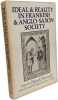

Bon état avec sa jaquette (défraîchie) intérieur propre
Correspondance with Islanders. Ed.by Jakob Benediktsson.
K., 1948. Lex8vo. XXXVII,553 pp. (Bibl.Arnamagn.vol.7).
Wormser Michel Morize Patrick Margo Marie
Reference : 500265905
(2017)
ISBN : 9782210757066
Cahier de vacances du CP au CE1 éd. 2017: 6-7 ans
MAGNARD 2017 48 pages 21x27x0 5cm. 2017. Broché. 48 pages.
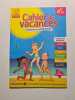
Worroll Jane Houghton Peter Choupin Emilie
Reference : 500044500
(2022)
ISBN : 9782889536061
Le guide des petits aventuriers de la forêt: Jeux et activités nature autour des 4 éléments
JOUVENCE 2022 176 pages 16 5x23 6x1 5cm. 2022. Broché. 176 pages.
Comme neuf - L'ouvrage qui n'a jamais été lu pourrait présenter de légères traces de stockage - expédié soigneusement dans emballage adapté -
Conversing with the Saints Communication in Pre-Carolingian Hagiography from Auxerre
, Brepols - Harvey Miller, 2006 Hardcover. X 230 p., 2 b/w tables, 1 b/w line art, 160 x 240 mm, Languages: English, Fine copy. Including an index. ISBN 9782503517605.
Early medieval hagiographical texts abound with vivid descriptions of acts of communication. Such descriptions in the hagiography written in the diocese of Auxerre during the Merovingian period are studied here in an attempt to establish the status of the written word vis-a-vis other means of communication, such as the spoken word or rituals. For this purpose the dating of each source is reconsidered. The texts were written within the clerical community of Auxerre and most relate in some way to Germanus, the most renowned bishop of Auxerre (first half of the fifth century). Although the Vita Germani by Constantius was not written in Auxerre nor for an Auxerrois audience, it is included in the analysis, since it has exerted a profound influence on the later hagiographical narratives produced in the diocese. This study demonstrates that the authors of these texts were very much aware of the limitations of the written word as well as of the advantages and importance of non-written communication.
THE ARTIST WHO SWALLOWED THE WORLD.
Ostfildern/Wien, Hatje Cantz/Museum Moderner Kunst Stiftung Ludwig Wien , 2007 Bound, hard cover, original editor's jacket in colour, 28.7x22.6 cm., 304 pp. 732 illustrations in colour. ISBN 9783775718660.
Impérissable Amitié
Sans éditeur 2015 Livre en français, chinois. In-4 relié 26 cm sur 26. 97 pages. Sous étui pleine toile bleu marine. Très bon état d’occasion.
Préfaces Laurent Fabius ; Zhang Tiantu ; Gosset David. Ouvrage réalisé à l’occasion de l’amitié franco-chinoise, réalisé dans le cadre du 50ème anniversaire de l’établissement des relations diplomatique entre la France et la Chine autour de l’art du thé. la culture, de la cérémonie du thé Très bon état d’occasion
"WURTZ, ADOLPHE. - ANNOUNCING THE DISCOVERY OF THE AMINES IN CHEMISTRY.
Reference : 47031
(1849)
Sur une série d'alcalis organiques homologues avec l'ammoniaque.
(Paris, Bachelier), 1849. 4to. No wrappers. In: ""Comptes Rendus Hebdomadaires des Séances de L'Academie des Sciences"", Tome 28, No 7. Pp. 189-240 (entire issue offered). Wurtz's paper: pp. 223-226.
First appearance of the announcement of Wurtz's outstanding discovery of Liebig’s prediction, that there might be organic compounds analogous to ammonia and derivable from it by the replacement of hydrogen - the amines. The entire memoir was not published in full until 1855 in 'Annales de Chimie et de Physique'.Wurtz is most noted for his investigation of glycols and for his discovery of the amines. The latter discovery in 1849 (the paper offered) was very significant at the time, for ot suggested the possibility of a new type, the ammonia type, which helped to explain the behaviour of nitrogenous compounds. (Leicester & Klickstein ""A Source Book.."", pp. 362-63). - Parkinson ""Breakthroughs"" 1849 C.
"WURTZ, ADOLPHE. - THE DISCOVERY OF THE AMINES IN CHEMISTRY.
Reference : 45031
(1855)
Mémoire sur une Série D'Alcaloïdes homologues avec L'Ammoniaque.
Paris, Victor Masson, 1855. 8vo. Without wrappers. In 'Annales de Chimie et de Physique', Series 3 , tome 30, December-issue. With halftitle to vol. 30. Pp. 385-508 a. 1 plate. (Entire issue offered). Wurtz's paper: pp. 443-506.
First appearance of the entire memoir in which Wurtz describes his outstanding discovery of Liebig’s prediction, that there might be organic compounds analogous to ammonia and derivable from it by the replacement of hydrogen - the amines. The discovery was announced in 1849, and a small extract was printed in ""Comptes rendu"" (4 pp.). The offered paper is the memoir in full.Wurtz is most noted for his investigation of glycols and for his discovery of the amines. The latter discovery in 1849 (the paper offered) was very significant at the time, for ot suggested the possibility of a new type, the ammonia type, which helped to explain the behaviour of nitrogenous compounds. (Leicester & Klickstein ""A Source Book.."", pp. 362-63). - Parkinson ""Breakthroughs"" 1849 C.Charles Adolphe Wurtz, was born at Strasbourg 1817. For many years he was Professor of Chemistry at the Ecole de Médicine and at Sorbonne in Paris. He was known not only for his researches in organic chemistry but also for his many literary works. He was editor of a Dictionnaire de Chemie Pure et Appliquée, and after 1868 one of the editors of the Annalen der Chemie et de Physique. He died in Paris in 1884.
Sur une nouvelle Classe de Radicaux Organiques.
Paris, Victor Masson, 1855. 8vo. Contemp. hcalf, raised bands, gilt spine. Light wear along edges. Light wear to top of spine. A few scartches to binding.Small stamps on verso of titlepage. In ""Annales de Chimie et de Physique"", 3me Series - Tome 44. Pp. 512 pp. a. 2 folded engraved plates. (entire volume offered). Light scattered brownspots. Wurtz's paper: pp. 275-313.
First printing of an importent paper in the history of organic chemistry in which Wurtz describes his methodof syntheesizing longchain hydrocarbons by using hydrocarbon iodides and sodium, a method essential for the synthesis of a series of hydrocarbons.Parkinson ""Breakthroughs"", 1855 C.Charles Adolphe Wurtz, was born at Strasbourg 1817. For many years he was Professor of Chemistry at the Ecole de Médicine and at Sorbonne in Paris. He was known not only for his researches in organic chemistry but also for his many literary works. He was editor of a Dictionnaire de Chemie Pure et Appliquée, and after 1868 one of the editors of the Annalen der Chemie et de Physique. He died in Paris in 1884.
Education and Culture in Industrializing Asia. The Interaction between Industrialization, Cultural Identity and Education. A Comparison of Secondary Education in Nine Asian Countries.
Leuven, Universitaire Pers, 1992 Paperback, English, original editor's jacket, 16x24 cm., viii-486 pp. ISBN 9789061864899.
Studia Paedagogica : 13. The Ferdinand Verbiest Foundation directs the Cultural Centre of the China-Europe Institute at the Catholic University of Louvain (K.U. Leuven, Belgium). The purpose of the Institute is to promote cultural exchange between East and West, particulary between China and Europe. It wishes to contribute to a better appreciation of Chinese culture by people in the West and of European culture by people in the East. The Foundation found it meaningful to sponsor the Bangkok International Conference on "Education and Culture in Industrializing Asia" because its topic touches upon the key problem of cultural development today in the East as well as in the West. In both East and West we are confronted with the problem of how to catch up with the times without losing our own cultural identity: how to know and appreciate the cultures of foreign countries with which we enter into contact and yet remain ourselves.
RUPERT VIT ! Preuves scientifiques de la survivance de l'ame.
PARIS, P. Leymarie - 1920 - In-8 ° broché - 178 pages - Ex; propre;
Traduit de l'anglais par Carita BORDERIEUX & Sarah EDWARDS. - Epitre dédicatoire à Miss Estelle STEAD - Cnformément à nos conditions générales de vente :Les frais de port sont affichés à titre indicatif. Il se peut que nous devions vous contacter pour vous informer du coût de laffranchissement supplémentaire en fonction du poids et du nombre de livres, surtout pour les envois internationaux Cependant vu l'augmentation des tarifs postaux à l'internationale, nous pouvons expédier les ouvrages en point relais MONDIAL RELAY pour les pays suivants : Allemagne, Autriche, Belgique, Espagne, Italie, Luxembourg, Pays-Bas, Pologne, et Portugal. Merci de nous indiquer en retour le point relais choisi ainsi que votre numéro de téléphone mobile & adresse Courriel pour assurer le suivi du colis.N'hésitez pas à nous interroger.In accordance with our general terms and conditions of sale:Shipping costs are displayed for informational purposes only. We may need to contact you to inform you of the additional postage costs depending on the weight and number of books, especially for international shipments.However, given the increase in international postal rates, we can ship books via Mondial Relay to the following countries: Germany, Austria, Belgium, Spain, Italy, Luxembourg, Netherlands, Poland, and Portugal. Please provide us with your chosen Mondial Relay point, as well as your mobile phone number and email address to ensure package tracking.Please feel free to contact us with any questions
"WÖHLER, F. et J. LIEBIG. - THE DISCOVERY OF ""EMULSIN"" A MAIN WORK IN ORGANIC CHEMISTRY.
Reference : 48086
(1837)
Sur la Formation de l'Huile d'Amandes amères. (+) Emploi d'un nouveau Médicament en place des Waux distillées du Laurier-Cerise ou d'Amandes amères, proposé par.. F. Woehler et J. Liebig.
Paris, Crochard et Comp., 1837. Orig. printed wrappers. No backstrip. In: ""Annales de Chimie et de Physique, Par MM. Gay-Lussac et Arago."", tome 64, Cahier 2 (Fevrier 1837). Pp. 113-224. (Entire issue offered with printed wrappers.). Wöhler a. Liebig's papers: pp. 185-209 a. pp. 209-217.
First appearance of this classic paper in organic chemistry in which Wöhler and Liebig showed how Amygdalin could be decomposed by a vegetable emulsion, the first example of a glycoside. The papers were issued at the same time in ""Annalen der Physik und Chemie"".""The conclusions which you have drawn from the investigation of bitter-almond oil,"" wrote Berzelius to Liebig and Wöhler, ""are certainly the most importent which have so far been reached in the domain of vegetable chemistry, and give promise of shedding an unexpected light over this part of the science...The facts which you have set forth inspire such reflections that they may be regarded as the dawn of a new day in vegetable chemistry.""(Berzelius-Wöhler Briefwechsel).""During the years that Liebig was preoccupied with the ether theory and with organic acids, he also carried out two importent investigations with Wöhler. In october 1836 Wöhler wrote that he had discovered a way to transform amygdalin to oil of bitter almonds and hydrocyanid acis, by distilling it with manganese and sulfuric acid, and he invited Liebig to join in pursuing the topic. Two days later he made a more remarkable discovery. It had occurred to him that perhaps thetransformation of amygdalin could be effected by the albumin in the almonds, in a manner similar to the action of yeast in sugar...Wöhler suspected that the decomposition was an example of what Berzelius had recently defined as catalysis. Liebig and Wöhler then divided up the detailed examination of the properties and composition of amygdalin. They precipitated from the emulsion of almonds a substance which when dissolved retain its action. They named the active substance ""emulsion"". Its effectiveness in very small quantities confirmed that it acted like yeast.""(DSB VIII, p. 342).

