 Write to the booksellers
-
Type
Book (7138)
Disk (1)
Drawings (1)
Engraving (9)
Magazine (89)
Maps (4)
Music sheets (136)
New book (4)
Old papers (1)
Photographs (7)
-
Latest
Last 24h (4)
Last 3 days (5)
Last month (116)
Last week (20)
-
Language
Czech (1)
Dutch (9)
English (158)
French (7208)
German (4)
Italian (2)
Japanese (1)
Latin (3)
Russian (4)
-
Century
16th (9)
17th (43)
18th (194)
19th (878)
20th (2402)
21st (1535)
-
Countries
Belgium (1156)
Canada (34)
China (56)
Côte d'Ivoire (7)
Denmark (1063)
France (4721)
Germany (1)
Netherlands (181)
Switzerland (155)
United Kingdom (12)
United States of America (4)
-
Syndicate
ALAC (27)
CLAM (25)
CLAQ (2)
ILAB (2251)
NVVA (15)
SLACES (15)
SLAM (1038)
SNCAO (4)
Vigilemus et Oremus'. The Theological Significance of 'Keeping Vigil' in Rome from the Fourth to the Eighth Centuries
, Brepols, 2021 Hardback, 411 pages, Size:216 x 280 mm, Illustrations:94 tables b/w., Language(s):English, Latin. ISBN 9782503590882.
Summary Christians have observed vigils in both East and West from earliest times. In the broad liturgical tradition of Christianity, the idea of keeping vigil appears to manifest the Church's eschatological nature. Documentary evidence from the earliest centuries reveals that some Christians kept a night watch at the graves of martyrs and other heroes of the faith as to anticipate that dawn when the rising Sun of Justice would return in fulfilment of his promise. Eventually, vigils appear not just for Easter, Pentecost and saints' days, but also for Christmas, the dedication of a church building, and on Saturday evening of the uniquely Roman quarterly Ember Weeks. Liturgical sources of the sixth, seventh, and eighth centuries reveal that such practices became relatively standardized with the assignment of specific Mass texts and scriptural readings, yet we know very little about the precise elements which comprised a vigil liturgy and of their theological significance. At the same time these vigils were so important that they attracted to themselves the celebration of major sacramental liturgies during them. Hence, the Paschal Vigil, which existed for centuries as a vigil liturgy of scriptural readings and prayers gradually became the setting for the annual baptismal celebration. This book examines the nature of Roman vigil liturgies in the early centuries of Christianity to unravel the most primitive structure of keeping vigil and to provide a better understanding of the Paschal Vigil, which Augustine of Hippo affirms as the 'mother of all vigils.'
A pieds joints
Sans date. « Couche-la dans le muguet » est un roman de James Hadley Chase publié en 1950 dans la Série Noire des éditions Gallimard. Il s'agit d'un roman policier appartenant à la collection de poche
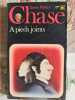
Bon état
The Italian Schools of Painting, with observations on the present state of the Art.
London, John Murray, 1820. In-8, rel. de l'ép. (signée Forado, La Cannet-Cannes), dos à nerfs rehaussés d'une roulette dorée et soulignés de filets dorés, fleuron doré entre les nerfs, titre doré, filet à froid en encadrement sur les plats, dentelle intérieure, tête dorée ; VIII-307 pp., texte en anglais, index.
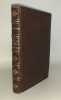
Un coin frotté, petites tâches brunes angulaires au titre, qq. pâles rousseurs, bel exemplaire. - Frais de port : -France 7,15 € -U.E. 9 € -Monde (z B : 14 €) (z C : 24 €)


East : Imagined, Experienced, Remembered - Orientalist Nineteenth Century Painting
Dublin, National Gallery of Ireland, 1988 Pictorial softcover, 295 x 215 x 15mm., ENG. edition ; 183pages., profoundly illustrated in b/w. ISBN 9780903162456.
Continental, British and Irish Orientalists. Book is in good condition.
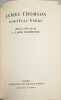
Poetical Works - dédicacé par le traducteur
Oxford University Press 516 pages in8. Sans date. Reliure Editeur avec jaquette. 516 pages. Ce volume rassemble l'ensemble de l'œuvre poétique de James Thomson (1700-1748) poète écossais du XVIIIe siècle incluant notamment son célèbre poème descriptif 'Les Saisons' (The Seasons). L'édition publiée par Oxford University Press et souvent éditée par J. Logie Robertson comprend parfois une notice biographique détaillée sur l'auteur
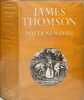
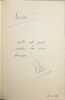
Bon état
Jane's All the World's Aircraft - JANE, John Fredrick Thomas (Fondateur)
Reference : 112673
(1931)
Jane's All the World's Aircraft 1931 : Thrity-Fifth year of Issue
1931 Edited by Sampson Low, Marston & Compagny, Ltd. Naval Publishers / Oscar Parkes - Publication annuelle illustrée - 1931 - In-folio à l'iatlienne, cartonnage toilé bleu, Titre, année et éditeur doré au dos, et en relief sur le premier plat - 38 pages de publicités + 512 pages + XIV pages d'index - Très nombreuses illustrations et reproductions photographiques en N&B - Texte en anglais
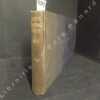
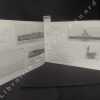
Assez bon état - Cartonnage frotté avec tassements sur les bords et les coins - Deux pages de publicités renforcées au scotch - Dos insolé ainsi que la moitié du premier plat - Reliure compacte malgré une fente sur le mors du premier plat Assez bon
Jane's All the World's Aircraft - JANE, John Fredrick Thomas (Fondateur)
Reference : 112674
(1931)
Jane's All the World's Aircraft 1938 : Forty-Second year of Issue
1931 Edited by Sampson Low, Marston & Compagny, Ltd. Naval Publishers / Francis E. McMurtrie - Publication annuelle illustrée - 1931 - In-4, cartonnage toilé bleu format à l'italienne, Titre, année et éditeur doré au dos, et en relief sur le premier plat - 51 pages de publicités + 540 pages + XX pages d'index - Très nombreuses illustrations et reproductions photographiques en N&B - Texte en anglais
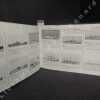
Bon état - Légers frottements sur le cartonnage - Coins et coiffes frottés - Inscriptions au stylo sur les pages de "notes" en fin d'ouvrage - Première et dernières pages (publicités et notes) défraîchies (sans incidence sur le texte) - Dos légèrement fragilisé, reliure toujours compacte
Jan Hoet, Stefan Hertmans, Hand Ballets and Reflection. On the Work of Karel Dierickx
Reference : 44968
Karel Dierickx, Hand Ballet
, Roberto Polo Gallery, 2014 Hardback, 294x240mm, 116p, 68 colour illustrations, English edition, Fine copy. Including an index. ISBN 9791092599039.
Karel Dierickx's existential radicalism will always keep him aloof from the current generation of Flemish painters, but over the years the aristocratic appeal of his aloofness has grown. It is the detachment, the integrity of someone who is such an integral part of the great painting tradition that he no longer needs any environment, a school or trend. He has enough work in the time and space around him. It is the breath of a body of work that is self-sufficient in the iconographic space of its own intimacy, while simultaneously recognisable as a human living space. It is the freedom of the old master who has reached the moment about which Paul Klee says: 'Drawing is taking a line out for a walk.' It is the freedom of the old Henri Matisse: the hand knows its way through the complex paths of painting laid down through the centuries, yet settled in its own existence. Freedom and rigour, a room filled with light and reflection, and work that spreads out towards the window. An artist could not ask for more. (Stefan Hertmans)
Grammaire anglaise tome 6. Types de procès et repères temporels
Ophrys 2000 208 pages 15x1x23cm. 2000. Broché. 208 pages.
Bon état
DE MEESTER KOMT BIJNA TE LAAT,
Antwerpen , De Vries , Gebonden, 26pp. ISBN 9789059270084.
De meester is iemand met veel fantasie. En met een heel bijzondere manier om te zorgen dat niemand meer te laat komt! Nieuw.
world in a mirror . World maps from the Middle Ages to the present day
, [BE] BAI - MAS Books , 2015 Hardback, 285x210mm, 176p, throughout colour illustrations, English edition. ISBN 9789085866930.
The surface of the earth covers 510 million square kilometres. For centuries, people across the world have tried to render this great planet intelligible by reproducing it on a smaller scale: in the form of world maps. World maps, from the past to the present day, reveal what we know about the world. World maps mirror the spirit of the times. In medieval Christendom, Jerusalem was placed at the centre of world maps. Unexplored parts of the world were populated with monsters and mythical beings. Subsequent voyages of discovery extended our horizons. Eastern and Western knowledge joined forces. Globes saw the light of day. Nowadays, thanks to Google's satellite maps, we would appear to have full knowledge of the whole world. But is that really the case? 'The World in a Mirror' relates the history of the Western conception of the world based on unique maps and globes. The world was coloured in a little more with each passing century, however, it was depicted differently in each century as well. Several contemporary artists have added to this story their own mirrors on the world.
DE KUNSTSCHATTEN VAN HET TORENMUSEUM TE MOL,
Mol, Gemeentelijk Beiaardcomite, 1988 Gebonden, geillustreerd linnen in kleur, 170 x 250mm., 269pp., uitgebreide illustratie z/w.
Inleiding - Fotoalbum - Catalogus - Bibliografie - Registers. Boek is in prima staat.
RICHARD DEACON. RECENT SCULPTURE 1985 - 1987,
, Maastricht / Luzern, Bonnenfantenmuseum / Kunstmuseum, 1987, Softcover, gold coloured cardboard wrappers, frontispice, 260 x 210mm., 110pp., rich illustration in color and b/w.
Published on the occassion of the exhibition with the same name that was organized by Bonnenfantenmuseum Maastricht and Kunstmuseum Luzern in association with the Fundacion Caja de Pensiones Madrid and the Museum van Hedendaagse Kunst Antwerpen. Trilingual edition Eng/Nl/German. Book is in good condition.
Hoogsteder exhibition of Rembrandt's Academy.
Zwolle, Waanders, 1992 Bound, blue cloth, gilt lettering with dustjacket, 304pp., 25x29cm., num. col. and. b/w ills., good cond. ISBN 9789066303348.
The Hoogsteder exhibition of Rembrandt's Academy.
"JANSSEN, PIERRE JULES CÉSAR - THE DISCOVERY OF HELIUM IN THE SUN.
Reference : 44231
(1878)
Éclipse de Soleil du 18 Aout 1868. Rapport adressé par M. Janssen au Maréchal de France Président du Bureau des Longitude.
Paris, G. Masson, 1878. 8vo. Contemp. hcalf, raised bands, gilt spine. Light wear along edges. Small stamps on verso of titlepage. In: ""Annales de Chimie et de Physique"", 4e Series - Tome 15. 512 pp. a. 3 folded engraved plates. (The entire volume offered). Janssen's memoir: pp. 414-426.
First appearance of this milestone paper in chemistry, physics and astronomy, announcing the discovery of the helium lines in the spectrum of the sun. It was Lockyer in the same year that named it 'helium' for Helios, the Greek God of the Sun. Helium was not discovered on the earth before 1895 by William Ramsay, and it was Crookes who established its identity with the helium Janssen and Lockyer observed in the spectrum of the sun.""He Janssen) met immortality by travelling to India in 1868 to study the total eclipse. It was then that he observed the helium line and forwarded the spectral data to ockyer. He also noted the size of the solar prominences. The day after the eclipse he attempted to take their spectra again and succeeded despite the absence of the obscuring moon. he then announced jubilantly that it was the day after the eclipse that was the real eclipse day for him. Lockyer also reported this method of studying prominences without an eclipse....Like Lockyer he lived to see his observation of the helium line vindicated by Ramsay's discovery of that element on earth.""(Asimov).""This (the discovery of helium lines in the sun by Lockyer) was announced on the same day by the French astronomer Janssen, who was in India observing a total eclipse. As a result, the French government some ten years later struck a medallion showing the heads of both scientists.By that time, the two men had made a much more dramatic discovery at the same time, this time in cooperation. Janssen, studying the spectrum ofthe sun during the eclipse, had noted a fine line he did not recognize. he send a report on this to Lockyer, an acknowledges expert on solar spectra. Lockyer compared the reported position of the line with lines of known elements, concluding that it must belong to a yeat unknown element, possibly not even existing on the earth. He named the element, from the Greek word for the sun.""(Asimov).Parkinson ""Breakthroughs"" 1868 A. - The volume contains other notable papers by Dumas, Berthelot et al.
"JANSSEN, PIERRE JULES CÉSAR. - THE PHOTOGRAPHIC REVOLVER AND THE ""FIRST FILM"".
Reference : 49205
(1873)
Passage de Vénus"" Methode pour obtenir photographiquement l'instant des contacts, avec les circonstances physiques qu'ils présentent. (+) Présentation de quelques spécimens de photographies solaires obtenues avec un appareil construit pour la mis...
Paris: Gauthier-Villars, 1873, 1874, 1874 a.1882. 4to. No wrappers. In: ""Comptes Rendus Hebdomadaires des Seances de l'Academie des Sciences"", Vol. 76, No 11, Vol. 78, No 25, Vol. 79, No 1, Vol. 94, No 14. (3 entire issues offered). Pp. (677-) 732, pp. (1721-) 1780, pp. (5-) 72 and pp. (901-) 996. Janssen's papers: pp. 677-679, pp. 1730-31, pp. 6-7 and pp. 909-911. (The main paper having the title-page to the volume (vol. 79), stamp to title-page).
First printings of this series of epoch-making papers in which Janssen introduced the ""PHOTOGRAPHIC REVOLVER"" and its first successfull use leading to the ""First Film"" and hereby ""realized one of the operations necessary for cinematography""(DSB).In the first papers he conceived the idea of a device of historical interest, the photographic revolver, the technique of short exposures, which is announced here. The third paper is the epoch-making paper in which he specifically describes the ""revolver"" and its results, the ""first film"". The fourth paper is his responce to Marey's famous expriments with the ""revolver"" recording the flight of birds.""A long barreled canon-like automatic camera was invented in 1874 by an outstanding pioneer of modern astronomical photography, Jules Janssen. Janssen used the revolving plate technique and called his camera a 'pistol'. Janssen's method used the forerunner of a number of 'gun' cameras with a slowly revolving plate and shutter operated by clockwork. The photos were taken every 70 seconds along the margin of the negative and he used his pistol to record a 48 image sequence of the transit of Venus across the sun at an exposure rate of 1.5 seconds.""""In planning for the observation of the transit of Venus, which he was to observe in Japan on 9 Deembe 1874, Janssen decided to substitute for visual observation at the time of transit a series of photographs taken in rapid succession, which would permit him to measure the successive positions of the planet in relation to the solar limb. He ordered the construcion of an apparatus consisting of three circular disks with the same axis: the first, pierced by twelve slits, served as the shutter"the second contained a window" the photographic plate, which was circular, was fixed to the third. The first two disks turned with a synchronized movement, the shutter disk continuously and the other irregularly in the intervals of time in which the window was not swept by a slit. A series of separate images laid out on a circle was thus obtained on the plate. In a general manner the apparatus provided an analysis of a motion on the basis of the sequence of its elemental aspects. Here Janssen realized one of the operations necessary for cinematography, which was invented twenty years later, and which required, besides analysis, the synthesis of images."" (DSB).
"JANSSEN, PIERRE JULES. - DISCOVERY OF THE FIRST ALIAN ELEMENT, HELIUM.
Reference : 59086
(1869)
Observations spectrales prises pendent l'éclipse du 18 août 1868, et methode d'observation des protubérances des éclipses... Calcutta, 3 octobre 1868.
(Paris, Gauthier-Villars), 1869. 4to. In: ""Comptes Rendus Hebdomadaires des Séances de L'Academie des Sciences"", Tome 68, No 7. Pp. (349-) 408. (Entire issue offered). Janssen's paper pp. 367-376.
First printing of the paper in which Janssen announced the discovery of a new element. On August 18, 1868, Janssen managed to do just that. He became the first person to observe helium, an element never before seen on Earth, in the solar spectrum. At the time, though, Janssen didn’t know what he’d seen""just that it was something new""""Helium, the second most abundant element in the universe, was discovered on the sun before it was found on the earth. Pierre-Jules-César Janssen, a French astronomer, noticed a yellow line in the sun's spectrum while studying a total solar eclipse in 1868. Sir Norman Lockyer, an English astronomer, realized that this line, with a wavelength of 587.49 nanometers, could not be produced by any element known at the time. It was hypothesized that a new element on the sun was responsible for this mysterious yellow emission. This unknown element was named helium by Lockyer.""
VAN DEN VOS REYNAERDE. HET COMBURGSE HANDSCHRIFT,
, Leuven, Davidsfonds, 1991 Gebonden in rood linnen met goudstempeling op rug en voorplat, geillustreerde stofomslag, 230 x 310mm., 248pp., leeslint, prachtige kleur illustratie en weergave van het facsimile in kleur. ISBN 9789061527503.
Met woordverklaring, paleografische commentaar en aantekeningen bij de voordracht. Cultuurhistorische achtergronden en bibliografie. Als nieuw.
Printing images in Antwerp. The introduction of printmaking in a city: fifteenth century to 1585.
Rotterdam, Sound and Vision Interactive, 1998 Bound in black cloth with orange lettering, illustr. editor's dustjacket, 508pp., 17x24.5cm., 18 col. and 110 b/w ills., as new. ISBN 9789075607130.
This book discusses the production and consumption of printed images in an urban environment in the fifteenth and sixteenth centuries, up to 1585. The story begins in the fifteenth century. At some point - no one knows exactly when - prints were suddenly being offered for sale in Antwerp. Initially they may have been brought from other cities by merchants and travellers, but at length the first printmaker established himself in the city. In the sixteenth century Antwerp fast developed into one of the main centres of print making in the western world. The author explores the complex way in which the printed image secured a place for itself in the urban fabric. He reconstructs the different traditions from which the print producers evolved, and explains how existing institutions in the city related to the new medium. He traces the way in which the traditional guilds tried to bring practitioners of this 'singular skill', as it was labelled in 1452, into their ranks, and shows how the government tried to gain control of the new medium. He discusses the interplay between printmakers seeking strategies to market their wares, and a public confronted with an interesting array of cheap new products.The reader is given an impression of the variety of prints produced, which have thus far received little attention in art history. Archival research has generated a good deal of detailed new information on the prices of prints, the numbers of impressions made, the costs of printing and colouring, and so forth. Printing Images in Antwerp is an exploration of the impact of print making in the sixteenth century. It contains an abundance of new information, not only for print historians but for anyone interested in cultural history.
Yokohama shashin ou Album de 50 photographies tirées sur papier albuminé contrecollées sur carton (recto et verso), sous plats épais en bois laqué décoré, peint à la main, avec grande scène incrustée sculptée d'ivoire, nacre et corail (feuillages, fleurs et oiseau sur la branche).
[Japon, Yokohama ?, vers 1890] Très beau spécimen en grand format (36 x 27 cm environ pour l'album et 26,5 x 20,5 cm pour les tirages). Complet. Très bel album très bien conservé malgré quelques chocs sur quelques bords et le dos de l'album manquant (bande de cuir), parfaitement solide et très décoratif. Très belle esthétique d'ensemble, superbe décor sur le premier plat (rare aussi beau et fin). Intérieur d'une grande fraîcheur. Beau coloris au pinceau à la main.
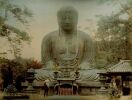
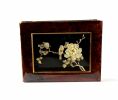
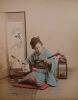
"Ces photographies – appelées Yokohama shashin car elles étaient proposées à Yokohama aux voyageurs à leur arrivée, marquèrent les esprits de l’époque pour la qualité exceptionnelle de leur mise en couleur. Elles sont un témoignage inestimable d’un Japon s’ouvrant alors au monde et riche d’un savoir-faire pictural unique. Dès la période Meiji, le Japon fut surnommé « the Land of Photography » et les photographies coloriées à la main étaient particulièrement appréciées en Occident. Produites pour les touristes, elles avaient alors bien plus de valeur que les estampes japonaises qui n’intéressaient guère la plupart des visiteurs." (Présentation de l'Exposition YOKOHAMA SHASHIN 横浜写真 LE JAPON MIS EN COULEUR, Claude Estèb, avril-juin 2022). "Des centaines d’ateliers ont participé à cette aventure dont de nombreux restent encore anonymes. Les plus connus étant ceux de Kusakabe Kimbei, Yamamoto, Suzuki, Tamamura, Farsari, Ogawa et leurs précurseurs Felice Beato, Stillfried et Shimooka Renjô. Ces images ont largement circulé en Occident au XIXe siècle et forment une inspiration peu connue de l’iconographie du japonisme." (Maison de la culture du Japon à Paris). Il y avait, selon les prix, des albums de 12, 24, 48 ou encore 50 photographies, parfois plus, de divers formats. Voici la liste des 50 sujets présents dans cet album : 1. Miyajima inland sea at Aki. 2. View of Miyajima. 3. Garden at Okayama 4. Gathering Shell (Hommoku, Yokohama) 5. Takaboko (Pappenberg) Nagasaki 6. Ujikawa, Yamashiro 7. Matsushima, inland sea three view 8. Tea House Garden at Hikone 9. Nunobiki waterfall at Kobé 10. Garden at Hikone, Omi. 11. Asakusa park at Tokyo 12. View of Kioto 13. Pagoda at Tokio 14. Dainichi-do Nikko. 15. Jinkyo, Nikko 16. Yomeimon gate at Nikko 17. Karamon Iyemitsu Temple Nikko 18. Kyo-Do, Nikko 19. Yomeimon, Nikko 20. Nagoya Castle 21. Oji Tokyo Maple 22. The Garden of sweat flac in Horikiri at Tokyo 23. Haruna Temple at joshu 24. Mino Maple near Kobé 25. Japanese Sanpan 26. Japanese Jank 27. kameido, Tokyo Wistaria Flowers 28. Sendai Park, Spring 29. Yokohama Park 30. Yokohama Park 31. Tea House at Mayebashi 32. Chigogafuchi Enoshima 33. Shinobadzu Tokyo, Lotus Pond 34. Daibutsu Kamakura (Bouddha) 35. Transplantig Rice 36. Waxing the tree 37. The Farmer taking off the stalk of wheat 38. Crinding Hunhulled rice 39. Second Hand Cloth Store 40. chinese Music 41. Group of Girls 42. Singer Tokyo 43. Girls dusting in room 44. Singers playing at garden 45. Drawing up the water frome the well 46. Dancing girls 47. The kichen work 48. Musicians (girls) 49. Singing Girls 50. Palanquin Notre album contient comme à l'habitude pour ce genre d'albums, des photographies de paysages, scènes de la vie quotidienne (marché, fêtes, scènes de rue), vues de villes (Tokyo, Kobé, Yokohama, etc.) et des vues de femmes et filles en costumes (jeunes filles, geisha, cérémonies, etc.), mais l'ensemble regroupé ici est d'une qualité assez exceptionnelle avec des sujets peu communs et d'une très belle conservations (netteté, contraste, coloris). Cet album grand format était un exemplaire de grand luxe à l'époque, réservé aux touristes étrangers fortunés. Magnifique et rare spécimen grand format dans une très belle condition presque parfaite.
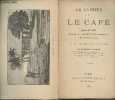
Le caféier et le café - Monographie, historique, scientifique et commerciale de cette rubiacée - Suivie d'un index bibliographique - INCOMPLET
Ernest Leroux. 1895. In-12. Broché. Etat d'usage, Livré sans Couverture, Dos abîmé, Papier jauni. IV + 144 pages - quelques illustrations en noir et blanc hors texte et en frontispice - 1 carte dépliante. Plats manquants. Livre incomplet : 144/413 pages ; 4 premiers chapitres complets : Chap. 1 : Histoire du caféier ; Ch.2 : Littérature du caféier et du café ; Ch.3 : Géographie du Caféier ; Ch.4 : Botanique.. . . . Classification Dewey : 633.7-Plantes alcaloïdes (tabac, thé, cacao, café, pavot)
Classification Dewey : 633.7-Plantes alcaloïdes (tabac, thé, cacao, café, pavot)
[The Oriental Institute of the University of Chicago] - JASNOW, Richard
Reference : 59549
(1992)
A late period Hieratic Wisdom Text (P. Brooklyn 47.218.135)
4to, paperback, The Oriental Institute of the University of Chicago, Studies in Ancient Oriental Civilization, n°52, Chicago, Illinois, 1992, 217 pp. and plates
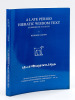

Good. Bon état (qq. traces d'usage, très bon état par ailleurs).
Au Turf (The Tramphers)
N° 340 - cartonnage éditeur avec sa jaquette - 1956 - 247p - Ed. nrf. Gallimard - coll. Série Noire
bon état (jaquette légèrement frottée avec petit trait au stylo bille)
ELOGE FUNEBRE DES VENDEENS ET AUTRES OEUVRES DE L ABBE JAUNET.
Société D'émulation De La Vendée Association Vendéenne Pour L'histoire Et L'avenir De La Culture, 1993 21 X 14 cm., 229 pp, Broché

- - VENTE PAR CORRESPONDANCE UNIQUEMENT - LIEN DE PAIEMENT, NOUS CONSULTER.
GUIDE DU TABAC
CHEZ L'AUTEUR. 1984. In-8. Relié. Bon état, Couv. convenable, Dos satisfaisant, Intérieur frais. 250 pages illustrées de photos en noir et blanc.. . . . Classification Dewey : 633.7-Plantes alcaloïdes (tabac, thé, cacao, café, pavot)
Classification Dewey : 633.7-Plantes alcaloïdes (tabac, thé, cacao, café, pavot)

