 Write to the booksellers
-
Type
Book (7138)
Disk (1)
Drawings (1)
Engraving (9)
Magazine (89)
Maps (4)
Music sheets (136)
New book (4)
Old papers (1)
Photographs (7)
-
Latest
Last 24h (4)
Last 3 days (5)
Last month (116)
Last week (20)
-
Language
Czech (1)
Dutch (9)
English (158)
French (7208)
German (4)
Italian (2)
Japanese (1)
Latin (3)
Russian (4)
-
Century
16th (9)
17th (43)
18th (194)
19th (878)
20th (2402)
21st (1535)
-
Countries
Belgium (1156)
Canada (34)
China (56)
Côte d'Ivoire (7)
Denmark (1063)
France (4721)
Germany (1)
Netherlands (181)
Switzerland (155)
United Kingdom (12)
United States of America (4)
-
Syndicate
ALAC (27)
CLAM (25)
CLAQ (2)
ILAB (2251)
NVVA (15)
SLACES (15)
SLAM (1038)
SNCAO (4)
The War of American Independence: Military Attitudes Policies and Practice 1763-1789 (Northeastern Classics Edition)
Northeastern University Press 1983 521 pages 14 9x22 3x3 7cm. 1983. Broché. 521 pages.
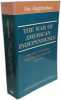
Bon Etat couverture un peu défraîchie intérieur propre
Grand siecle peintures françaises du xviie siecle
RMN 1993 in4. 1993. Cartonné jaquette.
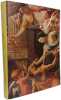
Très bon état avec sa jaquette intérieur propre bonne tenue
HILBERT, D. UND W. ACKERMANN. - THE FOUNDATION OF MODERN MATHEMATICAL LOGIC.
Reference : 46101
(1928)
Grundzüge der theoretischen Logik.
Berlin, Springer, 1928. Orig. full cloth. Lower part of spine with loss of cloth. Lower right cornerof titlepage cut away, no loss of letters. VIII,120 pp.
First edition. (Die Grundlehren der Mathematischen Wissenshaften in Einzeldarstellungen, Band XXVII). In the years 1917-22 Hilbert gave three seminal courses at the Univeristy og Göttingen on logic and the foundation of mathematics. He received considerable help in preperation and eventual write up of these lectures from Bernays. This material was subsequently reworked by Ackermann into the monograph 'Grundzüge der Theoretischen Logik' (the offered item). It containes the first exposition ever of first-order logic and poses the problem of its completeness and the decision problem ('Entscheidungsproblem'). The first of these questions was answered just a year later by Kurt Gödel in his doctorial dissertation 'Die Vollständigkeit der Axiome des logischen Funktionenkalküls'. This result is known as Gödel's completeness theorem. Two years later Gödel published his famous 1931 paper 'Über formal unentscheidbare Sätze der Principia Mathematica und verwandter Systeme I' in which he showed that a stronger logic, capable of modeling arithmetic, is either incomplete or inconsistent (Gödel's second incompleteness theorem). The later question posed by Hilbert and Ackermann regarding the decision problem was answered in 1936 independantly by Alonzo Church and Allan Turing. Church used his model the lambda-calculus and Turing his machine model to construct undecidable problems and show that the decision problem is unsolvable in first-order logic. These results by Gödel, Church, and Turing rank amongst the most important contributions to mathematical logic ever.

HILBERT, D. UND W. ACKERMANN. - THE FOUNDATION OF MODERN MATHEMATICAL LOGIC.
Reference : 49908
(1928)
Grundzüge der theoretischen Logik.
Berlin, Springer, 1928. 8vo. Uncut in orig. printed wrappers. VIII,120. With the name of Bent Schultzer (Former Danish professor in philosophy) on first leaf. Internally clean.
First edition. (Die Grundlehren der Mathematischen Wissenshaften in Einzeldarstellungen, Band XXVII). In the years 1917-22 Hilbert gave three seminal courses at the Univeristy og Göttingen on logic and the foundation of mathematics. He received considerable help in preperation and eventual write up of these lectures from Bernays. This material was subsequently reworked by Ackermann into the monograph 'Grundzüge der Theoretischen Logik' (the offered item). It containes the first exposition ever of first-order logic and poses the problem of its completeness and the decision problem ('Entscheidungsproblem'). The first of these questions was answered just a year later by Kurt Gödel in his doctorial dissertation 'Die Vollständigkeit der Axiome des logischen Funktionenkalküls'. This result is known as Gödel's completeness theorem. Two years later Gödel published his famous 1931 paper 'Über formal unentscheidbare Sätze der Principia Mathematica und verwandter Systeme I' in which he showed that a stronger logic, capable of modeling arithmetic, is either incomplete or inconsistent (Gödel's second incompleteness theorem). The later question posed by Hilbert and Ackermann regarding the decision problem was answered in 1936 independantly by Alonzo Church and Allan Turing. Church used his model the lambda-calculus and Turing his machine model to construct undecidable problems and show that the decision problem is unsolvable in first-order logic. These results by Gödel, Church, and Turing rank amongst the most important contributions to mathematical logic ever.
Miscellaneous Observations made during a tour in May, 1835, to the Falls of the Cuyahoga, near lake Erie: exctracted from the Diary of a Naturalist.
New Haven, A.H. Maltby and Herrick & Noyes, 1837). Contemp. hcalf. Gilt spine. Light wear to titlelabel with gilt lettering. Slightly rubbed. In: ""The Amrican Jounal of Science and Arts. Conducted by Benjamin Silliman"", Vol. 31.- January, 1837. Engraved portrait (Dr. Prince). VIII,428 pp. and 1 folded map, 4 engraved plates (partly folded). The entire volume offered. Hildreth's paper: pp. (1-) 84 a. 20 woodengraved textillustrations (maps, fossils, startigraphy). Apart from a brownspots in upper margin of the first 7 leaves, a fine clean copy.
First appearance of this classic travel account from Ohio, mainly describing the geology and teh fossils of the area. - Sabin: 31796.
Va te rhabiller ! policier
in-8 cartonnage éditeur avec sa jaquette - 1957 - 248p - Ed. nrf. Gallimard - coll. Série Noire
bon état (petites déchirures sur les bords de la jaquette)
Recalled to Life: A Dalziel and Pascoe novel
HarperCollins 2003 400 pages 10 4x3 4x17 8cm. 2003. Broché. 400 pages.
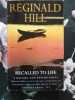
Bon état
DISQUE VINYLE 33T TOI FEMME PUBLIQUE, JE TE DONNE, EN L'AN 2001, UN CADEAU DU CIEL, LE GEANT DE PAPIER, JE T'AIME A L'ITALIENNE, EMBRASSE-MOI IDIOT, MARIE MA VIE, CHERI CHERI LADY, RAMBO, CHA CHA CHA, L'ESTATE STA FINENDO, HOT SHOT, READY TO DANCE...
ALINE MUSIC. non daté. In-12. Broché. Bon état, Couv. convenable, Dos satisfaisant, Intérieur frais. Pochette en couleurs, hit energie. Disque en anglais.. . . . Classification : 410-33 Tours
Disque n°AL 1005 Classification : 410-33 Tours

History of the Arabs
1974 - broché - St. Martin's Press, New York - Dixième édition - 1974 - Fort in-8 (21,5 x 14,5 cm) broché - 822 pages - Iconographie en noir et blanc - Ouvrage sous titré : From the earliest times to the present - Texte en anglais


Assez bon état - Couverture quelque peu défraîchie (plis et frottements)
"HITTORF, JOHANN WILHELM. - INTRODUCING THE NOTION OF ""TRANSPORT NUMBERS"" OF IONS.
Reference : 43082
(1853)
Ueber die Wanderungen der Ionen während der Elektrolyse. Erste-Zweite und Dritte Mittheilung (+) Rechtfertigung seiner Mittheilungen ""Ueber Wanderungen der Ionen"". Elektrolyse einer lösung zweier Salze. (4 papers).
Leipzig, Johann Ambrosius Barth, 1853, 1856, 1858, 1859. Without wrappers in ""Annalen der Physik und Chemie. Hrsg. von J.C. Poggendorff"", Dritte und Vierte Reihe, Bd. 89 No. 6 u. 7, Bd. 98 No 5, Bd. 103 No 1, Bd. 106 No. 3. The 5 entire issues offered. Hittorf's papers pp. 177-211 (Bd. 89), pp. 1-33 (Bd.98), pp. 1-56 (Bd.103), pp.337-411 a. 513-586 (Bd. 106). In all 7 engraved plates. All issues fine and clean.
First printing of all 4 fundamental papers on electrochemistry, where Hittorf states his concepts of ionic migration and transport numbers, concepts that should be the foundation stones of the later evolved theory of ionization, culminating in Svante Arrhenius's famous discovery of electrolytic dissociation.""After Faraday's experimental investigations in 1834, it was accepted that the electricity passing through an electrolytic cell was carried by the movement of charged ions produced from the decomposition of the compounds making up the solution. Daniell had extended these ideas in 1839 and showed that salts were compounds not of acid anhydrides and metallic oxides as had been thought, but of metallic cations and elemental or compound acid anions. Believing that the conductivity of solutions was due to these ions, he began a study of their transference. In 1853 Hittorf took up the problem. He extended the ideas of Daneill by reasoning inthe following manner: Cations and anions exist in solutions and migrate under the influence of current through the solution. The migration of the cation toward the cathode and away from the anode, and the deposition of the anode on the positive electrode, together result in a decrease of teh salt in the neighborhood of the anode. A similar analysis shows that there is also a decrease in the concemtration of the salt in the neighborhood of the cathode. If the motion of the two dissimilar ions were the same, the decrease in the concentration of the salt would be the same at the two electrodes.....Hwe concluded that the speeds of migration...were different and he characterized this fact by defining ""transport numbers"", which specified the portion of the transport of electricity carried by each ion. (DSB VI, p. 439). - Leicester & Klickstein ""A Source Book of Chemistry"", p. 400-406.In the 2 issues of 1853 are contained 2 papers by Helmholtz of fundamental cjharacter, both in physiology and on the theory on the conservation of energy. HERMAN HELMHOLTZ: ""Ueber einige Gesetze der Vertheilung elektrischer Ströme in körperlichen Leitern mit Anwendung auf die thierisch-elektrischen Versuche (+) Ueber einige Gesetze....(Schluss). 2 papers. 1853. (Bd. 89 No.6 a. 7). Pp. 211-233 a. pp. 353-377.""In this work (the papers offered) Helmholtz for the first time enters the field of mathematical physics and physiology, with the full equipment of the higher mathematical analysis, of which he was the only master in its application to the latter science.....This very interesting and fundamental work on the distribution of electrical currents in material conductors is purely mathematical in character, owing to Helmholtz's method of proving the theorems, which are intelligible enough from the physical point of view, It is essentially connected with the treatise on the CONSERVATION OF ENERGY, since helmholtz merely substitutes for the expression 'free tension' there employed, the identical concept of Gauss's potentia, or Green's potential function.""(Koenigsberger in ""Hermann von helmholtz"", p. 99-103.).
Tenormottetten von Johannes Regis in der uberlieferung des Chigi-Kodex I: Commentario ed analisi. II: Edizione dei motetti.
Turnhout, Brepols, 2000 Paperback, 420 p., 170 x 240 mm. ISBN 9782503508610.
Die Arbeit beschaftigt sich mit einer Werkgruppe, uber die es bisher kaum zuverlassige Untersuchungen gibt, obwohl ihre zentrale Bedeutung fur die Entwicklung der Motette in der zweiten Halfte des 15. Jahrhunderts unumstritten ist. Die funfstimmigen Tenormotetten von Johannes Regis (ca. 1435-ca. 1495) bilden die alteste Gruppe dieser Werke, entstanden nach isorhythmischen Werken von Guillaume Dufay und in einem Block in der fast alle Ockeghem-Messen uberliefernden Prachthandschrift Chigi zusammengefasst. Im ersten Teilband steht die Analyse der satztechnischen Genese der Motetten im Mittelpunkt. Die methodologische Grundlage der Analyse bilden die theoretischen Arbeiten von Ernst Apfel, deren Ergebnisse hier zum erstenmal konsequent fur die Beschreibung der Satzgestaltung angewandt werden. Der zweite Teilband beinhaltet eine kritische Edition der Tenormotetten von Johannes Regis. Eine ausfuhrliches Quellenverzeichnis und ein umfangreiches Register schliessen die Arbeit ab. Languages: German.
Ofurefli. Saga.
Reykj., 1908. Orig.helshirt.m.guldtryk. 380 pp. - Originaludgaven af Kvarans første roman.
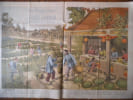
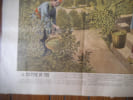
La culture du thé.Affiche LE PETI JOURNAL
La culture du thé.Affiche LE PETI JOURNAL.Le journal le meiux informé,Dessin de H MEYER.Imprimé sur machine rotative chromo-typographique MARINONE.Format 610x900mm.Très bon état

Technologie du Thé - Composition chimique de la feuille, récolte et manipulation, procédés européens, procédés asiatiques - Collection Bibliothèque d'agriculture coloniale.
Société d'éditions géographiques maritimes et coloniales. 1926. In-8. Broché. Etat d'usage, Couv. convenable, Coiffe en pied abîmée, Non coupé. 304 pages - quelques planches en noir et blanc - quelques figures en noir et blanc dans le texte - coiffes légèrement abîmées.. . . . Classification Dewey : 633.7-Plantes alcaloïdes (tabac, thé, cacao, café, pavot)
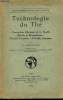
Seconde édition revisée avec le concours de la station expérimentale d'études sur le thé de Buttenzorg (java) - Collection Bibliothèque d'agriculture coloniale. Classification Dewey : 633.7-Plantes alcaloïdes (tabac, thé, cacao, café, pavot)
Mount Sinai
University of Texas Press 1995 382 pages 15x23x2 3cm. 1995. Broché. 382 pages.
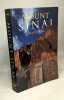
Très bon état de conservation intérieur propre bonne tenue
Mount Sinai
University of Texas Press 1995 382 pages 15x23x2 3cm. 1995. Broché. 382 pages.
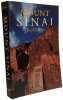
Bon état une ride sur le dos intérieur propre
John W. Waterhouse
Phaidon Press Ltd, London, 1994. In-4, broché sous couverture souple illustrée en couleur, 126 pp. Preface - Introduction - 1. The Early Years - 2. Primrose Hill - 3. Return to the Legends - 4. A Royal Academician - 5. St John's Wood - 6. Retrospect and Conclusion - Index.
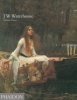
Avec 94 illustrations en noir et en couleur. --- Plus d'informations sur le site archivesdunord.com
LES MIRACLES DU THE. Les recettes secrètes du Docteur Leonhard Hochenegg.
Editions Godefroy, 1997, broché, couverture illustrée, 15x21 cm, 510 pages.
Très bon état.
"HODKINSON, EATON. - A PIONEER WORK ON THE STRENGHT OF MATERIALS.
Reference : 42912
(1840)
Experimental Researches on the Strenght of Pillars of Cast Iron, and other Materials. received April 22, - Read May 14, 1840.
(London, Richard and John E. Taylor, 1840). 4to. No wrappers as extracted from ""Philosophical Transactions"" 1840 - Part II. Pp. 385-456 a. 3 lithographed plates (one folding). Clean and fine.
First printing of an influential paper in structural mechanics.""In 1840, Hodkinson presented his investigation on buckling of columns to the Royal Society (the paper offered). His purpose was to verify the theoretical formula of Euler...Cylindrical, solid and hollow specimens with rounded and flat ends were tested. Foer slender, solid struts, good accord was found with Euler's formula...It was also found that a strut with flat ends has the same strenght as a shorter strut og half its lenght which has rounded ends.""""Hodkinson baceme the professor of mechanical principles of engineering in University College, London, in 1847, and, during his tenure of the chair, he participated as a member of teh Royal Commission appointed to inquire into the application of iron to railway structures. In 1841 Hodgkinson was awarded a Royal Medal for his work on strenght of pillars and, in the same year he was elected a Fellow of the Royal Society.""(Timoshenko ""History of Strenght of Materials"", p. 128-29). - Darmsatedter, 1840 H.
Les nodules polymétalliques dans les grands fonds océaniques: Une extraordinaire aventure minière et scientifique sous-marine
Vuibert 2008 in8. 2008. Broché.
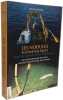
Comme neuf intérieur propre bonne tenue
John Lennon
London, Columbus books 1985 1 in 12 broché sous couverture illustrée rempliée 161[p.p]
Très bon état général Disponibilité sous réserve de vente en boutique, prix valable, frais de port en plus, La Poste ou Mondial Relay
Ueber die Beschaffenheit des römischen Bodens, nebst einigen allgemeinen Betrachtungen über den geognostiscehn Charakter Italiens.
(Leipzig, Johann Ambrosius Barth, 1829). Without wrappers as issued in ""Annalen der Physik und Chemie. Hrsg.von Poggendorff"", Bd. 16, Fünftes Stück. Halftitle to vol. 16. Pp. 1-192 a. 2 engraved plates. (Entire issue offered). Hoffmann's paper: pp. 1-40 and 1 folded engraved handcoloured plate ""Geognostische Skizze von Rom"". Clean and fine.
Importent early investigations into the geological structures of the underground of Rome.
"HOFMANN, A.W. (AUGUST WILHELM von). - THE TRUE NATURE OF AMINES DEMONSTRATED.
Reference : 44307
(1851)
Reseraches into the Molecular Constitution of the Organic Bases. (Second Memoir). Communicated by James Clark. Received March 12, - Read April 3, 1851.
(London, Richard Taylor, 1851). 4to. No wrappers as extracted from ""Philosophical Transactions"" 1851 - Part I. Pp. 357-398.
First appearance of a landmark paper in organic chemistry in which Hofmann demonstrates the true nature of amines.""Wurtz had shown the existence of methyl and ethyl amines and had suggested that that they may be regarded as derivatives of ammonia. Hofmannproved this in adetailled study, in which he showed that all hydrogens of ammonia, and even of the ammonia radical, could be replaced by organic groups to give primary, secondary, and tertiary amines, and quaternary ammonium compounds. In the course of this work, he also cleared up the relation between ammonia and the ammonium radical which had long troubles chemists. The investigation was carried out in 1850, at a time when the type theory was foremost in theminds of organic chemists. It was therefore natural that Hofmann should formulate his nes compounds as representative of the ""ammonia type"". The formulas which he wrote, however scarcely differ from those used today. These clear examples helped Frankland in developing his theory of variable valence.""(Klickstein p. 364). Klickstein's selection is taken form the offered item pp. 392-397.
HOFMAN, TYCHO de. - WITH A CHAPTER ON TYCHO BRAHE AND THE ISLAND OF HVEN.
Reference : 45365
(1777)
Historiske Efterretninger om velfortiente Danske Adelsmænd, med deres Stamme=Tavler og Portraiter. Oversatte, forøgede og forbedrede. Første (- Tredie) Deel. (3 Bd., kpl.).
København, Godiche, 1777-79. 4to. 3 samt. helldrbd., ophøjede bind på rygge, rig rygforgyldning. Titelfelter i skind, forgyldt. Rygge med lettere brugsspor. Kapitæler slidte. et par revnedannelser ved false. Bagpærm på bind 3 løs. Kobberstukket portræt af Hofman som frontispiece. 3 store kobberstukne titelvignetter. XX,193(8),342"(12),401 pp. Rigt illustreret med kobberstukne portrætter, store vignetter, prospekter, våbenskjolde og genealogiske foldetavler. Et af portrætterne opsat på sværere papir. Indvendig frisk eksemplar med brede marginer og trykt på svært skrivepapir. Enkelte spredte brunpletter.
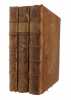
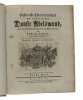
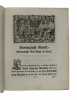
Første danske udgave, der udkom som en oversættelse af forfatterens ""Portraits Historiques des Hommes Illustres... fra 1746. - Hofmans omgang i Paris med tidens fornemste bogkunstnere gav ham smag for den nye franske bogkunst og han knyttede mange af disse kunstnere til udgivelsen af værket med dets pompøse udsmykninger, således blev hans eget portræt, som indleder værket, stukket af den fremtrædende franske kunstner J.G. Wille. I værket redegøres for over 40 danske adelsslægter, Friis, Skeel, Rantzau, Thott m.v. samt fremtrædende personligheder så som Tordenskjold, og særligt må fremhæves afsnittet om Tycho Brahe, der ud over hans stukne portræt, indeholder kortet over Hven, prospekt af Uranienborg m.v.This fine work describes 40 nobleDanish families and renowned Danes, among these Tycho Brahe and his family. There is a chapter on him, with his engraved portrait (1 engraved plate), a map of Hven (in the text) and illustrations of his observatories at the island Hven (2 engraved plates).
HOFMAN, TYCHO de. - WITH A CHAPTER ON TYCHO BRAHE AND THE ISLAND OF HVEN.
Reference : 56679
(1777)
Historiske Efterretninger om velfortiente Danske Adelsmænd, med deres Stamme=Tavler og Portraiter. Oversatte, forøgede og forbedrede. Første (- Tredie) Deel. (3 Bd., kpl.).
København, Godiche, 1777-79. 4to. 3 samt. hellæderbd., ophøjede bind på rygge, rig rygforgyldning. Forgyldte titel- og tomefelter. Kobberstukket portræt af Hofman som frontispiece. 3 store kobberstukne titelvignetter. XX,193(8),342"(12),401 pp. Rigt illustreret med kobberstukne portrætter, store vignetter, prospekter, våbenskjolde og genealogiske foldetavler. Indvendig frisk, trykt på skrivepapir. Enkelte spredte brunpletter. På forpermernes indersider et kobberstukket våbenskjold, kronet med 2 løver og 3 hundehoveder i skjoldet (?) og bagpermernes indersider stort kobberstukket våbenskjold Adam Comte Lewenhaupt Falckenstein.
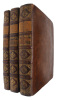
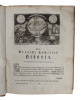
Første danske udgave, der udkom som en oversættelse af forfatterens ""Portraits Historiques des Hommes Illustres... fra 1746. - Hofmans omgang i Paris med tidens fornemste bogkunstnere gav ham smag for den nye franske bogkunst og han knyttede mange af disse kunstnere til udgivelsen af værket med dets pompøse udsmykninger, således blev hans eget portræt, som indleder værket, stukket af den fremtrædende franske kunstner J.G. Wille. I værket redegøres for over 40 danske adelsslægter, Friis, Skeel, Rantzau, Thott m.v. samt fremtrædende personligheder så som Tordenskjold, og særligt må fremhæves afsnittet om Tycho Brahe, der ud over hans stukne portræt, indeholder kortet over Hven, prospekt af Uranienborg m.v.This fine work describes 40 noble Danish families and renowned Danes, among these Tycho Brahe and his family. There is a chapter on him, with his engraved portrait (1 engraved plate), a map of Hven (in the text) and illustrations of his observatories at the island Hven (2 engraved plates).

