 Write to the booksellers
-
Type
Book (7151)
Disk (1)
Drawings (1)
Engraving (9)
Magazine (89)
Maps (4)
Music sheets (136)
New book (4)
Old papers (1)
Photographs (7)
-
Latest
Last 24h (4)
Last 3 days (5)
Last month (116)
Last week (20)
-
Language
Czech (1)
Dutch (9)
English (158)
French (7221)
German (4)
Italian (2)
Japanese (1)
Latin (3)
Russian (4)
-
Century
16th (9)
17th (43)
18th (194)
19th (879)
20th (2403)
21st (1535)
-
Countries
Belgium (1160)
Canada (34)
China (56)
Côte d'Ivoire (7)
Denmark (1063)
France (4730)
Germany (1)
Netherlands (181)
Switzerland (155)
United Kingdom (12)
United States of America (4)
-
Syndicate
ALAC (27)
CLAM (29)
CLAQ (2)
ILAB (2264)
NVVA (15)
SLACES (15)
SLAM (1047)
SNCAO (4)
FIZEAU, ARMAND HIPPOLYTE - ANNOUNCING FIZEAU EXPERIMENT ON THE VELOCITY OF LIGHT IN MEDIA.
Reference : 47033
(1851)
Sur les Hypothèses relatives a Lèther lumineux. Et sur une expérience qui parait démontrer que le mouvement des corps change la vitesse avec laquelle la lumiere se propage dans leur interieur" (Extrait par l'auteur). (The Hypotheses Relating to the Lu...
Paris, Bachelier, 1851. 4to. No wrappers. In: ""Comptes Rendus Hebdomadaires des Séances de L'Academie des Sciences"", Tome 33, No 13. With htitle and titlepage to tome 33. Pp. 329-360 (entire issue offered). Fizeau's paper: pp. 349-355. A stamp on erso of titlepage. Titlepage with faint brownspots.
First appearance of this paper, the first announcment of Fizeau's results of his experiments with the velocity of light.""It (the paper) is less famous, for some reason, than the failure of Michelson and Morley to detect the aether drag, but NO LESS SIGNIFICANT. For it showed that the velocity of light increases in a medium according to the formula, v (1 - 1/n2), where v is the velocity of the medium, and n is the refractive index""(Gillespie in ""The Edge of Objecticity"" p. 427). Fizeau shows that the velocity of light is higher in water flowing in the direction of the beam than that of light propagating in the direction opposite the direction of flow. The paper offered is the shorter announcement of the research, the paper in full was published later in 1859 in ""Annales de Chimie et de Physique"". Albert Einstein later pointed out the IMPORTENCE OF THE EXPERIMENT FOR SPECIAL RELATIVITY.Fizeau's result was replicated by Albert Michelson and Edward Morley in 1886 repeated the experiment on a larger scale and confirmed Fizeau's results., and in 1914 it was confirmed by Pieter Zeeman. It was Arago in 1838, who suggested this ""crucial experiment"" to decide between the corpuscular and undulatory theories of light by comparing the speed of light in water and in air.. It vindicated the undulatory position.It was shown by Hendrik Lorentz (1892, 1895) that the experiment can be explained by the reaction of the moving water upon the interfering waves without the need of any aether entrainment. On this occasion, Lorentz introduced a different time coordinate for moving bodies within the aether, the so called Local time (an early form of the Lorentz transformation for small velocities compared to the speed of light). In 1895, Lorentz went a step further and explained the coefficient by local time alone and without mentioning any interaction of light and matter.
FIZEAU, ARMAND HIPPOLYTE - ANNOUNCING FIZEAU EXPERIMENT ON THE VELOCITY OF LIGHT IN MEDIA.
Reference : 49596
(1851)
Sur les Hypothèses relatives a Lèther lumineux. Et sur une expérience qui parait démontrer que le mouvement des corps change la vitesse avec laquelle la lumiere se propage dans leur interieur" (Extrait par l'auteur). (The Hypotheses Relating to the Lu...
Paris, Bachelier, 1851. 4to. No wrappers. In: ""Comptes Rendus Hebdomadaires des Séances de L'Academie des Sciences"", Tome 33, No 13. With htitle and titlepage to tome 33. Pp. (329-) 360 (entire issue offered). Fizeau's paper: pp. 349-355. A stamp on upper right corner of title-page and a perforated stamp in lower margin of title-page. Clean and fine.
First appearance of this paper, the first announcment of Fizeau's results of his experiments with the velocity of light.""It (the paper) is less famous, for some reason, than the failure of Michelson and Morley to detect the aether drag, but NO LESS SIGNIFICANT. For it showed that the velocity of light increases in a medium according to the formula, v (1 - 1/n2), where v is the velocity of the medium, and n is the refractive index""(Gillespie in ""The Edge of Objecticity"" p. 427). Fizeau shows that the velocity of light is higher in water flowing in the direction of the beam than that of light propagating in the direction opposite the direction of flow. The paper offered is the shorter announcement of the research, the paper in full was published later in 1859 in ""Annales de Chimie et de Physique"". Albert Einstein later pointed out the IMPORTENCE OF THE EXPERIMENT FOR SPECIAL RELATIVITY.Fizeau's result was replicated by Albert Michelson and Edward Morley in 1886 repeated the experiment on a larger scale and confirmed Fizeau's results., and in 1914 it was confirmed by Pieter Zeeman. It was Arago in 1838, who suggested this ""crucial experiment"" to decide between the corpuscular and undulatory theories of light by comparing the speed of light in water and in air.. It vindicated the undulatory position.It was shown by Hendrik Lorentz (1892, 1895) that the experiment can be explained by the reaction of the moving water upon the interfering waves without the need of any aether entrainment. On this occasion, Lorentz introduced a different time coordinate for moving bodies within the aether, the so called Local time (an early form of the Lorentz transformation for small velocities compared to the speed of light). In 1895, Lorentz went a step further and explained the coefficient by local time alone and without mentioning any interaction of light and matter.
"FIZEAU, ARMAND HIPPOLYTE & JEAN BERNARD LÉON FOUCAULT. - CONFIRMING THE WAVE THEORY OF LIGHT.
Reference : 43827
(1849)
Sur les phénomène des interférences entre deux rayons de lumiere dans le cas de grandes differences de marche. (+) Sur les phénomène des interférences entre deux rayons de lumiere dans le cas de grandes differences de marche, et sur la polarisation ch...
Paris, Victor Masson, Imprimerie de Bachelier, 1849-50. No wrappers. In ""Annales de Chimie et de Physique"", 3me Series - Tome XXVI a. XXX., Juin 1849 a. Octobre 1850. (The entire issues offered). Titlepages to vol. 26 a. 30. Pp. 129-256 a. pp. 129-256. Fizeau & Foucault's paper: pp. 138-148 a. pp. 146-159, 2 folded engraved plates. Some scattred brownspots.
First appearance of thispaper in which the authors demonstrated importent similarities between sound - and lightwaves, and that interference takes place between rays of light of different wavelenghts thus giving considerably evidence for the wave theory of light.""By analyzing the white light source into simpler constituents by means of a spectroscope, Fizeau and Foucault were able to observe fringes produced by interfering light rays with a difference of travel equal to more than 7,000 wavelenghts, thus showing hat light waves, like sound waves, remain geometrically constant over a large number of periods. But light waves, because of their transverse vibrations, are more complex than sound waves. Light can assume different forms of planes of vibration as well as different intensities. Using the same spectroscopic apparatus as in the preceeding experiment, Fizeau and Foucault observed the interaction of two rays produced by passing a single polarized ray through a birefringent crystal. In this case, instead of obtaining alternating bands of light and dark, they obtained bands of light periodcally polarized in different planes of vibration.""(DSB V, p. 19).
FIZEAU, ARMAND HIPPOLYTE - THE FIZEAU EXPERIMENT ON THE VELOCITY OF LIGHT IN MEDIA.
Reference : 43122
(1859)
Sur les Hypothèses relatives a Lèther lumineux. Et sur une expérience qui parait démontrer que le mouvement des corps change la vitesse avec laquelle la lumiere se propage dans leur interieur" Presenté à l'Academie des Sciences dans sa séance du 29 se...
Paris, Victor Masson, Imprimerie de Bachelier, 1859. 8vo. Contemp. hcalf, raised bands, gilt spine. Light wear along edges. Small stamps on verso of titlepage and on verso of plates. In ""Annales de Chimie et de Physique"", 3me Series - Tome LVII. 512 pp. and 4 plates. (The entire volume offered). Fizeau's paper: pp. 385-404. Some scattered brownspots.
First printing of a highly importent paper in the history of physics, ""It is less famous, for some reason, than the failure of Michelson and Morley to detect the aether drag, but NO LESS SIGNIFICANT. For it showed that the velocity of light increases in a medium according to the formula, v (1 - 1/n2), where v is the velocity of the medium, and n is the refractive index""(Gillespie in ""The Edge of Objecticity"" p. 427). Fizeau shows that the velocity of light is higher in water flowing in the direction of the beam than that of light propagating in the direction opposite the direction of flow. The paper offered is the full text of the research, there appeared an extract of it in Comptes Rendus in 1851. Albert Einstein later pointed out the IMPORTENCE OF THE EXPERIMENT FOR SPECIAL RELATIVITY.Fizeau's result was replicated by Albert Michelson and Edward Morley in 1886 repeated the experiment on a larger scale and confirmed Fizeau's results., and in 1914 it was confirmed by Pieter Zeeman. It was Arago in 1838, who suggested this ""crucial experiment"" to decide between the corpuscular and undulatory theories of light by comparingthe speed of light in water and in air.. It vindicated the undulatory position.It was shown by Hendrik Lorentz (1892, 1895) that the experiment can be explained by the reaction of the moving water upon the interfering waves without the need of any aether entrainment. On this occasion, Lorentz introduced a different time coordinate for moving bodies within the aether, the so called Local time (an early form of the Lorentz transformation for small velocities compared to the speed of light). In 1895, Lorentz went a step further and explained the coefficient by local time alone and without mentioning any interaction of light and matter.
Masculinities and Femininities in the Middle Ages and Renaissance,
Turnhout, Brepols, 2010 Hardback, X+210 p., 1 b/w ill., 156 x 234 mm. ISBN 9782503529974.
Tracy Adams: 'Make me chaste and continent, but not yet': A Model for Clerical Masculinity'; Victor Scherb: 'Shoulder Companions and Shoulders in Beowulf'; Lynn Shutters, 'Lion Hearts, Saracen Heads, Dog Tails: The Body of the Conqueror in Richard Coer de Lyon'; Albrecht Classen: 'Women Win the Day: The Female Heroine in Late-Medieval German Maeren'; Megan Moore: 'Chretien's Romances of Grief: Widows and Their Erotic Bodies'; Judith H. Bryce: 'The Faces of Ginevra de' Benci: Homosocial Agendas and Female Subjectivity in Later Quattrocentro Florence'; Elizabeth Schirmer: 'Trewe Men': Pastoral Masculinity in Lollard Polemic'; Ryan Singh Paul: 'To See and Be Seen: Aemilia Lanyer's Poetics of Vision'; Paul Hartle: 'Sleeping with the Menagerie: Sex and the Renaissance Pet'. New.
L'abc daire des Pierre précieuses
FLAMMARION 1992 880 pages 19 4x6 2x28cm. 1992. Relié. 880 pages.
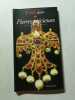
Bon état
The ""Flatey Book"" ""Flatö Bogen"". Published by the Royal Danish General Staff, Topographical Department.
Copenhagen, 1893. Folio. (51 x 45 cm.). Orig. printed clothbacked boards. Stamp on title-page. 28 pp. ""In the present reproduction only those few pages are printed, which concerns the discovery of America by the Northmen in the first years of the 11th century."". Lower right corners damaged by insect-bites, no loss of text. Old Norse text, English and Danish translation.
"FLAVIJ JOSEPHI (FLAVII, FLAVIUS, JOSEPHUS, FLAVIUS) (+) EGESIPPI (HEGESIPPUS THE NAZARENE)
Reference : 60564
(1630)
Dess Hochberühmbten Jüdischen Geschichtschreibers Historien vnd Bücher (+) des Hochberühmten Fürtrefflichen Christlichen Geschichtschreibers, v. Bücher: Vom Jüdischen Krieg...
Strasburg, Dietzel, 1630. Folio (34 x 215 mm). In contemporary full vellum with yapp edges. Title in contemporary hand to spine. Small paper label pasted on to spine indicating the volume's number in an estate library. Title-pages in red and black within historiated woodcut border. Binding soilied and with a few stains. Outer lower corner of title-page cut off, no loss of text. A fine copy. (12), 960, (36), (12), 214, (10) pp.
Fine copy of this later edition of two of Jesephus' most important works. The later work is a translation of a Latin christological version of Josephus' De bello Judaico, dating from ca. 367-374 A.D. It is of uncertain authorship but cited as the work of ""Hegesippus"" or ""Egesippus."" It was transmitted among the works of and sometimes attributed to Ambrose, Bishop of Milan Titus Flavius Josephus was a first-century Romano-Jewish historian who was born in Jerusalem. He fought against the Romans during the First Jewish–Roman War as head of Jewish forces in Galilee, but surrendered in 67 CE to Roman forces led by Vespasian. After Vespasian became Emperor in 69 CE, he granted Josephus his freedom, at which time Josephus assumed the emperor's family name of Flavius. Josephus recorded Jewish history, with special emphasis on the first century CE and the First Jewish–Roman War (66–70 CE), including the Siege of Masada. His most important works were The Jewish War (c. 75) and Antiquities of the Jews (c. 94). The Jewish War recounts the Jewish revolt against Roman occupation. Antiquities of the Jews recounts the history of the world from a Jewish perspective for an ostensibly Greek and Roman audience. These works provide valuable insight into first century Judaism and the background of Early Christianity, although not specifically mentioned by Josephus. Josephus' works are the chief source next to the Bible for the history and antiquity of ancient Palestine. For centuries Josephus' works were more widely read in Europe than any book other than the Bible. They are an invaluable eye-witness to a momentous turning point in Judaism, Christianity, and Western civilization. The present edition was first published in 1569. Graesse III, Pp. 481-482
""On the Conversion of Electric Oscillations into Continous Currents by means of a Vacuum Valve."" (And by the same author:) ""An Instrument for the Measurement of the Lenght of Long Electric Waves, and also Small Inductances and Capacities."" - [INTRODUCING THE BASIC PRINCIPLES OF MODERN WIRELESS VALVE (PMM 396)]
London, Harrison and Sons, 1905. Bound in recent marbled boards. Both papers extracted from ""Proceedings of the Royal Society of London"", vol. 74, With title-page to volume 74. Pp. 476-487 and pp. 488-498.
First printing of these two seminal articles, in which the basic principle of the modern wireless valve, also called the ""Fleming Valve"", is introduced for the first time, making radio-telephony and broadcasting possible. ""The immense superiority of the Fleming thermionic valve to all previous detectors of wireless waves caused it to be widely used as an efficient and reliable detector."" (PMM). When Lee DeForest perfected the ""grid"" in 1907, Fleming's wireless signals could be amplified to the degree necessary to make radio-telephony and broadcasting possible. The Edison effect was first described in a paper by William Henry Preece, who was shown an experiment by Edison ""On a peculier of Glow-Lamps when raised to high Incasdence"", 1885. This effect was known as the ""Edison effect"", and in 1890 Fleming, an electrical engineer who had worked with Edison Company in London and was now professor at University College, began a careful study of this phenomenon in carbon filament lamps. In 1904 he was able to demonstrate that this occurred not only with electric waves but also with wireless waves. He thus introduced the basic principle of the modern wireless valve, which permits only unilateral conductivity. (see PMM No. 396).Shiers, Early Television. A Bibliographical Guide to 1940, no. 323 (for the first article here present)"" the article has been reprinted in George Shiers, ed. !The Telephone: An Historical Anthology"", 1977. PMM no. 396 (for the first article here present).
Fletcher, C. R. L. & Butler, H. B. (the lives)/ Bell, C. F. (Introduction)/ Walker, Emery (Portraits Chosen By):
Reference : 122128aaf
Historical Portraits. In four (4) volumes.
Oxford , At the Clarendon Press, 1909 - 11 - 19, in-4to, 200 p. / 327 p. / 268 p. / 332 p., all volumes richly illust. w/ numerous portraits, bound in red leather richly gilt, spine on 5 bands, bindings signed - Bound by Zaenssdorff London - some spine ends used or scatched. All edges gilt. In all a fine copy.
Vol. 1: Richard II to Henry Writhesley 1400-1600 / Vol.ume 2: 1600-1700 / Volume 3, Part I: 1700-1800/ Volume 4, Part II: 1800-1850. Image disp.

(SLACES, NVVA)
Phone number : 41 (0)26 3223808
Eve Green (The Perennial Collection)
Harper Perennial 2008 304 pages 12 8x2x19 2cm. 2008. Broché. 304 pages.
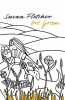
Très bon état - légères marques de lecture et/ou de stockage mais du reste en très bon état- expédié soigneusement depuis la France
Concerning the Differences in the Magnetic Needle, on Board the Investigator, arising from an Alteration in the Direction of the Ship's Head. Read March 28, 1805.
London, W. Bulmer and Co., 1805. 4to. No wrappers as extracted from ""Philosophical Transactions"" 1805. With titlepage to Phil. Transactions Part I. Pp. 186-197. Having also the titlepage to the volume (Part II, 1805). A few scattered brownspots and very faint browning to outer margins, otherwise fine and wide-margined. A small stamp to verso of titlepage.
First printing of, probably the first work, to discover, and correct for the errors of the compass caused by the iron in ships, by the first circumnavigator of Australia.""Captain Matthew Flinders RN (16 March 1774 - 19 July 1814) was one of the most successful navigators and cartographers of his age. In a career that spanned just over twenty years, he sailed with Captain William Bligh, circumnavigated Australia and encouraged the use of that name for the continent, which had previously been known as New Holland. He survived shipwreck and disaster only to be imprisoned for violating the terms of his scientific passport by changing ships and carrying prohibited papers. He identified and corrected the effect upon compass readings of iron components and equipment on board wooden ships and he wrote what may be the first work on early Australian exploration A Voyage to Terra Australis.""(Wikepedia)
Observations upon the Marine Barometer, made during the Examination of the Coasts of New Holland and New South Wales, in the years 1801, 1802, and 1803. Read March 27, 1806. - [THE NAMING OF AUSTRALIA.]
London, W. Bulmer and Co., 1806. 4to. No wrappers as extracted from ""Philosophical Transactions"" 1806 - Part II. Pp. 239-268. Having also the titlepage to the volume (Part II, 1806). A faint bit of soiling to outer right margin of the first 2 leaves, otherwise clean and wide-margined.
First printing of this important paper relating Flinder's observations on the ship ""Investigator"" when exploring the coast of Australia. IN THE PAPER THE NAME ""AUSTRALIA"" APPEARS PROBABLY FOR THE FIRST TIME IN A SCIENTIFIC MEMOIR (p. 247).The name Australia was popularised by Matthew Flinders, who pushed for the name to be formally adopted as early as 1804. When preparing his manuscript and charts for his 1814 A Voyage to Terra Australis, he was persuaded by his patron, Sir Joseph Banks, to use the term Terra Australis as this was the name most familiar to the public. Flinders did so, but allowed himself the footnote:""Had I permitted myself any innovation on the original term, it would have been to convert it to Australia"" as being more agreeable to the ear, and an assimilation to the names of the other great portions of the earth."" In the paper offered he used the name ""Australia"" as early as 1806.""Captain Matthew Flinders RN (16 March 1774 - 19 July 1814) was one of the most successful navigators and cartographers of his age. In a career that spanned just over twenty years, he sailed with Captain William Bligh, circumnavigated Australia and encouraged the use of that name for the continent, which had previously been known as New Holland. He survived shipwreck and disaster only to be imprisoned for violating the terms of his scientific passport by changing ships and carrying prohibited papers. He identified and corrected the effect upon compass readings of iron components and equipment on board wooden ships and he wrote what may be the first work on early Australian exploration A Voyage to Terra Australis.""(Wikepedia)
Observations upon the Marine Barometer, made during the Examination of the Coasts of New Holland and New South Wales, in the years 1801, 1802, and 1803.
London, The Author, 1807. 8vo. Contemp. calf, rebacked with brown buckram. Title- and tomelabels with gilt lettering. Corners bumped. In: ""A Journal of Natural Philosophy, Chemistry, and the Arts. By William Nicholson."" Vol. XVI. - VIII,392,(8) pp. a. 8 engraved plates. (Entire volume offered). Flinders letter: pp. 107-118 a. pp. 173-182. Internally clean.
Second printing of this important paper relating Flinder's observations on the ship ""Investigator"" when exploring the coast of Australia. IN THE PAPER THE NAME ""AUSTRALIA"" APPEARS PROBABLY FOR THE FIRST TIME IN A SCIENTIFIC MEMOIR (here p. 118). The letter was first printed in Philosophical Transactions, late in 1806 (read to the Royal Society March 27). Nicholson reprinted it here in the February issue of the offered volume 16. (1807).The name Australia was popularised by Matthew Flinders, who pushed for the name to be formally adopted as early as 1804. When preparing his manuscript and charts for his 1814 A Voyage to Terra Australis, he was persuaded by his patron, Sir Joseph Banks, to use the term Terra Australis as this was the name most familiar to the public. Flinders did so, but allowed himself the footnote:""Had I permitted myself any innovation on the original term, it would have been to convert it to Australia"" as being more agreeable to the ear, and an assimilation to the names of the other great portions of the earth."" In the paper offered he used the name ""Australia"" as early as 1806.""Captain Matthew Flinders RN (16 March 1774 - 19 July 1814) was one of the most successful navigators and cartographers of his age. In a career that spanned just over twenty years, he sailed with Captain William Bligh, circumnavigated Australia and encouraged the use of that name for the continent, which had previously been known as New Holland. He survived shipwreck and disaster only to be imprisoned for violating the terms of his scientific passport by changing ships and carrying prohibited papers. He identified and corrected the effect upon compass readings of iron components and equipment on board wooden ships and he wrote what may be the first work on early Australian exploration A Voyage to Terra Australis.""(Wikepedia)
Gabriel Di Mateo The Blind man
AMIS BIBL LYON 1995 in8. 1995. Broché.
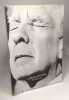

très bon état de conservation 4e plat jauni intérieur propre
FLEMISCH PAINTING From the 16th to the 18th century. Relaying ideas from Erasmus to Diderot
Turin, Umberto Allemandi & C., 2010 320pp Misure: 24 x 31 cm Illustrazioni: 320 col. Hardback english deutsch nederlands francais preface by Emmanuel Le Roy Ladurie ISBN 978884221837197.
Real? honest men?, the Brueghels took part in the intellectual epic of their day which, from humanism to the spirit of the Enlightenment, brought about a renewal in thought and laid the foundations of Modernity. Through the human adventure of the Brueghel dynasty, progressing from obscure beginnings to recognition by the very greatest, Florence de Voldere introduces us to the genius of these men who created the Flemish aesthetic identity. She takes us through the Renaissance in Flanders in the form of a story in pictures. Through this approach based on a dynamic reading of the paintings, this book shows the crucial role of art at one moment of civilization, and opens up some decidedly novel perspectives for interpreting Flemish art.
Vlaamse schilderkunst van de XVIde tot de XVIIIde eeuw.
Turin, Umberto Allemandi & C., 2010 320pp Misure: 24 x 31 cm Illustrazioni: 320 col. Hardback nederlands preface by Emmanuel Le Roy Ladurie ISBN 9788842219590.
Real honest men, the Brueghels took part in the intellectual epic of their day which, from humanism to the spirit of the Enlightenment, brought about a renewal in thought and laid the foundations of Modernity. Through the human adventure of the Brueghel dynasty, progressing from obscure beginnings to recognition by the very greatest, Florence de Voldere introduces us to the genius of these men who created the Flemish aesthetic identity. She takes us through the Renaissance in Flanders in the form of a story in pictures. Through this approach based on a dynamic reading of the paintings, this book shows the crucial role of art at one moment of civilization, and opens up some decidedly novel perspectives for interpreting Flemish art.
Thé van Bergen au Paradis
Antwerpen 2002 Muhka As New 1st Edition
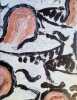
jaquette: Comme Neuf, 28 x 22 cm, 70 pages, Néerlandais, Première édition, Illustrations, état: Comme Neuf [Cette description peut avoir été traduite par une IA.]
Gouverner par les livres. Les L gendes dor es et la formation de la soci t chr tienne (XIIIe-XVe si cles)
, Brepols, 2021 Paperback, 335 pages, Size:156 x 234 mm, Illustrations:8 tables b/w., Language: French. ISBN 9782503592947.
Summary La L gende dor e de Jacques de Voragine constitue n'en pas douter une oeuvre centrale et incontournable de la litt rature europ enne. Le nombre consid rable de ses t moins manuscrits dans toutes les langues de l'Occident m di val permet largement de le mesurer, tout autant que la foule des oeuvres qui s'en sont inspir . On ne peut manquer pourtant de s' tonner : la L gende dor e a certes circul travers les milieux sociaux, les aires linguistiques et les territoires les plus divers, mais au prix de substantielles transformations, dans sa mat rialit , dans sa composition, dans ses significations et ses usages. Pourtant, sans devenir absolument m connaissable, la compilation hagiographique confectionn e la fin du xiiie si cle a rapidement constitu une matrice textuelle accueillante et ouverte aux interventions que ses lecteurs ult rieurs ont apport es pour mieux l'actualiser au gr de leurs besoins et selon les n cessit s des contextes. Tel est bien le paradoxe d'une oeuvre si plastique et polyvalente qu'avec une singuli re long vit litt raire elle parvient perdurer non pas malgr , mais gr ce aux modulations consid rables qu'elle connait. C'est ainsi que la L gende dor e a pu s'imposer comme un instrument la fois souple et robuste de la pastorale, tout la fois tourn vers l' dification de l'individu et assurant l'interface entre la collectivit de tous les hommes et la grande Cour des saints. TABLE OF CONTENTS Remerciements Pr face Introduction Premi re partie. La L gende dor e comme compilation Pr ambule: Pol miques modernes autour de la L gende dor e Chapitre 1: Po tique de la compilation m di vale Chapitre 2: Les vertus de la compilation dans la L gende dor e de Iacopo da Varazze Deuxi me partie. La L gende dor e comme recueil Pr ambule: Les p r grinations europ ennes d'un manuscrit de la L gende dor e Chapitre 3: Identit et int grit de la L gende dor e Chapitre 4: Polyvalences de la L gende dor e travers ses recueils Troisi me partie. La L gende dor e et la formation pastorale des fid les Pr ambule: Des saints, des ailes, des avions (et une autruche) Chapitre 5: Les L gendes dor es ou comment s'entretenir avec les saints? Chapitre 6: La mobilisation des communaut s textuelles de la L gende dor e Conclusion. Casuistique et communication de masse. Les paradoxes de l'universalisme pastoral travers la L gende dor e Bibiliographie Index manuscriptorum Index sanctorum et festorum Index personarum Table des mati res
"FLOURENS, MARIE JEAN PIERRE. - THE ANAESTHETC EFFECT OF CHLOROFORM DISCOVERED.
Reference : 49524
(1847)
Note touchant l'action de l'éther sur les centres nerveux.
(Paris, Bachelier), 1847. 4to. No wrappers. In: ""Comptes Rendus Hebdomadaires des Séances de L'Academie des Sciences"", Tome 24, No. 10. Pp. (337-) 396. (Entire issue offered). Flourens' paper: pp. 340-44. A small paperflaw in inner margin on the first leaf. Clean and fine.
First printing of groundbreaking paper on anaesthesia, disclosing that chloroform had an anaesthetic effect. Flourens made the discovery before James Young Simpson.""Little notice seems to have been taken of his paper, but later the same year Simpson independently demonstrated the value of chloroform.""(Garrison & Morton, 5654.
Foncke Robert dr. gewoon hoogleraar aan de rijksuniversiteit te Gent
Reference : 008838
(1937)
Duitse vlugschriften van de tijd over het proces en terechtstelling van de protestanten Frans en Nikolaas Thys te Mechelen (1555)
Antwerpen 1937 De Sikkel Soft cover 1st Edition
Langue: néerlandais. Brochures allemandes de l'époque sur le procès et l'exécution des protestants François et Nicolas Thys à Malines (1555), couverture souple, 26 x 17 cm, 188 pages, ex, bon état
FONCKE, Robert/Rijksuniversiteit Gent Faculteit Wijsbegeerte en Letteren.
Reference : 26474
DUITSE VLUGSCHRIFTEN VAN DE TIJD. OVER HET PROCES EN DE TERECHTSTELLING VAN DE PROTESTANTEN FRANS EN NIKOLAAS THYS TE MECHELEN (1555).
Antwerpen/Parijs/'s Gravenhage, De Sikkel/Librairie Ernest Leroux/Martinus Nijhoff, 1937 Oorspronkelijke uitgeversomslag, 16.6x25.4 cm., 189 pp., bladeren gesneden en niet-gesneden.
80ste aflevering. Met inleiding en aantekeningen opnieuw uitgegeven door Dr. Robert Foncke.
massif du canigo 2015
PETIT FUTE 2015 64 pages 11 8x0 4x17 9cm. 2015. Broché. 64 pages.
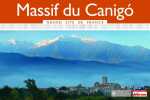
Très bon état
LATIN EN 15 LECONS
PU RENNES 2007 14 8x2 4x24cm. 2007. Broché.
Bon Etat intérieur propre bonne tenue
"FONTENELLE, BERNARD LE BOYER (BOVIER) De. - THE PROGRAM OF THE ENLIGHTMENT
Reference : 44534
(1702)
Preface.
Paris, Jean Boudot, 1702. 4to. Without wrappers. Extracted from ""Mémoires de l'Academie des Sciences"". Année 1699. With the fine engraved frontispiece and the titlepage to the volume. (22) pp.. Stamped in blind on the 2 first leaves, in margins.
First appearance of Fontenelle's famous program for the philosophy of science of the Enlightment, stipulating the nature of scientific research in terms of the analytical geometry.""From 1699 to 1740 Fontenelle devoted himself almost exclusively to his task of editing the Histoire de l’Académie royale des sciences . . . avec les mémoires de mathématique et de physique pour la même année, tirés des registres de cette Académie. The volume for the year 1699, which appeared in 1702, opens with an untitled preface usually called ""Préface [sometimes ""Discours préliminaire""] sur l’utilitë des mathématiques et de la physique et sur les travaux de l’Académie (the paper offered), which contains essential material on the philosophy of science and is a sort of bridge between Descartes’s Discours de la méthode and Claude Bernard’s Introduction à l’étude de la médecine expérimentale. Here one finds the first literary expression of the idea of the interdependence of the sciences and of the constancy of the laws of nature.""

