 Write to the booksellers
-
Type
Any type (1)
Art print (7)
Autograph (1)
Book (33011)
Disk (1)
Drawings (264)
Engraving (11)
Magazine (125)
Old papers (1)
Photographs (15)
Posters (1)
-
Latest
Last 24h (65)
Last 3 days (1)
Last month (398)
Last week (25)
-
Language
Dutch (79)
English (56)
French (33259)
German (6)
Italian (18)
Portuguese (9)
Spanish (11)
-
Century
16th (14)
17th (47)
18th (203)
19th (1547)
20th (9776)
21st (1745)
-
Countries
Belgium (10932)
Brazil (6)
Canada (116)
China (1)
Côte d'Ivoire (139)
Denmark (209)
France (18937)
Germany (1)
Greece (1)
Switzerland (3096)
-
Syndicate
ALAC (107)
CLAM (143)
CLAQ (102)
CNE (3)
ILAB (11260)
NVVA (1145)
SLACES (1145)
SLAM (8656)
SNCAO (10)
L'enjeu du Centre Georges Pompidou -
Préface de Robert Bordaz - Paris : Union générale d'éditions (coll. 10/18), 1977 - Format poche sous couverture illustrée en couleurs de 307 pages illustrées de dessins en noir dans et hors texte - bon état - EDITION ORIGINALE -
Tous nos livres sont visibles sur notre site : https://www.livrepoesie.com/
MOLLARD Claude, LE BON Laurent & BONDIL Nathalie
Reference : MUSEOLOGIE467900624
(2023)
ISBN : 9782281146554
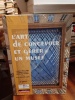
L’art de concevoir et gérer un musée
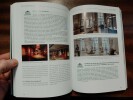
Paris, Editions Le Moniteur, 2023, 17 x 24, 320 pages sous couverture souple illustrée. Iconographie couleurs. "A partir de 1975, une série impressionnante de constructions, d'extensions et de rénovations bouleverse le monde des musées, mobilisant les architectes les plus réputés. En témoigne le Centre Georges-Pompidou, inauguré à Paris en 1977. Aujourd'hui, la France compte plus de 2 000 musées. Il s'en construit toujours plus chaque année, que ce soit à Paris ou en région, et ils accueillent quelque 80 millions de visiteurs. Cet ouvrage offre la vision unique de deux personnes emblématiques du monde culturel en France ; les auteurs dressent un panorama complet des institutions muséales, du concept à la gestion concrète du projet et de l'établissement, à travers leur riche expé-rience, étayant leur propos par de nombreux exemples, définitions et recommandations issus de leur pratique professionnelle. Organisé selon les étapes d'élaboration du projet muséal, ce guide permet : - d'en comprendre les enjeux ; - d'identifier et de situer chaque acteur aux différents stades de ce projet ; - d'élaborer un projet scientifique et culturel (PSC) ; - de définir les orientations et les stratégies ; - d'acquérir les notions indispensables (définitions, chiffres-clés, etc.) à la gestion de projet ; - de déterminer l'enveloppe budgétaire nécessaire ; - d'analyser les interactions entre les collections, les publics, l'environnement et le futur bâtiment ; - de conduire le projet jusqu'à l'inauguration de l'établissement ; - de gérer et d'entretenir le musée, d'accueillir le public, etc. Il aborde aussi bien les constructions neuves que les réhabilitations et les extensions de musées, en s'appuyant sur des réalisations exemplaires récemment inaugurées, tout en articulant l'organisation du projet muséal autour d'un programme ou d'un PSC. Véritable outil pédagogique, cet ouvrage est destiné aux chefs de projet, directeurs d'établissement et conservateurs, élus locaux et services techniques des collectivités, ainsi qu'aux architectes et programmistes. Cette 2° édition met l'accent sur la dimension sociétale des musées à travers l'art-thérapie et la conservation. Elle intègre des musées qui ont vu le jour ou ont réouvert à la suite de travaux de restauration ou d'embellissement (le musée Soulages, le musée de Cluny, le nouveau musée IMA, etc.). Elle tient également compte du contexte sanitaire récent qui a vu croître la fréquentation numérique des musées, notamment via les réseaux sociaux."
Très bon état.
New York in Photographs : Includes 24 Framable Images
, Metropolitan Museum of Art, 2010 Paperback, 52 pages, ENG, 355 x 280 x 10 mm, Large Format, Full Page b/w photographs, in New condit. ISBN 9780764145605.
Titles in Barron's brand-new series of "Art Portfolios " each present 24 stunning reproductions of memorable works from the collection of New York's Metropolitan Museum of Art. Enlightening descriptive texts supplement these large reproductions, each of which is true to its original artwork. Pictures are printed on heavy matte-coated paper and are easily removable from its portfolio, which makes them suitable for framing. The skyscrapers of New York's financial district, the Flatiron Building, the bridges of Manhattan, and many other New York City landmarks are captured in 24 memorable black-and-white photographs from the New York Metropolitan Museum of Art's vast photography collection.
Historia General del Arte Mexicano : Danzas y Bailes Populares.
Buenos Aires, Editorial Hermes Mexico, 1976 Hardcover with dustjacket, 239 pages, 29 x 22 cm, Spanish text. *Very good condition. ISBN 9788439959885.
ISBN 10: 8439959885 / ISBN 13: 9788439959885 Historia General del Arte Mexicano : Danzas y Bailes Populares.
KOLLWITZ : TAKING A STAND
, Hirmer Verlag (Thames), 2024 HB, 280 x 240 mm, ENG. edition, 240 pages, NEW , 192 illustrations, ****Expo : 18/06/2024 - 16/08/2024, Kunsthaus Z rich, Switzerland **** Z rich and Kunsthalle Bielefeld. ISBN 9783777442327.
Examines the art and passion of K the Kollwitz, who used art to bring a voice to political issues. Raw, unprettified, and decried in conservative circles as "gutter art," K the Kollwitz employed her art uncompromisingly as a political voice for the social and human misery of her time. Her focus always lay on the dignity of humankind. Taking a Stand provides wide-ranging insight into the commitment and creative work of the artist, whose achievements are more topical than ever. It covers the entire spectrum of Kollwitz's creative work, including the world-famous cycles of the graphic works A Weavers' Revolt and Peasants' War, rare proofs, moving drawings, and sculptures, each of which showcases all facets of her masterful skills. The political dimension of Kollwitz's art becomes tangible in a particularly impressive manner through her posters. The unbroken validity of her work is demonstrated in a juxtaposition with the interventions by the contemporary artist Mona Hatoum, which revolve around topics such as vulnerability, persecution, and the experience of conflict.
Mona Kuhn : Private
, Steidl, 2014 Hardcover, 110 pages, ENG, 315 x 305 x 18 mm, dustjacket, in NEW condition ! illustrated in soft colours. ISBN 9783869307091.
For a new monograph, Private, Kuhn's fifth publication for Steidl, the photographer focused her gaze on the bleached tones and broad expanses of light that bathe the Mojave Desert, a few hours drive from her Los Angeles home. In a series of thoughtful and intimate compositions, Kuhn catalogs flora and fauna, most of it coarse-grained and engineered for survival. Landscapes are windswept and invite introspection. Hard light falls on no-nonsense structures that are built to last. Punctuated throughout these pages are female nudes, bathed in the same supple light and shadow, their faces mostly serene. As in previous series by Kuhn, the artist employs glass as a secondary lens and means of filtration and dissolution of identity, shooting her subjects from outside of structures, allowing their features to soften and meld with the reflections of the surrounding terrain. The sequencing of the images in Private is expertly tuned to tease out the complex relationship between the vulnerability of the nude female form and the rugged natural context which Kuhn employs as a backdrop. Kuhn's models are mostly supine, the softness of their luminous skin a foil and a complement to the jagged, indomitable geology of the landscape in which they find themselves. Against this backdrop, the self is by turns magnified and diminished into a dreamy, sensual phenomenology.--Kevin Greenberg "The Last Magazine "
Palais et maisons du Caire, 1 poque mamelouke (XIIIe-XVIe si cle)
Paris, Editions du CNRS, 1982 Couverture rigide faux cuir, 268 pages, 21 x 27 cm, Fran ais. *Comme neuf. ISBN 9782222028529.
Palais et maisons du Caire, 1 poque mamelouke (XIIIe-XVIe si cle)
Palais et maisons du Caire, 2 poque ottomane (XVIe-XVIIIe si cle)
Paris, Editions du CNRS, 1983 Couverture rigide faux cuir, 602 pages, 21 x 27 cm, Fran ais. *Comme neuf. ISBN 9782222031550.
Palais et maisons du Caire, 2 poque ottomane (XVIe-XVIIIe si cle)
Les passages en Europe
Les éditions du Mécène 1993 In-4 relié 29,7 cm sur 22,5. 327 pages. Jaquette en bon état. Bon état d’occasion.
Edition réalisée par La Ségécé, compagnie bancaire Bon état d’occasion
Villes Rêvées
Paris Les Éditions Du Mécène 1998 In Quarto , Oblong Avec la collaboration de Philippe Chiambaretta . IIlustré de nombreuses photographies et dessins en couleurs et noir et blanc . Architecture .- 192 p. , 1 kg 600 gr.
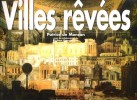
Couverture rigide Très Bon État . Jaquette en bon état 1ère Édition
La mission héliographique Cinq photographes parcourent la France en 1851
44.éditions du patrimoine 2002 - In-4, cartonnage illustré sous jaquette illustrée de l'éditeur. Nombreuses reproductions photographiques dans, hors-texte et pleine page en couleurs et noir et blanc, 319 pages. La Jaquette est ,très légèrement, défraîchie et tachee... Photos possibles
Le livre est lourd! Et les frais d’envoi sont calculés au plus juste suivant la destination
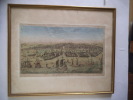
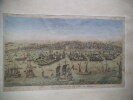
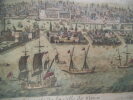
Vue générale de Venise.
Vue générale de Venise. Vue d’optique rehaussée en couleur. Belle épreuve du XVIIIème siècle, sur vergé, encadrée. Louis Joseph MONDHARE graveur, et éditeur. Signature à la pointe, en marge inférieure gauche. 365x210mm plus marge ; titre dans la marge inférieure. Sous passe-partout .Dimensions avec encadrement 390x 470mm.
AIDE-MEMOIRE TRAVAUX PUBLICS / TOME 1 - A L'USAGE DES: INGENIEURS, ARCHITECTES, ENTREPRENEURS, CONDUCTEURS, AGENTS VOYERS, METREURS ET COMMIS DE TRAVAUX - 67ème EDITION.
DUNOD. 1954. In-16. Relié. Etat d'usage, Couv. convenable, Dos satisfaisant, Intérieur frais. XVIII + 234 + LXIV pages augmentées de nombreuses illustrations et formules mathématiques en noir et blanc dans et hors texte.. . . . Classification Dewey : 720-Architecture
Classification Dewey : 720-Architecture


"Assainissement général des villes et des petites collectivités; tome IV : Partie administrative."
Paris, Dunod, 1934. "16 x 25, 399 pp., broché, bon état (1 cachet d'ex-propriétaire; couverture défraîchie)."
Tome 4 seul.
Mondriaan compleet
, Atrium 2001, 2001 Softcover, 575 pagina's, NL, 215 x 170 mm, in goede staat, met illustraties / foto's in kleur en z/w. ISBN 9789066139299.
Pieter Cornelis (Piet) Mondriaan (Amersfoort, 7 maart 1872 ? New York, 1 februari 1944) was een Nederlandse kunstschilder en kunsttheoreticus, die op latere leeftijd in het buitenland woonde en werkte. Mondriaan wordt algemeen gezien als een pionier van de abstracte en non-figuratieve kunst. Vooral zijn latere geometrisch-abstracte werk, met de kenmerkende horizontale en verticale zwarte lijnen en primaire kleuren, is wereldberoemd en dient als inspiratiebron voor vele architecten en ontwerpers van toegepaste kunst. Hij was een van de belangrijkste medewerkers van het tijdschrift De Stijl en ontwikkelde een eigen kunsttheorie, die hij nieuwe beelding of neoplasticisme noemde. Hij is in het buitenland beter bekend als Mondrian, een wijziging die hij zelf invoerde nadat hij in Parijs was gaan wonen. In 1908 werd hij lid van de Theosofische Vereniging.
LE MUSEE DE L' ANNONCIADE : SAINT-TROPEZ
, RMN, 1993 Broches, 118 pages, Francais, Illustrations. ISBN 9782911809316.
I Eglises et Chapelles- Combrailles et patrimoine
Le regard et l'écriture. 1994. In-12. Broché. Bon état, Coins frottés, Dos frotté, Intérieur frais. 95 pages. Texte sur plusieurs colonnes. Nombreuses illustrations et photos en couleurs et en noir et blanc, in texte.. . . . Classification Dewey : 720-Architecture
Classification Dewey : 720-Architecture
Le livre d'or du Lyonnais du Forez et du Beaujolais.
Bibliothèque De La Ville Lyon 1866 in-8 de 93 pages, en bon etat ,Archéologie ProvençaleProvincia.Recueil de Textes.Archéologie Provençale.Synopsis:- bibliographie ligure- Jean de Villages, Viguier de Marseille- Provence chrétienne, monuments, histoires, légendes- paléolithique en Provence
Boukhara, Samarakand, Turkestan, une histoire de l'architecture musulmane en Asie centrale
Esitions France-Kazakhstan Seine et Marne Reliure 2005 In-4 (21 x 29.7 cm), reliure thermocollée, 54 pages, iconographie en couleurs , léger fendillement en tête du mors postérieur, très bon état d'ensemble par ailleurs. Livraison a domicile (La Poste) ou en Mondial Relay sur simple demande.
Philosophical Psychology in Late-Medieval Commentaries on Peter Lombard's Sentences. Acts of the XIVth Annual Colloquium of the Soci t Internationale pour l' tude de la Philosophie M di vale, Radboud Universiteit, 28-30 October 2009
, Brepols, 2020 Hardback, xxii + 445 pages, Size:156 x 234 mm, Language: English. ISBN 9782503589091.
Summary The proceedings of the SIEPM Colloquium at Nijmegen published in this volume bring together new evidence for how the corpus of late-medieval commentaries on the Sentences, especially from the second half of the fourteenth century, contributed to the development of philosophical psychology within the discipline of theology. The relation among the faculties of the soul, the limits of knowledge, hylomorphism and the union of soul and body, intuitive and abstractive cognition, the immortality of the soul, the experience of the beatific vision, divine foreknowledge and the knowability of species are some of the topics involving psychological issues that are examined in this volume. The wealth of new information presented in this volume results from the interpretation of previously unexplored sources. The essays in this volume demonstrate that the various parts and Books of Peter Lombard's Sentences, the standard textbook of theology in the Middle Ages, provided lecturers and commentators with a variety of loci for the discussion of philosophical topics, from the principia (Denys of Montina), the Prologue (Alfonsus Vargas of Toledo, Hugolino of Orvieto, John Regis, Francis Toti of Perugia), Book I (Gregory of Rimini, John of Mirecourt, Pierre Ceffons, Hugolino of Orvieto, Pierre d'Ailly, Peter of Candia, the Vienna Group, John Capreolus, Henry of Gorkum, Denys the Carthusian), Book II (Pierre Ceffons, Peter of Candia, Guillaume de Vaurouillon, Gabriel Biel, Denys the Carthusian), and Book III (Heymericus de Campo). This diversity, within large works on theology conceived broadly, constitutes a tradition parallel to that found in commentaries on Aristotle's De anima in the late Middle Ages. TABLE OF CONTENTS Monica BR NZEI, Introduction Christopher D. SCHABEL, Note on the Vernacular Name of Richardus de Mediavilla : of 'Menneville', Not 'Middleton' I. HUMAN COGNITION Amos CORBINI, Notitia intuitiva and complexe significabile at Paris in the 1340s: From Alphonsus Vargas Toletanus to Peter Ceffons Aur lien ROBERT, The Possibility of Cognizing Material Substances. The Evolution of a Philosophical Problem in Late-Medieval Commentaries on the Sentences Jeffrey C. WITT, Peter Plaoul and Intuitive Knowledge II. THE HUMAN SOUL Maarten J.F.M. HOENEN, Heymericus de Campo (?1460) Reads Peter Lombard: Late-Medieval Abbreviations of the Libri Sententiarum Thomas JESCHKE, Unum antiquum problema: Denys the Carthusian and John Capreolus on the Question Whether the Soul's Essence Is Distinct from Its Potencies. A Late-Medieval Starting Point William DUBA and Olivier RIBORDY, The Human Soul: Definitions and Differentiae in Late-Medieval Commentaries on the Sentences Kent EMERY, Jr., Denys the Carthusian's Sentential Teachings on the Nature and Operations of the Soul III. THEOLOGICAL ISSUES John T. SLOTEMAKER, Pierre d'Ailly and the Imago Trinitatis: The Sources of His Trinitarian Theology Severin KITANOV, Freedom in Heaven: Peter of Candia's Treatment of the Necessity or Contingency of Beatific Enjoyment Christopher D. SCHABEL, Henry of Langenstein, Henry Totting of Oyta, Nicholas of Dinkelsb hl and the Vienna Group on Reconciling Human Free Will with Divine Foreknowledge Monica BR NZEI, Epilogue: Commentaries on the Sentences in Paris around 1370 Index of Manuscripts Index of Ancient and Medieval Names Index of Modern and Contemporary Authors
Pseudo-Aristotelian Texts in Medieval Thought. Acts of the XXII Annual Colloquium of the Soci t Internationale pour l? tude de la Philosophie M di vale, Cluj-Napoca, 28?30 September 2016
, Brepols, 2023 Hardback, xxii + 360 pages, Size:156 x 234 mm, Illustrations:3 tables b/w., Language(s):English, German. ISBN 9782503606064.
Summary The Philosopher, the Master of Those Who Know, was the dominant pagan authority in all four of the main traditions of medieval philosophy: Arabic, Greek, Hebrew, and Latin. Yet we now know that a number of works attributed to Aristotle were in fact spurious, authored by others who claimed to be, or whom others claimed to be, the Stagirite, for example, the Secretum secretorum, the Liber de causis, De mundo, De proprietatibus elementorum, De pomo, and De plantis. These writings strongly impacted medieval thought in various and fascinating ways, both in the original language, be it Arabic, Greek, Hebrew or Latin, and in translation. The mechanisms of their production, dissemination, and translation are themselves worthy of attention. Many of these works spawned commentary traditions of their own, parallel to those involving the classic texts of Peripatetic philosophy. Apparent contradictions between ideas expressed in these treatises and those found in what we consider to be authentic works, for instance ideas that appeared to derive more from the Academy than from the Lyceum, provoked questions about authenticity and about the possible evolution of Aristotle's thought. Finally, these texts were employed in one way or another in many genres of philosophical literature in the Middle Ages, including metaphysics, natural and moral philosophy, theology, and even more exotic disciplines like chiromancy and alchemy. This volume aims to shed new light on various aspects of the history of Pseudo-Aristotelian texts in the Middle Ages. TABLE OF CONTENTS Introduction Pieter De Leemans (?) and Lisa Devriese, Translating and Reading Pseudo-Aristotle in the Latin West William Duba, Balancing Authority on a Column of Fire: The Secret of Secrets and the Salvation of Aristotle Ant nio Rocha Martins, The Secretum secretorum and the Idea of Political Happiness in the Latin Middle Ages Pavl na Cermanov , Greek and Arabic Inspirations for Organizing Medieval Banquets: The Pseudo-Aristotelian Secretum secretorum as a Source and a Model for Medieval Advice Literature Julie Loveland Swanstrom, Secondary Causes in the Liber de Causis and the Work of Thomas Aquinas Henryk Anzulewicz, Der Liber de causis als Quelle der Intellektlehre des Albertus Magnus Beate Ulrike La Sala, The Arabic Islamic Reception of the Arabic Plotinus and Maimonides' Theory of Emanation Marilena Panarelli, Spiritus and Plant Formation: Albert the Great's Rrestatement of the Pseudo-Aristotelian De plantis Evelina Miteva, From Pseudo-Aristotle to Pseudo-Albert: The Emancipation of Natural Philosophy Pavel Brazek, Iste liber videtur esse factus ab Aristotile: Bartholomew of Bruges and the Medieval Reception of the De Inundatione Nili Abraham Melamed, The Medieval Hebrew De pomo and the Myth of the Jewish Aristotle Ioana Curu?, The Medieval Latin Reception of Liber de Pomo in Questions De intentione Aristotelis on the Eternity of the World (Available in Open Access) Andrei Marinca, The Pseudo-Aristotelian De mundo and Fourteenth-Century Theologians (Available in Open Access) Index of Manuscripts Index of Names
Monica Brinzei, Irene Caiazzo, Christophe Grellard, Aur lien Robert (eds)
Reference : 70745
Radical Thinking in the Middle Ages: Acts of the XVth International Congress of the SIEPM, Paris, 22-26 August 2022
, Brepols, 2025 Hardback, Pages:2 vols, xxvi + 1177, Size:156 x 234 mm, Illustrations:1 b/w, 1 col., 3 tables b/w., Languages: English, French, Italian. ISBN 9782503613543.
Summary These volumes present a selection of papers delivered in Paris at the XV International Congress of the Soci t Internationale pour l' tude de la Philosophie M di vale, August 22-26, 2022. The appearance of the term radix positionis in medieval debates inspired the contributors to investigate whether there was something that could be considered radical thought in the Middle Ages and, if so, what the roots of this radical thought were in the different philosophical traditions in various geographical, cultural, religious, and linguistic contexts (Arabic, Greek, Hebrew, Latin). Medieval philosophy often engaged in a quest for origins, but it could also be radical in its methodology or in its attitude when it refused any compromise on its principles or basic concepts, be they innovative or rediscovered. Radicalism could be conceived as extremism in pushing a hypothesis, procedure, or line of inquiry to its limits, leading to extreme positions. Radical thought could mean being intellectually inflexible on principles, obstinate in embracing theses that broke from tradition, progressive but also extremist. The contributions in these volumes thus analyse case-studies of doctrinal conflict, dogmatic struggle, and condemnation by religious or academic institutions, presenting examples of both intellectual courage and philosophical intransigence. TABLE OF CONTENTS VOLUME I Monica Brinzei, Irene Caiazzo, Christophe Grellard, Aur lien Robert, Introduction Part I: Plenary Sessions Alain de Libera, Radicalit , annulation, oubli Sarah Stroumsa, The Search for Jewish Andalusian Freethinking Michele Trizio, Three Radical Philosophers in the Greek Middle Ages Emma Gannag , How Does Opium Chill? A Radical Response to Avicenna on Natural Properties Virpi M kinen, The Radicalism of Franciscan Poverty and Its Legacy to the Subsistence Rights Kantik Ghosh, Radical Certitude or Radical Perplexity? Ecclesiology, Hermeneutics, and Conscience in Later Medieval England SIEPM Lifetime Achievement Reward 2022: Sten Ebbesen, My Radicals Part II: Ordinary and Special Sessions 1. From Late Antiquity to Early Middle Ages Rosabel Ansari, La m taphysique l atique et son explication psychologique dans la philosophie d'Al-Farabi Laura Busetto, Les limites de la dialectique dans le Periphyseon d'Erig ne Luiz Marcos Da Silva Filho, Philosophy Without Subject in Augustine? Dialogue with Alain de Libera Renato de Filippis, Boethius and the Opuscula Sacra: A Radical Theological Thinking? Terence J. Kleven, Alfarabi's Several Introductions to the Organon: Sorting out the Significance of the Manuscript Traditions of Istanbul, Tehran, and Diyarbak?r Luka Kuchukhidze, Determinism, Future Contingents and Divine Foreknowledge in Boethius's II Commentary on De interpretatione 2. The Twelfth and Thirteenth Centuries David Albertson, Immanence as Exile: Hadewijch as Philosopher of Finitude Tadeusz Barto?, Person as a Relation: Thomas Aquinas' Theory of God Paola Bernardini, The Notion of Forma Hominis in Albert the Great's De quindecim problematibus Irene Caiazzo, L'h r sie amauricienne et sa post rit ou des bienfaits des condamnations Antoine Calvet, L'alchimie, image ou contre image d'une pens e radicale Rodrigo Camargo, Les racines de la pens e juridique de Thomas d'Aquin Elisa Chiti, Nunc cecidit haec anima de amore in nichilum: La radicalit dell'irruzione del nulla in Margherita Porete e Bonaventura Val rie Cordonier, Qu'est-ce qu'une lecture radicale d'Aristote? La r ception du Liber de bona fortuna (13e-16e si cles) Mateus Domingues Da Silva, Platon et l'ontologisation des intelligibles d'apr s la ?ikmat al-i?r?q de Suhraward? Francesco de Benedittis, Defining the Subject Matter of Theology: The Concept of Radicality in John Pecham's Principium to the Commentary on the Sentences Carlos Arthur R. Do Nascimento, L'arbre de la philosophie Anselmo Tadeu Ferreira, Interpretations of Thomas Aquinas's Theory on the Soul Albert D. Friedberg, Maimonides on Scriptural Anthropomorphism: It is what it is Roberto Gatti, In Search of Last, Radical Averroes. Ibn Rushd's Noetics Interpreted by His Jewish Commentator, Gersonides Ann Giletti, How Radical is Radical? Heterodoxy and the Paris Radical Aristotelians Guy Guldentops, Deradicalizing Christian Ethics: Bonaventure, Richard of Mediavilla, and Duns Scotus on the Imperative 'Love thy Enemies' Andrey Ivanov, Vis cogitativa and Ars facing Thomas Aquinas Pedro Konzen Capra, The Wall of Separation Between the Deliberative and the Scientific Part of the Soul - Thomas Aquinas on Passage 1139a11-15 of Aristotle's Nicomachean Ethics Roberto Lambertini, Bacone e il Secretum Secretorum come specchio per i principi: Alcune note Daniel J. Lasker, Were There any Karaite Radical Thinkers? Julien le Mauff, La communitas perfecta chez les lecteurs d'Aristote: aux racines de la pens e civique et de l'exclusion David Lemler, The Radicality of Religious Dogmatism: Medieval Jewish Philosophers and the Principles of Judaism Isabel L on-Sanz, La teor a bonaventuriana de la iluminaci n y el fundamento radical del conocimiento intelectual Celina A. L rtora Mendoza, Roger Bacon y el giro ling stico de la ex gesis b blica Darlan Lorenzetti, For A Genealogy of Temporal Power: The Aristotelian and Augustinian Influence on Thomas Aquinas' Theory of the State Fiorella Magnano, The Role of the Communes animae conceptiones in Boethius and Albert the Great Stephen Metzger, Aristotelian Virtue and Apostolic Poverty in the Polemical Debate: Between Thomas of York, OFM, and Gerard of Abbeville Ritva Palm n, The Wandering Mind and Curiosity in Twelfth Century Philosophical Theology Anna Rodolfi, Ma tre Albert pol miste. Acceptions de la radicalit dans la pens e d'Albert le Grand Jens Ole Schmitt, Ibn Ab? l-Ash?ath's Treatise on Sleeping and Wakefulness Napole o Schoeller de Azevedo J nior, From Intellect to Passions: An Analysis of How the Apprehension Through the Vis Cogitativa is Influenced by the Intellect Chiara Carmen Scordari, Radicalizing Prophetical Anthropology and Messianism: Maimonides under the Lens of Joseph Soloveitchik Sita Steckel, Signs of Radicalization. Conflict Escalation and the Fragmentation of Socio-Epistemic Consensus in the Polemics of William of Saint-Amour Taki Suto, The Best Life and the Radicality in John of Dinsdale's Ethics Commentary Andrew G. Traver, Nicholas of Lisieux's De perfectione et excellentia status clericorum Cody C. Warta, Departing from the Philosopher: Thomas Aquinas on the Nature of Topos VOLUME II 3. The Fourteenth Century Alexandra Baneu, Narcissus Pfister on Eternity of God and of the World and his Radical Manner of Taking Notes Charles Bolyard, Knowledge, Epistemic Regress, and the Ultima Visio in Ockham's Quodlibets Niccol Bonetti, Salvare Averro ? Il problema della conoscenza divina in John Baconthorpe Monica Brinzei, Perfectio radicalis in John Hiltalingen of Basel's Principium I (Paris 1367-1368) Nathaniel Bulthuis, Truth-Bearing and Objective Being: Walter Burley on the Consequence, 'Some Proposition is False, Therefore its Contradictory is True' Richard Cross, The Radical Franciscan Christology of William of Rubio Ernesto Dezza, OFM, The Impeded Will: The Effects of Hellfire on the Damned According to John Duns Scotus Robert J. Dobie, Meister Eckhart: A Radical Thinker? Davide Falessi, Guillaume d'Occam sur la continuit et la toute-puissance divine Francesco Fiorentino, Social Peace, Private Property, and Free Agreement According to John Duns Scotus Christophe Grellard, Ut dormientes a somno excitaret. Retour sur la condamnation de Nicolas d'Autr court Vesa Hirvonen, Was Jean Gerson's Interest in Children Radical? Vlad Ile, Worcester Cathedral Library ms. F. 73 ff. 3-21 in the Light of a Radical Catalogue Description Martin Klein, Medieval Lived Experience Roberto Limonta, Il segno radicale: la semiotica del calligramma in Opicino de Canistris Mihai Maga, Withstanding a Radical Event: Etienne Gaudet's Note Against Marsilius of Padua Andrea Nannini, Metafisica dell'univocit e dell'analogia tra Giovanni Duns Scoto e Giovanni da Ripa Madalina G. Pantea, Variation on the Same Question in John of Mirecourt's Sentences (Ms. Salamanca, BU, 1863) Ana Rieger Schmidt, Christine de Pizan on Wisdom and Kingship Marcus Paulo Rycembel Boeira, Deontic Logic in the 14th Century: Normative Operators and Conditional Modalities Between William of Ockham and Roger Roseth Amalia Salvestrini, Radicalit de la recherche. Inspirations rh toriques autour de la beaut chez Nicolas d'Autr court Marcella Serafini, La dialectique de la volont et la possibilit du mal. Duns Scot entre Augustine et Ab lard Giacomo Signore, Radical Philology. Rewriting the Transmission History of the Fifteenth-Century Codex Basel, UB, A VIII 9 Emanuele Sorichetti, Radicaliter e formaliter. Essenza e attributi divini nella teologia trinitaria di Giovanni Duns Scoto 4. Early Modern Period Claus A. Andersen, Radical Scotism: The Error Wiclefi in the Long Scotist Tradition Jean Christian Egoavil, The Philosophical Projection of Medieval Scholasticism in the American Territories Throughout the Sixteenth and Seventeenth Centuries Matteo Esu, Radix Morbi. A Short Note on Anti-Contagion Measures and Resource Allocation in John Mair Roberto Hofmeister Pich, Philosophy of Nature and the Principles of Natural Being: Characterizing (OLD) New Traditions in Latin American Scholasticism Isabelle Mandrella, Blumenberg et la pens e radicale (Urspr nglichkeit) de l'Ontologie M di vale Rog rio Tadeu Mesquita Marques, Liberdades nas Am ricas a partir do Ius gentium de Francisco de Vitoria Silvia Negri, Radical Humility? Girolamo Savonarola's Trattato dell'umilt Olaf Pluta, Pura ratione naturali dictante ponendum est: Radical Philosophical Thinking in the Late Middle Ages Aur lien Robert, Galeotto Marzio da Narni's Radical Ethics J zsef Simon, Radical Atheism and Scholastic Rational Theology in Christian Francken's Disputatio (ca. 1590) Indexes Index of Manuscripts Index of Names
Principia on the Sentences of Peter Lombard. Exploring an Uncharted Scholastic Philosophical Genre Across Europe
, Brepols, 2024 Hardback, 1204 pages, Illustrations:1 b/w, 25 tables b/w., Language(s):English, French, Latin. ISBN 9782503612089.
Summary Principia were an obligatory step on the medieval university path to becoming a master of theology. As inaugural lectures on the four books of the Sentences of Peter Lombard, they provided the first opportunity for a scholastic to defend a philosophical-theological worldview. These lectures were also a way for the theologian, now a sententiarius, to present himself and to make a name for himself, initially by delivering in a speech an introduction to the course and by debating with his fellows. The present book takes a collective approach to offer a survey of the evolution of the genre, mapping the dissemination of this exercise during the fourteenth and fifteenth centuries across Europe. As an academic exercise, principia bridge ideas, texts, authors, and institutions across time. Exploring the corpus of surviving principia illuminates the philosophical creativity cultivated in the faculties of theology. The papers in these volumes thus not only discuss the structural aspects of principia, but also treat the philosophical and theological ideas defended and attacked during the principial debates and the topics and imagery used in the speeches. The various chapters delve into the surviving material in a common attempt, firstly, to assemble pieces of evidence from Paris and Oxford into an image portraying how, when, and by whom the principia were performed in the first European universities. The second part illustrates the spread of the genre to the new faculties of theology in Central Europe and Italy, with case studies from Bologna, Cracow, Florence, Heidelberg, Prague, and Vienna, highlighting the pan-European diffusion of the practice. TABLE OF CONTENTS Volume I: Paris and Oxford Monica Brinzei and William O. Duba, Introduction Monica Brinzei, A Guide for Understanding Principia on the Sentences of Peter Lombard Paris William J. Courtenay, The Transformation of Sentential Principia in the Early Fourteenth Century Florian W ller, Inaugural Speeches by Bachelors of Theology Principial Collationes and their Transmission (1317-1319) Chris Schabel, Francis of Marchia on Instrumental Causality: The Conclusion to Principium in IV in Question 2 on IV Sentences Chris Schabel, The Genre Matures. Parisian Principia in the 1340s, from Gregory of Rimini to Pierre Ceffons Chris Schabel, The Forgotten Principia of a Forgotten Theologian: Jean de Moyenneville, 1356-1357, and Parisian Theology in the Late 1350s Alexandra Anisie, Mediated Knowledge and Beatific Vision in the First Principium of John of Brammart William J. Courtenay, Principial Cohorts at Paris Oxford Siegfried Wenzel, Introductory Lectures on the Sentences by ?Frisby? Michael Dunne, Between Old and New at Oxford: The Introitus Sententiarum of Richard FitzRalph and the First Collatio of Adam Wodeham Pascale Bermon, la recherche des Principia aux Questions sur les Sentences de Robert Holcot O.P. (? 1349) Chris Schabel, The Oxford Franciscan Robert Halifax's Principial Debate over Grace and Merit with His Pelagian Socius and Other Colleagues in 1332-133 Volume II: Blogona, Cracow, Florence, Heidelberg, Prague, and Vienna Bologna Chris Schabel, The Franciscan Guglielmo Centueri of Cremona's Bologna Principium of 1368, with an Appendix on Whether God Can Make the Past Not to Have Been Cracow Wojciech Baran, Survey on Medieval Principia on Peter Lombard's Sentences of Theologians from the University of Cracow Florence William O. Duba and Russell L. Friedman, A(nother) Florentine Principium on the Sentences. The Mystery of the Two "Prologues" in Peter of Trabibus' I Sentences Heidelberg Andrea Fiamma, John Wenck's Principia on the Sentences (1431) Prague Monica Brinzei, The Cistercian Matthew of Zbraslav (de Aula Regia / K nigsaal), Socius of a Pre-Radical Jan Hus, and Their Prague Principial Debate Vienna Edit Anna Luk cs, Pr cher sur les Sentences: sermons sur l'?uvre du Lombard la biblioth que des Dominicains de Vienne Ueli Zahnd, Disputing without Socii: The Principium on Book I of Conrad of Rothenburg, Vienna 1408/09 Matteo Esu, Peter of Pirkenwart's Textual Workshop from his Principium IV (1417) Matteo Esu and Ueli Zahnd, A joint Edition of Conrad of Rothenburg's and Peter of Pirchenwart's Principia on Book IV of the Sentences Index
Rise of an Academic Elite : Deans, Masters, and Scribes at the University of Vienna before 1400
, Brepols, 2022 Hardback, xi + 697 pages, Size:156 x 234 mm, Illustrations:15 col., Language(s):English, French, Latin. ISBN 9782503601021.
Summary Henry of Rheinfelden, a Dominican from Basel, spent the last decade of the fourteenth century at the University of Vienna studying theology. During this time he took notes on the academic activities of the first rectors of the university and deans of the Faculties of Arts and Theology. This volume explores Rheinfelden's contribution to our understanding of the doctrinal, curricular, administrative, and prosopographical history of the early University of Vienna. Deciphering Rheinfelden's surviving notebooks in the Universit tsbibliothek Basel sheds new light on the rise of an academic elite in Vienna. His manuscripts reveal a network of scholars sharing a passion for knowledge and supply a gallery of intellectual profiles, starting with the mentors of the group, Henry of Langenstein and Henry Totting of Oyta, and continuing with the lesser-known figures Stephen of Enzersdorf, Gerhard Vischpekch of Osnabr ck, Paul (Fabri) of Geldern, Andreas of Langenstein, Rutger Dole of Roermond, Nicholas of H nhartzkirchen, Nicholas of Dinkelsb hl, John Berwart of Villingen, John Stadel of Russbach, Peter de Treysa, Michael Suchenschatz of Hausleiten, Peter Schad of Walse, Thomas of Cleves, and Leonhard of Dorffen. The papers gathered in this volume highlight the intricate relationship between a commitment to administrative duty and an appetite for the creation of a doctrinal tradition via debating, forging arguments, defending and attacking positions, commenting on authorities, and adopting and adapting academic practices imported from Paris, since the majority of the authors in our gallery were educated in Paris and built their careers in Vienna. Through Rheinfelden's notebooks, this volume provides access to unique and previously unknown texts that together offer a new image of the medieval University of Vienna. TABLE OF CONTENTS Introduction - Monica BR NZEI Acknowledgements Adinel C. DINC? - Henry of Rheinfelden (?1433) The Identity of a Scribe Nad ge CORBI RE - Henry of Rheinfelden's Collection of Quaestiones on Peter of Lombard Sentences in Basel, Univesit tsbibliothek, A IX 92 Aurora PANZICA - Une tentative de r ductionnisme au Moyen ge: la philosophie naturelle d'Henri de Langenstein, de Paris Vienne Luciana CIOCA - The Parisian Background of Henry of Langenstein Through the Case of John of Calore's Vesperies Harald BERGER - Henry Totting of Oyta and his Quaestiones Sententiarum Andrei MARINCA - Stretching the Great Chain of Being: Stephen of?Enzersdorf on the Latitude of Creatures Mihai MAGA - A Law Professor Discussing a Theological Question in Vienna: Gerhard Vischpekch of Osnabr ck on Peter Lombard's Sentences, Book 4, Dist. 18 Alexandra BANEU - Paul of Geldern - A Portrait of the Parisian artista as a Viennese Theologian Chris SCHABEL - Andrew of Langenstein (ca 1362-1399?) and His Question on Human Freedom from a Disputatio Aularis Monica BR NZEI - Discovering Rutger Dole of Roermond (?1409) via Henry of Rheinfelden's Collection of Notes Monica BR NZEI - Notes on Magister John of Russbach (?1417) With an Update of Paul Uiblein's Survey and Some Discoveries Matteo ESU - Pedagogical Practices at the University in Vienna: New Textual Evidence on Nicholas de Dinkelsbu?hl's Theological Training Edit Anna LUK CS and Daniel COMAN - Thomas of Cleves on the Universal Force of Charity Lavinia GRIJAC and Alexander BAUMGARTEN - Quelibet creatura est creativa. Traces of Peter Schad de Walse's Theological Debates in Vienna at the End of the 14th Century? Alexandra BANEU - Leonard of Dorffen's Question about Lucifer's Sin Monica BR NZEI - Nicholas of Anaskilch or Nicholas of H nhartzkirchen (?1400) on Angelic Cognition Ioana CURU? - John Berwart of Villingen: Witness of Henry of Langenstein and the Viennese Opinio Communis on Predestination Daniel COMAN - Grace Meets Free Will Ruling in a Regal Government: Magister Michael Suchenschatz on Grace and Free Will Monica BR NZEI - Rectors and Deans as Scribes at the Medieval University from Vienna Indices

