 Write to the booksellers
-
Type
Any type (1)
Art print (7)
Autograph (1)
Book (32223)
Disk (1)
Drawings (264)
Engraving (11)
Magazine (125)
Old papers (1)
Photographs (15)
Posters (1)
-
Latest
Last 24h (3)
Last 3 days (9)
Last month (449)
Last week (24)
-
Language
Dutch (78)
English (56)
French (32472)
German (6)
Italian (18)
Portuguese (9)
Spanish (11)
-
Century
16th (14)
17th (46)
18th (199)
19th (1525)
20th (9436)
21st (1683)
-
Countries
Belgium (10933)
Brazil (6)
Canada (116)
China (1)
Côte d'Ivoire (139)
Denmark (209)
France (18150)
Germany (1)
Greece (1)
Switzerland (3094)
-
Syndicate
ALAC (107)
CLAM (143)
CLAQ (102)
CNE (3)
ILAB (10475)
NVVA (1145)
SLACES (1145)
SLAM (7871)
SNCAO (10)
orangisme in het Waasland en in het bijzonder in de steden Lokeren en Sint-Niklaas
Gent, Provincie Oost-Vlaanderen, 2013, 2013 Hardcover, 288 pagina's, Nederlands, 300 x 250 mm, in nieuwstaat, illustraties in kleur en z/w, . ISBN X.
Het orangisme in het Waasland en in het bijzonder in de steden Lokeren en Sint-Niklaas
The Crown and the Cross. Burgundy, France, and the Crusades, 1095-1223
, Brepols, 2020 Hardback, 263 pages, Size:156 x 234 mm, Illustrations:2 b/w, Languages: English, French. ISBN 9782503586847.
Summary The Crown and the Cross examines the heretofore-unstudied role of the French province of Burgundy in the 'traditional' era of the crusades, from 1095-c.1220. Covering the First, Second, Third, Fourth, and Albigensian Crusades in detail, it focuses primarily on the Capetian dukes, a cadet branch of the French royal family, but uncovers substantial lay participation and some crusading traditions among Burgundian noble families as well. The book additionally uses the crusading institution to explore the development of the medieval French monarchy, and makes accessible a corpus of scholarship and documents that until now have mostly existed in French or Latin. It concludes that while piety and religion did play a central role in the experience of many everyday Burgundian crusaders, the greater political ramifications of the crusading project functioned in subtle and long-lasting ways, and had consequences for the entire institution, not just Burgundy or France. Of interest to scholars of the crusades, French history, and the formation of medieval Europe, The Crown and the Cross nuances, challenges, and expands our understanding of the intellectual genealogy of the crusades and their real-world consequences, fills a critical gap in the historiography, and poses a set of important conclusions and questions for continued study. TABLE OF CONTENTS Chapter 1: Burgundy at the Dawn of the Crusades: Familial, Political, and Religious Histories -?Geography, territory, and polity: from Carolingians to Capetians, 843-1032 -?Politics, family, and power in Burgundy, 1032-95 -?Cluny and the prehistory of the Crusades: 910-c.1050 -?Battling the Muslims and Cluniac Reform: Burgundians in Iberia, 1063-87 Chapter 2: Considering Contrasts: Burgundian Participation on the First Crusade, 1095-1101 -?France and the First Crusade: Clermont, recruitment, and resistance -?Doing Christian duty: Burgundian first crusaders, 1096-99 -?Making amends: Burgundy goes on Crusade, 1101 -?Cluny and the crown of France: Odo of Burgundy and the Crusade Chapter 3: Transforming Traditions: The Burgundian Second Crusade, 1102-49 -?Dukes, counts, and kings: political change and context, 1102-45 -?Canon law and crusader-kings: creating a new political paradigm -?The Folly of Christendom? Participation and penance in the Second Crusade Chapter 4: Between King and Emperor: The Evolving Burgundies, 1143-87 -?Power struggles and dynastic development: the dukes, 1143-65 -?Burgundy and the Holy Land: marriages and expeditions, 1162-79 -?Challenges to the crown: France and Burgundy, 1180-87 Chapter 5: Intimate Enemies: Burgundy on the Third Crusade, 1187-92 - The fall of Jerusalem and initial response, 1185-88 - Burgundy Prepares for the crusade, 1188-90 - The Third Crusade, 1190-92 Chapter 6: The Early Thirteenth Century: Burgundy, France, and Rome, 1193-1223 - Marriages, politics, and papal reprisals, 1193-1200 -?The Fourth Crusade: from C teaux to Constantinople, 1200-04 -?The Crown of France, the Cistercians, and the Albigensian Crusade, 1203-09 -?Aftermath: nation building and crusading memory Conclusion Appendix: A List of Burgundian Crusaders Bibliography Index
Watercolor Right from the Start : Progressive Lessons in Seeing and Painting
, Watson-Guptill Publications 1992, 1992 Hardcover, 144 pages, English, 285 x 225 mm, fine copy, lots of illustrations, . ISBN 9780823056880.
Introduces useful equipment, materials, and techniques, discusses color, light, and composition, and shows how to paint scenes featuring spheres, cylinders, cubes, ovoids, cones, and pyramid
Biographie: Matisse, I. 1869-1908
, Seuil, 1998 Couverture souple, 497 pages, 24 x 15.5 cm, FR. *en bon tat. ISBN 9782020349871.
Biographie: Matisse, I. 1869-1908
Gods Have Faces'. The Biblical Epigrams and Short Poems of Hildebert of Lavardin
, Brepols, 2024 Paperback, 336 pages, Size:156 x 234 mm, Illustrations:1 b/w, 8 col., Language: English. ISBN 9782503612812.
Summary Hildebert of Lavardin is one of the great poets of the Middle Ages, praised for his elegant style by his contemporaries and by modern scholars alike. He occupies a seminal position in the revival of learning in the late Middle Ages known as the Twelfth Century Renaissance, and his mastery of classical Latin style was so refined that some of his works were long considered products of Antiquity. This collection of Hildebert's biblical epigrams and short poems introduces English-speaking readers to the best works of this neglected poet and places them in the context of his life and literary career. The translations attempt to bring the reader as close as possible to experiencing these poems in their original Latin while still being readable and comprehensible, facilitated by notes and commentary. Hildebert's poetry is sometimes challenging, dense and complicated, yet his rhetoric is often beautiful, even magnificent. TABLE OF CONTENTS Introduction Biblical Epigrams The Short Poems (Carmina minora) Appendix I: List of Manuscripts Containing Hildebert's Biblical Epigrams Appendix II: List of Manuscripts Containing Hildebert's Short Poems Appendix III: Photographs of Selected Manuscripts Bibliography Index
Chine
Paris Lazarus 1987 In Quarto Collection " Prestige du Passé " . Comporte trois sections d'illustrations en couleurs dont l'art bouddhique . Architecture et Architecture d'intérieur . - 148 p., 600 gr.
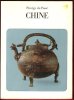
Couverture souple Très bon 1ère Édition
Les arsenaux de Suisse, les parcs automobiles de l'armée. Die Zeughäuser der Schweiz, Die Armeemotorfahrzeugparks. Gli arsenali svizzeri, I parchi automobilistici dell'esercito.
1993 Edité par l'Intendance du Matériel de Guerre, Berne (Suisse) - 1993 - In-4, cartonnage bleu décoré de dorures sous jaquette illustrée en N&B de l'éditeur - 384 p. - Riche iconographie in et hors-texte en N&B - Ouvrage trilingue allemand-français-italien
Bon état - Coins supérieurs légèrement tassés Bon
Dislexicon of Slapstick Humor, Funny Cinematography, and Very Special Effects
, MER. Paper Kunsthalle, 2011 Hardcover 64 pages / 19,5 x 13 cm. ISBN 9789490693312.
The Dislexicon of Slapstick Humor, Funny Cinematography, and Very Special Effects? is a richly illustrated glossary containing 138 witty words used in the Mack Sennett Comedy Studios between 1912 and 1933. It comprises clever concepts connected to slapstick comedy, gag strategies, funny pratfalls, dangerous stuntwork, and secrets of the filmmaking trade. In a mishmash of slapstick facts and fictions, the Dislexicon fully accepts tall tales, technical reports, jokes, and gossip as historical sources. Hopping from "gag" to "laugh" to "trick," the dictionary presents a slapstick universe in which everything makes perfect sense ? as only a fictional construction can.
allegorie van de zeven vrije kunsten, De verbeelding van Maerten de Vos / Maarten de Vos
Antwerpen , Phoebus Focus III, 2019 Oorspronkelijk uitgevers omslag, 62 pagina's . ISBN 9789082829013.
Phoebus Focus III: een wetenschappelijke publicatiereeks waarin pareltjes uit de collectie in de schijnwerpers worden geplaatst. Hierbij wordt voor elke nieuwe uitgave een beroep gedaan op kunsthistorici die gespecialiseerd zijn in het betreffende thema, en het verhaal op een boeiende en toegankelijke manier kunnen vertellen. Het eerste boekje uit de reeks verscheen naar aanleiding van de eerste focustentoonstelling in de Keizerskapel, waarbij het triptiekje van Sint-Lukas schildert de Madonna getoond werd. De tweede en derde uitgaven volgden snel, waarbij twee schilderijen besproken worden die vandaag te zien zijn in het nieuwe Snijders&Rockoxhuis in Antwerpen: Keukenstilleven met Christus in het huis van Marta en Maria door Frans Ykens (1601-1693) en Allegorie van de zeven vrije kunsten van Maerten de Vos (1532-1603). Het vierde boekje verscheen vervolgens naar aanleiding van VOSSEN. Expeditie door het land van Reynaert, en handelt ? u kon het al raden ? over Reynaert de vos. Recent verscheen ook de vijfde uitgave, waarin het Meermonster van Tagua Tagua besproken wordt. Dit schijnbaar vrolijke en komische schilderij blijkt een brede betekenis te hebben: je zou het een geschiedenisboekje kunnen noemen, samengebald in een merkwaardig beeld...
KEYBOARD INSTRUMENTS Virginals, harpsichords and organs in paintings of the 16th and 17th centuries.
Antwerp, BAI, 2022 Hardcover, 280 x 210 mm, 176 pages, throughout illustraties, ENG edition, *new. ISBN 9789085868293.
Paintings featuring harpsichords, virginals and organs offer us a glimpse of gorgeous interiors, amorous scenes and finely-dressed ladies - and the occasional young man too - at the keyboard. Keyboard instruments can also be the key to decoding an allegory, myth or hidden message in a painting. Other exhibits include painted harpsichord and virginal lids as well as original instruments. Loans from the National Gallery in London, the Rijksmuseum in Amsterdam, the Suermondt-Ludwigmuseum in Aachen and many other museums and collectors offer a delight for eyes and ears. The music room at the Snyders&Rockox House evokes the Jewish-Portuguese Duarte family, who came to Antwerp in the 16th century to flee the Inquisition. They were drawn by the commercial opportunities offered by the city, where they lived in a patrician residence on the Meir, the most important street. Besides an exceptional collection of paintings by leading Italian and above all Flemish masters, from Titian and Tintoretto to Quinten Massys, Peter Paul Rubens and Anthony Van Dyck, the family also owned five harpsichords and virginals. Duarte did not have to look far to find them, as Antwerp was one of the leading centres for the construction of these instruments and two if not more important harpsichord builders belonged to the businessman's circle of acquaintances. The first references to harpsichord builders in Antwerp date from the beginning of the 16th century. It was between 1560 and 1660, however, that the city was known as the undisputed world capital of harpsichord production. Every year, Antwerp workshops turned out hundreds of harpsichords and virginals. Contemporaries praised the instruments for the richness of their sound and their reliability. The members of the Ruckers-Couchet family were especially renowned for their exceptionally high-quality instruments. Hans Ruckers, his sons Joannes and Andreas and his grandson Joannes Couchet did for instrument-making what Peter Paul Rubens was doing for painting and Christophe Plantin for printing. The Ruckers-Couchet family was not alone: names like Marten van der Biest, Joos Karest, Cornelis and Simon Hagaerts, Joris Britsen and many others also stood for excellent quality. Antwerp harpsichords and virginals did not only sell very well locally, they were sought-after throughout Europe and even far beyond until well into the eighteenth century. A substantial proportion of Antwerp's harpsichord output, like that of its paintings and ornamental furniture, was destined for the international market. The city also developed a strong tradition in the building of domestic and church organs. Dozens of organ builders were active in the 16th century alone, including the Moors and Brebos families. The Ruckers-Couchet family worked with organs too: Joannes Ruckers, for instance, was responsible for a while for maintaining the organ at Antwerp Cathedral. The rise of the Antwerp keyboard builders was accompanied by a flourishing music printing industry (Antwerp was not the first or the only centre of music publication, but it was certainly one of the most important) and an emerging bourgeois culture in which music too played a part. The original instruments are a lasting testimony to musical life in Antwerp, as are the paintings that explore them as their subject matter. Frans Floris, Jacob Jordaens, Maerten de Vos, de familie Francken, Jan Miense Molenaer, Jan Steen, Gerard Dou, Gabri l Metsu en Jacob Ochtervelt
KLAVIER Virginalen, Klavecimbels en orgels verbeeld in de 16de en de 17de eeuw
, BAI, 2022 HB, 280 x 210 mm, 176 pagina's, illustraties in,kleur. NL edition. nieuw. ISBN 9789085868309.
In Museum Vleeshuis maak je kennis met klavecimbels en virginalen, met unieke, beschilderde klavecimbeldeksels, en met Anthony Van Dycks portret van klaviervirtuoos Henricus Liberti. Mario Sarrechia, Bart Rodyns en Korneel Bernolet zorgen met nieuwe opnames op klavecimbel, virginaal en orgel, voor de gepaste soundtrack. In het Snijders&Rockoxhuis kan je schilderijen van onder meer Frans Floris, Jacob Jordaens, Maerten de Vos, de familie Francken, Jan Miense Molenaer, Jan Steen, Gerard Dou, Gabri l Metsu en Jacob Ochtervelt ontdekken. Al deze schilderijen hebben n ding gemeen: ze tonen orgels, klavecimbels en virginalen, vaak van Antwerpse makelij. Enkele klavierinstrumenten uit de collectie van Museum Vleeshuis vullen de tentoonstelling aan.
Artificial flowers
Hasselt, Provinciaal Museum Hasselt, 1996 Softcover met poster, 23.5 x 16.5 cm, pagina's ongenummerd, NL. *Uitstekende staat.
Vincent Emmanuel Guitter, Stephane Lallemand, Eric Lamouroux
Op zoek naar het paradijs. Flora op het Lam Gods. / A la recherche du paradis. La flore sur l'agneau mystique / in search of paradise, Flora on the Ghent Altarpiece. Een wonderbaarlijke tuin
be, erfgoed Oostvlaanderen, 2020 Softcover, 296 pages, illustrations couleur/ richly illustrated / Nederlands / Texte en Francais / English Text. ISBN 9789082732870.
Een wonderbaarlijke tuin. Flora op het Lam Gods / Un jardin miraculeux la flore sur l'agneau mystique. / A miraculeus garden flora on the Ghent Altarpiece. Het Lam Gods toont een paradijselijke tuin die getuigt van het uitzonderlijke vermogen van de Van Eycks om waarheidsgetrouw te schilderen n om de realiteit te verweven met symboliek. Na de restauratie van het topstuk herkennen bioloog Paul Van den Bremt en apotheker Hilde Van Crombrugge 76 verschillende bloemen en planten. Gastauteurs leveren bijkomende studies van de vogels en de rotsformaties, gesteenten en mineralen. Laat je opnieuw verwonderen door het genie van de broers Van Eyck en leer heel wat bij over bloemen en planten met deze herwerkte uitgave van de bestseller uit 2016. /// Un magnifique jardin. Flore sur le retable de Gand / Un jardin miraculeux la flore sur l'agneau mystique. / Une flore de jardin miraculeuse sur le retable de Gand. Le retable de Gand montre un jardin paradisiaque qui t moigne de la capacit exceptionnelle des Van Eycks peindre honn tement et entrem ler la r alit avec le symbolisme. Apr s la restauration du chef-d'?uvre, le biologiste Paul Van den Bremt et la pharmacienne Hilde Van Crombrugge reconnaissent 76 fleurs et plantes diff rentes. Les auteurs invit s fournissent des tudes suppl mentaires sur les oiseaux et les formations rocheuses, les roches et les min raux. Laissez-vous surprendre par le g nie des fr res Van Eyck et apprenez-en beaucoup sur les fleurs et les plantes avec cette dition r vis e du best-seller de 2016. /// A wonderful garden. Flora on the Ghent Altarpiece / Un jardin miraculeux la flore sur l'agneau mystique. / A miraculous garden flora on the Ghent Altarpiece. The Ghent Altarpiece shows a paradise garden that testifies to the exceptional ability of the Van Eycks to paint truthfully and to interweave reality with symbolism. After the restoration of the masterpiece, biologist Paul Van den Bremt and pharmacist Hilde Van Crombrugge recognize 76 different flowers and plants. Guest authors provide additional studies of the birds and rock formations, rocks and minerals. Be amazed again by the genius of the Van Eyck brothers and learn a lot about flowers and plants with this revised edition of the bestseller from 2016.
tegendraadse Verlangen, The Contradicted Desire, Le d sir contrari
, Koninklijk Museum voor Schone Kunsten, Antwerpen, 1997 Softcover, 92 pages, 24 x 16 cm, Dutch / French/ English. good condition.
Frederick Bell, Pierre Antoine, Francois Elie, Marc Schepers
Raoul de Keyser - ICC Antwerpen 1980
, Internationaal Cultureel Centrum Antwerpen , 1980 Oorspronkelijk uitgevers omslag, Inclusief 9 zwart-wit- en kleurenplaten en 2 afbeeldingen van de tentoonstelling. NL/ENG. - 21x29.7cm ingesloten; + uitnodigingskaart.
Raoul de Keyser - ICC Antwerpen 1980 / Catalogus / Internationaal Cultureel Centrum - Antwerpen; vol. 201
Dictionnaire historique des rues de Paris
2 volumes 4 reliure éditeur pleine toile écrue, titre en blanc au dos et sur le premier plat. Tome 1 : faux-titre, titre, 733 pages, texte sur 2 colonnes, nombreuses illustrations Tome 2 : faux-titre, titre, 734 pages, plan de Paris 8 pages. Pages de gardes illustrées. Les éditions de minuit 30 mai 1964. très bon état
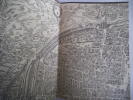
Dictionnaire historique des rues de Paris. 2 tomes + supplément [3 volumes]
Les Editions de Minuit. L’ensemble se déploie comme suit: -Tome I, A-K. 6e édition, 1973 [1963], 721 p. ill. n&b, plans, noms anciens des voies supprimées ou encore existantes. Cartonnage éditeur toilé beige, sous jaquette, 21,7 x 29,7 x 4,5 cm. -Tome II, L-Z. 6e édition, 1973 [1963], 717 p., ill. n&b, noms anciens des voies supprimées ou encore existantes, index des principaux établissements cités + plan de Paris in fine [10 p.]. Cartonnage éditeur toilé beige, sous jaquette, 21,7 x 29,7 x 4,5 cm. -Supplément, par Jacques Hillairet et Pascal Payen-Apenzeller, 2e édition, 1975 [1972], 146 p. ill. n&b. Cartonnage éditeur toilé beige, sous jaquette illustrée, 21,7 x 29,7 cm.
Bon état.
Evocation du vieux Paris - Vieux quartiers, vieilles rues, vieilles demeures historique, vestiges, annales et anecdotes (Tome 1, deuxième édition)
1957 Ed. de Minuit - 1957 - Fort In-8 cartonné - 677 p. - Illustrations et cartes en N&B
Bon état - Pli de lecture au dos
LE PALAIS DU LOUVRE - SA VIE, SES GRANDS SOUVENIRS HISTORIQUES
LES EDITIONS DE MINUIT. 1969. In-8. Broché. Bon état, Couv. convenable, Dos satisfaisant, Intérieur frais. 159 Pages - Nombreuses photos et plans en noir et blanc dans et hors texte. . . . Classification Dewey : 720-Architecture
Classification Dewey : 720-Architecture


Le palais du Louvre - Sa vie, ses grands souvenirs historiques
Les éditions de minuit. 1955. In-12. Broché. Etat d'usage, Couv. convenable, Dos plié, Intérieur frais. 198 pages augmentées de quelques planches d'illustrations en noir et blanc hors texte.. . . . Classification Dewey : 720-Architecture
Classification Dewey : 720-Architecture
PLAISIR DE LA MAISON.
PARIS. PLAISIR DE FRANCE. SANS DATE. (VERS 1960). 4 VOLUMES PETIT IN-4 (23 X 30,5 CENTIMETRES ENVIRON) DE 60 PAGES CHACUN, RELIURE DE L'EDITEUR A LA BRADEL PLEINE PERCALINE ROUGE, SOUS CHEMISE ET ETUI. NUMBREUSES ILLUSTRATIONS EN NOIR ET EN COULEURS, PHOTOGRAPHIES ET PLANS. COMPREND : - ENTREES, SALONS, BUREAUX. - SALLES A MANGER, COINS REPAS, CUISINES. - CHAMBRES, RANGEMENTS, SALLES DE BAINS. - LIVING-ROOMS, CAVES ET GRENIERS, TERRASSES. BON EXEMPLAIRE.
Gary Hill: Centre Georges Pompidou : 25 novembre 1992 - 24 janvier 1993
Paris, Centre Georges Pompidou, 1992 Softcover, 141 pages, 30 x 23.5 cm, FR. *fine condition. ISBN 9782858507092.
Gary Hill: Centre Georges Pompidou : 25 novembre 1992 - 24 janvier 1993
Die Meister des japanischen Farbendruckes.
London, Phaidon, 1955. 4°. 143 S. 1 farb. Frontisp., 16 Farbtafeln u. zahlr., z.T. ganzs. Abb. Orig.-Leinenband mit Schutzumschlag (mit kleinen Randläsuren).
Tuinen van heden. Vernieuwende tuinarchitectuur in Europa,
, Mercatorfonds / Fonds Mercator, Hardcover met stofomslag, 265 x 345mm., 264pp., 400 illustraties in kleur*prima staat. ISBN 9789061534952.
De hedendaagse tuinontwerpen zijn verfrissend, gedurfd, karaktervol. Zij steunen op de kracht van de traditie en op verwezenlijkingen uit het verleden, of druisen tegen de gebruikelijke visie op tuinen in. Penelope Hill is in Europa op zoek gegaan naar tuinen die, door hun originaliteit, hun verrassende locatie of hun schoonheid een bijzondere bijdrage aan de hedendaagse tuinarchitectuur betekenen , en zij ontdekte er vele honderden. Dankzij de boeiend geschreven tekst en de prachtige tuinfotos is haar boek een pleidooi voor de tuinarchitectuur als een van de rijkste hedendaagse kunstvormen.
Petite histoire de l'art et des artistes : La sculpture et L'architecture.
Paris, Fernand Nathan, 1948. 15 x 21, 192 pp., très nombreuses illustrations en N/B, reliure d'édition + jaquette, bon état (jaquette défraîchie).
Adaptation et préface de Georges Huisman.

