Write to the booksellers
-
Type
Any type (1)
Art print (7)
Autograph (1)
Book (32263)
Disk (1)
Drawings (265)
Engraving (11)
Magazine (125)
Old papers (1)
Photographs (15)
Posters (1)
-
Latest
Last 24h (7)
Last 3 days (8)
Last month (563)
Last week (46)
-
Language
Dutch (156)
English (75)
French (32412)
German (7)
Italian (20)
Portuguese (9)
Spanish (12)
-
Century
16th (14)
17th (46)
18th (186)
19th (1514)
20th (9545)
21st (1699)
-
Countries
Belgium (10983)
Brazil (6)
Canada (116)
China (1)
Côte d'Ivoire (139)
Denmark (209)
France (18133)
Germany (1)
Greece (1)
Switzerland (3102)
-
Syndicate
ALAC (107)
CLAM (266)
CLAQ (102)
CNE (3)
ILAB (10707)
NVVA (1145)
SLACES (1145)
SLAM (7977)
SNCAO (10)
EXCURSIONS EN PROVENCE. Nouvelle édition.
Marseille Librairie Paul Ruat sans date vers 1900. 7 fascicules in-12 brochés sous chemise spéciale cartonnée bleue, titre sur le dos et le 1er plat. 1°) 51pp IV feuillets roses de programmes pour 21 excursions 2°) 47pp IV feuillet roses de monuments classés historiques 3°) 48pp IV feuillets roses e programmes pour 15 excursions 4°) 52pp IV feuillets roses de conseils aux excursionnistes 5°) 52pp IV feuillets roses pour 6 excursions 6°) 48pp 4 feuillets roses de rectifications et changements 7°) 63pp. Orné de 36 illustrations: 7 frontispices, 6 à pleine page, 18 dans le texte, 4 cartes (2 repliées, 2 dépliantes), 1 plan dépliant (Aix-en-Provence). Pliure angulaire sur le 1er plat et petit manque sur le dos (2e fascicule); manque angulaire sur le 2e plat de la couverture (3e fascicule); manque au bas du dos et en bordure du 2e plat (7e fascicule). Ensemble complet, présenté sous sa chemise spéciale cartonnée, qui fait très souvent défaut. Ces petits guides très complets et d'une lecture agréable, invitent à découvrir les sites et monuments des Bouches du Rhône.

Beyond Sovereign Courts. Agents and Practices in Early Modern Spanish and Habsburg Diplomacy
, Brepols, 2026 Hardback, Pages: 203, Size:178 x 254 mm, Illustrations:4 b/w, Language: English. ISBN 9782503611808.
Summary The classic model of early modern diplomacy suggests the exchange of missions between royal courts and sovereigns, but recent scholarship emphasises that many cross-imperial contacts transcended this scheme. Whether missions were sent from Manila to Mangalore, from Sanl car de Barrameda to Marrakesh or from Buda to Vienna, regional authorities or local notables managed and conducted exchanges of their own with tacit or indirect control by their sovereign court. Given the breadth and variety of this typology, which goes beyond the anecdotal exception, this collection sets out to reveal how such indirect diplomacy functioned and developed throughout the first period of globalisation. And of course, many of the actors in these exchanges had contact in some degree with the court, the hub of diplomatic activity. Exploring the further reaches of court cultures therefore will provide a useful opportunity to clarify how diplomatic actors negotiated in socio-political frameworks alien to their own traditions by denying a formalised and ritual approach, many derived from court culture, to discreetly advance their dealings. In so doing, we argue for a change in the way historians think about indirect diplomacy as a scarcely institutionalised practice or unrelated to the court. Indeed, this collection affirms how indirect diplomacy was a peculiar model of diplomacy implemented by early modern empires according to their political and cultural needs. TABLE OF CONTENTS Introduction: Indirect Diplomacy and Sovereign Courts Rub n Gonz lez Cuerva & Francesco Caprioli 1. The Spanish Monarchy and Muslim Polities The Court and the Stronghold: The Distrustful Political Communication between Tunis and La Goleta (1535-1570) Rub n Gonz lez Cuerva Court, Nobility, and Diplomacy: The Relations between the Spanish Monarchy and the Saadian Sultanate of Morocco at the Turn of the Seventeenth Century Miguel Soto Garrido Religious Figures as Indirect Agents: The Case of Jer nimo Graci n de la Madre de Dios in Morocco (1600-1605) Miguel ngel de Bunes Ibarra Negotiating Difference between Manila and Mangalore. Colonial Ethnography and Intercultural Diplomacy in the Diary and Drawings of Miguel Antonio G mez (1776-1777) Diego Herrero Garc a 2. The Limits of the European Diplomatic System Brussels and the 'Politics of the North': The Dispatch of Burgundian Agents to the Tudor Court, 1559-1567 Javier Hip lito Villanueva Diplomatic Agents and Stakeholders between Madrid, Rome, and Naples in the Time of the Viceroy Castrillo (1653-1658) Marcelo Paulo Correa Local Truces and Minor Memories: The War between Portugal and Spain (1640-1668) and the Construction of the Past within Frontier Communities David Mart n Marcos A Third Party: G bor Bethlen, Prince of Transylvania and the Habsburg-Ottoman Peace Negotiations 1624-1627 Gabor K rm n Afterword Indirect Diplomacy in the Context of New Diplomatic History. The Cause of Decentralizing Diplomacy Hillard von Thiessen
Die Reklame. - Ihre Kunst und Wissenschaft ... einem Geleitwort von Victoar Mataja.
1. (v. 2) Bdn. Berlin, Verlag für Sozialpolitik, 1913. Lex-8°. XI, 360 S. Mit zahlr. z.T. farb. Illustr. Orig.-Leinenband (berieben, bestossen).
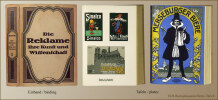
Bekannter Klassiker der Werbung, leider nur der erste von zwei Bänden, wobei letzterer ein Jahr später separat erschienen. Reich illustriertes Werk mit Beiträgen über Firmenautritte, Schaufensterdekorationen, Plakatwerbungen und über die Werbung in diversen Ländern, wie Deutschland, Polen, Amerika u.a. - 1 Seite mit Unterstreichungen und 1 Einriss. Der Leinenband mit Restaurationen.
Hinault
, Kannibaal 2014, 2014 Hardcover, 208 pagina's , NL, 300 x 245 mm, in nieuwstaat ! met tientallen foto's in kleur en z/w, hoort thuis bij elke wielrennen fanaat !. ISBN 9789492081087.
Herbeleef de wonderlijke carri re van wielerlegende Bernard Hinault 'Ik koers om te winnen, niet om mensen te plezieren' Bernard Hinault Bernard Hinault, een van de allergrootste iconen uit het wielrennen, is de laatste chte patron van het peloton. In dit boek schetst VRT-sportjournalist Ruben Van Gucht de twintig belangrijkste momenten in zijn carri re, van zijn ophefmakende solo?s bij de jeugd over zijn eerste straffe prestaties bij de profs tot zijn raid tijdens het Frans kampioenschap in 1978 en zijn wereldtitelkoers, die hij op een imponerende manier naar zijn hand zette in Sallanches. Samen met Eddy Merckx is hij de enige renner die erin geslaagd is alle klassementen in de Tour de France te winnen en hij behaalde er eveneens vijf keer de eindzege. Hinault heeft niet alleen meer dan 250 overwinningen behaald, hij heeft daarbovenop ook een diepe indruk nagelaten op zowel voor- als tegenstanders. Met een bijdrage van de Franse wielerjournalist Philippe Brunel (L? quipe), een woord vooraf door Bernard Hinault zelf en een schat aan indrukwekkende archiefbeelden.
Volkskunst am Berner Bauernhaus. ‘Volkstum der Schweiz’, 3.
Basel, Schweiz. Gesells. für Volkskunde, Helbing & Lichtenhahn Buchhandling, 1942, in-8°, 120 S., mit 54 Zeichnungen von Herb. Abrecht + 51 Tafeln mit 82 Abb. nach photographischen Aufnahmen von Rob. Marti-Wehren, Original-Leinenband. Illustr. Orig.-Umschlag.

(SLACES, NVVA)
Phone number : 41 (0)26 3223808
L'Ancienne Abbaye de Sainte-Trinité de Lessay au Diocèse de Coutances (Exaquium) 1056-1791
Mortain, Imprimerie du Mortanais, 199 p. in-8 br., s.d. (1930), 3 planches h.-t., dont un plan de l'Abbaye au XVIIe siècle, couverture un peu passée avec petit manque, non coupé, envoi de l'auteur, bon état
Première étude sur l'abbaye proprement dite, la vie et l'activité de ce monastère au cours des sept siècles de son existence
Catastrophes in Context. Disaster and Response in the Roman and Early Byzantine World
, Brepols, 2026 Hardback, Pages: xvi + 297, Size:216 x 280 mm, Illustrations:22 b/w, 58 col., 26 tables b/w., Language: English. ISBN 9782503623641.
Summary Catastrophes in Context: Disaster and Response in the Roman and Early Byzantine World explores how people in the ancient world lived through, reacted to, and recovered after major crises. From earthquakes and eruptions to shortages, plagues, and sudden environmental shifts, the book shows disasters not as stand-alone events but as moments that changed communities in lasting ways. Drawing on a wide mix of evidence such as archaeological remains, texts, landscapes, and scientific data, it brings together engaging case studies that highlight real human experiences of fear, loss, recovery, and resilience. The contributors offer new ways to understand how ancient societies coped with catastrophic events, what resources they relied on, and how they adapted to new realities. Comprehensive, engaging, and wide-ranging, this volume presents the ancient world through the lens of challenge and response, showing how crises shaped everyday life and long-term history. TABLE OF CONTENTS List of Illustrations List of Contributors Preface 1. Catastrophe and Response in the Ancient World Rubina Raja and Andrew Wilson 2. War and Urbanism: The Boudican Revolt and the Reconstruction of Londinium Lacey Wallace 3. Re-evaluating the Impact of the Earthquake(s) of AD 62/63 in Roman Pompeii Michael A. Anderson 4. The Catastrophic AD 79 Eruption of Vesuvius: Survivors and Post-eruption Intervention at the Local and Imperial Level in Four Communities Steven L. Tuck 5. The Economic Impact of the Antonine Plague Andrew Wilson 6. Catastrophes and Resilience: The Archaeology of Crises at Palmyra, 150-272 Olympia Bobou and Rubina Raja 7. Cyrenaica and the Plague of Cyprian Andrew Wilson 8. Catastrophes and the Dynamic Landscape of Thonis-Heracleion Damian Robinson and Franck Goddio 9. Catastrophic(?) Floods in the Roman North: Chronologies, Causes, and Contexts Tyler Franconi 10. Resilience in Late Fifth-Century Aphrodisias: An Archaeological Perspective from the Tetrapylon Street Ine Jacobs 11. The Environmental Context for the Outbreak of the Justinianic Plague in the Mediterranean Brandon McDonald, Andrew Wilson, and Arietta Papaconstantinou 12. Contextualizing Late Antique Natural Disasters: The Elements and Effects of the Late Antique Little Ice Age and the Justinianic Plague Brandon McDonald Errata to 'The Environmental Context for the Outbreak of the Justinianic Plague in the Mediterranean' (Brandon McDonald, Andrew Wilson, and Arietta Papaconstantinou) (https://doi.org/10.1484/M.STIA-EB.5.155908)
Small Stuff of the Palmyrenes. Coins and Tesserae from Palmyra
, Brepols, 2022 Paperback, xvi + 177 pages, Size:216 x 280 mm, Illustrations:1204 b/w, 2 col., 7 tables b/w., 2 maps b/w, Language: English. * NEW ISBN 9782503597607.
Summary The ancient city of Palmyra is, rightly, famous for its major monumental architecture and its vast corpus of funerary portraiture, most of which dates from the first three centuries AD. This material has long been central to art-historical, archaeological, and epigraphical studies of the region. However, up to now, relatively little attention has been paid to the 'small stuff' from Palmyra ? seemingly minor items such as the enigmatic local coinage and the richly iconographic banqueting tesserae found scattered across the city's sanctuaries ? which has never been comprehensively studied, but may have had huge importance for the people who lived in Roman Palmyra. This volume, which arises from the research project Circular Economy and Urban Sustainability in Antiquity headed by Prof. Rubina Raja, aims to redress the balance by giving new focus to these small finds with a view to studying them and better understanding their significance in Palmyrene social and religious life. Drawing together experts on Palmyra's archaeology, history, and language, the volume offers insights and reflections into various aspects of the city's coins and tesserae in both their local setting and their wider regional context. In doing so, the contributions gathered here open up new lines of enquiry, and at the same time underline how much we still have to learn from studying even the smallest items. TABLE OF CONTENTS The Small Stuff of the Palmyrenes: Coins and Tesserae from Palmyra ? RUBINA RAJA Revisiting the Palmyrene Banqueting Tesserae: Conceptualization, Production, Usage, and Meaning of the Palmyrene ? RUBINA RAJA Tesserae and Prosopography ? JEAN-BAPTISTE YON Palmyrene Tesserae in the Context of Temple Administration ? ALEKSANDRA KUBIAK-SCHNEIDER Some Thoughts on Divine Representations on Palmyrene Coins and Tesserae ? TED KAIZER Caravan Trade in Palmyrene Tesserae and Coins? ? EIVIND H. SELAND Three Forgotten Tesserae and a Coin from Palmyra in the Oriental Museum at Durham University ? TED KAIZER AND JEREMY HUTTON The Production, Circulation and Function of the Local Palmyrene Coinage ? NATHALIA KRISTENSEN Palmyra's Small Coins and their Dies: Preliminary Results ? NATHANAEL ANDRADE Civic Coins and Urban Networks: Palmyra and its Coinage in a Regional Perspective ? MICHAEL BL MER Bigger Stuff Beyond Palmyra: The Coinage of the Hatrans and Assyrians ? KEVIN BUTCHER
Dada und Surrealismus.
New York, Büchergilde Gutenberg, 1972. 4°. 507 S. Mit zahlr. Abb. im Text und auf Seitentafeln sowie 59 mont. farb. Abb. Gepr. Orig.-Samteinband mit Schutzumschlag (lichtrandig, Schutzumschlag leicht gebräunt).
Schnitt leicht gebräunt und minim fleckig.
Ulrich Ruckriem
London, Serpentine Gallery, 1991 Softcover with dustjacket, 40 pages, 29 x 23 cm; in English and German. ISBN 9781870814317.
Ulrich R ckriem (born 30 September 1938) is a German sculptor notable for his monumental stone sculptures. He lives and works in Cologne and London. His abstract works of art are often assigned to the style of minimalism and process art.
RUDAZ, Patrick; RUFFIEUX-CHEHAB, Jean-Marc et Colette; DUPONT, Thérèse; CASTIGLIONI, Piero:
Reference : 101770aaf
L’église Saint-Pierre à Fribourg. Patrimoine Fribourgeois N° 18.
Villars-sur-Glâne, Service des biens culturels, 2008, in-4to, 88 p. richement ill., brochure originale ill.
Claude Castella: Quand les églises étaient polychromes / Aloys Lauper: De Saint-Pierre à Gambach: les tribulations d’un saint patron / Aloys Lauper: La leçon de Romont / Aloys Lauper: Une architecture simple et forte / Patrick Rudaz: Un grand peintre trop encombrant? / Patrick Rudaz: Une constellation d’artistes en arrière-plan / Frédéric Arnaud et Ferdinand Pajor: Couleurs et lumières, de Melbourne à Fribourg / Anna Carolina Kapsopoulos: Gino Severini, un peintre de son temps / Jean-Marc et Colette Ruffieux-Chehab: Retrouver l’unité / Thérèse Dupont: La restauration du décor / Piero Castiglioni: Modulations de lumière.
(SLACES, NVVA)
Phone number : 41 (0)26 3223808
Mechelen. Kunst van de Middeleeuwen tot heden. L'art du moyen- ge nos jours. Kunst vom Mittelalter zur Gegenwart. The Arts from the Middle Ages until the present day.
Antwerpen/Brussel, Continental Printing, 1997 Linnen band met stofomslag, 168 pagina's, 30,5 x 23,5 cm, Nederlands/English/fran ais. Mooie staat. . ISBN 9789057200472.
Mechelen. Kunst van de Middeleeuwen tot heden. L'art du moyen- ge nos jours. Kunst vom Mittelalter zur Gegenwart. The Arts from the Middle Ages until the present day.
Dutch and Flemish Painting: Portraits 1600-1800, Old Masters' Gallery Catalogues, Szepmuveszeti Muzeum Budapest, Volume 1.
NL-, Primavera, 2011 Bound, hardcover, 304 pag., 22 x 28 cm, bound, ca. 150 ill. mostly colour fine condition !. ISBN 9789059971004.
The collection of Dutch Old Master paintings in the Szepm?veszeti Muzeum, Budapest, is one of the largest in the world outside the Netherlands and Belgium. This first volume of its catalogue raisonne series discusses one hundred and five Dutch and Flemish portraits from 1600 to 1800, an abundant and varied section of the collection. Represented are such great masters like Anthony van Dyck, Frans Hals, Thomas de Keyser, Bartholomeus van der Helst, and it includes fine works by leading portraitists from nearly all the famous centres of Dutch painting. The core of this material comes from the Prince Esterhazy collection purchased in 1871, which was subsequently enriched by gifts and bequests of further Hungarian aristocrats and bourgeois collectors. Until recently the collection of portraits has been augmented through resolute or occasional aquisitions by gallery directors, starting with Karoly Pulszky, Gabriel Terey and others. This volume is the first systematic overview of that special part of the Budapest collection, containing new achievements of research: several new attributions, names of sitters, and unknown data to the provenance of the paintings. The text is in English and Hungarian. Rudi E.O. Ekkart, director of the Rijksbureau voor Kunsthistorische Documentatie in the Hague, is the leading authority on seventeenth-century Dutch and Flemish portraits, author of scholarly catalogues and co-curator of special exhibitions. He is professor of arthistory at the Utrecht University.
Anselm Kiefer Bilderstreit.
, museum voorlinden, 2023 Hardcover,184 PAGES met prachtige illustraties in kleur. index. Text NL/ENG. 24 x 29,7 cm. ISBN 9789492549914.
Dankzij zijn eigenzinnige beeldtaal, vol verwijzingen naar geschiedenis, mythologie en literatuur, groeide Anselm Kiefer (1945) uit tot een van de grootste kunstenaars van onze tijd. Zijn werk is een lust voor het oog en prikkelt het brein. Hij denkt groots, werkt op monumentale schaal met ongebruikelijke materialen en deinst er niet voor terug om de ongemakkelijke vragen van het leven te stellen. Tijdens zijn solotentoonstelling Bilderstreit bij Voorlinden kun je zijn intrigerende schilderijen, sculpturen, kunstenaarsboeken en installaties zien. Een groot aantal daarvan is nooit eerder vertoond. ///--- Thanks to his idiosyncratic visual language, full of references to history, mythology and literature, Anselm Kiefer (1945) has become one of the greatest artists of our time. His work is pleasing to the eye and stimulating for the brain. He thinks big, works on a monumental scale with unusual materials and does not shy away from asking the uncomfortable questions of life. During his solo exhibition Bilderstreit at Voorlinden you can see his intriguing paintings, sculptures, artists? books and installations. Many of them have never been shown before.
Van hier tot daar - D'ici jusqu' l bas : tekeningen door vluchtelingen in Belgi - Dessins de r fugi s en Belgique
, mercatorfonds - fondsmercator 2016, 2016 Softcover, 208 pagina's, Nederlands / Francais, 235 x 170 mm, in goede staat, met veel tekst en illustraties,. ISBN 9789462301528.
'Van hier tot daar' toont tekeningen van vluchtelingen in Belgi . Met potlood en papier trok S.M.A.K. naar opvangcentra in Maximiliaanpark, Poelkapelle, Sijsele, Koksijde, Leopoldsburg en Holsbeek en nodigde er de bewoners uit om te tekenen. De resultaten zijn verrassend en kwetsbaar, soms wreed maar vooral herkenbaar. Van oorlog, riskante bootreizen en diepmenselijk verdriet, over voetbal en bloemen tot klein geluk. Waar woorden tekortschieten, bewijst beeldtaal zijn universele kracht. Na Traces of Surival (2015), met tekeningen van bewoners van vluchtelingenkampen in Irak, wil S.M.A.K. met dit nieuwe boek opnieuw bijdragen aan het debat en de beeldvorming rond vluchtelingen. Uitgegeven door S.M.A.K., Fondation Boghossian en Mercatorfonds. Met teksten van Philippe van Cauteren, Rudi Vranckx et Prof. dr. Philippe Vandekerckhove. Alle inkomsten van de verkoop van dit boek gaan naar het Rode Kruis voor het ontwikkelen van artistieke projecten in de kampen.
Architecture without architects
Academy Editions. English Text. London, 1964; paperback, pp. 148, b/w ill., b/w plates.
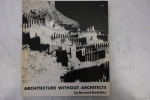
Good condition. Spine a little faded, small crease at the corners of the covers and most of the pages, pleasant interior. Bon état général. Dos un peu passé, petite pliure aux coins des plats et de la plupart des pages, intérieur agréable

Felix Vallotton Les Couchers de Soleil.
, Fondation Gianadda, 2005 softcover illustre de l'editeur, 264 pages, HB, 240 x 220 mm illustre. Texte en Francais. ISBN 9782884430876.
Expo: 18/3/2005-12/6/2005, Fondation Gianadda, Martigny
Robert Wehrlin
, , 1989 Hardcover, 216 pages, Texte en Francais, 305 x 255 x 25 mm, Nouveau !,jaquette illustre , tissu rouge avec impression argent e , illustrations en couleur / n/b, dans un etui en carton. ISBN 9782825800317.
Artiste suisse form aupr s de l'expressionniste Ernst Ludwig Kirchner, Robert Wehrlin est tr s pr sent dans les collections de La Piscine. Le catalogue pr sente l'importante et troisi me donation conc d e par le fils de l'artiste en 2014 et qui couvre tout loeuvre grav de Wehrlin.
Music and Science from Leonardo to Galileo
, Brepols, 2022 Hardback, 440 pages, Size:210 x 270 mm, Illustrations:51 b/w, 40 musical examples, Language(s):English, Italian. ISBN 9782503600802.
Summary Music is not only an art (either as the art of composition or the art of performance) but also a subject for scientific investigation. Scientists have always been interested in musical sound, philosophers in the impact of music on the human mind, and musicians may have been puzzled by the scientific foundations of their art. This book collects fourteen studies by authors from various countries about the interrelations between music and science as apparent in the long century from the lifetime of Leonardo da Vinci (1452-1519) to that of Galileo Galilei (1564-1642), a period termed Renaissance, Early Modern or the time of the (first) Scientific Revolution depending on the angle from which this period is approached. It is a time when the Aristotelian physics was replaced by modern pre-Newtonian physics, when Catholicism was challenged by the Reformation, when traditional polyphonic musical styles were supplemented by new monodic styles, vocal and instrumental. Both Leonardo and Galileo had vivid interests in music, but they were not the only ones. The ideas of scientists and philosophers, such as Marin Mersenne, Ren Descartes, Giordano Bruno and Philipp Melanchton are also discussed. TABLE OF CONTENTS Library Sigla Greek Writings Abbreviations of Reference Works Rudolf Rasch ? Introduction The (Long) Sixteenth Century Music David E. Cohen ? Latet discordantia quartae : An Early Natural-Scientific Explanation of Upper-Voice Fourths by Franchinus Gaffurius Science Paolo Alberto Rismondo ? Teoria musicale e patronage nobiliare a Venezia nel Cinquecento Alexander Jakobidze-Gitman ? Nascent Mechanism in Philip Melanchthon's References to Josquin des Prez Carlo Bosi ? Intra quaternarii limites musicam intelligunt omnem consonantiam : La musica nel pensiero di Giordano Bruno Gioia Filocamo ? Dissezioni anatomiche con musica a Padova nella prima et moderna The (Long) Seventeenth Century Music Daniel Mart n S ez ? Galileo and Opera: Music, Science, Religion, and Politics in the Seventeenth Century Jason Stoessel & Denis Collins ? La grandezza del numero sonoro : Canonic Techniques, Combinatorics and Early Scientific Thought in Seventeenth-Century Rome Carlos C. Iafelice ? Giovanni Battista Doni on the Tonal Space of Chromatic Music: The Case of Gesualdo's Tu m'uccidi, o crudele Rudolf Rasch ? Me veux-tu voir mourir: Joan Albert Ban versus Antoine Bo sset (1640-1641) Galliano Ciliberti? La Missa La luna piena (1657-1658) di Giuseppe Corsi e le teorie galileiane Science Rudolf Rasch ? Ren Descartes and Isaac Beeckman: The Philosopher and the Schoolmaster Leendert van der Miesen ? The Trumpet as Nature's Voice: Marin Mersenne and the Nature of Music Roberta Vidic ? Joachim Jungius and the Question of Music as an Experimental 'Mixed Science' Th odora Psychoyou ? Trajectories of Musical Acoustics in Seventeenth-Century French Theory and Experiment: Sound, Noise, and the Authorities of the Past Adam Fix ? The Acoustical Paradox: How Music Was Unmoored and Set Adrift from Sciences in the Seventeenth Century Index of Names
Bernin, le sculpteur du baroque romain.
, Phaidon, 2007 Couverture souple, 256 pages, 28 x 25 cm, Fran ais. illustrations. *En bon tat. ISBN 9780714894324.
Bernin, le sculpteur du baroque romain. Nouvelles photographies de Pino Guidolotti. Traduction fran aise de Domoinique Lablanche.
Painters and Communities in Seventeenth-Century Brussels, A Social History of Art
BE, UPL - KU Leuven, 2024 Paperback, 300 pages, 50 Illustrated, full colour, 244 x 170 x mm, Language: English, .*NEW ISBN 9789462704282.
Innovative exploration of the Brussels Baroque and the social dimensions of art production. In seventeenth-century Brussels, the careers of painters were shaped not only by their artistic talents but also by the communities to which they belonged. This book explores the intricate relationship between the social structures and artistic production of the 353 painters who became masters in the Brussels Guild of Painters, Goldbeaters, and Stained-Glass Makers between 1599 and 1706. This innovative study combines quantitative digital analysis with detailed qualitative case studies, offering a novel approach to the social history of art. By examining the various communities in which these artists operated, this book provides new insights into how early modern painters ? both in Brussels and beyond ? created their art, earned a living, and navigated the complexities of urban life. Painters and Communities in Seventeenth-Century Brussels also presents the first overview of the Brussels Baroque, with extensive biographical lists of the city?s master painters. PART I THE THREE PLACES OF LIVING CHAPTER 1. THE FIRST PLACE: THE FAMILY AND KINSHIP PATTERNS OF BRUSSELS? PAINTERS 1.1 The Early Modern Family of Painters in Art History 1.2 Brussels in the Seventeenth Century 1.3 Marriage Patterns and Independent Households 1.4 Occupational Continuity 1.5 Spiritual Kinship: Godparents and Marriage Witnesses 1.6 Conclusion CHAPTER 2. THE SECOND PLACE: BRUSSELS? PAINTERS AND THE LOCAL GUILD OF PAINTERS, GOLDBEATERS, AND STAINED-GLASS MAKERS 2.1 A Social Approach to the History of Guilds in the Southern Netherlands 2.2 The Brussels Guild of Painters, Goldbeaters, and Stained-Glass Makers During the Seventeenth Century 2.3 The Guild?s Conditions of Membership and Increasing Openness to Outsiders 2.4 Social Mobility Within the Guild 2.5 Occupational Ties and Information Flows 2.6 Conclusion CHAPTER 3. THE THIRD PLACE: THE SOCIAL LIFE OF BRUSSELS? PAINTERS BEYOND HOME AND WORK 3.1 The ?Third Place? in the Early Modern Southern Netherlands 3.2 Public Houses 3.3 Chambers of Rhetoric 3.4 Confraternities 3.5 Parishes and Neighbourhoods 3.6 Conclusion PART II THE THREE PLACES OF PAINTING CHAPTER 4. PAINTING FOR THE COURT: A FAMILY OF PAINTERS AT THE START OF THE SEVENTEENTH CENTURY 4.1 Brussels? Painters and the Archdukes? Patronage 4.2 The Noveliers Family of Painters 4.3 The Noveliers Family?s Privileged Position at the Court 4.4 The Noveliers Family?s Activities Outside the Court 4.5 Conclusion CHAPTER 5. PAINTING FOR THE MARKET: THE SONIAN FOREST DEPICTED AROUND THE MID-SEVENTEENTH CENTURY 5.1 The Sonian Forest Painters in Art-Historical Literature 5.2 The Growing Demand for Native Landscapes 5.3 The Sonian Forest Painters? Network 5.4 Collaborations 5.5 Conclusion CHAPTER 6. PAINTING FOR THE TAPESTRY INDUSTRY: THE CO-PRODUCTION OF TAPESTRY CARTOONS AT THE END OF THE SEVENTEENTH CENTURY 6.1 The Increasing Interest in Brussels? Tapestry Designers and Cartoon Painters 6.2 Adapting to a Changing Taste 6.3 Designing and Painting Tapestry Cartoons 6.4 The Importance of Spatial Proximity 6.5 Conclusion GENERAL CONCLUSION APPENDICES NOTES SOURCES AND BIBLIOGRAPHY
appel valt niet ver van de boom, maar wel in de tuin van de buurman. (met opdracht)
, Entos, 2008 Hardcover, 107 pagina's, 21 x 13.5 cm, Nederlandstalige tekst, met opdracht van de auteur. *Nieuwstaat. ISBN 9789077458068.
De appel valt niet ver van de boom, maar wel in de tuin van de buurman. (met opdracht)
Actensammlung aus der Zeit der Helvetischen Republik (1798-1803). 15. Band des Gesamtwerkes der Kulturhistor. Serie, 5. Band. Bearbeitet von Alfred Rufer. Amtliche Sammlung der Acten. -
Fribourg, Fragnière, 1964, in-4°, 3 Bl. + 1035 S., unaufgeschnitten, Original-Broschüre.
Enthält: 1) Textilindustrie. / 2) Ziegelbrennerei und Glasfabrikation. / 3) Erfindungen (Patentgesuche). / 4) Handel. / 5) Zollwesen. / 6) Masse und Gewichte. / 7) Münzwesen. / 8) Bauwesen. / 9) Transportanstalten. / 10) Strassenwesen. / 11) Bergstrassen. / 12) Brückenbau. / 13) Wasserbauten.
(SLACES, NVVA)
Phone number : 41 (0)26 3223808
Architectures of Herzog & de Meuron, portraits by Thomas Ruff
New York, P. Blum Edition, 1994 Hardcover with dustjacket, 200 pages, 33 x 25 cm, English text. *Near Fine. ISBN 9780935875126.
Contents: Notes to a synthesis of a text / Eduardo Souto de Moura -- Abstract juncture / Hans Kollhoff -- New discipline / Rem Koolhaas -- Raw experience / Steven Holl -- Representing architecture ; Interview with Jacques Herzog ; Interview with Thomas Ruff / Theodora Vischer.
Assise, la Colline de Saint François
Laffont Les hauts lieux de la spiritualité Cartonnage d'éditeur 1982 In-4°, cartonnage d'éditeur illustré en couleurs, 138 pp., nombreuses reproductions en couleurs et noir et blanc in texte ; très bon état. Livraison a domicile (La Poste) ou en Mondial Relay sur simple demande.