Write to the booksellers
-
Type
Any type (1)
Art print (7)
Autograph (1)
Book (31946)
Disk (1)
Drawings (265)
Engraving (10)
Magazine (125)
Old papers (1)
Photographs (15)
Posters (1)
-
Latest
Last 24h (28)
Last 3 days (32)
Last month (341)
Last week (142)
-
Language
Dutch (78)
English (56)
French (32195)
German (6)
Italian (18)
Portuguese (9)
Spanish (11)
-
Century
16th (14)
17th (47)
18th (198)
19th (1517)
20th (9447)
21st (1624)
-
Countries
Belgium (10865)
Brazil (6)
Canada (115)
China (1)
Côte d'Ivoire (139)
Denmark (207)
France (17922)
Germany (1)
Greece (1)
Switzerland (3116)
-
Syndicate
ALAC (106)
CLAM (145)
CLAQ (101)
CNE (3)
ILAB (10578)
NVVA (1145)
SLACES (1145)
SLAM (7970)
SNCAO (10)
Bureau Véritas. Registre international de classification de navires. Fondé en 1828. REGLEMENT pour la CONSTRUCTION et la CLASSIFICATION des NAVIRES en ACIER. Année 1946.
P., Véritas, 1946, in 4° carré, cartonnage demi-percaline à coins de l'éditeur, XVIII-226 pages ; texte sur deux colonnes ; cartonnage frotté et taché.
PHOTOS sur DEMANDE. ...................... Photos sur demande ...................


Phone number : 04 77 32 63 69
Industrie et Soci t en Hainaut et en Wallonie du XVIIe au XXe Si cle, Recueil d'articles de Marinette Bruwier.
Bruxelles, Credit Communal, 1996 cartonnage illustre de l' diteur, pages 414, 24 x 16 cm. ISBN 5411572080942.
Industrie et Soci t en Hainaut et en Wallonie du XVIIe au XXe Si cle, Recueil d'articles de Marinette Bruwier.
La Basilique des Frari.
Venise, Ardo, Editions d'art, 1979. 19 x 24, 58 pp., nombreuses illustrations en couleurs, broché,très bon état.
texte en français.
La Basilique des Frari.
Milan, Kina Italia, 2000. 19 x 24, 61 pp., très nombreuses illustrations en couleurs, broché, très bon état.
La Basilique des Frari
Ardo 1979 in4. 1979. Broché.
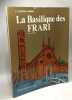
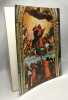
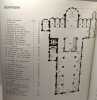
Bon Etat de conservation intérieur propre propre accroc sur le haut du premier plat petite tache sur la première page
Vetripedia: Masterpieces of Venetian Glass
, Prestel, 2025 Three Volumes in a Slipcase, hardcovers, 1712 pages, 30,0 x 32,0 cm, 3,285 color illustrations. ISBN 9783791377391.
This magnificent and unprecedented three-volume set showcases one of the world?s most important collections of twentieth-century Venetian glass?1.000 masterpieces marvelously photographed and cataloged by a renowned expert in the field. Celebrated for its exceptional craftsmanship, artistic mastery, and iconic design, Venetian glass has a rich historical legacy. The techniques developed by Venetian glassmakers have influenced glassmaking worldwide. Presented in three impressive volumes, this private collection includes works by thirty of the most influential artists, artisans, and studios from 1895?1970. Through Marino Barovier?s expertly insightful texts, readers will learn the evolution of the techniques, forms, colors, and tastes in Venetian glass during the Novecento?a century of sociopolitical, historical, and cultural change of egregious magnitude. Each glass object is described in terms of its aesthetic beauty, style and proportions, artistic quality and rarity. The author describes the technical difficulties of the realization and the perfection of the technique that went into each piece. He also considers the designer?s standing; the significance of the manufacturers and glass masters; and their historical importance. Photographed with exceptional clarity and quality, the works are presented in remarkable full-page spreads, grouped by manufacturer, designer and type. The result is an impeccable and invaluable reference work reflecting the latest scholarship, that will appeal to glass experts, collectors, and anyone interested in modern glass art and design.
La cathedrale d'Evry
Skira, 1996. Format 29x28 cm, reliure souple a rabats, 79 pages. 4eme de couverture tachee. Bon etat.

Architecture orientale
Paris, Berger-Levrault, 1980, in-4, relié sous jaquette éditeur, 433 pages. Bon état. Ill. (photos et plans) N/B. Index. Importante bibliographie.


Georg Baselitz Belle Haleine
, Silvana Editorale, 2024 PB, 310 x 260 mm, 112 pages, 60 Color illustrations, EN-IT edition. ISBN 9788836657896.
This volume accompanies the exhibition Belle Haleine by German artist Georg Baselitz (1938) - a leading figure in the world of contemporary art - hosted in the splendid setting of the Galleria degli Antichi in Sabbioneta (Mantua), the Ideal City founded by Vespasiano Gonzaga Colonna. Among the works presented - chosen from among the most significant in his artistic career - are imposing sculptures, large paintings on canvas, and the ten provocative engravings collectively entitled Belle Haleine in homage to Marcel Duchamp, an artist to whom Baselitz - provocatively - often refers in his work, and first exhibited in 1963. The volume offers a broad view of the multifaceted nature of the pioneer of neo-expressionist art, whose hallmark is to reproduce figures "upside down".
THE LIFE AND TIMES OF RUBENS
, Hamlyn 1970, 1970 Hardcover, 75 pages, English, 290 x 230 mm, Fine copy., very richly illustrated with coloured illustrations !!.
verdwenen museum
Zwolle, Waanders & De Kunst, 2024 Oorspronkelijk uitgevers omslag, 184 pagina's, 29 x 23.5 cm. ISBN 9789462625709.
Ruim 200 jaar geleden waren er in het Mauritshuis niet n, maar twee musea te bezoeken. Op de bovenverdieping bevond zich het Koninklijk Kabinet van Schilderijen, terwijl op de begane grond duizenden objecten van allerlei aard tentoongesteld waren in het Koninklijk Kabinet van Zeldzaamheden. Dit zeldzaamhedenkabinet sloot in 1875 en de objecten werden verdeeld over verschillende Nederlandse instellingen. Bij de tijdelijke tentoonstelling Het verdwenen museum over dit Koninklijk Kabinet
Marion Arnaud Demontfaucon Christophe Bayle Laurent
Reference : 5768
(2006)
ISBN : 2732434949
La salle Pleyel: Lieu de modernité édition bilingue français-anglais
Editions de La Martinière 2006 25 4x1 8x28cm. 2006. Reliure editeur cartonnée. Ce livre bilingue (français-anglais) documente la rénovation de la salle Pleyel célèbre salle de concert parisienne. Il explore l'équilibre retrouvé entre son acoustique révolutionnaire et son esthétique Art déco en établissant un parallèle entre sa conception originelle et sa restauration moderne menée par une équipe internationale d'experts
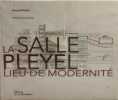
Neuf
Penser l'individu. Gen se sto cienne de la subjectivit
, Brepols, 2020 Paperback, 424 pages, Size:156 x 234 mm, Language: French. ISBN 9782503584430.
Summary Par quel prodige une philosophie mat rialiste et naturaliste qui posait tout la fois l'unit du continuum cosmique et l'existence du destin a-t-elle pu donner naissance une conception forte de l'individu, et de cet individu singulier qu'est le sujet humain? Tel est le paradoxe que nous cherchons ici clairer. Sur pr s de cinq si cles, le sto cisme construit en effet une conception unifi e de l'individu, depuis sa forme commune tous les vivants jusqu' la sp cificit radicale de l'individuation humaine, celle de la subjectivit . C'est cette gen se dans laquelle le passage du sto cisme Rome a jou un r le d cisif que nous nous attachons reconstruire.
Description des oeuvres d'art qui décorent les édifices publics de la ville de Bordeaux.
Paris, A. Aubry, Bordeaux, Chaumas-Gayet, 1861-65 in-8, viij-550 pp., avec un tirage photographique en guise de portrait-frontispice, maroquin havane, dos à nerfs orné de pointillés, filets et caissons dorés richement ornés, encadrement de triple filet doré sur les plats, double filet doré sur les coupes, tranches dorées, large guirlande en encadrement sur les contreplats, première couverture conservée (Capé).



Tirage limité à 212 exemplaires. Un des deux seuls exemplaires sur papier rose. Il était destiné à Mme Marionneau (Anne-Aimée Chevalier, 1802-1874), et fut à ce titre spécialement truffé d'un tirage photographique contrecollé sur papier blanc et représentant l'auteur, avec un envoi autographe "A ma chère mère". Unique édition de la seule partie parue, qui concerne uniquement les édifices religieux.Peintre et historien de l'art, Charles Marionneau (1823-1896) était le fils du peintre François Marionneau (1795-1867) ; après une formation à Paris, il revint s'installer dans sa ville natale en 1860 et y mena une carrière exclusivement régionale, très axée sur l'archéologie et l'histoire des monuments de Bordeaux.Exemplaire de Pierre Bonnal, de Bordeaux, avec vignette ex-libris contrecollée sur les premières gardes. - - VENTE PAR CORRESPONDANCE UNIQUEMENT - LIEN DE PAIEMENT, NOUS CONSULTER.
Bauhaus Imaginista
, Thames & Hudson, 2019 hardcover, 312 pages Illustrated. 32x25cm, Language English, *New. ISBN 9780500021934.
Featuring the latest research commissioned on the occasion of the Bauhaus centenary, this book explores the global influence of the renowned Bauhaus school of arts and its famed artists. Bauhaus Imaginista marks the centennial anniversary of this fascinating and popular school of art, which championed the idea of artists working together as a community. The Bauhaus reconnected art with everyday life and was active in the fields of architecture, performance, design, and visual art. Founded by Walter Gropius, its faculty included such luminaries as Paul Klee, Wassily Kandinsky, L szl Moholy-Nagy, and Josef Albers. Placing emphasis on the international dissemination and reception of the Bauhaus, this book expresses the Bauhaus' influence, philosophy, and history beyond Germany. Rethinking the school from an international perspective, it sets its entanglements against a century of geopolitical change, as many of its artists fled World War II Germany. Bauhaus Imaginista takes readers on a global visual tour of Bauhaus influence from art and design museums to campus galleries and art institutes in India, Japan, China, Russia, Brazil, Berlin, and the United States.
L'ARCHITECTURE
EDITIONS DES DEUX COQS D'OR. 1965. In-12. Cartonné. Bon état, Couv. convenable, Dos satisfaisant, Intérieur frais. 45 pages. Nombreuses illustrations en couleur, dans le texte, par Peter Spier.. . . A l'italienne. Classification Dewey : 720-Architecture
Librairie de l'Amateur. Classification Dewey : 720-Architecture
"Pompéi, les nouvelles fouilles : la ""Villa des Mystères"", l'Antiquarium. Itinéraires des musées, galeries et monuments d'Italie, N° 3."
Roma, Istituto poligrafico dello Stato, Libreria dello Stato, 1966. 13 x 18, 191 pp., 18 illustrations dans le texte, 114 hors texte, 2 plans, broché, bon état.
675 jaar parochie Artselaer - Aartselaar, 1309-1984
Sint-Niklaas,, uitgever niet gekend, 1984 , Gebonden, Hardcover 125 p. : ill. .
Limiting Spaces. The Attribution of Spatial Meaning through the Creation of Boundaries
, Brepols, 2025 Hardback, Pages: 187, Size:216 x 280 mm, Illustrations:69 b/w, 14 col., 4 tables b/w., Language: English. ISBN 9782503617497.
Summary This volume explores how boundaries were created, perceived, and experienced in past societies. Bringing together diverse theoretical and methodological approaches - from cognitive and processual to sensory and phenomenological - the contributors examine how spatial meaning is attributed through the creation and negotiation of boundaries. The volume is structured into three thematic sections: the first investigates how boundaries define and characterize space; the second focuses on the act of crossing boundaries and its role in shaping spatial significance; and the third examines the experience of boundaries, of their crossing, and of the spaces contained within them. Drawing on case studies from Prehistory to the Early Modern period, and spanning regions from Europe and Africa to Central Asia, the chapters reflect a wide range of archaeological traditions and perspectives. Through innovative analyses and interdisciplinary dialogue, this collection advances our understanding of how past societies organized, perceived, and interacted with space. TABLE OF CONTENTS List of Illustrations 1. The Attribution of Spatial Meaning through the Creation of Boundaries: An Introduction Mari Yamasaki, Sonja Speck, and Francesca Meneghetti Part One. Delimiting Spaces 2. Conceptual Boundaries in Evolutionary Perspective: Peripersonality, Encapsulation, and the Extension of Neanderthal Worlds Paul Pettitt 3. Vertical Boundaries and the Conceptualization of Built Spaces: Insights from the Experience of an Egyptian Old Kingdom Tomb Sonja Speck 4. Defining Regional, Local, and Household and Activity Area Boundaries in Iron Age Saka Settlements and Mortuary Complexes in Southeastern Kazakhstan Claudia Chang 5. Limited Perfection: Regular Mediaeval Towns and Villages in Central Europe: Wandering of Ideas, Laws and Measures Maria Legut-Pintal, Krzysztof Fokt, Tomasz Kl r, and Anna Kubicka-Sowi?ska Part Two. Limits Between Spaces 6. On the Thresholds of Social Space in Swahili Towns of East Africa Monika Baumanova 7. On the Edge: Hyperrealism, Motivated Symbolism and Situated Iconography in Northwestern Iberia during the Late Iron Age Javier Rodr guez-Corral 8. Water Crossings as Structuring Elements in the Experience of Ancient Greek Sacred Space Andrew Farinholt Ward Part Three. Experiencing the Limit 9. Diving through the Mirror: The Liminality of Water Surfaces in Cultures across the Ancient Eastern Mediterranean Mari Yamasaki 10. The Gates of the Cosmos: Liminality in the Architecture and Functions of Central European Neolithic Circular Enclosures (Rondels) Judit P. Barna and G bor Kalla 11. Boundaries, Entrances, and Placemaking: The Creation of Liminal Spaces at Castell Henllys Iron Age Fort, Wales Harold Mytum
Marly
Tel 1947 110 pages in4. 1947. Broché. 110 pages. nombreuses illustrations en noir et blanc et en couleurs


Etat Correct intérieur propre
Madonna met Kind. Jan II Borman (gest. ca. 1520) Vroeg zestiende-eeuwse beeldhouwkunst op haar best
Antwerp, Phoebus Focus XII, 2019 Paperback, 86 pages, 21,1 x 14,1 x 1,1 cm. Illustrated. Text in NL ISBN 9789463883337.
Phoebus Focus 12 - Madonna met Kind. Jan II Borman (gest. ca. 1520) Vroeg zestiende-eeuwse beeldhouwkunst op haar best
Scultori Fiamminghi. Artistic Exchange in Sculpture between the Low Countries and Italy 1500-1620
, Brepols - Harvey Miller, 2026 Hardback, 432 pages, Size:240 x 300 mm, Illustrations:20 b/w, 330 col., 10 tables b/w., Language: English. *new ISBN 9781912554973.
Summary From the late medieval period onwards, an interplay of different factors stimulated sculptors from the Low Countries to work abroad. From the first half of the sixteenth century, artists increasingly travelled to Italy. These so-called Scultori Fiamminghi crossed the Alps to study classical monuments and sculptures firsthand, to draw inspiration from the new Renaissance style and, as a result, to both develop their own artistic expression and seek commissions from new patrons. The dynamic exchange between the Northern and Southern Renaissance gave rise to fascinating stylistic cross-pollination. This book contains not only a wide range of essays that address multiple aspects of the sculptural relationship between the Low Countries and Italy in the sixteenth and early seventeenth centuries, but also detailed catalogue entries on all exhibition loans. The catalogue follows a chronological structure, highlighting early precursors and transitional figures, as well as the first and second generation of Flemish sculptors active in Italy, culminating in the Early Baroque period. In addition to bringing together and synthesizing previously published research, the present volume presents a significant body of new information. This material is the result of in-depth research conducted by leading specialists across various disciplines and offers an overview of the most recent discoveries in the field, including the papers presented at the tenth ards Colloquium on Medieval and Renaissance Art (Rome, 2023). With essays by Marjan Debaene, Harula Economopoulos, Gr goire Extermann, Tancredi Farina, Stefano Farinelli, Valerie Herremans & Joris Snaet, Alain Jacobs, Arie Pappot, Frits Scholten, Max Wiringa. TABLE OF CONTENTS Introduction Marjan Debaene From Gothicism to Mannerism in the Low Countries The Development of a New Style in the Low Countries in the First Half of the Sixteenth Century Marjan Debaene Jacques Dubroeucq: A Connection Between Genoa and Rome Gr goire Extermann catalogue nos 1-32 Shaping Connections: Giambologna and Artistic Exchange between Italy and the Low Countries Sculptors from the Low Countries in Italy in the Late Sixteenth and Early Seventeenth Centuries Harula Economopoulos and Alain Jacobs Giambologna: Between Florence and the Low Countries Max Wiringa Casting a New Light on Giambologna's Time in Rome Max Wiringa On Goldsmiths and Sculptors Frits Scholten Copies of Michelangelo's Phases of Time Shared between Italy and Northern Europe: The Role of Niccol Tribolo's Terracottas Stefano Farinelli catalogue nos 33-90 Fiamminghi Sculptors' Presence and Activity in Rome Fiamminghi Sculptors in a Roman Context: Work Organization, Patronage, and Religious Affiliations Harula Economopoulos Piper, Van den Vliete, and La Motte as Restorers, Antiquarians, and Collectors Harula Economopoulos Some Thoughts on Nicolas Piper, Gillis van den Vliete, and Portraiture in Late Sixteenth-Century Rome Tancredi Farina Jacob Cobart: An Update of Our Knowledge Alain Jacobs Pierre de la Motte and Guglielmo Mido: Two Sculptors from the Southern Netherlands Active in Post-Tridentine Rome Alain Jacobs catalogue nos 91-102 The Triumph of Catholicism and Early Flemish Baroque Sculpture in the Southern Netherlands From Mannerism to Baroque in the Southern Netherlands Alain Jacobs The De Nole Workshop's Sculptural Programme at the Basilica of Our Lady of Scherpenheuvel Valerie Herremans and Joris Snaet catalogue nos 103-113 Epilogue catalogue no. 114 Dating Bronzes: Two Case Studies from the Exhibition Arie Pappot Bibliography Index Lenders to the Exhibition Photographic Acknowledgements
Sculpting Abroad Nationality and Mobility of Sculptors in the Nineteenth Century
, Brepols 2020, 2020 160 p., 28 b/w ills, 39 col. ills, 216 x 280 mm, English, Hardcover,. ISBN 9782503580272.
An edited volume reflecting upon the transnational mobility of sculptors and its implications for the artists and their art during the long nineteenth century. This volume analyses the international mobility of sculptors and their work in the nineteenth century. The creation of nation-states at that time coincided with an increasingly international outlook shared by artists, their commissioners, sellers, buyers and critics. Sculptors were encouraged to study abroad, and were recognized for their experience and success overseas. As they were very much dependent on commissions, they had to travel to provide for their revenues. While abroad, they were nonetheless expected to represent their nation and showcase their e essays in this collection reflect upon the theoretical and practical implications of the many aspects of transnationality, travel and (cultural) mobility for nineteenth-century sculptors, their work and their careers, by addressing the role of, among others, education, execution, commissions, exhibitions, art criticism and the art market. The main focus is on French, Belgian and Italian sculptors and their works but other countries are represented too, and well-known as well as lesser-known sculptors, through general articles and case studies. Tom Verschaffel is professor in cultural history at KU Leuven. His research concerns the intellectual and cultural history of the eighteenth and nineteenth centuries, and more specifically the history of historical writing, the popular representation of history and cultural nationalism, the history of cultural infrastructure and of cultural transfers. Art historian Marjan Sterckx is associate professor in Art History at Ghent University, where she recently launched the research group ThIS: The Inside Story: Art, Interior design & architecture 1750-1950. Her research concerns the intersections between sculpture, gender, photography and the interior.
Marjan Sterckx (UGent) Eve Brems, Devilles, De Vos, Levine, Van Gelder
Reference : 57419
Meunier in dialoog : een actueel kunstparcours door Leuven
, Erfgoedcel leuven, 2005 Softcover, 201 pages, Illustrated.
Longing for Egmond. The artist colony of Egmond, where Gari Melchers and George Hitchcock painted life and landscape. Verlangen naar Egmond.
, WAANDERSStedelijk Museum Alkmaar, 2025 Softcover, 270 x 230 mm, 100 Illustrations col.ill. 128 Pages, Language ENGLISH ed. ISBN 9789462626317.
Holland was a popular travel destination for artists in the last quarter of the nineteenth century. American artists Gari Melchers and George Hitchcock also visited our country in the 1880s. In 1884, they settled in Egmond aan Zee. The presence of Melchers and Hitchcock in Egmond exerted a great attraction on fellow professionals. Desire for Egmond offers an overview of the developments in the artist colony of Egmond and the key role Hitchcock and Melchers played there.