Write to the booksellers
-
Type
Any type (1)
Art print (7)
Autograph (1)
Book (32105)
Disk (1)
Drawings (264)
Engraving (10)
Magazine (125)
Old papers (1)
Photographs (15)
Posters (1)
-
Latest
Last 24h (14)
Last 3 days (41)
Last month (418)
Last week (53)
-
Language
Dutch (78)
English (56)
French (32353)
German (6)
Italian (18)
Portuguese (9)
Spanish (11)
-
Century
16th (14)
17th (47)
18th (198)
19th (1517)
20th (9548)
21st (1690)
-
Countries
Belgium (10915)
Brazil (6)
Canada (115)
China (1)
Côte d'Ivoire (140)
Denmark (208)
France (18048)
Germany (1)
Greece (1)
Switzerland (3096)
-
Syndicate
ALAC (106)
CLAM (145)
CLAQ (101)
CNE (3)
ILAB (10571)
NVVA (1145)
SLACES (1145)
SLAM (7967)
SNCAO (10)
Impressionist Paris A Panoramic View of Paris in French Impressionism.
, Hannibal Books, 2025 Hardcover 209 pages, Illustrated. 29x24.5cm, English text. *new ISBN 9789464941401.
Magnificent publication on the depiction of Paris by the French impressionists such as Monet, Cassatt, Renoir and Degas In 1867, Claude Monet painted three iconic views of Paris from the balcony of the Louvre, thus firing the starting shot of Impressionism. This book explores these groundbreaking works in detail, alongside a multitude of other Impressionist paintings and drawings. Experts from leading museums around the world show how Paul Cézanne, Gustave Caillebotte, Mary Cassatt and many others also depicted Paris in the midst of a radical transformation. Their artworks transport us to the birth of the French capital as a modern metropolis. They grant us entry to the theatres, parks and boulevards of Haussmann?s Paris, where the bourgeoisie parade their new-found wealth. In a new world dominated by fashion and consumption, the graceful Parisienne emerges as the symbol of this vibrant world city. But behind the facade of light, beauty and romance, political unrest and revolution are in the air. This turbulent period is brought to life in this publication through original photographs, posters, letters and satirical prints. Published to accompany the exhibition New Paris: From Monet to Morisot at Kunstmuseum Den Haag from 15 February until 9 June 2025.
Étretat par-delà les falaises Courbet, Monet, Matisse
, Fonds Mercator/ Mercatorfonds, 2025 hardcover, Couverture rigide, 280 pages, 280 x 230 mm, 274 ill. col. & nb FR. *NOUVEAU. ISBN 9789462304017.
Expo: 29/11/2025 - 01/03/2026, Musée des Beaux-Arts, Lyon. Au cours du XIXe siècle, un modeste village de pêcheurs de la côte normande, découvert par les peintres romantiques, s'élève au rang de mythe : Étretat. La beauté sauvage de ses falaises vertigineuses, rythmées d'arches naturelles aux formes fantastiques, les couleurs de la mer, la lumière changeante et l'atmosphère de villégiature loin du tumulte parisien, attirent des artistes de toute l'Europe. Dans ce décor naturel grandiose, peintres et intellectuels s'adonnent à l'étude du paysage.
Italiaanse miniaturen uit de renaissance.
, Het Spectrum 1978, 1978 Hardcover, 120 pagina's, Nederlands, 285 x 210 mm, omslag heeft een betere tijd gehad, boek zelf is in prima staat, met illustraties in kleur, . ISBN 9789027473035.
Paris ist meine Bibliothek : Zeichnungen und Druckgraphik von Félicien Rops
, Hamburger Kunsthalle, 2023 Hardcover, 216 Seiten, Deutsch, 285 x 215 x 20 mm, NEU, mit abb. in farbe. ISBN 9783731913047.
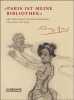
Nackte, aufreizend dargestellte Frauenkörper, schockierende satanistische Rituale, fantasievoll-opulente Szenerien: Kaum ein Radierer des 19. Jahrhunderts war derart berüchtigt und einflussreich wie der Künstler Félicien Rops (1833?1898). Tätig v. a. in Brüssel und Paris prägten seine immer wieder für Skandale bekannten Graphiken bis nach 1900 mehrere Künstlergenerationen, zu denen u. a. Max Klinger, Alfred Kubin und Otto Dix gehörten. Hinter seinen frivol-obszönen Darstellungen stecken scharfer Witz, Gesellschaftskritik sowie politische Satire. Das Kupferstichkabinett der Hamburger Kunsthalle beherbergt seit 1907 eine umfangreiche Sammlung an Werken des belgischen Symbolisten, die bis heute nahezu unbekannt ist. Die Ausstellung ?Paris ist meine Bibliothek? wird erstmals knapp 100 Blätter aus diesem Konvolut präsentieren. Dies erlaubt es, die von Rops so häufig thematisierten Geschlechterrollen, sozialen Verhältnisse und moralischen Ambivalenzen des 19. Jahrhunderts in den Blick zu nehmen.
Compilatio singularis exemplorum
, Brepols, 2021 Hardback, cxl + 853 pages, Size:155 x 245 mm, Language: Latin. ISBN 9782503593081.
Summary Die Compilatio singularis exemplorum ist eine Exempelsammlung, die gegen Ende des 13. Jahrhundert von einem anonymen französischen Dominikaner zusammengestellt wurde. Sie enthält neben vielen auch anderweitig breit und variantenreich überlieferten Stoffen einiges sonst nur selten erhaltene oder gänzlich unbekannte Erzählgut. Zudem hebt sie sich von den meisten anderen Exempelsammlungen durch das ihr zugrundeliegende Gliederungsprinzip ab, welches sich an der Dreiteilung der mittelalterlichen Christenheit in Säkularklerus, Regularklerus und Laienstand orientiert: Streng hierarchisch geordnet, werden der Reihe nach Geschichten über die Mitglieder dieser drei Stände erzählt. Von den Päpsten bis hinab zu den Theologiestudenten, von den Äbten und Abtissinnen bis hinab zu den Laienbrüdern und Beginen, von den Kaisern und Königen bis hinab zu den gesellschaftlichen Randexistenzen wird vor uns das ganze Panoptikum der spätmittelalterlichen Gesellschaft entfaltet. Dem so entworfenen Abbild der Menschenwelt werden in den ersten Teilen der Sammlung eine Marienvita, zahlreiche Marienmirakel, Hostienwunder, Kreuzzugsgeschichte und einige Geschichten über die Engel vorangestellt. Lediglich der letzte, vermutlich sekundär hinzugefügte Teil der Sammlung weicht von der Gesamtkonzeption des Werkes ab. Er vereint in sich eine Liste altfranzösischer Sprichwörter nebst deren lateinischen Nachdichtungen, Proben der Vagantenpoesie des Hugo Primas und weitere Verse erbaulichen und unterhaltsamen Inhalts. Der lateinische Text der Sammlung ist stellenweise von altfranzösischen Einsprengseln durchsetzt, die in einigen Fällen das Ausmaß kleinerer Gedichte erreichen. Er wird hier zum ersten Mal vollständig nach allen drei bekannten Überlieferungsträgern, Handschriften des 14. und 15. Jahrhunderts, kritisch herausgegeben.
Holbein's Wit. Pictorial Ingenuity in Renaissance Art
, Brepols - Harvey Miller, 2026 Hardback, Pages: 516, Size:225 x 300 mm, Illustrations:5 b/w, 374 col., Language: English. ISBN 9781915487520.
Summary Hans Holbein the Younger (1497/8-1543) is renowned as an outstandingly realistic painter-the acme of Renaissance naturalism. In fact, he was a purveyor of cunning ambiguity. Holbein's Wit: Pictorial Ingenuity in Renaissance Art reveals the artist at play, juggling the uncertainties and paradoxes that arise in the enterprise of imitation. Spanning Holbein's career in Basel and London, and encompassing his portraits, devotional paintings, and designs for prints and the decorative arts, the book explores this celebrated artist's subtle pictorial wiles. Holbein was immersed in the multi-faceted world of Renaissance ingenium or 'wit', which could mean innate talent, mental acuity, generative capacity, and a person's unique nature. In dialogue with witty patrons such as Desiderius Erasmus and Thomas More, Holbein advanced an ingenious kind of artmaking characterised by visual jokes, puns, and internal contradictions. Responding to humanism's literary conceits with an inventive visual language, he upended conventional assumptions about naturalism and the status of painting to assert the worth of an autonomous artistic intelligence. TABLE OF CONTENTS Prologue: Holbein's Angels Introduction Chapter 1: Verbal and Visual Wit Chapter 2: A Father's Figures Chapter 3: Hans the Jester Chapter 4: Ludic Illusionism Chapter 5: Death ad vivum Chapter 6: Mimics and Critics Chapter 7: More or Less a Smile Chapter 8: The Mindful Hand Chapter 9: Inherent Ingenuity Epilogue: The Ambassadors' Policy
Ravenna in the Imagination of Renaissance Art
, Brepols, 2020 Paperback, 208 pages, Size:216 x 280 mm, Illustrations:100 col., Language: English.*NEW ISBN 9782503583990.
Summary It is clear that Renaissance artists and their patrons were interested in Ravenna's buildings and their decorations, both before Vasari's negative pronouncements and after them. Contemporary European travelers and diarists have left descriptions of the city's heritage, by then in ruinous condition. What happens if we reinsert this corpus of Ravenna's treasures and their multiple imbrications into our histories of Renaissance art? How can our narratives change if we trace and study an almost forgotten, albeit rich and articulated series of intersections between Ravenna's splendors and ambitious works of art and architecture from early modern Italy? We have ignored a series of visual engagements and imaginative plays with Ravenna's forms, materials, and iconographies, folding the past into the present and the present into the past. These instances of creative imitations and recreations can best be recovered if we focus on the Renaissance production and humanists' accounts of the city's treasures, that is, works in various media and size, to map out an extended dimension of early modern visual culture. TABLE OF CONTENTS 1. Alexander Nagel, Giancarla Periti, Introduction 2. Sarah McHam, Byzantine Sources in Ravenna Influence Venetian Renaissance Sculpture 3. Nicholas Herman, Reframing the Past: Viewing Mosaics in Renaissance Ravenna 4. Linda A. Koch, Creating the Legitimate Prince at the Tempio Malatestiano, Rimini: Ravenna and the Continuity of Imperial Tradition 5. Giancarla Periti, Ravenna, Vasari, and the Problem of the Late Antique Heritage 6. Debra Pincus, Ravenna's Unlikely Monument: The Tomb of Dante at the Church of San Francesco 7. Silvia Foschi, San Vitale in Ravenna: the Renaissance Interpretation of a Church between East and West 8. Claudio Franzoni, Art or History? The Mosaics of San Vitale in Ravenna between the Middle Ages and Avantgardes
Shifting Places: Peter Downsbrough, the Photographs .
, uni pers leuven, 2011 paperback,Language: English, Series: Lieven Gevaert Series 12, Number of pages: 188 p. Illustrations: 140, Width: 170 cm x Height: 230 cm . ISBN 9789058678720.
Since the late 1960s Peter Downsbrough (1940) has been an important figure in contemporary art, associated with major international art movements such as minimal art, conceptual art, and visual poetry. In his artistic work he explores various fields including sculpture, architecture, books, film, and photography. This book provides, for the first time, a profound insight into Downsbrough's diverse and complex use of photography within his artistic work over the last 40 years. A substantial essay by Alexander Streitberger discusses the artist's photographic work - which includes single prints, series, postcards, collages, and books - within its aesthetic and historical context. Streitberger relates Downsbrough's work to fundamental issues of photographic practice and discourse such as the photograph as document, the representation of urban space, space-time relations, collage as an aesthetic and political means of expression, the relationship between still and moving image, and the context of presentation. The rich image material - some of which has never been published before - is arranged by the artist himself in order to create a fertile exchange between the topics of the text and his own intervention. Concluding with an exclusive interview with the artist, this book offers a real dialogue between artistic practice and theoretical reflexion.
Nicolaes Gillis: Antwerpen 1593 - Haarlem 1630 / Pionier van het Haarlemse voedsel- en bloemstilleven
, Primavera Pers, 2024 Hardback, 304 pages, Illustrated. 29.5 (hoogte) x 25.3cm, Tekst; Nederlands, Catalogue raisonne. *Nieuw. ISBN 9789059974159.
NICOLAES GILLIS (Antwerpen 1593 - Haarlem 1630) behoort tot de eerste beoefenaars van het zelfstandige stilleven. Over zijn leven was tot nog toe niet veel bekend, behalve dat hij uit Antwerpen kwam en in Haarlem werkzaam was. Nieuw onderzoek wijst op een gedegen leertijd in Antwerpen, waarna Gillis furore maakte als pionier van het Haarlemse voedsel- en bloemstilleven. In Antwerpen heeft Gillis veel geleerd van Osias Beert; in Haarlem was de kruisbestuiving met Floris van Dijck van belang. De gezamenlijke invloed van Gillis en Van Dijck zou zich uitstrekken naar volgende generaties stillevenschilders. Het oeuvre dat Nicolaes Gillis heeft nagelaten is niet erg groot. Dit boek laat echter zien dat het veelzijdiger en invloedrijker is geweest dan voorheen werd aangenomen. Gillis was niet alleen een schakel tussen Antwerpen en Haarlem, maar ook een echte vernieuwer. Deze eerste monografie met catalogue raisonné is het resultaat van uitgebreid kunsthistorisch onderzoek en speurwerk in archieven. Behalve een overvloedige bron van informatie, vormt het boek een terecht eerbetoon aan Nicolaes Gillis. Drs. Alexander Thijs (1980) heeft na een carrière als tandarts zijn liefde voor Oude Meesters verder ontwikkeld met oog voor historische context, herkomstonderzoek, symboliek en schildertechnieken. Als zelfstandig onderzoeker bestudeerde hij voor de tentoonstelling Ode aan Antwerpen (Utrecht, Museum Catharijneconvent, 2023) een schilderij van Erasmus II Quellinus, Rubens? laatste grote leerling en medewerker. Dit leidde tot een bijdrage aan de tentoonstellingscatalogus Van Antwerpen naar Amsterdam.
Santiago Calatrava. The Complete Works
New York, Rizzoli International Publications, fort in-4, relié sous jaquette éditeur, Très bon état
NB. Les commandes et questions sont traitées dans les 48h, les expéditions reprendront le 23 octobre. Merci.
Alexandra Baudelot, Clara Schulmann, Georgina Jackson, Aisha Sasha John, Lauren A. Wright, Kathy Noble
Reference : 53698
Zarba Lonsa, _0_0__0, Mesonya / Katinka Bock
BE - , MER. Paper Kunsthalle, 2018 Softcover, (silver on coated linen) / 192 pages / 28 x 21,6 cm,Languages EN, FR. / FINE ISBN 9789492321701.
This publication forms the catalogue of three solo-exhibitions of artist Katinka Bock in Paris, London and Toronto that were linked to the work ?Zarba Lonsa? which she created during her residency at Les Laboratoires d?Aubervilliers in Paris in 2016. Particularly interested by the atmosphere of the Quatre-Chemins district where Les Laboratories is located, the artist went to meet merchants to initiate a relationship with them based on the exchange of one of her works for an object of their shop. This gesture was the starting point of a creative process that has unfolded in several forms ? sculptures, installation, films and photos. Renewing the process of this exchange-based relationship in a specific urban context for a new production of works and photographs, a second edition of the project took shape under the title _0_0__0 in June 2017 at Mercer Union in Toronto. To complete the series, a last edition took place at the Siobhan Davies Dance in London under the title Mesonya/ in Fall 2017
Alexandra BITCHKOVA, Melle Yvonne BOUCHAUD, M. Alexey BRODOOVITCH, Melle Marianne CLOUZOT, M. Serge GLADY, M Boris LACROIX, M. OKOULOW, M. ICHIMOUKOW, M. Henry VALENSI.
Reference : 13775
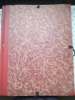
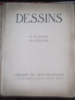
DESSINS
DESSINS suite de 20 planches en couleurs, au pochoir, 285x380mm. Librairie des Arts Décoratifs A. CALAVAS éditeur Paris. 1929. Planches par Alexandra BITCHKOVA (2) Melle Yvonne BOUCHAUD (2) M. Alexey BRODOOVITCH (2) Melle Marianne CLOUZOT (2) M. Serge GLADY (2) M ; Boris LACROIX (2) M. OKOULOW(2) M. ICHIMOUKOW(2) M. Henry VALENSI. Portefeuille cartonné, muet, dos demi toile rouge, fermoirs à rubans. DRAWINGS; suite of 20 color plates, stencilled, 285x380mm. Librairie des Arts Décoratifs A. CALAVAS publisher Paris. 1929. Plates by Alexandra BITCHKOVA (2) Ms. Yvonne BOUCHAUD (2) Mr. Alexey BRODOOVITCH (2) Ms. Marianne CLOUZOT (2) Mr. Serge GLADY (2) Mr. Boris LACROIX (2) Mr. OKOULOW(2) Mr. ICHIMOUKOW(2) Mr. Henry VALENSI. Cardboard wallet, silent, half red canvas back, ribbon clasps
Gods in the House. Anthropology of Roman Housing - II
, Brepols, 2023 Paperback, 368 pages, Size:156 x 234 mm, Illustrations:39 b/w, 80 col., 4 tables b/w., Language(s):English, French. ISBN 9782503601694.
Summary The archaeological excavations conducted from one end of the Mediterranean zone to the other have illuminated the place of gods in the ritual practices in the dwellings of the Graeco-Roman era. The discovery of multiple artefacts, dedicated spaces, and figurative paintings support new avenues of historical, anthropological, and social reflection with the aim of better understanding domestic religious practices in the polytheistic contexts of antiquity. This collective volume organizes those reflections around three axes. The first axis centres on identifying the deities that were favoured in domestic sanctuaries. Which gods are represented and which are not? The second axis concerns the interrelationships evident within domestic ritual spaces and sanctuaries. The third axis is dedicated to the anthropology of rituals. Lines of inquiry informed by anthropological, social, and phenomenological approaches are assuming ever-greater importance in scholarship on Antiquity. It is from this perspective that the authors explore the role that domestic ritual spaces play in shaping the lived environment. TABLE OF CONTENTS Gods in the House: An Anthropological Approach to Ancient Divinities and Domestic Cults (Alexandra Dardenay & Laurent Bricault) I. Gods of the House Domestic Aphrodite, Goddess of Desire and Seduction (Heather F. Sharpe) Dédoublements de divinités dans les laraires romains : polymorphie des images et multiplicité des champs d'action (Nicolas Amoroso) Honorer Mithra en contexte résidentiel. Réflexions à partire des exemples de Rome et d'Ostie (Françoise Van Haeperen) Divine Guests: Religious Identities and Groups of Deities in Roman Domestic Shrines (Carla Sfameni) II. Gods in the House Sacraria ou 'chapelles' religieuses à Pompéi : culte domestique ou vénération publique ? (Eric M. Moormann) Morphologies of sacra privata in the Roman House: Architecture, Furnishings, Cults (Maddalena Bassani) Herculaneum's Insula V Domestic Cult Places: Reflections on Typology, Locations and Fields of Action (Alexandra Dardenay) III. Towards an Anthropological Analysis of Spaces and Rituals Domestic Religion and the Anthropology of Space in the Entrance to the Roman House (Marin Mauger) From Routines to Rituals in Pompeian Houses - How Layout and Image-Objects of Household Shrines Shape Religious Knowledge (Anna-Katharina Rieger) Les pratiques cultuelles dans les villas gallo-romaines du Haut-Empire (Emmanuel Pui) Réflexion sur le devenir et la propriété des sacraria en contexte domestique (Aude Durand) Index rerum Index deorum Index locorum
Anthropology of Roman Housing
, Brepols, 2020 Paperback, 324 pages, Size:156 x 234 mm, Illustrations:47 b/w, 10 col., 30 tables b/w., 5 tables col., 26 maps b/w, 10 maps color, Languages: English, French, Italian. ISBN 9782503588605.
Summary At a time when we reflect intensively on the issue of social cohesion, on the influence of architecture in lifestyles, and on relationships between neighbourhoods within large modern cities, this book aims to approach the study of "inhabiting modes" in Roman urban dwellings. Drawing on concepts common to historical anthropology and incorporating evidence from multiple lines of research (archaeological, iconographic, textual, and others), this volume aims to contribute to the invigoration of a social history of ancient housing through new research projects, publications, and digital tools from both individual and collaborative efforts. This field of study is currently undergoing a period of disciplinary revitalization and this volume is an opportunity to present the most recent work and to conduct a dialogue in an interdisciplinary perspective. TABLE OF CONTENTS Toward an anthropological approach to the Roman living space (Alexandra Dardenay & Nicolas Laubry) L'archéologie des espaces domestiques à Pompéi : un point sur la question (Sandra Zanella) Lucrum facere? Strategie d'uso degli spazi domestici nell'ultima Pompei (Antonella Coralini) Rooms with a view: status, spatial hierarchy, and seasonality in the upper floors of houses at Herculaneum (James N. Andrews) Tra domus e villa. Spazio e società nelle abitazioni lungo le mura di Pompei (Anna Anguissola) With all mod cons? Latrines in domestic settings (Alain Bouet) Sanctuaires et marges de l'habitat : perception et délimitation de l'espace domestique (Marin Mauger) Locating the use and storage of female toiletry items in Pompeian Houses (Ria Berg) Where are the women? Approaching domestic space through graffiti (Polly Lohmann) Between public and private: the Italian houses of late Hellenistic / Roman Delos (Mantha Zarmakoupi) House form and household structure: the social analysis of urban domestic architecture in Roman Celtiberia (Jesús Bermejo Tirado) Des morts chez les vivants ? Les enfants en bas âge inhumés dans les espaces domestiques de Gaule romaine (Nathalie Baills-Barré & Mélissa Tirel) Place index Source index
Ultimate Guide to Dior Bags
, teNeues, 2025 Hardback, 192 pages, 30 x 22.5 cm, English. *NEW. ISBN 9783961717132.
Presents the creative range of the Parisian fashion house, featuring bags like the Lady Dior, the Saddle bag and the Book Tote. The new Brand Bible series is dedicated exclusively to iconic handbag models from the most important designers.
Letters of Salvator Rosa (1615-1673). An Italian Transcription, English Translation and Critical Edition
, Brepols - Harvey Miller, 2019 Hardback, 2 vols, vi + 1104 pages, Size:225 x 300 mm, Illustrations:4 b/w, 47 col., Languages: English, Italian. ISBN 9781905375882.
Summary These two volumes comprise the first English translation and critical edition of the extant letters of the Neapolitan painter and satirist Salvator Rosa (1615-1673). Presented in a revised Italian transcription and a complete English translation, the letters are accompanied by extensive historical notes, a philological apparatus, a comprehensive index, appendices, and photographs of the manuscripts. A number of previously unpublished letters also appear here for the first time. Unique among early modern primary documents for their quantity and exceptional for their candour, Rosa's letters are not only a fascinating and intimate chronicle of the artist himself but also an invaluable record of the activities and aspirations of his contemporaries,?offering useful insights into historical persons, ideas and events. An indispensable early modern primary source, comparable in significance to the letters of Michelangelo, Nicolas Poussin or Peter Paul Rubens, Rosa's letters here receive a long-overdue analysis and an English translation that seeks to make more accessible their contents, frequently impenetrable to even native Italian speakers.
Studies in Byzantine Sigillography. Volume 13
, Brepols, 2019 Paperback, xiv + 208 pages, Size:156 x 234 mm, Illustrations:100 b/w, Languages: English, French, German. ISBN 9782503583730.
Summary This volume contains primarily papers of the 11th International Symposium of Byzantine Sigillography held in Istanbul (May 2014) and of the last Congress of Byzantine Studies in Belgrade (August 2016). There are papers about the seals as historical source and archaeological finding presenting their role in the Byzantine prosopography, administration, historical geography and art history. TABLE OF CONTENTS Foreword Abbreviations New Finds and Seal Collections Gert Boersema, A Dutch Collection of Late Antique and Early Christian Lead Seals Vera Bulgurlu, The Byzantine Lead Seals in the Bal?kesir Kuva-yi Milliye Museum Collection Jean-Claude Cheynet, Sceaux du xie siècle trouvés en Palestine Prosopography Ioannes?G. Leontiades, The Seal of Theodoros Styppeiotes Protonobellisimos and Megas Sakellarios (1150s). A?Contribution to Prosopography of the Comnenian Period Werner Seibt, The Theodorokanoi. Members of the Byzantine Military Aristocracy with an Armeno-Iberian Origin Alexandra-Kyriaki Wassiliou-Seibt, Leon Gabras Kaisar. Ein Beitrag Zur Prosopographie Der Frühen Palaiologenzeit Administration, Historical Geography, Profession Andreas Gkoutzioukostas, The Theme of Drougoubiteia Werner Seibt, ?????o??? ??? ??????. Residierte Der Bischof von Atel in Chazaria (Am Unterem Don)? Christos Stavrakos - Christos Tsatsoulis, A Rare Lead Seal of a Goldsmith (????????????) from the Unpublished Collection of Zafeiris Syrras (London) Piety John Cotsonis, An Image of Saint Nicholas with the "Tongues of Fire" on a Byzantine Lead Seal Ioanna Koltsida-Makre, The Collection of Byzantine Bread Stamps in the Loulis Museum (Aghiou Georgiou Mills), Piraeus, Greece Indexes Index of Proper Names and Terms Index of Iconography Index of Metrical Inscriptions
Studies in Byzantine Sigillography. Volume 14
, Brepols, 2023 Paperback, xiv + 188 pages, Size:156 x 234 mm, Illustrations:80 col., 1 maps b/w, Language(s):English, French, German. ISBN 9782503601274.
Summary The present volume contains the papers from the 12th International Symposium of Byzantine Sigillography, held at the State Ermitage Museum in St. Petersburg, May 27-30, 2019. The papers discuss seals as historical sources and archaeological findings, presenting their role in the Byzantine prosopography, administration, historical geography and art history. TABLE OF CONTENTS Collections and Finds Vera Bulgurlu, Seals from the Basilica of St. John the Theologian in Ayasuluk Ioanna Koltsida-Makre - Yorka Nikolaou, Unpublished Byzantine Lead Seals from the Acquisitions of the Athens Numismatic Museum Collections Nikolaos Mastrochristos, Lead Seal of John VIII Palaiologos from Rhodes Christos Stavrakos - Zafeiris Syrras, A Selection of Important Seals from the Private Collection of Zafeiris Syrras History, Prosopography and Administration Andreas Gkoutzioukostas, The Office of oikistikos: A Re-examination of the Sigillary Material and an Unpublished Lead Seal from Konstantinos Kalantzes' Collection Werner Seibt, The Byzantine Eastern Frontier in the 1070s Werner Seibt, Auch der georgische Aristokrat Va??e Lip'arit? emigrierte in der zweiten Hälfte des 11. Jahrhunderts in das Byzantinische Reich Byzantium and Beyond Michael N. Boutyrski, The bulla of Joseph, Metropolitan of Rosia Jean-Claude Cheynet, Les sceaux du bureau du génikon hors des frontières de l'Empire Elena Stepanova - Piotr Gaydukov - Oleg Oleynikov, A Collection of Byzantine Seals from Velikij Novgorod Alexandra-Kyriaki Wassiliou-Seibt - Volker Hilberg, Byzantium and Beyond: Siegel aus Skandinavien Piety Gert Boersema, Sigillographic Evidence for Early Byzantine Jerusalem Pilgrimage Technology and Management Maria Teresa Catalano, Nutzen und Grenzen der RTI-Fotografie am Beispiel von zwei stark beschädigten byzantinischen Bleisiegeln George Kakavas - Niki Katsikosta - Eleni Kontou, Integrated Management of Lead Seals: The Case of the Numismatic Museum, Athens-Greece Index of Proper Names and Terms Index of Iconography Index of Metrical Inscriptions
Book of Colour Concepts : 1686-1963 :
, Taschen, 2024 Hardcover, two vols. in slipcase, 24.3 x 30.4 cm, 846 pages, Multilingual (English, French, German, Spanish).²²²²²²²² ISBN 9783836595650.
The human history of color, in two sweeping volumes The earliest forms of human creativity ? in carvings, markings, and cave paintings ? bear witness to humanity?s engagement with color. Almost as old as these examples is the desire to assign structure, order, and meaning to this universal yet elusive concept, and it is this fascination that unites the works compiled in this expansive edition. Gathering over 65 rare books and manuscripts from a wealth of institutions, including the most distinguished color collections worldwide, The Book of Colour Concepts takes the reader on a chromatic odyssey across four centuries and over 1,000 images of luscious wheels and globes, painstakingly collated charts, and meticulous diagrams, many of them newly photographed exclusively for this edition. Some of these concepts provide exhaustive taxonomies of color, while others reflect upon the relationship of color and music, or the affinities between color and human emotions. Seminal works of color theory, such as Isaac Newton?s Opticks and Johann Wolfgang von Goethe?s hugely significant Zur Farbenlehre, are shown alongside rare and unfamiliar contributions, including the theosophical color systems of Charles Webster Leadbeater and Annie Besant, the comprehensive color ?dictionary? of Aloys John Maerz and Morris Rea Paul, and the patchwork combinations of the Japanese costume designer and artist Sanz? Wada. The two volumes also bring many intriguing and often overlooked works by women into the spotlight, including the radically inventive color ?blots? of the English flower painter Mary Gartside and a botanical notebook by the pionieering spiritualist Hilma af Klint. The color systems that make up this edition are contextualized by introductory essays from editor Alexandra Loske and co-author Sarah Lowengard, while authoritative texts from the editor on the works reproduced set out each concept in further detail. Illuminating the history of color in all its shapes and forms, The Book of Colour Concepts offers a chromatic chronology unparalleled in scope.
Book of Colour Concepts. 45th Ed.
, Taschen, 2024 Hardcover, 512 pages, 15.6 x 21.7 cm, Multilingual (English, French, German).The Book of Colour Concepts. 45th Ed. ISBN 9783754401248.
The human history of color, The earliest forms of human creativity in carvings, markings, and cave paintings bear witness to humanity's engagement with color. Almost as old as these examples is the desire to assign structure, order, and meaning to this universal yet elusive concept, and it is this fascination that unites the works compiled in this expansive edition. Gathering over 65 rare books and manuscripts from a wealth of institutions, including the most distinguished color collections worldwide, The Book of Colour Concepts takes the reader on a chromatic odyssey across four centuries and over 1,000 images of luscious wheels and globes, painstakingly collated charts, and meticulous diagrams, many of them newly photographed exclusively for this edition. Some of these concepts provide exhaustive taxonomies of color, while others reflect upon the relationship of color and music, or the affinities between color and human emotions. Seminal works of color theory, such as Isaac Newton's Opticks and Johann Wolfgang von Goethe?s hugely significant Zur Farbenlehre, are shown alongside rare and unfamiliar contributions, including the theosophical color systems of Charles Webster Leadbeater and Annie Besant, the comprehensive color dictionary of Aloys John Maerz and Morris Rea Paul, and the patchwork combinations of the Japanese costume designer and artist Sanz Wada. also bring many intriguing and often overlooked works by women into the spotlight, including the radically inventive color ?blots? of the English flower painter Mary Gartside and a botanical notebook by the pionieering spiritualist Hilma af Klint. The color systems that make up this edition are contextualized by introductory essays from editor Alexandra Loske and co-author Sarah Lowengard, while authoritative texts from the editor on the works reproduced set out each concept in further detail. Illuminating the history of color in all its shapes and forms, The Book of Colour Concepts offers a chromatic chronology unparalleled in scope.
Les châteaux : Versailles, Maison de Saint-Cyr, Compiègne, Chantilly [4 volumes en 1]
Paris, Librairie A. Pigoreau 1911 4 volumes en 1. In-folio 41,5 x 36,5 cm. Cartonnage éditeur pleine percaline rouge, dos muet, titre doré sur le premier plat encadré d’une frise noir & or, premiers plats de couverture en couleurs conservés, 24-[26]-24-24 pp., abondamment illustré en noir & blanc de reproductions et de documents d’époque, 9 planches en couleurs hors texte sous serpentes. Exemplaire en bon état.
Contient : Versailles par Pierre de Nolhac - Les fastes de Saint-Cyr (1808-1908) - Le palais de Compiègne, par Arsène Alexandre - Chantilly, par Gustave Macon. Bon état d’occasion
lithographies de : La Guienne Historique et Monumentale
, Les Editions de l'Entre-deux-Mers, 2000 Paperback, 262 pages, Francais, 310 x 225 mm, etat bon!. Illustrations en n/b. ISBN 9782913568082.
Présente la reproduction des 280 lithographies réalisées par A. Ducourneau, autour des monuments les plus remarquables de l'ancienne Guyenne
Nancy et l'Europe urbaine au siècle des Lumières 1720-1770 De l'esprit des villes
Editions Artlys, Versailles, 2005. In-4, broché sous couverture rempliée et illustrée en couleur, 398 pp. Avant-propos, par Pierre Rosenberg - De Nancy à Lisbonne et de Paris à Dresde : promenade au cœur des villes européennes, par Blandine Chavanne - Un âge d'or des villes? - Les pouvoirs en représentation - La ville en mouvement ...
Nombreuses illustrations en noir et blanc et planches couleur en hors texte. --- Plus d'informations sur le site archivesdunord.com
6 - Paraboles - Publication éditée dans le cadre du séminaire expérimental " Art, Architecture, Institution ", Lyon - L'embarcadère - 1990
1990 Editions séminaire expérimental " Art, Architecture, Institution ", Lyon - L'embarcadère - 1990 - 1 vol in-24 - broché - 1990 - sans pagination -
Très bon état -
Abrégé de la vie des peintres des écoles allemande, flamande, hollandaise, française, romaine, florentine, vénitienne, lombarde, génoise, napolitaine, espagnole et les anciens ; mis en ordre alphabétique, avec une explication de leur manière et genre de peindre
Bruxelles : Et se vend chez l'Auteur, rue de la Colline, Section 8, n.° 349., 1807. PLUS DE 1000 NOTICES SUR LA VIE DES PEINTRES
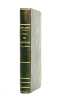
In-12° (186 x 121 mm), 306 pp., demi-veau vert, dos lisse, coins renforcés de parchemin (reliure de l'époque). Vraisemblable édition originale(chose pour le moins curieuse, les exemplaires portant la mention « Nouvelle édition »sont datés 1806) de ce recueil comprenant plus de 1000 notices biographiques organisées alphabétiquement. Pour chaque peintre, l'auteur indique ses lieux et dates de naissance et de mort avec éventuellement de brèves informations biographiques, ses sujets de prédilection, quelques indications sur sa manière de peindre et la place qu'il occupe dans l'histoire de l'art. Alexandre estime ainsi de Adrien van den Velde: « [S]es ciels pétillants brillent à travers les arbres, sa touche est franche et termine les formes avec finesse; son feuillé est pointu et d'un grand travail, il règne un flou et une chaleur dans ses tableaux, ses figures sont bien dessinées, ses animaux sont bien coloriés avec beaucoup de vérité, de correction et de finesse, il fut choisi par Ruysdael, Wynants, Guillaume van den Velde le jeune, et de Van der Heyden pour orner leurs tableaux des petits figures qui rendent leurs tableaux intéressants. » Quelques notes marginales (encre et crayon), notes au crayon sur la dernière garde blanche (liste de peintres inclus ou non dans l'ouvrage). CCFR : Deux exemplaires : INHA, BnF. Frottements, coiffes supérieures arasées, un petit manque à celle inférieure. Premières et dernières pages légèrement roussies.