 Write to the booksellers
-
Type
Any type (1)
Art print (7)
Autograph (1)
Book (32093)
Disk (1)
Drawings (264)
Engraving (10)
Magazine (125)
Old papers (1)
Photographs (15)
Posters (1)
-
Latest
Last 24h (35)
Last 3 days (12)
Last month (399)
Last week (69)
-
Language
Dutch (78)
English (56)
French (32341)
German (6)
Italian (18)
Portuguese (9)
Spanish (11)
-
Century
16th (14)
17th (47)
18th (199)
19th (1523)
20th (9493)
21st (1684)
-
Countries
Belgium (10916)
Brazil (6)
Canada (115)
China (1)
Côte d'Ivoire (140)
Denmark (209)
France (18034)
Germany (1)
Greece (1)
Switzerland (3096)
-
Syndicate
ALAC (106)
CLAM (145)
CLAQ (101)
CNE (3)
ILAB (10592)
NVVA (1145)
SLACES (1145)
SLAM (7987)
SNCAO (10)
Bringing the Holy Land Home. The Crusades, Chertsey Abbey, and the Reconstruction of a Medieval Masterpiece
, Brepols - Harvey Miller, 2022 Hardback, 376 pages, Size:240 x 240 mm, Illustrations:136 col., Language: English. ISBN 9781912554942.
Summary A carefully-integrated group of studies begins with the so-called ?Chertsey? ceramic tiles, depicting combat between King Richard the Lionheart and Saladin. Found at Chertsey Abbey not far outside London and admired since the nineteenth century, we present here a new reconstruction of both the tiles and their previously-undeciphered Latin texts. The reconstruction demonstrates not only that the theme of the entire mosaic is the Crusades, but also that the overall appearance of the tiles, when laid as a floor, draws from the composition and iconography of imported Islamic and Byzantine silks. Essays illuminate specific material contexts that similarly witness western Europe's, and particularly England's, engagement with the material culture of the eastern Mediterranean, including ceramics, textiles, relics and reliquaries, metalwork, coins, sculpture, and ivories. TABLE OF CONTENTS CONTRIBUTORS FOREWORD by Michael Wood DIRECTOR'S FOREWORD by Meredith Fluke PREFACE by Amanda Luyster We who were Occidentals have now become Orientals CATALOGUE ESSAYS Amanda Luyster The Chertsey Tiles: Reassembling Fragments of Meaning Suleiman A. Mourad A Clash of Civilizations? Diverse Motivations, Multiple Actors, and the Hidden Richness of Muslim Historical Sources David Nicolle The Crusades: A Short History Euan Roger So Much National Magnificence and National History: The Foundation, Structure, and Fall of Chertsey Abbey Richard A. Leson Epic Sensibilities in French Art of the Crusader Period Cynthia Hahn Re-creating the Holy Land at Home: Relics from the East in England Elizabeth Dosp?l Williams The Mobility of Fabric: Textiles in and around Medieval Eurasia Eva R. HoFFman Crusaders in Jerusalem: Frankish Encounters with Idols, Holy Monuments, and Portable Objects Sarah M. Guérin Oliphants and Elephants: African Ivory in England Scott Redford A Cupbearer Crosses Cultures: Figural Ceramic Traditions of the Eastern Mediterranean Paroma Chatterjee Citizens and Invaders: Encounters with Sculpture in Constantinople during the Fourth Crusaded OBJECTS IN FOCUS Andrea Myers Achi Black Fighters on a Late Antique Textile Sean Gilsdorf St. Menas Pilgrim Flask Nina Masin-Moyer Brooch/Amulet with Inscribed Arabic Seal Nina Masin-Moyer Enkolpion Reliquary Cross Nina Masin-Moyer Chess Piece with King or Vizier Alicia Walker So-called Crusader's Bowl A. L. McClanan Architectural Fragment with Griffin Nina Masin-Moyer Amphora with Confronted Hybrid Figures Meredith Fluke Section of a Cassone Panel with Beasts in Roundels Grace P. Morrissey Lusterware Bowl with Figure Eurydice S. Georganteli Gold Penny of Henry III Nina Masin-Moyer Gemellion with the Arms of the Latin Kingdom of Jerusalem Students From Boston College The Morgan Picture Bible WORKS CITED INDEX
Fernando Gallego and His Workshop: The Altarpiece from Ciudad Rodrigo, Paintings from the Collection of the University of Arizona Museum of Art.
Dallas, Meadows Museum, 2008 Bound, cloth with dustjacket, 360pp., 28.5x25.5cm., ills. in col. and b/w., new. ISBN 9780856676512.
The twenty-six panels of the altarpiece of the cathedral of Ciudad Rodrigo (Castile) rank among the most beautiful and ambitious works by two of Castile?s gifted late medieval painters, Fernando Gallego and the virtually unknown Master Bartolome. Accompanying a major new exhibition of their work, this extensively illustrated volume includes full catalog entries for each of the panels, as well as a collection of essays exploring both their cultural and artistic significance. Ranging in subject matter from the physical life and composition of the altarpiece itself, to Fernando Gallego, the Hispano-Flemish tradition in Spain and millennialism in late fifteenth-century Castile, these essays highlight individual techniques and workshop practices in the context of the cosmopolitan communities of a gothic city.
Matthieu d'Aquasparta. Portrait d'un maître en théologie franciscain au miroir de ses Quodlibets
, Brepols, 2024 Paperback, 433 pages, Size:156 x 234 mm, Language: French. ISBN 9782503609294.
Summary Franciscain d'origine ombrienne, Matthieu d'Aquasparta (v. 1240-1302) est maître en théologie à l'université de Paris au moment de la censure de 1277. Il rejoint ensuite la Curie pontificale en 1279. Doté de talents politiques certains, il est brièvement ministre général de l'ordre franciscain avant d'être créé cardinal par Nicolas IV en 1288. Il obtient la charge de grand pénitencier et devient un soutien fidèle de Boniface VIII. Depuis le début du XXe siècle, la pensée du théologien avait surtout fait l'objet d'études construites à partir de l'édition progressive de ses Questions disputées. Cet ouvrage propose une biographie complète de Matthieu d'Aquasparta au prisme de ses textes universitaires grâce à l'analyse de sa bibliothèque personnelle, de ses manuscrits de travail, légués aux couvent d'Assise et de Todi et de ses Quodlibets, encore inédits. TABLE OF CONTENTS INTRODUCTION CHAPITRE PREMIER. LES ORIGINES ITALIENNES CHAPITRE II. LE CURSUS ÉTUDIANT EN THEOLOGIE CHAPITRE III. LA BIBLIOTHEQUE DU FRANCISCAIN CHAPITRE IV. MAITRE EN THEOLOGIE A PARIS EN 1277 CHAPITRE V. MATTHIEU D'AQUASPARTA FACE AUX DISSENSIONS DOCTRINALES CHAPITRE VI. L'ENSEIGNEMENT À LA CURIE PONTIFICALE CHAPITRE VII. UN FRANCISCAIN AU SERVICE DE LA PAPAUTE CHAPITRE VIII. TRANSMISSION DES TEXTES ET HERITAGE CONCLUSION ANNEXES SOURCES BIBLIOGRAPHIE INDEX
Textiles of the Andes Catalog of Amano Collection
San Francisco, Heian / Dohosha, 1979 Hardcover. Fine in Very Good dustjacket. 248 pages and 200 of which are color plates. In-folio, 43x30cm. ISBN 0893460176.
Textiles of the Andes Catalog of Amano Collection
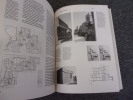
L .J. BAUCHER J.P. LONDEL O. FILIPPONE. 3 ARCHITECTES MODERNISTES
Grand format. Couverture souple.413 pages. Illustrations n/b et couleurs.très bon état. Une expédition par Mondial Relay vous sera proposée 2011 ULB Lacambrehorta
Ambassades de France. Les trésors du patrimoine diplomatique tome III. Photographies de Martin Fraudreau
Paris Perrin 2006 In-4 (32 x 25 cm.) 190 pp. couverture cartonnée, jacquette imprimée.
![Ambassades de France. Les trésors du patrimoine diplomatique tome III. Photographies de Martin Fraudreau. [AMBASSADE] FRAUDREAU (Martin)](https://static.livre-rare-book.com/pictures/GUH/2549_1_thumb.jpg)
Histoire et photographies des résidences diplomatiques de France à Alger, Ankara, Athènes, Belgrade, Berne, Bruxelles, Bucarest, Le Caire, Londres, Ouagadougou, Pékin, Séoul, Stockholm, Tachkent, Téhéran et Varsovie. Très bel exemplaire de cette publication recherchée. Libraire membre du S.L.A.M. (Syndicat national de la Librairie Ancienne et Moderne) et de la L.I.L.A. (Ligue Internationale de la Librairie Ancienne). N'hésitez pas à prendre contact par mail pour des photographies et des détails supplémentaires, pour des recherches ou des estimations de livres anciens et rares.
Emilio Ambasz. Textes par R. Cornu, C. Fort,G. Tironi.
Genève, Halles Sud, 1987 ; in-4, broché, 95 p. Nombreuses reproductions , figures, plans, en noir et couleurs. Bibliographie.
Neuf
Emilio AMBASZ Interventions. The reality of the ideal. Essays by Tadao Ando and Fumihiko Maki. Foreword by Ryuichi Sakamoto. Overview by Peter Buchanan.
New York, Rizzoli International Publications, 1992, in-4to, 360 p., fully illustr. with photogr. in colors, orig. clothbound with orig. illustr. jacket.

(SLACES, NVVA)
Phone number : 41 (0)26 3223808
DANS L'OMBRE DES CATHEDRALES. Étude sur l'ésotérisme architectural et décoratif de Notre-Dame de Paris .
Adyar - G. & J. Niclaus Paris 1939 DANS L'OMBRE DES CATHEDRALES. Étude sur l'ésotérisme architectural et décoratif de Notre-Dame de Paris dans ses rapports avec le symbolisme hermétique, les doctrines secrètes, L'Astrologie, la Magie et l'Alchimie.In-8 ( 250 X 165 mm ) de 302 pages, broché sous couverture imprimée et jaquette. 6 planches photographiques en noir hors texte. EDITION ORIGINALE, exemplaire de remise en vente avec les papillons Niclaus. Jaquette et couverture tachées, bon exemplaire.
La colonne de la grande armée d'Austerlitz ou de la Victoire
La colonne de la grande armée d'Austerlitz ou de la Victoire de Ambroise Tardieu au Dépôt de l'atlas géographique Non Daté (1833). Le livre est illustré à la suite de 4 pages de texte, les 38 planches (COMPLET) représentent la vue générale, les médailles, piédestaux, bas-reliefs et la statue de l'Empereur au sommet de la colonne. Le livre mesure 32x25 cm et pèse 0,900 kg (c) Non paginé. Reliure d'époque cartonnée. Le livre est en état d’usage, bon, quelques rousseurs, coiffes frottée, absence de la page de titres.
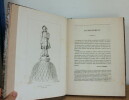
Avertissement La Colonne de la Grande Armée, ce monument impérissable de la gloire des soldats français, était peu connue dans tous ses détails, son élévation empêchant l'oeil de distinguer jusqu'à son sommet les sculptures qui l'entourent. Les bas-reliefs, au nombre de quatre-vingts, représentent, dans une suite de belles compositions, tous les faits importants de l'étonnante campagne de 1805, depuis la levée du camp de Boulogne, jusqu'à la paix de Presbourg. J'ai pensé qu'il serait agréable aux nombreux admirateurs de notre gloire nationale, et aux braves qui l'ont élevée à un si haut degré, de posséder une description exacte du seul monument érigé à la Grande Armée par son illustre chef. En conséquence, j'ai dessiné et gravé avec le plus grand soin la vue générale, les piédestaux, bas-reliefs, statue et médailles dont il se compose, et n'ai rien négligé pour que l'exécution réponde à la noblesse du sujet, et que cet ouvrage forme, pour ainsi dire, le chapiteau du beau monument des Victoires et Conquêtes élevé par M. Panckoucke à la valeur française. Ambroise Tardieu
Gérard Ambroselli né en 1906, un artiste témoin de la Libération de l'Alsace : Exposition, Salle des Catherinettes, Colmar, 10-26 novembre 2000
De Bayser 2000 In-4 broché. Très bon état d’occasion.
Très bon état d’occasion
Itineraires des Musees et Monuments d'Italie. No. 3: Pompei
Roma, Ministero della Pubblica Istruzione, 1955 Broché,187 pages, avec 58 illustrations, cartes et plans. FR. *En bon état.
Itineraires des Musees et Monuments d'Italie. No. 3: Pompei
Bargello Palace The Invention of Civic Architecture in Florence
, Brepols, 2016 267 p240 x 240 mmIllustrations:152 b/wEnglish, Latin, Italian. ISBN 9781909400313.
This book offers a new, revised building history of the Bargello, the first town hall of Florence. A careful analysis of documents, fabric, and restoration allows us to reconstruct the original site. It reveals two previously unidentified building stages. The first palace, begun in 1255, adapted an ex-neighborhood consortium, reusing an old tower and three houses. In the 1280s, a second palace arose next to it, thus creating a twin-palace complex for the Podestà and Capitano, the highest-ranking public officials. Long misidentified as the 1255 palace, the front wing's lower two stories were actually built in 1291-1308. An unroofed precinct wall enclosed the older structures behind a monumental facade, forming an open-air courtyard used for tribunals and stables. This part became known as the ?old palace? when the large, arcaded courtyard and rear wing were addded in 1316-1322. The "new palace" containing the Magdalen Chapel was designed for the Angevin court in residence, not for the communal administration of justice as generally believed. After a 1332 fire devastated the upper stories, the front wing was covered with two immense roof vaults in 1332-1346. Inside, many old dividing walls survived until the nineteenth century. They were demolished with the prisons during the building's conversion into the present national museum, concocting the two vast exhibition halls. This book illustrates the Bargello's early architecture. Reinterpreting the timeline radically changes our understanding of the palace's construction, function, and urban context during the formation of early modern Florence. TABLE OF CONTENTS Introduction 1. Surviving Monument 2. Site and Neighborhood, 1255 3. Disentangling the Evidence 4. Old Bargello: A Palace for the Florentine Popolo, 1255?1308 5. New Bargello: Court of Lords, 1316?1346 6. Function, Iconography, and Urbanism Conclusion Appendix Bibliography Photo Credits Index
Hammacher - Silhouette De Seurat
, Kroller-Muller Museum, 1994 Hardcover, 83 pages, Texte en Francais / Tres belle exemplaire, ill. en couleur / n/b, 230 x 220 x 10 mm. ISBN 9789074453134.
Hammacher - Silhouette De Seurat
L'ART ANTIQUE DU PROCHE ORIENT.
Citadelles & Mazenod Paris 1977 Fort in-4 carré ( 320 X 255 mm ) de 601 pages, pleine toile sous jaquette illustrée en couleurs et étui maroquiné taupe. Superbe et abondante iconographie en couleurs et en noir dans et hors-texte. Très bel exemplaire en parfait état.
AMIET, Pierre, BARATTE, François, DESROCHES NOBLECOURT, Christiane, METZGER, Catherine, PASQUIER, Alain:
Reference : 87427aaf
Art in the Ancient World. A handbook of styles and forms.
London, Faber and Faber Limited, 1981, in-8vo, 567 p., fully illustr. with drawings in b/w, copy from the archives of the publisher with stamp ‘Exemplaire d’Archive’, orig. ill. clothbound.
(SLACES, NVVA)
Phone number : 41 (0)26 3223808
AMIET, Pierre, BARATTE, François, DESROCHES NOBLECOURT, Christiane, METZGER, Catherine, PASQUIER, Alain:
Reference : 87428aaf
Art in the Ancient World. A handbook of styles and forms.
London, Faber and Faber Limited, 1981, in-8vo, 567 p., fully illustr. with drawings in b/w, copy from the archives of the publisher with stamp ‘Exemplaire d’Archive’, orig. ill. clothbound with jacket.
(SLACES, NVVA)
Phone number : 41 (0)26 3223808
AMIET, Pierre, BARATTE, François, DESROCHES NOBLECOURT, Christiane, METZGER, Catherine, PASQUIER, Alain:
Reference : 87396aaf
Handbuch der Formen- und Stilkunde. Antike.
Fribourg, Office du Livre, 1981, in-8vo, 571 S., ill. mit 370 Abb., Verlags-Archiv Exemplar mit Stempel ‘Exemplaire d’Archive’, Original-Pappband. Schönes Exemplar.
(SLACES, NVVA)
Phone number : 41 (0)26 3223808
A.Milton Henry ; Lampugnani Vittorio
Reference : 113482
(1995)
ISBN : 2080117696 9782080117694
Architecture de la Renaissance Italienne. Brunelleschi à Michel Ange
Flammarion 1995 In-4 broché 29,7 cm sur 21. 399 pages. Couverture légèrement passée et écornée, premier plat légèrement plié, intérieur très propre. Bon état d’occasion.
Bon état d’occasion
Archis d'ici éléments pour une réflexion sur l'architecture occitane
Edisud 1988 157 pages in8. 1988. broché. 157 pages. Ouvrage proposant une réflexion sur l'architecture occitane à travers des éléments architecturaux fondamentaux explorant les caractéristiques et l'identité du patrimoine bâti de cette région culturelle
Bon état
IL ETAIT UNE FOIS L ' ABBAYE DE BEAUPORT . Contes , récits et traditions orales. Illustrés par A M Ollivier Henry .
Couverture rigide Liv éditions , 2010 , in4° cartonnage illustré éditeur , 93 pp . La somme de récits proposée dans ce recueil n'a pour but que de rassembler des écrits plus ou moins imaginaires et quelques témoignages oraux tournant autour de l'abbaye de Beauport. L'ensemble comporte trois grandes parties, toutes en rapport avec Beauport. La première concerne les moines, la seconde évoque quelques anecdotes liées à ce grand personnage que fut Saint Yves et la troisième rapporte quelques croyances populaires encore liées à la vie de l'abbaye.Cet ouvrage est d'une nature résolument originale. Aux récits récoltés par les cueilleurs de légendes, que sont Luzel, Sébillot ou encore Pierre Bernard, répond la technique de «mémoire de papier» de l'artiste A.-M. Ollivier-Henry. Alchimie subtile et improbable Langue: Français
Drawings of Peter Paul Rubens, A Critical Catalogue, VOLUME ONE (1590-1608) 2 VOLS.
, Brepols 2021, 2021 2 vols., 536 pages ., 216 x 280 mm , 260 colour ill., English, Hardcover, . FINE ISBN 9782503595702.
This is Volume I of the three-volume catalogue raisonné of all drawings considered by the authors to be by Rubens. It covers the years 1590- 1608, Volumes II and III dealing, respectively, with the periods 1609?20 and 1621?40. It is the first publication that presents the artist?s entire drawn oeuvre in chronological order, previous such publications containing only selections of drawings. By leafing through the illustrations, this arrangement provides the user with a quick visual impression of the variety of techniques, media, subject and functions of Rubens?s drawings at an one time. Volume I consists of the drawings of the artist?s childhood, apprenticeship and first years as a master in Antwerp to his formative years in Italy, spent mostly in Mantua and Rome, with an excursion to Spain. These are the years primarily devoted to learning and absorbing the art of the past, from sixteenth-century German and Netherlandish prints to the works of the ancient and Italian Renaissance masters. A large number of these drawings consists of copies after the works of other artists, largely executed as part of the artistic training at the time. For the first time, Rubens?s copies and their models are not discussed and illustrated as a separate entity but are fully integrated into the rest of his graphic oeuvre, thus showing copies and original compositions created at the same time side by side. The volume contains 204 entries, including several sheets with drawings on recto and verso. Each entry consists of a detailed physical description of the drawing, provenance, exhibition history, full bibliography and a critical, interpretive discussion. In addition, Volume I contains an essay on the history of the scholarship of Rubens?s drawings, a subject that has not been treated before. All drawings by Rubens and the works by other artists he copied as well as a selection of other comparative images are reproduced in color. Anne-Marie Logan is a specialist in Rubens?s drawings and in those of his Flemish contemporaries, especially Van Dyck's. Kristin Lohse Belkin is a Rubens specialist who has carried out extensive research on the artist.
Drawings of Peter Paul Rubens, A Critical Catalogue vols; 1-6, - 6 VOLUMES SET catalogue raisonné of all drawings. * The Drawings of Peter Paul Rubens, A Critical Catalogue, Volume One (1590?1608) 2 vols. * The Drawings of Peter Paul Rubens, A Critical Catalogue, Volume Two (1609?1620) 2 vols. * The Drawings of Peter Paul Rubens, A Critical Catalogue, Volume Three, 1621?1640) 2 vols Part One: Text and Part Two: Plates
, Brepols - Harvey Miller, 2021-2023-2025 6 vols., 536 pages + 732 + 555 pages, 216 x 280 mm , 260 + 291 colour ill., English, Hardcovers, **NEW. ISBN 9782503595702.
This is the 6 -volume catalogue raisonné of all drawings considered by the authors to be by Rubens. It covers the years 1590- 1608, Volumes II and III dealing, respectively, with the periods 1609-20 and 1621- 40 and * The Drawings of Peter Paul Rubens, A Critical Catalogue, Volume One (1590?1608) * The Drawings of Peter Paul Rubens, A Critical Catalogue, Volume Two (1609?1620) * The Drawings of Peter Paul Rubens, A Critical Catalogue, Volume Three, 1621?1640 It is the first publication that presents the artist?s entire drawn oeuvre in chronological order, previous such publications containing only selections of drawings. By leafing through the illustrations, this arrangement provides the user with a quick visual impression of the variety of techniques, media, subject and functions of Rubens?s drawings at an one time. Volume I consists of the drawings of the artist?s childhood, apprenticeship and first years as a master in Antwerp to his formative years in Italy, spent mostly in Mantua and Rome, with an excursion to Spain. These are the years primarily devoted to learning and absorbing the art of the past, from sixteenth-century German and Netherlandish prints to the works of the ancient and Italian Renaissance masters. A large number of these drawings consists of copies after the works of other artists, largely executed as part of the artistic training at the time. For the first time, Rubens's copies and their models are not discussed and illustrated as a separate entity but are fully integrated into the rest of his graphic oeuvre, thus showing copies and original compositions created at the same time side by side. The volume contains 204 entries, including several sheets with drawings on recto and verso. Each entry consists of a detailed physical description of the drawing, provenance, exhibition history, full bibliography and a critical, interpretive discussion. In addition, Volume I contains an essay on the history of the scholarship of Rubens?s drawings, a subject that has not been treated before. All drawings by Rubens and the works by other artists he copied as well as a selection of other comparative images are reproduced in color. This is Volume II in the three-volume catalogue raisonné of the drawings by Rubens covering the years 1609?20. The project is a collaboration between Anne-Marie Logan, to whom belong all the Rubens attributions, and Kristin Lohse Belkin. It is the first publication that presents the artist?s entire drawn oeuvre in chronological order, previous such publications containing only selections of drawings. By leafing through the illustrations, this arrangement offers the user a quick visual impression of the variety of techniques, media, subject matter and functions of Rubens?s drawings at any one time. Accordingly, Volume II consists of the drawings from the time of Rubens?s return from Italy and the establishment of his workshop in Antwerp to the completion of his contribution to the furnishing and decoration of the city?s new Jesuit church, today?s St. Charles Borromeo. The decade is characterized by a broad range of genres and iconography: large altarpieces stand next to cabinet-size pictures, book illustrations next to designs for tapestry, sculpture and architectural reliefs; religious, mythological and historical subjects alternate with allegories, portraits, exotic hunts and scenes from country life. Copies after other artists? works that constitute such a large part of Rubens's early years discussed in Volume I have given way to original inventions in pen and ink and, above all, by life studies in chalk of the human body, naked or dressed. The whole spectrum of Rubens's extraordinary creativity, nowhere presented as directly and immediately as in his drawings, is there to be contemplated in all its astonishing diversity. Each entry consists of a detailed physical description of the drawing, provenance, exhibition history, full bibliography and a critical, interpretive discussion. All drawings by Rubens as well as a selection of comparative images are reproduced in color.
Maisons de campage genevoises du XVIIIe siècle. Avant-propos de Pierre Keller et Thierry Lombard. Préface d’Olivier Fatio. Tome I et tome II.
Genève, Domus Antiqua Helvetica 1999- 2001, 250x310mm, 348 + 319pages, reliure d'éditeur sous jaquette. Format oblong, “à l’italienne”. Très bel exemplaire, comme neuf.
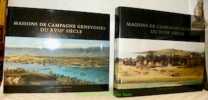
photos couleurs et n/b, avec le plan dépliant et le tiré à part “Landey”, Pour un paiement via PayPal, veuillez nous en faire la demande et nous vous enverrons une facture PayPal
Vieilles Maisons Françaises n° 52 . Avril 1972 : Les Châteaux Privés - Le Paysage Breton - Le Dessin De DON - La Chronique De Beaumesnil - Pouzauges - Lettre de Mon Moulin - Château De Magnitot - La Houssaye Près De Sens
Paris Au Bureau 1972 In 8 Suite du sommaire : La belle histoire du moulin de la galette - Cadrans solaires - Le parc naturel du Haut Languedoc - Préservons l'esprit du Languedoc - Les deux châteaux de Fages ( Dordogne ) - Nuisement-Aux-Bois - Ces vieux murs de feuillus vêtus . Photographies et nombreux dessins , schémas . Architecture . - 126 p. , 350 gr.
Couverture souple Très Bon État . 1° édition

