 Write to the booksellers
-
Type
Any type (1)
Art print (7)
Autograph (1)
Book (32315)
Disk (1)
Drawings (264)
Engraving (11)
Magazine (125)
Old papers (1)
Photographs (15)
Posters (1)
-
Latest
Last 24h (12)
Last 3 days (10)
Last month (318)
Last week (195)
-
Language
Dutch (78)
English (56)
French (32564)
German (6)
Italian (18)
Portuguese (9)
Spanish (11)
-
Century
16th (14)
17th (47)
18th (190)
19th (1506)
20th (9490)
21st (1685)
-
Countries
Belgium (10932)
Brazil (6)
Canada (116)
China (1)
Côte d'Ivoire (139)
Denmark (209)
France (18241)
Germany (1)
Greece (1)
Switzerland (3096)
-
Syndicate
ALAC (107)
CLAM (143)
CLAQ (102)
CNE (3)
ILAB (10560)
NVVA (1145)
SLACES (1145)
SLAM (7956)
SNCAO (10)
LE GUIDE DE LA BRETAGNE . Photgraphies de J R Masson .
1989 1989 Beltan-Breiz 1989, in8 oblong, nombreuses photos couleur. n/b. 637 pp . Cette édition reprend le texte d' origine du " Guide de la Bretagne mystérieuse " publié chez Tchou en 1966 , entièrement revu, mis à jour et augmenté par son auteur avec une illustration inédite . Langue: Français
L'architecture à pans de bois en Normandie
Les provinciales 1990 In-4 broché, couverture et dos muets sous jaquette. 31,8 cm sur 24,8. 142 pages. Jaquette en mauvais état. Importante déchirure 4 cm en tête de la jaquette, intérieur très propre. État correct d’occasion.
Etat correct d’occasion
LESCROART, Yves; FAUCON, Régis (Phot.)
Reference : 127374
(1995)
ISBN : 2856203582 9782856203583
Manoirs du Pays d'Auge
Mengès 1995 In-4 reliure éd. sous jaquette 33,5 cm sur 27,9. 399 pages. Jaquette légèrement passée. Jaquette en état satisfaisant. Bon état d’occasion.
Bon état d’occasion
L'Architecture à pans de bois en Normandie.
Varzy, Les Provinciades éditeurs, 1980, grand in-4° de 2 ff.-XII pp.-142 planches, broché sous couverture muette et jaquette illustrée.Documents d'architecture civile réunis par R. Quenedey et A. Vincent, présentés par Y. Lescroat. Ex-libris (tampon humide).
142 planches reproduites en noir, essentiellement du Calvados et de la Seine-Maritime, quelques-unes de l'Eure, ordonnées en 3 parties : Constructions rurales. Manoirs. Constructions urbaines.

L'église Saint-Cybard de Magnac-sur-Touvre. La restauration d'une belle église romane du XIIe siècle en Angoumois.
Couverture souple. Broché. 66 pages.
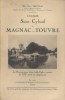
Livre. Presbytère de Magnac sur Touvre, 1934.
ARCHITECTURE DES NIDS
Edition originale de 1875.Petit in-8 demi-relié.182 p.Demi-chagrin à 5 nerfs.Bon état.
Etude sur les oiseaux. Architecture des nids. Deuxième édition, revue et augmentée.
Paris, Baillère & Fils/ Palmé, 1878, in-8vo, 222 p. avec quelques schémas, avec dédicace manuscrite sur feuille de garde de 1899 de ? Erbeau à Jean Mathey, demi-cuir et papier coloré avec dos à 5 nerfs; tranches, coins et dos lég. usés, qq. taches d'eau sur la p. de garde, sinon en bon état.
Image disp.

(SLACES, NVVA)
Phone number : 41 (0)26 3223808
La Gaule. Architecture et Civilisation
Flammarion 2001 In-4 cartonné 29 cm sur 22. Jaquette en très bon état. 207 pages. Très bon état d’occasion. Poids sans emballage : 1253 grammes. Synthèse richement illustrée couvrant un millénaire, de 500 av. J.-C. à 500 ap. J.-C.
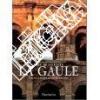
Synthèse richement illustrée couvrant un millénaire, de 500 av. J.-C. à 500 ap. J.-C. Très bon état d’occasion
Les nouvelles de l'archéologie N° 38. Acqueducs romains.
Couverture souple. Revue brochée 22 x 28 cm. 100 pages.
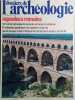
Périodique. Editions Errance (Collection : Archéologia), Octobre-novembre 1979.
LESORT André - BERNUS Pierre - RICHARD-RIVOIRE Monique - BOYE Maurice-Pierre
Reference : 103263
(1964)
Visages de l'Ile de France.
Couverture rigide. Cartonnage de l'éditeur. 254 pages.

Livre. Horizons de France (Collection : Les nouvelles provinciales - 4), 1964.
Les jardins du prieuré Notre-Dame d'Orsan - A la recherche d'un jardin médiéval
Actes Sud, 1977, in-8 br., 175 p., dessins, plans, couverture à rabats, très bon état.
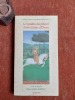
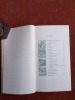
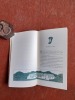
Si Robert d'Arbrissel, fondateur de Fontevrault, bâtit le prieuré Notre-Dame d'Orsan en 1107, deux architectes, Sonia Lesot et Patrice Taravella, rejoints par le jardinier Gilles Guillot, ont entrepris depuis 1992 de lui restituer ses jardins d'inspiration médiévale. Symboliques et utilitaires, inspirés des jardins bibliques, les jardins monastiques médiévaux préfiguraient le paradis auquel le moine était promis après une vie de prières. Orsan a aussi retrouvé ses jardins clos où l'admirable travail de tressage du bois et de palissage des plantes, établi à partir d'enluminures, a permis de reconstituer haies et clôtures, gloriettes et tonnelles, parterres surélevés et banquettes de verdure, caractéristiques de ces jardins de monastère. Cet ouvrage, coécrit et dessiné par les deux architectes, relate la recréation de ces jardins, des recherches nécessaires à un tel projet jusqu'à sa réalisation. Voir le sommaire sur photos jointes.
Les jardins du prieuré Notre-Dame d'Orsan. A la recherche d'un jardin médiéval
1997 Editions Actes Sud - 1997 - in-8 broché, couverture illustrée - 175 p. - croquis et illustrations en vert dans l'ouvrage
Bon état
NOTES HISTORIQUES SUR SAINT MONTAN - Suivies d' une notice archéologique sur l' église de San Samonta par N Thiollier
1969 Volle Couverture souple Privas 1969 Privas, Imprimerie Lucien Volle , 1969 .Grand in8 broché, 121 pp.Photos hors texte.
La Butte sacrée : Montmartre des origines au XXe siècle
1 vol. in-4 reliure demi-basane verte, couverture conservée, plats de toiles, reliure signée d l'abbaye de Maumont, Editions Spes, Paris, 1937, 523 pp.
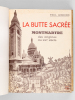
Bon exemplaire bien relié, avec élégance et solidité (dos lég. passé, ex-dono, très bon état par ailleurs).
Les architectures fantastiques de Gaudi
Atlas. 1984. In-4. Cartonné. Bon état, Couv. convenable, Dos satisfaisant, Intérieur frais. 74 pages. Nombreuses photos en couleurs, dans et hors texte.. . . . Classification Dewey : 720-Architecture
Classification Dewey : 720-Architecture
L'Abbaye de la Chaise-Dieu. Collection : Edition d'Art.
Le Puy (France), Imprimerie Jeanne-d'Arc, 1960. 15 x 19, 20 pp. + planches en N/B, broché, bon état.
L'ABBAYE DE LA CHAISE-DIEU.
IMPRIMERIE JEAN D'ARC. NON DATE. In-12. Broché. Etat d'usage, Couv. convenable, Dos satisfaisant, Intérieur acceptable. 20 pages illustrées de nombreuses photos en noir et blanc hors texte - Couverture illustrée d'une photo en noir et blanc.. . . . Classification Dewey : 720-Architecture
Classification Dewey : 720-Architecture
L'Abbaye de la Chaise-Dieu
IMP. JEANNE D'ARC. Non daté. In-12. Broché. Etat d'usage, Couv. convenable, Dos satisfaisant, Intérieur acceptable. Livret de 20 pages + de nombreuses planches illustrées en héliogravure. Déchirure sur le 2nd plat de couverture.. . . . Classification Dewey : 720-Architecture
Classification Dewey : 720-Architecture
LA CHAISE-DIEU
Edition d'Art. Non daté. In-8. Broché. Etat d'usage, Couv. légèrement passée, Dos abîmé, Intérieur frais. 20 pages. Illustré de nombreuses photos en noir et blanc (héliogravées) hors texte.. . . . Classification Dewey : 720-Architecture
Aperçu historique. Intérieur de l'église. Le Jubé... Classification Dewey : 720-Architecture
Traité du lavis des plans appliqué principalement aux reconnaissances militaires.
Paris Magimel 1801 1 vol. broché in-8, broché, 157 pp., 9 grandes planches dépliantes gravée en taille-douce in fine. Edition originale de cet ouvrage important, et qui fit date dans la cartographie. Les planches illustrent parfaitement les techniques d'emploi des ombrés, des hachurés et autres textures etc., dans la représentation des cartes militaires. Louis-Nicolas de Lespinasse (1734-1808) était à la fois officier d'artillerie spécialisé dans le levé des plans et dessinateur, peintre et graveur d'où cette aptitude à "rendre, avec toute l'exactitude possible, sur de grandes échelles, un terrain quelconque". Exemplaire sans dos ni couvertures mais bien complet de ses belles planches et enrichi sur la page de faux-titre d'une dédicace manuscrite (non signée) à un capitaine au Corps Royal de l'Etat major.
Antique Furniture of Quebec - Four centuries of furniture making
McClelland & Stewart 2002 Grand et fort in-4 géneurement illustré couleurs, 543p. Cartonnage de l'éditeur, toile et jaquette illustré couleurs.
:: English translation by Jane Macaulay and Alison McGain. :: Bel état.
La Nouvelle encyclopédie des antiquités du Québec
Montréal l'Homme 2007 Grand et fort in-4 géneurement illustré couleurs, 1103 p. Cartonnage laminée de l'éditeur, illustré couleurs.
:: Ce livre est la synthèse d'une vie de recherche sur les disccours de l'objet ainsi qu'un hommage à la créativité, à l'évolution et à la mémoire d'un peuple. :: Avec son étui de transport. Bon état.
Montréal, Métropole du Québec : images oubliées de la vie quotidienne 1852-1910
Montréal Editions de l'Homme 1992
in-4 bien illustré, 303p. Cartonnage de l'éditeur, toile et jaquette illustrée. :: Bon état.
Montréal au XXe siècle : regards de photographes
Montréal l'Homme 1995
in-4 généreusement illustré à pleine page, 335p. Cartonnage et jaquette illustrés. :: En 4 parties : La Ville animée par Martin Brault; La Ville internationale par Jean Lauzon; La Ville revendiquée par Serge Allaire; et La Ville plurielle par Lise Gagnon. :: Bon état.

