 Write to the booksellers
-
Type
Any type (2)
Art print (7)
Book (31807)
Disk (1)
Drawings (7)
Engraving (9)
Magazine (129)
Old papers (1)
Photographs (14)
Posters (4)
-
Latest
Last 24h (5)
Last 3 days (302)
Last month (557)
Last week (39)
-
Language
Dutch (1)
English (54)
French (31880)
German (6)
Italian (18)
Japanese (2)
Portuguese (9)
Spanish (11)
-
Century
16th (16)
17th (53)
18th (207)
19th (1565)
20th (9554)
21st (1762)
-
Countries
Belgium (9808)
Brazil (7)
Canada (108)
China (3)
Côte d'Ivoire (125)
Denmark (214)
France (18632)
Germany (1)
Greece (1)
Italy (36)
Switzerland (3046)
-
Syndicate
ALAC (99)
CLAM (42)
CLAQ (94)
CNE (3)
ILAB (10787)
NVVA (1161)
SLACES (1161)
SLAM (8266)
SNCAO (9)
Schenkung Peter und Irene Ludwig für Suermondt-Museum
, DuMont, Köln, 1982, 1982 Softcover, 110 seiten, Deutsche sprache, 295 x 210 mm, .
Aus der Reihe Aachener Kunstblätter, Band 51/1982
Königliche Bildwerke im Krönungssaal des Aachener Rathauses
, Suermondt-Ludwig-Museum1977, 1977 Hardcover, 140 seiten, 259 tafeln,Deutsch, 240 x 170 mm, in shr guten zustand,. ISBN 9783770109821.
Sammlungen, Skulpturen des Mittelalters, europäische Kunstprovinzen, Bildschnitzer, Aachen, Entstehung der Sammlungen, Köln und Niederrhein, religiöse und Mariendarstellungen, Christus, Heilige, Maria mit Kind, Holzschnitzkunst, Bayern, Franken, Schwaben, Mittel- und Oberrhein, Westfalen und Norddeutschland, Niederlande
MANUEL DE L'ART CHRETIEN.
Poitiers Paris Oudin Frères 1878. Grand et fort in-8 2 feuillets non chiffrés 2-626pp 1 feuillet errata. Demi basane rouge, dos à nerfs, non rogné, reliure postérieure. Orné de 232 figures dans le texte (y compris la vignette sur le titre), 31 planches hors texte (dont le frontispice), toutes numérotées. Restauration sur 10 cm sur la 2e planche, coupure sans manque page 147, rousseurs. Exemplaire bien complet du texte, des figures et de toutes les planches dans une reliure postérieure sobre, de bonne qualité et en bon état.
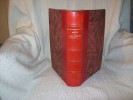
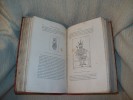
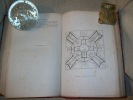
Ouvrage intéressant, très bien documenté, servi par une iconographie abondante, de bonne qualité.
Johann Lucas von Hidebrandt.
Wien, Österreichischen Staatsdruckerei, 1932. In-4 rel. pleine toile jaune éditeur, titre noir au dos et plat sup., VIII-202 pp., 200 planches de reprod. et ill. photogr. en noir in fine, qq. plans en noir dans le texte, bibliographie, index.
Guter Zustand. - Frais de port : -France 8,45 € -U.E. 13 € -Monde (z B : 23 €) (z C : 43 €)


BARTHELEMY-GRINO ARCHITECTES - FRAMEWORKS - TRAIT POUR TRAIT - TEXTE EN FRANCAIS ET EN ANGLAIS.
BIRKJAUSER. 2005. In-8. Broché. Bon état, Couv. convenable, Dos satisfaisant, Intérieur frais. 152 pages - nombreuses photos et plans en noir et blanc et en couleurs dans et hors texte - texte en 2 colonnes - couverture contre-pliée.. . . . Classification Dewey : 720-Architecture
TEXTE EN FRANCAIS ET EN ANGLAIS. Classification Dewey : 720-Architecture
Hommes et traditions populaires en Normandie
In 8 broché, couverture illustrée en couleurs. Faux-titre, titre, 204 pages, 1 page de table des matières, illustrations dans le texte dot dessins plus couverture de Jacques VAYSSIERE. Martelle éditions novembre 1998. Très bon état deux exemplaires.
LES JARDINS DE RENE PECHERE,
Bruxelles, Archives d'Architecture Moderne, 2002 Edition reliee sous jaquette, 260 x 310 mm., 288pp., 423 illustrations. ISBN 9782871431140.
Rene Pechere, un des grands createurs europeens de jardins de la seconde moitie du XXe siecle, s'est fait connaitre par le jardin des quatre saisons et le jardin congolais qu'il realisa a l'Exposition de Bruxelles en 1958, puis par ceux qu'il crea pour des chateaux ou de simples maisons en Belgique, en France, en Allemagne ou en Hollande. Le labyrinthe et le jardin du coeur qu'il dessina pour les van Buuren a Uccle lui ont assure une renommee internationale. Les textes de Laurent Grisel sont accompagnes de photographies contemporaines de Sylvie Desauw. Les jardins ont ete photographies au cours des differentes saisons, ce qui ajoute a l'originalite de l'ouvrage. Nouveau livre
ANTWERPSE MEESTERS UIT DE HERMITAGE / LENINGRAD.
Antwerpen, Ministerie van de Vlaamse Gemeenschap, 1986 Originele uitgeversomslag, onder geillustreerde kartonomslag, oblong formaat, 63 pp., mooie illustraties in kleur en z/w op aparte platen.297 x 210 mm,.
Rubenshuis Antwerpen. Gelijknamige tentoonstelling werd georganiseerd door de Stad Antwerpen, Kunsthistorische Musea en het Ministerie van de Vlaamse Gemeenschap, Administratie voor Kunst en Toerisme, in samenwerking met het Ministerie van Cultuur van de U.S.S.R., het Hermitagemuseum en het Stadsbestuur van Leningrad.
Seventeenth and Eighteenth Century Flemish Painting: State Hermitage Museum Catalogue
New Haven & London, Yale University Press, 2008 Hardcover with dustjacket, 520 pages, 31.5 x 26 cm, illustrated. *good condition. ISBN 9780300116861.
Seventeenth and Eighteenth Century Flemish Painting: State Hermitage Museum Catalogue
LA SPHERE DE BEAUTE. Lois d'évolution, de rythme et d'harmonie dans les phénomenes estétiques.
Félix Alcan, Editeur Paris 1901 Fort in-8 ( 230 X 145 mm ) de 980 pages, broché sous couverture imprimée de l'éditeur. EDITION ORIGINALE de ce traité d'esthétique dans lequel Maurice GRIVEAU explore les différentes lois d'harmonie, de rythme et d'évolution dans les phénomènes esthétiques. Cet ouvrage comprend de nombreuses illustrations en noir dans le texte. Bel exemplaire.La nature et l'homme - Art monumental - Arts industriels & décoratifs - Peinture et sculpture - Chorégraphie, Musique, Art littéraire.
LE TYMPAN DE LA CATHEDRALE D'AUTUN
Fernand Guimet. 1954. In-8. Broché. Etat d'usage, 1er plat abîmé, Dos frotté, Intérieur bon état. 20 pages. Illustré de nombreuses photos en noir et blanc hors texte.. . . . Classification Dewey : 720-Architecture
Par le maître de Chapelle de la Cathédrale. Il a été tiré de cet ouvrage 6000 ex. Classification Dewey : 720-Architecture
Bourgogne romane
Zodiaque, collection "La nuit des temps", La Pierre-Qui-Vire, 1962. In-8, reliure pleine toile éditeur, signet, 260 pp. Introduction : Préface, par Dom Angelico Surchamp - Présentation - Cartes de l'art roman en Bourgogne - Signification de l'art roman - Tournus - Paray-le-Monial - Saulieu - Autun - Vézelay. - Angers. - Version anglaise. - Version allemande.
Nombreuses illustrations et planches en noir et en couleurs.Mention de quatrième édition. --- Plus d'informations sur le site archivesdunord.com
Phone number : 01 42 73 13 41
Aimer l'Art Roman en Bourgogne.
OUEST FRANCE. 1986. In-4. Broché. Très bon état, Couv. fraîche, Dos satisfaisant, Intérieur frais. 62 pages. Nombreuses photos en couleurs dans le texte et hors-texte.. . . . Classification Dewey : 720-Architecture
Classification Dewey : 720-Architecture
Aimer l'art roman en bourgogne
OUEST FRANCE. 1986. In-4. Broché. Bon état, Couv. convenable, Dos satisfaisant, Intérieur frais. 62 pages. Nombreuses photos en couleurs dans le texte et hors-texte.. . . . Classification Dewey : 720-Architecture
Classification Dewey : 720-Architecture
Autun.
la Pierre qui Vire Editions Zodiaque 1953 Collection Les Travaux des Mois. Un volume grand in-8 broché, couverture blanche illustrée, 49 pages, illustrations en n&b. Bon état.
La librairie est ouverte du mardi au samedi de 9h30 à 12h30 et de 13h30 à 19h00. Commandes par courriel ou téléphone. Envoi rapide, emballage soigné.
Autun.
la Pierre qui Vire Editions Zodiaque 1987 Collection Les Travaux des Mois. Un volume grand in-8 cartonnage illustré, 79 pages, illustrations en n&b.Bon état.
La librairie est ouverte du mardi au samedi de 9h30 à 12h30 et de 13h30 à 19h00. Commandes par courriel ou téléphone. Envoi rapide, emballage soigné.
AUTUN, HISTOIRE ET GUIDE DE LA VILLE
Lescuyer, Lyon. 1968. In-8. Broché. Bon état, Couv. convenable, Dos satisfaisant, Intérieur frais. 79 pages. Illustré de nombreuses photos en noir et blanc (héliogravées) hors texte. Couverture se détachant très légèrement.. . . . Classification Dewey : 720-Architecture
Plan de Bibracte. Remparts. Minerve. Porte Saint-André. Cathédrale. Maison du XVe siècle... Classification Dewey : 720-Architecture
Christ romans : christs en gloire.
Zodiaque Les Travaux des Mois 1988 Zodiaque, Coll. les Travaux des Mois, 1988, cartonnage éditeur, bon état.
Merci de nous contacter à l'avance si vous souhaitez consulter une référence au sein de notre librairie.
La sculpture du XIIe siècle de la cathédrale d'Autun
Saep. 1976. In-8. Relié. Bon état, Couv. convenable, Dos satisfaisant, Intérieur frais. 99 pages augmentées de nombreuses illustrations en noir et blanc et en couleurs dans et hors texte.. . . . Classification Dewey : 720-Architecture
Classification Dewey : 720-Architecture
Le monde d'Autun
Zodiaque, coll. « Les points cardinaux », n° 1 1960 In-8, cartonnage éditeur, sous jaquette illustrée défraîchie, 203 pp, nombreuses illustrations en noir & blanc . Corps du livre en Bon état.
Etat correct d’occasion
Le monde d'Autun.
Reliure toile de l'éditeur sous jaquette, 26X22 cm, 1965 (2°ed), 203 pages, illustrations en noir (héliogravures) et en couleurs, collection les points cardinaux, éditions Zodiaque. Deux déchirures en bord de jaquette sans manque, bon exemplaire.
Le Monde d' Autun. Texte de Denis Grivot, photographies de Pierre Belzeaux.
Zodiaque, 1960 ; 1 volume petit in-4°, pleine toile beige clair de l'éditeur , titre en bleu pale, jaquette illustrée d'une photographie sur les 2 plats, titre en noir au dos; 203pp., ( 2)pp.; illustré de très nombreuses photographies tirées en héliogravure en noir à pleine page, de planches hors texte en couleurs et d'un plan dans le texte.Déchirures à la jaquette avec manques en bordure du 1er plat; quelques piqûres éparses.
Ouvrage de la Collection " Les Points cardinaux", N°1.Parfaitement illustré, par les photographies de Pierre Belzeaux, de détails en gros plan de la cathédrale; avec le texte précis et poétique, plein d'érudition, du célèbre abbé Grivot. ( GrBO)
[Hervé Champollion , Photographe] - GRIVOT Denis , Chanoine
Reference : 013913
(1999)
Romanische Kunst Im Burgund
Rennes Ouest France 1999 In Quarto Largement illustré de photographies d'Hervé Champollion , plans en couleurs, texte en allemand . Une pliure en 1° plat . Pour commandes multiples voir notre catalogue , un seul frais de port compté pour plusieurs livres . - 64 p. , 450 gr.
Couverture rigide Très bon 1ère Édition
DAS DEUTSCHE KRANKENHAUS.
, Jena, Fischer, 1932., Gebunden, leinen, Titelvergoldung, Ruckentitelvergoldung, 17x25,5cm, 1002pp, illustriert s/w.
Handbuch fur Bau, Einrichtung und Betrieb der Krankenanstalten.
DE L'EXECUTION DRAMATIQUE considérée dans ses rapports avec le matériel de la salle et de la scène. Traité dédié à SAS Monseigneur le Prince Cambacérès.
Paris Schoell 1809. In-8 6 feuillets non chiffrés XIV-XXII 1 feuillet non chiffré table 2-297pp 2-16pp catalogue. Demi chagrin acajou, dos à nerfs orné de jolies fleurettes dorées, initiales dorées en queue, reliure de la 2e moitié du XIXe siècle. Orné de 3 planches dépliantes regroupant 11 figures. Quelques pâles rousseurs par endroits. Exemplaire bien complet de son texte et des planches, dans une reliure de bonne qualité de la 2e moitié du XIXe siècle.
Le théâtre et l'exécution dramatique chez les Anciens (avantages et défauts). Description des salles modernes: peinture, perspective, acoustique, scène, machines, décors, accessoires, éclairage, costumes. Les accessoires de la salle, les moyens de la chauffer ou de la rafraîchir, son éclairage.

