 Write to the booksellers
-
Type
Any type (1)
Art print (7)
Autograph (1)
Book (32221)
Disk (1)
Drawings (264)
Engraving (11)
Magazine (125)
Old papers (1)
Photographs (15)
Posters (1)
-
Latest
Last 24h (4)
Last 3 days (17)
Last month (480)
Last week (12)
-
Language
Dutch (78)
English (56)
French (32470)
German (6)
Italian (18)
Portuguese (9)
Spanish (11)
-
Century
16th (14)
17th (46)
18th (199)
19th (1525)
20th (9434)
21st (1683)
-
Countries
Belgium (10932)
Brazil (6)
Canada (116)
China (1)
Côte d'Ivoire (139)
Denmark (209)
France (18147)
Germany (1)
Greece (1)
Switzerland (3096)
-
Syndicate
ALAC (107)
CLAM (143)
CLAQ (102)
CNE (3)
ILAB (10475)
NVVA (1145)
SLACES (1145)
SLAM (7871)
SNCAO (10)
Die schönsten Yachthäfen des Mittelmeeres. Mit Hafenplänen, praktischen und technischen Daten.
München, Mosaik Verlag, 1988, in-4to, 230 S., reich ill., Verlags-Archiv Exemplar mit Stempel ‘Exemplaire d’Archive’, Original-Leinenband, farb. ill. OU, ill. Schuber. Schönes Exemplar.

(SLACES, NVVA)
Phone number : 41 (0)26 3223808
GILLES ET BLEUZEN DU PONTAVICE
Reference : ABE-1657196541600
(2014)
ISBN : 9782953008678
VIOLLET-LE-DUC A ROQUETAILLADE
20,2 CM X 14 CM-RICHE ICONOGRAPHIE-LONG ENVOI DE GILLES DU PONTAVICE-(12D)
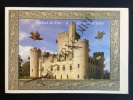
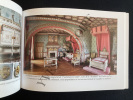
LA TRUITE DE QUENECAN COUVERTURE SOUPLE ETAT COMME NEUF
Famagusta. Vol. II: History and Society
, Brepols, 2021 Hardback, 912 pages, Size:156 x 234 mm, Illustrations:115 col., 13 tables b/w., 3 maps b/w, Languages: English, French. ISBN 9782503590417.
Summary This is the second of two volumes on the history and archaeology of the port city of Famagusta in Cyprus from the beginning of the island's Frankish rule in 1191 to the Ottoman conquest in 1571. The first volume, entitled Art and Architecture and edited by Annemarie Weyl Carr, was published in this series in 2014. The volume provides a comprehensive survey of the four-century history of Famagusta under Frankish, Genoese, and Venetian rule down to the Ottoman siege and conquest, supplemented by an account of the image of the medieval and Renaissance city in retrospect. Based on original research and often using unpublished sources, fourteen acknowledged specialists study Famagusta's political, social, economic, and ecclesiastical history from a multi- and interdisciplinary approach that involves aspects such as institutional continuities and discontinuities, military and spatial organisation, religious and cultural exchanges, gender roles, and the city's image in travelogues, literature and art. Such an approach allows a better understanding of the evolution of the ethnically and religiously diverse Famagustian society from a rich commercial centre under the Lusignans to an enclave under the Genoese and a military outpost under the Venetians. TABLE OF CONTENTS Preface Gilles Grivaud, Introduction Part I. Frankish Famagusta 1191-1373/4 Peter W. Edbury, Famagusta and the Lusignan Kingdom of Cyprus, 1192-1374 Jean Richard, Famagouste dans les institutions du royaume de Chypre et la question du bailliage royal David Jacoby, The Economy of Frankish Famagusta, 1191-1373 Part II. Genoese Famagusta 1373/74-1464 Catherine Otten-Froux, Famagouste sous la domination g noise (1374-1464) Laura Balletto, conomie et commerce Chypre pendant la p riode g noise Svetlana Bliznyuk, Famagusta on Guard Part III. Frankish and Genoese Famagusta Alexander Beihammer, La population de Famagouste (XIIIe-XVe si cle) Michel Balard, Syrian Christian Communities in Medieval Famagusta Chris Schabel, The Ecclesiastical History of Lusignan and Genoese Famagusta Part IV. Venetian Famagusta 1474-1571 Gilles Grivaud, Martiale et marcienne, Famagouste entre 1474-1571 Part V. Medieval and Renaissance Famagusta Panos Leventis, Fragmentation and Unity Angel Nicolaou-Konnari, Women in Medieval Famagusta Part VI. Medieval and Renaissance Famagusta in Retrospect Lucie Bonato, Famagouste dans la litt rature des voyageurs fran ais Rita Severis, Famagusta?: With Pencils, Brush, and Palette Maps and Illustrations List of Abbreviations Bibliography Index List of Contributors
Pol Bury - Deluding Time
, Patrick Derom Gallery 2014, 2014 Paperback, English, 84 pagina's, 250 x 250 mm, fine copy.
Pol Bury introduced the concept of time in sculpture. He was presented as a kinetic artist because his works incorporate movement, but this slow, sometimes barely perceptible movement allowed him to sow doubt in the minds of his viewers. If the spectator is to believe his own eyes, he must stand perfectly still, and attentive to movements that will undermine the superficial appearance of a work at rest. Movement is not the fundamental message of a work that transmits no signs, and makes no grand gestures. The movement gives the sculpture an additional point of interest ? the possibility to be several sculptures in succession, which may only be seen if we are prepared to grant them the time it takes.
Achard de Saint-Victor m taphysicien. Le De unitate Dei et pluralitate creaturarum
, Brepols, 2019 Paperback, 180 pages, Size:170 x 240 mm, Illustrations:3 col., 1 maps b/w, Languages: French, English. ISBN 9782503588254.
Summary Apr s plus de 800 ans d'oubli paraissait, il y a une treintaine d'ann es, un chef d'oeuvre de la philosophie m di vale - si ce n'est de la pens e occidentale dans son ensemble?-, le De unitate Dei et pluralitate creaturarum d'Achard de Saint-Victor, devenu v que d'Avranches en 1161, dans l' dition et la traduction de son unique exemplaire padouan que procurait Emmanuel Martineau en 1987. C'est pour marquer cette renaissance qu'a t r dit e cette premi re dition et organis le colloque dont le pr sent ouvrage publie les actes. Il rassemble des contributions n cessairement modestes et partielles, mais pionni res, dont le seul but est d'initier l'explication d'un trait d'une audace, d'une complexit et d'une puissance sp culative exceptionnelles?: ?g nial entrelacs de spiritualit hyper-augustinienne et de m taphysique hyper-platonicienne? , o il s'agit de rien de moins que de penser l'uni-distinction essentielle de la Sagesse divine. Puisse ce volume de la collection Ad argumenta. Quaestio Special Issues ouvrir d'autres tudes qui donneront leur tour le go t de cette sagesse sans laquelle la v rit ne saurait tre saisie ?par elle-m me? ?: ipsa generalis, qua omnes sapiunt, sapientia. TABLE OF CONTENTS Vincent Carraud, Gilles Olivo, Pasquale Porro, Avant-propos. Le go t de la sagesse Emmanuel Martineau, Achard et l'Occident V ronique Gazeau, Culture et soci t dans l'ouest de la Normandie. Autour d'Achard de Saint-Victor Hugh Feiss, The Trinity in De unitate: Metaphysics and Theology Pascal Massie, M taphysique de la pluralit premi re Mohammad Ilkhani, Achard of Saint-Victor and Philosophy Fran ois Medriane, Unit , pluralit et modalit dans le De unitate : approche du chapitre I.11 David Albertson, Ecce Quadratura! An Early Reader of Thierry of Chartres's Arithmetica Commentary Jean-Louis Poirier, L'adverbe ibi dans le De unitate Nicole Reibe, Reconsidering the homo assumptus position Nicole Reibe, Achard of Saint-Victor. A Bibliography Index of Names Index of Manuscripts
Details of scottish domestic architecture. A series of selected examples from the sixteenth and seventeenth centuries, of stonework, woodwork furniture, plasterwork, & metalwork. 124 plates of measured drawing, and 6 plates of collotype reproductions of photographs.
1922 1 Edinburgh, Waterston, 1922, gd in-4 relié percaline vert-olive éditeur, tête dorée.
Histoire de l'art Français. tome 1 et 2 (Zodiaque )
Zodiaque ,1977, 2 vol. in-8 de 407-439 pages ,illustrations in-texte et hors-texte ,Relié, jaquette illustrée ,Très bon état , .(2 photos du livre sur mon site https://www.vieuxlivre.fr) .Les frais de port pour la France sont offerts à partir de 25 euros d'achat (Mondial relay ). (colissimo suivi +6,90 ).
Encyclopédie illustrée d'Architecture
Du Livre d'or/ Flammarion. 1964. In-Folio. Relié toilé. Bon état, Coins frottés, Dos satisfaisant, Intérieur acceptable. 352 pages. Nombreuses photos et illustrations en noir et blanc, couleurs et monochromes, in et hors texte, dont contre-plats. Papier légèrement jauni. Frontispice illustré d'une photo en couleurs. Texte sur deux colonnes. 2ème plat tâché.. . . . Classification Dewey : 720-Architecture
Adaptation Française par Charles Rambert. Préface par Guillame Gillet. Introduction par Henry-Russell Hiychcock. Classification Dewey : 720-Architecture
Gillet Guillaume (préface), Rambert Charles, Othenin-Girard Madeleine, Prévost Sonia (adaptation française)
Reference : 60079
(1980)
Encyclopédie illustrée d'architecture
Diffusion SACELP 1980 In-4 relié. 352 pages. Jaquette en mauvais état. Bon état d’occasion.
Bon état d’occasion
La cathédrale vivante.
1936 Paris, Flammarion, 1964, fort volume in 8° carré relié pleine toile grège de l'éditeur, jaquette illustrée en couleurs, 455 pages ; très nombreuses illustrations en noir et en couleurs.
"La présente éditions, destinée à commémorer le 20e anniversaire de la mort de Louis Gillet (1873-1943)..." ...................... Photos sur demande ...................

Phone number : 04 77 32 63 69
HISTOIRE DE L'ART FRANCAIS. 1 ) Des origines à CLOUET. 2 ) De VOUET à MONET. 2 tomes.
Zodiaque La Pierre-qui-Vire 1977 2 volumes in-8 ( 220 X 170 mm ) de 383 et 401-50 pages, pleine toile à la bradel sous jaquettes illustrées en couleurs et étui illustré. Dessins dans et hors-texte, superbe et abondante iconographie hors-texte en couleurs et en noir. Très beaux exemplaires.
La cathédrale vivante.
Paris, Flammarion, 1964 ; fort 8°, cartonnage entoilé, jaquette illustrée.
Nombreuses planches en couleurs, abondante iconographie. Minimes fente à la jaquette si non très bon état.
Nomenclature des ouvrages de peinture, sculpture, architecture, gravure, lithographie se rapportant à l'histoire de Paris. et qui ont été exposés aux divers salons depuis l'année 1673 jusqu'à nos jours. Dressée d'après les livrets officiels
Saint-Denis, Bouillant, 1911 gr. in-8, 431 pp., broché. Quelques traits au crayon rouge.
La couverture précise : 1673-1814. - - VENTE PAR CORRESPONDANCE UNIQUEMENT - LIEN DE PAIEMENT, NOUS CONSULTER.
Eliasz albo walka ze slowikami
, , 1971 Cloth binding with dustjacket, 141 pages, Polish text, 18.5 x 12 cm. Good condition.
Elias, of : Het gevecht met de nachtegalen
Atlas van de borduurkunst Een wereldreis langs erfgoed en stijlen
, WBooks, 2026 Hardcover, 400 pagina's, 27.8 (hoogte) x 21.9 (breedte) x 3.6 (dikte) cm, ge llustreerd, NL. *Nieuw. ISBN 9789462587380.
Borduren is een van ?s werelds meest gebruikte en een van de meest diverse uitingsvormen van creativiteit. Het wordt toegepast op elk continent, in elke regio. En de verscheidenheid in visuele taal, thema?s en technieken is enorm. De Atlas van de borduurkunst reist langs al deze streken en beschrijft de vele onderscheidende borduurstijlen en -tradities die er te vinden zijn. Aan de hand van geografisch geordende voorbeelden ? van de berkenhouten dozen van inheems Noord-Amerika tot de decoratieve matyo-stijl van Hongarije, de zardozi-borduurders van India en de satijnsteken van het China van de Han-dynastie ? biedt het boek een uitgebreid beeld van de uitbundigheid en het kunstige ambacht dat het borduren omvat. De kleurrijke fotografie toont de diverse borduurwerken in geheel en zoomt in op de bijzondere details, van gebruiksvoorwerpen tot (traditionele) kleding. Gillian Vogelsang-Eastwood geeft behalve een uitgebreide geschiedenis van borduren, ook heldere beschrijvingen van de materialen en gereedschappen, de ontwerpen en symbolen, en de toepassingen en natuurlijk de makers. Met als resultaat een naslagwerk dat naast informatie en context ook meer dan genoeg stof voor inspiratie biedt voor nieuwe borduurwerken.
LES BAINS DE MER CHAUDS. UNE MAISON A MARSEILLE JEAN-BAPTISTE PIETRI ARCHITECTE,
Bruxelles, Archives d'Architecture Moderne, 2009 Couverture souple, 240 x 260mm., 148pp., 120 illustrations. ISBN 9782871432272.
Ayant tourne le dos a la mer depuis de nombreuses annees, l'habitat residentiel reinvestit peu a peu le centre-ville de Marseille. La renovation de la Canebiere, les operations d'envergure comme Euro-Mediterrannee, font renouer la Cite phoceenne avec la question de l'habitat, comme avait pu le faire Le Corbusier avec La cite radieuse dans les annees 50. La maison des Bains de mer chauds, realisee par l'architecte Jean-Baptiste Pietri temoigne de cette reappropriation. Nichee sur l'emblematique Corniche Kennedy, elle deploie une architecture modeste et astucieuse, inspiree de l'auto-construction et d'elements mobiles balneaires, et affirme une integration a un tissu urbain complexe et a un site exceptionnel face au large. Edition trilingue francais /anglais / italien. Nouveau livre.
GILLIPSIE, Charles Coulston et DEWACHTER, Michel (textes de) - Traduit de l'anglais par Dominique Le Bourg -
Reference : 108203
(1988)
Monuments de l'Egypte. L'Edition impériale de 1809. Descriptions de l'Egypte, ou recueil des observations et des recherches qui ont été faites en Egypte pendant l'expédition de l'Armée Française. Tome 1 : Antiquités, Planches + Volume des Doubles-Planches (2 volumes)
1988 Edition Hazan - 1988 - Reprint de l'Edition impériale de 1809, A Paris, de l'Imprimerie Impériale, publié par les Ordres de sa Majesté l'Empereur Napoléon Le Grand - 2 volumes In-4, cartonnage toilés noir avec titres en dorés sur les premiers plats et dos, dans un emboîtage noir - Sans pagination - Nombreuses planches d'illustrations en N&B, second volume avec planches dépliantes
Bon état - Menus frottements sur l'emboîtage
Architecture N°21 : Notre sondage, la profession mieux perçue - Menaces sur la loi - Le besoin d'un architecte - Maisons individuelles et banalité ...
ORDRE DES ARCHITECTES. Janvier 1981. In-4. Broché. Bon état, Couv. convenable, Dos satisfaisant, Intérieur frais. Revue de 56 pages. Nombreuses photos en couleurs et quelques dessins et en noir et blanc, dans le texte.. . . . Classification Dewey : 720-Architecture
Classification Dewey : 720-Architecture
Architecture N°29 : La Défense encore décapitée - L'oeuvre ultime de Pingusson - Résister à l'anarchie touristique ...
"SERA (SOCIETE D'EDITION DE LA REVUE ""ARCHITECTURE""). Nov. 1981. In-4. Broché. Bon état, Couv. convenable, Dos satisfaisant, Intérieur frais. Revue de 72 pages. Nombreuses photos en couleurs et quelques dessins et en noir et blanc, dans le texte.. . . . Classification Dewey : 720-Architecture"
Classification Dewey : 720-Architecture
Architecture N°30 : Une consultation nationale, la profession choisit des structures -
"SERA (SOCIETE D'EDITION DE LA REVUE ""ARCHITECTURE""). Déc. 1981. In-4. Broché. Etat d'usage, Couv. convenable, Dos satisfaisant, Intérieur acceptable. Revue de 64 pages. Nombreuses photos et quelques dessins en couleurs et en noir et blanc, dans le texte. Une photo découpée page 19 / 20.. . . . Classification Dewey : 720-Architecture"
Classification Dewey : 720-Architecture
Architecture N°31 : Les c.a.u.e. en question - Le Mirail, 20 ans après - Les maisons de Varbedian - Cordier à Toulouse - Le nouveau pompiérisme ...
ORDRE DES ARCHITECTES. Janvier 1982. In-4. Broché. Bon état, Couv. convenable, Dos satisfaisant, Intérieur frais. Revue de 64 pages. Nombreuses photos en couleurs et quelques dessins et en noir et blanc, dans le texte.. . . . Classification Dewey : 720-Architecture
Classification Dewey : 720-Architecture
Architecture N°33 : Des églises pour notre temps - Les retombées d'une consultation ...
"SERA (SOCIETE D'EDITION DE LA REVUE ""ARCHITECTURE""). Nov. 1981. In-4. Broché. Bon état, Couv. convenable, Dos satisfaisant, Intérieur frais. Revue de 72 pages. Nombreuses photos en couleurs et quelques dessins et en noir et blanc, dans le texte.. . . . Classification Dewey : 720-Architecture"
Classification Dewey : 720-Architecture
"Architecture N°34 : Adresse du Président de la République - Auvergne, trop peu de création - Une exposition dans le métro, par Mich. BIETRY - ""Un mois Le Corbusier"" - Lz maison pensante"
"SERA (SOCIETE D'EDITION DE LA REVUE ""ARCHITECTURE""). Avril 1982. In-4. Broché. Bon état, Couv. convenable, Dos satisfaisant, Intérieur frais. Revue de 72 pages. Nombreuses photos en couleurs et quelques dessins et en noir et blanc, dans le texte.. . . . Classification Dewey : 720-Architecture"
Classification Dewey : 720-Architecture
Architecture N°37 : Chine, la longue marche - Hôtel, entre la norme et l'étonnement - Bois, un matériau qui s'affirme.
"SERA (SOCIETE D'EDITION DE LA REVUE ""ARCHITECTURE""). Mai 1982. In-4. Broché. Bon état, Couv. convenable, Dos satisfaisant, Intérieur frais. Revue de 72 pages. Nombreuses photos et quelques dessins en couleurs et en noir et blanc, dans le texte.. . . . Classification Dewey : 720-Architecture"
Classification Dewey : 720-Architecture
Les fortifications de Fougères
2 in-8 brochés en bon état Rousseurs sur 1 des couvertures et traces de mouillures sur le bord de la partie haute du 2è volume de planchesPublication de la Société Archéologique Exemplaire numéro 57 / 100
RARE

