 Write to the booksellers
-
Type
Any type (1)
Book (1395)
Drawings (1)
Magazine (9)
-
Latest
Last 24h (14)
Last 3 days (1)
Last month (38)
Last week (10)
-
Language
Dutch (2)
French (1401)
Italian (1)
Latin (2)
-
Century
17th (4)
18th (9)
19th (40)
20th (637)
21st (107)
-
Countries
Belgium (287)
Canada (26)
Côte d'Ivoire (7)
France (940)
Switzerland (146)
-
Syndicate
ALAC (25)
CLAM (2)
ILAB (509)
NVVA (5)
SLACES (5)
SLAM (474)
SNCAO (5)
Fables, formes, figures
1978 Edition Flammarion, collection "Idées et Recherches" dirigée par Yves Bonnefoy - 1978 - Complet en 2 forts volumes in-8 brochés, dans un étui cartonné illustré de l'éditeur - 548 + 539 pages - Illustrations en N&B, in et hors texte, dans l'ouvrage
Bon état - Petit frottements sur un des plats de l'étui Bon
Album CHATEAUBRIAND. Iconographie choisie et commentée (457 reproductions de documents) par J. d'Ormesson. Collection Bibliothèque de la Pléiade.
Paris, éditions Gallimard 1988. Bel exemplaire relié, cartonnage et jaquette d'éd., 360 pages avec ill., index et table.
1789
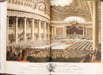
Editions Hervas 1988 175 pages collection Collection Banque Nationale de Paris. in4. 1988. reliure editeur. 175 pages. Cet ouvrage de Guy Chaussinand-Nogaret publié en 1988 par les Éditions Hervas retrace les événements de l'année 1789 marquant le début de la Révolution française. Réalisé avec la collaboration du Cabinet des Estampes de la Bibliothèque Nationale il est richement illustré de dessins et gravures d'époque. L'édition limitée à 650 exemplaires numérotés fait partie de la collection de la Banque Nationale de Paris


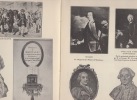
Canadiana
1921 QUEBEC,ACTION SOCIALE,sans date (vers 1921),IN8 broche,136p.,entierement illustre de reproductions iconographiques sur l’histoire du Canada,bon état.

bon etat Remise de 20% pour toutes commandes supérieures à 200 €
Dictionnaire des symboles (4 tomes)
1978 - brochés - Editions Seghers - 1978 - 4 volumes in-12 (format poche) brochés, dans leur coffret cartonné - 369 + 397 + 391 + 424 pages - Bibliographies non paginées à chaque fin d'ouvrage - Illustrations en noir et blanc de Bernard GANDET - Ouvrages sous titrés : "Mythes, rêves, coutumes, gestes, formes, figures, couleurs, nombres" - Tome 1 : A à CHE - Tome 2 : CHE a G - Tome 3 H à PIE - Tome 4 : PIE à Z


Bon état - Légers plis de lecture au dos des tomes I, III et IV - Petits frottements sur les coins du coffret
Album Théâtre classique : La vie théâtrale sous Louis XIII et Louis XIV (Bibliothèque de la Pléiade)
NRF Gallimard Bibliothèque de la Pléiade Reliure d'éditeur 1970 In-12 (11 x 17,7 cm), reliure d'éditeur sous rhodoïd (sans la jaquette), 325 pages, iconographie réunie et commentée par Sylvie Chevalley ; bon état. Livraison a domicile (La Poste) ou en Mondial Relay sur simple demande.


ALBUM THÉÂTRE CLASSIQUE. La vie théâtrale sous Louis XIII et Louis XIV
Paris N.R.F Gallimard, Bibliothèque de la Pléiade 1970 in 12 (17,5x11,5) 1 volume reliure pleine peau souple de l'éditeur, rhodoïd, 325 pages (index et table non chiffrés in fine), avec 525 illustrations, étui, la jaquette imprimée manque. Iconographie réunie et commentée par Sylvie Chevalley. Neuvième album illustré de la Bibliothèque de la Pléiade. Bel exemplaire ( Photographies sur demande / We can send pictures of this book on simple request )
Très bon Pas de jaquette Couverture rigide
Album Théâtre classique. La Vie théâtrale sous Louis XIII et Louis XIV
Paris, éditions Gallimard, 1970. In-12, 325 pp., cartonnage éditeur de veau grainé brun, dos lisse orné de filets dorés, pièce de titre rouge, rhodoïd (2 petites taches au rhodoïd).
Album de la Bibliothèque de la Pléiade consacré au théâtre classique. Il est abondamment illustré de reproductions en noir. Voir photographie(s) / See picture(s) * Membre du SLAM et de la LILA / ILAB Member. La librairie est ouverte du lundi au vendredi de 14h à 19h. Merci de nous prévenir avant de passer,certains de nos livres étant entreposés dans une réserve.
Holy Children and Liminality in Early Modern Art
, Brepols, 2025 Hardback, Pages: 231, Size:216 x 280 mm, Illustrations:8 b/w, 91 col., Language: English. ISBN 9782503586984.
Summary Children play a key role in the visual cultures of early modern Europe. On the one hand, they are central figures because of the Christian belief in a divine embodiment as a child; on the other, since children were assigned with values of mediation and transitions between different worlds, liminality became one of the ideas that structured the extensive spectrum of their roles in premodern imaginations. By fostering a conversation between art historians from different backgrounds and specializations, this volume departs from the conventional focus on representations of children as evidence for inquiries into childhood to explore their status as (normative) images. Starting from the ancient putto and liminal representations of children, before moving on to holy children, the Christ Child or child martyrs at the crossroad of religious conflict, the eight essays in this book seek to grasp the many different ambiguous meanings carried by objects representing children and the ways in which artists and viewers reflected on the concepts of childhood and liminality between the fourteenth and the nineteenth centuries across different European trajectories: from Ravenna to Sarajevo, from Milan to Mechelen, and beyond. TABLE OF CONTENTS Introduction Holy Children, Liminal Bodies: An Introduction Chiara Franceschini, Cloe Cavero de Carondelet Chapter 1 Fragments of Desire: On the Ravenna Thrones and their Multiple Contexts of Reuse Chiara Franceschini Chapter 2 Baptising the Putto: Transmigration of the Infantile Forms in Sacred Settings between the Adriatic and the Alps Jasenka Gudelj Chapter 3 Prudence, Memory and the Liminal Child in the "Medieval Housebook" Andrea Pearson Chapter 4 From Sacred to Secular: The Infants Christ and Saint John the Baptist Embracing Nelleke de Vries Chapter 5 Re-thinking so-called 'Holy Dolls': The Performative and Devotional Context of Christ Child Sculptures in the Early Italian Renaissance Patricia Simons Chapter 6 Child and God: The Body of the Christ Child in Medieval and Early Modern Italian Sculptures Fabien Lacouture Chapter 7 The Cult of the Holy Child from Sarajevo: Sanctity between Official Orthodoxy and Multiconfessional Piety Vuk Dautovi? Chapter 8 From Norwich to Nagasaki: Hieronymus Wierix and the Iconography of Crucified Child Martyrs Cloe Cavero de Carondelet Bibliography Indexes
Strangeness and Recognition: Mystery and Familiarity in Renaissance Paintings of Christ
, Brepols, 2019 Hardback, 230 pages, Size:216 x 280 mm, Illustrations:69 col., Language: English. ISBN 9782503581200.
Summary How do you paint a figure who is fully human and fully divine? How do you paint Christ? Strangeness and Recognition takes a fresh look at well-known Renaissance paintings of Christ and shows how surprising and deeply 'strange' they can be. This book brings an imaginative and affective theological perspective to the viewing experience as it explores the twin roles played by 'strangeness' and 'recognition' in responding to the challenge of creating and relating to images of Christ. By confounding expectations and defamiliarising subject matter, the ambiguity and mystery of these paintings disturbs viewers' expectations and reconnects them with the extraordinary mystery of the Incarnation. While neither words nor images can fully describe God, through a questioning, challenging dialogue with paintings, whose visual language disrupts itself, viewers can be brought to the limits of their own understanding and can enter into transformative and personlike relationships with paintings. These personal exchanges lead through estrangement to the rediscovery of the familiar within the strange and the renewed within the familiar, and to the ultimately unspeakable, unpaintable, mystery of the Incarnation. Drawing on a diverse range of theologians, philosophers, art historians and art theorists, and building on her own earlier work, Chlo Reddaway shows the theological potential of Christian images, even when they are far removed from their original contexts. A major contribution to the emerging field of visual theology, this book will appeal to scholars of theology and art history alike, as well as to the museum-going public. TABLE OF CONTENTS Introduction Part 1: Strangeness and Recognition Chapter 1: The problem and potential of religious language and art Chapter 2: Naming Strangeness Chapter 3: Recognising Christ Part 2: Making Strange Chapter 4: Strangeness in Renaissance Painting Chapter 5: Unexpected Iconography Chapter 6: Time and Place Chapter 7: Always and Nowhere Chapter 8: Revelation Chapter 9: Open Images Conclusions: Attending
How Do Images Work? Strategies of Visual Communication in Medieval Art
, Brepols, 2022 Hardback, iv + 244 pages, Size:216 x 280 mm, Illustrations:31 b/w, 140 col., Language(s):English, German, Italian. ISBN 9782503595870.
Summary How did historical images work and interact with their beholders and users? Drawing on the results of an international conference held in Vienna in 2018, this volume offers new perspectives on a central question for contemporary art history. The fourteen authors approach working imagery from the medieval and early modern periods in terms of its production, usage, and reception. They address wide-ranging media?architecture, sculpture, painting, metalwork, stained glass?in similarly wide-ranging contexts: from monumental installations in the most public zones of urban churches to exquisite devotional objects and illuminated books reserved for more exclusive settings. While including research from West European and American institutions, the project also engages with the distinctive scholarly traditions of Eastern Europe and Israel. In all these ways, it reflects the interests of the dedicatee Michael Viktor Schwarz, whose introductory interview lays out the parameters of the subject. TABLE OF CONTENTS How Do Images Work? An Interview with Michael Viktor Schwarz Editors' Introduction PART I: VISUAL ELOQUENCE Can We Grasp Wordless Images? ? Milena Bartlov Gothic Art, Realism and magniloquentia: Thoughts on Erich Auerbach ? Paul Binski The Scaling Turn: Experiencing Late Medieval Artifacts? Assaf Pinkus and Einat Klafter ?Where the Wild Things Are?. Die Wilden Leute des sp ten Mittelalters und der fr hen Neuzeit im Raum des Dekorativen ? Hans K rner Das Kultbild und sein Rahmen: Zur Funktion von Stildifferenzen (zwei schlesische Beispiele aus dem Anfang des 16. Jahrhunderts) ? Romuald Kaczmarek PART II: IMAGERY IN BOOKS In cerchio: Illuminating the Trojan Legend and the Commedia between the Veneto and Naples (with some conjectures on Madrid, BNE, MS 10057) ? Rosa M. Rodr guez Porto Wie die Bilder im Roman d'Alexandre en prose die dubiose Herkunft des Helden diskutieren ? Lieselotte E. Saurma-Jeltsch Bonaventure and Monastic Images of St Elizabeth ? Ivan Ger t PART III: IMAGERY IN SPACE In Praise of the Pigeon: Interpretive Adventures in Naumburg Cathedral ? Jacqueline E. Jung Bilder und Kult als Ausdruck bisch flicher Macht: Berthold von Buchegg und die Katharinenkapelle im Stra burger M nster? Marc Carel Schurr Eye of the Donkey: Visual Strategies on the Choir Threshold of St Laurence's in Nuremberg ? Tim Juckes Bildkonzepte im Widerstreit. Donatellos Judith als ?naturalisierte Allegorie?? Ulrich Pfisterer Inhaltliche Vielfalt durch motivische Zur ckhaltung. Zur Wandmalerei in der camera pape im Papstpalast von Avignon ? Tanja Hinterholz Storia, mito e allegoria: I portali del Santo Sepolcro a Brindisi ? Valentino Pace
La montagne dans la peinture. Le Club alpin suisse à ses membres à l'occasion du Centenaire de 1963.
Zollikon, Editions de la Centrale des publications du Club alpin suisse, 1963. In-4 de 141-[3] pages, couverture imprimée en deux tons.
Iconographie en couleurs et en noir hors-texte. HORAIRE ESTIVAL : DU LUNDI 27 JUILLET AU SAMEDI 21 AOUT NOUS SERONS OUVERTS UNIQUEMENT SUR RENDEZ-VOUS.
Les perles de l'icône
Editions de l'écureuil. 1957. In-8. Broché. Bon état, Couv. convenable, Dos satisfaisant, Intérieur frais. 190 pages augmentées de quelques gravures en noir et blanc hors texte.. . . . Classification Dewey : 704.9-Iconographie
Classification Dewey : 704.9-Iconographie
Two Lamaistic Pantheons, edited with introduction and indexes by Walter Eugene Clark, from materials collected by the late baron A.Von Staël-Holstein [Two volumes in one]
New York, Paragon book reprint corp. 1965 Complete work (2 volumes in 1): 169 + 314pp.of plates out-of-text with over 1100 Tibetan & Sino-Tibetan icons, 26cm., hardcover (editor's cloth), dustwrapper (with some use), good condition, X78858
CLAUDEL - Iconographie choisie et commentée par Guy Coffette
Reference : 123700
(2011)
ISBN : 2070123758
Album Claudel
2011 Editions Gallimard, Collection "Bibliothèque de la Pléiade" - 2011 - In-12, reliure pleine peau havane, dos lisse orné de titres et filets horizontaux dorés, signet jaune, sous jaquette rhodoïd, sous étui cartonné illustré - 301 pages - Iconographie en N&B et en couleurs
Très bon état Très bon
Claudel, Paul (Iconographie choisie et commentée par Guy Goffette)
Reference : 2534
(1970)
Le poète et le shamisen. Le poète et le vase d'encens. Jules ou l'homme-aux-deux-cravates
Les Belles Lettres In-8 Couverture souple Paris 1970
Très bon 310 pages. Petits plis aux pages, couverture un peu piquée. Édition critique établie par Michel Malicet.
La grande rafle du Vel d'Hiv
Cercle du bibliophile Sans date. Ce livre documente la rafle du Vélodrome d'Hiver du 16 juillet 1942 un événement majeur de la Seconde Guerre mondiale en France où des milliers de Juifs ont été arrêtés. Il s'agit d'un ouvrage historique écrit par Claude Lévy et Paul Tillard basé sur des recherches et une iconographie réunie par Roger Jean Ségalat
Bon état
Reinventing Alexander. Myth, Legend, History in Renaissance Italian Art
, Brepols, 2022 Hardback, 348 pages, Size:178 x 254 mm, Illustrations:80 b/w, 16 col., Language: English. ISBN 9782503597430.
Summary In this book Claudia Daniotti provides the first comprehensive study of the representation of Alexander the Great in Renaissance Italian art, exploring a fundamental turning point in the tradition: the transition from the medieval imagery of Alexander as a legendary, fairy-tale hero to the new historically grounded portrait of him as an example of moral virtue and military prowess. During the Middle Ages, Alexander was turned into a fabled creature and fearless explorer, whose Flight to Heaven and other marvellous adventures were tirelessly recounted and illustrated, enjoying huge popularity. With the humanist recovery of the ancient historical texts and the changing taste and expectations of the wider, wealthier and more diverse public of the courts and cities of the Italian peninsula, the fabulous aura that had surrounded Alexander for centuries evaporated. He was recast as the moral exemplum and valorous military commander spoken of by the newly available ancient historians, and became the protagonist of an unprecedently vast iconographic repertoire established in the course of the sixteenth century. By discussing a body of artworks from 1160s to 1560s spanning several media (from illuminated manuscripts and frescoes to sculptural reliefs, wedding chests and tapestries) and researching this material in constant dialogue with the literary tradition, this book offers a reassessment of the whole visual tradition of Alexander in Renaissance Italy, making sense of a figurative repertoire often perceived as fragmentary and disparate, and casting new light on an overall still neglected chapter in the tradition of the myth of Alexander. TABLE OF CONTENTS Acknowledgments Introduction Chapter 1. The Legendary Tradition of Alexander in Medieval Art and Literature The Medieval Tradition in Italy: An Overview Episodes from the Legend: The Begetting and Birth of Alexander; The Taming of Bucephalus; The Flight with Griffins; The Submarine Voyage; The Visit to the Trees of the Sun and the Moon Chapter 2. The Persistence of the Legendary Tradition in Fifteenth-Century Italian Art Marvellous Adventures in the East in the Doria Tapestries The Flight with Griffins in a Curtius Rufus Manuscript Alexander as King of Swords in the Sola-Busca Tarocchi A Fifteenth-Century Drawing Depicting the Submarine Voyage Alexander among the Nine Worthies: the Sala Baronale in the Castle della Manta; the Triads of Castel Roncolo; the Castelnuovo Cycle; the 'Cavalcavia' with the Worthies of Palazzo Trinci Chapter 3. The Humanist Recovery of Ancient Historical Sources and Its Impact on the Reception of Alexander The Recovery of the Ancient Greek Sources: Plutarch's Life of Alexander; Arrian's Anabasis; Diodorus Siculus's Bibliotheca Historica The Revived Interest in the Ancient Latin Sources: Curtius Rufus's Historiae Alexandri Magni; Justin's Epitoma Historiarum Philippicarum Humanist Use of Ancient Sources: Petrarch; Giovanni Boccaccio; Angelo Decembrio's De politia litteraria; Pier Paolo Vergerio Chapter 4. The Emergence of a New Renaissance Iconography in the Fifteenth Century Alexander on Cassone Panels: The Battle of Issus and the Meeting with the Family of Darius; Two Sienese Panels Based on Plutarch Alexander and the Cycles of Uomini famosi: An Introduction to the Uomini famosi in Italian Art; Representations of Alexander in Uomini famosi Cycles; Medieval Cycles (The Castel Nuovo Cycle, Naples); Transitional Cycles (The Cycle in the Aula Minor, Palazzo Vecchio, Florence; The Cycle in the Orsini Palace of Monte Giordano, Rome); Humanist Cycles (Alexander in the Sala dei Giganti, Padua; The Cycle in the Corte Ducale, Palazzo dell'Arengo, Milan; The 'Piccolomini Cycle' of Famous Men and Women) Images of Alexander in Fifteenth-Century Manuscripts: Images of Alexander Based on Ancient Numismatic Prototypes (Alexander Wearing the Lion-Skin of Hercules; the Helmeted Alexander; Alexander with the Horns of Zeus Ammon); A Curtius Rufus Manuscript ?Illustrated like a Romance Text? Chapter 5. The Development and Consolidation of Renaissance Iconography in the Sixteenth Century Selected Episodes from the Life of Alexander: The Meeting with the Women of Darius; The Marriage of Alexander and Roxane; Alexander, Apelles and Campaspe; The Taming of Bucephalus; The Birth (and Begetting) of Alexander Conclusion Conclusion Appendices Bibliography Index of names List of Illustrations Table of contents
Iconographie mariale. La représentation de la Madone à travers les âges. (Avec de nombreuses figures).
Montluçon, "Les Conférences" (Lyon, imp Poncet), sd. [1908] ; in-12, broché. 30 figures in-texte. Dos recolé, couverture tâchée.
EDITION ORIGINALE, Avec un RNVOI AUTOGRAPHE de l'auteur. "Etude-conférence donnée à la salle des fêtes de l'Institution Saint-Joseph [de Moulins] le 2 février 1908".
ALBUM GIDE.
, Paris, Editions Gallimard, 1985.**, Relie, plein-veau, dos orne de titre dore, sous jacquette d' editeur illustre (photo) n/b, avec emboitage d' editeur, 11x17,5cm, 254pp, illustre n/b, index.
Iconographie. Collection "Bibliotheque de la Pleiade", vol. 24. A l'occasion de la Quinzaine de la Pleiade.
Croquis.
Paris, Léon Berville, s.d. in-12 oblong (14 x 22 cm), 20 vues lithographiées, signées et légendées (légendes souvent peu déchiffrables), broché sous couverture illustrée. Coupure à la couverture.
Rare petit album de vues de villes et de paysages sans unité géographique, réalisé par le peintre et lithographe Hubert Clerget (1818-1899), qui fut surtout un enseignant, mais avait multiplié, tout au long de sa carrière, les scènes de ce genre.1. Fort de Mauléon [Pyrénées-Atlantiques]. - 2. Lac [du] Tech [Hautes-Pyrénées] . - 3. Iona [Hébrides]. - 4. Saint-Denis. - 5. Rome. - 6. Mont d'Or. - 7. Rosenlaui [canton de Berne]. - 8. Périgueux. - 9. Ratisbonne. - 10. Le Châtelet (Côte-d'Or). - 11. [?] - 12. Argentan. - 13. [?]. - 14. Argentan. - 15. Étretat. - 16. Ravières [Yonne]. - 17. La Battiguai (?). - 18. Hyères. - 19. Aubusson. - 20. Pont de Cé. - - ACTUELLEMENT EN CONGÉS, DE RETOUR LE 17 AOÛT - VENTE PAR CORRESPONDANCE UNIQUEMENT - LIEN DE PAIEMENT, NOUS CONSULTER.
Dimitri clown présenté par Patrick Ferla.
Lausanne, Editions Pierre-Marcel Favre, 1979. In-8 broché, couverture illustrée en couleurs.
![Dimitri clown présenté par Patrick Ferla.. [CLOWN] FERLA patrick:](https://static.livre-rare-book.com/pictures/KUA/20508_1_thumb.jpg)
Très abondante iconographie. Édition originale de ces entretiens de l'artiste qui "dit pour la première fois le regard qu'il porte sur le spectacle, les gens, l'enfance, la solitude et quelques fées.Il dot aussi qu'il fera un temps “très triste” sur terre si, par malheur, les clowns devaient disparaître.". HORAIRE ESTIVAL : DU LUNDI 27 JUILLET AU SAMEDI 21 AOUT NOUS SERONS OUVERTS UNIQUEMENT SUR RENDEZ-VOUS.
COCHE DE LA FERTE, Etienne - Principaux monuments de l'Art de Byzance par Giustina Ostuni - Iconographie dirigée par Jean Mazenod
Reference : 74223
(1981)
L'Art de Byzance
1981 Editions Mazenod, collection "L'Art et les Grandes Civilisations" créée par Lucien Mazenod, N° 11 - 1981 - Fort in-4, cartonnage pleine toile sous jaquette illustrée de l'éditeur, dans son étui cartonné - 591 pages - Très nombreuses illustrations et reproductions photographiques en couleurs et en N&B in et hors texte
Bon état - Infimes frottements sur la jaquette - Petite déchirure sans manque en haut du dos de la jaquette - Emboitage cartonné quelque peu frotté
Album Jean-Paul Sartre. Iconographie choisie et commentée par Annie Cohen-Solal
s.l., Gallimard 1991 320pp. avec 345 ills., 18cm., dans la collection "Bibliothèque de la Pléiade", reliure plein-cuir (jaq. et étui manquent), nom du propriétaire sur page de titre, bel état, F71056
Colette (Iconographie choisie et commentée par Claude et Vincenette Pichois)
Reference : 47825
(1984)
Album Colette
Gallimard Jaquette en très bon état Cuir Paris 1984
Très bon In-12. 322 pages. Sous étui. Coll. "Bibliothèque de la Pléiade".

