Write to the booksellers
-
Type
Book (30418)
Disk (1)
Engraving (1)
Magazine (1070)
Old papers (2)
Photographs (2)
Reprint (4)
-
Latest
Last 24h (1)
Last 3 days (146)
Last month (493)
Last week (8)
-
Language
Chinese (1)
Dutch (82)
English (52)
French (31323)
German (15)
Italian (16)
Latin (5)
Portuguese (1)
Spanish (3)
-
Century
16th (3)
17th (14)
18th (60)
19th (1702)
20th (12256)
21st (1384)
-
Countries
Belgium (4076)
Brazil (2)
Canada (6)
China (14)
Côte d'Ivoire (192)
Denmark (483)
France (22565)
Greece (7)
Netherlands (1711)
Switzerland (2442)
-
Syndicate
ALAC (6)
CLAM (107)
ILAB (11456)
NVVA (1063)
SLACES (1063)
SLAM (9770)
SNCAO (71)
Quarante mille (40.000) ans d'art moderne. Avec 51 illustrations hors-texte et de nombreuses illustrations dans le texte.
Paris, Plon, 1954, in 8° broché, 316 pages ; couverture illustrée en couleurs.
...................... Photos sur demande ...................


Phone number : 04 77 32 63 69
Nouveaux documents archéologiques - ou considérations générales motivées par les découvertes des environs de Nantes. - Suivi de LE SYMBOLISME GAULOIS, mai 1874.
J.B Dumoulin Paris 1874 In-8 ( 225 X 140 mm ) de 149 pages, broché sous couverture illustrée. Bon exemplaire.
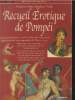
Recueil érotique de Pompéi
Plurigraf. Non daté. In-4. Broché. Bon état, Couv. convenable, Dos satisfaisant, Intérieur frais. 104 pages augmentées de nombreuses photos en couleurs dans le texte.. . . . Classification Dewey : 930.1-Archéologie
Classification Dewey : 930.1-Archéologie
Recherches récentes sur les établissements ruraux protohistoriques en Gaule méridionale (IXe-IIIe siècle avant J.-C.).
Montagnac, Editions Monique Mergoil, 1998. In-4 broché, 175 pp., texte sur 2 col., nb. fig. in-t. ( ill. photogr., plans, dessins, croquis...), 9 contributions.
UMR 154 du CNRS - Programme H14-15 du Ministère de la Culture, Préhistoire européenne, 2. 1998. Couv. un peu défraîchie, bon ex. - Frais de port : -France 6,8 € -U.E. 9 € -Monde (z B : 14 €) (z C : 24 €)
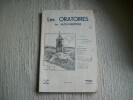
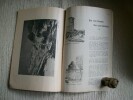
LES ORATOIRES DES ALPES MARITIMES.
Aix-en-Provence Les Amis des Oratoires 1942. In-8 broché couverture illustrée 22pp imprimées sur 2 colonnes. Illustré d'après des photographies et des dessins de Coste-Linder. Quelques pâles rousseurs. Bel exemplaire complet.
Individualizing the Dead. Attributes in Palmyrene Funerary Sculpture
, Brepols, 2021 Paperback, xvi + 140 pages, Size:216 x 280 mm, Illustrations:107 b/w, Language: English. ISBN 9782503591261.
Summary During the Roman era, when the ancient city of Palmyra was at the height of its powers, several thousand funerary portraits were sculpted, each carefully crafted to represent the men, women, and children who had once lived there as members of the Palmyrene elite. In their commemorative monuments, these individuals were given specific attributes to express their social status, wealth, identity, and skills. This volume provides an in-depth exploration of different aspects of these funerary portraits, and illuminates in particular the addition of attributes and how and why they were used by both artists and their patrons. The eight contributions gathered here examine the range of choices available to commissioners of art works in Palmyra, the prevalence or rarity of specific attributes, and the ways in which the variation and selection of attributes could be used in funerary, religious, or public contexts to express social cohesion and group identity, as well as to demonstrate individuality. Crucially, while these funerary monuments may be closely associated with Palmyra, they in fact provide clear evidence of the city's relationships across the wider region: examination of the different attributes suggests that the Palmyrenes were aware of how these were used, perceived, and adapted by neighbouring people as a way of transmitting various social meanings and expressing their own values. TABLE OF CONTENTS Table of Contents List of Illustrations Attributes in Palmyrene Funerary Sculpture: Functions and Meanings - MAURA HEYN AND RUBINA RAJA The 'Fringed' Mantle and its Relation to Gender in Palmyrene Funerary Sculpture - FRED ALBERTSON Plants in Palmyrene Funerary Iconography of Adults - OLYMPIA BOBOU Unlocking a Mystery? The Keys in Palmyrene Funerary Portraiture - RIKKE RANDERIS THOMSEN Significance of the Drinking Attributes in Palmyrene Banquet Scenes - MAURA HEYN Adornment and Jewellery as a Status Symbol in Priestly Representations in Roman Palmyra: The Palmyrene Priests and their Brooches - RUBINA RAJA A Symbol of a City. The Iconography of the Palmyrene Coinage - NATHALIA B. KRISTENSEN Why No Attributes? Expressions of Status and Social Realities in the Epigraphy of Palmyra - JEAN-BAPTISTE YON Index
Odds and Ends. Unusual Elements in Palmyrene Iconography
, Brepols, 2023 Paperback, xiv + 180 pages, Size:216 x 280 mm, Illustrations:45 b/w, 63 col., 1 tables b/w., 1 maps b/w, Language: English. ISBN 9782503603964.
Summary The funerary art that was produced in Roman Palmyra, a caravan city in the Syrian steppe desert, is rightly world-renowned. The frontal depictions of the deceased, featured in torso-length portraits, and the large-scale banqueting scenes are iconic, and lent an added mystique by the absence of any literary sources that might aid in their interpretation. But while from a distance these exquisite portraits might seem rather formulaic, when examining more closely, it is clear that these scenes reveal a surprisingly rich and varied funerary décor. Alongside the more popular iconographic choices are singular scenes, motifs, and elements that deviate from the norm, while new patterns and connections between Palmyra and its surroundings are identifiable. This volume, which draws on the vast materials gathered under the auspices of the Palmyra Portrait Project directed by Professor Rubina Raja, explores the 'oddities' raised by the Palmyrene corpus; it examines one-off scenes or elements, and unusual or unparalleled iconographical choices, and it questions how and why such unusual choices should be interpreted. The chapters gathered here not only focus on these visual 'hapax legomena' in Palmyra, but also explore the city's connections with the art of Roman centres to the west, as well as the nearby Hellenistic city states, regional centres of production, and Parthian and Persian sites to the east. Through this approach, the authors engage with the visual richness and sheer amount of choice that existed in Palmyrene funerary art, while also providing unique insights into the knowledge culture that existed within Palmyrene society. TABLE OF CONTENTS List of Illustrations Abbreviations 1. Unusual Iconographies, Choices, Musts, and Sculptural Traditions in Palmyra Maura K. Heyn and Rubina Raja 2. Hunting with Birds in Palmyra: Iconographic Evidence for the Activities of Elite Youths in the Period AD 100-200 Olympia Bobou 3. Playing Games in the Palmyrene Tomb Maura K. Heyn 4. The Phrygian Cap in Palmyrene Art Fred C. Albertson 5. Representation of Fish in the Palmyrene Tesserae Aleksandra Kubiak-Schneider 6. A Palmyrene Relief of Nemesis from Dura-Europos Lisa R. Brody 7. Anomalies in Funerary Representation Encountered in the Course of the WPAIP's Research Jeremy M. Hutton 8. Luxury Jewellery in Palmyrene Funerary Art: Necklaces with Portrait Busts Carried by Women Represented in the Funerary Sculpture Rubina Raja 9. As Close as You Can Get: Mourning Women in Palmyrene Funerary Art Rubina Raja 10. Palmyrene Double Reliefs and their Value Julia Steding Index
Quinze jours à Florence.
Paris, Librairie Hachette, 1913. 11 x 18, 252 pp., 108 illustrations, 16 plans, reliure d'édition percaline rouge, motifs or, bon état.
Symboles sacrés - Quatre mille ans d'art des Amériques.
Paris, Réunion des musées nationaux, 2002 1 volume 21,8 x 28cm Broché sous couverture à larges rabats, illustrée couleurs. 215p.; cartes et très nombreuses illustrations in texte, vignettes et pleines pages, en noir et en couleurs. Très bon état.
Catalogue de l'exposition présentée en 2002-2003 au Musée Fabre de Montpellier, aux Musées des Beaux-Arts de Rouen et de Lyon et à Rennes par le FRAME (French Regional & American Museums Exchange); par les historiens d'art états-uniens Evan M. MAURER et Molly HENNEN: une sélection de 182 pièces issues des collections de 9 musées américains avec photos, notices et commentaires, réparties au fil des chapitres sur la culture ancienne et les arts de l'Est et du Sud-Ouest des Etats-Unis, les civilisations du Mexique ancien, l'or et le jade en Amérique centrale, les côtes Sud et Nord de l'Amérique du Sud; préface sur l'histoire des relations France / Amériques et introduction sur les anciens peuples américains par Evan M. MAURER; cartes; tableau chronologique; bibliographie. Exemplaire avec article d'Emmanuel de Roux parue en août 2002 dans "Le Monde".
Druides Héros Centaures
PLON 1955 214 pages in8. 1955. Broché avec jaquette. 214 pages. DE THULÉ A L'ASIE DES STEPPES


jaquette légèrement usagée intérieur propre
Druides héros centaures : de Thulé à l'Asie des steppes
Librairie plon 1955 in12. 1955. Broché. Ouvrage de Maurice Bell publié en 1955 par Plon qui explore les liens mythologiques et historiques entre les civilisations de Thulé (Nord) et celles de l'Asie des steppes en s'appuyant notamment sur la découverte des manuscrits de la mer Morte pour éclairer les sectes religieuses juives du début de l'ère chrétienne. Le livre est richement illustré

Bon état intérieur propre
CONNAISSANCE des ILES : BALI, L'ILE AIMEE DES DIEUX
Un ouvrage de 354 pages, format 175 x 240 mm, relié pleine toile, illustrés de 139 photos et cartes, publié en 1973, Société Continentale d'Editions Modernes Illustrées, bon état
Aborde les thèmes de l'anthropologie, de l'archéologie, de l'ethnographie, du folklore, de la sociologie, etc.
Phone number : 04 74 33 45 19
Rome souterraine - coll. Le signe
Arthème fayard 1965 374 pages in8. 1965. Broché. 374 pages.
Bon Etat de conservation sous papier de soie tranche jaunie intérieur propre qq marques jaunes
LA GROTTE D'UNANG à MALEMORT DU COMBAT
broché - 21 x 27 - 205 pp - édition SERVICE D'ARCHEOLOGIE DU VAUCLUSE - 12 plaance
ANTHROLOGIE HISTOIR PHILOSOPHIE LITTERATURE PARADES
Le Dieu d'Or aux Pommes d'Or
Seghers 1978 231 pages in8. 1978. broché. 231 pages. L'ouvrage explore la légende d'Héraklès le dieu aux pommes d'or pour retracer l'hellénisation de la Gaule méridionale via une navigation d'est en ouest méconnue des historiens. Il examine le rôle de ce dieu des sources sacrées de la beauté et de l'altruisme dans la diffusion de la culture grecque en Provence Languedoc Espagne méditerranéenne et au Maroc
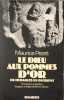
Bon état
Aegean writing and linear A - Studies in Mediterranean archaeology Vol. VIII
Carl Bloms Boktryckeri / Lund 1964 165 pages in4. 1964. Agrafé. 165 pages. iconographie en noir et blanc
Bon état de conservation cependant couverture défraîchie (marques frottements) agrafes oxydées intérieur propre
Indian antiquities: or, Dissertations, relative to the ancient geographical divisions of Hindostan... Part 3: In which the Indian theology is continued, and the sacred edifices of Hindostan and Egypt are compared
London, Printed for the author, and sold by W. Richardson 1793 vii + pp.343-540 (complete volume, this work is known for pagination errors), illustrated with 1 figure in text + folding frontispiece (the lower part is missing though) + 5 folding plates out of text ("The great pagoda of Tanjore", "A Mexican temple to the sun and moon", "Plan of the Serpentine Temple at Abury [Avebury] & Plan of Stonehenge", "The grand pantheon or rotunda of Rome", The superb temple of Esnay & The beautiful ruins of Komombu"), 1st edition, nice modern half-cloth binding, some foxing but text always very well readable, 22cm., good condition, X80080
Bahut trouvé en Suède avec blason rappelant celui de Busleyden.
Extrait des "Annales de la Société d'Archéologie", vol. V, 1891, 1 br., couverture muette. in-8 de 16 pages noon coupées, planche h.t. (blasons) ;
Saintes antique des origines à la fin du VIe siècle [2 volumes]
Lille, 1981 Complet en 2 tomes, T.1: 818pp., T.2: 100 planches en n/bl, resp. 24 & 31cm., br.orig. (avec trace d'une étiquette enlevée), Thèse de doctorat présentée devant l'Université de Bordeaux III (1977), cachet au verso de la p.d.t., texte frais, poids: 1.7kg., G112429
Adrienne ou la vie de Mme de La Fayette
,Paris, Hachette 1960, 570 pp., 1 vol. in 8 relié cartonnage éditeur
Edouard VII et son temps.
,Paris, Les Editions de France 1934, 387 pp., 1 vol. in 12 relié demi-basane, dos à nerfs, titre doré, couverture conservée.
Histoire d'Angleterre
,Paris, Arthème Fayard Les grandes études historiques 1946, 717 pp., 1 vol. in 12 br.
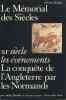
La conquéte de l'Angleterre par les Normands - Le Mémorial des siècles établi par Gérard Walter - Les événements : onzième siècle
,Paris, Albin Michel 1968, 369 pp., 1 vol. in 8 br. illustrations in et hors-texte