 Write to the booksellers
-
Type
Book (30417)
Disk (1)
Engraving (1)
Magazine (1070)
Old papers (2)
Photographs (2)
Reprint (4)
-
Latest
Last 24h (1)
Last 3 days (146)
Last month (492)
Last week (8)
-
Language
Chinese (1)
Dutch (82)
English (52)
French (31322)
German (15)
Italian (16)
Latin (5)
Portuguese (1)
Spanish (3)
-
Century
16th (3)
17th (14)
18th (59)
19th (1697)
20th (12255)
21st (1384)
-
Countries
Belgium (4087)
Brazil (2)
Canada (6)
China (14)
Côte d'Ivoire (192)
Denmark (483)
France (22553)
Greece (7)
Netherlands (1711)
Switzerland (2442)
-
Syndicate
ALAC (6)
CLAM (107)
ILAB (11445)
NVVA (1063)
SLACES (1063)
SLAM (9759)
SNCAO (71)
"Pompéi, les nouvelles fouilles : la ""Villa des Mystères"", l'Antiquarium. Itinéraires des musées, galeries et monuments d'Italie, N° 3."
Roma, Istituto poligrafico dello Stato, Libreria dello Stato, 1966. 13 x 18, 191 pp., 18 illustrations dans le texte, 114 hors texte, 2 plans, broché, bon état.
Conceptualizing Bronze Age Seascapes. Concepts of the Sea and Marine Fauna in the Eastern Mediterranean in the Second Millennium BCE
, Brepols - 2023, 2023 Paperback, x + 218 pages, Size:216 x 280 mm, Illustrations:20 b/w, 7 col., 13 tables b/w., 3 maps b/w, Language: English. ISBN 9782503606477.
Summary The Mediterranean has, for millennia, formed the heart of an intensive trading network of ideas, goods, and people. For the ancient populations of the Levant, Cyprus, and Southern Anatolia, interactions with the sea ? from fishing to seafaring, and from trade to dye production ? were a constant presence in their life. But how did the coastal peoples of the Bronze Age understand the sea? How did living on the shore influence their lives, from daily practices to mythological beliefs? And what was the impact on their conceptual world? This volume seeks to engage with these questions by addressing the relationship between environment, diet, material production, perception, and thought formation through a combination of archaeological analysis and engagement with primary sources, and in doing so, it offers unique insights into the conceptual world of the ancient Mediterranean maritime cultures of the 2nd millennium BCE. TABLE OF CONTENTS Acknowledgements List of Abbreviations List of Common and Scientific Names of Fish and Molluscs Mentioned in the Text Part I: Framework Chapter 1. Introduction Objectives Organization of the Book Chapter 2. History, Theory, and Methods State of the Art Theoretical Framework Chronological Framework The Evidence Part II: Regional Chapters Chapter 3. Levant Faunal and Material Cultural Evidence Textual Evidence Discussion Chapter 4. Cyprus Faunal and Material Cultural Evidence Textual Evidence Discussion Chapter 5. Southern Anatolian Coast Faunal and Material Cultural Evidence Textual Evidence Discussion Part III: Overarching Analysis Chapter 6. Concepts of Marine Fauna Marine Fauna as Food Fish and Molluscs: Offerings and Purity Marine Fauna as Status or Commodity Visual Concepts of Marine Fauna Chapter 7. Concepts of the Sea The Sea as a Place The Sea as a Supernatural Force The Sea as a Divine Entity Chapter 8. Conclusions: Concepts of Seascapes Works Cited Index
Limiting Spaces. The Attribution of Spatial Meaning through the Creation of Boundaries
, Brepols, 2025 Hardback, Pages: 187, Size:216 x 280 mm, Illustrations:69 b/w, 14 col., 4 tables b/w., Language: English. ISBN 9782503617497.
Summary This volume explores how boundaries were created, perceived, and experienced in past societies. Bringing together diverse theoretical and methodological approaches - from cognitive and processual to sensory and phenomenological - the contributors examine how spatial meaning is attributed through the creation and negotiation of boundaries. The volume is structured into three thematic sections: the first investigates how boundaries define and characterize space; the second focuses on the act of crossing boundaries and its role in shaping spatial significance; and the third examines the experience of boundaries, of their crossing, and of the spaces contained within them. Drawing on case studies from Prehistory to the Early Modern period, and spanning regions from Europe and Africa to Central Asia, the chapters reflect a wide range of archaeological traditions and perspectives. Through innovative analyses and interdisciplinary dialogue, this collection advances our understanding of how past societies organized, perceived, and interacted with space. TABLE OF CONTENTS List of Illustrations 1. The Attribution of Spatial Meaning through the Creation of Boundaries: An Introduction Mari Yamasaki, Sonja Speck, and Francesca Meneghetti Part One. Delimiting Spaces 2. Conceptual Boundaries in Evolutionary Perspective: Peripersonality, Encapsulation, and the Extension of Neanderthal Worlds Paul Pettitt 3. Vertical Boundaries and the Conceptualization of Built Spaces: Insights from the Experience of an Egyptian Old Kingdom Tomb Sonja Speck 4. Defining Regional, Local, and Household and Activity Area Boundaries in Iron Age Saka Settlements and Mortuary Complexes in Southeastern Kazakhstan Claudia Chang 5. Limited Perfection: Regular Mediaeval Towns and Villages in Central Europe: Wandering of Ideas, Laws and Measures Maria Legut-Pintal, Krzysztof Fokt, Tomasz Klír, and Anna Kubicka-Sowi?ska Part Two. Limits Between Spaces 6. On the Thresholds of Social Space in Swahili Towns of East Africa Monika Baumanova 7. On the Edge: Hyperrealism, Motivated Symbolism and Situated Iconography in Northwestern Iberia during the Late Iron Age Javier Rodríguez-Corral 8. Water Crossings as Structuring Elements in the Experience of Ancient Greek Sacred Space Andrew Farinholt Ward Part Three. Experiencing the Limit 9. Diving through the Mirror: The Liminality of Water Surfaces in Cultures across the Ancient Eastern Mediterranean Mari Yamasaki 10. The Gates of the Cosmos: Liminality in the Architecture and Functions of Central European Neolithic Circular Enclosures (Rondels) Judit P. Barna and Gábor Kalla 11. Boundaries, Entrances, and Placemaking: The Creation of Liminal Spaces at Castell Henllys Iron Age Fort, Wales Harold Mytum
L'empreinte de Rome : Belgica antiqua
Anvers, Fonds Mercator 1980 In-4 reliure éd. sous jaquette 30,5 cm sur 26,5. 531 pages, couverture illustrée. Jaquette en très bon état. Ouvrage illustré. Très bon état d’occasion.
Sous étui carton noir, 278 illustrations en couleurs et en noir & blanc, dans et hors texte, Notes, bibliographie générale, liste des illustrations, cartes, plans, schémas, typologie, index des noms, index des matières, table des matières. Très bon état d’occasion
Les vestiges archéologiques de la région de Lesse-et-Lomme des origines aux mérovingiens - Monographie n°4 1961 / Ardenne et Gaume
A.s.b.l 1961 in8. 1961. Broché. iconographie en noir et blanc
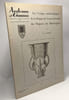

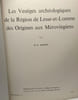
Bon état bonne tenue intérieur propre
Colloque international concernant la protection des sites et monuments archéologiques.
Bruxelles, Commissariat Général au Tourisme, Musées Royaux d'Art et d'Histoire, 1962. 17 x 24, 62 pp., 44 figures en N/B et en couleurs, broché, bon état.
Bilingual Notaries in Hellenistic Egypt. A study of Greek as a second language
Brussel, Koninklijke Vlaamse academie van Belgie voor Wetenschappen en Kunsten, 2012 Softcover, 291pp., 21x29.5cm., nieuw. ISBN 9789065691033.
In the Upper Egyptian town Pathyris nearly twenty bilingual family archives have been found, dating to the second and first centuries BCE. They contain different types of documents, but contracts play an important role. Most of the Greek contracts were written by notaries (agoranomoi), whose native language was Egyptian. This study describes the language contact situation in Hellenistic Egypt in general and in Pathyris in particular. Notarial offices and scribal families in Upper Egypt are also discussed. The main focus of the study is a thorough phonological and morpho-syntactic analysis of the Greek language of the bilingual notaries. With the help of handwriting analysis, we get close to studying idiolects. Some of the notaries had more transfer features from their first language than others. Especially a notary called Hermias used creative strategies to avoid certain Greek structures and his Greek seems to present a learner's interlanguage with first and second language structures intertwining.
Dolmens et menhirs, la civilisation mégalithique.
Paris, Payot et Rivages, 1994. In-8 br., couverture illustrée ; 372 pp., nb. dessins cartes et plans en noir dans le texte. Bibliographie.
Etat de neuf. - Frais de port : -France 6,8 € -U.E. 9 € -Monde (z B : 14 €) (z C : 24 €)
La femme celte. Mythe et sociologie.
Payot, collection Histoire, 1989. In-8 broché, couverture illustrée, très légèrement défraîchie, avec traces de plis.
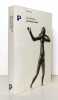
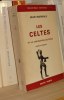
Les celtes et la civilisation celtique
Payot, coll. « Bibliothèque Historique » 1970 Dédicadé par l’auteur. In-8 broché 23 cm sur 14. Non massicoté, jamais lu. Bon état d’occasion.
Bon état d’occasion
Les Celtes et la civilisation celtique. Mythe et histoire.
1975 P., Payot, 1975, fort in 8° broché, 494 pages, couverture illustrée.
...................... Photos sur demande ...................


Phone number : 04 77 32 63 69
Les Celtes et la civilisation celtique, mythe et histoire, Paris, PAYOT, 1969
1 vol. in-8° br. couverture illustrée, 494 p., non coupé, très bon état malgré couverture jaunie, envoi de l'auteur à Jean Duché.
Phone number : 06.31.29.75.65
L'épopée celtique en Bretagne. Petite Bibliothèque Payot, N° 174.
Paris, Payot, 1975. 11 x 18, 287 pp., broché, très bon état.
Vercingétorix
Editions de crémille 1992 In-4 relié. Très bon état d’occasion.
Très bon état d’occasion
Vercingétorix
éditions du Rocher 1995 In-8 broché 24,0 cm sur 15,5. 267 pages. Bon état d’occasion.
Bon état d’occasion
Vercingétorix - Collection la naissance de la France. Éditions de Crémille. Genève. 1992.
1 volume in-4° reliure éditeur, tête dorée, reliure syvertex bleu orné de fleurs de lys dorées. 378 p. + illustrations. Sur papier bouffant. Très bon état.
Phone number : 06.31.29.75.65
Paroles Celtes
Albin Michel, coll. « Carnets de sagesse » 1996 In-8 cartonné 21 cm sur 12. 50 pages. Très bon état d’occasion.
Très bon état d’occasion
THE HORSE IN GREEK ART.
NEW YORK. BIBLO AND TANNEN. 1969. IN-8 DE XVII + 211 PAGES + 1 FEUILLET, RELIURE DE L'EDITEUR PLEINE PERCALINE ROUGE, TITRE DORE. ILLUSTRE DE 62 FIGURES. BEL EXEMPLAIRE.
A Connecticut Yankee in King Arthur's Court
Harper & Brothers Publishers 1889 in8. 1889. Cartonné.
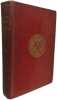
Bon état pages jaunies intérieur propre
Origins of Classical Architecture: Temples, Orders, and Gifts to the Gods in Ancient Greece
, Yale University Press, 2014 Linnen binding under dustjacket, 288 pages, 30 colour images + 230 black-&-white illustrations, 26.5 x 22 cm. English text. *New . ISBN 9780300182767.
The Greek architectural orders?Doric, Ionic, and Corinthian?lie at the heart of the classical traditions of building, and yet satisfying accounts for their origins have proved elusive. In contrast with conventional theories that would see the orders originating over the course of a long evolution, this book stresses the suddenness of the phenomenon and its dependence on historical context, human agency, and artistic inspiration. Casting new light on a subject that has preoccupied architects since the Renaissance, Mark Wilson Jones shows how construction, influence, appearance, and meaning found expression in complex and multifaceted designs. New emphasis is placed on the relationship between the orders and the temples of worship that they were created to adorn. Temples were exquisitely made offerings to the divinity, and they also contained valuable offerings. In revealing affinities between certain offerings and the orders, the author explains how these gave architectural expression to sensibilities of intense social and religious significance.
Goed gevonden, Een historie van archeologen en amateurs - Het portret van Martien Weel (1935-2011)
, Uitgeverij Polder, 2014 272 pagina's. Hardcover. Fine copy. Including an index. 4to Illustrated. ISBN 9789081706346.
Makelaar en fervent amateurarcheoloog Martien Weel (1935-2011) legde al rond 1950 de basis voor zijn eigen collectie bodemvondsten. In de periode waarin hij gewapend met schop, laarzen en (later) detector op pad ging, veranderde niet alleen het hobbygraven zelf, maar ook de manier waarop men naar deze liefhebberij keek. De vele vindplaatsen door grootschalig grondverzet, koerswijzigingen binnen de archeologie, de ontdekking van de metaaldetector, nieuwe wetgeving? Al die ontwikkelingen worden belicht in het boek.>Goed gevonden vormt een kleine geschiedenis van (amateur)archeologie in Nederland, maar vertelt bovenal het levensverhaal van een gelukkige graver. Ook bovengronds: alle vondsten werden met zorg gearchiveerd. De mooiste en meest bijzondere worden nu onthuld. Van munten, insignes en riembeslag tot steengoed, aardewerk, tegels en glas.Treed in Weels voetsporen en volg hem tijdens zijn zoektochten in onder meer Medemblik, Hoorn en Amsterdam. Hoe ging hij te werk? Waar werd gegraven? Wat is de geschiedenis van de vindplaatsen? Marleen Weel vertelt het levensverhaal van haar vader. Verschillende (amateur)-archeologen en andere verzamelaars onderzoeken de vondsten en het vinden door de jaren heen. Het levensverhaal van een gelukkige graver- Een kleine geschiedenis van (amateur)archeologie- Rijk geillustreerd
Alfred, ou le jeune voyageur en France.
Didier Paris 1837 In-12 ( 180 X 110 mm ) de XI-372 pages, plein veau framboise, dos lisse orné d'un grand fer et de frises romantiques dorés, filet doré sur les plats encadrant un grand décor romantique estampé à froid, coupes et coiffes filetées d'or, tranches dorées. ( Reliure de l'époque ). 4 fines gravures hors-texte. Joli spécimen de reliure romantique.
Transformationen stadtrömischer Heiligtümer während der späten Republik und Kaiserzeit
, Brepols, 2020 Paperback, xxxii + 384 pages, Size:216 x 280 mm, Illustrations:167 b/w, 2 tables b/w., Language: German. ISBN 9782503588353.
Summary Was geschah in der Stadt Rom mit den republikanischen Tempelbauten während der Kaiserzeit? Wie wurden diese (noch) genutzt? Welchen baulichen Veränderungen unterlagen sie? Neue Akteure, veränderte Machtverhältnisse, eine ganze Stadt im Wandel, zunehmend begrenzter Raum, wegfallende Sichtachsen, letztendlich aber auch neue Kulte sowie neue Formen von Kultbauten und -praktiken bestimmen den Rahmen, vor dem auch das Fortbestehen der bereits in republikanischer Zeit vorhandenen Heiligtümer betrachtet werden muss. Dabei zeichnet sich ein Bild ihrer Nutzungsweisen und Funktionen, das kaum heterogener sein könnte, sich bei näherer Betrachtung jedoch sinnvoll zu einem Ganzen verbindet. Geprägt von Pragmatismus und dem Repräsentationswillen verschiedener Akteure spiegelt sich im unterschiedlichen Umgang mit den Heiligtümern die räumliche und funktionale Segmentierung der kaiserzeitlichen Stadt eindrucksvoll wider. Dabei steht weit mehr als die Rekonstruktion der bisher häufig vernachlässigten kaiserzeitlichen Phasen ausgewählter Heiligtümer im Vordergrund. Es sind die Einbettung der Architekturen und Räume dieser Stätten in das urbane Umfeld, die Konzeption städtischen Raumes und insbesondere auch die Frage, welche Rolle den ?alten' Kulten in einer ?neuen' Stadt beigemessen wurde, die das Augenmerk dieses Buches bilden. TABLE OF CONTENTS Abbildungsverzeichnis Abkürzungsverzeichnis Einleitung Teil 1. Einzelbeispiele 1. Die sog. Area Sacra des Largo Argentina 2 Der sog. Tempel der Via delle Botteghe Oscure 3 Der Portunus-Tempel im Forum Boarium 4 Die sog. Area Sacra von Sant'Omobono im Forum Boarium 5 Die drei Podiumtempel des Forum Holitorium 6 Die Porticus Octaviae und Porticus Philippi am Nordrand des Circus Flaminius 7 Die Heiligtümer des Apollo und der Bellona in circo 8 Die sog. Area Sacra dei Templi Repubblicani in Ostia Teil 2. Transformationen 1 Architekturen 2 Räumlicher Wandel von Heiligtümern 3 Nutzungen und Funktionen 4 Kultfragen Schluss Literaturverzeichnis English Summary
Many Faces of the Lady of Elche. Essays on the Reception of an Iberian Sculpture
, Brepols, 2024 Hardback, 155 pages, Size:156 x 234 mm, Illustrations:5 b/w, 36 col., 1 maps b/w, Language: English. ISBN 9782503610306.
Summary On 4 August 1897, farm workers in Elche - the site of ancient Ilici - discovered an Iberian sculpture of a woman that dated from the fifth- fourth centuries BCE. French archaeologist Pierre Paris dubbed this figure 'the Lady of Elche', and promptly purchased the sculpture on behalf of the Louvre Museum. There, she drew the attention of European scholars who were intrigued by her stylistic features, finally concluding that she bore witness to the existence of a specifically Iberian art. Since her discovery, the Lady of Elche has been a source of fascination not only for scholars, but also for artists, and she has become an icon of regional and national identity across Spain. This volume, co-written by an archaeologist and an anthropologist and translated here into English for the first time, seeks to explore the importance of the Lady of Elche, both for students of the past, and for the peoples of Iberia. The authors here explore not only what we know - and still do not know - about her creation, but also engage with key questions about what she represents for the men and women of our time who have questioned, manipulated, admired, loved, and often reinvented the singular beauty of this iconic figure. TABLE OF CONTENTS List of Illustrations Acknowledgements Chapter 1. Introduction A Unique Work A Remarkable History Actors and their Agendas Chapter 2. The Lady and the Discovery of Iberian Art Ilici in the Iberian World A Newly Defined Art From la Alcudia's Soil to the Louvre: How the Discovery Came about An Exceptional Piece Chapter 3. A Century of Discussions about the Lady The First Attempts at Identification: The Moorish Queen, Apollo The Lady and the Archaeologists Iberian or Mediterranean, Goddess or Queen? Chapter 4. Through Artists' Eyes: The Lady from Orientalism to Primitivism and Art Nouveau Painters' Interpretations: Oriental or Hellenizing Iberians and 'Primitives' Ignacio Pinazo Martinez, Art Nouveau Sculptor Chapter 5. Women in Stone, Women in Flesh and Blood The Iberians and Valencian Identity The Lady as Archetypal Valencian Woman The Venus of Arles and the Lady of Elche Female Beauty A 'Living Lady' in Elche Chapter 6. The Lady between Elche and Madrid Ramon Folqués's Account of the Discovery of the Statue Reasons for Rewriting the Account An Account that Became the 'Official Account' The Lady and the Virgin: Holiness Transferred After Francoism: The Rise of Heritage Manuel and 'His' Lady From Nationalism to Localism Chapter 7. Conclusion Works Cited
Mystique (La) des Eaux Sacrées dans l'antique Armor. Essai sur la connaissance mythique.
Paris, Vrin, 1947 ; in-8, broché ; 280 pp., 1 figure et 4 cartes départementales (Finistère, Côtes du Nord, Morbihan, Ille et Vilaine).
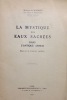
Edition originale. Les légendes de Bretagne. I- Les Puissances Agissantes (L'Homme, l'Animal, les Etres de féérie, les Ames en peine, les Phénomènes physiques) ; II- Le triple aspect des légendes de Bretagne (le Rituel, les pouvoirs des fontaines bretonnes, la poésie des légendes bretonnes). Les caractères universels et spécifiques du culte de l'eau : I- Caractère d'universalité du culte des sources (origines, puissances agissantes, rituel, pouvoirs des sources et des fontaines) ; II- Caractères spécifiques du culte de l'eau en Irlande et en Armorique (le Druidisme : en Irlande ; en Armorique) ; III- Réalité du culte des sources (théorie en présence ; documents archéologiques). Essai de méthodologie du mythe : I- L'Homme individuel ; II- L'Homme vis à vis des choses ; III- Vis à vis de la société ; La Philosophie du mythe ; etc. Ouvrage en bon état général.

