 Write to the booksellers
-
Type
Book (31096)
Disk (1)
Engraving (1)
Magazine (1072)
Old papers (2)
Photographs (2)
Reprint (4)
-
Latest
Last 24h (6)
Last 3 days (7)
Last month (222)
Last week (13)
-
Language
Chinese (1)
Dutch (82)
English (52)
French (32004)
German (15)
Italian (16)
Latin (4)
Portuguese (1)
Spanish (3)
-
Century
16th (3)
17th (13)
18th (60)
19th (1743)
20th (12929)
21st (1545)
-
Countries
Belgium (4064)
Brazil (1)
Canada (6)
China (14)
Côte d'Ivoire (202)
Denmark (483)
France (23234)
Greece (7)
Netherlands (1715)
Switzerland (2452)
-
Syndicate
ALAC (6)
CLAM (103)
ILAB (12338)
NVVA (1063)
SLACES (1063)
SLAM (10656)
SNCAO (71)
Hrsg. vom Römisch-Germanischen Zentralmuseum Mainz. Band 10: Hansestadt Lübeck, Ostholstein, Kiel.
Mainz, v.Zabern, (1968)
XI,216 p.; ills. Pb. 21 cm
Hrsg. vom Römisch-Germanischen Zentralmuseum Mainz. Band 12: Nördliches Rheinhessen, Ingelheim, Bingen, Bad Kreuznach, Alzey, Oppenheim.
Mainz, v.Zabern, 1969.
XV,260 p.; ills. Pb. 21 cm
Hrsg. vom Römisch-Germanischen Zentralmuseum Mainz. Band 14: Linker Niederrhein, Krefeld, Xanten, Kleve.
Mainz, v.Zabern, 1969.
XV,222 p.; ills. Paperback 21 cm
Hrsg. vom Römisch-Germanischen Zentralmuseum Mainz. Band 21: Hochtaunus, Bad Homburg, Usingen, Königstein, Hofheim.
Mainz, v.Zabern, (1974).
XV,236 p. ills. Pb.
Hrsg. vom Römisch-Germanischen Zentralmuseum Mainz. Band 22: Aalen, Lauchheim, Ellwangen.
Mainz, v.Zabern, 1973.
XV,260 p.; ills., fold. map. Pb. 21 cm
Hrsg. vom Römisch-Germanischen Zentralmuseum Mainz. Band 23: Schwäbisch Hall, Comburg, Vellberg.
Mainz, v.Zabern, 1973.
XIV,161 p.; ills. Pb. 21 cm
Hrsg. vom Römisch-Germanischen Zentralmuseum Mainz. Band 25 & 26: Nordöstliches Eifelvorland, etc. Einführende Aufsätze & Exkursionen.
Mainz, Zabern, (1974).
2 vols: 181;210 p.; ills. Pb. 21 cm
Hrsg. vom Römisch-Germanischen Zentralmuseum Mainz. Band 27: Würzburg, Karlstadt, Iphofen, Schweinfurt.
Mainz, v.Zabern, 1977.
XVII,310 p.; ills. Pb. 21 cm
Hrsg. vom Römisch-Germanischen Zentralmuseum Mainz. Band 33. Südwestliche Eifel, Bitburg, Prüm, Daun, Wittlich.
Mainz, v. Zabern, 1977.
XVI,343 p.; ills., 2 folding maps loosely inserted. Paperback 21 cm
Hrsg. vom Römisch-Germanischen Zentralmuseum Mainz. Band 34. Westlicher Hunsrück, Bernkastel-Kues, Idar-Oberstein, Birkenfeld, Saarburg.
Mainz, v. Zabern, 1977.
XVI,299 p.; ills., 2 folding maps loosely inserted. Paperback 21 cm
Hrsg. vom Römisch-Germanischen Zentralmuseum Mainz. Band 48: Hannover, Nienburg, Hildesheim, Alfeld. Teil I: einführende Aufsätze.
Mainz, v.Zabern, 1981.
XVIII,231 p.; ills. Pb. 21 cm
La marge orientale du vicus de Boutae. Les fouilles Galbert à Annecy (Haute-Savoie).
Lyon, Alpara, 2015. In-4 br., couv. rempl., 445 pp., nbreuses fig. en noir et couleurs (dessins, plans, reprod. photogr.), bibliogr.
Etat de neuf. - Frais de port : -France 8,4 € -U.E. 10 € -Monde (z B : 15 €) (z C : 33 €)


Rom und die Provinzen. Gedenkschrift für Hanns Gabelmann. Hrsg. von G. Brands (et alii).
Mainz, Von Zabern, 2001.
X,220 p., ills., 48 pls. Cl. 30 cm (Beihefte der Bonner Jahrbücher 53)(Festschrift; incl. a vita & bibliography)
Die Werkstattgruppen der oberitalischen Sakrophage --- Beihefte der bonner jahrbücher - BAND 34 andschaftsverband rheinland rheinisches landesmuseum bonn und verein von altertumsfreunden im rheinlande
Rheinland-Verlag GMBH / Bonn 1973 in4. 1973. Cartonné jaquette. iconographie en noir et blanc
Bon état d'ensemble avec jaquette (défraîchie ternie petite déchirure en haut du premier plat) intérieur propre trace d'étiquette sur le premier plat intérieur première garde découpée en partie supérieure
Deux récits officiels de l'Escalade recueillis et mis en lumière par J. Gaberel, pasteur.
Jules-Guillaume Fick, imprimeur, 1868. In-12 broché de 16 pages, couverture comprise. Premier plat orné des armoiries genevoises. Non rogné. Quelques taches et traces de plis.
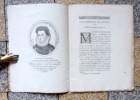
Illustré de bandeaux, culs-de-lampe et d'un portrait de Dame Julien Piaget, née Baud en frontispice. Suite à un accident immobilisant votre libraire pour quelques semaines, le traitement des commandes est bien assuré, mais momentanément ralenti. Merci de votre patience et de votre compréhension.
Asti, nei principali suoi ricordi storici. Volume primo.
Torino, Varesio, 1927 ; 8°,cartonnage, pièce de titre, 597 p., 14 planches hors-texte. (Biblioteca della societa storica subalpina, vol.CII, N.serie XI.
TrËs bon Ètat.
Hommages à Jean-Claude GOYON. Textes réunis et édités par...
Le Caire, IFAO, 2008. In-4 broché, couv. ill. en coul., 434 pp., portrait au front., très nb. ill. en n/b. in-t. (reprod. photogr., reprod. textes hiéroglyphiques, dessins, croquis etc...) , textes en français, en anglais ou en allemand.
IF 981. BiEtud 143. 40 contributions offerts à J.C. Goyon pour son 70ème anniversaire. Comme neuf. - Frais de port : -France 8,4 € -U.E. 10 € -Monde (z B : 15 €) (z C : 33 €)
Les grandes heures de Vendée . Les convulsions de l'Ouest
,Paris, Librairie académique Perrin 1963, 329 pp., 1 vol. in 8 relié (reliure éditeur), illustrations hors-texte
Problemi di numismatica greca della Sicilia e Magna Grecia
Napoli, Gaetano Macchiaroli 1959 166pp. with 78 illustrations in text, 24cm., softcover, in the series "Accademia di Archeologia Lettere e Belle Arti di Napoli. Memorie" volume 4, few annotations in pencil by the previous owner Paul Naster who was a reknowned belgian numismatist, good condition, G103757
Kasr el-Heir.
P., Geuthner, 1927. In-4 br., pp. 302-329, 10 planches (5 plans et 5 planches d'héliogravures montrant le site), 14 figures dans le texte.
Extrait de la revue Syria. Bonne condition. - Frais de port : -France 4,9 € -U.E. 7 € -Monde (z B : 11 €) (z C : 21 €)
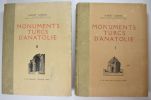
Monuments turcs d'Anatolie. Tome Premier. Kayseri-Nigde. Tome Deuxième. Amasya - Tokat-Sivas.
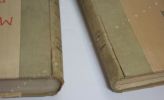
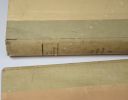
Paris, E. de Boccard, Éditeur, Librairie des Écoles Françaises d'Athènes et de Rome, 1931. 2 vol. 378 x 280 mm, vol. 1 : (3) ff. : blanc, faux-titre, titre, VII-(1)-170 pp., ill. n/b in-texte, LVI (56) planches photos n/b, concernant les planches du vol. 1 : il manque la pl. XII à la place de laquelle se trouve la pl. II, reliée une deuxième fois, vol. 2 : (3) ff. : (1) f. blanc, faux-titre, titre, III-(1)-204-(1) pp., (1) f. blanc, 120 fig. n/b in-texte, y compris 2 cartes n/b précédant la préface, 80 planches photos n/b numérotées LXXIX et II bis. Reliure demi-toile d'éditeur illustrée, vol. 1 : mors fendu (122 et 20 mm), manques de papier aux coins, rayures et taches, frottements au second plat, rousseurs sur la toile (dos et premier plat), claires rousseurs sur quelques planches, essentiellement dans les marges ; vol. 2 : mors fendu (55 et 140 mm), manque de papier au premier plat, rayures et taches au deuxième plat, dos taché, coupes et coins frottés, intérieur en très bon état. Bon exemplaire.
Ouvrage publié sous les auspices du Ministère Turc de l'instruction publique.
PHRYGIE. Exploration Archéologique. Tome IV: LA CITE DE MIDAS, ARCHITECTURE.
Paris, De Boccard, 1965. In-4 broché, 99pp, 42 fig. in-texte, 48 planches d'ill. phot. logées dans le second plat de la couv., bibliographie, index. (Institut Français de Stanboul), bel envoi autographe de l'auteur.
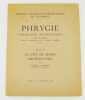
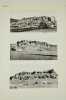
Très bonne condition. - Frais de port : -France 7,15 € -U.E. 9 € -Monde (z B : 14 €) (z C : 24 €)
Gabrielle Démian s d'Archimbaud Lucy Vallauri Jacques Thiriot Danièle Foy
Reference : 13597
(1990)
Céramiques d'Avignon. Les fouilles de l'Hôtel de Brion et leur matériel
Petit Palais Diffusion 1990 185 pages in8. 1990. Broché couverture rempliée. 185 pages. Cet ouvrage est une monographie scientifique présentant un ensemble exceptionnel de céramiques découvertes lors des fouilles du jardin de l'Hôtel de Brion à Avignon menées à partir de 1966. Richement illustré il étudie le matériel céramique de la fin du XIVe siècle et est destiné à un public spécialisé en archéologie médiévale
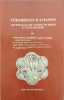
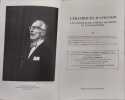
Très bon état
Gabrielle Démian's d'Archimbaud Lucy Vallauri Jacques Thiriot Danièle Foy
Reference : 14478
(1990)
Céramiques d'Avignon. Les fouilles de l'Hôtel de Brion et leur matériel
Petit Palais Diffusion 1990 185 pages in8. 1990. Broché couverture rempliée. 185 pages.
Bon état
Les rêves dans les "discours sacrés" IIe siècles ap. J.C. - essai d'analyse psychologique - éditions universitaires de Mons série sciences humaines
Université de Mons 1972 in8. 1972. Broché. iconographie en noir et blanc
Bon état tranche un peu ternie intérieur propre

