 Write to the booksellers
-
Type
Book (30237)
Disk (1)
Engraving (1)
Magazine (938)
Old papers (2)
Photographs (1)
Reprint (4)
-
Latest
Last 24h (73)
Last 3 days (6)
Last month (208)
Last week (11)
-
Language
Chinese (1)
Dutch (82)
English (49)
French (31016)
German (15)
Italian (14)
Latin (4)
Portuguese (1)
Spanish (2)
-
Century
16th (3)
17th (13)
18th (59)
19th (1673)
20th (12108)
21st (1383)
-
Countries
Belgium (4079)
Brazil (1)
Canada (6)
China (14)
Côte d'Ivoire (200)
Denmark (483)
France (22191)
Greece (7)
Netherlands (1720)
Switzerland (2483)
-
Syndicate
ALAC (6)
CLAM (107)
ILAB (11515)
NVVA (1063)
SLACES (1063)
SLAM (9829)
SNCAO (71)
Figurines de la C ramique Fun raire.
leipzig, Verlag W. Hiersemann , 1929 2 vols in large hardcover folder, 34 x 26 cm, 105 pages + 114 plates, Fran ais. *Good condition .
Les Figurines de la C ramique Fun raire. Mat riaux pour l tude des Croyances et du Folklore de la Chine Ancienne. Tome I: Texte. Tome II: Planches.
Découverte de l'art préhistorique en Chine.
Paris, Albin Michel, [d.l. 1988] 1 volume 24 x 33,5cm Reliure éditeur sous jaquette au 1er plat illustré couleurs. 220p., 2 feuillets; carte et très nombreuses illustrations, vignettes, pleines et double pages, en noir et en couleurs. Bon état.
Traduction, par Aline DIDIER, de "Cina, l'arte rupestre preistorica", de l'archéologue chinois spécialiste de l'art rupestre CHEN Zhaofu, publié en italien en 1987: une "introduction à un vaste monde presque inédit", histoire des découvertes, zones d'art rupestre et sites, étude des contenus des peintures et gravures, datations et ethnies, caractères artistiques; préface du préhistorien italien Emmanuel ANATI; carte, très nombreuses photos couleurs, croquis en noir. Exemplaire bien complet de sa jaquette.
Rome
,Grenoble, Arthaud 'Les Beaux Pays' 1936, 221 pp., 1 vol. in 8 br. ouvrage orné de 293 héliogravures. Couverture illustrée de Paul Bret.
Saint-Sébastien hors les Murs. La basilique, le souvenir apostolique, le cimetière ad Catacumbas.
Paris, Maison de la bonne Presse, 1925. Broché, couverture illustrée. In-8 de 85-(2) pages, illustrations, photos, plans.
Construite à Rome dans la première moitié du IVe siècle, au-dessus des catacombes du même nom, la basilique est dédiée à saint Sébastien, martyr romain populaire du IIIe siècle. Le terme « hors-les-murs » fait référence au fait qu’elle se trouve à l’extérieur du mur d’Aurélien, à la différence de la basilique Saint-Sébastien située sur le mont Palatin.
LES CATACOMBRES ROMAINES
Ernest Flammarion. 1934. In-12. Broché. Bon état, Couv. convenable, Dos frotté, Intérieur acceptable. 211 pages. Photo héliogravée en noir et blanc en frontispice. Illustré de photos héliogravées en noir et blanc sur planches hors texte.. . . . Classification Dewey : 930.1-Archéologie
'Les pèlerinages'. Au pèlerin. Sous terre. Au lendemain de la mort. Le cimetière de Priscille. Le cimetière de saint Callixte... Classification Dewey : 930.1-Archéologie
Mémoire sur l'invention du tissu.
1935 Paris, Editions d'Art et d'Histoire, 1935, in 4° broché, 75 pages ; couverture rempliée (petit manque en tête du dos) ; 6 planches hors-texte et 26 figures in-texte.
Forme le "Document N°I" de l'"Histoire Générale du Tissu". Fermeture du 1er au 23 Août


Phone number : 04 77 32 63 69
Glozel et l'écriture préhistorique.
Chez l'auteur 1991 Un volume in-8 broché, couverture beige illustrée, 139 pages, illustrations en n&b. Couverture insolée, néanmoins bon état.
La librairie est ouverte du mardi au samedi de 9h30 à 12h30 et de 13h30 à 19h00. Commandes par courriel ou téléphone. Envoi rapide, emballage soigné.
Glozel ou l'écriture préhistorique.
Courgenard (Sarthe), Edition de l'auteur, 1991 ; plaquette in-8, brochée. 140pp. Dessins in-texte. Bon état.

L'auteur, espérantophone reconnu, s'essaie à la transcription des signes gravés retrouvés sur des tablettes, os, et autres objets découverts à Glozel (Allier) en 1924 par un jeune agriculteur Emile Fradin. Il donne en préambule l'histoire de la découverte et les différentes étapes de la controverse qui à suivie.
Deux tombes de la XVIIIe dynastie à Deir el-Medina. N° 340 (Amenemhat) et 354 (anonyme).
Le Caire, IFAO,1999. In-folio broché, 124pp, 28 fig., 47 pl. d'illustrations phot. en noir et en coul., certaines dépl., bibliographie. Ex-dono manuscrit sur la page de titre.
Couv. très légèrement jaunie, très bon ex. - Frais de port : -France 8,4 € -U.E. 10 € -Monde (z B : 15 €) (z C : 33 €)
Deux tombes de la XVIIIe dynastie à Deir el-Medina. N° 340 (Amenemhat) et 354 (anonyme).
Le Caire, IFAO,1999. In-folio broché, 124 pp., 28 fig., 47 pl. d'illustrations phot. en noir et en coul., certaines dépl., bibliographie.
Couv. très légèrement jaunie, très bon ex. - Frais de port : -France 8,4 € -U.E. 10 € -Monde (z B : 15 €) (z C : 33 €)
Archaeology in Britain since 1945
British Museum Publications Broché 1986 In-8 (19 x 24,5 cm), broché, 248 pages, texte en anglais, illustrations en noir ; très bon état général. Livraison a domicile (La Poste) ou en Mondial Relay sur simple demande.
Dictionnaire des antiquités romaines et grecques, accompagné de 2000 gravures d'après l'antique, représentant tous les objets de divers usages d'art et d'industrie des grecs et des romains. Traduit de l'anglais sous la direction de M. Chéruel, Inspecteur Général de l’Instruction Publique. Troisième édition, revue, corrigée et augmentée.
Paris, Librairie de Firmin-Didot et Cie. 1883, 205x140mm, XII - 740pages, reliure demi-basane. Relié en demi-basane à coins avec pièce de titre et d’auteur dorés au dos. Cuir taché par endroits. Plats percaline.
Pour un paiement via PayPal, veuillez nous en faire la demande et nous vous enverrons une facture PayPal
Anthropologie Bolivienne
Paris, Librairie H. le Soudier, Imprimerie Nationale, 1907-1908,3 volumes in-8 (280x190 mm), xl-411pp., 435pp., 151pp., brochés, signature de l’auteur, rousseurs. Tome I : Ethnologie, démographie, photographie métrique, - tome II : craniologie - tome III : anthropométrie, Avec Des illustrations dans le texte des planches, des photographies, etc…
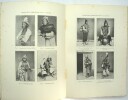
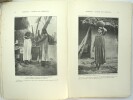
Édition originale de ce vaste travail scientifique dirigé par le médecin et anthropologue Arthur Chervin (1850-1921), qui fut envoyé par le gouvernement français en mission en Bolivie entre 1903 et 1905. L’ouvrage constitue une des premières grandes études d’anthropologie physique et culturelle consacrées à la Bolivie : observations anthropométriques, linguistiques, ethnographiques et archéologiques, accompagnées de nombreuses planches photographiques montrant les différentes populations péruviennes, des tableaux statistiques et cartes. Publié sous les auspices du Ministère de l’Instruction publique et des Beaux-Arts, cet ensemble s’inscrit dans la lignée des grandes enquêtes ethnographiques françaises de la fin du XIXᵉ siècle. M10-B
Die Gipsformen aus Memphis im Roemer-Pelizaeus-Museum zu Hildesheim
Trier, 1996 vi + 202pp. + 205 bl/w illustrations out of text, 28cm., softcover, Doctoral Dissertation (Inaugural-Dissertation zur Erlangung der Doktorwürde der Philosophischen Fakultät der Universität Trier), stamp at verso of title page, text is clean and bright, good condition, weight: 1.4kg., C111756
Sun Yat-Sen
,Paris, C.F.L. Portraits de l'Histoire 1959, 258 pp., 1 vol. in 8 relié cartonnage plein toile éditeur, illustrations hors-texte, , carte dépliante
Origine des noms de personnes. Sens et origine des prénoms, des noms de famille et des surnoms.
Lausanne, La Guilde du livre, collection Gai Savoir, 1946. In-12 broché, couverture (un peu défraîchie hélas) à rabats. Illustré de photographies hors-texte.
Suite à un accident immobilisant votre libraire pour quelques semaines, le traitement des commandes est bien assuré, mais momentanément ralenti. Merci de votre patience et de votre compréhension.
Classical terracotta figures. With a foreword by R.A. HIGGINS.
Ldn., Ward Lock, (1974).
99 p.; ills. Hardb. 27 cm
Altonum fille d'Aeria
Imprimeries réunies 1968 156 pages Valence. in-8. 1968. broché. 156 pages. Avec 42 gravures 1 planche et 1 carte en couleurs - Origines gallo-romaines de Montbrison Le Pègue Rousset Valréas Saint-Pantaléon
Très bon état
Le Site d'Aeria
Imprimeries réunies 1968 70 pages Valence. in-8. 1968. broché. 70 pages. Avec 8 gravures 1 plan dépliant et 1 carte dépliante
Bon état. Des rousseurs claires à la page de titre sinon très bon état
Le site d'Aéria.
Valence, Jules Céas & fils, 1920 in-8 broché. 72 pp.
Contient 8 photos, 1 plan, 1 carte et 1 portrait de l'auteur. Tirage limité à 303 exemplaires numérotés.
Le site d'Aéria.
Valence, imp. Céas, 1920, 1 broché. in-8 de 72 pages, 8 photos hors texte, 1 plan dépliant en couleurs, 1 carte dépliante en couleurs, portrait de l'auteur en frontispice, un des 303 exemplaires numérotés.
Aéria ville gallo-romaine disparue et longtemps recherchée. L'auteur la situe dans la Drome, entre Grignan et Dieulefit, sur la commune de Roche Saint-Secret.
L'UNIVERS Histoire et Description de Tous les Peuples. ITALIE - SICILE.
Firmin Didot Frères, Editeurs Paris 1835 In-8 ( 215 X 135 mm ) de 384-96 pages, demi basane chocolat avec dos lisse orné de fleurons à froid et filets dorés, tranche marbrée. Planches hors-texte, et cartes. Rousseurs passim, bon exemplaire. De la bibliothèque de Monsieur le Baron DE NERVO ( Ex-libris ).
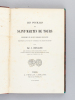
Les Fouilles de Saint-Martin de Tours. Recherches sur les six basiliques successives élevées autour du tombeau de Saint Martin
1 vol. in-8 reliure demi-basane rouge, L. Péricat, Tours, 1888, VII-134 pp. et 7 planches hors texte (dont 2 dépliantes)
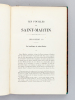
Etat très satisfaisant (une tache d'encre sur tranche en queue, notes manuscrites contrecollées en dernière garde)
Une mission en Perse 1897-1912
Réunion des Musées Nationaux "Les dossiers du musée du Louvre" 1997, grand in-8 broché, 215 p. (bel état ; non réédité) Intéressant catalogue d'une exposition au Louvre, consacrée aux découvertes archéologiques en Perse de l'expédition conduite par Jacques de Morgan (1857-1924).
Le Canton de Vaud 1803-1953, présenté par Georges-André Chevallaz.
Conseil d'Etat à la jeunesse vaudoise / Imprimerie vaudoise, 1953. Plaquette in-8 brochée de 22 pages, quelques reproductions en noir.
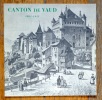
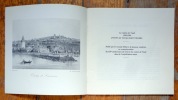
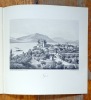
Publié à l'occasion du 150e anniversaire de l'entrée du canton de Vaud dans la Confédération suisse. Au sommaire: La fin de l'Ancien Régime, la Restauration, le Régime libéral, de 1845 à 1848, évolution politique 1848-1953. Suite à un accident immobilisant votre libraire pour quelques semaines, le traitement des commandes est bien assuré, mais momentanément ralenti. Merci de votre patience et de votre compréhension.

