 Write to the booksellers
-
Type
Book (30345)
Disk (1)
Engraving (1)
Magazine (1069)
Old papers (2)
Photographs (2)
Reprint (4)
-
Latest
Last 24h (3)
Last 3 days (10)
Last month (614)
Last week (14)
-
Language
Chinese (1)
Dutch (82)
English (52)
French (31249)
German (15)
Italian (16)
Latin (5)
Portuguese (1)
Spanish (3)
-
Century
16th (3)
17th (14)
18th (60)
19th (1700)
20th (12208)
21st (1382)
-
Countries
Belgium (4076)
Brazil (2)
Canada (6)
China (14)
Côte d'Ivoire (192)
Denmark (483)
France (22490)
Greece (7)
Netherlands (1711)
Switzerland (2443)
-
Syndicate
ALAC (6)
CLAM (107)
ILAB (11437)
NVVA (1063)
SLACES (1063)
SLAM (9751)
SNCAO (71)
Common Thread. Collected Essays in Honour of Eva Andersson Strand
, Brepols, 2024 Paperback, xii + 272 pages, Size:216 x 280 mm, Illustrations:42 b/w, 79 col., 9 tables b/w., Language: English.*new ISBN 9782503612775.
Summary The Ancient Egyptians used it for both the living and the dead, the Greeks and Romans used it to signal their status, and it aided the Vikings in reaching the far shores of Europe and Eurasia. Textiles have surrounded us, literally and figuratively for millennia, but this common thread has long been ignored in scholarly research. With the inception of the Centre for Textile Research at the University of Copenhagen in 2005, however, this approach changed fundamentally, and today, every type of research discipline comes together to begin unravelling the stories told by textiles. How do we understand textiles and how do we talk about them? Who produced textiles, where, and for what purposes? How do we conduct research into the origins of materials? How did cultivating flax or raising sheep change the ancient landscape? How have we researched textiles so far? What can we learn from textiles about society, gender, and production? This volume engages with these questions and explores how the fabric of society has changed through researching textiles in all its facets, from archaeology and history to natural sciences. Taking as its starting point the research interests and career of its honorand, Eva Andersson Strand, this meticulously researched volume consists of three parts, covering the tools and techniques that form the basis of all research explores; how craftspeople made use of tools and techniques; and how textiles have been used over millennia to signify identity and status. TABLE OF CONTENTS Preface 1. In the beginning... Anne Drewsen, Mary Harlow, Ulla Mannering, and Marie-Louise Nosch I. Textile and Tools 2. Ragpickers. Critiquing the Third Science Revolution with Walter Benjamin Tim Flohr Sørensen 3. Textile Analysis in Europe. Current practices and Future Prognosis Margarita Gleba, Susanna Harris, and Jane Malcolm-Davies 4. From Fleece to Thread. Interdisciplinary Evidence for the Origins of Sheep Wool Laura C. Viñas-Caron, Mikkel Nørtoft, Jonas Holm Jæger, Peder Flemestad, and Christina Margariti 5. An Arctic Thread Mikkel Sørensen 6. The Beginnings of Clothing Experiments in Near Eastern Archaeology Catherine Breniquet and Cécile Michel 7. Fløjstrup ? A Viking Age Grave with Early Silk Charlotte Rimstad, Irene Skals, and Ina Vanden Berghe 8. The Importance of Understanding Textile Tools Francesco Meo 9. Making Visible the Invisible. The Case Study of Clay Sealings from Arslantepe (Turkey) Romina Laurito II. Craft and Cratf Traditions 10. Textile Workshops in the Nile Valley? Questioning the Concepts and Sources Chiara Spinazzi-Lucchesi and Elsa Yvanez 11. Sprang Hairnets from Prehistoric Denmark and Byzantine Egypt. Experimental Research Anne Kwaspen, Ida Demant, and Johanne Høgh 12. Spinning Fates and the Fate of Spinning. Towards a Nordic Textile Technical Terminology Morten Grymer-Hansen and Susanne Lervad 13. Teaching and Disseminating Textile Archaeology in University and Museum Contexts Lise Bender Jørgensen and Karina Grömer 14. Weaving Pictures. Evoking a World from Threads Ulrikka Mokdad (with a helpin hand from Mark Schram Christensen) 15. Beyond Traditions. Rethinking Textile Crafts and Heritage Magali-An Berthon III. Identity and Status 16. Stitch and Status. An Analysis of the Expression of Worldviews through Knitted Garments Maj Ringgaard and Tove Engelhardt Mathiassen 17. The Combat Agate and the Tartan-like Textiles of the Aegean Kalliope Sarri 18. Textiles in Etruscan Dance. The Case of the Tomba del Triclinio in Tarquinia Audrey Gouy 19. Reading the Roman Toga from Sculpture Mary Harlow and Lena Larsson Lovén 20. Two Donkey Burials Ulla Lund Hansen and Anne Drewsen 21. Embellished Clothing in the Mesolithic Based on Finds from two Cemeteries in Sweden Lars Larsson 22. Sequins and other 'Bling' in Viking Age Fashion Charlotte Hedenstierna-Jonson, Marianne Vedeler, and Amica Sundström 23. One Silk Textile ? Multiple Histories and Her-Stories Ulla Mannering and Marie-Louise Nosch
Les combattants suisses en Espagne républicaine, 1936-1939.
Lausanne, Editions Antipodes, 2001. In-8 broché, couverture photographique. Quelques illustrations in-texte en noir.
ULRICH-BOCHSLER, Susi / EGGENBERGER, Peter / GUTSCHER, Daniel / SUTER, Peter J.:
Reference : 114467aaf
Büetigen - Köniz - Unterseen. Anthropologische Untersuchungen an früh- und hochmittelalterlichen Skeletten.
Staatlicher Lehrmittelverlag, 1994, in-4to, 128 S., reich und s./w. ill., Original-Broschüre.

(SLACES, NVVA)
Phone number : 41 (0)26 3223808
Die Phönizier im Zeitalter Homers: Kestner-Museum Hannover 14. Sept. 1990-25. Nov. 1990
Zabern 1990 21x23x2cm. 1990. Cartonné jaquette. iconographie en couleurs et en noir et blanc
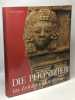
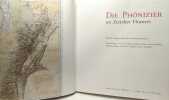
Très Bon état avec sa jaquette intérieur propre
Allgemeine grundlagen der archäologie - begriff und methode geschichte problem der form schriftzeugnisse
C.H. Beck'sche verlgasbuchhandlung 1969 in8. 1969. Cartonné.
Bon état tranche ternie intérieur propre avec jaquette (un peu ternie dos insolé) passages annotés au stylo bleu dans l'avant-propos
Handbuch der Archäologie. Im Rahmen des Handbuchs der Altertumswissenschaft: Handbuch der Archäologie Römische Sarkophage
1982 18x26x6cm. 1982. Relié. iconographie en noir et blanc
Bon état jaquette un peu défraîchie intérieur propre garde découpée en haut bonne tenue
ARCHAEOLOGIA BELGICA,249 L??industrie lithique du site rubane du Staberg a Rosmeer,
, Brussel, Studies en verslagen uitgegeven door de Nationale Dienst voor Opgravingen, 1982, Gebrocheerd, 195 x 265mm., 50 pag.
Nr. 249 : Studies en verslagen uitgegeven door de Nationale Dienst voor Opgravingen. In goede staat.
LE ORIGINI CRISTIANE A TRASTEVERE
FRATELLI PALOMBI EDITORI. 1991. In-8. Broché. Bon état, Couv. convenable, Dos satisfaisant, Intérieur frais. 59 pages. Premier plat illustré en couleurs. Nombreuses photos et illustrations en couleurs et noir et blanc, dans et hors texte. Un plan. Texte en italien.. . . . Classification Dewey : 930.1-Archéologie
Classification Dewey : 930.1-Archéologie

EMPREINTES SUR LES ROCHERS PIERRE ET PAUL A ROME
VISION EDITRICE. 1980. In-8. Broché. Bon état, Couv. convenable, Dos satisfaisant, Intérieur frais. 175 pages. Nombreuses illustrations en couleur et en noir et blanc. Etiquette de classement sur le dos. Tampon d'institution sur la page de titre. . . . Classification Dewey : 930.1-Archéologie
Classification Dewey : 930.1-Archéologie
Pierre et Paul à Rome - empreintes sur les rochers
Vision Editrice 1980 in4. 1980. Broché. iconographie en noir et blanc et en couleurs
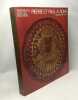
Bon Etat de conservation couverture un peu marquée légères rousseurs aux abords des plats intérieurs
UNAL Rahmi Huseyin, KRINZINGER Friedrich, ALRAM Michael & PFEIFFER-TAS Sule (eds.)
Reference : X93224
(2010)
Der Munzschatz von Beçin [Becin] (2 volumes)
Wien, Verlag der österreichischen Akademie der Wissenschaften 2010 Complete in 2 volumes: 680 + 592pp., with numerous bl/w illustrations, added: CD-Rom containing the complete catalogue of the islamic coins, 30cm., in the series "Denkschriften der philosophisch-historischen Klasse" Band 396 (Veröffentlichungen der Numismatischen Kommission, Band 49 & Archäologische Forschungen, Band 17), ISBN 978-3-7001-6725-9, original softcovers, unread, fine condition, X93224
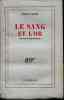
Le sang et l'or (souvenirs de camps allemands)
,Paris, Gallimard 1946, 235 pp., 1 vol. in 12 br. défraîchi
Adopted and proclaimed by the General Assembly of the United Nations on the
tenth day of December 1948 - Final authorized text,United Nations, Department of Public Information 1952, pp., 1 vol. in 8 br.
[Univers des Formes] ALDRED (Cyril) ; DE CENIVAL (Jean-Louis) ; DEBONO (Fernand) ; DESROCHES-NOBLECOURT (Christiane) ; LAUER (jean-Philippe) ; LECLANT (Jean) ; VERCOUTTER (Jean)
Reference : 31022
(1978)
Le temps des Pyramides - De la Préhistoire aux Hyksos (1560 av. J.-C.)
NRF - Gallimard [Univers des Formes] 1978 26eme volume de la collection. In-4, rel. toile éditeur rouge, sous jaquette illustréecoin tête légèrement émoussée, 346pp+cartes. Illustrations en noir et blanc et en couleurs. Bon état d’occasion
Bon état d’occasion
Musée Léon Leclère (catalogue).
Fondation Archéologique de l'Universté de Bruxelles, 1932. 16 x 24, 77 pp., broché, très bon état.
Université de Dijon - Centre de recherches sur les techniques gréco-romaines
Reference : 3240
Archéologie - contribution à l’étude de la céramique métallescente recueillie à Alésia par Robert Sénéchal
N° N° 1 de 1972 (réédition de 1975) - broché
bon état
Université de Dijon - Centre de recherches sur les techniques gréco-romaines
Reference : 3238
Archéologie - céramique commune d’Alésia - les cruches par Robert Sénéchal
N° N° 5 de 1975 - broché
bon état
Université de Dijon - Centre de recherches sur les techniques gréco-romaines
Reference : 3235
Archéologie - Etude des ossements animaux et son apport à l’archéologie
N° N° 6 de 1976 - broché
bon état
[Editions Errance] - Université de Tours ; Caesarodunum ; CHEVALLIER, R. ; Bulletin de l'Institut d'Etudes Latines et du Centre de Recherches A. Piganiol
Reference : 57409
(1986)
Le Vicus gallo-romain. Actes du colloque.
Réédition de la version de 1976, 1 vol. in-8 br., Bulletin de l'Institut d'Etudes Latines et du Centre de Recherches A. Piganiol, Editions Errance, Paris, 1986, 334 pp.
Bon état
Programme et publication de l'Institut de philologie et d'histoire orientales.
Bruxelles, Imprimerie Sopel, 1935. 15 x 22, 71 pp., broché, bon état.
Mesopotamien und Vorderasien. Die Kunst des mittleren Ostens. Kunst der Welt P 7
1982 16x21x2cm. 1982. Broché. iconographie en noir et blanc et en couleurs
Bon Etat couverture un peu défraîchie intérieur propre
Gendering the Nordic Past Dialogues between Perspectives
, Brepols - Harvey Miller, 2025 Paperback, Pages: 264 pages, Size:216 x 280 mm, Illustrations:6 b/w, 19 col., 11 tables b/w., Language:English, *New. ISBN 9782503608877.
The idea of the Nordic nations as champions of gender equality is firmly rooted in today?s perceptions of society. But how does such a modern comprehension influence our views of history? Does our understanding of gender impact on how we see the past? And do the ways in which we gender the past have an effect on our present identities? From the Stone Age to the Early Modern period, and from warriors and queens to households and burials, this groundbreaking volume draws together research conducted as part of the project Gendering the Nordic Past, an inter-Nordic collaboration aimed at (re)evaluating and revitalizing the field of gender studies in the region. The chapters gathered in this volume, contributed by archaeologists and historians, theologians, art historians, and specialists in gender studies, aim to offer novel perspectives on the ways in which we gender the past. While many of the chapters focus explicitly on the Nordic countries, comparisons are also drawn with other regions in order to provide both internal and external views on the role of the collective past in present Nordic identities. The result, presented here, is an essential dialogue into the importance of gender in creating and maintaining past identities, as well as a new understanding of how the identities that we construct for the past can relate to heritage narratives. TABLE OF CONTENTS List of Illustrations Introduction 1. Gendering the Nordic Past: Dialogues Between Perspectives Unn Pedersen, Marianne Moen, and Lisbeth Skogstrand The Nordic Stone Age, Bronze Age, and Early Iron Age 2. Settlement, Technology and Transmission of Knowledge: Early Mesolithic Family Structure as a Key to Understand Long-term Social Stability and Non-change Ingrid Fuglestvedt 3. Why Patrilocal Female Exogamy? A Critical View on Kinship in The Nordic Bronze Age Lene Melheim 4. A Network of Girls: Marriage Alliances in Roman Period Scandinavia Lisbeth Skogstrand 5. ?Body, Doorway that You Are?: Gendering in Fourth to Sixth Century AD Voss and Hardanger Elisabeth Aslesen 6. Golden Revelations: Revisiting the Richly Furnished Graves of the Migration Period in Southern Norway Marie Dave Amundsen 7. Women, Warriors and the Negotiation of Identity in Migration Period Scandinavia Ingunn Røstad The Viking Age 8. Another Story? Returning to the Oseberg Ship Burial Unn Pedersen 9. A Völva or Seiðmaðr in Finland? Cultural Creolization as a Problem for Interpretations Anna Wessman, Frog, and Charlotte Hedenstierna-Jonson 10. Gender and Relationality in the Viking Age: Mortuary Archaeology Beyond Grave-goods Sarah Croix 11. The Spaces in Between: Exploring the Interpretative Potential of Ungendered Graves Marianne Moen The Nordic Middle Ages and Beyond 12. Textiles and Texts: Gendering the Medieval Church Steinunn Kristjánsdóttir 13. Gender and Ornamental Practices, c. 1000?1350: Re-assessing the Interpretative History Ragnhild M. Bø 14. Gender and Work under the Arctic Circle: Household Perspective on Early Modern Economies in the North Hilde Sandvik 15. Dissolving Dichotomies: On the Necessity of Integrating Saami, Nordic, and Feminist Gender Archaeology Marte Spangen The Nordic Past in Perspective 16. Gender in Migration Narratives of Neolithic and Bronze Age Europe Martin Furholt and Stefan Burmeister 17. A Case Study of the Turin Satirical-Erotic Papyri: Historical Bodies, Mundane Resistance and Alternative Worlds Reinert Skumsnes 18. Changing Gender Ideologies in Early Iron Age Athens Søren Handberg
Gendering the Nordic Past Dialogues between Perspectives
, Brepols - Harvey Miller, 2025 Paperback, Pages: 261 pages,Size:216 x 280 mm, Illustrations:6 b/w, 21 col., 11 tables b/w. Language:English *new. ISBN 9782503608877.
The idea of the Nordic nations as champions of gender equality is firmly rooted in today?s perceptions of society. But how does such a modern comprehension influence our views of history? Does our understanding of gender impact on how we see the past? And do the ways in which we gender the past have an effect on our present identities? From the Stone Age to the Early Modern period, and from warriors and queens to households and burials, this groundbreaking volume draws together research conducted as part of the project Gendering the Nordic Past, an inter-Nordic collaboration aimed at (re)evaluating and revitalizing the field of gender studies in the region. The chapters gathered in this volume, contributed by archaeologists and historians, theologians, art historians, and specialists in gender studies, aim to offer novel perspectives on the ways in which we gender the past. While many of the chapters focus explicitly on the Nordic countries, comparisons are also drawn with other regions in order to provide both internal and external views on the role of the collective past in present Nordic identities. The result, presented here, is an essential dialogue into the importance of gender in creating and maintaining past identities, as well as a new understanding of how the identities that we construct for the past can relate to heritage narratives. TABLE OF CONTENTS List of Illustrations Introduction 1. Gendering the Nordic Past: Dialogues Between Perspectives Unn Pedersen, Marianne Moen, and Lisbeth Skogstrand The Nordic Stone Age, Bronze Age, and Early Iron Age 2. Settlement, Technology and Transmission of Knowledge: Early Mesolithic Family Structure as a Key to Understand Long-term Social Stability and Non-change Ingrid Fuglestvedt 3. Why Patrilocal Female Exogamy? A Critical View on Kinship in The Nordic Bronze Age Lene Melheim 4. A Network of Girls: Marriage Alliances in Roman Period Scandinavia Lisbeth Skogstrand 5. ?Body, Doorway that You Are?: Gendering in Fourth to Sixth Century AD Voss and Hardanger Elisabeth Aslesen 6. Golden Revelations: Revisiting the Richly Furnished Graves of the Migration Period in Southern Norway Marie Dave Amundsen 7. Women, Warriors and the Negotiation of Identity in Migration Period Scandinavia Ingunn Røstad The Viking Age 8. Another Story? Returning to the Oseberg Ship Burial Unn Pedersen 9. A Völva or Seiðmaðr in Finland? Cultural Creolization as a Problem for Interpretations Anna Wessman, Frog, and Charlotte Hedenstierna-Jonson 10. Gender and Relationality in the Viking Age: Mortuary Archaeology Beyond Grave-goods Sarah Croix 11. The Spaces in Between: Exploring the Interpretative Potential of Ungendered Graves Marianne Moen The Nordic Middle Ages and Beyond 12. Textiles and Texts: Gendering the Medieval Church Steinunn Kristjánsdóttir 13. Gender and Ornamental Practices, c. 1000?1350: Re-assessing the Interpretative History Ragnhild M. Bø 14. Gender and Work under the Arctic Circle: Household Perspective on Early Modern Economies in the North Hilde Sandvik 15. Dissolving Dichotomies: On the Necessity of Integrating Saami, Nordic, and Feminist Gender Archaeology Marte Spangen The Nordic Past in Perspective 16. Gender in Migration Narratives of Neolithic and Bronze Age Europe Martin Furholt and Stefan Burmeister 17. A Case Study of the Turin Satirical-Erotic Papyri: Historical Bodies, Mundane Resistance and Alternative Worlds Reinert Skumsnes 18. Changing Gender Ideologies in Early Iron Age Athens Søren Handberg
L'Abbaye de Maison-Dieu Notre-Dame de la Grande-Trappe
1926. La Chapelle-Montligeon (Orne) Imprimerie de Montligeon 1926 - Broché 14 5 cm x 23 cm XXXVII+ 301 pages ills hors-texte - Texte par un religieux de ce monastère envoi et billet dans une enveloppe de Dom Jean-Marie Clerc abbé du monastère ; nomenclature détaillée de tous les abbés - Trombone tenant l'enveloppe rouillé bon état
Meisterwerke der Antike aus dem Archäologischen Nationalmuseum Neapel.
N.pl., Kunst- und Ausstellungshalle der Bundesrepublik Deutschland, 1995.
216 p., illustrations. Stiff wrappers 28 cm (Published on occasion of the exihibition 'Unter dem Vulkan, Meisterwerke der Antike aus dem Archäologischen Nationalmuseum Neapel', 17. Februar - 5. Juni 1995, Bonn)

