 Write to the booksellers
-
Type
Autograph (1)
Book (20218)
Magazine (154)
Manuscript (4)
Old papers (7)
-
Latest
Last 24h (11)
Last 3 days (12)
Last month (594)
Last week (2)
-
Language
Dutch (2)
English (8)
Finnish (1)
French (20355)
German (9)
Italian (5)
Spanish (2)
Swedish (2)
-
Century
16th (10)
17th (28)
18th (271)
19th (860)
20th (10091)
21st (1651)
-
Countries
Belgium (1625)
Brazil (2)
Canada (6)
Côte d'Ivoire (57)
Denmark (231)
France (16261)
Greece (10)
Italy (2)
Netherlands (150)
Switzerland (2040)
-
Syndicate
ALAC (6)
CLAM (1)
CLAQ (2)
CNE (1)
ILAB (12622)
NVVA (1781)
SLACES (1631)
SLAM (10731)
SNCAO (5)
ESSAIS SUR LA THEORIE DU CHOMAGE
Calmann-Lévy. 1983. In-8. Broché. Bon état, Couv. convenable, Dos satisfaisant, Intérieur frais. 244 pages. Annotations en page de garde.. . . . Classification Dewey : 330-Economie
'Perspectives de l'économique', Economie contemporaine, Dir. par Christian Schmidt. Classification Dewey : 330-Economie
Essais sur la théorie du chômage - Collection perspectives de l'économique.
Calmann-Lévy. 1983. In-8. Broché. Bon état, Couv. convenable, Dos satisfaisant, Papier jauni. 244 pages - étiquette collée sur le 2ème plat.. . . . Classification Dewey : 330-Economie

Collection perspectives de l'économique. Classification Dewey : 330-Economie
LECONS DE THEORIE MICROECONOMIQUE
DUNOD. 1968. In-8. Broché. Etat d'usage, Couv. défraîchie, Manque en coiffe de pied, Intérieur frais. 269 pages.. . . . Classification Dewey : 330-Economie
Avec une annexe de J. C. Milleron. Classification Dewey : 330-Economie
Leçons de théorie microéconomique - Collection modules économiques.
Dunod. 1977. In-8. Broché. Etat d'usage, Coins frottés, Coiffe en pied abîmée, Papier jauni. IX+333 pages - quelques figures en noir et blanc dans le texte - pliure sur le 1er plat.. . . . Classification Dewey : 330-Economie

Collection modules économiques. Classification Dewey : 330-Economie
Méthodes statistiques de l'économétrie / Finance et économie appliquée
Bordas Editions 1993 15x24x5cm. 1993. Broché.

Bon état couverture jauni intérieur propre tranche ternie quelques rousseurs ex-libris intérieur propre
Réexamen de la théorie du chômage - Collection perspectives de l'économique.
Calmann-Lévy. 1980. In-8. Broché. Etat d'usage, Couv. convenable, Dos satisfaisant, Papier jauni. 188 pages - quelques annotations au crayon à papier à l'intérieur de l'ouvrage sans conséquence sur la lecture.. . . . Classification Dewey : 330-Economie

Collection perspectives de l'économique - Traduit de l'anglais par Gérald Santucci revu et complété par l'auteur. Classification Dewey : 330-Economie
Sur les statistiques. Emploi et chômage. Rapport au premier ministre
La documentation française. 1986. In-8. Broché. Bon état, Couv. convenable, Dos satisfaisant, Intérieur frais. 136 pages.Exemplaire de bibliotthèque recouvert d'un film transparent. Etiquette au dos et tampon sur certaines pages.Un accroc sur le 2ème plat.. . . . Classification Dewey : 330-Economie

Classification Dewey : 330-Economie
Maljean-Dubois Sandrine, Roger Apolline & Co.
Reference : RO80245100
(2011)
ISBN : 2110086068
L'implication des entreprises dans les politiques climatiques - Entre corégulation et autorégulation
CERIC - La Documentation Française. 2011. In-8. Broché. Bon état, Couv. convenable, Dos satisfaisant, Intérieur frais. 212 pages. Dédicace de l'auteure au stylo en page de titre. Deux photos disponibles.. . . . Classification Dewey : 330-Economie
Classification Dewey : 330-Economie
Whither Rural India?
Bangalore, 1959, in-8, 526pp, Reliure éditeur jaquette illustrée, Superbe exemplaire! 526pp
Nécessités d'un retour à la terre. Etude d'économie comparée.
P., Librairie générale de droit et de jurisprudence, 1941, in-8°, 283 pp, biblio, broché, traces de papier collant sur les gardes, bon état
"Robert Mallet entame sa démonstration par l'affirmation d'une « surindustrialisation au XIXe siècle » (p. 41), surproduction qui a entraîné la crise de 1929 et la nécessité économique d'un retour à la terre dans le monde entier. Il distingue nécessité économique, nécessité politique et nécessité morale, mais pour lui, la première est la plus importante : « La nécessité économique d'un retour à la terre est donc une nécessité de base, commune à toutes les nations, elle peut en être le seul fondement (...). A cette nécessité peuvent s'en ajouter d'autres, d'ordre moral ou politique ». De toute façon elles conduisent inéluctablement à une action économique sans laquelle ces buts ne pourraient être atteints ». Comme Victor Boret, il considère le retour à la terre impossible. L'hérédité paysanne se défait plus vite qu'elle ne s'acquiert, une classe rurale se détruit plus facilement qu'elle ne se crée. « En règle générale, il faut admettre que ceux qui ont abandonné la terre sont à jamais perdus pour elle, car il est vain de replanter un arbre déraciné quand il est mûr » (p. 256). La solution est ailleurs : disperser les industries dans les campagnes, fixer ceux qui ne sont pas encore partis, etc. Les vicissitudes des guerres entraînent donc une certitude et même plusieurs : les agriculteurs doivent être nombreux ; loin de les chasser, la modernisation poussera à leur maintien, qui est possible, alors que leur retour est une utopie. (...) Après toutes les assertions sur la primauté de la nécessité économique, Robert Mallet en vient, à propos de la France de 1941, à parler d'une nécessité économique temporaire » pour subsister et d'une « nécessité morale permanente » (p. 242-243), car on a aussi besoin de nourriture spirituelle..." (Isabel Boussard, “Les arguments économiques en faveur du retour à la terre dans le discours agrarien”, 1988) Désormais les frais d'envoi sont de 6 € seulement pour les livres jusqu'à 1 kg (colissimo suivi), pour la France métropolitaine.
LA NOUVELLE CLASSE OUVRIERE- COLLECTION POLITIQUE N°32
SEUIL. 1969. In-12. Broché. Bon état, Couv. convenable, Dos satisfaisant, Intérieur frais. 252 Pages. . . . Classification Dewey : 330-Economie
Classification Dewey : 330-Economie
La nouvelle classe ouvrière.
P., Editions du Seuil (Collections Esprit "La Cité Prochaine"), 1963, in 8° broché, 269 pages ; couverture illustrée (légèrement fanée).
PHOTOS sur DEMANDE. ...................... Photos sur demande ...................


Phone number : 04 77 32 63 69
La Jurisdiccion de Xallas a lo largo del siglo XVIII. Poblacion, Sociedad y Economia
Santiago, 1973 693pp. + 6 bl/w plates, 24cm., text in Spanish, Doctoral Dissertation (University of Santiago de Compostela), original softcover (with label at lower end of spine), stamp at verso of title page, text is clean and bright, weight: 1.2 kg., G111913
Les Relations commerciales Franco-Belges de 1913 à 1923
Paris, P.U.F. 1925 485pp., 25cm., Thèse pour le doctorat en droit présentée à la Faculté de Droit de l'Université de Paris, br.orig. (dos peu restauré), cachet au verso de la p.d.t., pages toujours nopn coupées, texte frais, B111768
Marshall Orthodoxy and the Professionalisation of Economics (Cambridge Studies in the History and Theory of Politics)
Cambridge University Press 1985 288 pages in8. 1985. Cartonné jaquette. 288 pages.
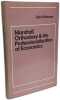

Très bon état avec sa jaquette dos insolé intérieur propre bonne tenue
LA FEERIE AMERICAINE - New-York, Washington
Paris Les Oeuvres Françaises 1936 In-12 Broché Satisfaisant
Titre imprimé en noir et bleu ; couverture légèrement défraichie, rousseurs, manque de papier au dos ; 186pp ; 5e édition
Opinion sur la révolte de la minorité contre la majorité, 26 février 1791.
S.l., (1791) in-8, 32 pp., cousu.
Malouet, membre du club monarchique dénonce les atteintes graves à la liberté de parole dont serait victime la minorité siégeant à la Constituante. Il n'aurait pas obtenu le droit de répliquer à Mirabeau, Lameth et Barnave.Martin & Walter, III, 22695. - - VENTE PAR CORRESPONDANCE UNIQUEMENT - LIEN DE PAIEMENT, NOUS CONSULTER.
Faucon village du Haut Comtat.
Vaison-la-romaine, La Restanco, (1977)-1983 4 fascicules in-4, illustrations in-t, thermocollé. Envoi.
Fascicule 1 : La vie du village aux 16e, 17e et 18e siècles. 44-[20] feuillets.Fascicule 2 : Origines du village. 55-[9] feuillets.Fascicule 3 : La vie au village pendant la révolution française. 71-[35] feuillets.Fascicule 4 : Sept siècles de cadastres. Essai d'histoire économique et sociale. 140 feuillets.Travail dactylographié publié par la Restanco, société folklorique et régionale du Pays Voconce. - - VENTE PAR CORRESPONDANCE UNIQUEMENT - LIEN DE PAIEMENT, NOUS CONSULTER.
La crise des monnaies le dollar en procés - Collection objectifs.
Cerf. 1972. In-12. Broché. Etat d'usage, Tâchée, Dos satisfaisant, Intérieur frais. 86 pages - 2ème plat tâché.. . . . Classification Dewey : 330-Economie

Collection objectifs. Classification Dewey : 330-Economie
Malterre Jan-François & Pradeau Christian
Reference : R160216902
(2005)
ISBN : 2749504953
L'Europe en fiches - 5e édition - Nouveau programme module 3 - Collection comprendre et intégrer.
Bréal éditions. 2005. In-8. Broché. Bon état, Couv. convenable, Dos satisfaisant, Intérieur frais. 270 pages - ex dono sur la page de titre.. . . . Classification Dewey : 330-Economie

Collection comprendre et intégrer. Classification Dewey : 330-Economie
Malterre Jan-François & Pradeau Christian
Reference : R160216904
(2003)
ISBN : 2749501334
L'Union Européenne en fiches - 4e édition - Collection comprendre et intégrer.
Bréal éditions. 2003. In-8. Broché. Bon état, Couv. convenable, Dos satisfaisant, Intérieur frais. 223 pages - quelques cartes et graphiques en noir et blanc dans le texte - quelques phrases surlignées au stabilo sans conséquence sur la lecture .. . . . Classification Dewey : 330-Economie

Collection comprendre et intégrer. Classification Dewey : 330-Economie
Malterre Jean-François & Pradeau Christian
Reference : R160216903
(1997)
ISBN : 2842910265
L'Union Européenne en fiches - 2e édition - Collection comprendre et intégrer.
Bréal. 1997. In-8. Broché. Etat d'usage, Couv. convenable, Dos satisfaisant, Intérieur acceptable. 217 pages - quelques cartes et graphiques en noir et blanc dans le texte - quelques phrases surlignées au stabilo sans conséquence sur la lecture - étiquette collée sur le 1er plat - ex dono sur la page 3.. . . . Classification Dewey : 330-Economie

Collection comprendre et intégrer. Classification Dewey : 330-Economie
PRINCIPE D'ECONOMIE POLITIQUE
CALMANN LEVY EDITEUR. 1969. In-12. Broché. Bon état, Couv. convenable, Dos satisfaisant, Intérieur frais. 306 pages. Couverture rempliée.. . . . Classification Dewey : 330-Economie
"Préface de J.-F FAURE SOULET. Collection ""perspectives economiques"" dirigée par Christian Schmidt. Classification Dewey : 330-Economie"
Principes dEconomie Politique Considérés sous le Rapport de leur Application Pratique - Editions Calmann-Lévy 1969
in-8° broché à rabats, 367 pages, bon état, collection Perspectives Economiques Préface de J.-F. Faure-Soulet -
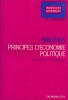
Principes d'économie politique
Calmann Levy Paris, Calmann Levy 1969. In-8 broché de 366 pages. Très bon état
Toutes les expéditions sont faites en suivi au-dessus de 25 euros. Expédition quotidienne pour les envois simples, suivis, recommandés ou Colissimo.

