 Write to the booksellers
-
Type
Autograph (1)
Book (20268)
Magazine (154)
Manuscript (4)
Old papers (7)
-
Latest
Last 24h (12)
Last 3 days (2)
Last month (577)
Last week (23)
-
Language
Dutch (2)
English (8)
Finnish (1)
French (20405)
German (9)
Italian (5)
Spanish (2)
Swedish (2)
-
Century
16th (10)
17th (28)
18th (273)
19th (859)
20th (10139)
21st (1654)
-
Countries
Belgium (1625)
Brazil (2)
Canada (6)
Côte d'Ivoire (57)
Denmark (231)
France (16311)
Greece (10)
Italy (2)
Netherlands (150)
Switzerland (2040)
-
Syndicate
ALAC (6)
CLAM (1)
CLAQ (2)
CNE (1)
ILAB (12635)
NVVA (1781)
SLACES (1631)
SLAM (10744)
SNCAO (5)
Le Banquier Perregaux et sa fille la duchesse de Raguse.
Paris, Lahure, 1905 in-12, VII-149-(1) pp., portr., demi-basane rouge, dos à nerfs orné (rel. de l'époque).
Relié en-tête 2 LAS de l'auteur. - - VENTE PAR CORRESPONDANCE UNIQUEMENT - LIEN DE PAIEMENT, NOUS CONSULTER.
Capitalisme et Economie Dirigée Dans La France Contemporaine
Paris LGDJ 1942 In-12 Fort 272 pp, Etudes sur l'économie dirigée III, exemplaire légèrement gauchi, rousseurs au dos ; intérieur frais.
Correct Broché à raba
"Economie et histoire - ""Travaux de droit, d'économie, de sociologie et de sciences politiques"" n°55"
Droz. 1967. In-8. Broché. Etat d'usage, Couv. légèrement passée, Dos satisfaisant, Intérieur frais. 200 pages.. . . . Classification Dewey : 330-Economie
Classification Dewey : 330-Economie
La politique sociale de l'Angleterre contemporaine. Salaires. Cout de la vie. Emploi.
P., PUF, 1953, in 8° broché, 517 pages ; couverture légèrement salie.
PHOTOS SUR DEMANDE. ...................... Photos sur demande ...................


Phone number : 04 77 32 63 69
La Politique sociale de l'Angleterre contemporaine. Salaires, coût de la vie, emploi
Paris, P.U.F., 1953 in-8, 517 pp., broché.
- - VENTE PAR CORRESPONDANCE UNIQUEMENT - LIEN DE PAIEMENT, NOUS CONSULTER.
Pour une sociologie de la connaissance économique, Nouvelle Bibliothèque Scientifique dirigée par Fernand Braudel, Paris, Flammarion, 1974.
1 vol. in-8° br., couverture pelliculée, 279 p., neuf.

Phone number : 06.31.29.75.65
Pour une sociologie de la connaissance économique, Nouvelle Bibliothèque Scientifique dirigée par Fernand Braudel, Paris, Flammarion, 1974.
1 vol. in-8° br., couverture pelliculée, 279 p., neuf.

Phone number : 06.31.29.75.65
Utilisation, Gaspillage, prodigalité. Essai D'une Classification Rationnelle Entre Les Divers Emplois De Biens
Paris Librairie De Médicis 1946 In-12 112 pp, exemplaire non coupé, quelques rousseurs sur brochage partiellement passé.
Bon Etat Broché à raba
Réhabilitation du libéralisme. Exposé de l'évolution économico-politique depuis un siècle.
1950 1950 Paris SEDIF 1950 1 in 8 Dos cuir à nerfs demi chagrin Sedif, 1950. Bon Etat: Dos Insolé. N° de réf. du libraire 21867

Pour réaliser une société prospére et humaine Réhabilitation du libéralisme. Exposé de l'évolution économico-politique depuis un siècle." Montrer pourquoi le libéralisme ne s'est pas rèalisé et pourquoi néanmoins il demeure seul capable de concilier social et réalités économiques, libertés politiques et impératifs moraux autonomies nationales et solidarité mondiale." Extrait de l'introduction Frais de port inclus vers France métropole au tarif normal, délai d'acheminement sous 72h, pour les commandes > à 80 euros et poids < 1kg. Disponibilité sous réserve de vente en Boutique. Frais de port inclus vers France métropole au tarif normal, délai d'acheminement sous 72h, pour les commandes > à 80 euros et poids < 1kg. Disponibilité sous réserve de vente en Boutique. Disponibilité sous réserve de vente en boutique, prix valable, frais de port en plus, La Poste ou Mondial Relay
La coopération économique internationale 1957-1959
Génin/Librairie de Médicis. 1959. In-8. Broché. Etat d'usage, Couv. légèrement passée, Dos satisfaisant, Non coupé. 137 pages. Papier légèrement jauni.. . . . Classification Dewey : 330-Economie
Classification Dewey : 330-Economie
Théorie et pratique de la coopération économique internationale
Génin. 20 juillet 1967. In-8. Relié. Bon état, Couv. convenable, Dos satisfaisant, Intérieur frais. 603 pages. Jaquette défraichie.. Avec Jaquette. . . Classification Dewey : 330-Economie
Numéro d'édition 319. Classification Dewey : 330-Economie
Une affaire de sentiments : l'argent.
Hommes & Groupes éditeurs. 1988. In-8. Broché. Etat d'usage, Couv. convenable, Dos satisfaisant, Intérieur acceptable. 186 pages - quelques annotations et phrases soulignées au crayon à papier à l'intérieur du livre sans conséquence sur la lecture.. . . . Classification Dewey : 330-Economie

Classification Dewey : 330-Economie
Les relations commerciales entre Gênes, la Belgique et l'Outremont, d’après les archives notariales génoises (1320 - 1400). Tome I: Index bibliographique, introduction, documents des années 1320 - 1352. Tome II: Documents des années 1353 - 1400, tables. Collection Etudes d’histoire économique et sociale publiées par l’Institut Historique Belge de Rome, Tome VII et tome VIII.
Bruxelles - Rome - Wetteren, Imprimerie Universa 1969, 255x165mm, CLXXII - 970pages, broché. Bel exemplaire.
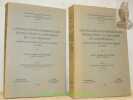
Pour un paiement via PayPal, veuillez nous en faire la demande et nous vous enverrons une facture PayPal
Principes d'économie politique, traité
Paris-Poitiers, Oudin 1894 xxiv + 386pp., 19cm., br.orig., bon état, ["publié à Rome en 1889 et traduit de l'italien par le baron Silvestre de Sacy..."], E81914
Plan y beneficio en la economía soviética
Ariel 1968 in12. 1968. Broché. Ce livre compile la discussion historique initiée par l'économiste Evsei Liberman dans la presse soviétique portant sur les relations entre la planification économique centralisée et la rentabilité des entreprises individuelles. Il inclut une sélection de textes et une introduction de Lisa Foa ainsi que des contributions d'autres économistes soviétiques
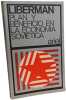
Bon état
Grandeur et servitudes de l'économie italienne
Calmann lévy 1973 in8. 1973. Broché.
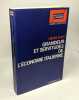
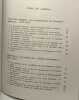
Très Bon Etat de conservation intérieur propre bonne tenue
[Maloine] - LICHNEROWICZ, André ; PERROUX, François ; GADOFFRE, Gilbert
Reference : 28008
(1986)
ISBN : 2224011717
Projet et programmation. Séminaires Interdisciplinaires du Collège de France réalisés avec la collaboration de l'Institut Collégial Européen.
1 vol. in-8 br., collection Recherches Interdisciplinaires dirigée par Pierre Delattre, Maloine, Maloine, Paris, 1986, 171 pp.
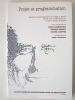
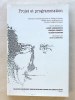

Bon exemplaire. "A tous ceux qui se préoccupent de la manière dont de petits groupes humains procèdent à des anticipations volontaristes sur le futur de ce qui leur importe, cherchent simultanément à prévoir et agir, ce livre apportera beaucoup d'éléments de réflexion".
Henri Heine penseur.
Paris, Félix Alcan, 1905 in-8, [2] ff. n. ch., 250 pp., un f. n. ch., demi-vélin Bradel, couverture conservée (reliure moderne).
Unique édition. Sur les idées politiques et religieuses du poète avant et après 1831, ainsi que sur ses relations avec le saint-simonisme.Henri Lichtenberger, (1864-1941) fut, avec Charles Andler l'un des pères fondateurs de la germanistique comme discipline universitaire en France. - - VENTE PAR CORRESPONDANCE UNIQUEMENT - LIEN DE PAIEMENT, NOUS CONSULTER.
L'Allemagne d'aujourd'hui dans ses relations avec la France
Crès et Cie Le nouveau monde politique, économique et social Broché 1922 In-12 (12x19 cm), broché, 280 pages, avant-propos de l'auteur ; pliures au dos, coiffes frottées, bon état. Livraison a domicile (La Poste) ou en Mondial Relay sur simple demande.
L'impérialisme économique allemand.
P., Flammarion (Bibliothèque de Philosophie Scientifique), 1919, in 12 broché, 290pp.
PHOTOS sur DEMANDE. ...................... Photos sur demande ...................
Phone number : 04 77 32 63 69
WAL-MART - L'ENTREPRISE-MONDE / COLLECTION PENSER/CROISER
LES PRAIRIES ORDINAIRES. 2009. In-12. Broché. Etat d'usage, Couv. convenable, Dos satisfaisant, Intérieur frais. 122 pages - annotation et soulignements au crayon dans le texte. . . . Classification Dewey : 330-Economie
traduit de l'anglais (Etats-Unis) par Rémy Toulouse - préface de Dork Zabunyan Classification Dewey : 330-Economie
Rouen ;. précis de son histoire, son commerce, son industrie, ses manufactures, ses monumens ; guide nécessaire pour bien connaître cette capitale de la Normandie ; suivi de notices sur Dieppe, Bolbec, Le Havre, Elbeuf et les endroits les plus remarquables du département de la Seine-Inférieure. Avec un plan
Rouen, Frère, 1827 in-8, [4]-4-348 pp., un f. n. ch. d'errata, avec un plan dépliant, cartonnage Bradel de papier crème, dos orné de filets dorés, pièce de titre cerise (reliure de l'époque). Coiffes abîmées.
Un des 200 exemplaires tirés au format in-8, et un de ceux portant la date de 1827 (au lieu de 1826 pour la plupart). Il s'agit de l'un des trois formats de l'édition originale (in-12, in-8 et in-4) de ce guide qui fut ensuite maintes fois réédité, sous des titres divers. Isidore Licquet (1787-1832) était conservateur de la Bibliothèque de Rouen depuis 1819.Frère II, 250.Exemplaire de Victor Teillard, avec vignette ex-libris contrecollée sur les premières gardes. - - VENTE PAR CORRESPONDANCE UNIQUEMENT - LIEN DE PAIEMENT, NOUS CONSULTER.
L'idée libre. 1969. Numéro 61 : Le problème de la monnaie… Revue mensuelle de culture individuelle et de rénovation sociale. Directeur: René Labrégère.
Couverture souple. Revue de 64 pages.
Périodique. L'Idée Libre, Décembre 1969.
Die Finanzen der Städte im Königreich Sachsen. ‘Ergänzungshefte zum deutschen statistischen Zentralblatt’, Heft 5.
Leipzig und Berlin, Teubner, 1914, gr. in-8°, VIII + 176 S., unbeschnitten, Original-Broschüre.
(SLACES, NVVA)
Phone number : 41 (0)26 3223808

