 Write to the booksellers
-
Type
Book (1184)
Magazine (53)
New book (1)
-
Latest
Last 24h (2)
Last 3 days (1)
Last month (65)
Last week (1)
-
Language
French (1236)
Italian (1)
Portuguese (1)
-
Century
16th (2)
19th (4)
20th (654)
21st (32)
-
Countries
Belgium (170)
Brazil (1)
Canada (6)
Côte d'Ivoire (2)
France (1020)
Netherlands (4)
Switzerland (35)
-
Syndicate
ALAC (6)
CLAQ (1)
ILAB (212)
NVVA (20)
SLACES (16)
SLAM (186)
SNCAO (1)
Economic Calculation in the Socialist Society
Liberty Fund Inc 1981 464 pages 15 6x22 8x3 3cm. 1981. Broché. 464 pages. Publié à l'origine en norvégien en 1938 et traduit en anglais en 1949 ce livre de Trygve Hoff est une analyse théorique du débat sur le calcul économique dans une société socialiste. L'ouvrage défend la position de Mises et Hayek soutenant l'impossibilité d'un calcul économique rationnel en l'absence de prix de marché établissant ainsi l'impossibilité théorique du socialisme
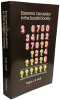
Bon état
Der Technische Eros - Das Wesen der materialistischen Geschichtsauffassung
, Freiburg, Herder 1955, xi + 520pp., 1°ed., linen cover with dustwrapper
La tentation communiste.
Couverture souple. Broché. 274 pages. Papier légèrement bruni.
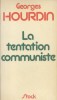
Livre. Editions Stock, 1978.
Essential Works of Socialism
Yale university press 1976 866 pages in8. 1976. Broché. 866 pages.
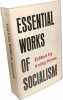
Bon état cependant couverture défraîchie dos creusé sans ride intérieur propre
Commerce et répartition en U.R.S.S.
Couverture souple. Broché. 359 pages. Rousseurs.
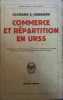
Livre. Introduction de René Zeller. Editions Payot (Collection : Bibliothèque économique), 1938.
ENQUÊTE SUR LA QUESTION SOCIALE EN EUROPE. Préfaces de MM. Jean Jaurès et Paul Deschanel
Paris Librairie Académique Didier. Perrin et Cie, Libraires-Editeurs 1897 in 12 (18x11,5) 1 volume reliure toilée noire ancienne, dos lisse titré en lettres dorées, avec en queue: Cercle de la Libératrice, XXIV et 372 pages. Jules Huret, 1863-1915. Edition originale. Bon exemplaire ( Photographies sur demande / We can send pictures of this book on simple request )
Très bon Couverture rigide
J'ai été communiste. Traduit de l'anglais par Jacques Potin.
Sans lieu, Editions du Centurion, 1962, petit in 8° broché, 282 pages ; couverture illustrée ; cachet d'un ancienne Institution religieuse.
PHOTOS sur DEMANDE. ...................... Photos sur demande ...................


Phone number : 04 77 32 63 69
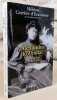
Alexandra Kollontaï. La walkyrie de la révolution.
Broché, 21X13 cm, 2021, 300 pages, photos en noir, éditions Fayard. Bon exemplaire.
Les experiences historiques de l'édification du parti du travail de Corée. Cours donné au personnel et aux élèves de l'Ecole Supérieure du Parti Kim Il Sung le 31 mai 1986
Pyongyang (Coree), Editions en Langues Etrangères 1986 117pp. + portrait de Kim Il Sung, 18cm., texte en français, X113949
La «Tipo» e la notte. Scritti sul lavoro (1978-1996)
Lingua italiana, a cura di Francesco Marchianò, con un saggio di Stefano Rodotà, Ediesse, Carte Pietro Ingrao, 2013, 202 pp., brossura editore, condizioni buone.
Histoire du marxismecontemporain, tome 1
Union générale d'éditions 10/18 Broché 1976 In-12 (10,5 x 18 cm.), broché, couverture illustrée, 445 pages, tome isolé ; plats un peu passés, bords, coiffes et coins un peu frottés, intérieur frais, bon état. Livraison a domicile (La Poste) ou en Mondial Relay sur simple demande.
Histoire du marxisme contemporain, tome 2
Union générale d'éditions 10/18 Broché 1976 In-12 (10,5 x 18 cm.), broché, couverture illustrée, 444 pages, tome isolé ; menus incidents sur les plats, bords, coiffes et coins à peine frottés, bon état général. Livraison a domicile (La Poste) ou en Mondial Relay sur simple demande.
Wirklichkeit und Veränderung der Gesellschaft in der Sozialkritik des jungen Karl Marx und der frühen christlich-sozialen Denker
Bochum, 1969 [vi +] 166 [+ v] pp., 21cm., Academic dissertation (Inaugural-Dissertation zur Erlangung des theologischen Doktorgrades der katholisch-theologischen Abteilung der Ruhr-Universität Bochum, 1969)
Le Soulèvement de la jeunesse - tome Ier : Le Problème
Paris, Aux escaliers de Lausanne [aux dépens de l'auteur], [1949]., In-8, 342 pp., broché, couverture originale imprimée (légère insolation marginale et minuscules déchirures à la couverture, 2 taches au 3e f.).
Édition originale. Exemplaire partiellement coupé. * Membre du SLAM et de la LILA / ILAB Member. La librairie est ouverte du lundi au vendredi de 14h à 19h. Merci de nous prévenir avant de passer,certains de nos livres étant entreposés dans une réserve.
L'Aliénation de Marx à la sociologie contemporaine. Une étude macrosociologique
Anthropos Grand in-8 Couverture souple Paris 1972
Bon 579 pages. Plis au dos et à la couverture.
Studi gramsciani. Atti del convegno tenuto a Roma nei giorni 11-12 gennaio 1958
Lingua italiana, Editori riuniti, 1958, 592 pp., brossura editore, tracce d'uso, passaggi segnalati a matita, condizioni discrete.
Elementi dell'economia marxista - Sul metodo dialettico - Comunismo e conscenza umana.
Couverture souple. Broché. 126 pages.
Livre en italien. Edizioni il programma comunista, 1971.
La crise mondiale: Théorie et pratique,
EDI (Etudes et documentation internationales), 1987, 259 pp., broché, une annotation au crayon sur la page de titre, couverture très légèrement jaunie, bon état.
Political Economy for Socialism
Palgrave Macmillan 1995 260 pages in8. 1995. Broché. 260 pages.
Très Bon Etat de conservation intérieur propre bonne tenue légère ternissure sur le dernier plat
La sainte cité ou l'anti-marxisme , titre et sous-titre primitifs et définitifs de la cité moderne ou la métaphysique de la Sociologie Tome 1 seul
Paris Albin Michel 0 In-8 le collège de moissac ma mission d'enquête sur le catholicisme , etc
Correct Broché à raba
JACOB Max / LOTTE Paul / SUPERVIELLE Jules / MORHANGE Pierre / COCTEAU Jean / HONNERT Robert / CAVES Jean / SOUPAULT Philipppe / DRIEU LA ROCHELLE P. et al.
Reference : 111628
(1924)
Philosophies, Numéro 1, 15 mars 1924 : Hommage à Miguel de Unamuno. revue
Philosophies 1924 Philosophies, N°1, 15 mars 1924, 110 p., broché, couverture insolée avec des rousseurs, dos un pue aplati vers le premier plat, intérieur propre.
Revue fondée par un groupe de jeunes sociologues proches du marxisme et du surréalisme naissant.Sommaire : Notes à propos des beaux-arts par Jacob / Prière de Paul Lotte / Poèmes de Jules Supervielle / Cinq fragments par Mrohange / Conseils. Carnets de l'Amiral X par Cocteau / Etude de chair par honnert / Le nihilisme européen et les appels de l'orient par Caves / Fragment d'un discours sur les difficultés du temps par Drieu la Rochelle / Billet de John Brown / Rétrospection par Jean Weber / Hors-texte de Pruna (et note de Morhange) / Notes et commentaires de : Charles-Henri Barbier, Emile Benveniste, Jean Caves, René Crevel, Georges Duvau, Edgard Forti, Francis Gérard, Norbert Guterman, Henir Journadan, Anton Juer, Pierre Morhange, Léon-Pierre Quint, André Vigan, Yves Simon. Merci de nous contacter à l'avance si vous souhaitez consulter une référence au sein de notre librairie.

Explication et reconstruction du Capital
2004, éditions Puf, Collection Actuel Marx Confrontation, 318 pages - très nombreux passages soulignés ou annotés au crayon papier , état d'usage.

Phone number : 04 96 21 81 64
Le nouveau système du monde [actes du colloque international, [Paris , Sorbonne, 29 et 30 mai 1992]
1994 , Puf, Collection Actuel Marx confrontation (numéro 1994), broché, 286 pages - pliures du dos, année d'édition manuscrites au dos - très bon état d'usage .
![Le nouveau système du monde
[actes du colloque international, [Paris , Sorbonne, 29 et 30 mai 1992]. Jacques Bidet](https://static.livre-rare-book.com/pictures/AIX/c1-14_1_thumb.jpg)
Phone number : 04 96 21 81 64
Les Paradigmes de la démocratie Colloque Du Cnrs, Paris, 29-30 Mai 1990
1994, Puf, collection "Actuel Marx Confrontation" - broché, 270 pages, pliure au dos, année d'édition manuscrite au dos - très bon état par ailleurs
Phone number : 04 96 21 81 64

