 Write to the booksellers
-
Latest
Last 24h (56)
Last 3 days (90)
Last month (3970)
Last week (177)
-
Century
14th (1)
15th (1)
16th (251)
17th (1013)
18th (4359)
19th (24349)
20th (85997)
21st (10218)
-
Countries
Belgium (28667)
Brazil (1)
Canada (517)
China (11)
Côte d'Ivoire (693)
Denmark (1977)
France (164828)
Germany (619)
Greece (68)
Italy (7)
Netherlands (1610)
Switzerland (16216)
-
Syndicate
ALAC (513)
CLAM (352)
CLAQ (462)
CNE (35)
ILAB (95198)
NVVA (5605)
SLACES (5428)
SLAM (85600)
SNCAO (27)
Forordning om Post-Budde. - [THE BIRTH OF THE DANISH-NORWEGIAN POSTAL SYSTEM]
(Copenhagen, 1624). 4to. Without wrappers, as extracted from a binding. A few marginal stains. Numbering in contemporary hand to upper outer margin of each leaf. 8 ff.
First appearance of this landmark ordinance constituting the birth of the Danish-Norwegian postal system. The ordinance issued in 1624 under Christian IV, setting out the duties, routes, payment and conduct of post riders. The decree is of seminal importance because it created a regular, organized postal service to replace earlier informal messenger systems. By establishing fixed routes and clear responsibilities it made communication faster and more reliable for the crown, administration and military across Denmark–Norway. “In 1624, King Christian IV laid the foundation for what would become Denmark's postal service – kind of a Christmas gift to all Danes, since it was on December 24. Initially, nine postal routes were created, connecting Copenhagen with key towns across the country. This new system introduced a structured method of communication, ensuring timely delivery of letters and parcels in an era when reliable communication was a luxury. For the next four centuries, the postal service became a backbone of society, adapting to Denmark’s growth and modernization. (Postnord, 400 Years of Connecting People: PostNord’s Milestone in Denmark). The ordinance marks an early step toward a centralized state administration and is a key document in Scandinavian postal history and early printed legislation.

Kurtze Relation welcher massen Königl. Maytt. zu Dennemarck, Norwegen, etc. die an Sie von den Herrn General Stadten der vereinigten Niederlande, abgeschickte Gesandten im ... Julio, Augusto, Septembri und Octobri annehmen, enthalten, zu Audientz komm...
Copenhagen, No printer, 1640. 4to. No wrappers. (32) pp.
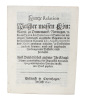
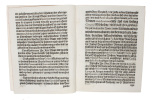
Bibl. Danica III:102.
Den Stormægtigste Konges Christian den Fjerdes Konges til Danmark og Norge...Historie, ...Men efter...Befaling igiennemseet af Archiv-Documenter forbedret af Hans Gram. (1.-4. Part). 2 Bd.
Kjøbenhavn., Kgl. Majest. priv. Bogtrykkerie, 1749. Folio. 2 samtidige helldrbd. Ophøjede bind på rygge. Rygfelter med rig forgyldning. Titelfelter forgyldte. Rygge fint reparerede med bevarelse af oprindelige rygge. (4),10,1534,(1) pp. De 2 kobberstukne portrætter (Chr. IV og Slange) mangler. Indvendig ganske ren og velbevaret, få spredte brunpletter. På begge forreste friblade gl. ejernavn Michael Lassenius Lassen, 1757.
Originaludgaven af dette monumentalværk som fortsætter hvor Arild Huitfeld slap, og giver en indholdsrig fremstilling af Christian IV's begivenhedsrige historie.
Den Stormægtigste Konges Christian den Fjerdes Konges til Danmark og Norge...Historie, ...Men efter...Befaling igiennemseet af Archiv-Documenter forbedret af Hans Gram. (1.-4. Part).
Kjøbenhavn., Kgl. Majest. priv. Bogtrykkerie, 1749. Folio. Samtidigt helldrbd. med ophøjede bind på rygge. Forgyldt rygtitel. Øverste kapitæl og rygfelt repareret. Et par svagheder i false ved øverste og nederste rygfelt reparerede. Lille stempel på titelbladet. 10,(4),1534,(1) pp. 2 kobberstukne plancher, det ene Chr. IV i hel figur efter Carl von Manders maleri, stukket af C. Fritsch samt portræt af Slange, ligeledes stukket af Fritsch. Titelbladet med en ubetydelig revne øverst i indre fals. Udmærket rent eksemplar med brede marginer.
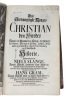
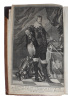
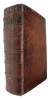
Originaludgaven af dette monumentalværk som fortsætter hvor Arild Huitfeld slap, og giver en indholdsrig fremstilling af Christian IV's begivenhedsrige historie.
Den Stormægtigste Konges Christian den Fjerdes Konges til Danmark og Norge...Historie, ...Men efter...Befaling igiennemseet af Archiv-Documenter forbedret af Hans Gram. (1.-4. Part).
Kjøbenhavn., Kgl. Majest. priviligerede Bogtrykkerie, 1749. Folio. To samtidigt hellæderbind med ophøjede bind på rygge. Forgyldt rygtitel . Begge bind med slitage, enkelte ormehuller samt dele af forgyldningen slidt bort. Bind 1 (Del 1-3) med gennemgående vandskjold i ydre overste hjørne. Pp. 591-676 strækker vandskjoldet sig ned i ydre margin. Bind 2 (Del 4) indvendig ren og pæn. (4),10, 1534,(1) pp. 2 kobberstukne plancher, det ene Chr. IV i hel figur efter Carl von Manders maleri, stukket af C. Fritsch samt portræt af Slange, ligeledes stukket af Fritsch. Titelbladet med en ubetydelig revne øverst i indre fals. Udmærket rent eksemplar med brede marginer.
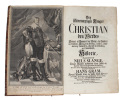
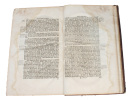
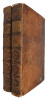
Originaludgaven af dette monumentalværk som fortsætter hvor Arild Huitfeld slap, og giver en indholdsrig fremstilling af Christian IV's begivenhedsrige historie.
Geschichte Christian des Vierten Königs in Dännemark von Niels Schlangen... verfertigt: kürzer vorgetragen und mit Anmerkungen und Zusätzen erweitert von Johann Heinrich Schlegeln. Erstes-Zweytes Buch (vom Jahr 1588 bis 1595, 1596-1612).
Kopenhagen und Leipzig, Pelt, 1757-59. 4to. Bound in one contemp. hcalf. raised bands. Richly gilt spine. Tome-and titlelabels with gilt lettering. stamp on title-page. (8),230,(6),231-582,(16) pp., 2 engraved plates.
First German edition. A ""Drittes Buch"" was published 12 years later (1771). - Bibl. Danica III,68.
Hertugdømmene Slesvig og Holsteens Historie. 2 Bd. Udg. paa Dansk af Joh. Ernst Heilmann, Med Forfatterens egne Forbedringer.
Odense, Iversens Forlag, 1776-77. 4to. 2 samt. helldrbd. med rig rygforgyldning. Kapitæler lidt slidte. En forperm løs. 4 kobberstukne titelvignetter. På skrivepapir.
Geschichte der Herzogthümer Schleswig und Hollstein. 1.-4. Theil (4 Bde, alles).
Flensburg & Leipzig, Kortschen Buchh., 1775-79. 8vo. Bound in 4 cont. boards with marbled coverpapers. Bindings, especially backs a little rubbed. Title-and tomelabels in leather on backs. 4 engraved titlevignettes ( 3 in woodengr.) (16),XXXVI,(4),484(24),552(24),492(20),426 pp. and 3 folded genealogical tables. Some light browning throughout.
First edition.
Geschichte der Herzogthümer Schleswig und Hollstein. 1.-4. Theil. + Register zu...Mit einer Nachricht von dem Leben und den Schriften ihres Verfassers herausgegeben von Valentin August Heinze.
Flensburg u. Leipzig, 1775-79 (und Register Kiel, Mohr, 1797). 4 cont. hcalf. Backs somewhat worn. Light browning to lvs. 4 engraved titlevignettes and 3 folded genealogical tables. Registerband in cont. boards.
Geschichte der Herzogthümer Schleswig und Hollstein. 1.-4. Theil (4 Bde, alles).
Flensburg & Leipzig, Kortschen Buchh., 1775-79. 8vo. Bound in 4 uniform contemp. hcalf. Richly gilt spines. Tome- and titlelabels with gilt lettering. 2 top of spines with wear. A label pasted on foot of spines. Stamp on title-pages. 4 engraved titlevignettes ( 3 in woodengr.) (16),XXXVI,(4),484(24),552(24),492(20),426 pp. and 3 folded genealogical tables.
Geschichte der Herzogthümer Schleswig und Hollstein unter dem Oldenburgischen Hause und im nähern Verhältnisse gegen die Krone Dännemark. 1.-2. Theil. (2 Bde., alles).
Kiel (Hamburg und Dessau), Kosten des Verfassers, (1781-) 84. 2 contemp. hcalf. Gilt spines. Titlelabels with gilt lettering. Paperlabels pasted on spines. Stamps on title-pages. (14),X,(8),548,(24)XXXII,518,(42) pp. Internally clean.
Geschichte der Herzogthümer Schleswig und Hollstein unter dem Oldenburgischen Hause und im nähern Verhältnisse gegen die Krone Dännemark. 1.-2. Theil. (2 Bde., alles).
Kiel (Hamburg und Dessau), Kosten des Verfassers, (1781-) 84. 2 contemp. hcalf. Gilt spines. Titlelabels with gilt lettering. Paperlabels pasted on spines. Stamps on title-pages. (14),X,(8),548,(24)XXXII,518,(42) pp. Internally clean.
Hertugdømmene Slesvigs og Holsteens Historie. Udgivet paa Dansk af Joh. Ernst Heilmann. Med Forfatterens egne Forbedringer. 5 Bd.
Odense, Iversen, 1776-83. 4to. Indbundet i 5 ensartede samtidige hldrbd. 4 kapitæler lidt slidte. Lille etiket påsat nederst på ryg. Kobberstukket portræt som frontispiece. 10 kobberstukne titelvignetter, 2 genealogiske foldetabeller. Indvendig ren.
Komplet del af ""Hertugdømmene"", som har selvstændige bindbetegnelser og som ingår i Gebhardi og Christiani's større værk om Danmark og Norge ""Kongerigerne Danmarks og Norges samt Hertugdømmene Slesvig og Holsteens Historie indtil vore Tider."" Eksemplaret her indeholder også alle 5 deltitelblade til det overordnede værk. Bibl. Danica III,18.
Vergleichung der Nachrichten von Dänischen Begebenheiten, von 1182 bis 1209, welche bey Arnold von Lübeck anzutreffen sind, mit andern Schriftstellern desselben Zeitalters, und Berichtigung der dazu gehörigen Zeitrechnung. Eine Preisschrift.
Copenhagen, N.Möller u. Sohn, 1789. 4to. Uncut and unopened in later blank wrappers. 94 pp.
Vergleichung der Nachrichten von Dänischen Begebenheiten, von 1182 bis 1209, welche bey Arnold von Lübeck anzutreffen sind, mit andern Schriftstellern desselben Zeitalters, und Berichtigung der dazu gehörigen Zeitrechnung. Eine Preisschrift.
Copenhagen, N. Möller und Sohn, 1789. 4to. Uncut in blank wrappers. On good paper, fine and clean. 94 pp.
The price was proposed by the Royal Danish Academy of Science.
LE MONDE MAGIQUE DE L'EGYPTE ANCIENNE
LE GRAND LIVRE DU MOIS. 1999. In-8. Cartonné. Bon état, Couv. convenable, Dos satisfaisant, Intérieur frais. 207 pages. Jaquette illustrée en couleurs. Quelques illustrations en noir et blanc dans et hors texte.. Avec Jaquette. . . Classification Dewey : 930-Histoire générale du monde ancien jusqu'à 499 apr. J.-C.
Classification Dewey : 930-Histoire générale du monde ancien jusqu'à 499 apr. J.-C.

NEFERTITI ET AKHENATON - LE COUPLE SOLAIRE
PERRIN. 1990. In-12. Cartonnage d'éditeurs. Bon état, Couv. convenable, Dos satisfaisant, Intérieur frais. 255 pages. Jaquette illustrée, rodhoïde.. Avec Jaquette. . . Classification Dewey : 900-GEOGRAPHIE, HISTOIRE, SCIENCES AUXILIAIRES DE L'HISTOIRE
Classification Dewey : 900-GEOGRAPHIE, HISTOIRE, SCIENCES AUXILIAIRES DE L'HISTOIRE
39 45 GUERRES : Normandie - Niemen
EDITION HEIMDAL. 1989. In-4. Broché. Bon état, Couv. convenable, Dos satisfaisant, Intérieur frais. 384 pages. Nombreuses photos en noir et blanc dans le texte et hors texte.. . . . Classification Dewey : 900-GEOGRAPHIE, HISTOIRE, SCIENCES AUXILIAIRES DE L'HISTOIRE
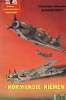
Classification Dewey : 900-GEOGRAPHIE, HISTOIRE, SCIENCES AUXILIAIRES DE L'HISTOIRE
Epikur im lateinischen Mittelalter. Mit einer kritischen Edition des X. Buches der Vitae philosophorum des Diogenes Laertios in der lateinischen bersetzung von Ambrogio Traversari (1433)
, Brepols, 2019 Hardback, viii + 493 pages, Size:156 x 234 mm, Language: German. ISBN 9782503587691.
Summary Die Studie liefert im ersten Teil erstmalig eine umfassende historisch-systematische, monographische Aufarbeitung der Rolle Epikurs in der Philosophie-, Kultur- und Ideengeschichte des lateinischen Mittelalters (von Isidor von Sevilla bis zum Ende des 15. Jahrhunderts). Quellennah werden viele mittelalterliche Denker von Rang und Namen besprochen. Neben der Philosophie im engeren Sinne wird auch die Bedeutung, die Epikurs Denken im theologischen, medizinischen und poetologischen Diskurs innehatte, eingehend beleuchtet. Durch diese F lle wird es jetzt erstmals m glich, ein fundiertes Bild ber das mittelalterliche Wissen zur epikureischen Philosophie - das sehr viel detaillierter und facettenreicher war als bisher allgemein angenommen - und vor allem zu deren systematischer Funktion innerhalb der mittelalterlichen Denkgeb ude zu gewinnen. Der zweite Teil bietet die kritische und kommentierte Edition der ersten lateinischen bersetzung des X. Buches des Diogenes Laertios, die Ambrogio Traversari 1433 fertiggestellt hatte. Diese bersetzung bildete den Grundlagentext f r die Epikur-Rezeption der Renaissance und Fr hen Neuzeit. F r die Edition wurden neben Traversaris Autograph 16 weitere Handschriften aus dem 15. Jahrhundert sowie die Editio princeps von Marchese (ohne Epigramme; ca. 1472) und die zweite Edition von Brugnoli (erstmals mit lat. bersetzung der Epigramme; 1. Auflage 1475) herangezogen. TABLE OF CONTENTS Teil I. Epikur im lateinischen Mittelalter 1. Einleitung: Forschungsstand, Voraussetzungen, Grundlagen 1.1. Bisherige philosophiehistorische Ans tze 1.2. Quellen zu Epikur im Mittelalter 2. Die patristische Pr gung 2.1. Drei Weltanschauungen: Epikureer - Stoiker - Christen 2.2. Epikureer und andere H retiker 3. Die Epikureer in den Texten des Mittelalters 3.1. Die Funktionsstelle der ,Epikureer' im System der vera philosophia 3.2. Epikureische Philosophie im medizinwissenschaftlichen Kontext 3.3. Leben und Lehre Epikurs in den bio-doxographischen Darstellungen des Mittelalters 4. Der Tod der menschlichen Seele: Ecclesiastes, die ,Araber' und die Epikureer 5. Verdichteter Konflikt: Epikur bei Dante und in den fr hen Kommentaren zur Commedia 5.1. Moderne Fabeln vom ,zweifachen Epikur' bei Dante 5.2. Epikurs ewiger Tod in der Schmerzensstadt 5.3. Die epikureische H resie in den fr hen Commedia-Kommentaren 6. Ambrogio Traversaris lateinische bersetzung des X. Buches des Diogenes Laertios 6.1. Umst nde und Werkprozess der bersetzung Traversaris 6.2. Leonardo Brunis bersetzungen und ihr Verh ltnis zu Traversaris Widmungsbrief in den Vitae philosophorum 7. Die versio Ambrosiana und die Epikur-Rezeption im 15. Jahrhundert 7.1. Die rhetorische Vereinnahmung der Ethik Epikurs bei Cosma Raimondi und Lorenzo Valla 7.2. Die Rezeption der versio Ambrosiana vor der editio princeps (ca. 1472) 7.3. Die Academia Romana und die ersten Drucke des lateinischen Epikur Teil II. Kritische Edition: Diogenes Laertios, Vitae philosophorum, Buch X, lateinische bersetzung von Ambrogio Traversari A. Editorische Vorbemerkungen B. Edition C. Kommentar Literaturverzeichnis Register
Madness in the Ancient World: Innate or Acquired? From Theoretical Concepts to Daily Life
, Brepols, 2023 Paperback, 360 pages, Size:156 x 234 mm, Illustrations:11 b/w, 23 col., 1 tables b/w., Language: English. ISBN 9782503601908.
Summary This is the first book volume ever to study the ?difficult' subject of congenital, intellectual disability in the ancient world. The contributions cover the Ancient Near East, Egypt and the Graeco-Roman world, up to the late ancient period, China, the rabbinic tradition, Byzantium, the Islamic world, and the Middle Ages in the Latin West. The engaging and thought-provoking chapters combine careful textual analysis with attention to the material evidence and comparative perspectives, not the least those offered by disability history for recent periods in history. TABLE OF CONTENTS Acknowledgements Hidden in Plain Sight or Simply Untraceable? The Challenge of Studying Intellectual Disability in the Ancient World (Christian Laes) ?Mad Bones': Tracing Mental Disability in the Bioarchaeological Record and its Possible Socio-Economic Implications in Past Societies (Chryssa Bourbou) Dagger of the Mind: Macedonian Kings and Chronic Traumatic Encephalopathy (CTE) (Alexandra F. Morris) The Quest for Down Syndrome (and Other Symptoms) in Antiquity (Edgar Kellenberger) Excluded from the Kingdom or Leading the Revolution? M roi and the Question of Intellectual Disability in New Testament Writings (Dominika Kurek-Chomycz & Emma Swai) Brain Injury and Intellectual Disabilities in Early and Medieval China: Two Case Studies (Olivia Milburn) The Shoteh in Rabbinic Sources: Intellectual Disability or Mental Illness? (Lennart Lehmhaus) Searching for Intellectual Disability in Byzantium (Fotis Vasileiou) Fools in Arabic Medicine and Hospitals: Medical, Social and Economic Studies (Peter E. Pormann) Incapacitas mentis: Medieval Musings about Congenital Fools (Irina Metzler) Living Creatively with Intellectual Disabilities: A Father's Observations as an Opportunity for Historical Research (Edgar Kellenberger) Source Index General Index
Christian Lemmerz (Signed)
, Antwerpen, Museum van Hedendaagse Kunst, 1997 Softcover, pages not numbered, 21 x 21 cm, English text, Signed by the artist. *Fine condition.
Catalogue with artworks and curriculum vitae of the artist, published on the occasion of the exhibition 'Kvium, Lemmerz, Frandsen' in 1997.
Origines de l'Imprimerie en France. Conférences faites les 25 Juillet et 17 Août 1900 par M. A. Christian.
Paris, Imprimerie Nationale, 1900. 323 x 250 mm, (4)-LXIV-128-(10) pp., planches en n/b. Reliure toile à la bradel, étiquette de titre au dos, première de couverture conservée, brunie, avec rousseurs, petites taches au dos et sur plats (reliure décolorée). Bon exemplaire.
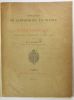
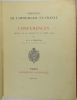
Conférences faites à l'École Internationale de l'Exposition Universelle précédées d'une lettre de M. Léon Bourgeois député, ancien Président du Conseil des Ministres et d'une introduction de M. Louis Herbette Conseiller d'État, Vice-Président de l'École Internationale (Groupe Français).
Councils, Conflicts, Correspondence. Urban Diplomacy in Reval (Tallinn) and L beck (c. 1470-1570)
, Brepols, 2026 Hardback, Pages: 224, Size:178 x 254 mm, Illustrations:10 b/w, 1 tables b/w., 1 maps b/w, Language: English. ISBN 9782503612904.
Summary In the fifteenth and sixteenth centuries, the city councils of Hanseatic towns participated lively in the Northern European landscape of diplomacy. Often, it was conflict which lay behind the magistrates' diplomatic activities. Discord among the members of the Hanse, intercity disputes between individual burghers, and large-scale "international" altercations, all required town councils to engage with actors and institutions beyond the town walls. 'Councils, conflicts, correspondence' examines how the magistrates of the Hanseatic towns L beck and Reval managed such conflicts which often exceeded the formal limits of their own jurisdiction and authority. Through a comparative study of two towns with markedly different access to political power and networks, this book analyses the scope of diplomatic action available to city councils. By placing the diplomacy of municipal governments in the broader frame of European urban political thought and practice, it shows how magistrates combined a flexible conception of the common good with a pragmatic notion of reciprocity to balance their relations to their own citizenry and overlords, as well as to the Hanse and foreign rulers. Furthermore, this book zooms in on practices of diplomacy and processes of negotiation, uncovering the variety of strategies and tactics employed by the councils and their diplomats in written correspondence as well as face-to-face meetings at regional and Hanseatic diets. TABLE OF CONTENTS List of illustrations Abbreviations Introduction 1. Hanseatic diplomacy: a conflict of interests 2. Bilateral relations: a politics of reciprocity 3. Conflicts beyond the city: urban diplomats at princely courts 4. Following the paper trail: diplomacy in the chancery Conclusion Appendix Bibliography
CHRISTIAN, Marie, CHRISTIAN, Étienne, préface de Ariane Audouin-Dubreuil
Reference : 121665
(2009)
ISBN : 2723448584
La Société de Géographie présente La croisière blanche. A l'assaut des montagnes Rocheuses
2009 Éditions Glénat - 2009 - Grand In-4, couverture cartonnée illustrée sous jaquette illustrée de l'éditeur - 208 pages - Très nombreuses reproductions photographiques N&B in et hors-texte, comprend une carte volante pliante format A1
Bon état, très légers frottements sur la jaquette
La Politique et la Grâce. Anthropologie politique de la beauté grecque
1987, éditions du Seuil,collection "Des Travaux", traduction Paul Veyne, broché, 124 pages.
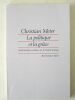
Très bon état.
Phone number : 04 96 21 81 64

