 Write to the booksellers
-
Type
Artists book (1)
Autograph (1)
Book (3413)
Magazine (7)
-
Latest
Last 24h (11)
Last month (40)
-
Language
English (5)
French (3406)
Italian (1)
Portuguese (3)
Spanish (7)
-
Century
16th (1)
18th (2)
19th (47)
20th (648)
21st (152)
-
Countries
Belgium (2262)
Canada (1)
China (10)
France (1046)
Switzerland (103)
-
Syndicate
ALAC (1)
ILAB (221)
SLAM (140)
L'Age d'or de la Peinture Toulousaine. Exposition organisée par la Ville et par le Syndicat d'Initiative de Toulouse. Avec le concours des Directions des Musées Nationaux et des Monuments Historiques.
Paris, Musée de l'Orangerie, 1947, 80pp. 13,7 X 18 cm, br. ouv. ill. 8 pl. h.t. n.b. Catalogue rédigé par Robert Mesuret avec une préface de M. René Huygue.
Bel ex de ce catalogue.
HET DORP IN DE KUNST. LE VILLAGE ET LES ARTS. DAS DORF IN DER KUNST. THE VILLAGE IN ART.
Antwerpen, Esco Books, 1978 Gebonden, lichtgroene linnen hardcover met goudopdruk, originele uitgeversomslag met flappen in kleur, 30x24.7 cm., 167 pp. + 1, geillustreerd in kleur en in z/w, viertalige editie Nederlands/Francais/Deutsch/English.
Belichting van het dorp in de Vlaamse schilderkunst en letterkunde, gaande van schilderijen, etsen, tekeningen, houtsneden, schetsen tot letterkunde, poezie, proza, anderstalige buitenlandse dichters. Bij dit alles werd getracht de keuze van illustraties en tekst zo verscheiden en kenschetsend mogelijk te houden.
Juan van Eyck y Espana
Cadiz, Museo Provincial de Bellas Artes de Cadiz 1969 126pp.+ 78 bl/w illustrations out of text, 25cm., hardcover (editor's blue cloth), illustrated dustwrapper, text in Spanish, good condition, S84423
PICASSO IN RETROSPECT.
, New York/ Washingthon, Praeger Publishers, 1973 Bound, cloth, with illustrated dust-jacket, 29,5x24cm, 283pp, illustrated in colors and b/w, index. ISBN X.
Illustrated with 30 color plates: Over 420 b/w illustrations. Good condition,
L'ESPAGNE DU XVIe AU XIXe SIÈCLE. Coello - Goya - Gréco - Murillo - Ribéra - Vélasquez - Zurbaran
Paris Editions Princesse 1977 in 4 (30,5 x 25,5) 1 volume reliure cartonnée de l'éditeur sous jaquette illustrée en couleurs, 96 pages, avec de nombreuses reproductions en noir et blanc et en couleurs. Collection '' Dessins et Aquarelles des Grands Maîtres ''. Bel exemplaire ( Photographies sur demande / We can send pictures of this book on simple request )
Très bon Jaquette en très bon état Reliure
LA NATURE MORTE ESPAGNOLE DU XVIIe SIECLE A GOYA.
, Bruxelles, Office du Livre, Lefebvre & Gilles, 1987.**, Relie, toile, dos orne de piece de titre dore, sous jacquette d' editeur illustre en couleur, 26,5x32,5cm, 247pp, illustre en couleur et n/b, notes bibliographie, expositions, index.
Le genre bodegon et sa signification. Problemes de terminologie. Origine et definition du gerne en Espagne. L' apparition du gerne en Castille. L' univers de la cour et ses interpretes jusqu' en 1650. Le domaine andalou: Seville et Grenade dans la premiere moitie du XVIIe siecle. La seconde moitie du XVIIe siecle: l' apogee du bodegon baroque, etc.
CARAVAGGIO AND PICTORIAL NARRATIVE, Dislocating the Istoria in Early Modern Painting
, Brepols Publishers, 2011 Hardcover, VII 654 p., 0 b/w ill. 336 colour ill., 225 x 300 mm, . ISBN 9781905375486.
"Truly a distinguished achievement, this book is required reading for general readers as well as specialists in the history of art" (Charles Dempsey, The Johns Hopkins University) A very important part of Caravaggio?s production consists of pictorial narratives, mostly religious. Thus, according to early modern aesthetics, Caravaggio practiced the artistic genre of the istoria: the most discussed and thoroughly defined pictorial institution of his time. Unanimously, seventeenth-century artists and art theorists censored and condemned Caravaggio?s art for its numerous deficiencies and faults in regard to the principles of the istoria. In spite of all these testimonies, Caravaggio?s innovations in and misuses of the techniques specific to early modern pictorial narrative have never been systematically studied, debated, and put into historical perspective. In this volume, Lorenzo Pericolo argues that Caravaggio?s multiple experimentations with the traditional devices of the istoria not only represent the core of an unprecedented "poetics of dislocation," but also unsettled, dismantled, and expanded the scope of pictorial narrative in ways that would have redefined and deeply transformed the concept of painting and artistic creation, had Caravaggio?s enterprise not have been ferociously criticized and stigmatized as both aberrant and defective. To solidly establish the importance and groundbreaking charge of Caravaggio?s work, Pericolo examines the notion of Leon Battista Alberti?s istoria as interpreted and developed by early modern artists and theorists?from Leonardo to Vasari, from Lomazzo to Poussin, and from Michelangelo to Bellori?in vast surveys in which the concepts of diachrony, duration, eurythmy, propriety, verisimilitude, and pictorial truth? among others?are carefully examined on a theoretical and practical level. By analyzing the paintings of Caravaggio?s followers such as Cecco del Caravaggio, Battistello Caracciolo, Valentin de Boulogne and, not least, Diego Velazquez, Pericolo explores how Caravaggio?s innovations in the domain of pictorial narrative were variously construed, elaborated upon, and brought to fruition in the aftermath of the master?s death in 1610, thereby offering a critical explanation of the implosion and extinction of the Caravaggesque movement in the 1630s. Among the flood of recent books devoted to Caravaggio, whose popularity now stands at the zenith, Lorenzo Pericolo?s profound and passionate study stands out for its sensitive and learned presentation of an argument that is both historically true and critically revealing to present-day sensibilities. Thoroughly at home in the vast literature devoted to Baroque art in general and to Caravaggio in particular, Pericolo also brings to his subject an unrivaled understanding of modern theoretical techniques on the one hand, and, on the other, an unrivaled mastery of seventeenth-century artistic theory, profoundly based in Aristotelian poetics and in rhetorical techniques. Through extended close readings of Caravaggio?s paintings, arranged in roughly chronological order, Pericolo brilliantly teases out the theoretical and practical choices that confronted Caravaggio, and that further determined reception of his work, both in the positive and negative senses, by highly sophisticated contemporary audiences. Beyond this, Pericolo is a remarkably sensitive guide to Caravaggio?s expression of profound, wrenching and often painful, emotions caught in eternal suspension, the sources of both his contemporaries? discomfort and our own, modern, recognition and appreciation. Truly a distinguished achievement, this book is required reading for general readers as well as specialists in the history of art.
PER KIRKEBY retrospective , Per kirkeby and the forbidden paintings of Kurt Schwitters / ENG.
Brussel, Bozar, 2012 Hardback with dusjacket 285x225mm, 200pages., illustrations English text * CONDITION. NEW ISBN 9789085866275.
The Centre for Fine Arts presents a retrospective of the work of Per Kirkeby (born in 1938), one of the key painters of the Danish avant-garde. But just what does avant-garde mean: rupture, minimalism, abstraction, borrowings, subversion? One can find all of those in a prolific body of work that began in the 1960s in the wake of the Fluxus movement. But that is only one aspect of a very diverse oeuvre that draws just as much on the figuration of Danish classicism and the experiments of 19th-century French masters such as Eugene Delacroix. Kirkeby cannot be pigeonholed, nor does he want to be: he prefers to relentlessly question the position and the perceptions of the observer. An artistic process that has seen him turn to different media (canvas, blackboards, paper, bronze, etc.) in an assertion of the freedom he finds, as a trained geologist, in the omnipresence of nature. It is in this context that the Kurt Schwitters room in the exhibition is so relevant. Here, Kirkeby is not confronted with the Dadaist, but with an unfamiliar, figurative Schwitters, in love with landscape. ''Forbidden paintings'' - from the point of view of the modernist mainstream that is. The Danish artist recognises in this work his own credo: a visceral assertion of his freedom as an artist. Bozar, Brussel. Expo: 10/02/2012 - 20/05/2012
Jean Fouquet (complete works)
Paris, Hyperion Press 1940 269pp. with ca. 300 bl/w illustrations + 16 colour plates out-of-texte, text in ENGLISH, 25cm., solid modern hardcover binding in red half-cloth, original softcover preserved and bound in, text and interior are clean and bright, with heraldic ex-libris, very good, S115944
Constant Permeke - retrospectieve tentoonstelling (Antwerpen, Museum voor Schone Kunsten, 28 juni-31 augustus 1959)
Antwerpen, 1959 148pp.rijkelijk geïll., 27cm., geïllustreerde omslag, tentoonstellingscatalogus
LA VIE DE MANET,
Paris, , Librairie Hachette, 1959 Broche, couverture papier blanch, impression du titre en rouge et noir, 130 x 200mm., 344pp.
Un fils de famille - Le salon de l'empereur - La bande a Manet - L'apres-midi d'un faune. Bon etat.
LA VIE DE TOULOUSE LAUTREC,
Paris,, Librairie Hachette, 1958 Broche, couverture papier blanche, impression du titre en rouge et noir, 130 x 200mm., 367pp.
Treclau - Le diable au corps - Elles - Le chien au lorgnon.. Bon etat.
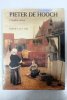
Pieter de Hooch
Bound book, 312 pages, published on 6 March 1980 by Phaidon Press Ltd, in very good general condition, slightly worn jacket. Livre relié, 312 pages, paru le 6 mars 1980 chez Phaidon Press Ltd, très bon état général, jaquette légèrement usée.


PETRE, Anne (coord.)./TLACHOVA, Katka (coord.)/DEVISSCHER, Hans (eindred.) & TYS, Michele (eindred.).
Reference : 27231
LAATGOTISCHE KUNST UIT BOHEMEN, MORAVIE EN SILEZIE 1400 - 1550.
Brussel, BBL, 1999 Originele uitgeversomslag met flappen, 21x29.6 cm., 278 pp., geillustreerd in z/w en in kleur.* IN PRIMA STAAT
Tentoonstelling georganiseerd door de Moravska Galerie te Brno in samenwerking met de BBL, Paleis van Keizer Karel Brussel 21 oktober 1998 - 17 januari 1999 Europalia 98 Ceska Republika. Overzicht van schilderkunst, architectuur, toegepaste kunst, houtsnijwerk, etc. en een historische context
LA RUSSIE A L'AVANT-GARDE 1900 - 1935.
Bruxelles, Fonds Mercator, 2005 Broche, sous jacquette originale d'editeur en couleurs, 28x23 cm., 287 pp., illustrations en couleurs et en n/b. ISBN 9061536022.
Europalia.russia. L'expositio au Palais des Beaux-Arts aborde le mouvement dans son ampleur pluridisciplinaire, afin d'etablir un dialogue entre les tableaux, les sculptures, les reliefs, les objets artisanaux, les decors et costumes de theatre, les courts metrages, les photographies et photocollages, les projets architecturaux, les affiches ... Pour la premiere fois, le mouvement est resitue dans un contexte historique large. L'exposition en retrace l'histoire eclatante, depuis ses origines jusqu'au milieu des annees 1930, et temoigne ainsi de cette evolution parallele ou concomitante vers le realisme sovietique, dont le dogme sera proclame en 1934.
AVANT-GARDE IN RUSLAND 1900-1935.
, Fonds Mercator, 2005., softcover, originele geillustreerde uitgeversomslag in kleur, 23x28cm, 286pp, geillustreerd in kleur en z/w. ISBN 9789061536017.
Europalia.russia. De tentoonstelling in het Paleis voor Schone Kunsten wil die veelvormigheid recht doen. Daarom werd gekozen voor een multidisciplinaire aanpak en een dialoog tussen schilderijen, beelden, reliefs, artisanale producten, theaterdecors en -kostuums, kortfilms, foto's en fotocollages, architectuurprojecten, affiches, enzovoort. De Russische avant-garde wordt hier voor het eerst in een brede historische context gesitueerd. De tentoonstelling schetst haar geschiedenis vanaf de eerste jaren van de 20e eeuw tot het midden van de jaren 1930 en legt de diverse banden bloot met de ontwikkeling naar het sovjetrealisme, dat in 1932 tot dogma verheven werd.
PETROV, Vsevolod & KAMENSKI, Alexandre. DABBADIE, Denis (traduit du russe par)
Reference : 24062
LE MONDE DE L'ART, Association artistique russe du début du XXe siècle
Léningrad Editions d'Art Aurora 1991 in 4 (29,5x22,5) 1 volume reliure toilée bleue de l'éditeur sous jaquette illustrée, 330 pages [1], avec de nombreuses illustrations en noir et blanc, et en couleurs, dont planches hors-texte en couleurs. Bel exemplaire ( Photographies sur demande / We can send pictures of this book on simple request )
Très bon Jaquette en très bon état Reliure
Kiai-Tseu-Yuan Houa Tchouan - Les Enseignements de la Peinture du Jardin grand comme un grain de moutarde - Encyclopédie de la Peinture Chinoise
Paris, Librairie Renouard, Henri Laurens Editeur, 1918. 1 volume in-folio (30*41 cm), broché, XII-519 pp., enrichi d'environ 500 gravures illustrées, très bon exemplaire à l'état de neuf. Tirage limité à 550 exemplaires numérotés (No 406). Un autre exemplaire, relié plein cuir moderne, est vendu 550 euros.
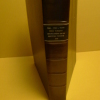
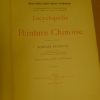
Le Kai Tseu yuan Houa Tchouan ou "Les Enseignements de la Peinture du Jardin comme un grain de moutarde" constitue une véritable Encyclopédie de la Peinture Chinoise.«Ce traité fondamental rassemble les plus vieilles lois de l'esthétique extrême-orientale; il recueille les instructions et les exemples des plus grands maîtres sans donner la préférence à une école particulière, ni à une époque déterminée. L'abondance des renseignements qu'il apporte, philosophiques, historiques ou techniques en font un instrument de travail de premier ordre.» (Extrait de la Préface). Ouvrage très lourd / Veryheavy book / extra-postage.
PETRUS PICTOR & PETRUS DE SANCTO AUDEMARO (& VAN ACKER L., ed.)
Reference : R67817
(1972)
Petri Pictoris Carmina nec non Petri de Sancto Audemaro Librum de coloribus faciendis [Corpus Christianorum. Continuatio Mediaevalis, 25] (Carmina nec non Petri de sancto Audemaro Liber de coloribus faciendis)
Turnhout, Brepols 1972 clxx + 247pp., 25cm., in the series "Corpus Christianorum. Continuatio Mediaevalis" volume XXV (25), publisher's hardcover binding in orange cloth with gilt lettering, text is clean and bright, very good condition, ISBN 2-503-03251-1, [introduction in German, text in Latin], R67817
PETRUS PICTOR & PETRUS DE SANCTO AUDEMARO (& VAN ACKER L., ed.)
Reference : R118774
(1972)
Petri Pictoris Carmina nec non Petri de Sancto Audemaro Librum de coloribus faciendis [Corpus Christianorum. Continuatio Mediaevalis, 25] (Carmina nec non Petri de sancto Audemaro Liber de coloribus faciendis)
Turnhout, Brepols 1972 clxx + 247pp., 25cm., in the series "Corpus Christianorum. Continuatio Mediaevalis" volume XXV (25), publisher's hardcover binding in orange cloth with gilt lettering, text is clean and bright (looks unread), small ex-libris stamp on blanco endpaper and at verso of title page, very good condition, ISBN 2-503-03251-1, [introduction in German, text in Latin], R118774
Van Dyck in England
London, National Portrait Gallery 1982 120pp.with bl/w ills. & 12 ills. in colour, 25cm., illustrated softcover, Exhibition catalogue (London, 19 November 1982 to 20 March 1983), very good, S85699
PIERRE BRUEGEL L'ANCIEN.
1997 / 351 pages. Relié avec jaquette Editions Flammarion.
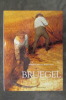
TRES BON ETAT. Quasi NEUF !
La peinture liégeoise au XVIIe siècle
Bruxelles, Cercle d'Art 1945 53pp.+ 32 planches hors-texte en n/bl, 25cm., br.orig., jaq. ill., dans la série "L'art en Belgique", bon état, S91861
Physique de l?Incarnation, Enfanter et prendre corps dans l?art italien de la Renaissance
, Brepols - Harvey Miller, 2026 HardbackPages: 347 pages, Size:216 x 280 mm, Illustrations:2 b/w, 176 col. Language:French. ISBN 9782503614083.
Summary La question de l?Incarnation est ici abord e selon son acception la plus charnelle, la plus physique voire la plus physiologique, d?abord du point de vue du lieu matriciel que sont la maison, le lit et le ventre de la Vierge, puis en tant que mouvement piphanique de venue au monde, avant d?en consid rer les prolongement et variations au sein d?autres contextes th matiques. Les nombreuses images qui se trouvent convoqu es et analys es t moignent de l?int r t que les artistes, les commanditaires et le public de la Renaissance italienne ont port pour des consid rations tr s humaines qui reconduisent Marie son tat de simple m re. L?approche adopt e oscille entre la mise en vidence d?une r alit physique de la gestation et de la parturition, qui r pond la d votion mariale des couples et des jeunes m res contemporaines en s?attachant des questions de nature obst trique, et l?abstraction figurale d?une r alit textile qui interpelle l?imagination et la m ditation pour les inviter contempler l?empreinte ou la marque du divin dans une mati re qui se donne comme l?enveloppe et la chair du Verbe incarn . L?id e de sortie ou de surgissement, de seuil ou de passage, est tout aussi pr gnante dans son rapport aux drap s organiques de la Vierge dont s?extrait l?Enfant. Ce sont autant de d tails qui, dans le sillage d? crits apocryphes anciens et d?une litt rature mystique f minine plus r cente, t moignent pour l?essentiel du d tournement ou de la mise en vidence par les artistes d?un impens th ologique, celui des conditions pr cises de la naissance de J sus. TABLE OF CONTENTS Introduction Philippe Morel Confirmer l?Incarnation . Nic e II et les th ologiens de l?image Maxime Deurbergue Premi re partie : L?Incarnation en son lieu Descendit de c?lis . Ex g se visuelle et paysage de l?Incarnation dans la peinture siennoise du Quattrocento Anne-Laure Imbert L?invention d?une figure matricielle. La Santa Casa et l?iconographie de la Madone de Lorette (XVe-XVIIe si cles) Ralph Dekoninck Creando el Creatore nel tuo talamo mondo . L?herm neutique du Thalamus Virginis la Renaissance Fiammetta Campagnoli L?Incarnation et l?oreille dans l?art italien de la Renaissance Marta Battisti De l?imago clipeata la mandorle ut rine. Ouverture et profondeur du lieu de l?Incarnation au XVe si cle Cl mence Legoux Deuxi me partie : Venir au jour, venir au monde La qualit motive du drap organique. Une image de l?amour maternel, de Gentile da Fabriano Jacopo Bellini Marie Piccoli-Wentzo Enfanter le Sauveur, na tre de la Vierge. Michel-Ange et l?impens de l?Incarnation Philippe Morel Culture de l?ornement et physique de l?Incarnation. Les dispositifs textiles de l?image mariale la Renaissance Juliette Brack Encadrer l?Incarnation. Le cadre fictif dans la Vierge l?Enfant avec deux anges de Filippo Lippi (Galerie des Offices, Florence) Elizaveta Falkova Troisi me partie : Aux marges de l?Incarnation Corps r g n r s. La chair, la l g ret et la pesanteur des lus et des damn s au jour du Jugement Ang le Tence La chair et la voix du spectre. Interpr tations picturales de l?ombre de Samuel Pierre Tchekhoff Roch, gyn cologue-obst tricien c leste au chevet des femmes Florence Larcher Fertilit de la nature et f condit humaine dans la peinture flamande du d but du XVIIe si cle. R flexions autour de la figure de C r s Cassandre Herbert

