Write to the booksellers
-
Type
Books (1734)
Engravings (1)
Magazines (8)
-
Latest
Last 24h (3)
Last 3 days (4)
Last month (19)
Last week (43)
-
Language
Chinese (1)
Dutch (1)
English (2)
French (1635)
Russian (104)
-
Century
16th (2)
18th (1)
19th (225)
20th (704)
21st (133)
-
Countries
Belgium (58)
Canada (3)
Denmark (258)
France (1171)
Germany (1)
Switzerland (147)
United States of America (105)
-
Syndicate
ALAC (3)
CLAM (3)
CLAQ (1)
CNE (6)
ILAB (972)
NVVA (8)
SLACES (8)
SLAM (673)
SNCAO (2)
Tre nye Eventyr og Historier.
Kjøbenhavn, 1870. Indb. ubesk. m. orig. for- og bagomsl. i et nydeligt nyere hldrbd. m. forf. og titel i guld på forperm. Særdeles nydeligt, rent og friskt ekspl. Komplet m. halvtitel, titel, dedikationsbl. og deltitelblade til de enkelte eventyr.
Originaludgave. BFN 992.

Tre nye Eventyr og Historier. Hanse-Grethes Familie. Hvad Tidselen oplevede. Hvad man kan hitte paa.
K., 1870. Indb. m. orig. for- og bagomsl. i nyere marmoreret papbd. m. blåt skindtitelfelt på forperm. Aldeles frisk.
Originaludgave. BFN 992.
Tre nye Eventyr og Historier. Hønse-Grethes Familie. Hvad Tidselen oplevede. Hvad man kan hitte paa.
Kjøbenhavn, reitzel, 1850. Med orig. bogtrykte omslag. Ubeskåret. Ryg med papirstape, som nok kan fjernes.
Originaludgaven. BFN: 992.
Tre nye Eventyr og Historier. + Lykke=Peer.
K., 1870. Indb. i ét samt. hldrbd. Ryg slidt. Indvendig ren.
2 originaludgaver. BFN 992 og 1006.
Vierge Des Glaces 1
Gallimard 2010 96 pages 10 4x0 8x17cm. 2010. pocket_book. 96 pages.
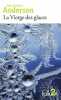
Très bon état - légères marques de lecture et/ou de stockage mais du reste en très bon état- expédié soigneusement depuis la France
Vignetter til danske Digtere.
Kjöbenhavn, Reitzel, 1832. Lille 8vo. Smukt senere hldrbd. med rig rygforgyldning of titelfelt i skind. Som næsten altid lettere brunplettet. Exlibris af Max Lester på indersiden af forpermen.
Originaludgaven. BFN: 174.
Vignetter til danske Digtere.
K., 1832. Senere mønstret papbd. m. skindtitel på forperm (Carl Lund). Brunplettet.
BFN 174. Originaludgave.
Vignetter til danske Digtere.
Kjöbenhavn, C. A. Reitzel, 1832. 12mo. Originalt kartonnage. Ryg fornyet. Eksemplar uden smudstitel. Spredte brunpletter. Indlagt i en nydelig nyere bogæske.
Særdeles nydeligt eksemplar af originaludgaven. BFN 174.Exlibris Hyllested.
15 førstetryk udgivet i tidsskriftet Valkyrien. Et Maanedsskrift for dannede Læsere. Udgivet af Ove thomsen. årgangene 1831 (3 Bd., det udk.) + 1832 (4 Bd., det udk.).
Kjøbenhavn, Udgiverens Forlag, 1831-32. Indbundet i 7 samtidige ensartede hldrbd. Rygforgyldning. Forgyldte rygtitler. Lettere spredte brunpletter.
BFN: 151, 152, 163, 164, 170, 175, 180, 181, 182, 189-93 og 198.
Læsning for den fine verden. Et poetisk Quartalsskrift. Udgivet og forlagt af F.J. Hansen. Første Hæfte.
Kjøbenhavn, C.H. Robert, 1829. Lille 8vo. Samtidigt helshirtbd. med forgyldt rygtitel. (8),124,(2) pp. Inclusiv subskribentliste med kun 60 subskribenter, heraf H.C. Andersen selv. Spredte brunpletter.
Indeholder 3 tidlige digte af den dengang 24-årige forfatter: 1. Kunstner=Livet. Pp. 43-48. - 2. Phantasie og Vanvid. Pp. 49-52. - 3. Ingenting og Noget. Pp. 53-54.BFN. 31, 32 og 33. - Bibl. Danica IV,202.
Ved min Velgører Provst Gutfelds Død. [In: Den Vest-Siællandske Avis eller Slagelse Ugeblad for uden- og inden-landske Historie og Dagens vigtigste Nyheder. Redigeret af Pastor og Ridder Bastholm, Trykt og Forlagt af Peter Magnus. No. 9, 9de Aarg. Løv... - [ANDERSEN'S THIRD PUBLICATION - EXTREMELY RARE]
Slagelse, 1823. 4to. Contemporary turquoise cardboard binding with contemporary handwritten title to spine. The poem is found on column 145. All the issues are numbered continuously throughout: 1676 columns (i.e. 838 pp.). All issues with the same contemporary owner's signature to top of first leaf: ""Neergaard"". An excellent copy.
The extremely rare first printing of the 1823-issues of this slightly obscure newspaper, which contains Hans Christian Andersen's third publication. This exceedingly rare piece of Anderseniana was published, when the master of the fairy tale genre was merely 17 years old, namely in February 1823. Hans Christian Andersen constitutes the greatest Danish author ever to have lived, arguably the greatest author of children's literature in the world, the founder of the fairy tale-genre and one of the most famous authors of all time. He almost singlehandedly put Denmark on the literary world map and gave to mankind a completely new way of writing and viewing the world. However, his road to fame was not straightforward and presumably, no one who made the acquaintance of the awkward and poor teenage Hans Christian Andersen would have predicted the role he came to play in the development of world literature. The present publication constitutes one of the two pieces of publication that are at the epicentre of the coming-to-be of the greatest poet and author to emerge from Danish soil. This little piece is a heartfelt, almost perfectly stylized poem that constitutes an obituary of Hans Christian Andersen's early benefactor, provost Gutfeld (1761-1823), who was responsible for Collin accepting to be Andersen's benefactor. It was due to Gutfeld and his belief in Andersen that he made it on into the world and was taken seriously enough – at the mere age of 17 – to later be allowed to follow his heart and his life dream – that of writing. ""As a poor child in the small but self-satisfied provincial centre of Odense, Andersen received throughout the first 14 years of his life impressions and experiences that were to be decisive for his literary production. In the autobiography of his youth, ""Levnedsbogen"" (not published till 1926), Andersen emphasised that the way of life in Odense had preserved popular old customs and superstitions unknown in Copenhagen and therefore available to him as a colourful stimulus to his imagination. However, even more decisive were the disturbing social experiences from the lowest ranks of society and his own urge to cast off the trammels of poverty, break with his social inheritance and realise his potential in the only outlet the times provided, the world of art, an urge that became ever more dominant throughout his childhood [...] A decisive factor that determined the direction of Hans Christian Andersen's life and his fantastic flight to Copenhagen in 1819, with the social and literary rise that followed, is the fact that, as the only town outside the capital, Odense had a theatre. [...] He left home as a 14-year-old 4 September 1819, a few months after his confirmation, to seek his fortune at the theatre in Copenhagen. [...] During Andersen's first years in Copenhagen (1819-22), he fought desperately to gain a foothold in the theatre as a ballet-dancer, actor or singer. Finally, when none of these attempts succeeded, he tried his hand as a playwright"" this was also in vain, but resulted in the director's deciding to send him to school so that something proper might be made of him, and this experience was thus as decisive for his later life and work as the Odense years."" (The Biography of the Hans Christian Andersen Centre). It was here, in Copenhagen, during the early theatre years, after he'd been cast aside as an actor, cast aside as a dancer, and cast aside as a singer that he wrote his play ""Alfsol"", which he handed in to the theatre in order to have it accepted for performance. But that too was cast aside, with the explanation that the author lacked all forms of education and had clearly never learned to write properly. Dean Gutfeld, however, had gotten to know Andersen and saw the potential in the young boy. Therefore, Gutfeld had spoken well of the uneducated boy and asked the theatre director Collin to look mercifully at it. ""[A] well liked speaker, Dean Gutfeld was alive then and was the one person that spoke most warmly and enthusiastically about my tragedy, which had now been completed. He sent it with a recommendation to the theatre direction and I was floating between hope and fear."" (own translation from Danish in Andersen: Mit Eget Eventyr. Uden Digtning, edt. Topsøe-Jensen, 1942, p. 46). Collin still refused the play, but it was this act of Gutfeld's that made Collin take an interest in Andersen and made him take him under his wings – if any, THE decisive moment in Andesen's life. Collin arranged that, at the expenses of the King, Andersen was sent to Slagelse Latinskole to get proper training and education. In the fall of 1822, Andersen left Copenhagen to go to Slagelse. From then on and throughout the rest of his life, Collin was his benefactor in all aspects of his life. Andersen came to consider him the closest to a father that he had, Collin's home became Andersen's home, and Collin's children his siblings and closest friends throughout his life. But Collin wanted Andersen to study and to learn properly before writing more poetry: ""Collin had mildly and friendly mentioned to me that he wished that during my school years I would not write too many verses"" that became a case of consciousness for me, an outright sin. That first year, I wrote merely one poem – for Gutfeld, who had died. I owed him a lot and I loved the man. The poem was published, without my name, in Slagelse Avis, and this is how Reverend Bastholm came to know me. I lent him my ""Alfsol"" [i.e. Andersen's first publication that was refused by Collin, but which he himself had procured money to publish a few months earlier], he wrote me a friendly letter, in which he encouraged me to study and thus more and more educate my poetic inclination."" (own translation from Danish, in: Andersen: Levnetsbog, edt. Hans Brix, 1926, p. 84). ""Hans Christian was virtually ordered to refrain from writing poetry or engaging in competitions at school until he was certain of his studies in language, grammar, and spelling."" (Jean Hersholt, Catalogue of the Collection of Hans Chritsian Andersen). Thus, only the circumstance of his love for Gutfeld and the gratitude he felt to him for having changed his life by making Collin take him under his wings, made Andersen commit the ""sin"" of writing poetry during school – and thus we have the exceedingly scarce third Andersen-publication, in ""Slagelse Ugeblad"", by the 17-year-old budding writer, who was so eager to write, but who otherwise had to suppress his poetic urges to please his benefactor. The publication is extremely rare and we have never seen a copy of it for sale before. Neither are we aware of any copy on private hands, and we have been able to locate only two other copies on OCLC: one in Odense and one in the Royal Library in Copenhagen. As Andersen-publications go, this is one of the two rarest and one might not come across another in one's life-time. BFN: 6. Not in Hersholt.
Den Onde Fyrste. Eventyr for Børn og Voksne.
Køpenhavn, Alex Vincents Kunstforlag, (1945). 4to-oblong (249 x 222mm). In the original yellow illustrated boards. Internally with traces from moisture wrinckles, otherwise a good copy. 20 pp. of which 9 are fullpage color illustrations by Palle Wennerwald.
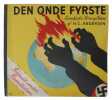

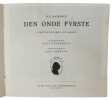
Rare first edition of this illustrated book that uses H. C. Andersen’s ""The Evil Prince"" as a model for an audacious plot that shows Hitler's megalomania and greed for power. Hans Christian Andersen’s 1840 tale, The Evil Prince, concerns a tyrant who, not satisfied with conquering neighboring countries, builds a spaceship and sets out to conquer God. In this version of the tale, published after the liberation of Denmark from Nazi occupation, Adolf Hitler assumes the title role and pursues the mad dream of world conquest, helped by Nazi storm-troopers and soldiers.
Le Rossignol du bonheur : La Tortue volante
Editions des deux coqs d'or Un petit livre d'or Cartonné 1976 In-12 (16,3 x 19,3 cm), cartonné, non paginé, illustrations en couleur ; frottements sur la pièce dorée (un peu décollée en queue), par ailleurs assez bon état général. Livraison a domicile (La Poste) ou en Mondial Relay sur simple demande.

ANDERSEN H. C., BLONDEL VALERIE, MARTIN A.-C.
Reference : RO40110793
(1988)
ISBN : 2010134761
LA BERGERE ET LE RAMONEUR
Hachette. 1988. In-8. Relié. Etat d'usage, Couv. légèrement passée, Dos satisfaisant, Intérieur acceptable. 6 pages cartonnées illustrées de dessins en couleur. 2e plat légèrement taché.. . . . Classification Dewey : 28.5-Enfantina
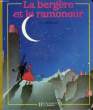
Hachette jeunesse. Classification Dewey : 28.5-Enfantina
Le Coffre volant
1921 Paris, Garnier , 1921, In douze, 362 pp, broché, bon état,très leger manque au bas du dos,
Illustrations de yan d'Argent. Coll. "Bibliothèque enfantine",traduction de MMM Gregoire et Moland,.
Blade af min Dagbog I-III. (I. Raphaels Begravelse. II. Thorvaldsen. III. En Spadseretour gjennem Posilip-Grotten ved Neapel). + Italiensk Musik, Sang og Theatervæsen. (Alle i Söndagsblad. Et æsthetisk Ugeskrift. Udgivet af A.P. Liunge.).
Kjøbenhavn, Udgiverens Forlag, 1835. Lex8vo. Samtidigt hldrbd. Rygforgyldning. Forgyldt rygtitel. Ryg og kanter lidt slidte. Ugeskriftets 1. årgang, nr. 1-39. (4),624 spalter. Lidt spredte brunpletter.
Alle i førstetryk. - BFN, 258, 259, 260 og 261.
LE VILAIN PETIT CANARD - NEIGELINE
LA RONDE DES ENFANTS. NON DATE. In-8. Broché. Bon état, Couv. convenable, Dos satisfaisant, Intérieur frais. environs 5 pages augmentées de nombreuses illustrations en couleur dans et hors texte. . . . Classification Dewey : 398.2-Conte populaire
CONTE PAR GISELE PARRY / CONTE PAR GISELE CASADESUS Classification Dewey : 398.2-Conte populaire
Les habits neufs du Grand-Duc.
Hatier. 1975. In-Folio. Relié. Etat d'usage, Couv. convenable, Coiffe en tête abîmée, Papier jauni. non paginé, environ 28 pages, nombreuses illustrations en couleur dans et hors texte.. . . . Classification Dewey : 843.0692-Livres d'enfants
Illustrations de Josef Palecek. Classification Dewey : 843.0692-Livres d'enfants
LES PLUS BEAUX CONTES D'HIVER
ALBIN MICHEL JEUNESSE. non daté. In-4. Cartonnage d'éditeurs. Bon état, Couv. convenable, Dos satisfaisant, Intérieur frais. 79 pages. Nombreux dessins en couleurs dans le texte et hors texte.. . . . Classification Dewey : 843.0692-Livres d'enfants
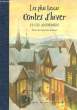
Illustrés par Anastassija Archipowa. Classification Dewey : 843.0692-Livres d'enfants
Eventyr fortalte for Børn. (1.-3. Hefte) + Eventyr fortalte for Børn. Ny Samling (1.-3. Hefte). 2 Bd (forskellige oplag). - [PMM 299 - THE UGLY DUCKLING]
Kbhvn., 1835-47. Indbundet i et smukt nyere hldrbd.af rødt gedeskind m. rygforgyldn. i gl. stil, i kassette. Med nogle brugsspor og nogle blade fint opforede i bladkanter, indimellem tæt beskåret. Originaludgaven af H.C. Andersens første eventyrsamlinger hvis 6 hefter udgør 2 bind. - Her er de 2 hefter i 1. oplag., mens de 4 er i 2. oplag. De få eksisterende eksemplarer er næsten alle en sammenblanding af disse oplag, ligesom eksemplarerne har visse mangler mht. titelblade, smudstitelblade og indholdsfortegnelser.1. Hefte: Smudstitelblad, titelblad samt 1. blad i faksimile. 61 pp. samt indholdsfortegnelse. 1 oplag. 1835.2. Hefte: Titelblad, 76 pp. samt indholdsfortegnelse. 2. oplag, 1844.3. Hefte: Smudstitelblad, titelblad, 60 pp. samt indholdsfortegnelse. 1. oplag, 1837.Ny Samling - 1. Hefte: Smudstitelblad, titelblad, 58 pp. samt indholdsfortegnelse. 2. oplag, 1846.Ny Samling - 2. Hefte: Smudstitelblad, titelblad i faksimile, 53 pp. (pp.47-48 i faksimile) samt indholdsfortegnelse, 2. oplag, 1847.Ny Samling - 3. Hefte: SMudstitelblad, titelblad, 49 pp. (pp. 48-49 i faksimile). Indholdsfortegnelse på p. 49. 2. oplag, 1847.Printing and the Mind of Man, No. 299. - Birger F. Nielsen, Nr. 266-70, 276-79, 303-05, 325-28, 352-55, 408-11.
Bound in a beautiful recent full leather binding of red goat skin. Back richly gilt in old style, in slipcase. Some traces of use and some leaves neatly restored at edges, occasionally rather shaved.The first edition of H.C.Andersen's first collections of fairy tales whose six parts make up two bindings. In the present copy two parts are first issues, while four are second issues. The few existing copies are nearly all a mixture of these issues and likewise nearly all copies have certain wants concerning title-page, half-title and tables of contents.First Part: Half title, title page and first leaf in facsimile. 61 pp. and table of contents. First issue, 1835.Second Part: Title page, 76 pp. and table of contents. Second issue, 1844.Third Part: Half title, title page, 60 pp. and table of contents. First issue, 1837.Ny Samling (New Collection) - First Part: Half title, title page, 58 pp. and table of contents. Second issue, 1846.Ny Samling (New Collection) - Second Part: Half title, title page in facsimile, 53pp. (pp.47-48 in facsimile) and table of contents. Second issue, 1847.Ny Samling (New Collection) - Third Part: Half title, title page, 49 pp. (pp. 48-49 in facsimile). Table of contents on p. 49. Second issue, 1847.These publications brought H.C.Andersen international fame. The critical world hailed the ""eventyr"" as a new genre.
Eventyr fortalte for Børn. (1.-3. Hefte) + Eventyr fortalte for Børn. Ny Samling (1.-3. Hefte). 2 Bind. [I.e. Fairy Tales Told for Children. 6 issues, divided into two volumes - all that was issued]. - [INAUGURANTING THE FAIRY TALE-GENRE]
Kjöbenhavn, 1837-1847. Bound in one nice contemporary half calf binding with blindstamped and gilt ornamentation to spine. Gilding vague, also the gilt title. Minor bumping to corners. Internally a bit of scattered brownspotting, but overall unusually nice, clean, and fresh. A truly excellent copy. See collation below.
A magnificent set - unusually nice and clean and bound together in a contemporary binding, which is almost never the case - of the first edition of this exceedingly rare collection of Andersen's earliest fairy tales. This legendary fairy tale-collection that created the fairy tale-genre and brought Andersen international fame, consists in six parts that together make up two volumes. As with most of the other few existing copies, the present set is a mixture of issues (though here, merely two of the parts are in second issue). ""With the passing of each year, Andersen's genious brought forth new ""wonder stories"", and the fame he had so desperately craved and striven for became a reality. Little did he know in the spring of 1835, when he all but had to beg his publisher to accept these remarkable tales, that one day they would make him immortal. And little did the critics, nearly all of whom advised him to give up his ""experiment"" and devote himself to his other writings, ever dream that they would live to see him gain world acclaim for these tales. For almost a hundred years now, generation after generation has been brought up on Andersen's stories. Take the English-speaking world, for instance. Since the first appearance of Andersen's Fairy Tales in London and New York, in 1846, over seven hundred different editions, including dozens of varied translations, illustrated by more than a hundred different artists, have been published in the United States alone. Indeed, Andersen's stories will live on as classics - as much part of our civilization as the two primary educational factors, reading and writing."" (Jean Hersholt, p. 27). Due to the fact that the six little pamphlets together, printed in different years, all have their own title-pages, half-titles, contents, etc. and that there were then also printed all of this for each volume of three (times two) together, the book binders almost always removed several of these ""extra"" leaves, as they seemed superfluous. It was never the intention of the publisher that the single half-titles, title-pages or tables of contents be preserved. However, due to the many different laves that were deemed ""superfluous"" or not, all existing sets of these two little volumes have their individual mix-up of half-titles, titles, and tables of contents. Thus, no copies are known to exist with all leaves present. ""During Andersen's lifetime 162 of his Fairy Tales were published, but the scarcest and most difficult to obtain are these six little pamphlets. We do not know exactly how many, or how few, copies were printed, but we do know that no copy with all the title pages and tables of contents has ever been offered for sale by any dealer or at any auction. To my knowledge, only five or six complete copies of the first printings (1835-1842) still exist. Even the second printing of the six pamphlets in their entirety (1842-1847) is exceedingly scarce and difficult to obtain."" (Jean Hersholt).Here follows a collation including mention of issues and lacunae: Vol. I: VIII pp. (joint title-page (dated 1837) for the three parts, contents-leaf for all three parts, and preface (""Til de ældre Læsere""). The joint half-title merely stating ""Eventyr for Børn"" has not been bound in.First Part: 61 (including the title-page), (3) (blank verso of p. 61 and the contents-leaf for part one) pp. The half-title has not been bound in. Second issue, 1842.Second Part: 76 (including half-title and title-page), 2 (contents-leaf for part two) pp. + 1 f. (blank). Second issue, 1844.Third Part: 60 (including half-title and title-page) pp., 2 (contents-leaf for part two) pp. + 1 f. (blank). First issue, 1837.Vol. II: 3 ff. (joint title-page, dedication-leaf (for Mrs. Heiberg), contents-leaf for all three parts). First Part: 58 (including title-page), (2) (contents-leaf for part one) pp. The half-title has not been bound in. First issue, 1838.Second Part: 53 (including title-page), (3) (verso of p. 53 and contents-leaf for part two) pp. The half-title has not been bound in. First issue, 1839.Third Part: 49 (including title-page), (3) (verso of p. 49 and contents-leaf for part three) pp. The half-title has not been bound in. First issue, 1842..This is one of the most complete copies we have ever seen, as the only leaves not withbound are some of the half-titles. Usually a lot more leaves have been left out by the binders, and it's even rare to find copies that have all title-pages. The separate contents-leaves are very rarely found preserved in copies that have the joint contents-leaves, and the blank leaves are almost never withbound. BFN: 266" Hersholt: 23 PMM: 299.
The Snow Queen. A Tale in seven Stories. Translated by Patricia L. Conroy and Sven Rossel. Postscript by Erik Dal. Illustrations by Helge Ernst. Binding Ole Olsen.
Herning, Povl Kristensen, 1986. Folio. Orig. helshirtbd.Guldsnit foroven. Ubeskåret trykt på Hahnemühle Bütten Papier. No. 36 signeret af kunstneren af 300 nummererede eksemplarer. 77,(1) pp. Med mange farveillustr. ""printed as direct copy from monocrome originals"".
Nouveaux Contes
GEDALGE. 1955. In-4. Cartonnage d'éditeurs. Etat d'usage, Coins frottés, Dos satisfaisant, Intérieur acceptable. 159 pages. Nombreuses planches illustrées en couleurs, dont une en frontispice. Nombreuses illustrations en noir et blanc, dans le texte, par Ivane MARCHEGAY. Coiffes légèrement usées.. . . . Classification Dewey : 890-Littératures des autres langues
Traduits du danois par Cécilie LUND. Classification Dewey : 890-Littératures des autres langues