 Write to the booksellers
-
Type
Book (1694)
Engraving (1)
Magazine (8)
-
Latest
Last month (98)
Last week (2)
-
Language
Chinese (1)
Dutch (2)
English (2)
French (1602)
Russian (96)
-
Century
16th (2)
18th (1)
19th (220)
20th (707)
21st (129)
-
Countries
Belgium (56)
Canada (2)
Denmark (251)
France (1178)
Germany (1)
Switzerland (118)
United States of America (97)
-
Syndicate
ALAC (2)
CLAM (3)
CLAQ (1)
CNE (7)
ILAB (964)
NVVA (8)
SLACES (8)
SLAM (673)
SNCAO (2)
Sämmtliche Werke. Einzige vom Verfassers besorgte deutsche Ausgabe. Mit 65 in den Text gedr. Holzschnitten und einem Titelbild nach Originalzeichnungen von V. Petersen und L. Hutschenreuter. 27. Aufl.
Leipzig, Ed. Wartig's Verlag, 1886. Large 8vo. Orig.hcloth. Gilt back. Frontcover in chromolithography. Tears at upper part of hinge. 727 pp. Illustr.

The True Story of My Life: A Sketch. Translated by Mary Howitt. - [THE FIRST SEPARATE EDITION OF THE AUTOBIOGRAPHY OF H.C.A.]
London, Longman, Brown, Green, and Longmans, 1847. Orig. red-brown full cloth. Boards and back blindtooled (Remnant & Edmonds, London). Capitals worn, especially upper capital, small nick to upper part of back. Inner hinges a bit weak. Internally nice and clean. W. half-title. VIII, 298 pp + Publisher's Catalogue (32 pp).
![The True Story of My Life: A Sketch. Translated by Mary Howitt. - [THE FIRST SEPARATE EDITION OF THE AUTOBIOGRAPHY OF H.C.A.]. "ANDERSEN, H.C.](https://static.livre-rare-book.com/pictures/LLX/32144_1_thumb.jpg)
![The True Story of My Life: A Sketch. Translated by Mary Howitt. - [THE FIRST SEPARATE EDITION OF THE AUTOBIOGRAPHY OF H.C.A.]. "ANDERSEN, H.C.](https://static.livre-rare-book.com/pictures/LLX/32144_2_thumb.jpg)
First English language edition, being the first separate edition, of Hans Christian Andersen's first official autobiography. The English edition preceded the Danish with 95 years (!), as the first Danish edition did not appear until 1942, when it was issued by H. Topsøe-Jensen under the title ""Mit eget Eventyr uden Digtning"" (i.e. ""My Own Fairy Tale Without Poetry""). The first German edition appeared as an introduction in the collected German edition of Andersen's works, also in 1847, under the title: ""Das Märchen meines Lebens ohne Dichtung."" The general idea that underlies the work is that life is like a fairy tale and that God makes curious things happen. ""This True Story of his Life will not be found the least interesting of his writings"" indeed, to me it seems one of the most so. It furnishes the key, as it were to all the rest [...]"" (Translator's preface). The autobiography is written in the same wonderful language and with the same straightforward mystique that characterizes H.C. Andersen's other writings, and the person H.C.A. cannot be said to be less interesting or intriguing than his fairy tales. ""My life is a lovely story, happy and full of incident. If, when I was a boy, and went forth into the world poor and friendless, a good fairy had met me and said, ""Choose now thy own course through life [...]"" (the initiating lines of Chapter one). H.C. Andresen wrote his autobiography while travelling in Europe. Numerous interruptions appeared, and Andersen sent the sheets of the manuscript off to the publisher as they were written, which meant that he did not have the earlier parts of the work with him when he wrote the latter. The work also much exceeded the length that he had intended. The manuscript was written in Danish and was translated into English and German the year after he had finished the final sheets (August 1846). For this work he only worked on one single manuscript, and made all of the numerous corrections directly in this, meaning that it was exceedingly difficult to read and that it could not be sent to a translator straight away. The publisher had been told to send the sheets of the manuscript directly to his friend and financial advisor, Edvard Collin, as they arrived, and Collin, realizing that no stranger would be able to read the manuscript, made a fair copy of the entire manuscript, correcting all of Andersen's linguistic and stylistic errors. In return he got to keep the manuscript, which is why it was still in existence almost 100 years later, when the first Danish edition of it was to be printed. Andersen borrowed his manuscript from Collin, when, some years later, he had to deliver a Danish autobiography for the edition of his collected works. He used it as the basis for ""Mit Livs Eventyr"" (The Fairy Tale of My Life""), which appeared in his collected works in 1854-55, but which is much different from the present and principal autobiography.
Tre Digtninger. Lykkens Kalosker. En rigtig Soldat. Det har Zombien gjort. - [ANDERSEN'S FIRST ADULT FAIRY-TALE]
Kjøbenhavn, C. A. Reitzel, 1838. Indbundet ubeskåret i et nyere marmoreret papbind med forgyldt titelfelt på forpermen. Enkelte brunpletter.Bound uncut in a later marbled paper binding with gilt title to front board. A bit of brownspotting.
![Tre Digtninger. Lykkens Kalosker. En rigtig Soldat. Det har Zombien gjort. - [ANDERSEN'S FIRST ADULT FAIRY-TALE]. "ANDERSEN, H. C.](https://static.livre-rare-book.com/pictures/LLX/57269_1_thumb.jpg)
![Tre Digtninger. Lykkens Kalosker. En rigtig Soldat. Det har Zombien gjort. - [ANDERSEN'S FIRST ADULT FAIRY-TALE]. "ANDERSEN, H. C.](https://static.livre-rare-book.com/pictures/LLX/57269_2_thumb.jpg)
Scarce first edition of Andersen's ""Three Poetical Works"", which contains the first printing on one of his most important fairy tales, ""The Galoches of Fortune"", which is in fact his very first fairy tale for adults, here in the original version (it was later re-written for publication in Andersen's collected fairy tales 1849-50). It appeared while Andersen was still publishing his first fairy tale-collection, namely as early as 1838, and constitutes the 18th fairy tale that he publishes, predating e.g. ""The Steadfast Tin Soldier"". ""The Galoches of Fortune"" is of the utmost importance to the development of Andersen's fairy tale writing and his style of writing. It is not only his first grown-up fairy-tale, it is also the first, in which he works with dividing a fairy tale into chapters, here bound together by the galoche-motive as the red line. This highly important fairy tale was so important that even though it differs in style from the other fairy tales for children that appeared during the same period, it needed to be included in the great collection of Andersen's fairy tales that appeared in 1849-50. But for this publication, the fairy tale needed re-writing, both linguistically and stylistically, and thus it is only in the present publication that we have it in its original version.""The Galoches of Fortune"" was very important to Andersen himself, who mentioned it in several letters while he was working on it. In a letter to Ms. Hanck, dated March 16 1938, he talks about his ""Three new poetical works"""" ""The first (i.e. The Galoches of Fortune"") is a fairy tale and I think the most satirical one I have written as well as some of the most phantastic that our literature holds."" - Clearly showing the importance that Andersen himself bestowed upon the work. In a letter to Henriette Hanck, dated February 10 1838, he emphasized that ""The Galoshes of Fortune"" were ""not for children"". As the fairy-tale is more in line with the ""Hoffmann-like imagination"" that we also see in ""A Walking Tour"" than with the spirit and style of the Fairy Tales for Children, Andersen himself also had some anxieties about it, however, and wrote to Frederik Læssøe on February 23 1938 ""I'm working on a fairy-tale, but now regret these juggling acts with the golden apples of imagination"".His anxieties world prove not to be completely unfounded. The work was widely read, but it also caused quite a bit of controversy. Kierkegaard, for instance, hated the work and harshly criticized its satirical features. As ""The Galoches of Fortune"" appear in May 1838, Kierkegaard's first work, ""From the Papers of one Still Living"", appears in September the same year. That work constitutes his long, sharp critique of Hans Christian Andersen, in which he ridicules Andersen and the genre of fairy tales in general. Kierkegaard furthermore denies that Andersen has any aptitude as a novelist and accuses him of not having ""philosophy of life"". Andersen had already heard rumours of the book on 30th August and felt martyred at the thought of what lay ahead.The dramatic poem ""A Real Soldier"" was submitted to the Royal Theatre in April 1836, but returned in May of the same year. BFN 320.
Tre nye Eventyr.
K., 1870. Ubeskåret, orig. omsl. m. rifter. Løs i ryggen. Indvendig ren.
Originaludgave. BFN 992.
Tre nye Eventyr og Historier.
Kjøbenhavn, 1870. Indb. ubesk. m. orig. for- og bagomsl. i et nydeligt nyere hldrbd. m. forf. og titel i guld på forperm. Særdeles nydeligt, rent og friskt ekspl. Komplet m. halvtitel, titel, dedikationsbl. og deltitelblade til de enkelte eventyr.
Originaludgave. BFN 992.
Tre nye Eventyr og Historier. Hanse-Grethes Familie. Hvad Tidselen oplevede. Hvad man kan hitte paa.
K., 1870. Indb. m. orig. for- og bagomsl. i nyere marmoreret papbd. m. blåt skindtitelfelt på forperm. Aldeles frisk.
Originaludgave. BFN 992.
Tre nye Eventyr og Historier. Hønse-Grethes Familie. Hvad Tidselen oplevede. Hvad man kan hitte paa.
Kjøbenhavn, reitzel, 1850. Med orig. bogtrykte omslag. Ubeskåret. Ryg med papirstape, som nok kan fjernes.
Originaludgaven. BFN: 992.
Tre nye Eventyr og Historier. + Lykke=Peer.
K., 1870. Indb. i ét samt. hldrbd. Ryg slidt. Indvendig ren.
2 originaludgaver. BFN 992 og 1006.
Vierge Des Glaces 1
Gallimard 2010 96 pages 10 4x0 8x17cm. 2010. pocket_book. 96 pages.
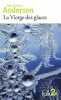
Très bon état - légères marques de lecture et/ou de stockage mais du reste en très bon état- expédié soigneusement depuis la France
Vignetter til danske Digtere.
Kjöbenhavn, Reitzel, 1832. Lille 8vo. Smukt senere hldrbd. med rig rygforgyldning of titelfelt i skind. Som næsten altid lettere brunplettet. Exlibris af Max Lester på indersiden af forpermen.
Originaludgaven. BFN: 174.
Vignetter til danske Digtere.
K., 1832. Senere mønstret papbd. m. skindtitel på forperm (Carl Lund). Brunplettet.
BFN 174. Originaludgave.
Vignetter til danske Digtere.
Kjöbenhavn, C. A. Reitzel, 1832. 12mo. Originalt kartonnage. Ryg fornyet. Eksemplar uden smudstitel. Spredte brunpletter. Indlagt i en nydelig nyere bogæske.
Særdeles nydeligt eksemplar af originaludgaven. BFN 174.Exlibris Hyllested.
15 førstetryk udgivet i tidsskriftet Valkyrien. Et Maanedsskrift for dannede Læsere. Udgivet af Ove thomsen. årgangene 1831 (3 Bd., det udk.) + 1832 (4 Bd., det udk.).
Kjøbenhavn, Udgiverens Forlag, 1831-32. Indbundet i 7 samtidige ensartede hldrbd. Rygforgyldning. Forgyldte rygtitler. Lettere spredte brunpletter.
BFN: 151, 152, 163, 164, 170, 175, 180, 181, 182, 189-93 og 198.
Læsning for den fine verden. Et poetisk Quartalsskrift. Udgivet og forlagt af F.J. Hansen. Første Hæfte.
Kjøbenhavn, C.H. Robert, 1829. Lille 8vo. Samtidigt helshirtbd. med forgyldt rygtitel. (8),124,(2) pp. Inclusiv subskribentliste med kun 60 subskribenter, heraf H.C. Andersen selv. Spredte brunpletter.
Indeholder 3 tidlige digte af den dengang 24-årige forfatter: 1. Kunstner=Livet. Pp. 43-48. - 2. Phantasie og Vanvid. Pp. 49-52. - 3. Ingenting og Noget. Pp. 53-54.BFN. 31, 32 og 33. - Bibl. Danica IV,202.
Den Onde Fyrste. Eventyr for Børn og Voksne.
Køpenhavn, Alex Vincents Kunstforlag, (1945). 4to-oblong (249 x 222mm). In the original yellow illustrated boards. Internally with traces from moisture wrinckles, otherwise a good copy. 20 pp. of which 9 are fullpage color illustrations by Palle Wennerwald.
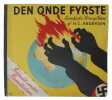

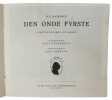
Rare first edition of this illustrated book that uses H. C. Andersen’s ""The Evil Prince"" as a model for an audacious plot that shows Hitler's megalomania and greed for power. Hans Christian Andersen’s 1840 tale, The Evil Prince, concerns a tyrant who, not satisfied with conquering neighboring countries, builds a spaceship and sets out to conquer God. In this version of the tale, published after the liberation of Denmark from Nazi occupation, Adolf Hitler assumes the title role and pursues the mad dream of world conquest, helped by Nazi storm-troopers and soldiers.
Le Rossignol du bonheur : La Tortue volante
Editions des deux coqs d'or Un petit livre d'or Cartonné 1976 In-12 (16,3 x 19,3 cm), cartonné, non paginé, illustrations en couleur ; frottements sur la pièce dorée (un peu décollée en queue), par ailleurs assez bon état général. Livraison a domicile (La Poste) ou en Mondial Relay sur simple demande.

ANDERSEN H. C., BLONDEL VALERIE, MARTIN A.-C.
Reference : RO40110793
(1988)
ISBN : 2010134761
LA BERGERE ET LE RAMONEUR
Hachette. 1988. In-8. Relié. Etat d'usage, Couv. légèrement passée, Dos satisfaisant, Intérieur acceptable. 6 pages cartonnées illustrées de dessins en couleur. 2e plat légèrement taché.. . . . Classification Dewey : 28.5-Enfantina
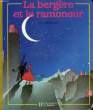
Hachette jeunesse. Classification Dewey : 28.5-Enfantina
Blade af min Dagbog I-III. (I. Raphaels Begravelse. II. Thorvaldsen. III. En Spadseretour gjennem Posilip-Grotten ved Neapel). + Italiensk Musik, Sang og Theatervæsen. (Alle i Söndagsblad. Et æsthetisk Ugeskrift. Udgivet af A.P. Liunge.).
Kjøbenhavn, Udgiverens Forlag, 1835. Lex8vo. Samtidigt hldrbd. Rygforgyldning. Forgyldt rygtitel. Ryg og kanter lidt slidte. Ugeskriftets 1. årgang, nr. 1-39. (4),624 spalter. Lidt spredte brunpletter.
Alle i førstetryk. - BFN, 258, 259, 260 og 261.
LE VILAIN PETIT CANARD - NEIGELINE
LA RONDE DES ENFANTS. NON DATE. In-8. Broché. Bon état, Couv. convenable, Dos satisfaisant, Intérieur frais. environs 5 pages augmentées de nombreuses illustrations en couleur dans et hors texte. . . . Classification Dewey : 398.2-Conte populaire
CONTE PAR GISELE PARRY / CONTE PAR GISELE CASADESUS Classification Dewey : 398.2-Conte populaire
Les habits neufs du Grand-Duc.
Hatier. 1975. In-Folio. Relié. Etat d'usage, Couv. convenable, Coiffe en tête abîmée, Papier jauni. non paginé, environ 28 pages, nombreuses illustrations en couleur dans et hors texte.. . . . Classification Dewey : 843.0692-Livres d'enfants
Illustrations de Josef Palecek. Classification Dewey : 843.0692-Livres d'enfants
LES PLUS BEAUX CONTES D'HIVER
ALBIN MICHEL JEUNESSE. non daté. In-4. Cartonnage d'éditeurs. Bon état, Couv. convenable, Dos satisfaisant, Intérieur frais. 79 pages. Nombreux dessins en couleurs dans le texte et hors texte.. . . . Classification Dewey : 843.0692-Livres d'enfants
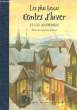
Illustrés par Anastassija Archipowa. Classification Dewey : 843.0692-Livres d'enfants
Eventyr fortalte for Børn. (1.-3. Hefte) + Eventyr fortalte for Børn. Ny Samling (1.-3. Hefte). 2 Bd (forskellige oplag). - [PMM 299 - THE UGLY DUCKLING]
Kbhvn., 1835-47. Indbundet i et smukt nyere hldrbd.af rødt gedeskind m. rygforgyldn. i gl. stil, i kassette. Med nogle brugsspor og nogle blade fint opforede i bladkanter, indimellem tæt beskåret. Originaludgaven af H.C. Andersens første eventyrsamlinger hvis 6 hefter udgør 2 bind. - Her er de 2 hefter i 1. oplag., mens de 4 er i 2. oplag. De få eksisterende eksemplarer er næsten alle en sammenblanding af disse oplag, ligesom eksemplarerne har visse mangler mht. titelblade, smudstitelblade og indholdsfortegnelser.1. Hefte: Smudstitelblad, titelblad samt 1. blad i faksimile. 61 pp. samt indholdsfortegnelse. 1 oplag. 1835.2. Hefte: Titelblad, 76 pp. samt indholdsfortegnelse. 2. oplag, 1844.3. Hefte: Smudstitelblad, titelblad, 60 pp. samt indholdsfortegnelse. 1. oplag, 1837.Ny Samling - 1. Hefte: Smudstitelblad, titelblad, 58 pp. samt indholdsfortegnelse. 2. oplag, 1846.Ny Samling - 2. Hefte: Smudstitelblad, titelblad i faksimile, 53 pp. (pp.47-48 i faksimile) samt indholdsfortegnelse, 2. oplag, 1847.Ny Samling - 3. Hefte: SMudstitelblad, titelblad, 49 pp. (pp. 48-49 i faksimile). Indholdsfortegnelse på p. 49. 2. oplag, 1847.Printing and the Mind of Man, No. 299. - Birger F. Nielsen, Nr. 266-70, 276-79, 303-05, 325-28, 352-55, 408-11.
Bound in a beautiful recent full leather binding of red goat skin. Back richly gilt in old style, in slipcase. Some traces of use and some leaves neatly restored at edges, occasionally rather shaved.The first edition of H.C.Andersen's first collections of fairy tales whose six parts make up two bindings. In the present copy two parts are first issues, while four are second issues. The few existing copies are nearly all a mixture of these issues and likewise nearly all copies have certain wants concerning title-page, half-title and tables of contents.First Part: Half title, title page and first leaf in facsimile. 61 pp. and table of contents. First issue, 1835.Second Part: Title page, 76 pp. and table of contents. Second issue, 1844.Third Part: Half title, title page, 60 pp. and table of contents. First issue, 1837.Ny Samling (New Collection) - First Part: Half title, title page, 58 pp. and table of contents. Second issue, 1846.Ny Samling (New Collection) - Second Part: Half title, title page in facsimile, 53pp. (pp.47-48 in facsimile) and table of contents. Second issue, 1847.Ny Samling (New Collection) - Third Part: Half title, title page, 49 pp. (pp. 48-49 in facsimile). Table of contents on p. 49. Second issue, 1847.These publications brought H.C.Andersen international fame. The critical world hailed the ""eventyr"" as a new genre.
Eventyr fortalte for Børn. (1.-3. Hefte) + Eventyr fortalte for Børn. Ny Samling (1.-3. Hefte). 2 Bind. [I.e. Fairy Tales Told for Children. 6 issues, divided into two volumes - all that was issued]. - [INAUGURANTING THE FAIRY TALE-GENRE]
Kjöbenhavn, 1837-1847. Bound in one nice contemporary half calf binding with blindstamped and gilt ornamentation to spine. Gilding vague, also the gilt title. Minor bumping to corners. Internally a bit of scattered brownspotting, but overall unusually nice, clean, and fresh. A truly excellent copy. See collation below.
A magnificent set - unusually nice and clean and bound together in a contemporary binding, which is almost never the case - of the first edition of this exceedingly rare collection of Andersen's earliest fairy tales. This legendary fairy tale-collection that created the fairy tale-genre and brought Andersen international fame, consists in six parts that together make up two volumes. As with most of the other few existing copies, the present set is a mixture of issues (though here, merely two of the parts are in second issue). ""With the passing of each year, Andersen's genious brought forth new ""wonder stories"", and the fame he had so desperately craved and striven for became a reality. Little did he know in the spring of 1835, when he all but had to beg his publisher to accept these remarkable tales, that one day they would make him immortal. And little did the critics, nearly all of whom advised him to give up his ""experiment"" and devote himself to his other writings, ever dream that they would live to see him gain world acclaim for these tales. For almost a hundred years now, generation after generation has been brought up on Andersen's stories. Take the English-speaking world, for instance. Since the first appearance of Andersen's Fairy Tales in London and New York, in 1846, over seven hundred different editions, including dozens of varied translations, illustrated by more than a hundred different artists, have been published in the United States alone. Indeed, Andersen's stories will live on as classics - as much part of our civilization as the two primary educational factors, reading and writing."" (Jean Hersholt, p. 27). Due to the fact that the six little pamphlets together, printed in different years, all have their own title-pages, half-titles, contents, etc. and that there were then also printed all of this for each volume of three (times two) together, the book binders almost always removed several of these ""extra"" leaves, as they seemed superfluous. It was never the intention of the publisher that the single half-titles, title-pages or tables of contents be preserved. However, due to the many different laves that were deemed ""superfluous"" or not, all existing sets of these two little volumes have their individual mix-up of half-titles, titles, and tables of contents. Thus, no copies are known to exist with all leaves present. ""During Andersen's lifetime 162 of his Fairy Tales were published, but the scarcest and most difficult to obtain are these six little pamphlets. We do not know exactly how many, or how few, copies were printed, but we do know that no copy with all the title pages and tables of contents has ever been offered for sale by any dealer or at any auction. To my knowledge, only five or six complete copies of the first printings (1835-1842) still exist. Even the second printing of the six pamphlets in their entirety (1842-1847) is exceedingly scarce and difficult to obtain."" (Jean Hersholt).Here follows a collation including mention of issues and lacunae: Vol. I: VIII pp. (joint title-page (dated 1837) for the three parts, contents-leaf for all three parts, and preface (""Til de ældre Læsere""). The joint half-title merely stating ""Eventyr for Børn"" has not been bound in.First Part: 61 (including the title-page), (3) (blank verso of p. 61 and the contents-leaf for part one) pp. The half-title has not been bound in. Second issue, 1842.Second Part: 76 (including half-title and title-page), 2 (contents-leaf for part two) pp. + 1 f. (blank). Second issue, 1844.Third Part: 60 (including half-title and title-page) pp., 2 (contents-leaf for part two) pp. + 1 f. (blank). First issue, 1837.Vol. II: 3 ff. (joint title-page, dedication-leaf (for Mrs. Heiberg), contents-leaf for all three parts). First Part: 58 (including title-page), (2) (contents-leaf for part one) pp. The half-title has not been bound in. First issue, 1838.Second Part: 53 (including title-page), (3) (verso of p. 53 and contents-leaf for part two) pp. The half-title has not been bound in. First issue, 1839.Third Part: 49 (including title-page), (3) (verso of p. 49 and contents-leaf for part three) pp. The half-title has not been bound in. First issue, 1842..This is one of the most complete copies we have ever seen, as the only leaves not withbound are some of the half-titles. Usually a lot more leaves have been left out by the binders, and it's even rare to find copies that have all title-pages. The separate contents-leaves are very rarely found preserved in copies that have the joint contents-leaves, and the blank leaves are almost never withbound. BFN: 266" Hersholt: 23 PMM: 299.

