 Write to the booksellers
-
Type
Book (709)
Magazine (3)
Music sheets (4)
-
Latest
Last 24h (3)
Last 3 days (1)
Last month (9)
Last week (3)
-
Language
Dutch (1)
English (1)
French (711)
Latin (3)
-
Century
16th (20)
17th (21)
18th (45)
19th (54)
20th (190)
21st (20)
-
Countries
Belgium (125)
Brazil (1)
Canada (7)
Denmark (24)
France (402)
Germany (3)
Netherlands (73)
Switzerland (81)
-
Syndicate
ALAC (7)
CLAM (8)
CNE (3)
ILAB (211)
NVVA (15)
SLACES (15)
SLAM (148)
Le naufrage
Librairie des bibliophiles / Imprimerie Jouaust Paris, 1874, Collection Bibliothèque récréative, petit in-32 broché sous couverture parcheminée, tirage à 500 exemplaires sur papier vergé. 28pp.-1f. De catalogue. Exemplaire non coupé. Minimes manques en bordure de couverture.Traduction nouvelle de Victor Develay.
![Le naufrage. Erasme [Victor Develay traducteur]](https://static.livre-rare-book.com/pictures/LIS/16815_1_thumb.jpg)
L'enterrement
Librairie des bibliophiles / Imprimerie Jouaust Paris, 1873, Collection Bibliothèque récréative, petit in-32 broché sous couverture parcheminée, tirage à 500 exemplaires sur papier vergé.Traduction nouvelle de Victor Develay. 76pp.-2ff. Vignette gravée sur bois en frontispice.
![L'enterrement. Erasme [Victor Develay traducteur]](https://static.livre-rare-book.com/pictures/LIS/16814_1_thumb.jpg)
![L'enterrement. Erasme [Victor Develay traducteur]](https://static.livre-rare-book.com/pictures/LIS/16814_2_thumb.jpg)
![L'enterrement. Erasme [Victor Develay traducteur]](https://static.livre-rare-book.com/pictures/LIS/16814_3_thumb.jpg)
Les Hotelleries
Librairie des bibliophiles / Imprimerie Jouaust Paris, 1874, Collection Bibliothèque récréative, petit in-32 broché sous couverture parcheminée, tirage à 500 exemplaires sur papier vergé. 29pp.-1f. Tous petits manques au dos. Traduction nouvelle de Victor Develay
![Les Hotelleries. Erasme [Victor Develay traducteur]](https://static.livre-rare-book.com/pictures/LIS/16811_1_thumb.jpg)
![Les Hotelleries. Erasme [Victor Develay traducteur]](https://static.livre-rare-book.com/pictures/LIS/16811_2_thumb.jpg)
L'union mal assortie
Librairie des bibliophiles / Imprimerie Jouaust Paris, 1872, Collection Bibliothèque récréative, petit in-32 broché sous couverture parcheminée, tirage à 500 exemplaires sur papier vergé.Traduction nouvelle de Victor Develay. 48pp. Vignette gravée sur bois en frontispice.
![L'union mal assortie. Erasme [Victor Develay traducteur]](https://static.livre-rare-book.com/pictures/LIS/16813_1_thumb.jpg)
![L'union mal assortie. Erasme [Victor Develay traducteur]](https://static.livre-rare-book.com/pictures/LIS/16813_2_thumb.jpg)
Erasme - Victor Develay (traduction) - Hans Holbein (dessins)
Reference : PHI619M
(1876)
ELOGE DE LA FOLIE D'ERASME. Troisième édition.
1876 / 247 pages. Relié. Editions Librairie des Bibliophiles. Numéroté sur Papier Hollande.
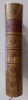
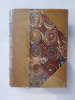
EXCELLENT ETAT.

ERASME, VOLKYR ou VOLCYR(E) de SERROUVILLE ou SEROUVILLE (Nicole, Nicolas)
Reference : 20768
(1643)
La louange de la sotise (sottise). Déclamation d'Erasme de Roterdam mise en françois
1643 La Haye, Théodore Maire, 1643, petit in-12 de (36)289-(22) pp., reliure de l'époque, de plein veau brun, dos à nerfs orné de fers dorés, pièce de titre de maroquin brun-orange, charnière du 1er plat fendu, usures aux coiffes, sinon bon exemplaire.
Rare édition de cette traduction en français de l'Eloge de la folie d'Erasme attribué à l'un de ses contemporains, Nicolas VOLCYR de Serrouville. (vers 1480-1541).
BELISARIO. Poema e Historia - textes bilingue: grec/espagnol
Bosch 1983 in12. 1983. Broché.
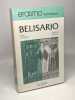
Bon Etat de conservation couverture un peu défraîchie intérieur propre
PROPERCIO, POEMAS, CARMINA. TEXTOS BILINGUES
BOSCH. 1985. In-12. Broché. Etat d'usage, Couv. légèrement passée, Dos plié, Intérieur frais. 473 pages. Premier plat illustré en couleurs. Couverture plastifiée. Texte bilingue latin/espagnol.. . . . Classification Dewey : 870-Littératures des langues italiques. Littérature latine
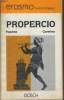
Traduction de Pedro-Luis Cano Alonso. Classification Dewey : 870-Littératures des langues italiques. Littérature latine
Colloquia. Testo originale a fronte. Biblioteca da la pléiade
Einaudi Gallimard ,2002, in-12 de 1534 pages ,relié plein cuir, étui ,Très bon état ,texte latin et traduction en italien .Isbn : 8844600501.(3 photos du livre sur mon site https://www.vieuxlivre.fr) .Les frais de port pour la France sont offerts à partir de 25 euros d'achat (Mondial relay ). (colissimo suivi +6,90 ).
Bellum. Two statements on the nature of war. An essay on war written in 1545 by Erasmus. fifty Etchings created in 1923 & 1924 by Otto Dix.
Massachusetts, Imprint Society, 1972, in-4to, 46 p., + 50 plates, 1568 / of 1950 printed copies, ex-libris John-E. Ward, original cloth, slipcase. Fine.

(SLACES, NVVA)
Phone number : 41 (0)26 3223808
De correspondentie van Desiderius Erasmus. In een vertaling van M.J. STEENS. (Vol.) 1: Brieven 1-141.
Rotterdam, Donker, 2004.
326 p. Cl. 25 cm
De klacht van de Vrede, die overal door alle volken verstoten en versmaad wordt. Inleiding J.J.M. Meyers. Vertaald door T. VAN LEEUWEN.
Rotterdam, Donker, 1986.
89 p. Stiff wrs. 21 cm (Somewhat used)
De lof der zotheid. Vert. J.B. KAN. Pentekeningen H. Holbein. 11e dr.
Amst., Antw., Wereldbibliotheek, 1947.
191 p. H.cl. (Name on title)
Des. Erasmi Roterod. Colloquia, nunc emendatiora.
Amsterdam (Amstelodami), Ex officina Elzeviriana, 1662.
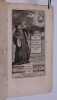
12mo. (XX),672 p. Overlapping vellum. 14 cm (Ref: Willems 1285: 'Réimpression ligne pour ligne de l'édition donnée par les Elzevier en 1655'; Berghman 1350; Rahir 1324; Brunet 2,1040) (Details: 5 thongs laced through the joints. Title engraved by Corn. Cl. Duysend, it depicts a standing Erasmus, who looks through a telescope into a clouded sky; from a cloud comes the hand of God, that bears the 'globus cruciger' (corss-bearing orb, in German Reichsapfel); the globe represents the earth, and he who holds the globe, owns the world. The motto on the title suits Erasmus: 'Vidit, pervidit, risit'. This engraved title was already used by Elsevier for the edition of the Colloquia of 1636. On the last of the preliminary pages a woodcut illustration, depicting both sides of a medal of Erasmus, on the recto his portrait, on the verso his motto: 'Concedo nulli'; around it the legend with Erasmus' interpretation of his motto: 'Mors ultima linea rerum') (Condition: Vellum age-tanned and somewhat soiled) (Note: 'The Colloquia, like the Adagia, were written over a period of years and constantly enlarged as edition succeeded edition. From their earliest form of short models of Latin conversation and formulae of etiquette (composed at Paris in 1497 for the use of some pupils and first printed in 1518) they grew into 'a rich and motley collection of dialogues, each a master piece of literary form, well-knit, spontaneous, convincing, unsurpassed in lightness, vivacity and fluent Latin, each one a finished one-act play' (Huizinga). The Colloquia, full of witty and penetrating observations on ordinary day-to-day happenings as well as on the basic weakness of Church and society, are an invaluable mine of information about 16th century customs, institutions and social problems. Besides, their success as a schoolbook was unrivaled and the stream of editions and translations flowed almost uninterruptedly down to modern times'. (Gilhofer & Ranschburg GmbH, Catalogue 50, Erasmus, published on the 500th anniversary of his birth', Luzern, ca. 1967, p. 34) The Colloquia are preceded by a short biography of Erasmus (last sentence: 'Discerptus est ab utraque, dum utrique studet consulere'), and a table of content) (Collation: *10, A-2E12) (Photographs on request)
Desiderii Erasmi Roterodami Liber utilissimus de conscribendis epistolis, continens artificium & praecepta in earum compositione observanda. Editio nova, diligenter ab erratis expurgata.
Amsterdam, Apud Henricum & Theodorum Boom, 1670.
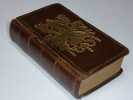
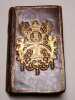
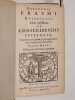
12mo. 470,(33),(1 blank) p., frontispiece. Calf 13 cm The definitive work on the subject (Ref: Spoelder p. 644: Middelburg 5;) (Details: Prize copy, but without the prize. Back ruled gilt, with a red morocco letterpiece. The boards have gilt borders. In the center of both boards the gilt coat of arms of Middelburg. The frontispiece depicts Erasmus in his study, writing a letter. On the title a woodcut printer's mark, depicting Hercules, club at hand, and the Nemean lion under a tree, the motto reads: 'Virtus nescia vinci', 'Virtue doesnot know defeat') (Condition: Some wear to the extremes. Front flyleaf removed. The blank upper margin of the frontispiece slightly cut short) (Note: The genesis of the treatise 'De conscribendis epistolis' of the Dutch humanist and scholar Desiderius Eramus, 1566/69-1536, is rather complicated. The genuine edition, authorized by Erasmus, was first published in Basel by Froben in 1522. In the short preface to this work, repeated also in this edition of 1670, Erasmus explains that he feels obliged to publish this work, because a kind of pirate edition had been published in England recently (i.e. 'Libellus de conscribendis epistolis', published in 1521 by John Siberch, in Cambridge) without his knowledge and consent. It was pirated from a copy of an old manuscript work of him on the art of writing letters, which he wrote, he continues, about 30 years ago (annis abhinc ferme triginta, ca. 1492) in Paris at the request of a friend. Erasmus is very unhappy with this English edition, because it is 'non solum rude, sed & truncum et mutilum'. And now he offers the reader a completely revised and expanded treatment. The emphasis in the treatment remains clearly pedagogical. Erasmus gives an elaborate lesson on the presentation of the subject matter, illustrating how the teacher should give an outline of the subject to be treated, define it in some detail, provide material from the classical authors, and his own work) (Collation: A-X12 (leaf X12 verso blank)) (Photographs on request)
Een twaalftal samenspraken. Vertaald door N.J. SINGELS, Tot inleiding: Cd. Busken Huet's beschouwing over Erasmus. 2e druk.
Amsterdam, Wereldbibliotheek, n.d.
LXVIII,176 p. Cloth. 18 cm
Een tweede twaalftal samenspraken. Vert. en van aant. voorzien door N.J. SINGELS.
Amst., Wereldbibliotheek, n.d.
205 p. Cloth
Een tweede twaalftal samenspraken. Vert. en van aant. voorzien door N.J. SINGELS.
Amsterdam, Wereldbibliotheek, n.d.
205 p. Half cloth
Erasmiana Lovaniensia. Catalogus van de Erasmus-tentoonstelling in de Centrale Bibliotheek te Leuven, november-december 1986, onder redactie van Chr. Coppens, J. IJsewijn, J. Roegiers en G. Tournoy.
Leuven, Leuven University Press, 1986.
315 p., illustrations. Stiff wrappers 24 cm (Exhibition catalogue)
Erasmi Roterod Colloquia, cum notis, tertia parte auctoribus , et Indice novo. Accurente Corn. Schrevelio
Apud Franciscum Hackium., Lugd. Batavorum [Leiden] ,1655, in-8 de 1067721 pages ,relié plein veau d'époque ,Etat correct ,reliure usée .(5 photos du livre sur mon site https://www.vieuxlivre.fr) .Les frais de port pour la France sont offerts à partir de 25 euros d'achat (Mondial relay ). (colissimo suivi +6,90 ).
Erasmus, de actualiteit van zijn denken. Redactie G.Th. Jensma, W.P. Blockmans, J. Sperna Weiland, S. Dresden, J. Nuchelmans, A.M. Koldeweij, W.Th.. Frijhoff.
Zutphen, Walburg Pers, (1986).
4to. 184 p.; illustrations. Cloth. 29 cm (Including dustjacket (6 articles, in which Erasmian topics are discussed, his biography, his politcal theories, his view on education, music, and an article on Erasmus in art)
Erasmus, een portret in brieven. Vertaald & bezorgd door Jan Papy, Marc van der Poel & Dirk Sacré.
Amsterdam, Boom, Mortsel, Denis, 2001.
280 p. Cloth. 21 cm (Front flyleaf removed. Including dustjacket)

